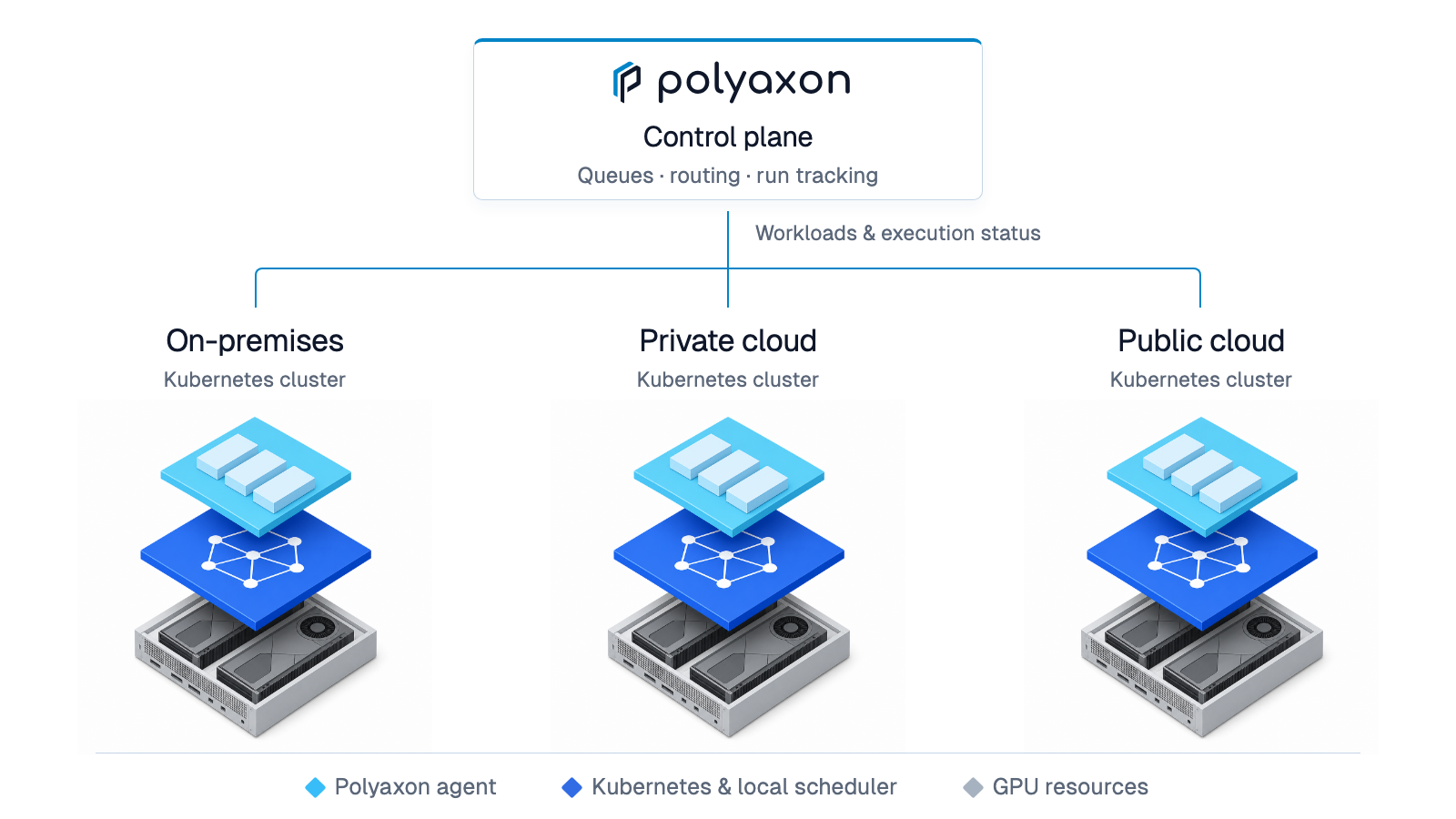
Multi-cluster GPU orchestration
Design multi-cluster GPU orchestration around workload eligibility, data locality, queue routing, recovery, and clear dispatch ownership.
OrchestrationKubernetes
The Polyaxon blog
Practical guides to building, running, and improving ML and AI in production.
GPU orchestration, distributed training, and multi-tenant AI workloads.
Design multi-cluster GPU orchestration around workload eligibility, data locality, queue routing, recovery, and clear dispatch ownership.
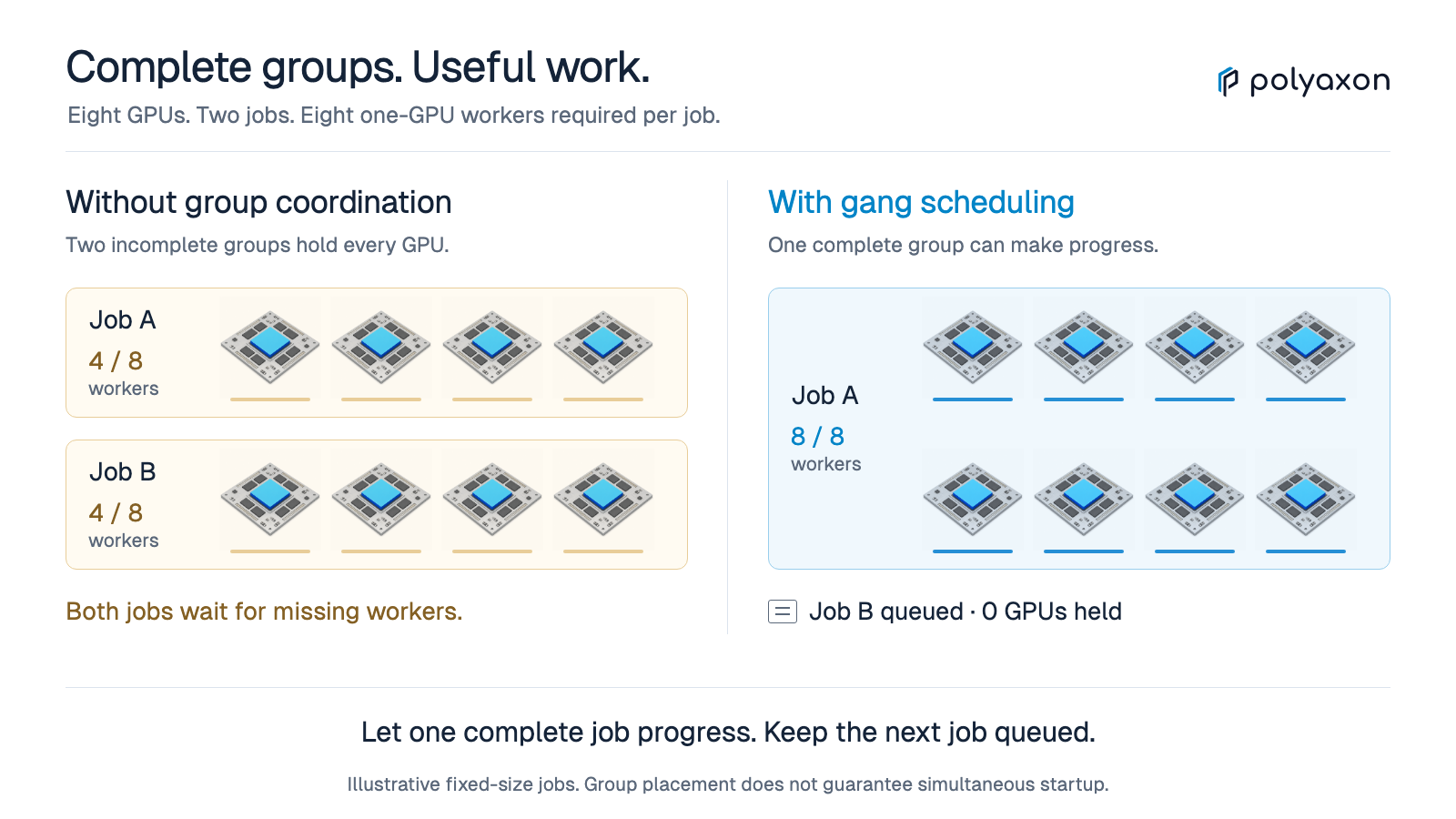
Understand how gang scheduling prevents partial distributed jobs from holding GPUs, how minimum membership works, and what Polyaxon supports.
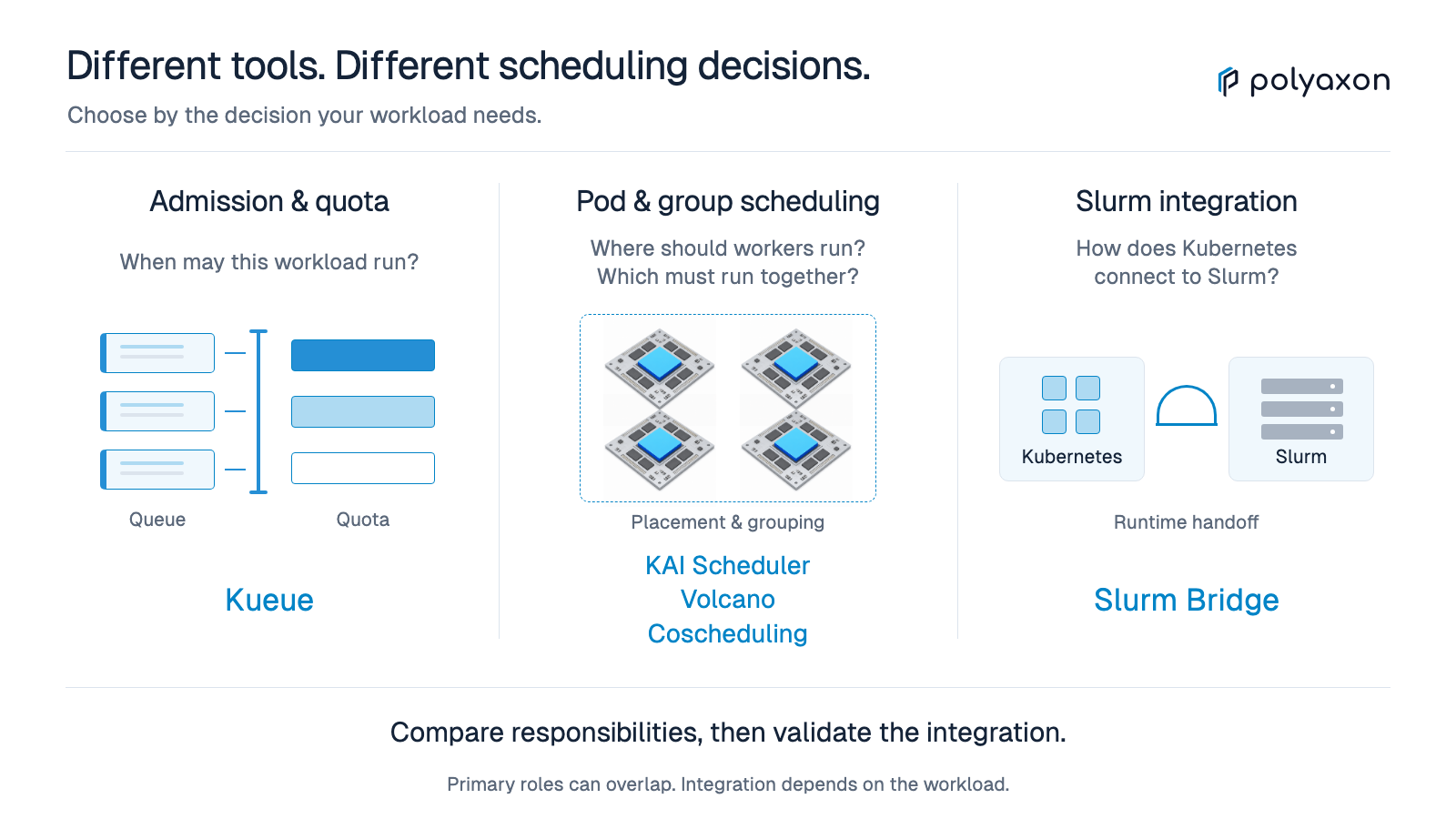
Compare Kueue, KAI Scheduler, Volcano, Coscheduling, and Slurm Bridge by responsibility, workload fit, and Polyaxon integration path.
Understand native topology-aware workload scheduling, combine rack locality with gang placement, and assess the tradeoff between waiting and communication.
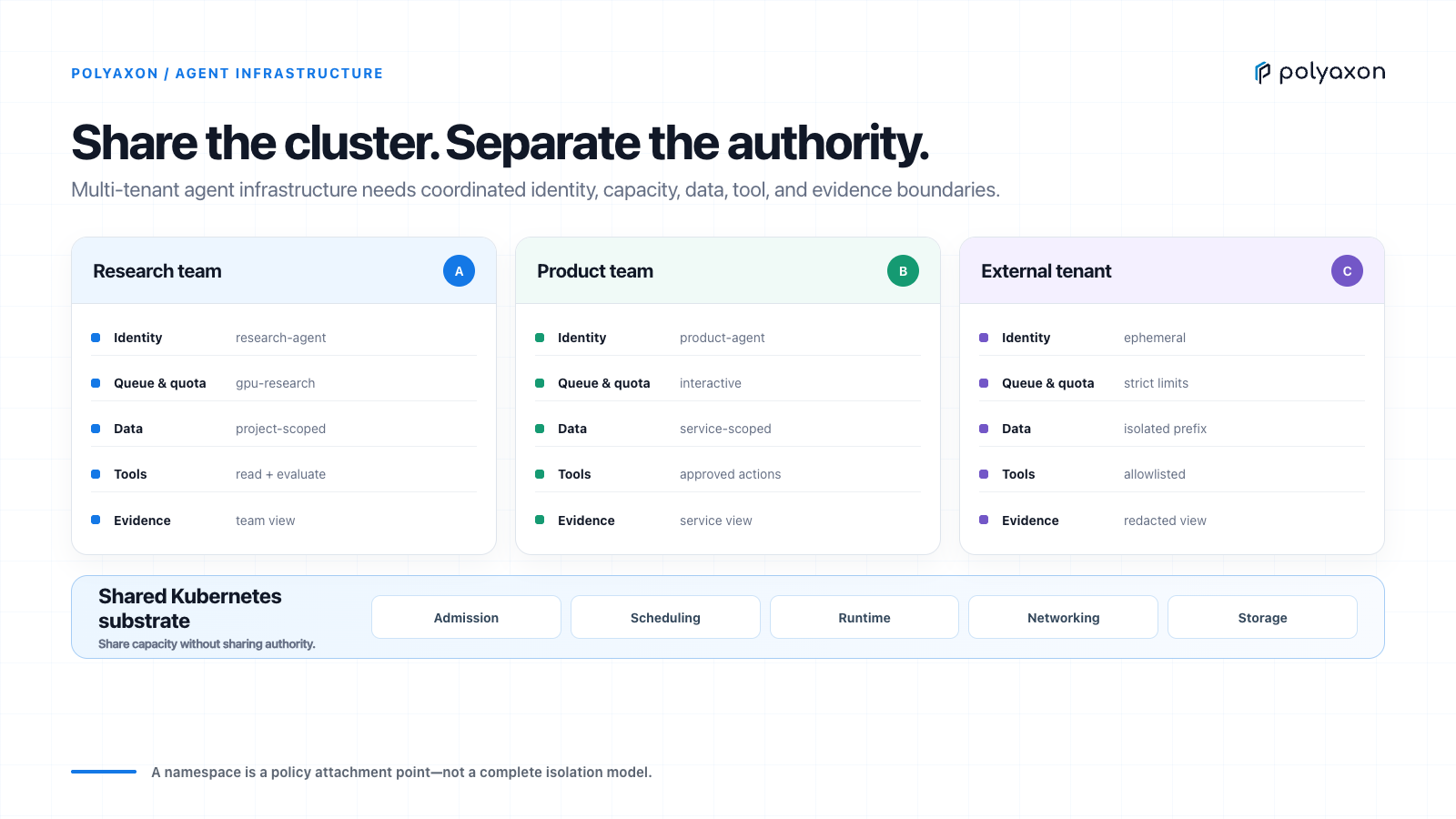
Separate identity, network access, data, queues, budgets, and evidence when multiple teams or customers run AI agents on shared Kubernetes infrastructure.
Track experiments, tune models, manage compute costs, and recover training.
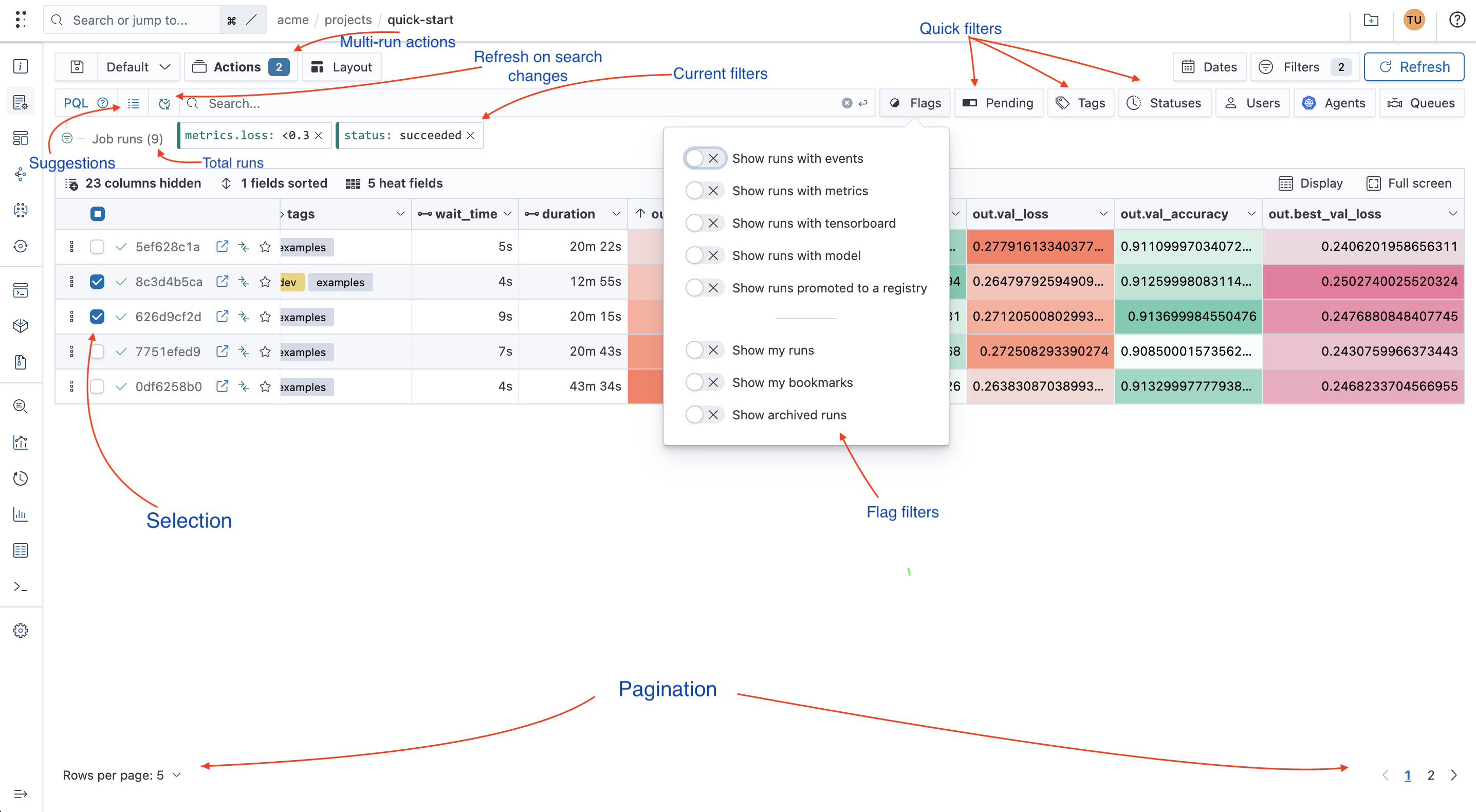
Understand ML metadata with examples of runs, datasets, and model artifacts. Learn how a metadata store connects them and how to query them in Polyaxon.
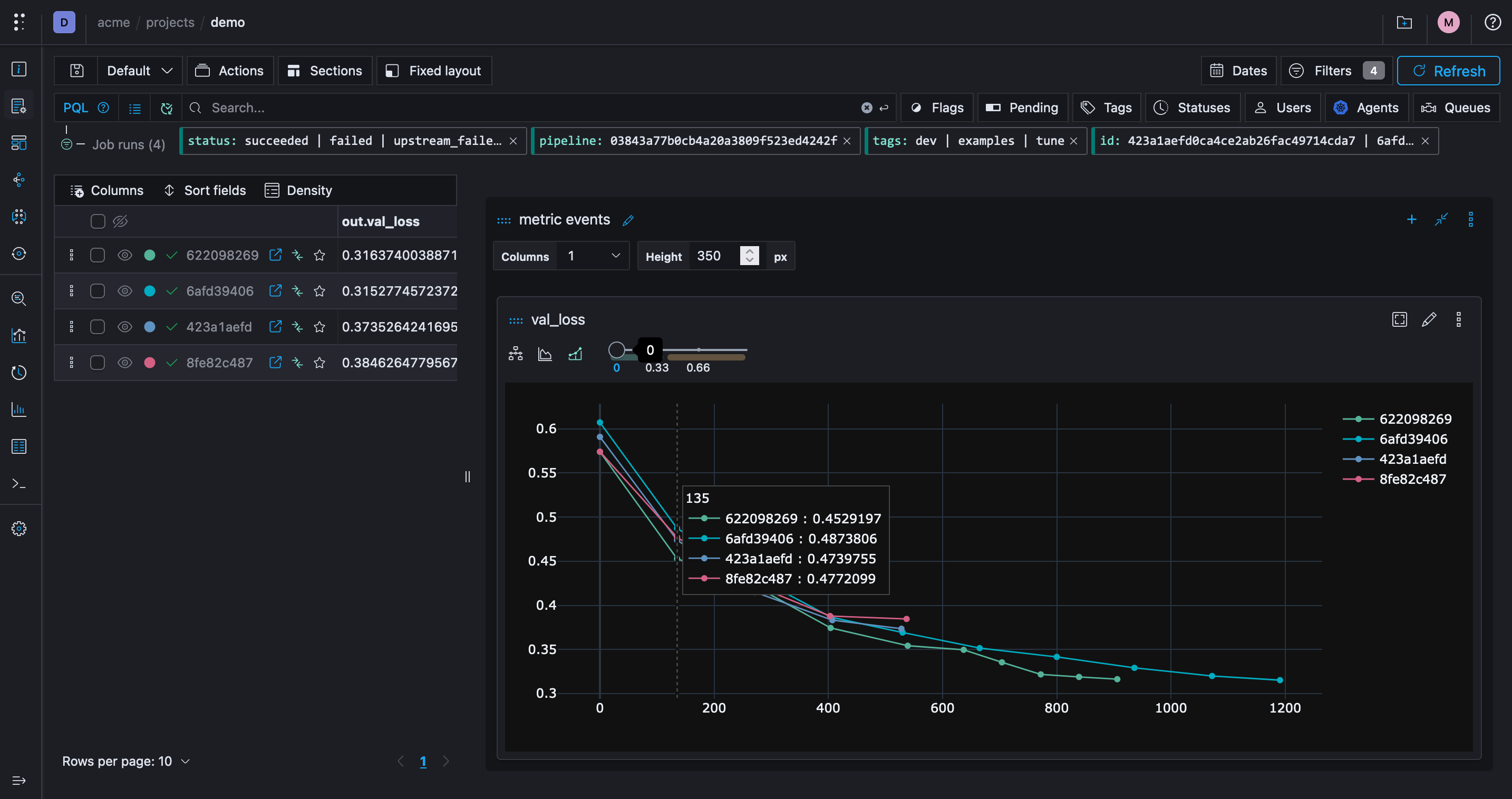
Learn what to record for each ML experiment, how to compare runs fairly, and how to log parameters, metrics, datasets, and model artifacts with Polyaxon.
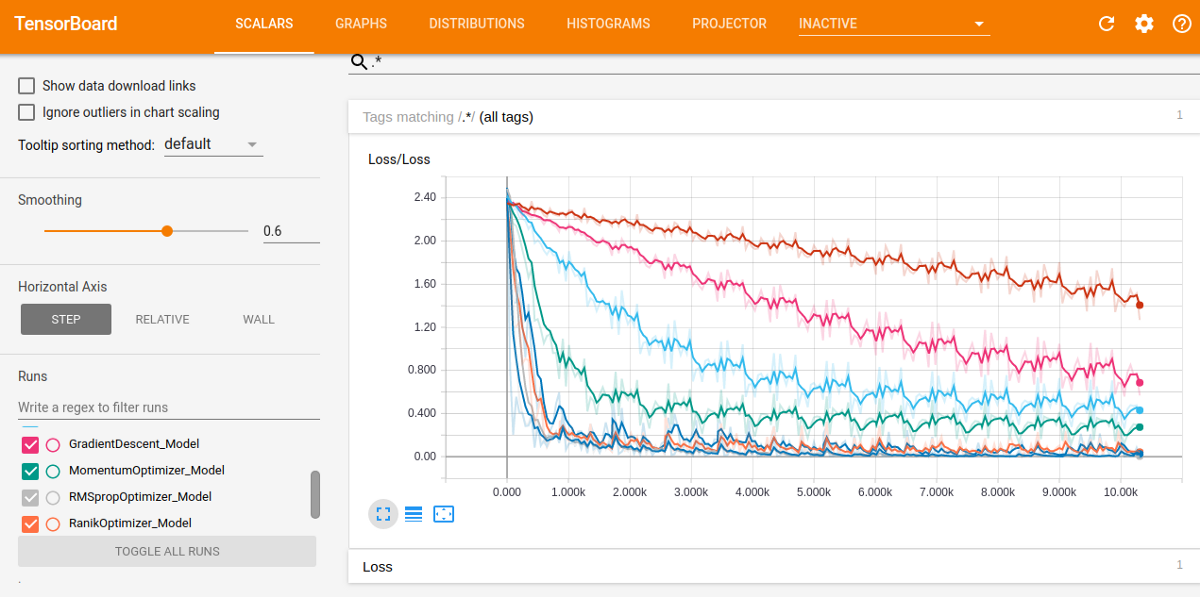
hyperparameters tuning is very important concept in order to choose the optimal hyperparameters for a given algorithm!
Control multi-cloud ML spending with normalized allocation, workload unit economics, placement policies, elastic capacity, and reproducible efficiency measurements.
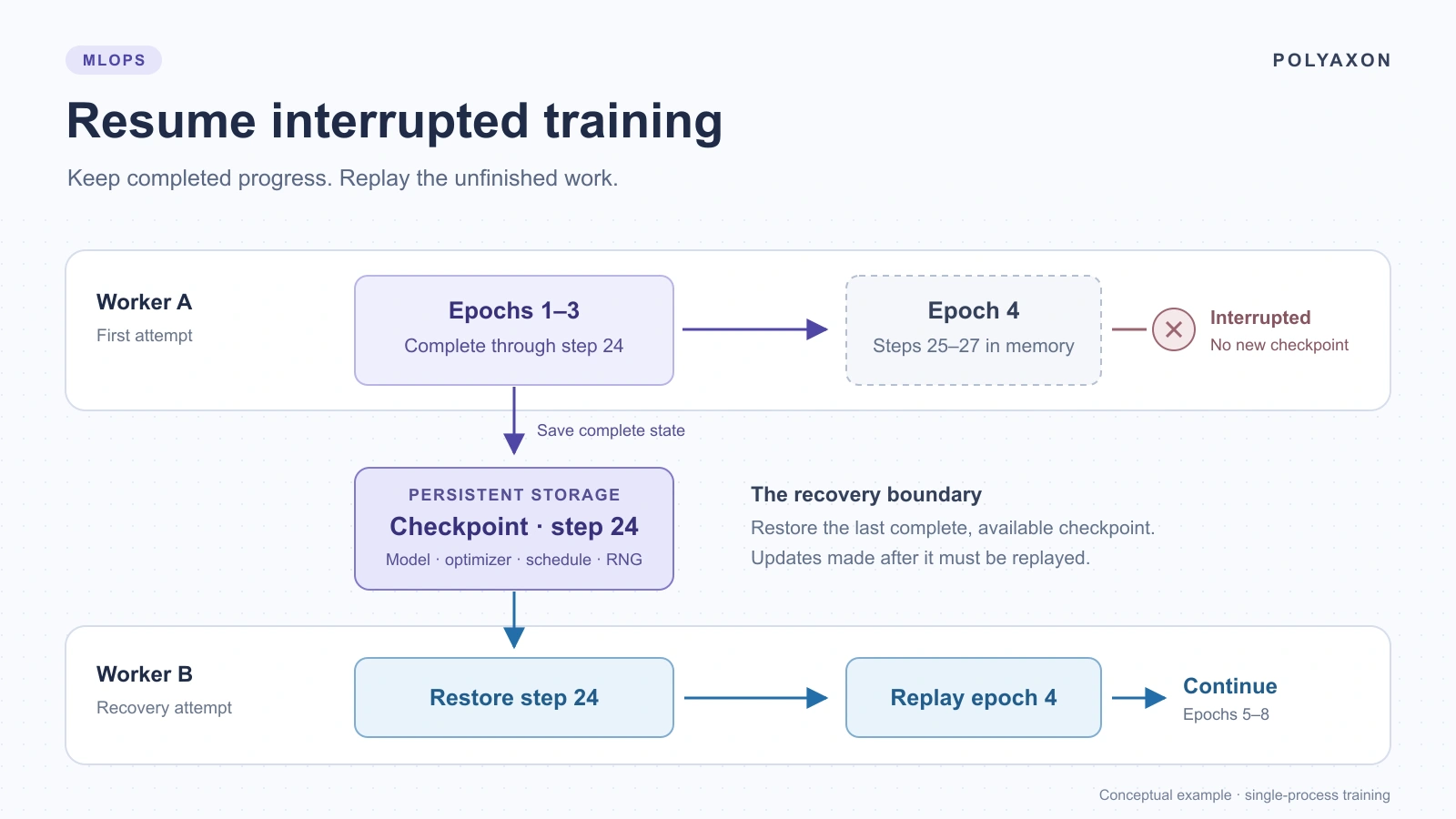
Build recoverable PyTorch training jobs with complete checkpoints, durable storage, and explicit restoration. Practice recovery locally and with Polyaxon.
Agent runtimes, Kubernetes isolation, and parallel coding workflows.
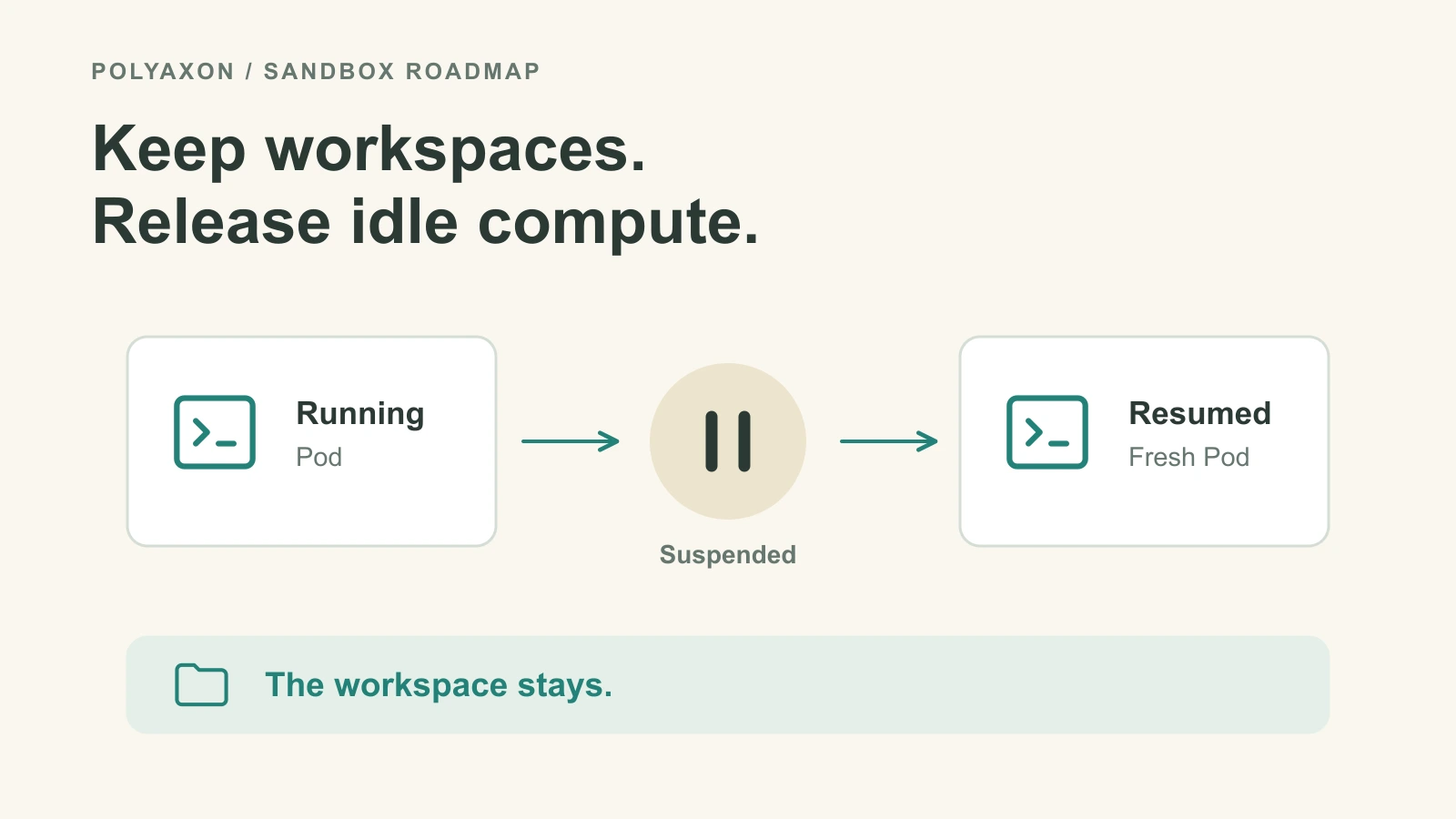
Our plans for persistent sandbox workspaces, suspend/resume, activity-aware idle suspension, and ready pools on Kubernetes—and where AX and Substrate differ.
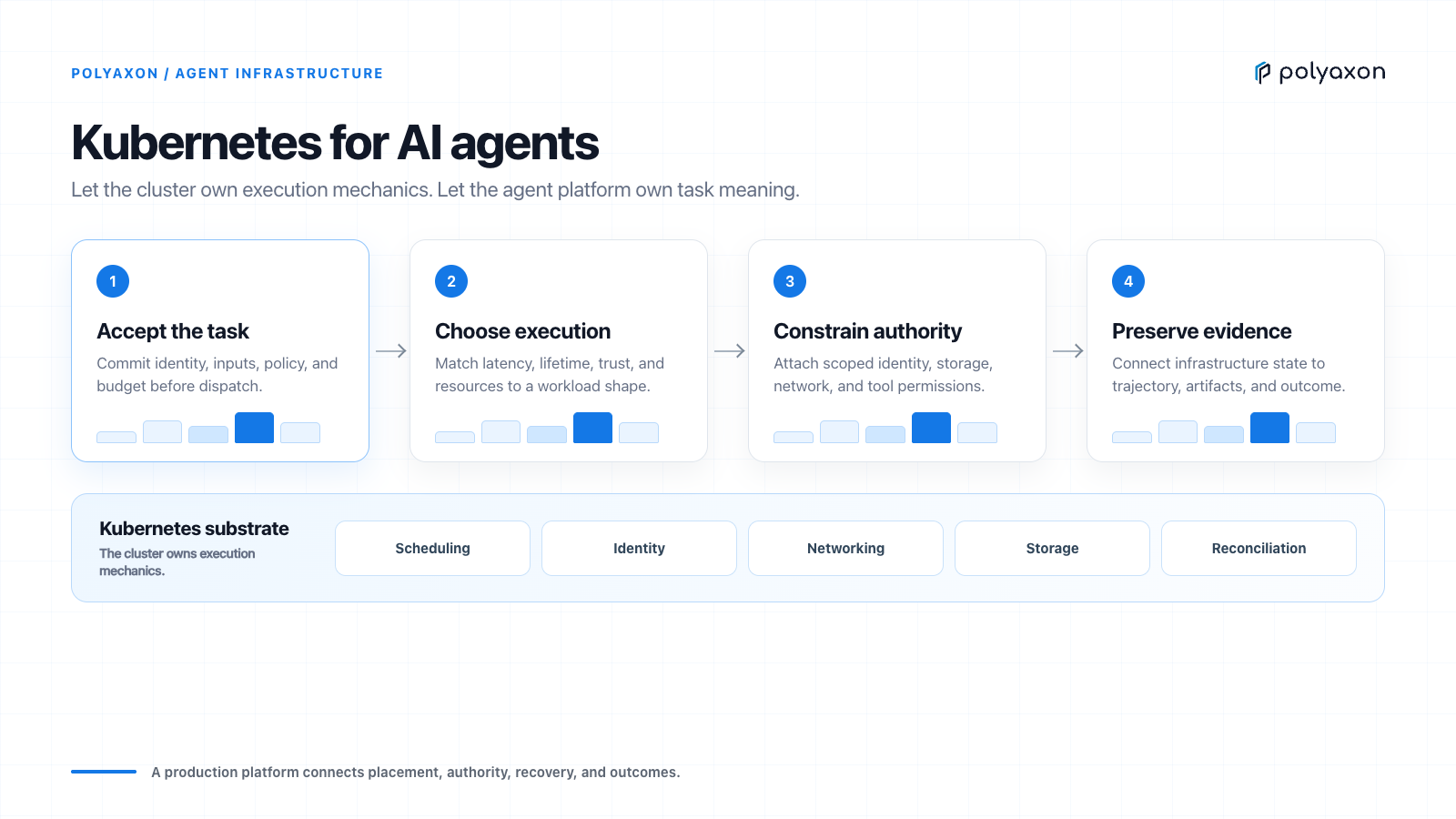
Design a Kubernetes platform for AI agents with clear workload boundaries, durable state, scoped access, resource controls, and end-to-end evidence.
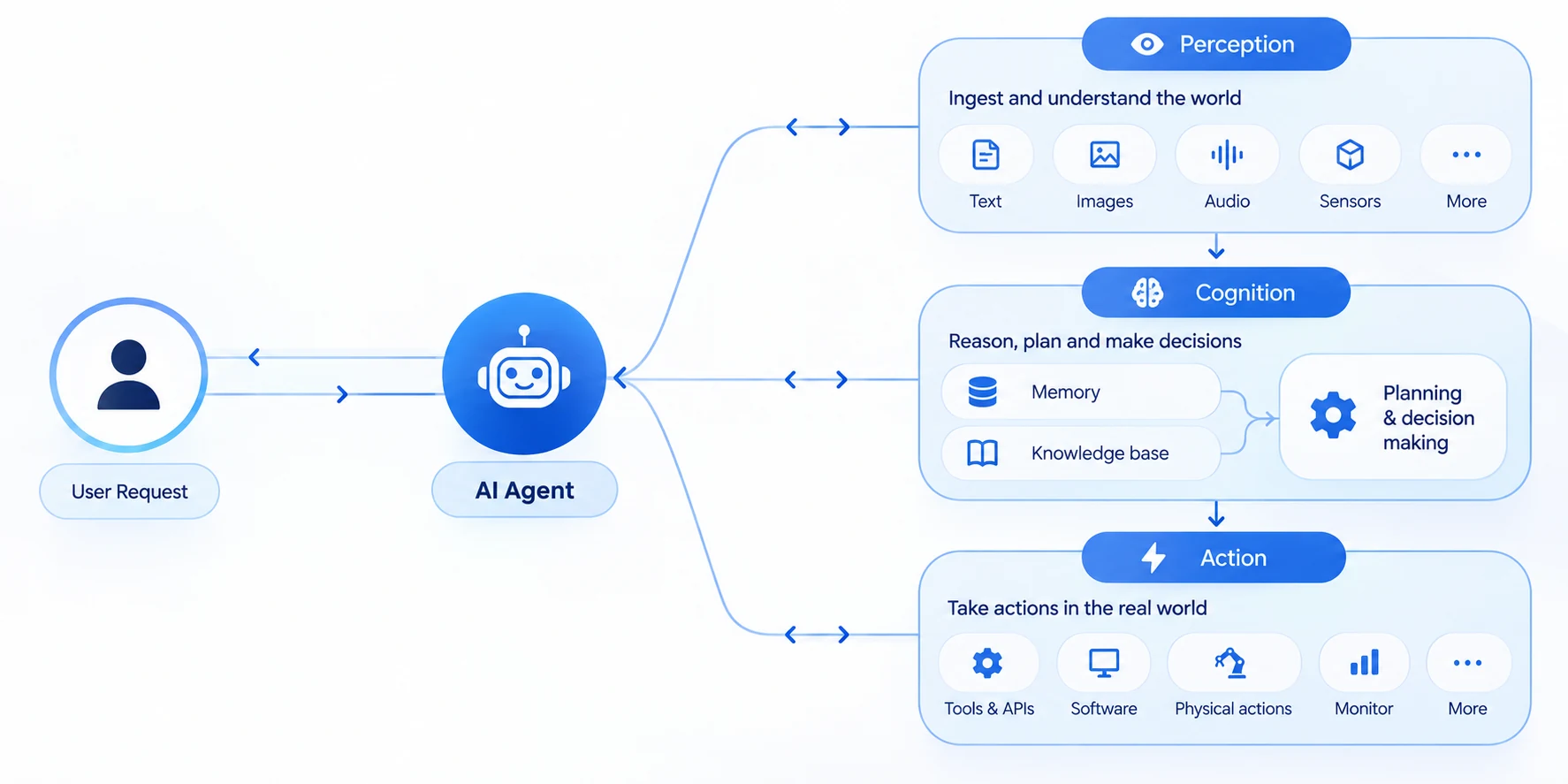
Map agent architectures to Polyaxon jobs, services, and DAGs, with concrete workload configuration and a repeatable architecture-comparison workflow.
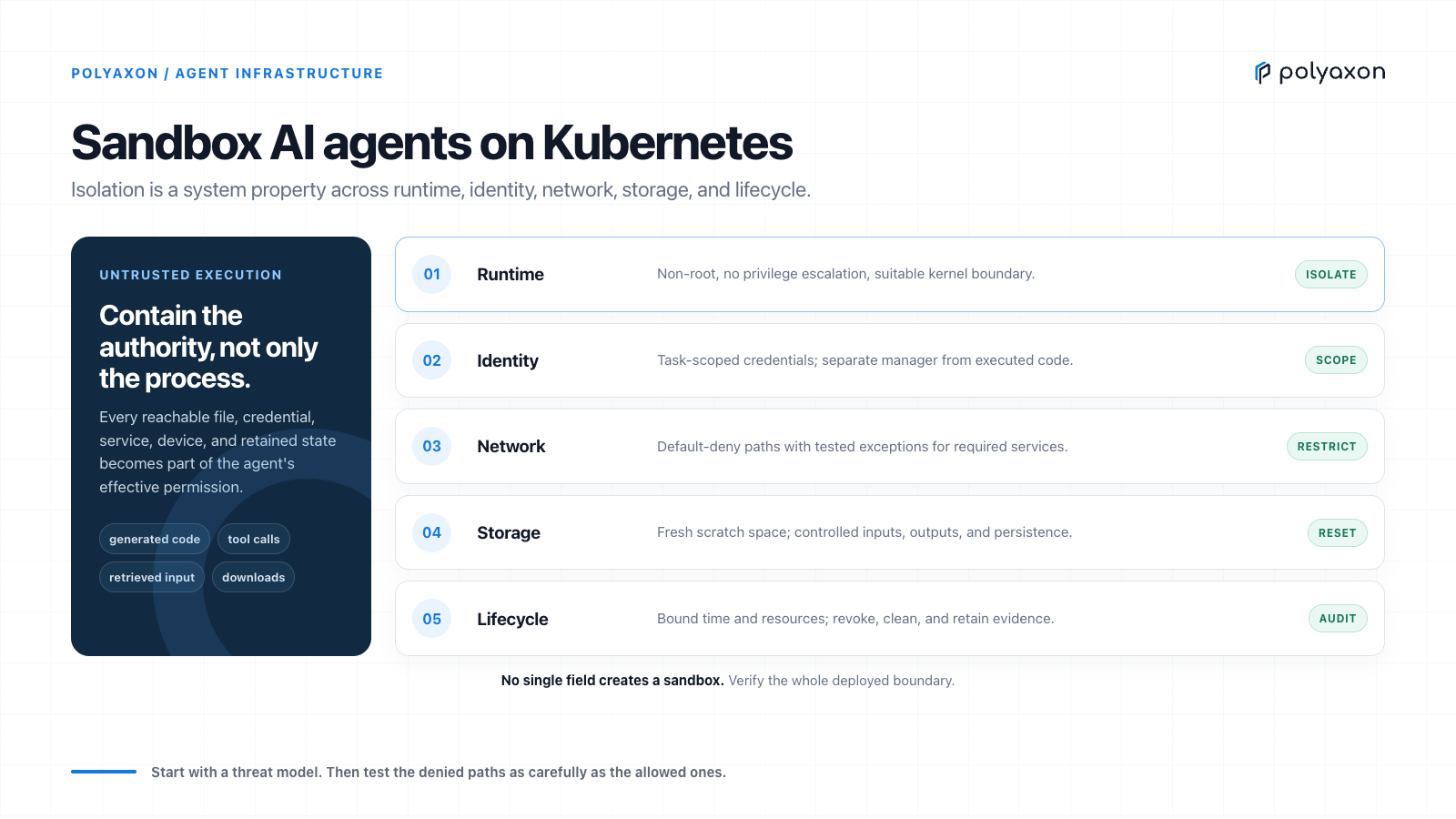
Design isolated Kubernetes execution for AI agents with a threat model, stronger runtimes, scoped identity, controlled egress, bounded storage, and auditable cleanup.

Run parallel coding agents in separate Polyaxon workspaces, collect candidate patches, evaluate independently, and merge only reviewed changes.
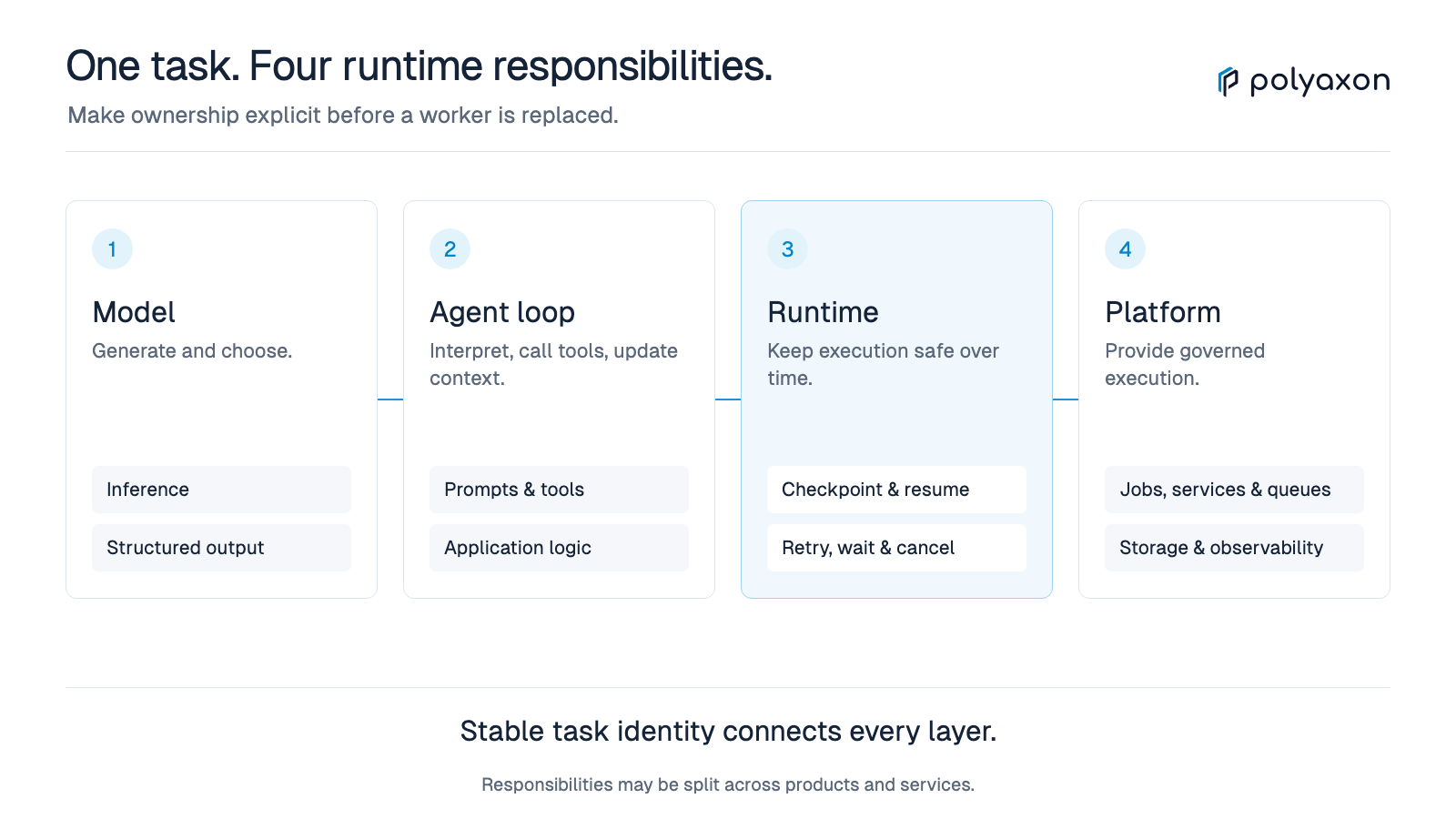
Design agent execution around durable state, safe tool retries, approval waits, and recovery, with clear responsibilities for Polyaxon and your agent framework.
Operate dynamic AI agent plans with Polyaxon execution, explicit policy checks, cumulative budgets, durable request state, and independent evaluation.
Evaluate, observe, and improve LLM applications in production.
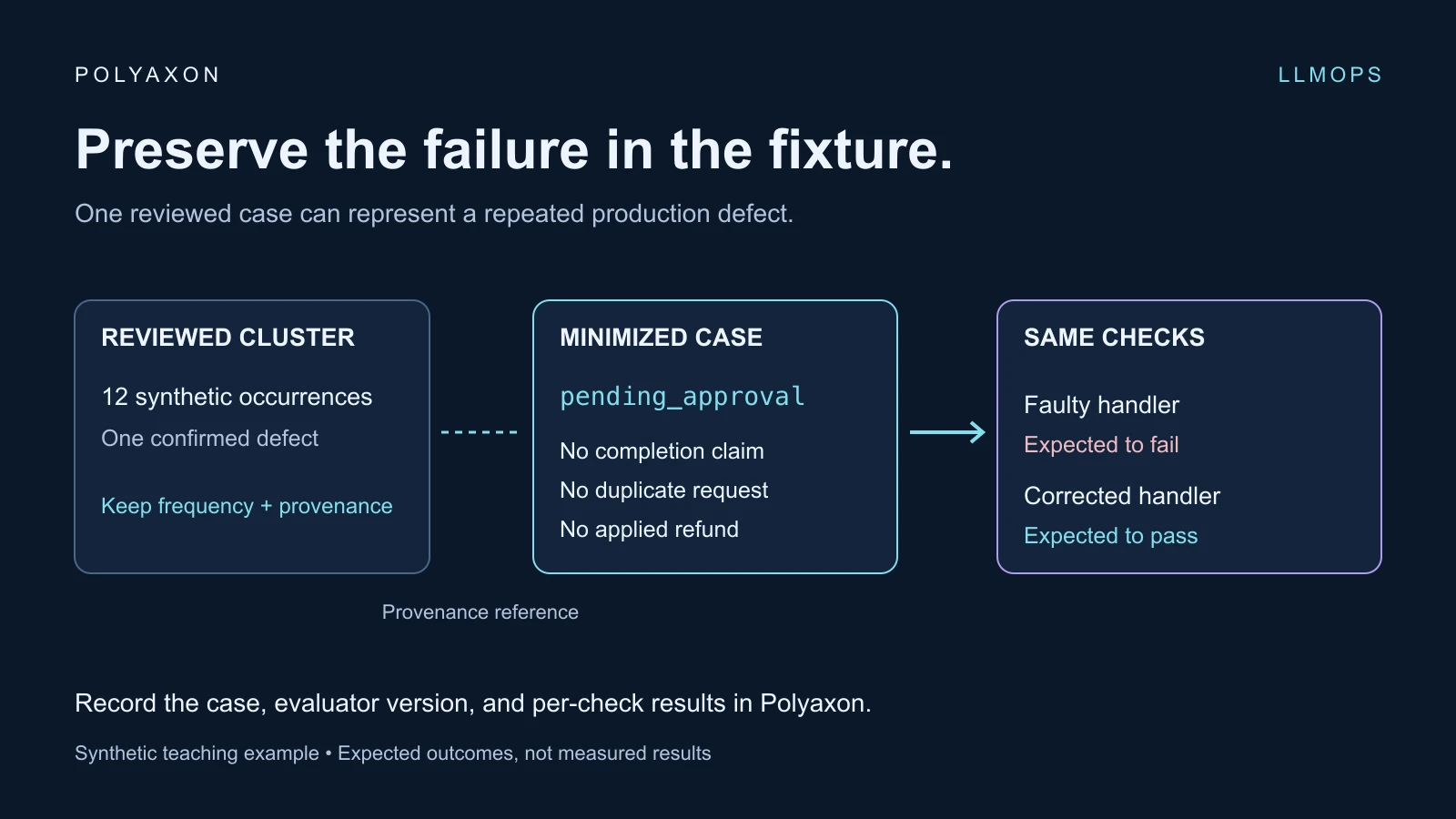
Turn a failure cluster into a reviewed regression case, preserve the causal tool response, and record baseline and candidate checks with Polyaxon.
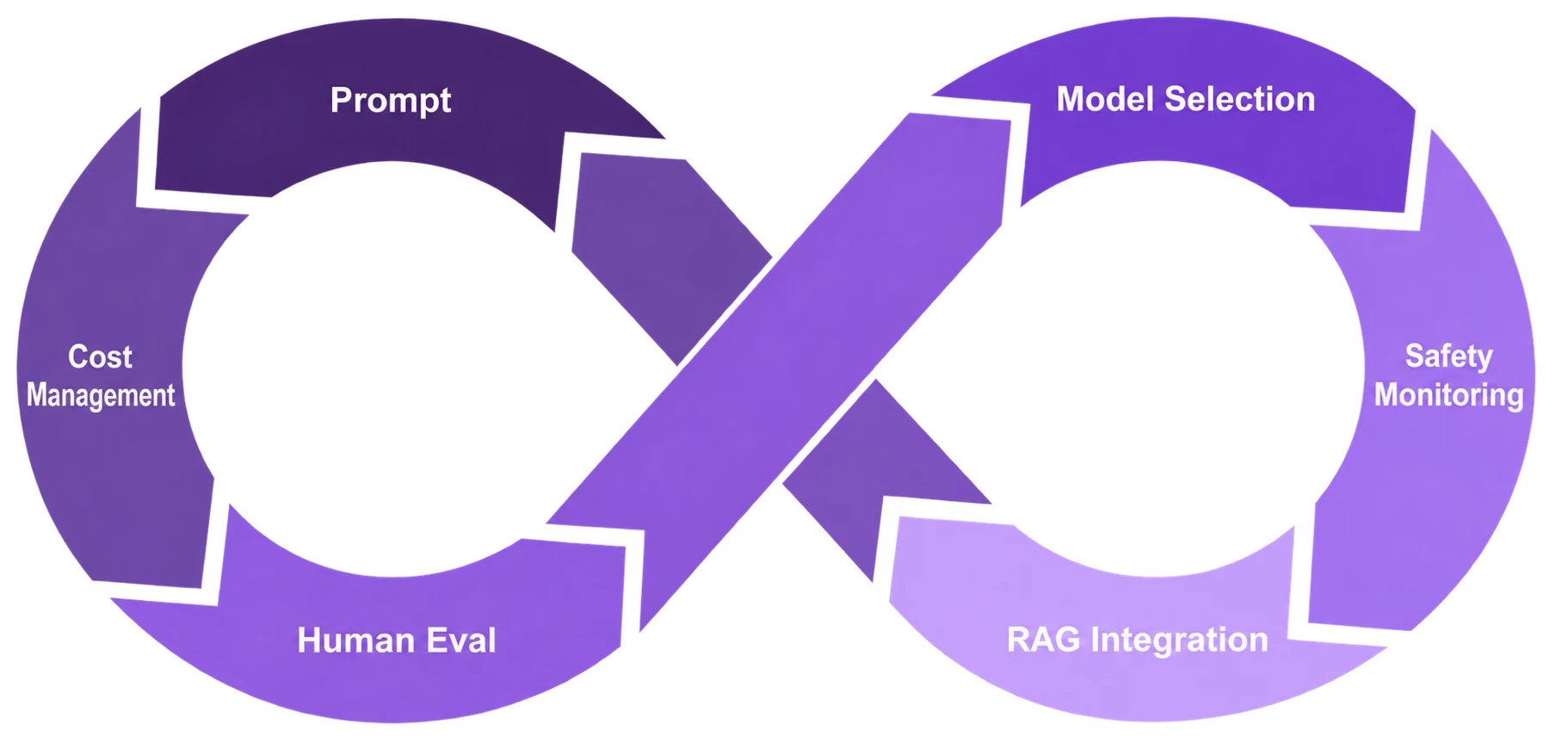
LLMOps applies repeatable development, evaluation, deployment, and observability practices to production LLM applications and AI agents.
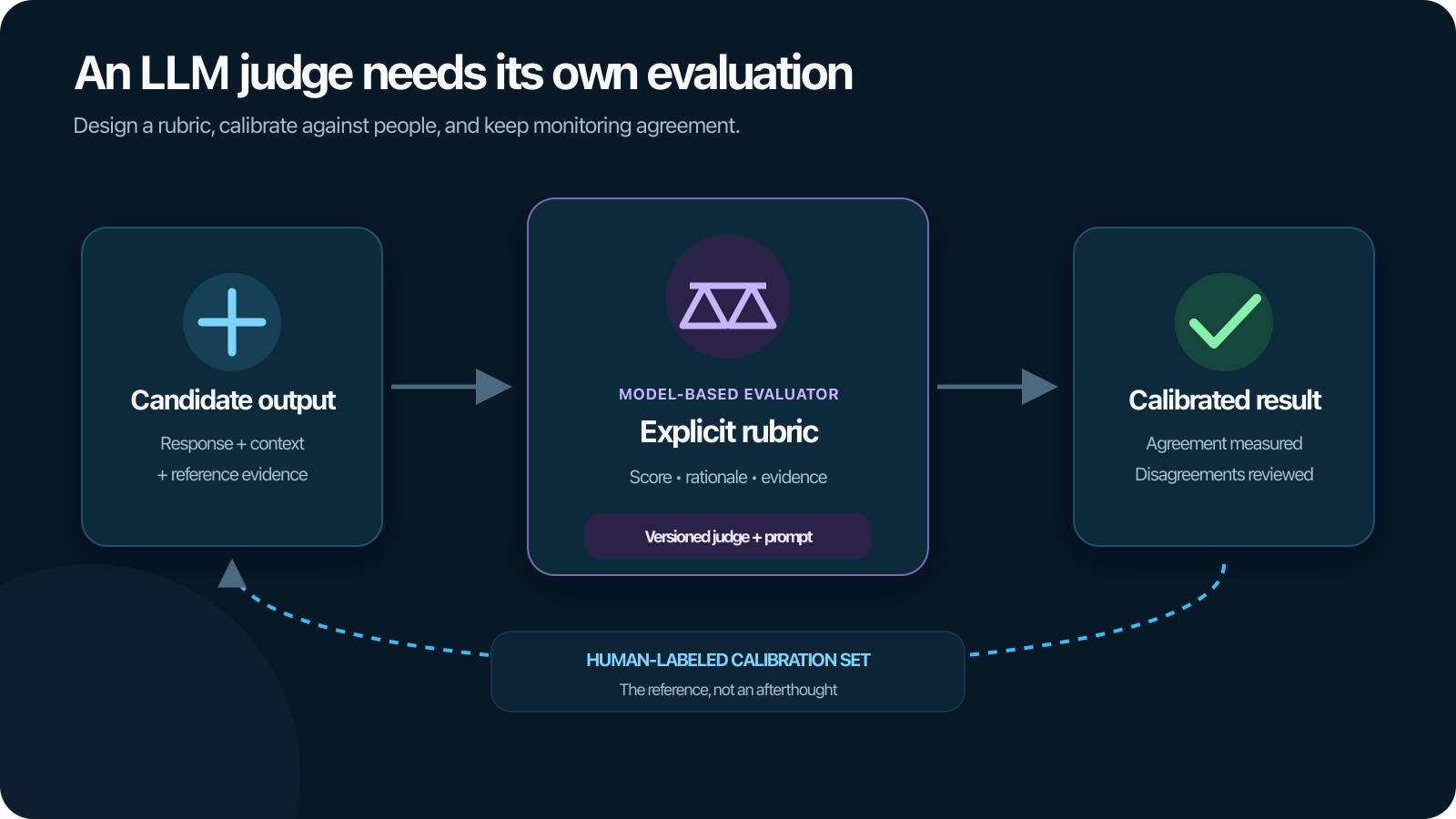
Use LLMs as scalable evaluators without treating them as ground truth: design clear rubrics, calibrate against humans, and monitor bias and drift.
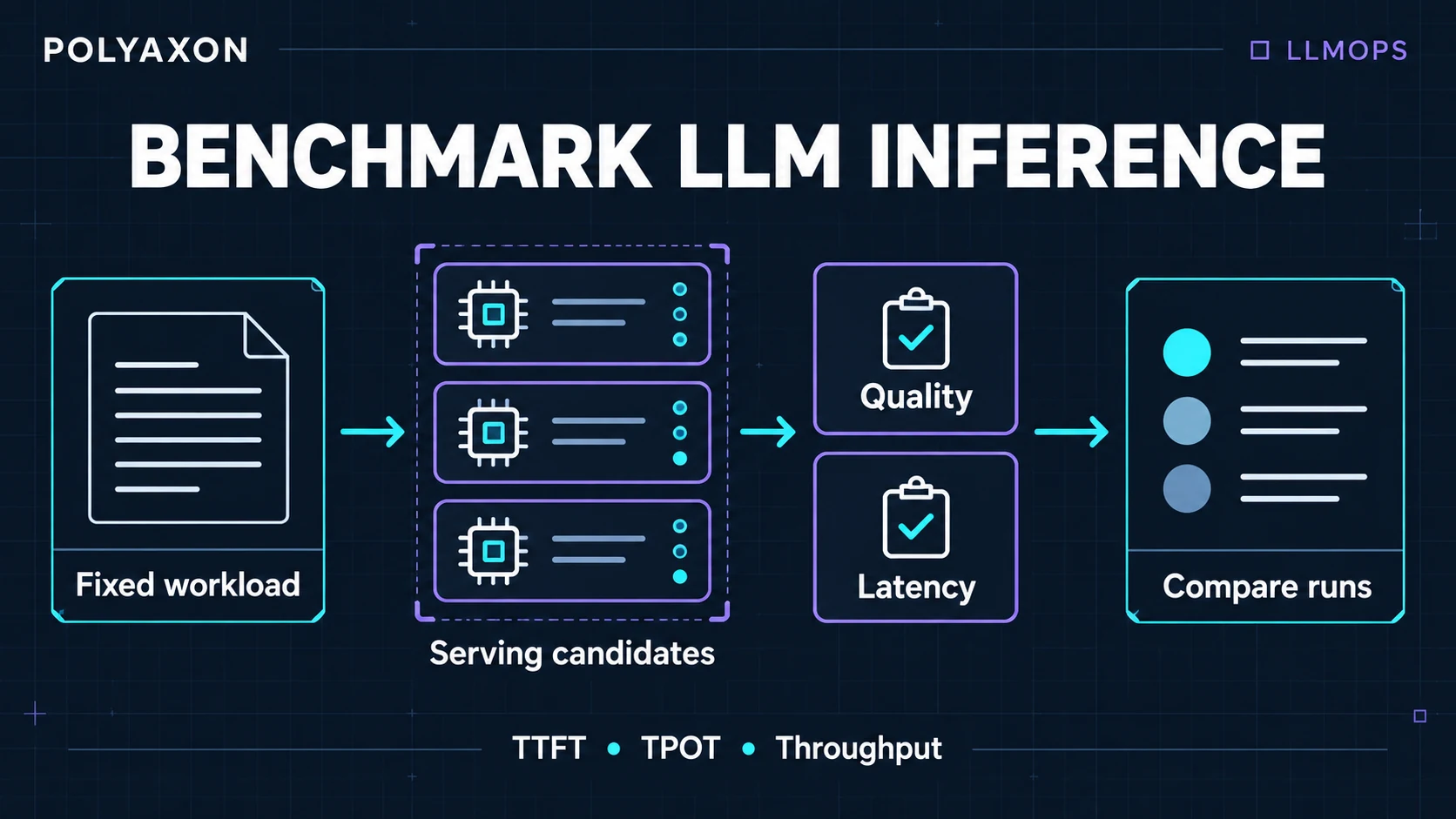
Compare inference optimizations against a fixed workload, latency limits, and quality checks, with benchmark configurations and results tracked in Polyaxon.
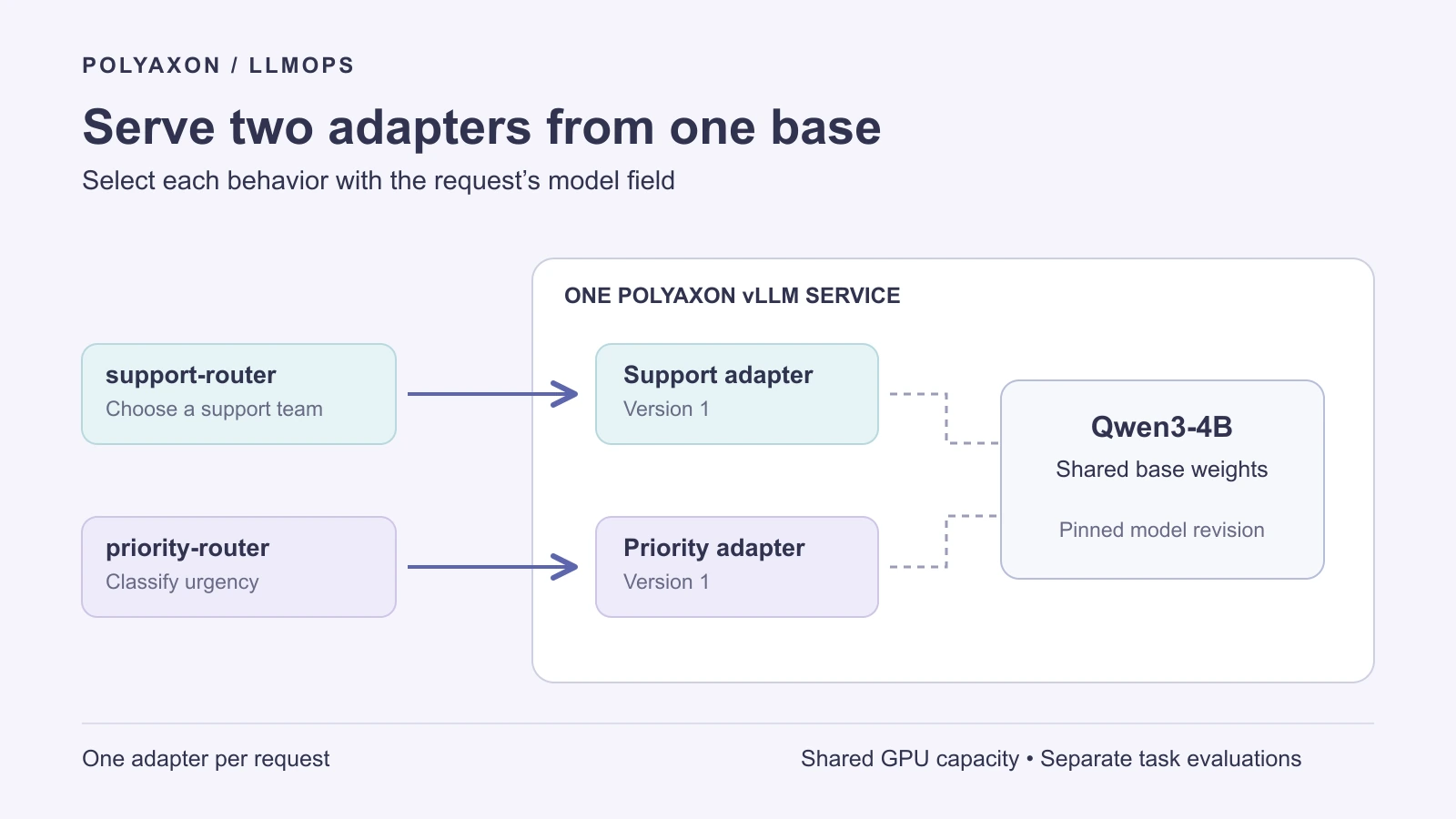
Deploy two task-specific LoRA adapters over one Qwen base model, select them by name, and measure quality and shared GPU capacity with Polyaxon.
Build reliable data pipelines and preserve the evidence behind your models.
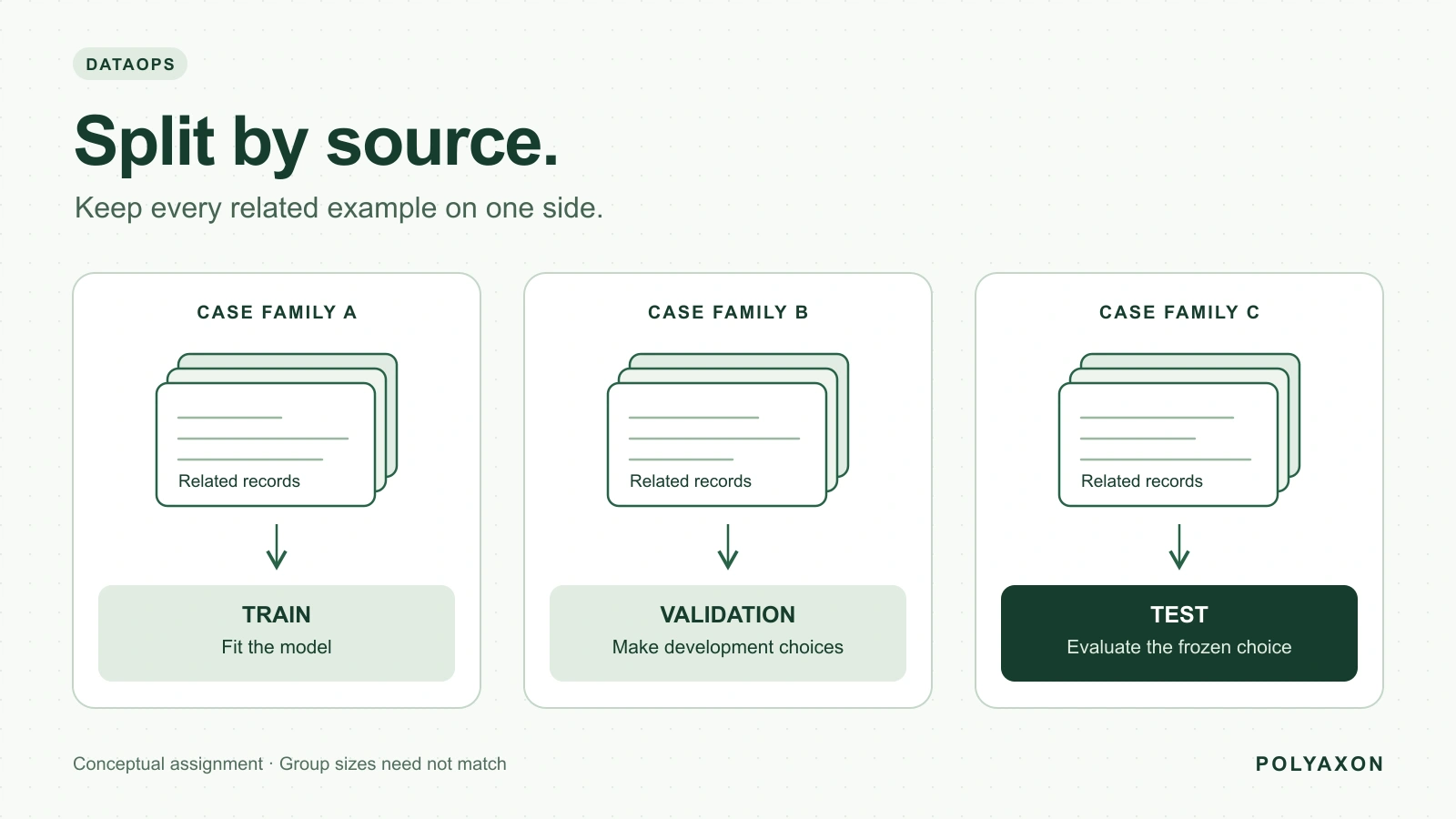
Choose evaluation boundaries, keep related examples together, audit duplicate overlap, and retain reproducible split manifests for ML and LLM experiments.
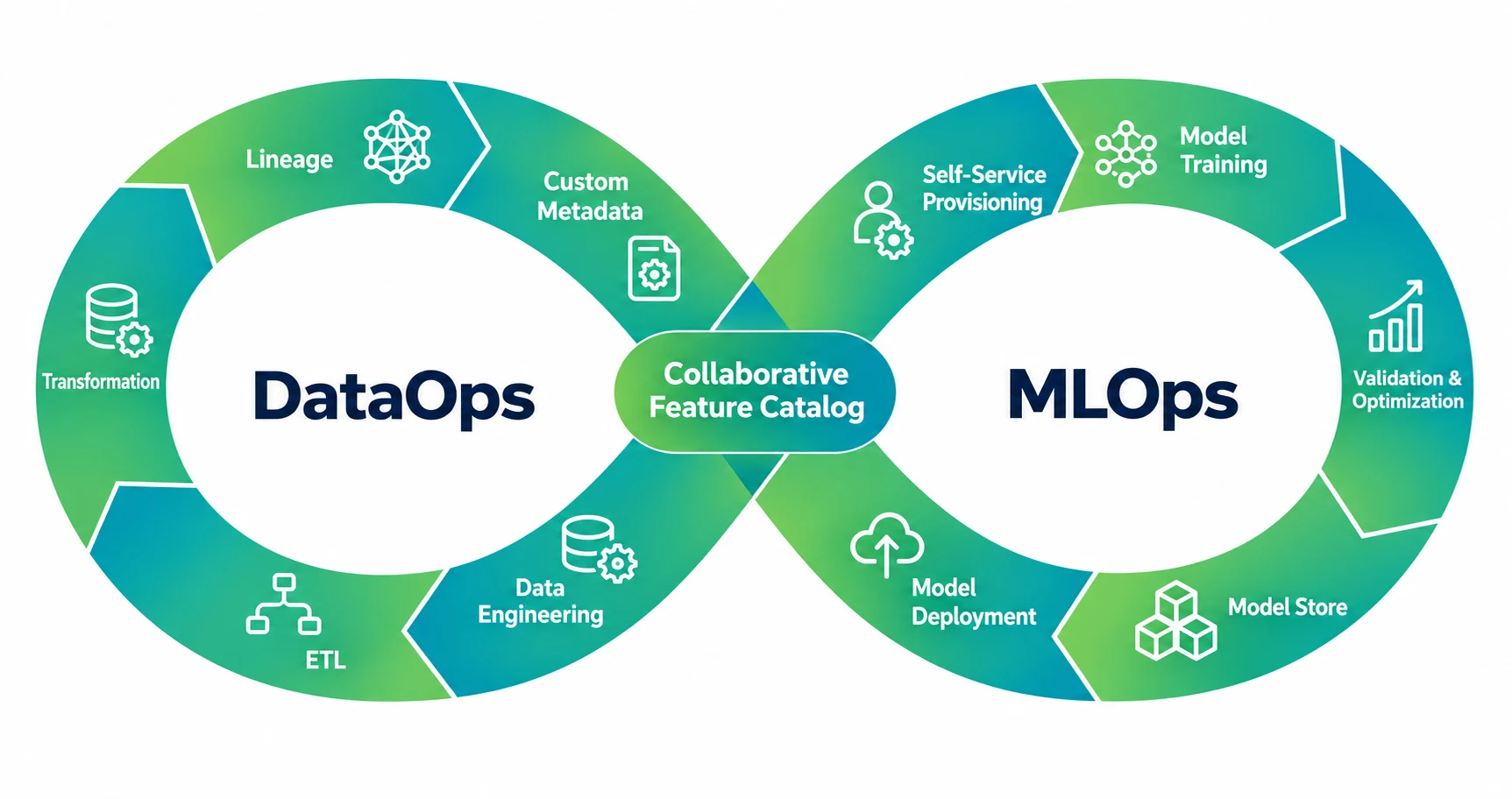
DataOps delivers reliable data; MLOps delivers reliable ML systems. Compare their responsibilities, checks, and handoffs using a practical example.
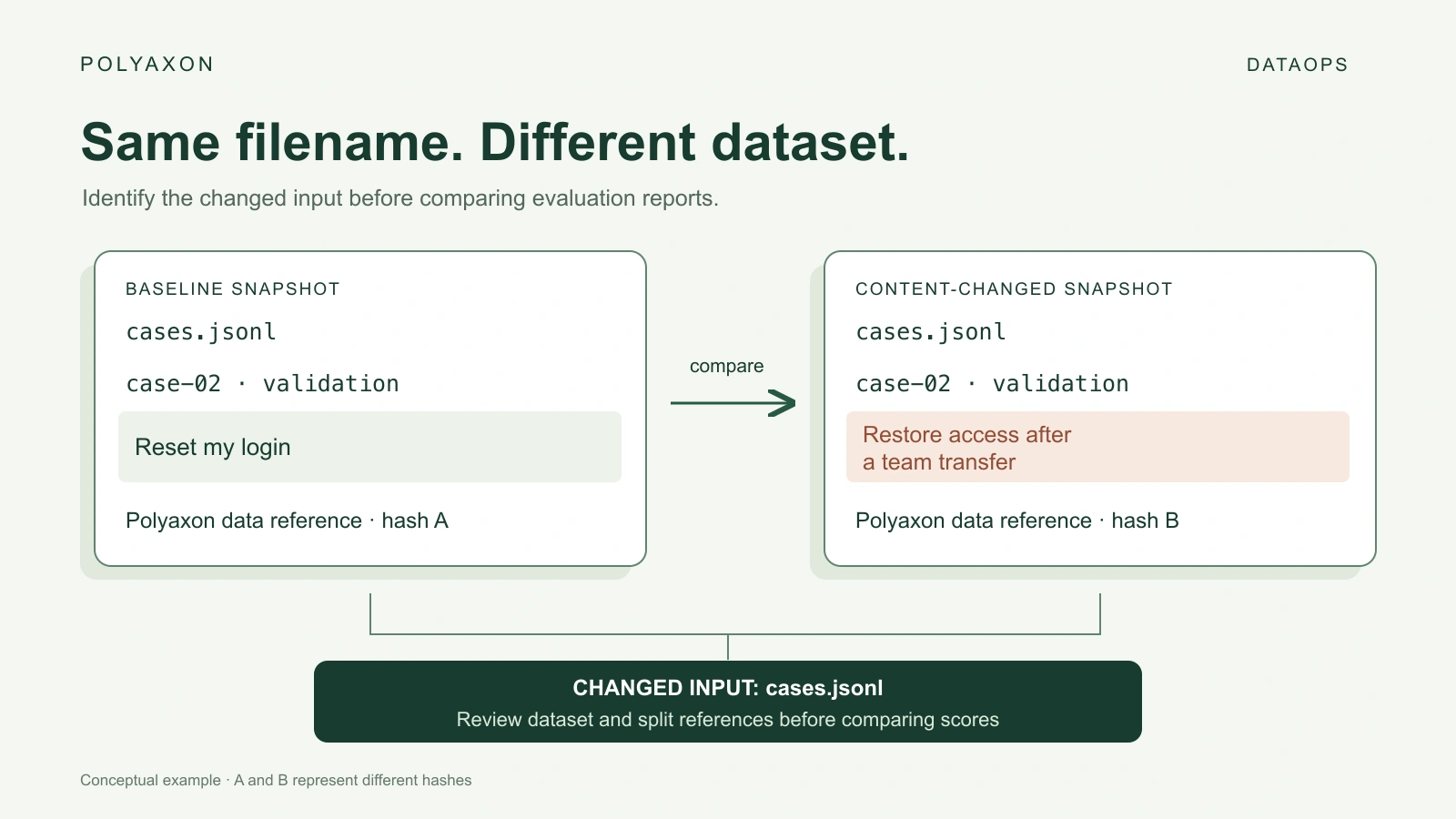
Use Polyaxon data references, artifact logging, and registered versions to retain the dataset and split behind each evaluation.
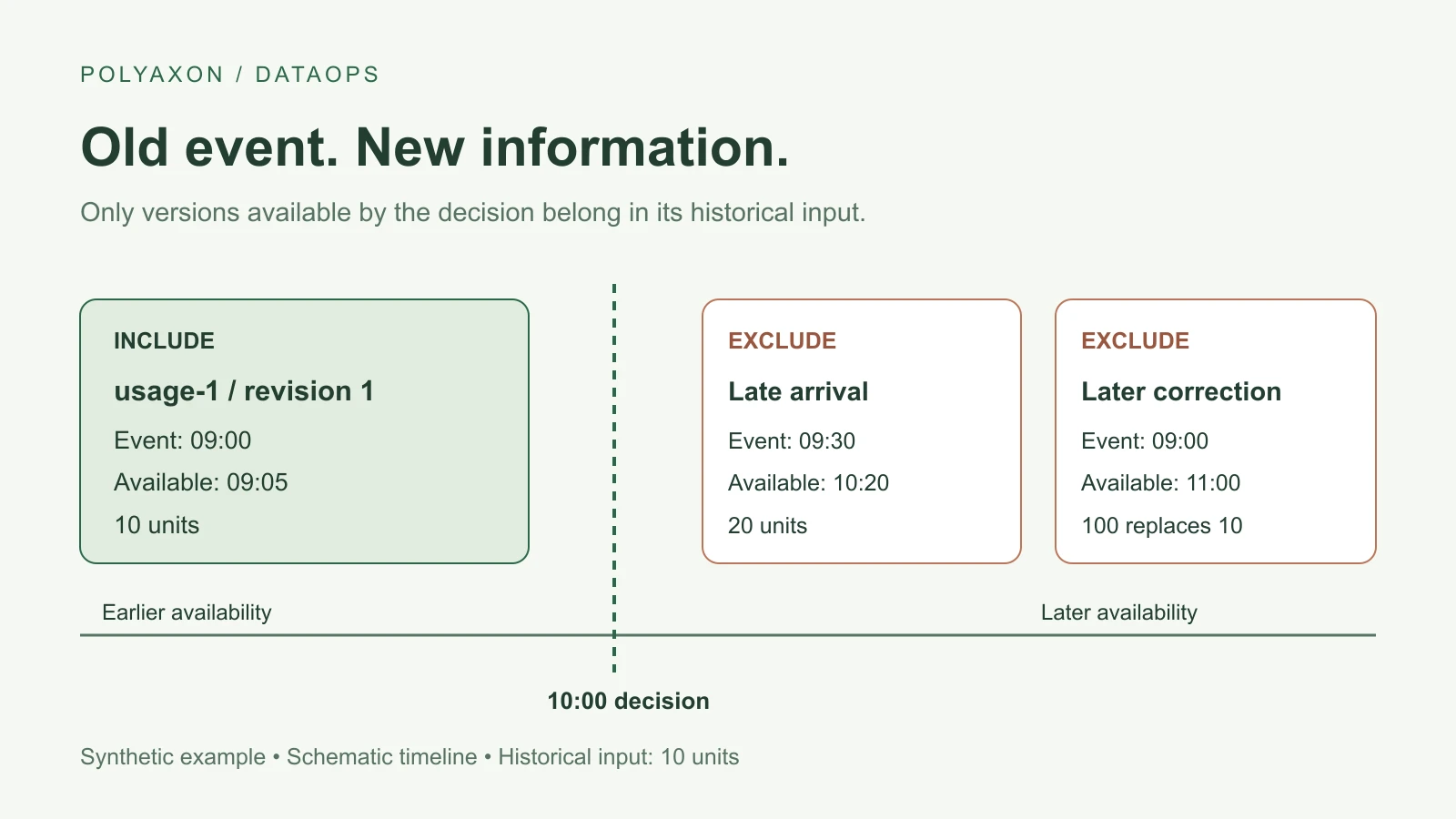
Reconstruct evaluation features using event time and actual availability time, excluding late arrivals and later corrections while preserving the source versions in Polyaxon.
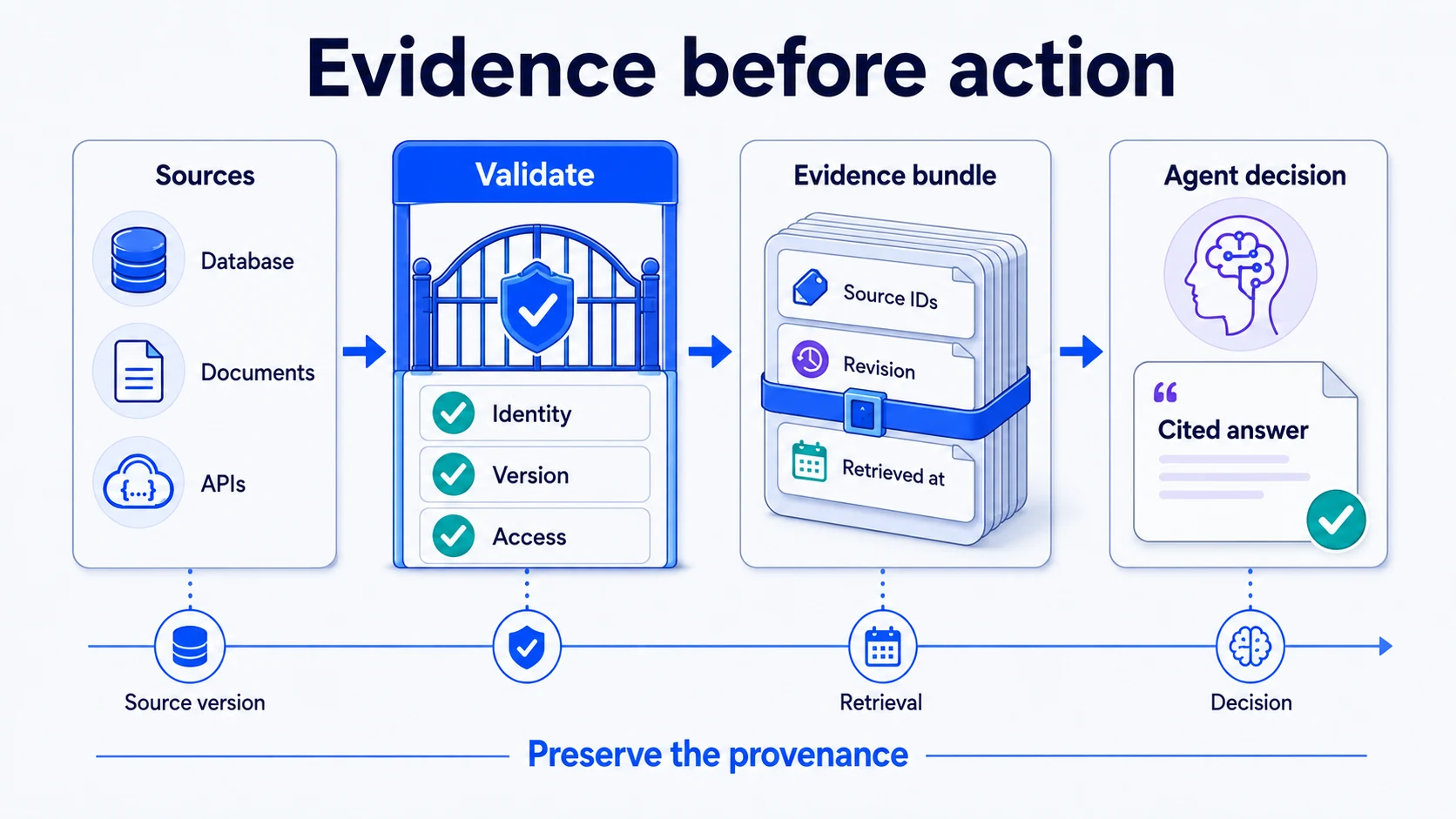
Design agent data paths that preserve source identity, versions, permissions, freshness, retrieval evidence, and verification results.
The latest guides, tutorials, and product updates.
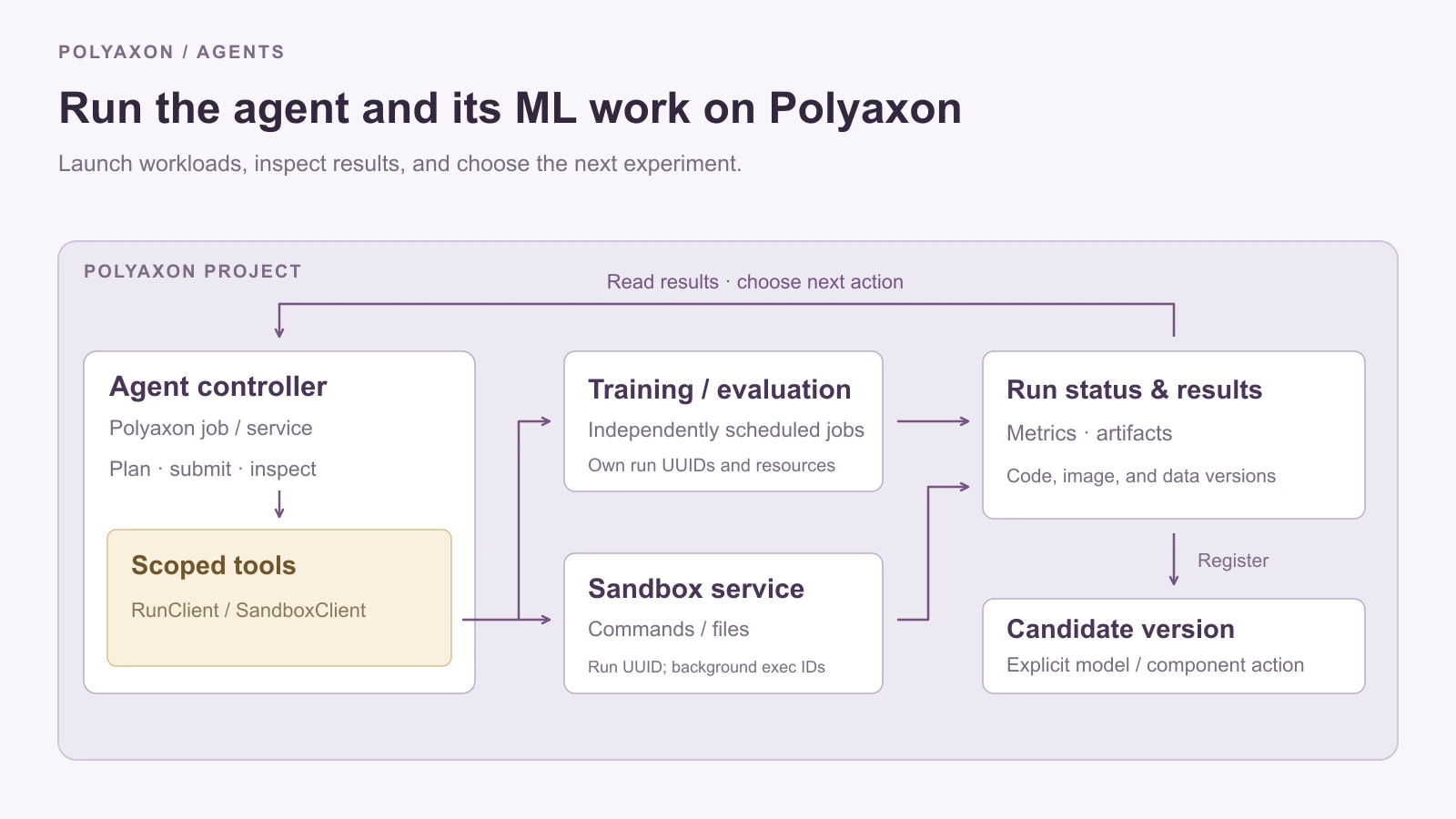
Host an agent controller on Polyaxon to launch training and evaluation jobs, inspect results, and choose the next experiment.
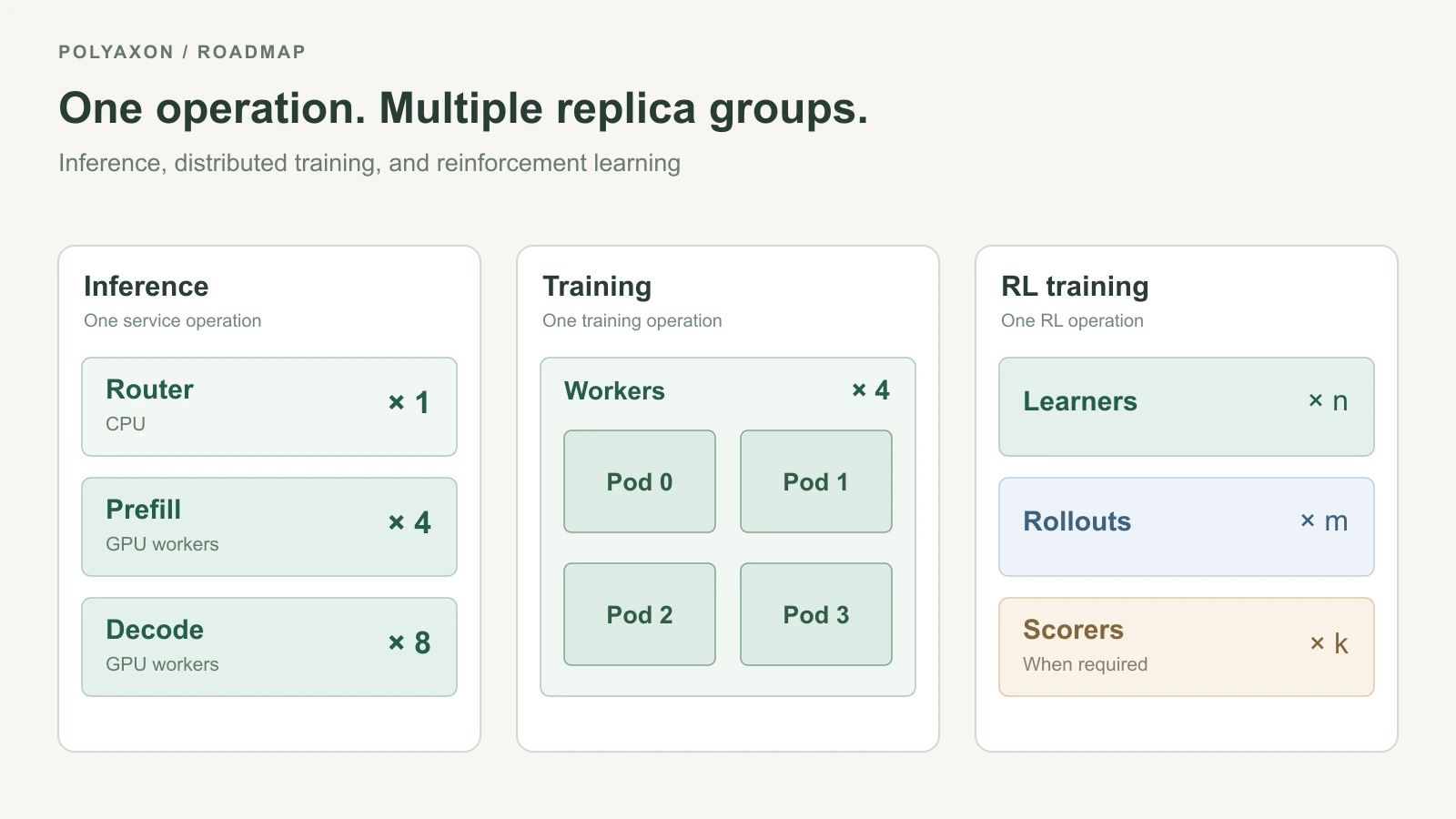
Polyaxon's roadmap for named replica groups, heterogeneous services, coordinated training, and RL workloads across Kubernetes scheduling backends.
Find the first failed or stalled training rank, preserve Kubernetes evidence, and use PyTorch collective diagnostics in Polyaxon.
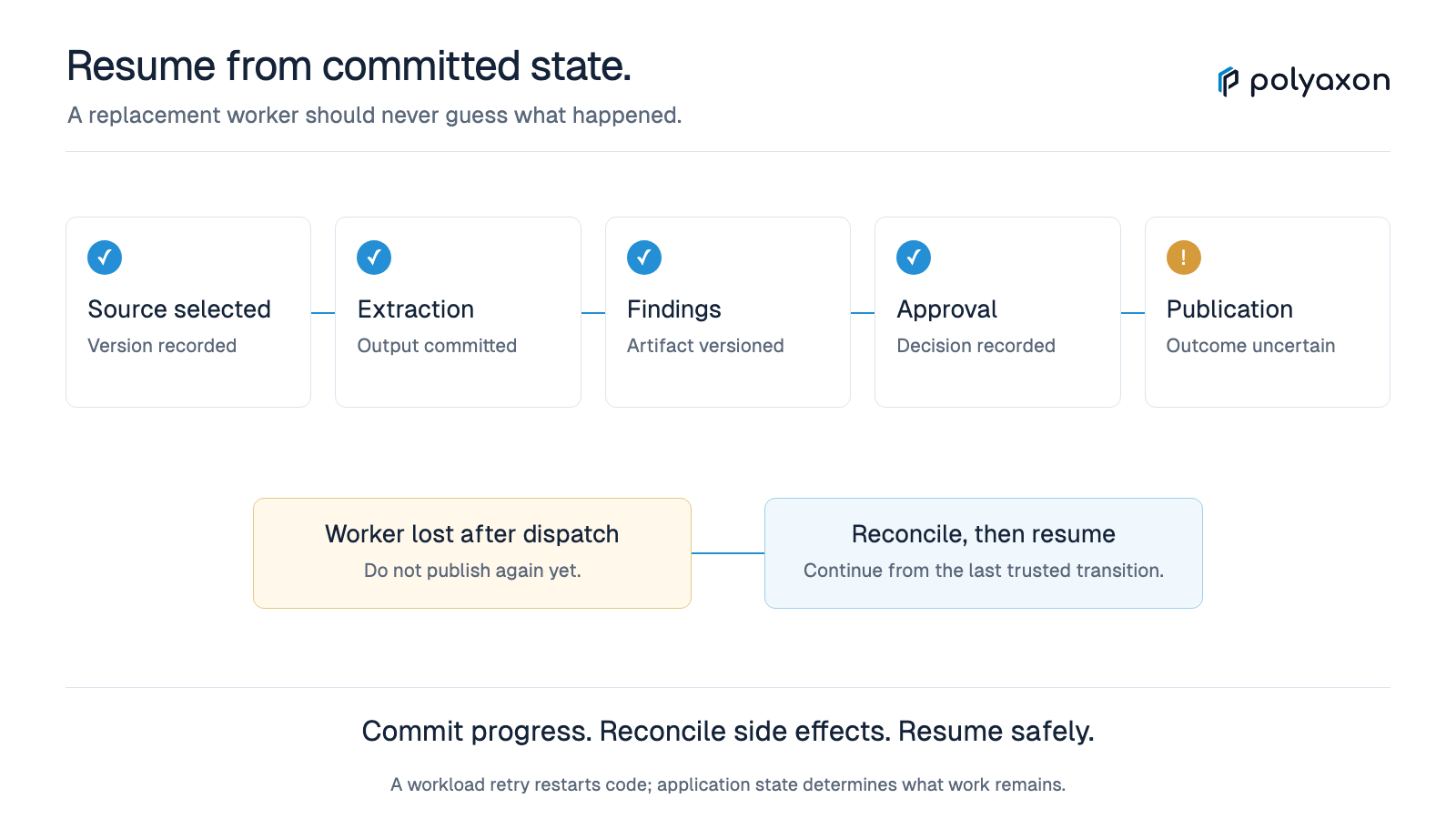
Build agent recovery around committed checkpoints, versioned inputs, safe side effects, and approval state so interrupted tasks can continue reliably.
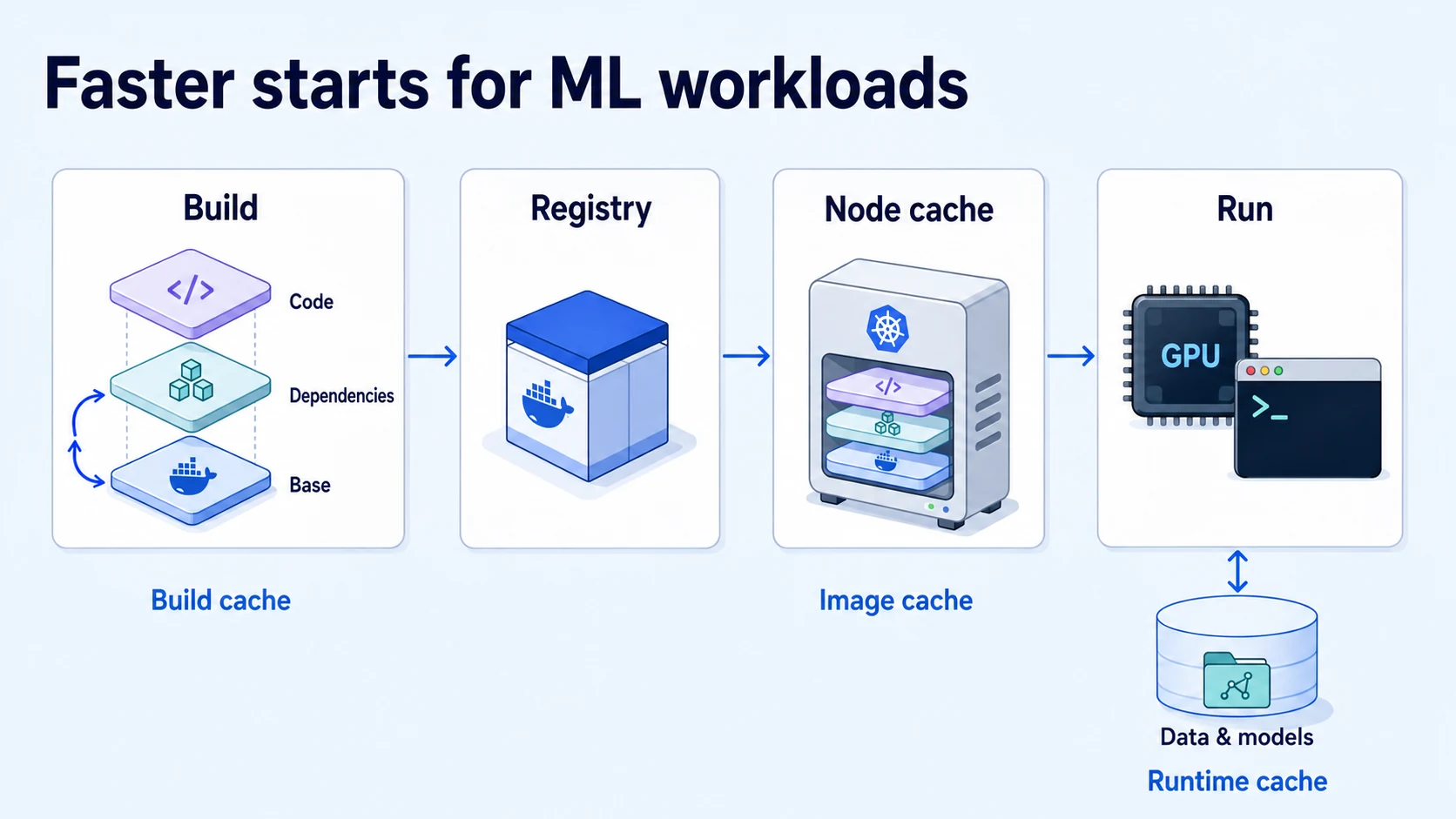
Reduce container build and startup time for ML jobs with reusable dependency layers, persistent build caches, and deliberate image and model caching.
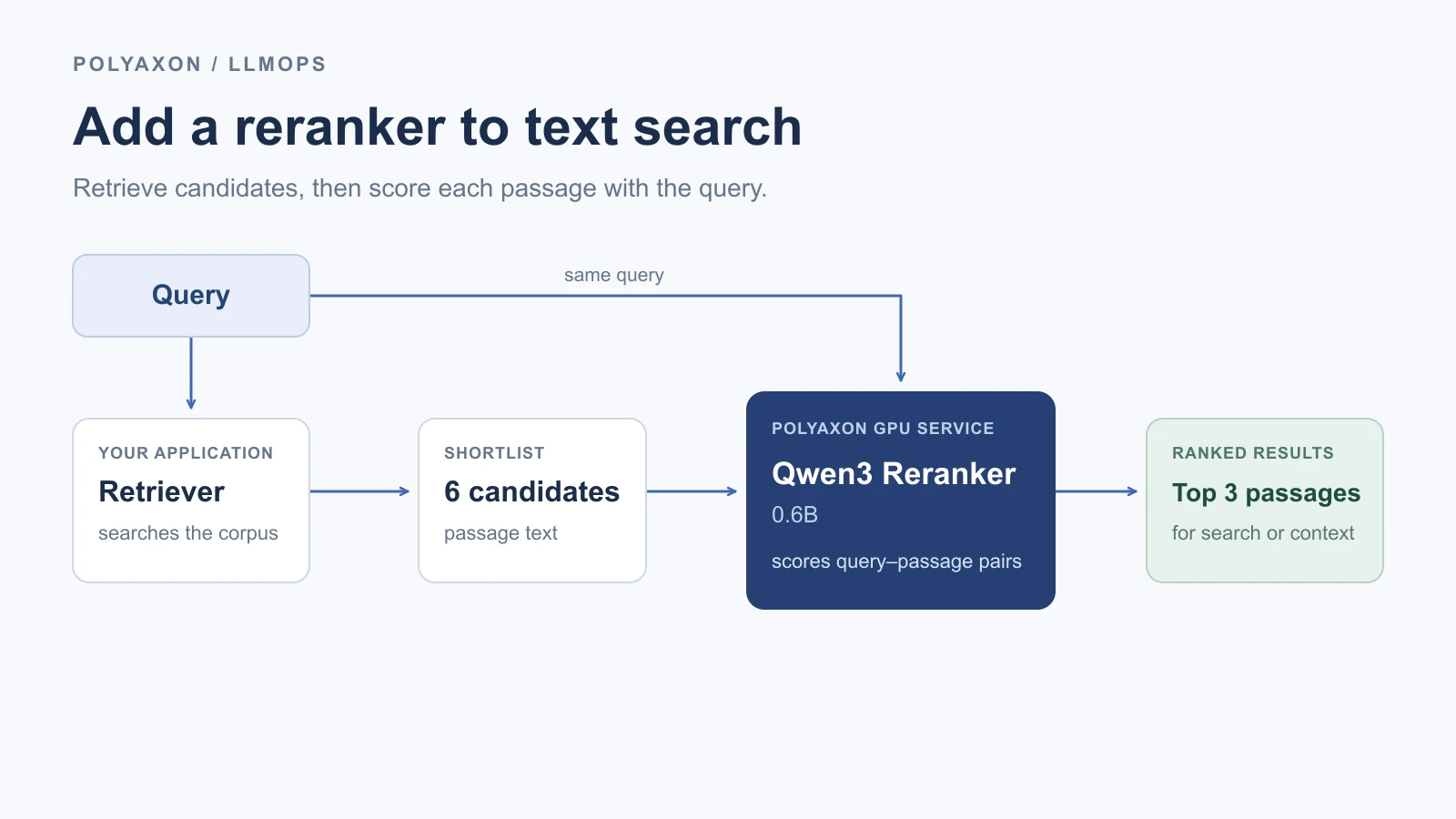
Deploy Qwen3-Reranker-0.6B as a Polyaxon GPU service, rerank a text-search shortlist, and compare relevance against added latency.

Compare six experiments at the same epoch, zoom across metric charts together, and configure tooltips with multiple live metric columns and run parameters.
Use Kubernetes Job success policies for chosen indexes or success counts, preserve durable results, and distinguish them from Polyaxon metric early stopping.

Trace a model back to its data and transformations, find consumers of a changed dataset, and inspect recorded inputs and outputs in Polyaxon.
Use topology spread constraints for inference availability, understand minDomains and GPU capacity, and preserve placement intent in Polyaxon.

Deploy TorchTPU through a simplified Polyaxonfile, train with eight PyTorch workers on four TPU7x chips, and track metrics and model weights.
Combine CPU Manager eligibility, full-core allocation, and Topology Manager policy, then compare CPU/GPU workloads with Polyaxon.

Enable sandbox execution on a Polyaxon service, reuse its image and compute settings, run commands through the SDK, and preserve results before cleanup.

Save a Polyaxon comparison's query, columns, sorting and charts, reopen it for later runs, and share reusable searches and dashboards with your team.

Build an attributable model release record, reuse unchanged pipeline outputs, and recompute reports and decisions when their dependencies change.
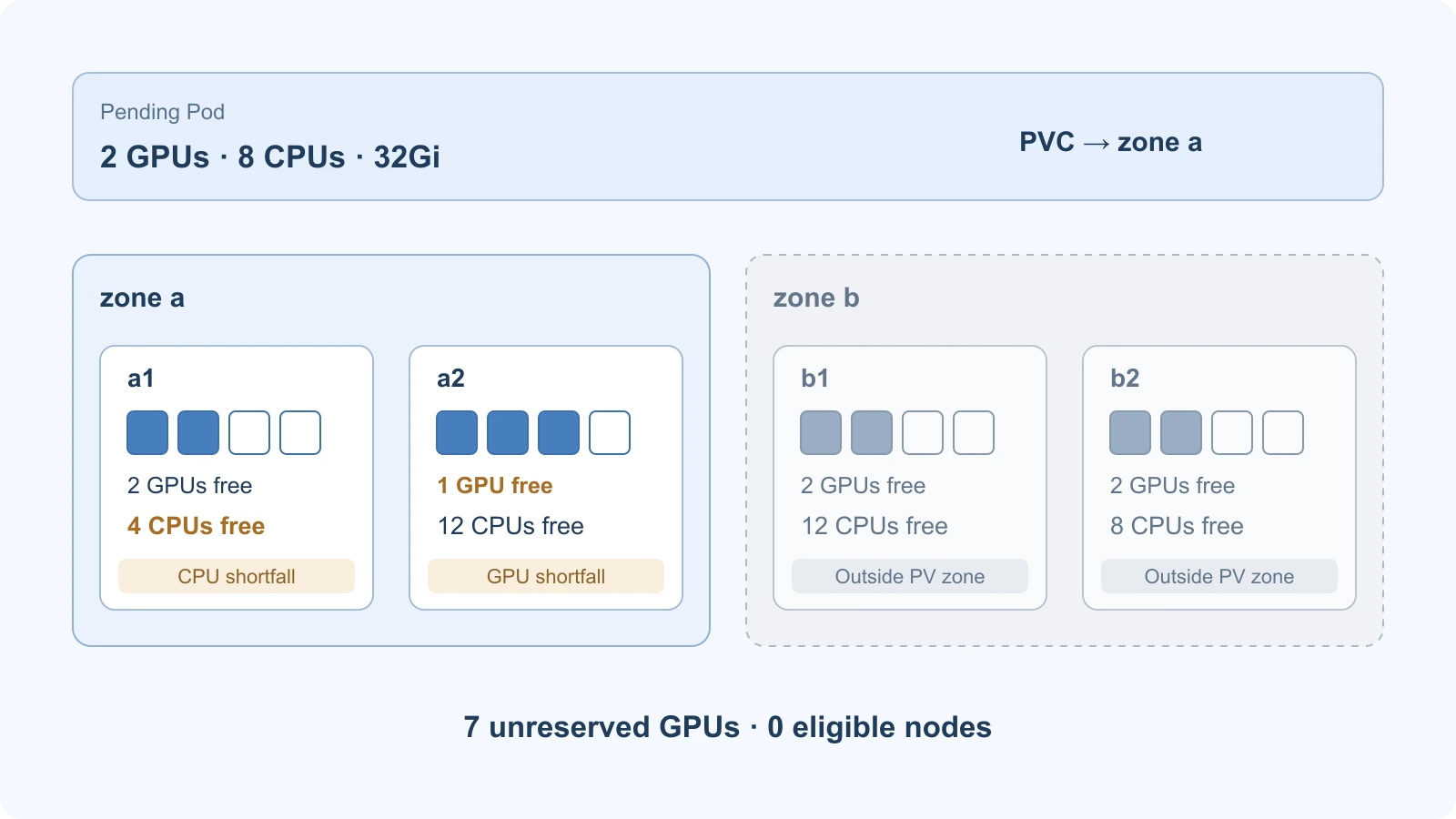
Work through a GPU placement case where available devices, CPU reservations, and volume topology leave no eligible node.

Reconcile uncertain tool effects, preserve approval and cancellation across task changes, and compare recovery policies using final-state evidence.
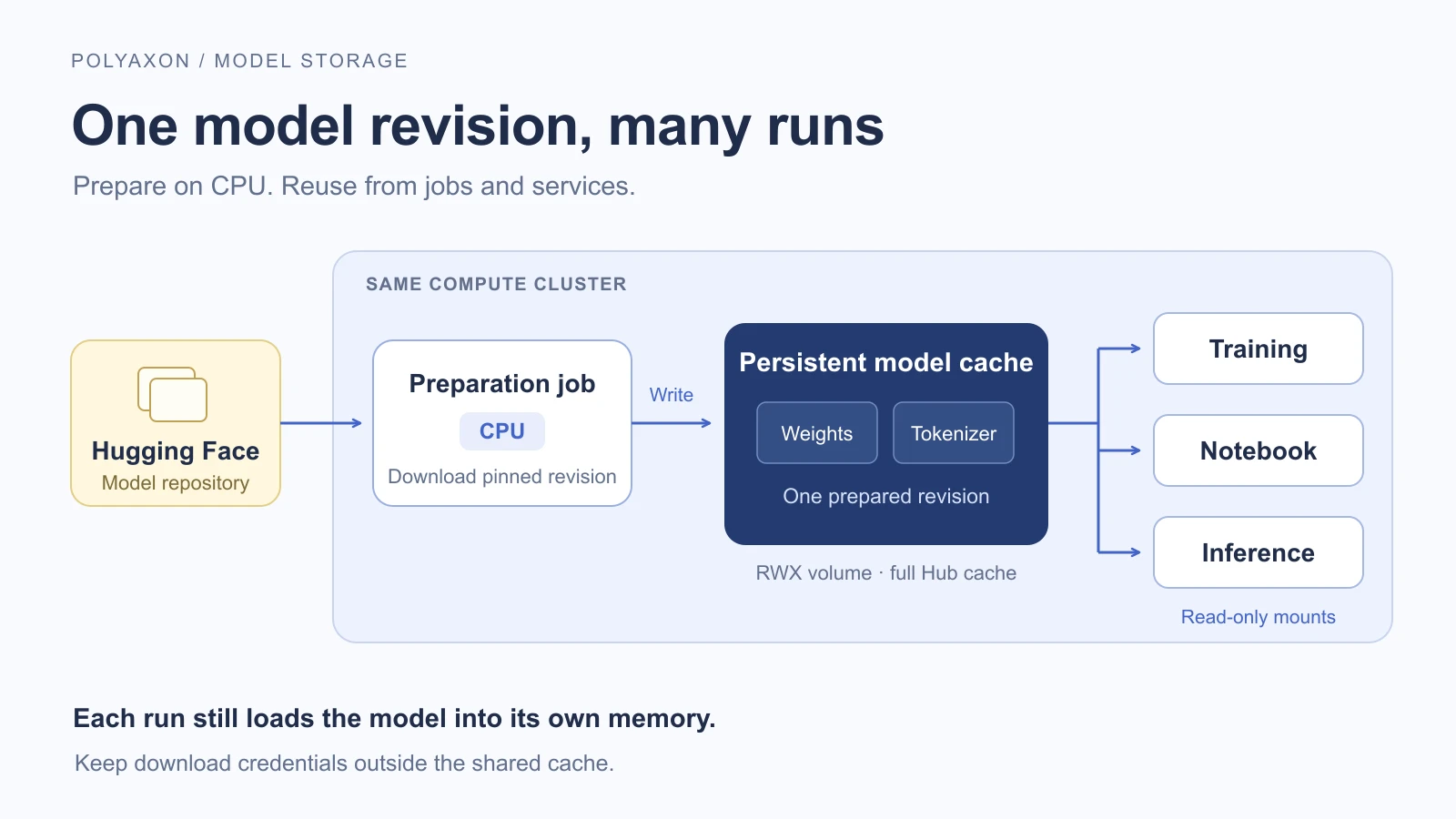
Prepare a pinned model revision in a CPU job, then reuse its files from read-only storage in Polyaxon training, notebook and inference workloads.
Set PyTorch CPU threads, DataLoader workers, and native-library thread counts together within a Kubernetes container's CPU budget.
Inspect /dev/shm, size DataLoader prefetching, and configure shared memory for PyTorch jobs on Kubernetes and Polyaxon.
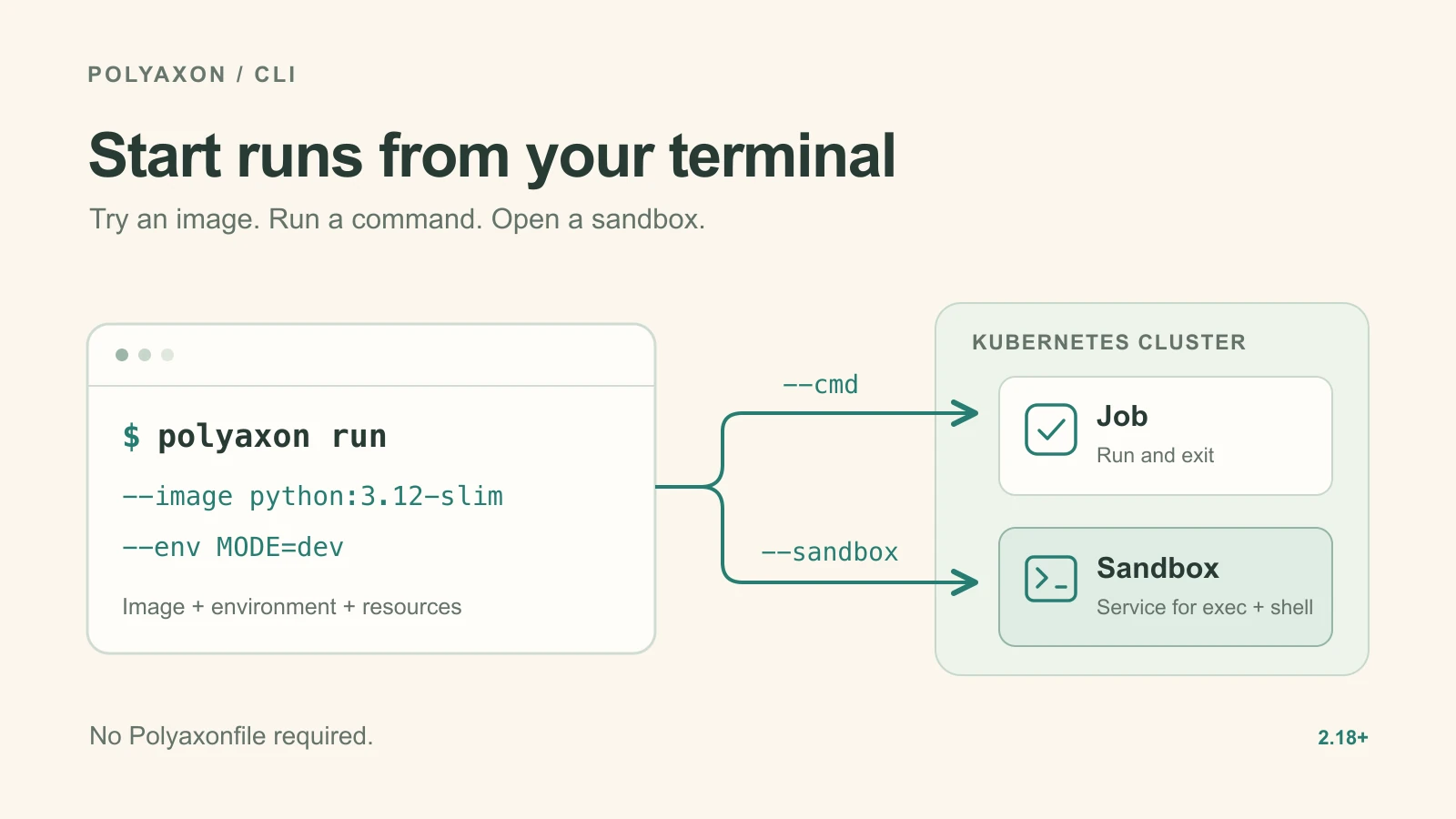
Try container images, package versions and environment changes from the Polyaxon CLI, or start a sandbox without writing a Polyaxonfile.
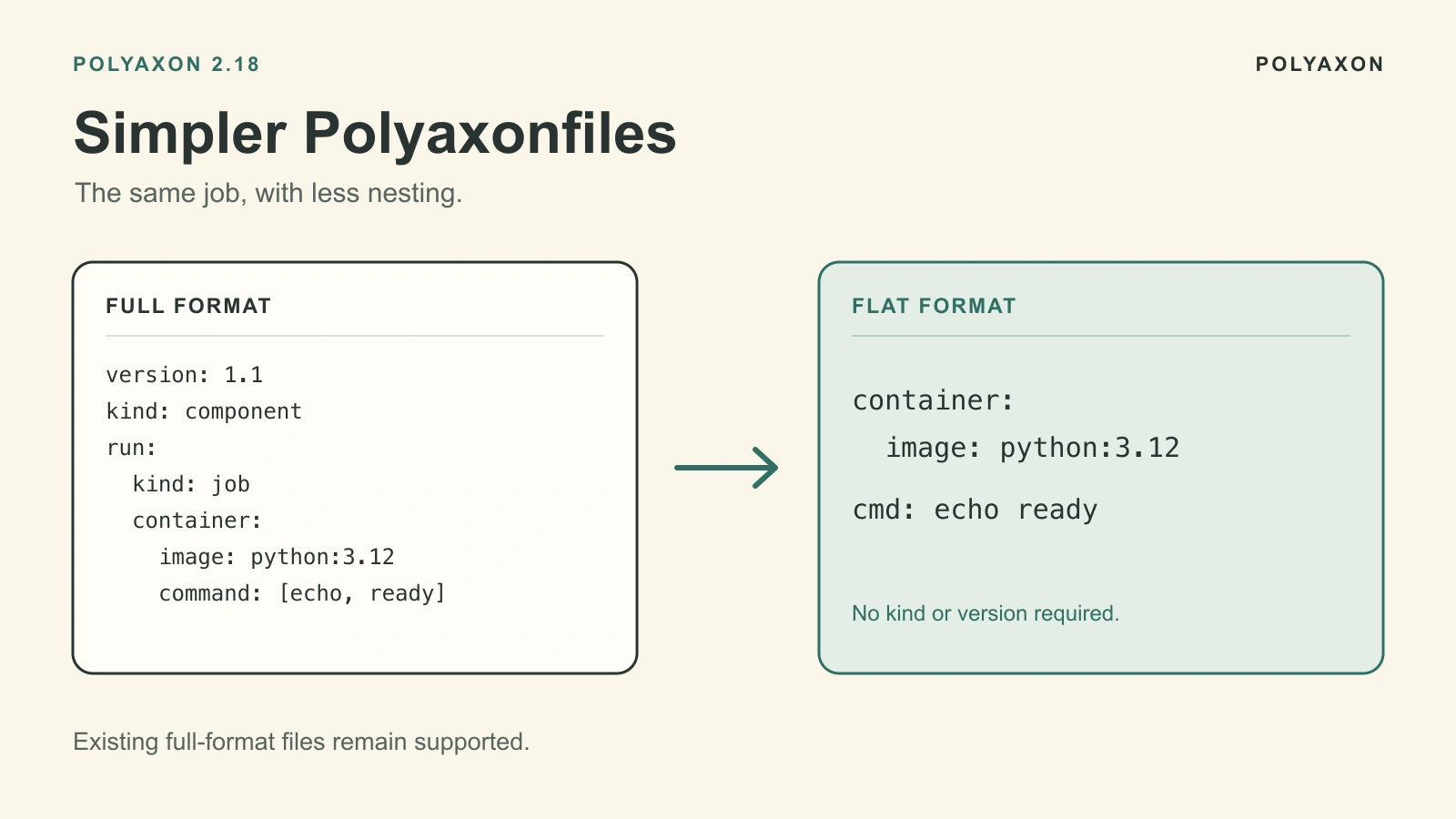
Define jobs and services with top-level container, cmd, env, resources, and service in Polyaxon 2.18, while keeping existing Polyaxonfiles supported.
Use Kubernetes Job TTLs to bound finished workload retention, preserve logs and artifacts separately, and configure the same policy through Polyaxon.

Build a measured research loop around Jev or a self-hosted classifier using Polyaxon jobs, sandboxes, experiment matrices, and per-case evidence.