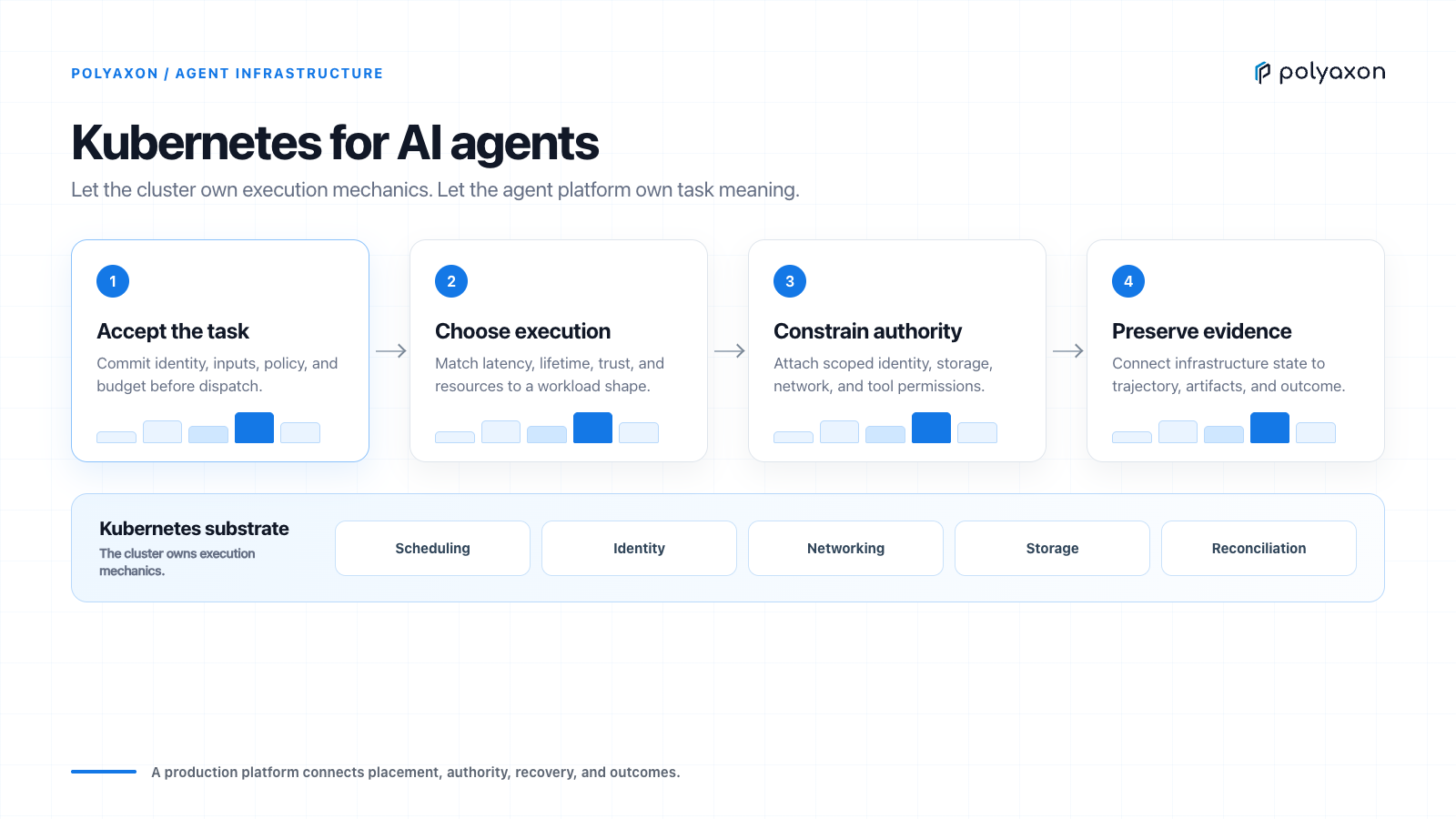
Kubernetes for AI agents: A platform engineering guide
Design a Kubernetes platform for AI agents with clear workload boundaries, durable state, scoped access, resource controls, and end-to-end evidence.
AI AgentsKubernetesInfrastructure
Explore practical AI agent guides covering architecture, evaluation, sandboxed execution, tracing, security, and production operations.
Essential guides, selected for this topic.
Design a Kubernetes platform for AI agents with clear workload boundaries, durable state, scoped access, resource controls, and end-to-end evidence.
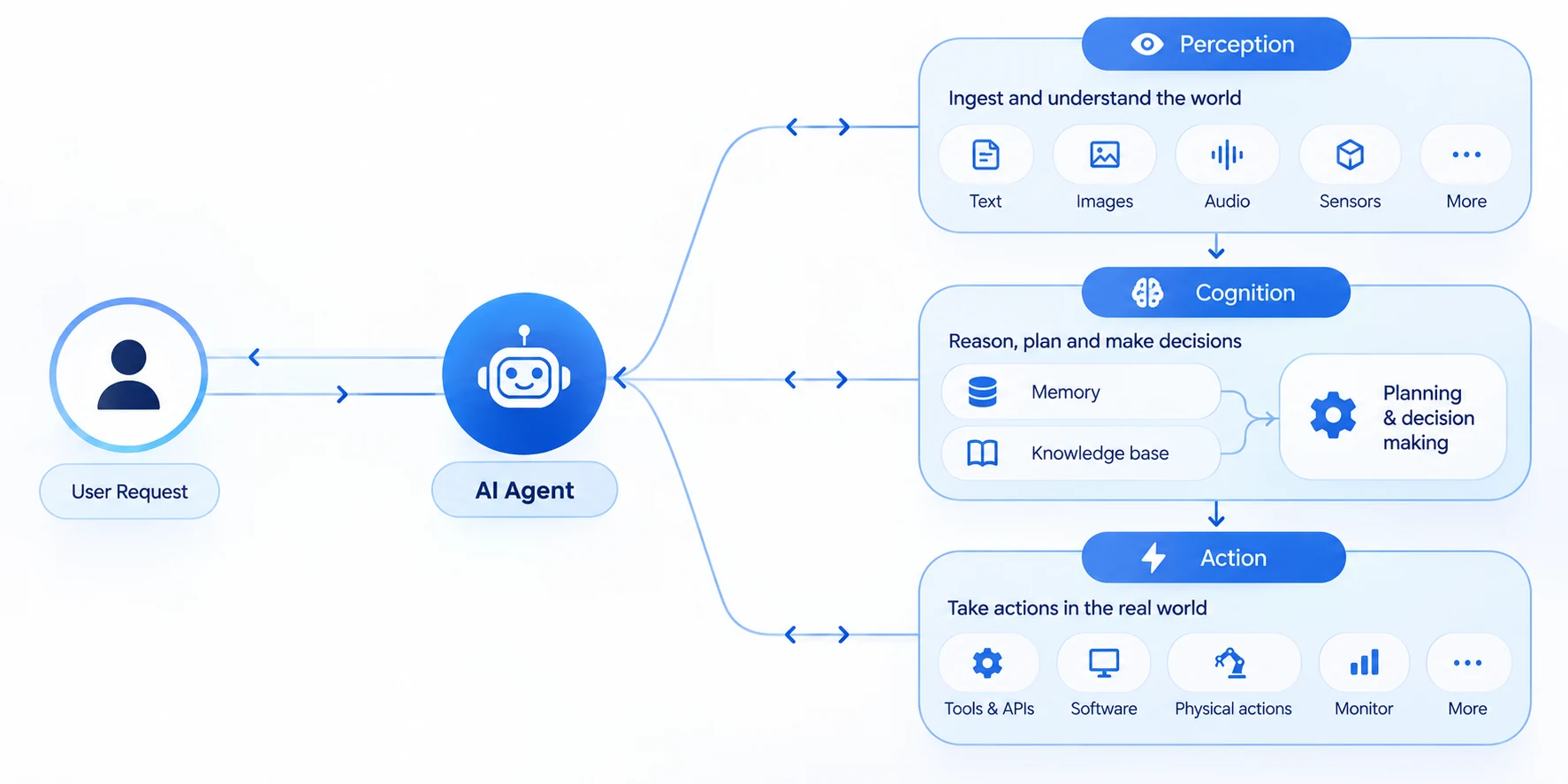
Map agent architectures to Polyaxon jobs, services, and DAGs, with concrete workload configuration and a repeatable architecture-comparison workflow.
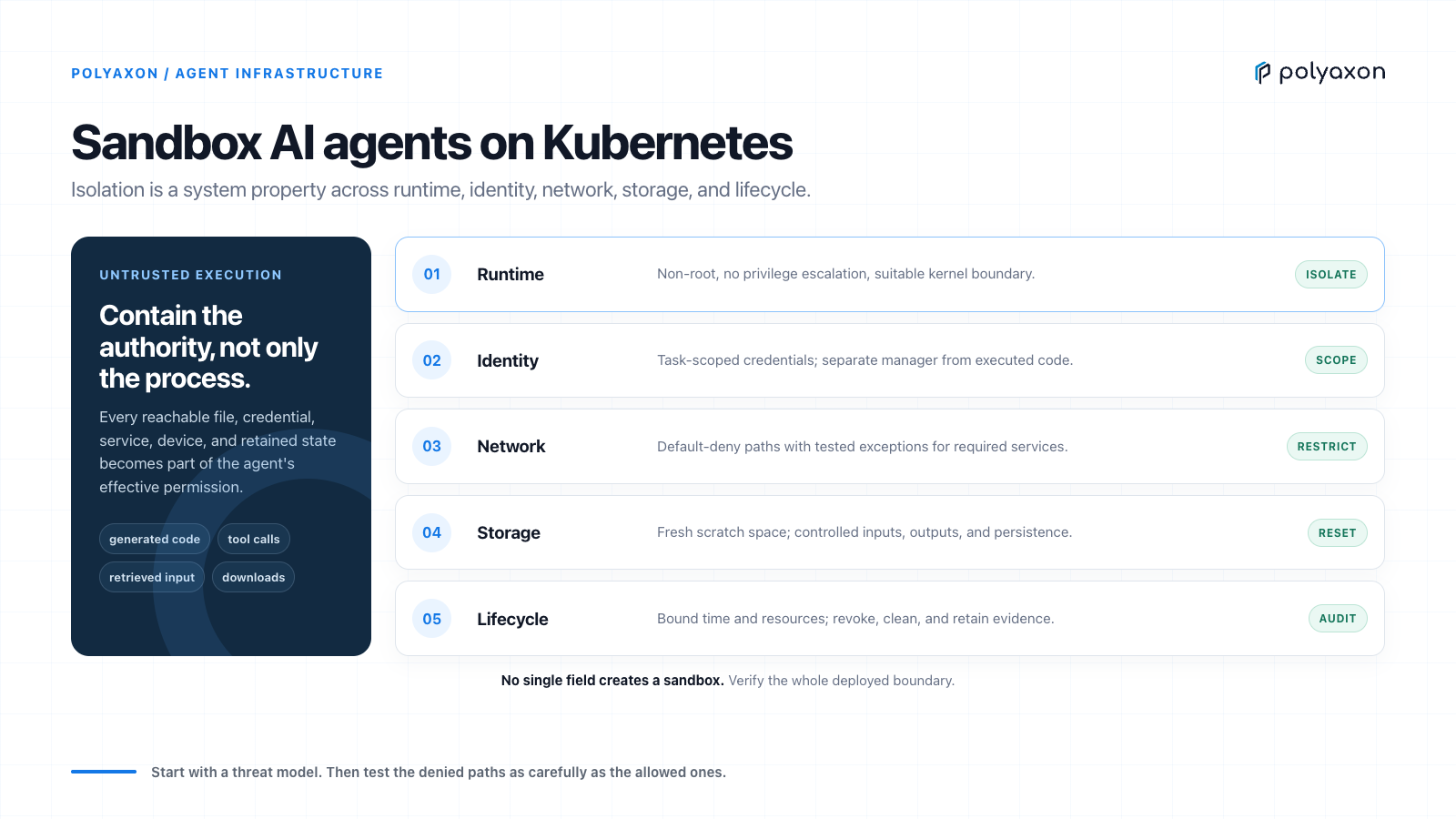
Design isolated Kubernetes execution for AI agents with a threat model, stronger runtimes, scoped identity, controlled egress, bounded storage, and auditable cleanup.

Run parallel coding agents in separate Polyaxon workspaces, collect candidate patches, evaluate independently, and merge only reviewed changes.
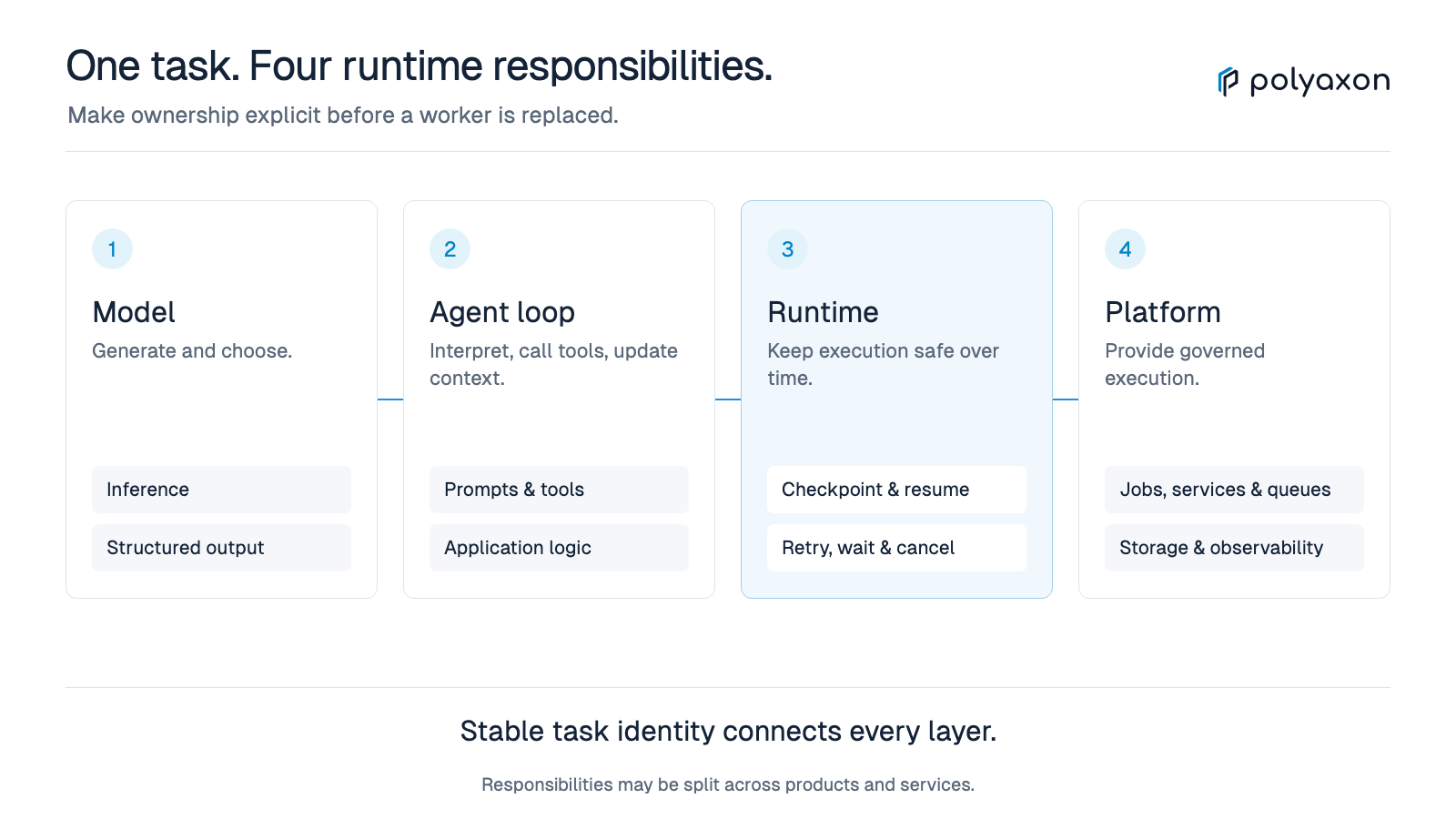
Design agent execution around durable state, safe tool retries, approval waits, and recovery, with clear responsibilities for Polyaxon and your agent framework.
The latest guides, tutorials, and product updates.
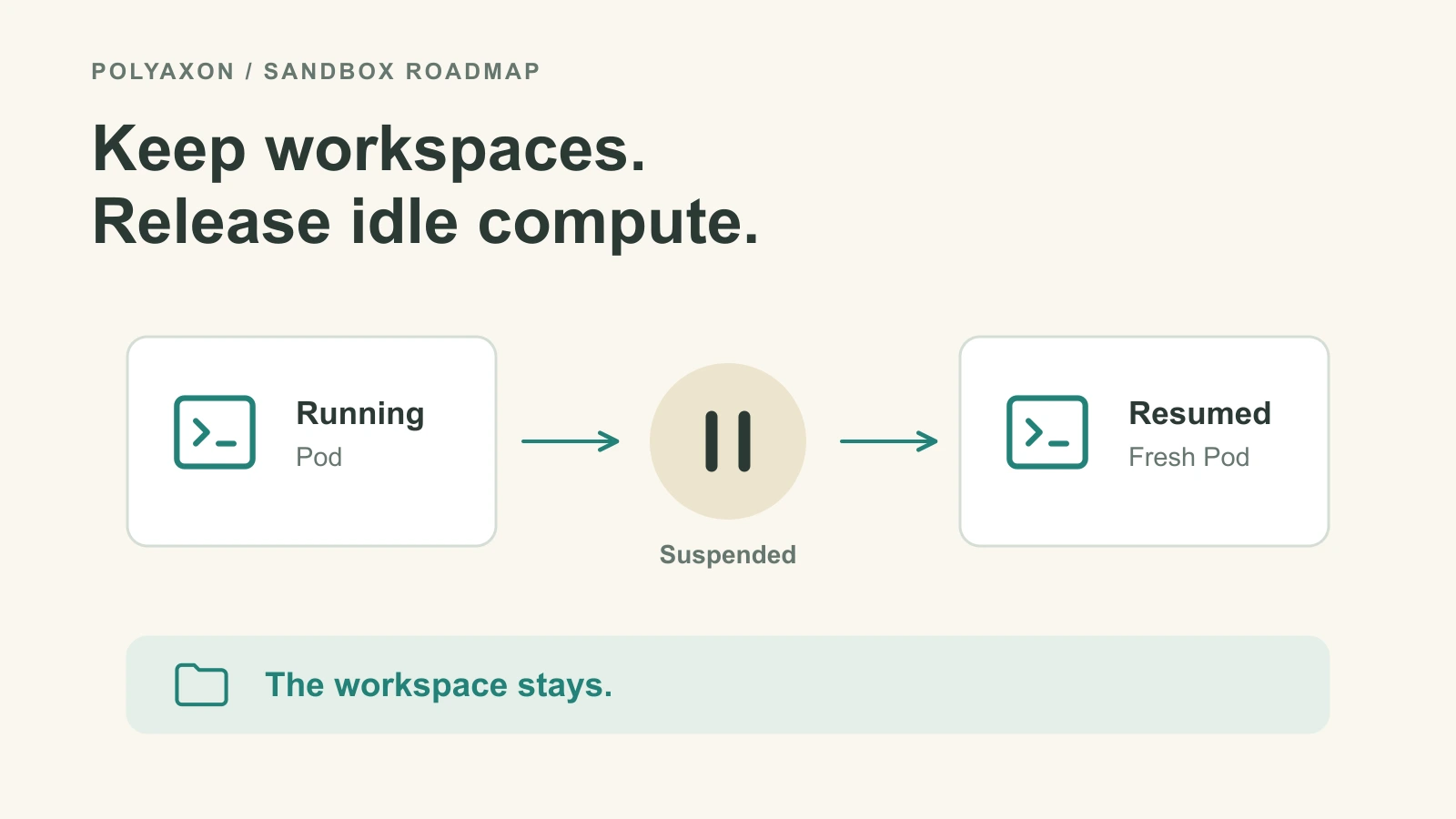
Our plans for persistent sandbox workspaces, suspend/resume, activity-aware idle suspension, and ready pools on Kubernetes—and where AX and Substrate differ.
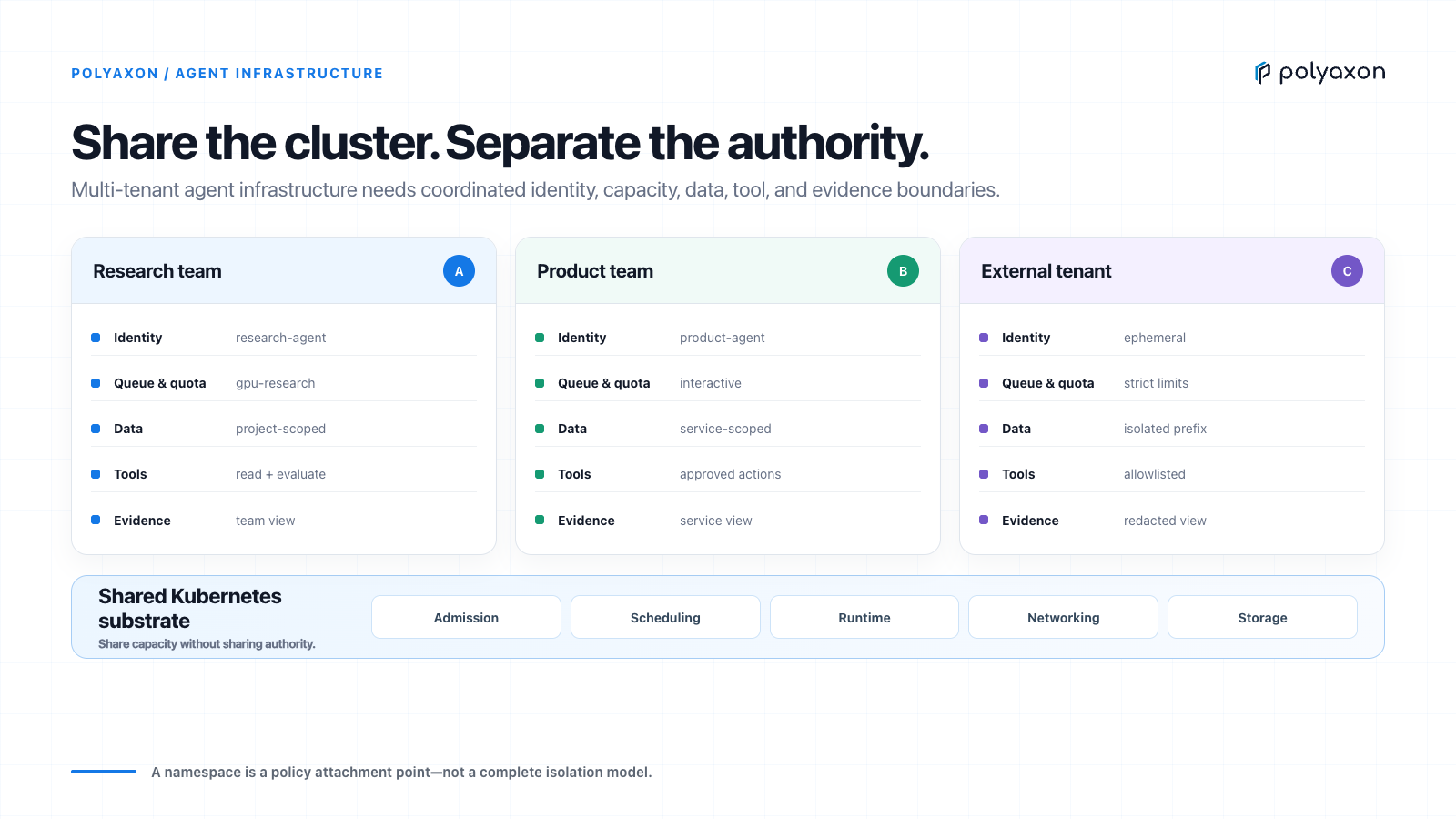
Separate identity, network access, data, queues, budgets, and evidence when multiple teams or customers run AI agents on shared Kubernetes infrastructure.
Design isolated Kubernetes execution for AI agents with a threat model, stronger runtimes, scoped identity, controlled egress, bounded storage, and auditable cleanup.
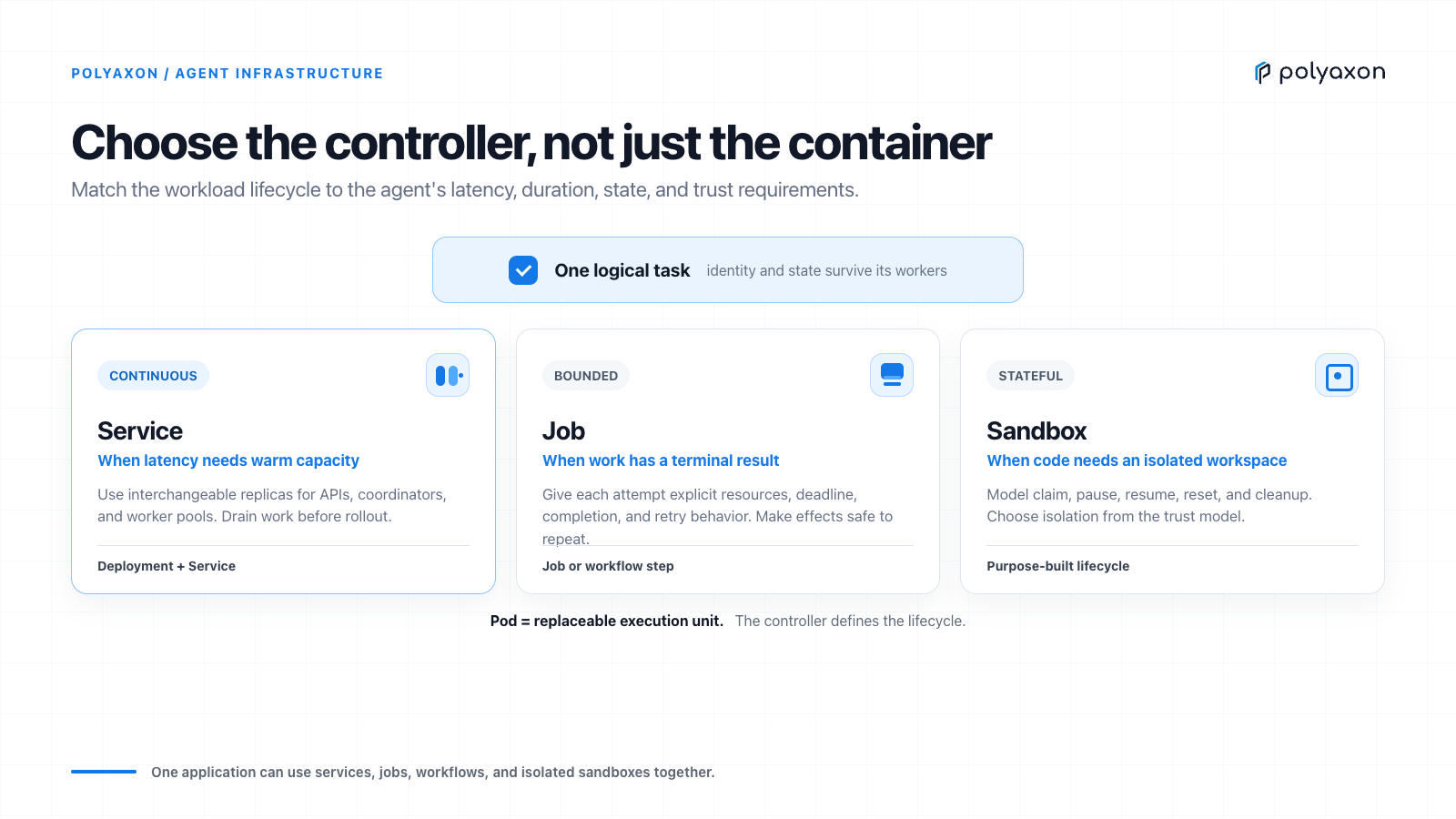
Choose the Kubernetes execution shape for an AI agent by separating logical task identity from Pods, Jobs, Services, workflows, and sandbox lifecycles.
Run parallel coding agents in separate Polyaxon workspaces, collect candidate patches, evaluate independently, and merge only reviewed changes.
Design a Kubernetes platform for AI agents with clear workload boundaries, durable state, scoped access, resource controls, and end-to-end evidence.
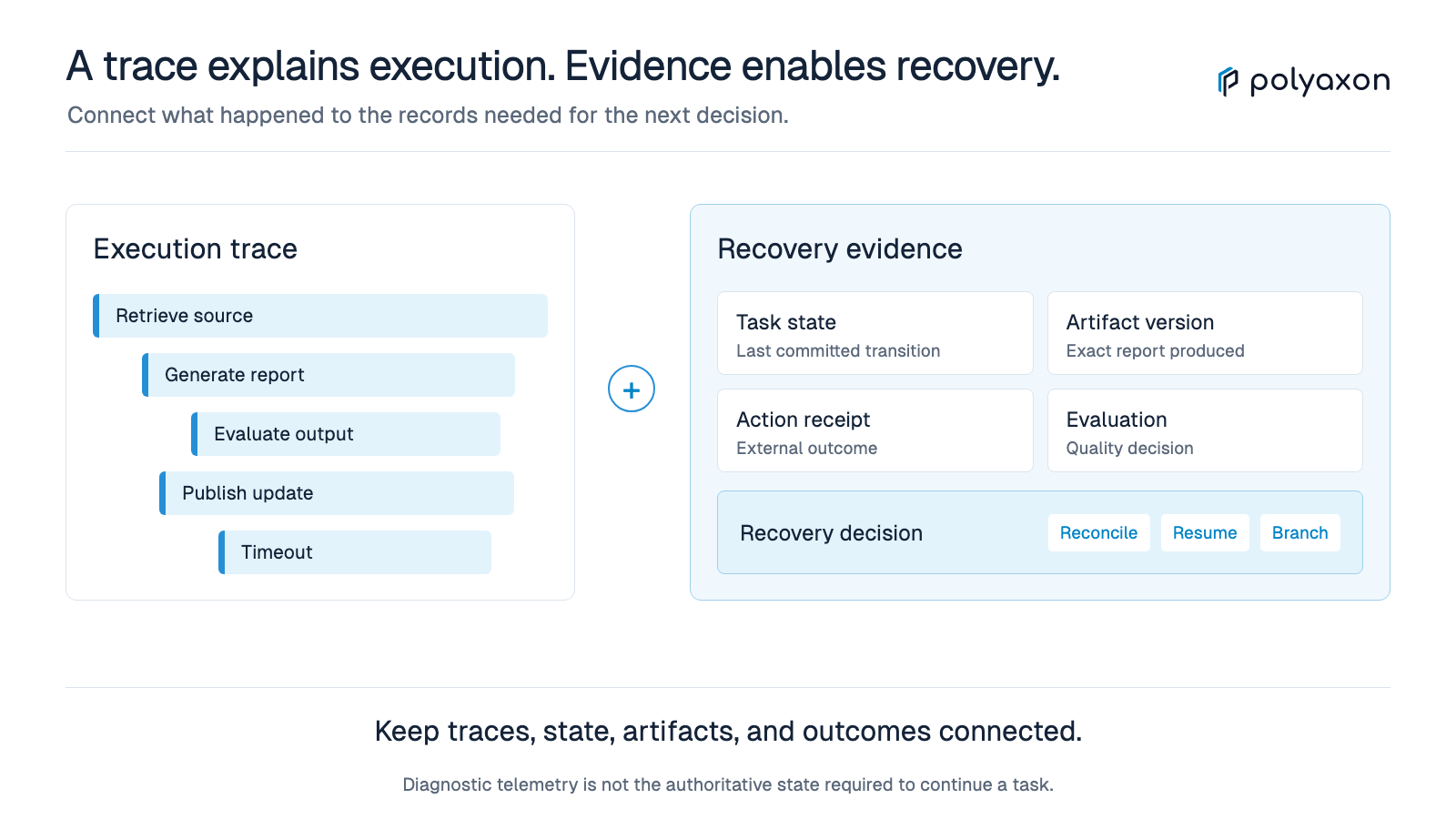
Connect agent traces to checkpoint state, versioned artifacts, action receipts, and evaluations so failures lead to controlled recovery and reproducible improvements.
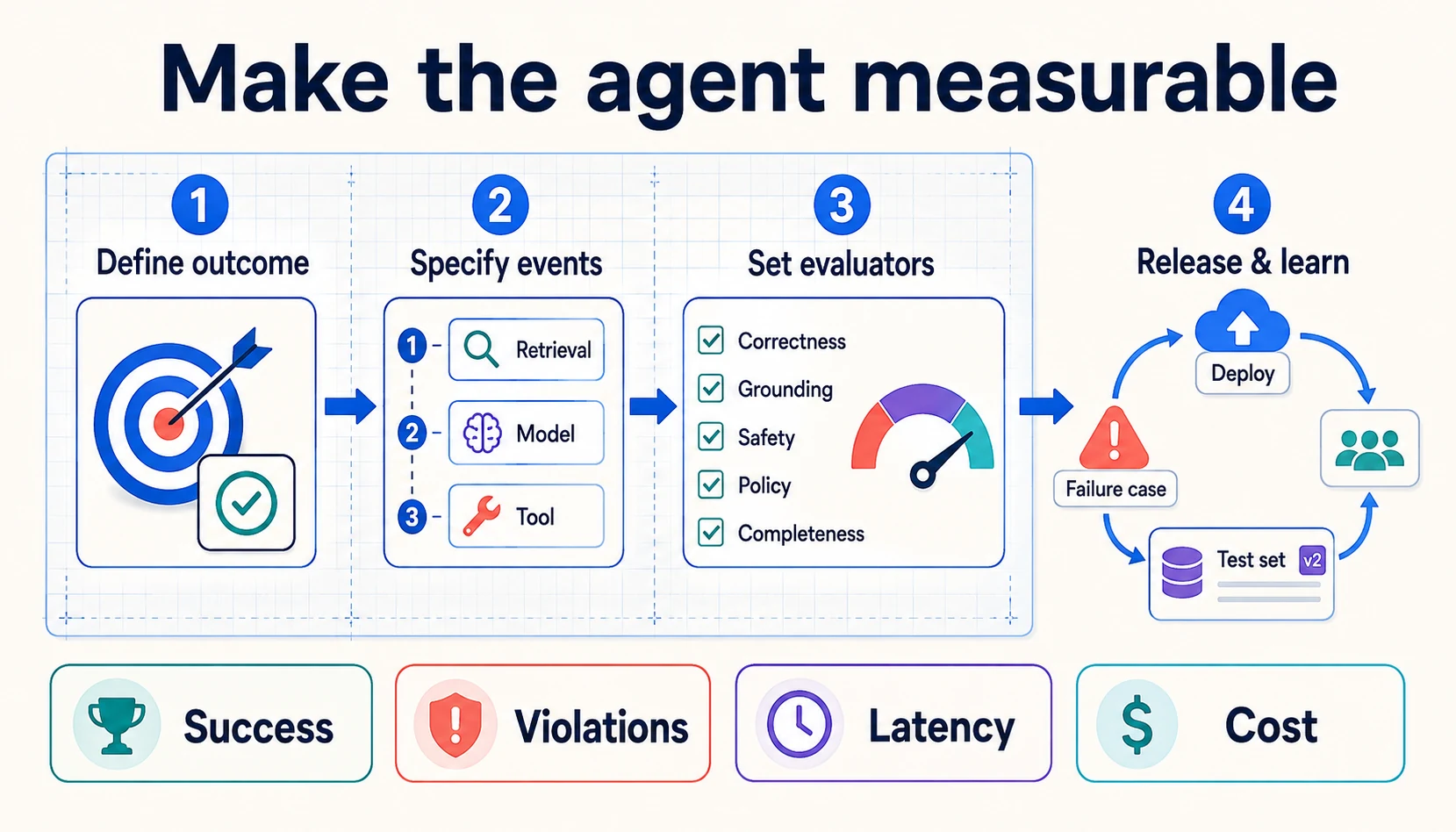
Define agent outcomes, prohibited actions, events, evaluators, budgets, segments, and feedback loops before implementation begins.
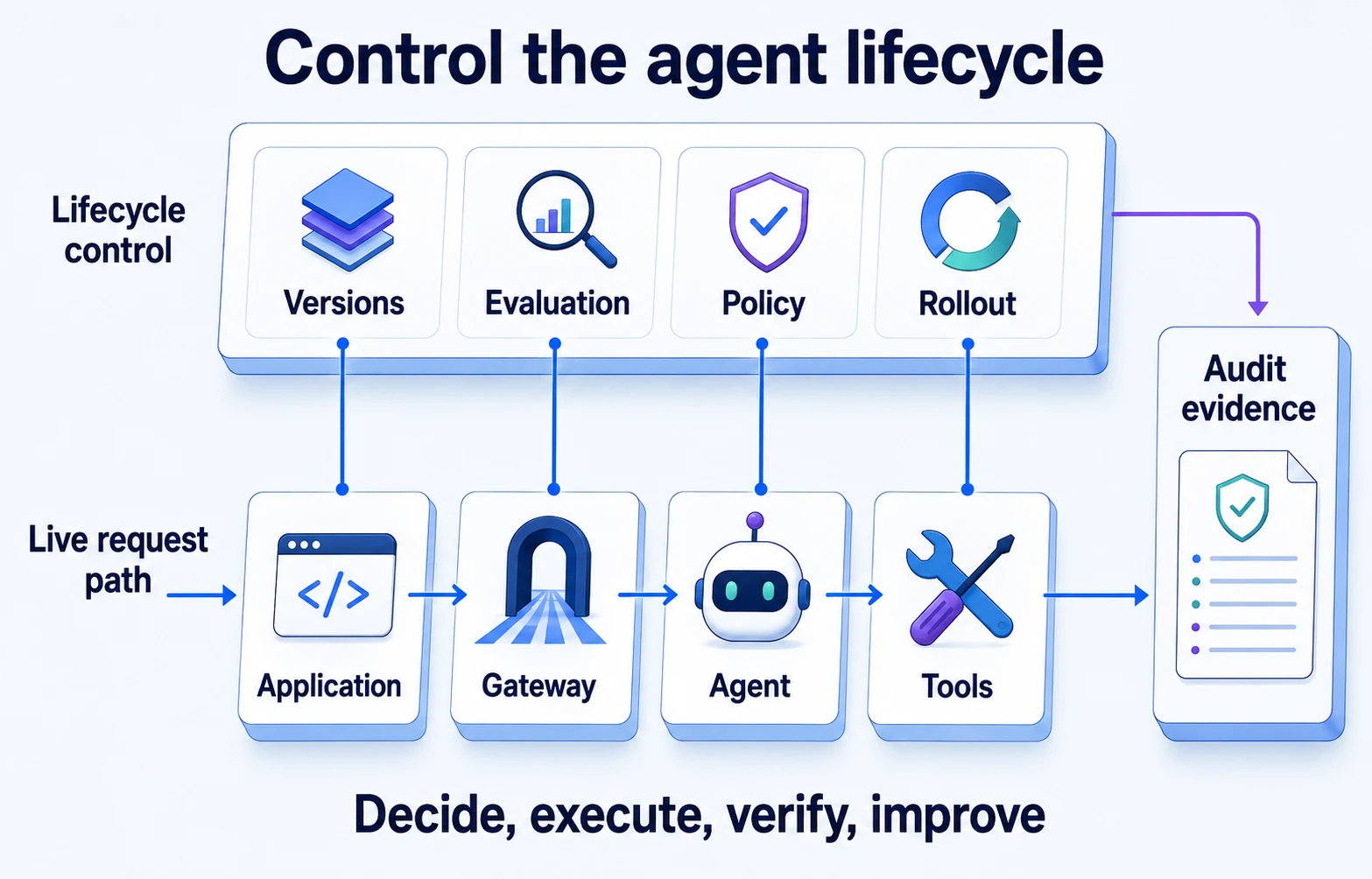
Operate agentic AI with explicit service ownership, platform contracts, task lifecycle rules, change control, incident response, SLOs, and financial accountability.
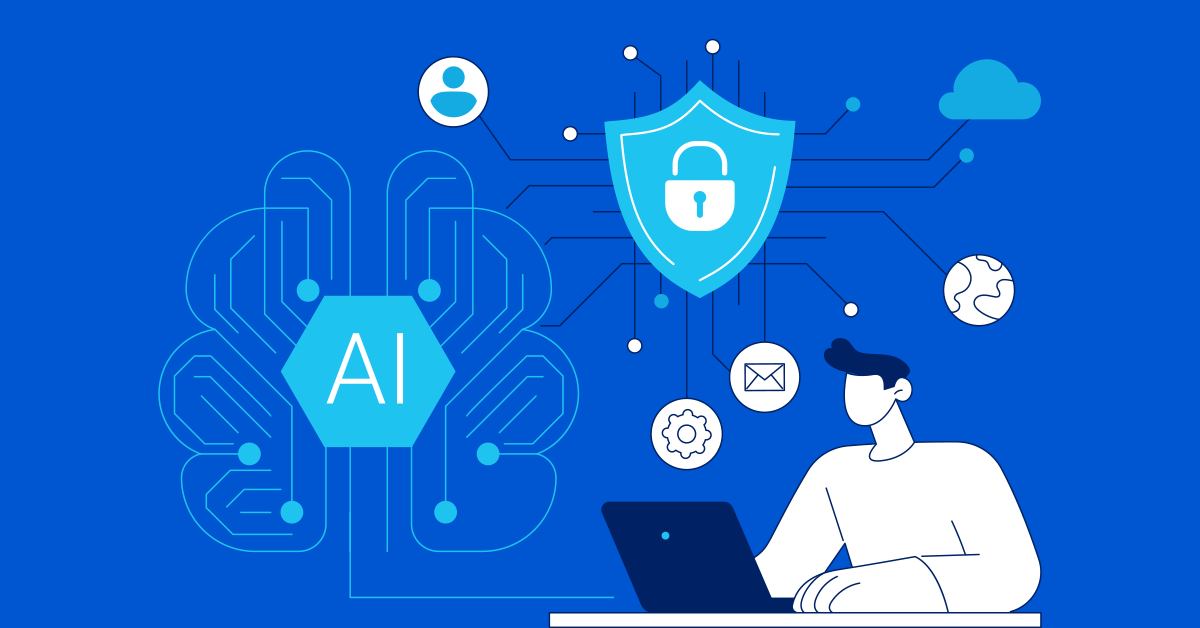
Contain AI agent identity, tools, memory, network access, and delegated actions with enforceable production boundaries.

Connect AI agent execution to Polyaxon projects, components, scheduling, tracking, and artifacts through a stable application-owned execution contract.
Package application-owned agent evaluators as versioned Polyaxon components with typed contracts, reusable execution profiles, and consistent result evidence.
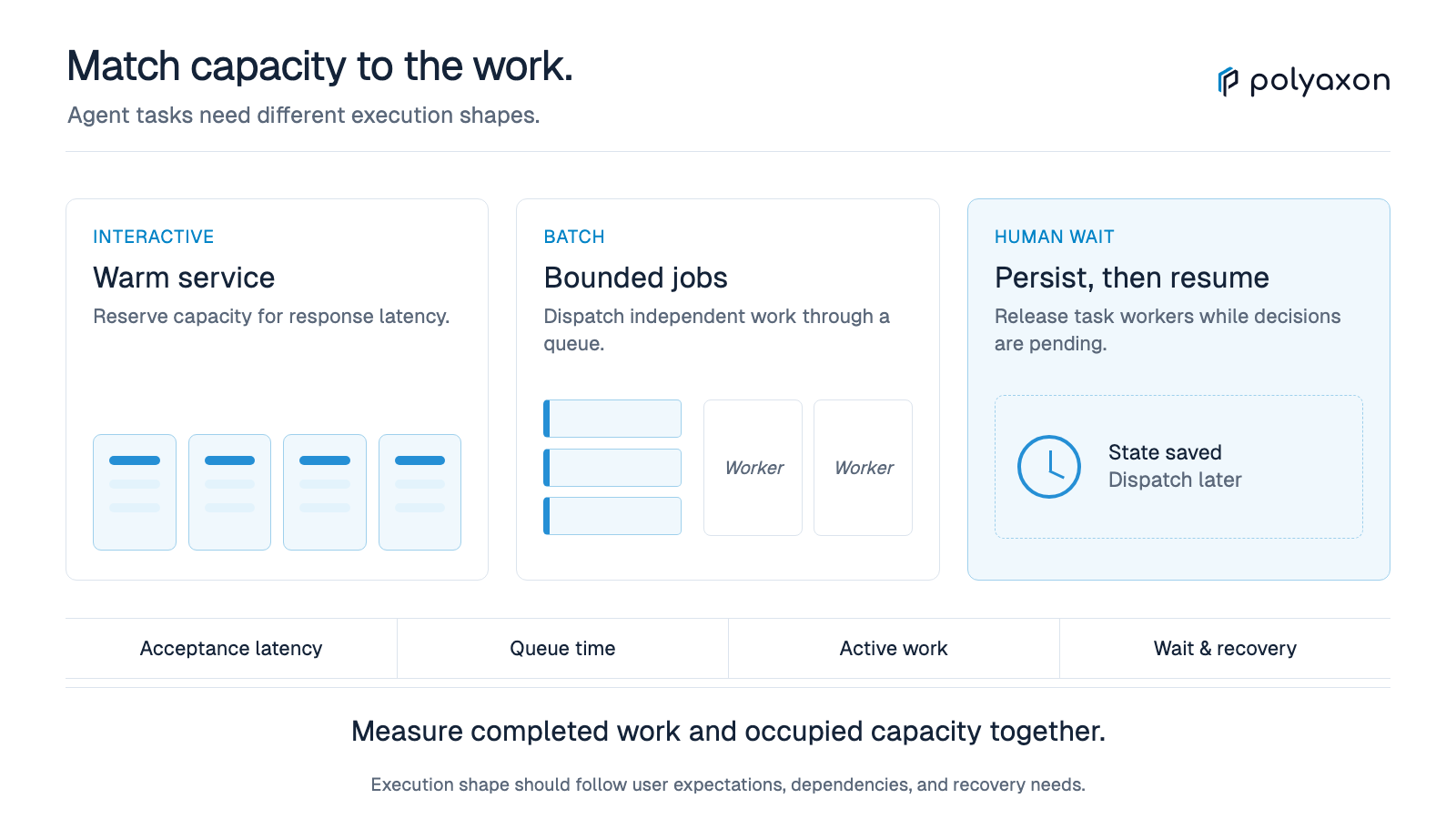
Choose jobs, services, queues, and capacity controls for agent workloads using task duration, dependency limits, resume latency, and execution cost.
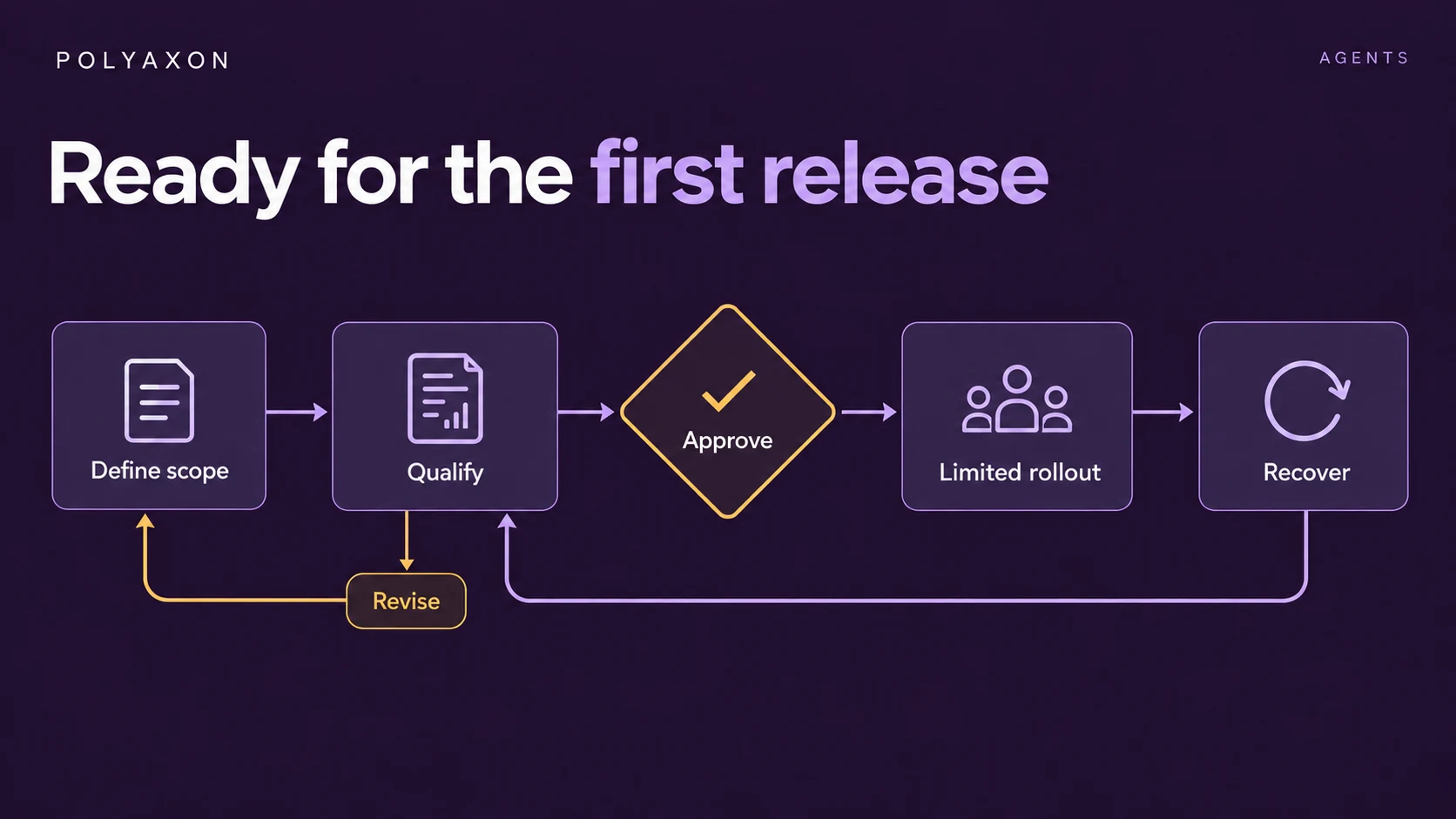
Build an agent release checklist around Polyaxon qualification jobs, versioned components, artifact reports, termination settings, and manual approval.
Build an operational foundation for autonomous agents using Polyaxon workload profiles, durable state, bounded authority, evaluation, and recovery ownership.
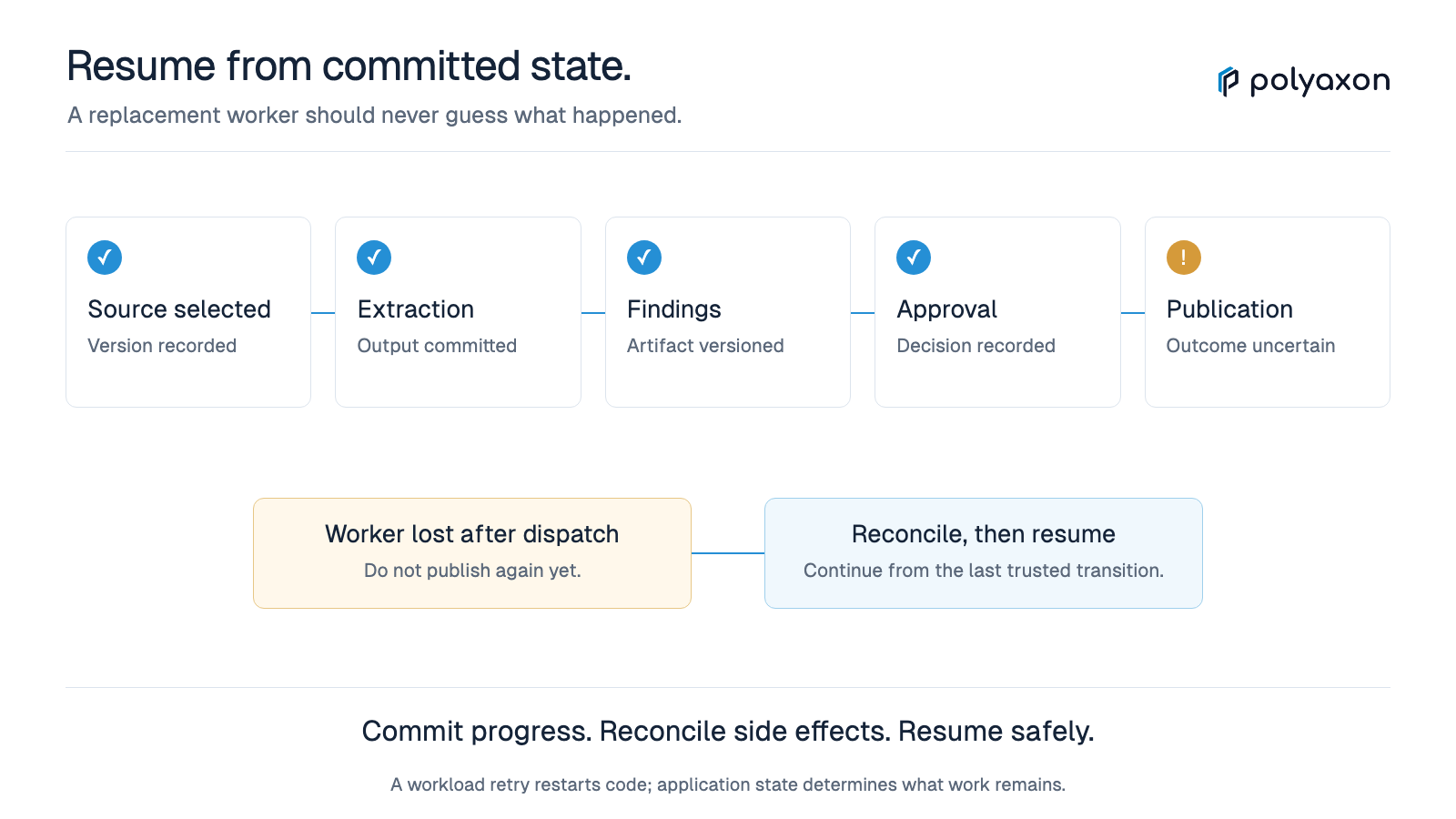
Build agent recovery around committed checkpoints, versioned inputs, safe side effects, and approval state so interrupted tasks can continue reliably.
Separate live agent requests from versioning, evaluation, policy, rollout, identity, evidence, and recovery across the application lifecycle.
Build MCP security tests for tool discovery, authorization, injected tool results, session identity, and approval boundaries in AI agents.
Design agent execution around durable state, safe tool retries, approval waits, and recovery, with clear responsibilities for Polyaxon and your agent framework.
Measure Polyaxon agent workflow bottlenecks across planning, queueing, execution, transfers, and evaluation using critical-path timing and quality-aware comparisons.
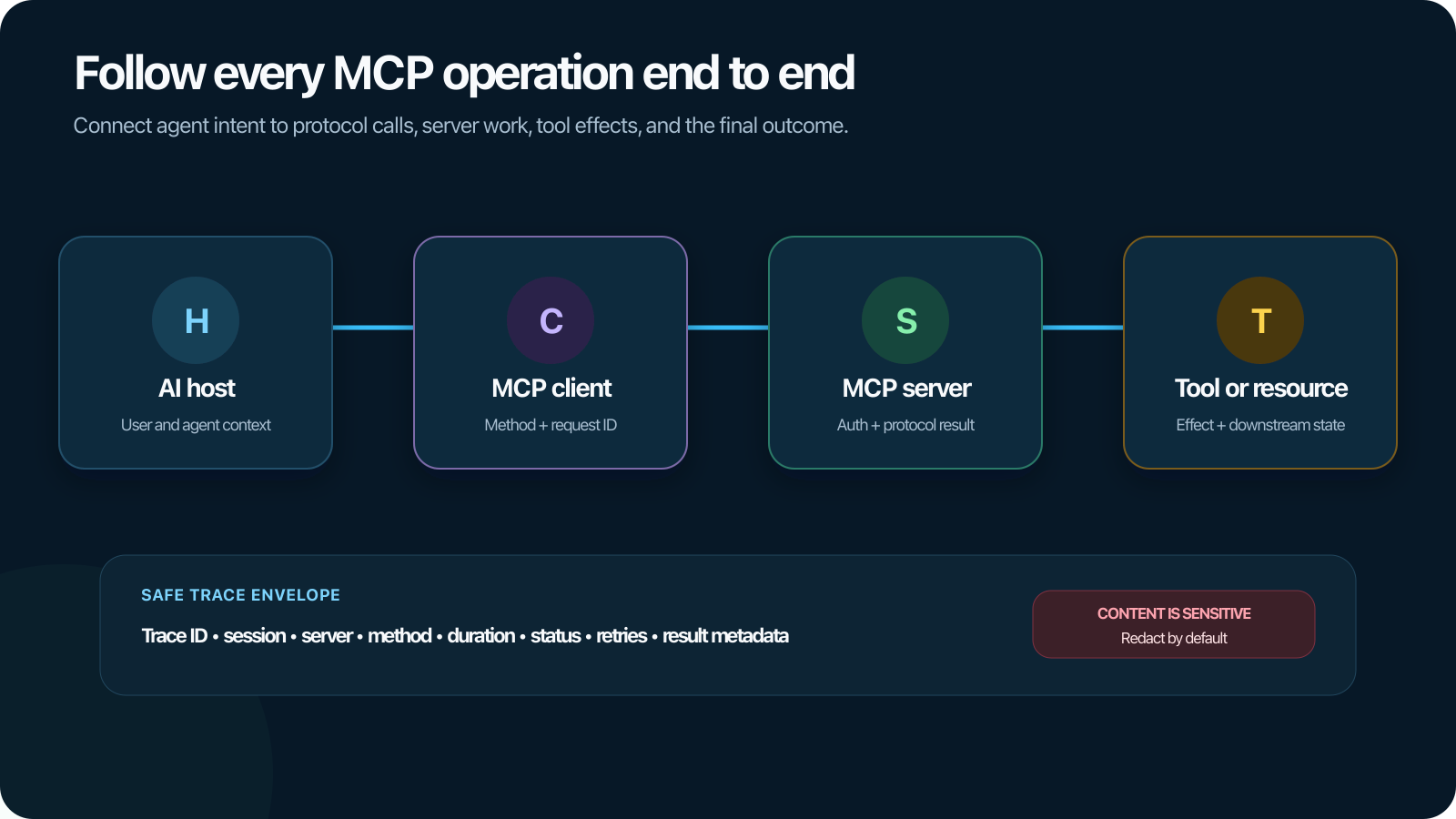
Trace MCP discovery, sessions, resources, prompts, tool calls, permissions, errors, and agent outcomes across clients and servers.
Design a production conversational assistant with grounded retrieval, controlled model access, durable conversation state, evaluation, security, and Kubernetes operations.
Reduce the impact of generated-code failures with Polyaxon workload configuration, Kubernetes admission and network controls, minimal credentials, and incident evidence.
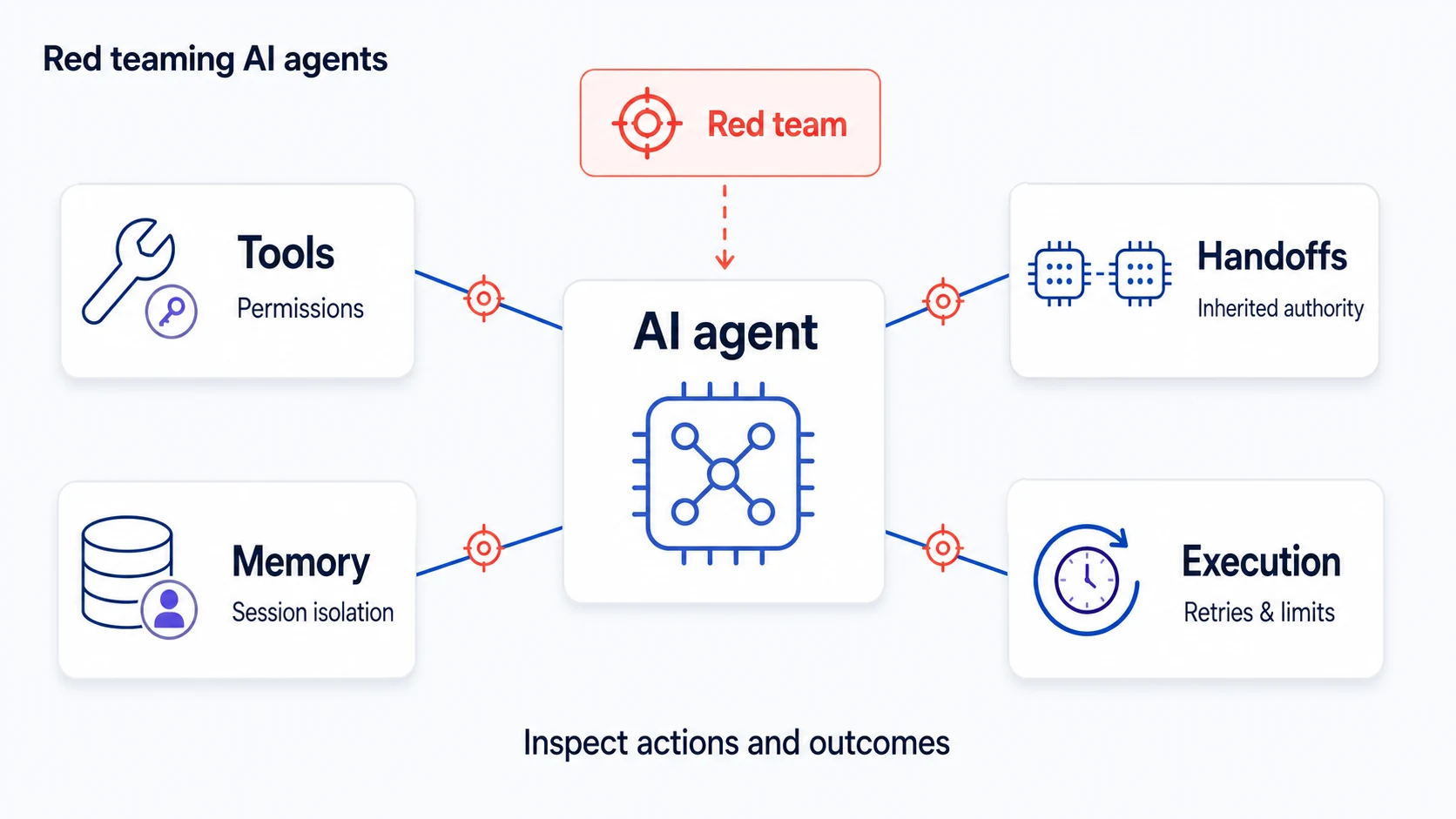
Test AI agent permissions, memory, handoffs, retries, and tool actions with a practical security matrix and reproducible evaluation workflow.