Keep long-running workloads authenticated through token rotation
Use projected ServiceAccount tokens and refresh-aware clients so long-running training, notebooks, and services can keep authenticating without static credentials.
The latest guides, tutorials, and product updates.

Use projected ServiceAccount tokens and refresh-aware clients so long-running training, notebooks, and services can keep authenticating without static credentials.

Use Kubernetes ValidatingAdmissionPolicy to check workload ownership and image references, with scoped warning and enforcement stages for ML namespaces.

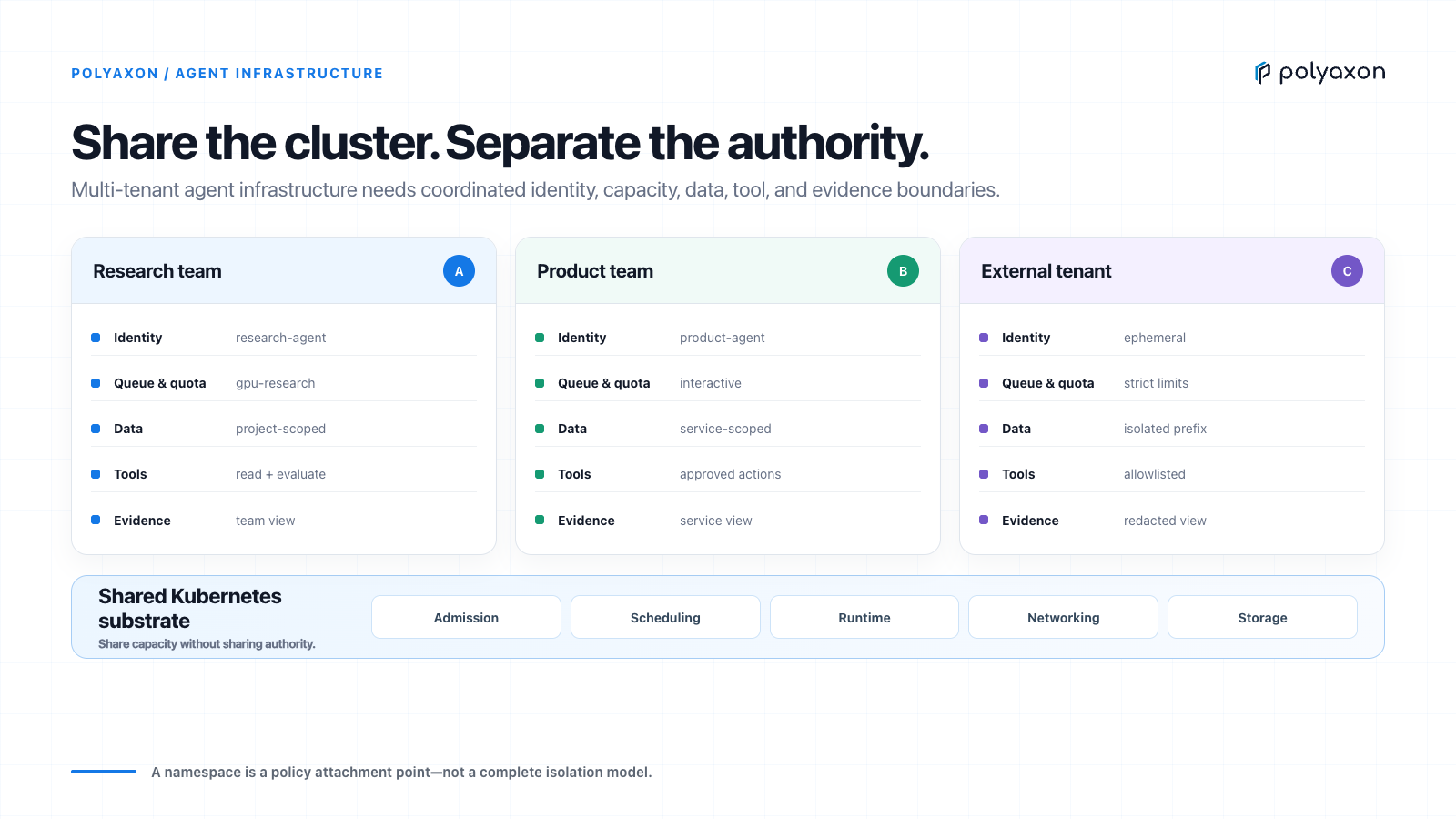
Separate identity, network access, data, queues, budgets, and evidence when multiple teams or customers run AI agents on shared Kubernetes infrastructure.

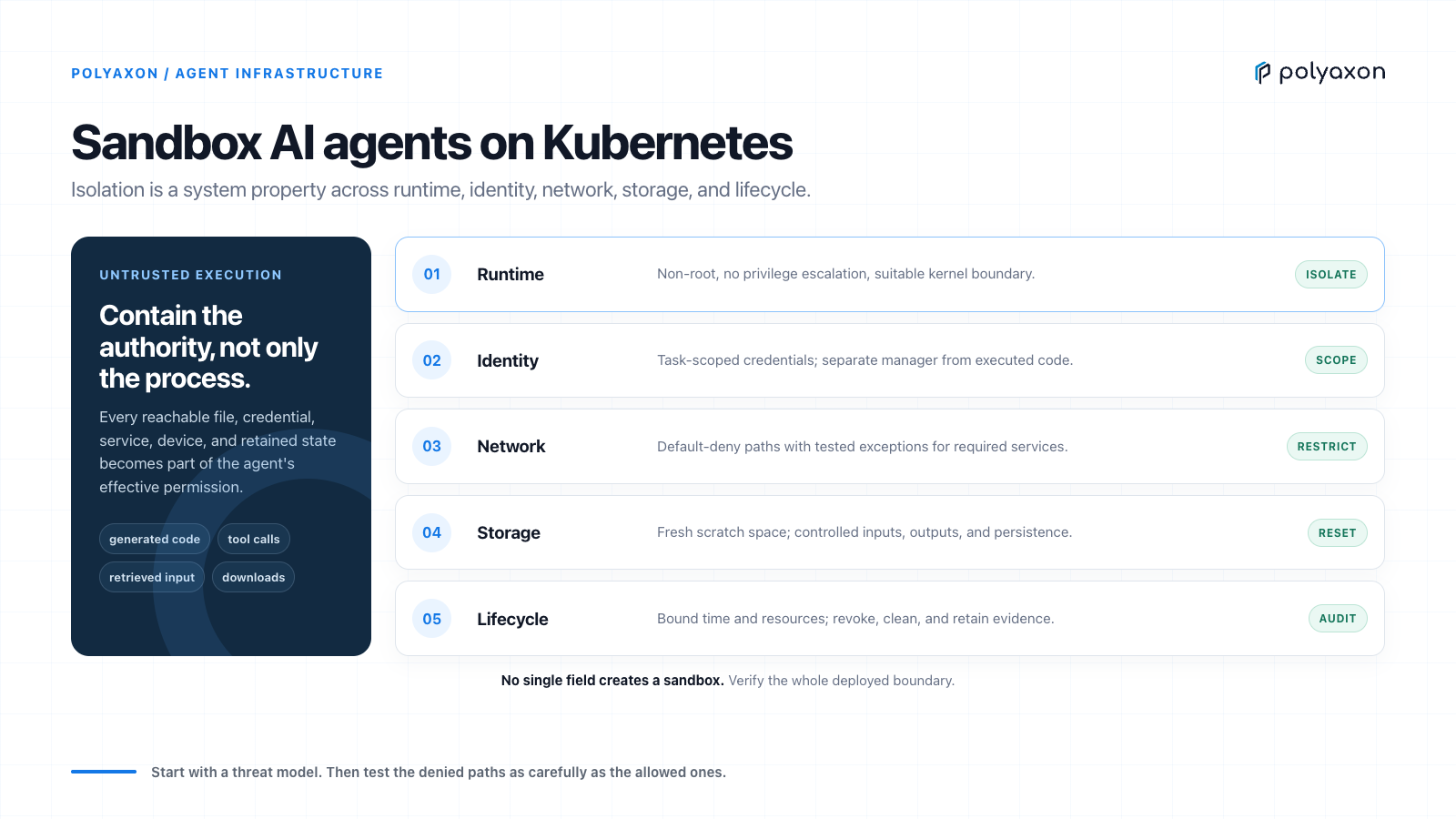
Design isolated Kubernetes execution for AI agents with a threat model, stronger runtimes, scoped identity, controlled egress, bounded storage, and auditable cleanup.

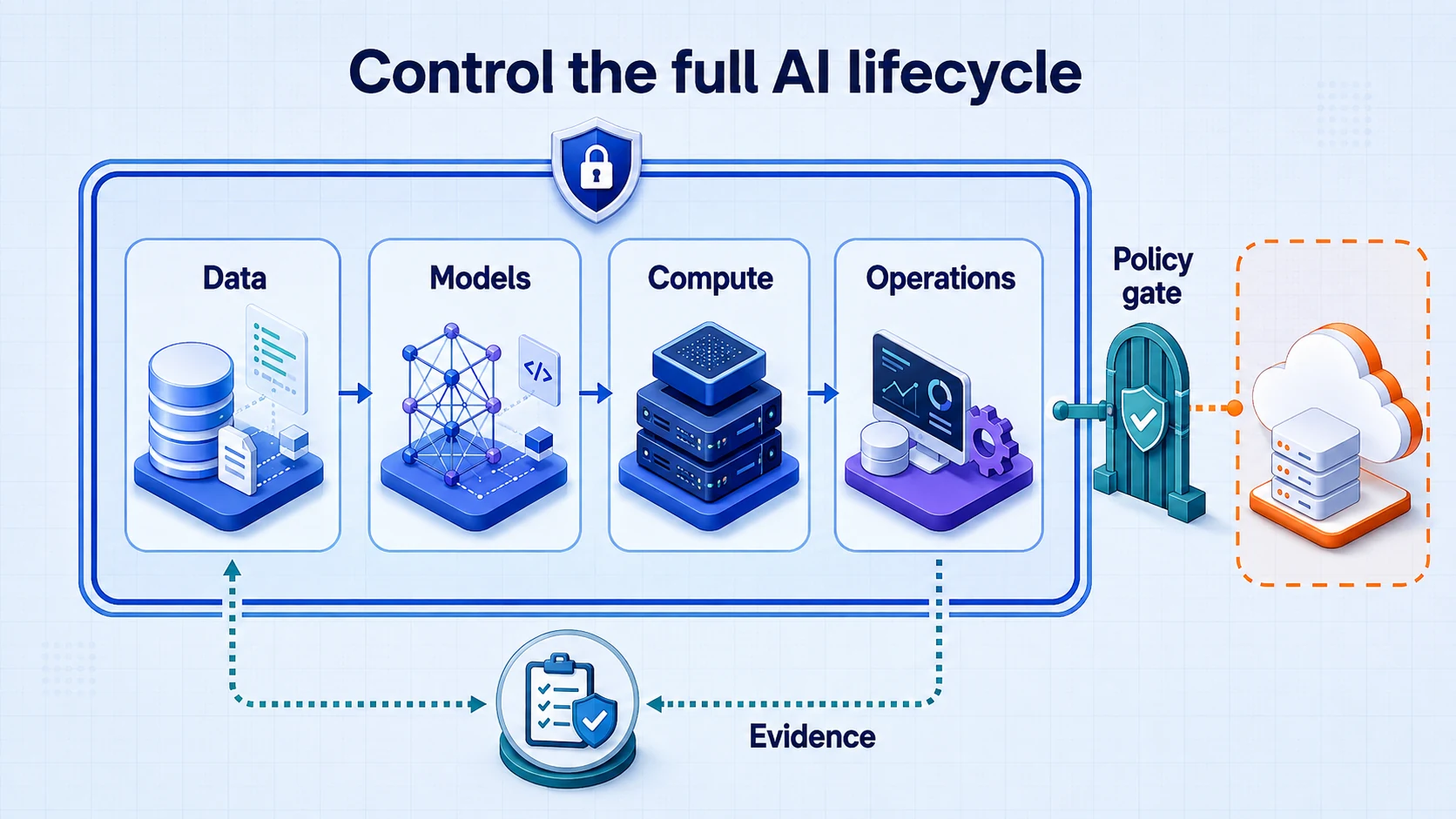
Define sovereign AI as control over data, models, compute, operations, providers, and evidence, then implement it with Kubernetes.

Define ownership, risk tiers, platform boundaries, exceptions, and evidence so enterprise AI security operates continuously instead of as a launch checklist.

Add static model artifact scanning before registry promotion, preserve scan evidence, check coverage, and bind approval to immutable artifact digests.

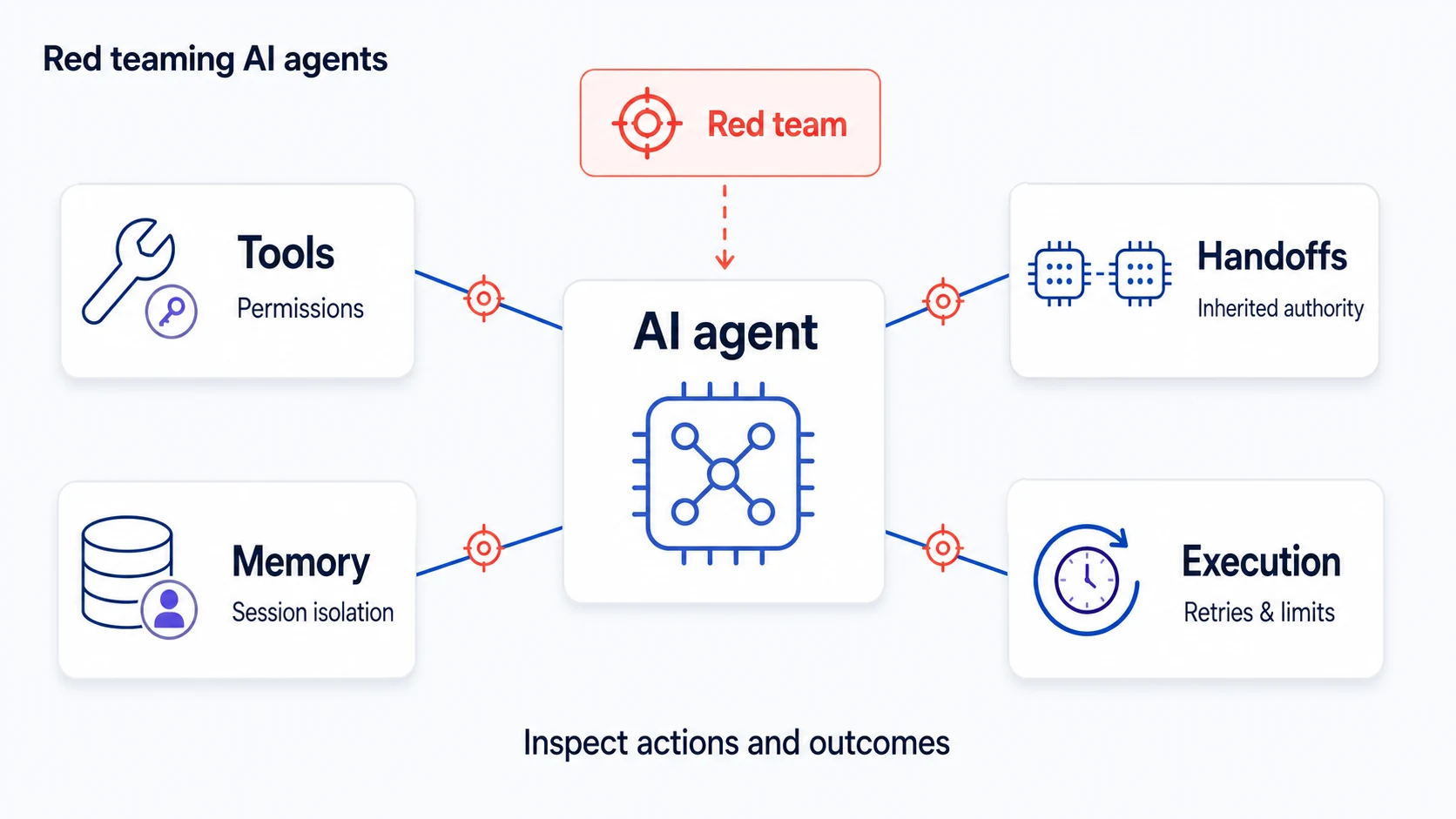
Contain AI agent identity, tools, memory, network access, and delegated actions with enforceable production boundaries.

Apply security controls across data, training, evaluation, artifacts, deployment, and operation without slowing every AI workload equally.

Use consequence-based AI risk tiers to apply proportionate data, evaluation, security, approval, deployment, monitoring, and incident controls.

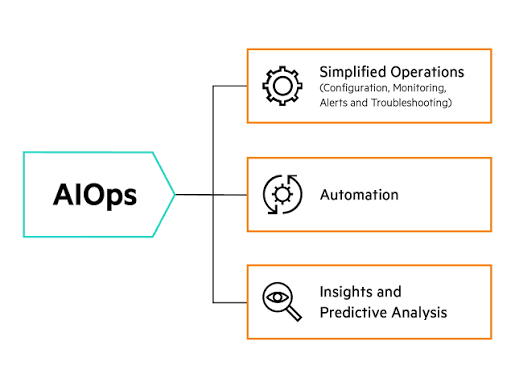
Use AIOps to investigate ML incidents and automate low-risk remediation without giving an AI system unrestricted production access.

Control what coding agents can read, change, execute, merge, and deploy with layered checks from context selection through production.

Reduce the impact of generated-code failures with Polyaxon workload configuration, Kubernetes admission and network controls, minimal credentials, and incident evidence.

Test AI agent permissions, memory, handoffs, retries, and tool actions with a practical security matrix and reproducible evaluation workflow.

Review the trust boundary for LLM-generated code before execution, mapping permissions, trusted controllers, output handling, and promotion controls in Polyaxon.

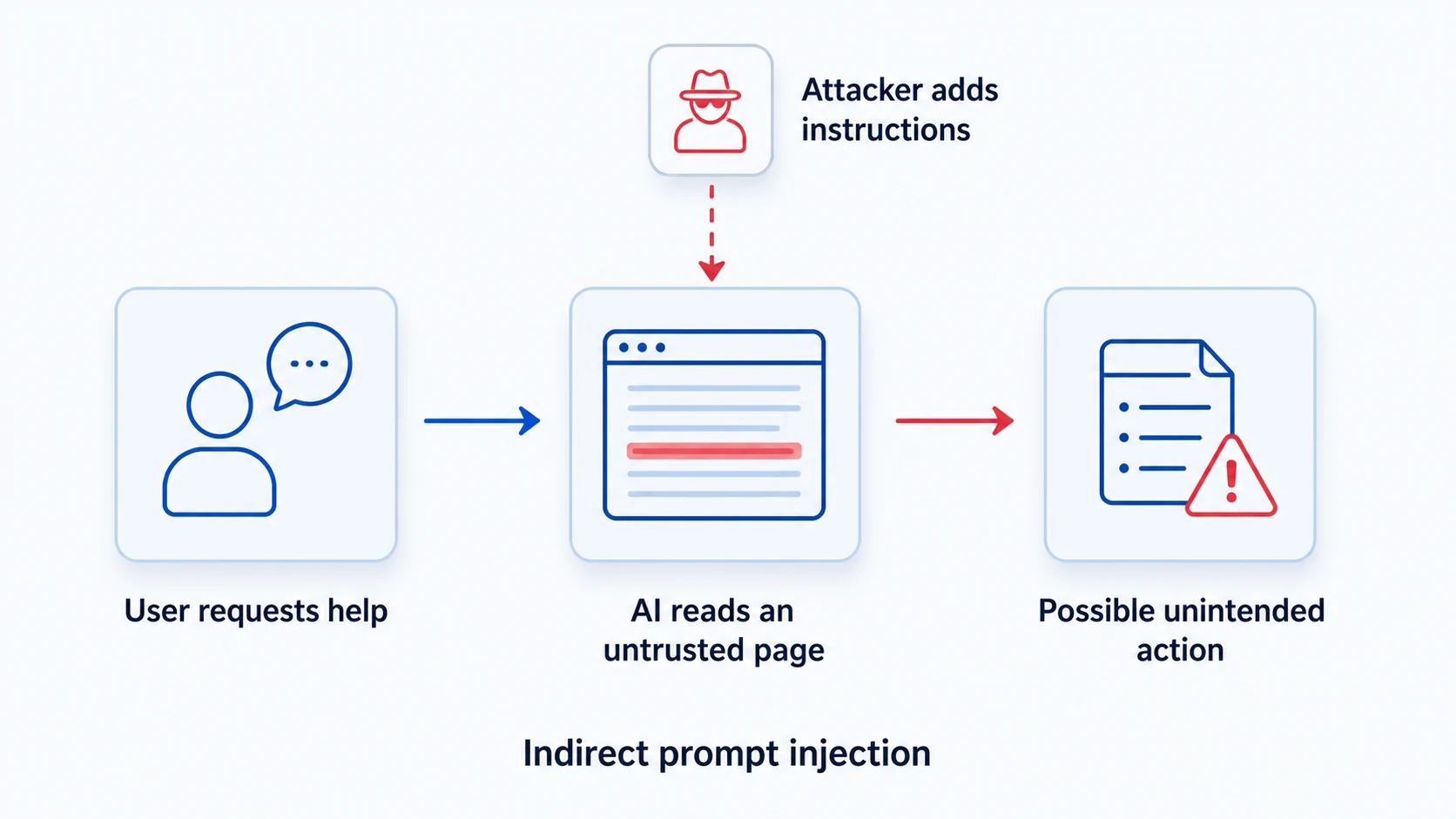
Build prompt injection tests for user input, retrieved documents, and tool responses, with checks for data access and actual side effects.

Manage Polyaxon sandbox-enabled services from versioned environment templates through readiness checks, process execution, file persistence, and resource cleanup.

Design least-privilege Kubernetes access for ML workloads with clear subjects, namespaced roles, dedicated service accounts, permission checks, and reviewable policy.

Route multi-tenant agent workloads through Polyaxon projects, queues, scoped connections, and explicit Kubernetes isolation and capacity policies.

Establish model trust through provenance, artifact inspection, reproducible evaluation, approval, runtime verification, monitoring, and rapid revocation.

Configure Polyaxon Python sandbox services with minimal privileges, controlled writable paths, bounded resources, and separate handling of untrusted LLM code.

Qualify AI-generated code with Polyaxon sandbox controls, tracked execution receipts, reusable evaluation jobs, artifacts, and explicit promotion boundaries.

Map AI execution data paths to Polyaxon compute placement, connections, artifacts, external providers, and documented residency controls.

Qualify AI-generated code for Polyaxon pipelines using immutable candidate identity, independent evaluation, explicit approval, and versioned release artifacts.