Secure AIOps automation for ML platforms
Use AIOps to investigate ML incidents and automate low-risk remediation without giving an AI system unrestricted production access.
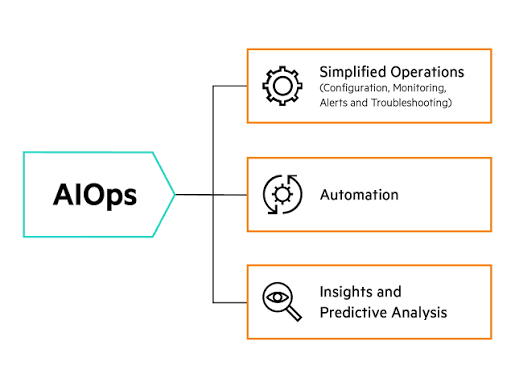
AIOps can reduce the time spent connecting an alert to the run, deployment, infrastructure change, or data condition that caused it. In an ML platform, however, the same system may also see experiment metadata, logs, model artifacts, cluster events, and cloud resources. Giving it permission to act turns a useful investigator into a privileged production principal.
The safe pattern is to separate what the system can observe, what it can recommend, and what it can execute. Automation then grows from evidence instead of starting with broad authority.
Separate the decision stages
Treat AIOps as four distinct stages:
| Stage | Output | Default authority |
|---|---|---|
| Detect | An anomaly with supporting signals | Read telemetry |
| Correlate | A candidate incident and affected resources | Read metadata and topology |
| Recommend | A proposed runbook action | No production write |
| Execute | A bounded, validated operation | One explicitly permitted action |
This separation matters because confidence in detection does not imply that a proposed remedy is safe. A GPU worker becoming idle may correlate with a failed process, but it can also be waiting for peers or data. Restarting it could destroy useful state or multiply a distributed job's failure.
Keep the recommendation as structured data: action type, target, reason, evidence references, predicted impact, rollback path, and expiry. Validate these fields outside the model before any executor accepts the request.
Build an action ladder
Group actions by reversibility, blast radius, and data sensitivity. A practical starting point is:
- Automatic: enrich an incident, collect diagnostics, label a run, or open a ticket.
- Constrained: pause a queued workload, retry an idempotent step, or scale inside a pre-approved range.
- Approved: terminate a running job, change resource requests, alter routing, or restore an artifact.
- Prohibited: disable audit controls, reveal credentials, broaden its own permissions, or delete evidence.
Run the system in observe-only mode first. Compare its proposals with the actions operators actually take and record false associations, unnecessary remediations, and missed incidents. Move an action upward only when the executor is deterministic, the rollback is tested, and the proposal has held up across representative failures.
The NIST AI Risk Management Framework playbook organizes risk work around govern, map, measure, and manage. That sequence is useful here: establish ownership and limits, map each action to affected systems, measure the proposal and outcome, then expand automation deliberately.
Give the executor less authority than the analyst
An investigative service may need to read many signals. Its executor does not. Create a separate workload identity per action class and grant only the verbs, namespaces, and external APIs that action needs. Do not pass a cluster administrator token or a general cloud credential through the model context.
Kubernetes RBAC good practices recommend minimum permissions and namespace-scoped bindings where possible. Apply the same principle to non-Kubernetes integrations. A runbook that annotates a Polyaxon run should not also have permission to delete artifacts or rotate credentials.
Validate the authenticated actor, requested target, current resource state, approval reference, and operation identifier at execution time. The model's natural-language statement that an action is approved is evidence to inspect, not authorization.
Treat telemetry as sensitive input
Logs and traces routinely contain dataset paths, request fragments, user identifiers, environment variables, and occasionally secrets. Minimize what enters the correlation layer, redact known sensitive fields before indexing, and restrict access to raw evidence. Store references to protected artifacts instead of copying their contents into every prompt.
Also treat log messages, ticket descriptions, and model outputs as untrusted content. They can contain text that resembles instructions. The correlation system may summarize that content, but it should never convert it directly into an executable command.
Retain the provenance of every observation: source, collection time, run or deployment identifier, and any transformation applied. Without provenance, a plausible incident narrative can silently combine events from different tenants or time windows.
Preserve an action ledger
For every proposal, record the telemetry references, system and policy versions, structured action, authorization result, approver, executor response, and resulting state. Kubernetes auditing provides a chronological record of API activity; join it with the AIOps decision record rather than treating either source as complete on its own.
Measure more than alert volume. Useful operating metrics include correlation precision, time to a supported diagnosis, accepted recommendation rate, completed unauthorized actions, rollback rate, duplicate actions, operator overrides, and time saved per resolved incident. Report them per action tier because a harmless diagnostic and a workload termination carry different consequences.
Apply the pattern with Polyaxon
Use Polyaxon tracking to connect metrics, logs, parameters, and lineage to the affected run. Preserve incident fixtures, proposed actions, and sanitized evidence as artifacts. Run replay and failure-injection scenarios through pipelines before enabling a new automation tier.
Polyaxon supplies the workload context and reproducible execution history. Authorization for an external remediation still belongs in the executor and the systems it calls. Keeping those responsibilities separate lets AIOps accelerate investigation without making a probabilistic component the final security boundary.