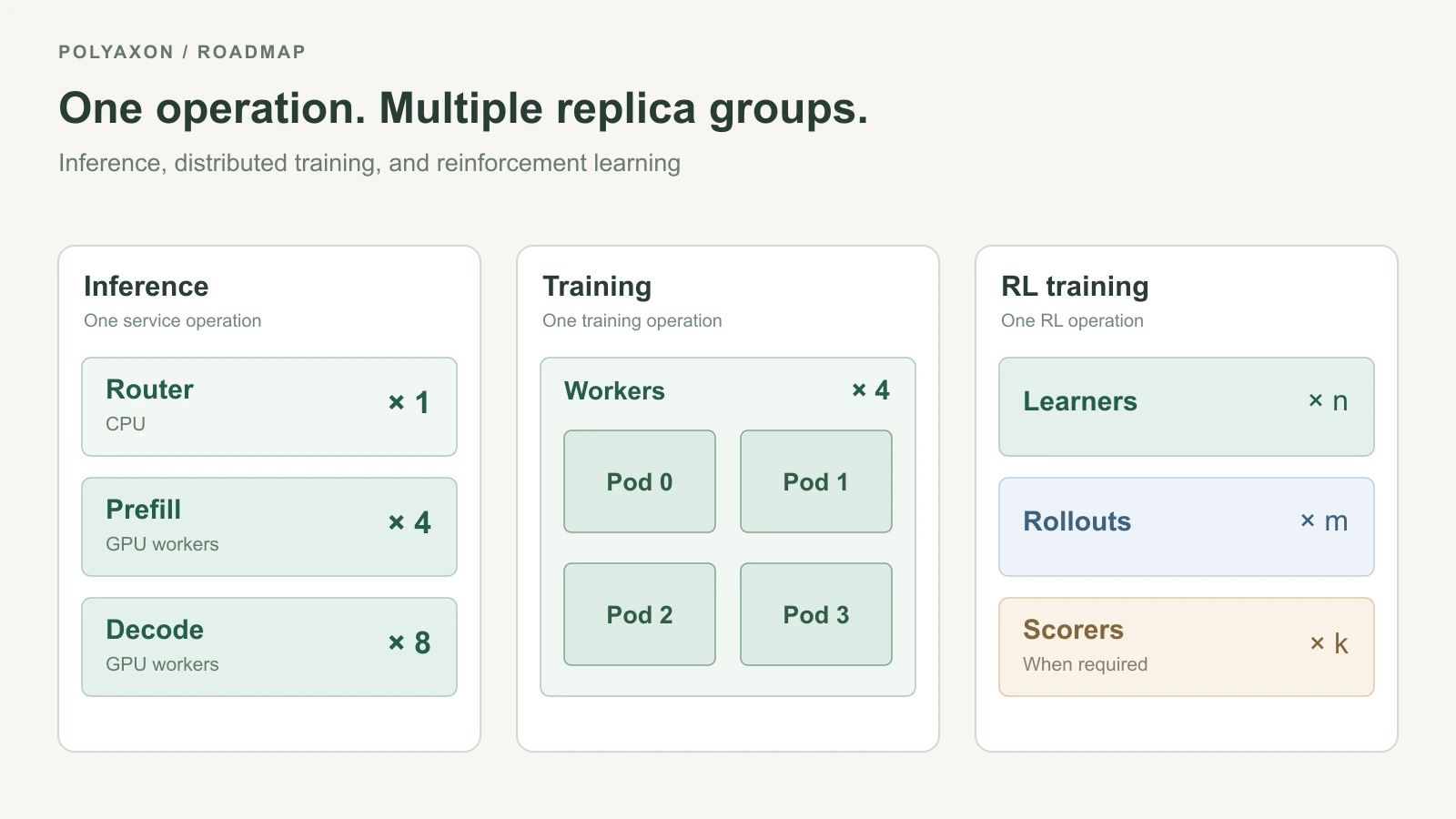
One replica model for inference, training, and RL
Polyaxon's roadmap for named replica groups, heterogeneous services, coordinated training, and RL workloads across Kubernetes scheduling backends.
RoadmapPolyaxonKubernetes
The latest guides, tutorials, and product updates.
Polyaxon's roadmap for named replica groups, heterogeneous services, coordinated training, and RL workloads across Kubernetes scheduling backends.
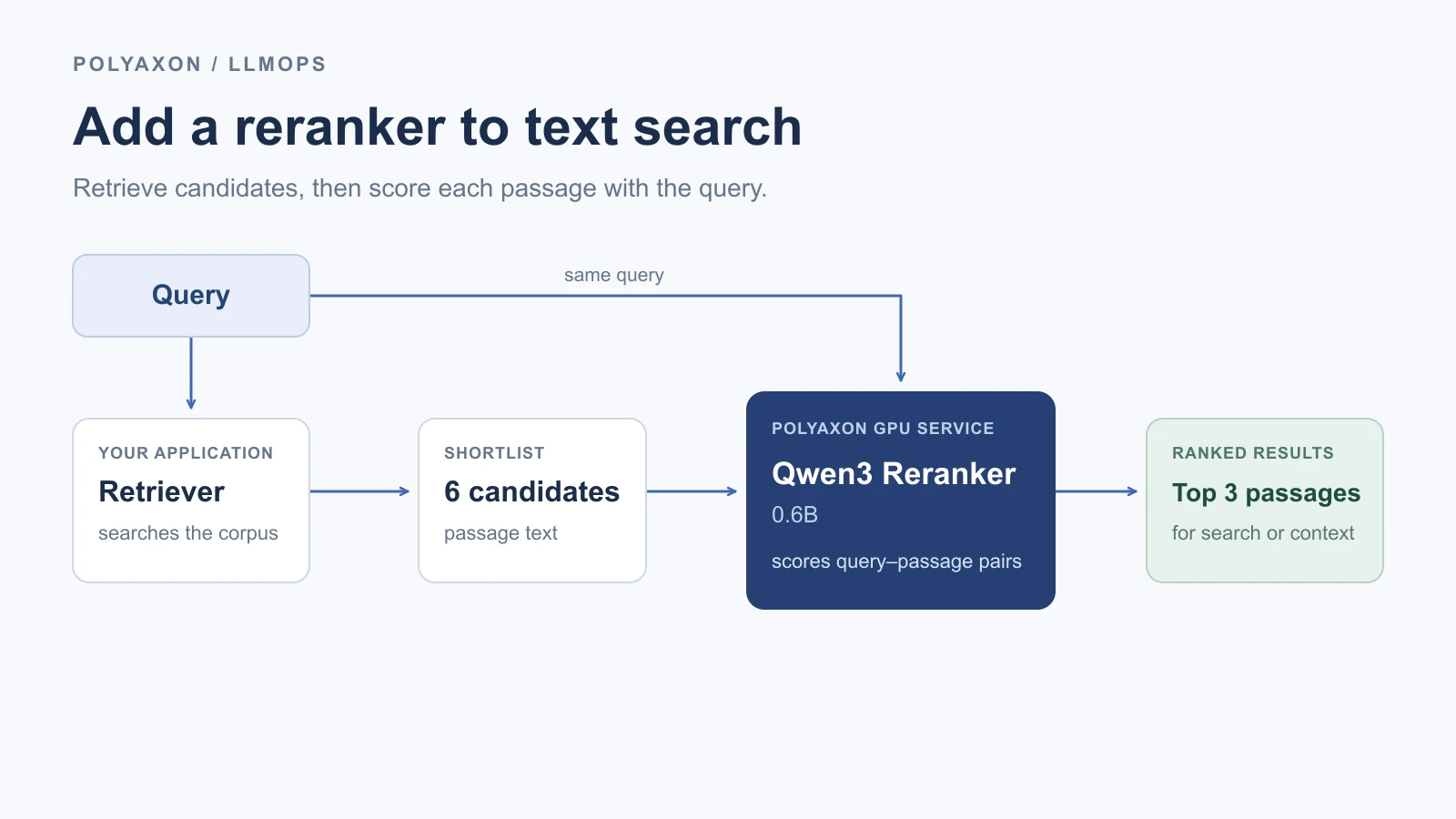
Deploy Qwen3-Reranker-0.6B as a Polyaxon GPU service, rerank a text-search shortlist, and compare relevance against added latency.
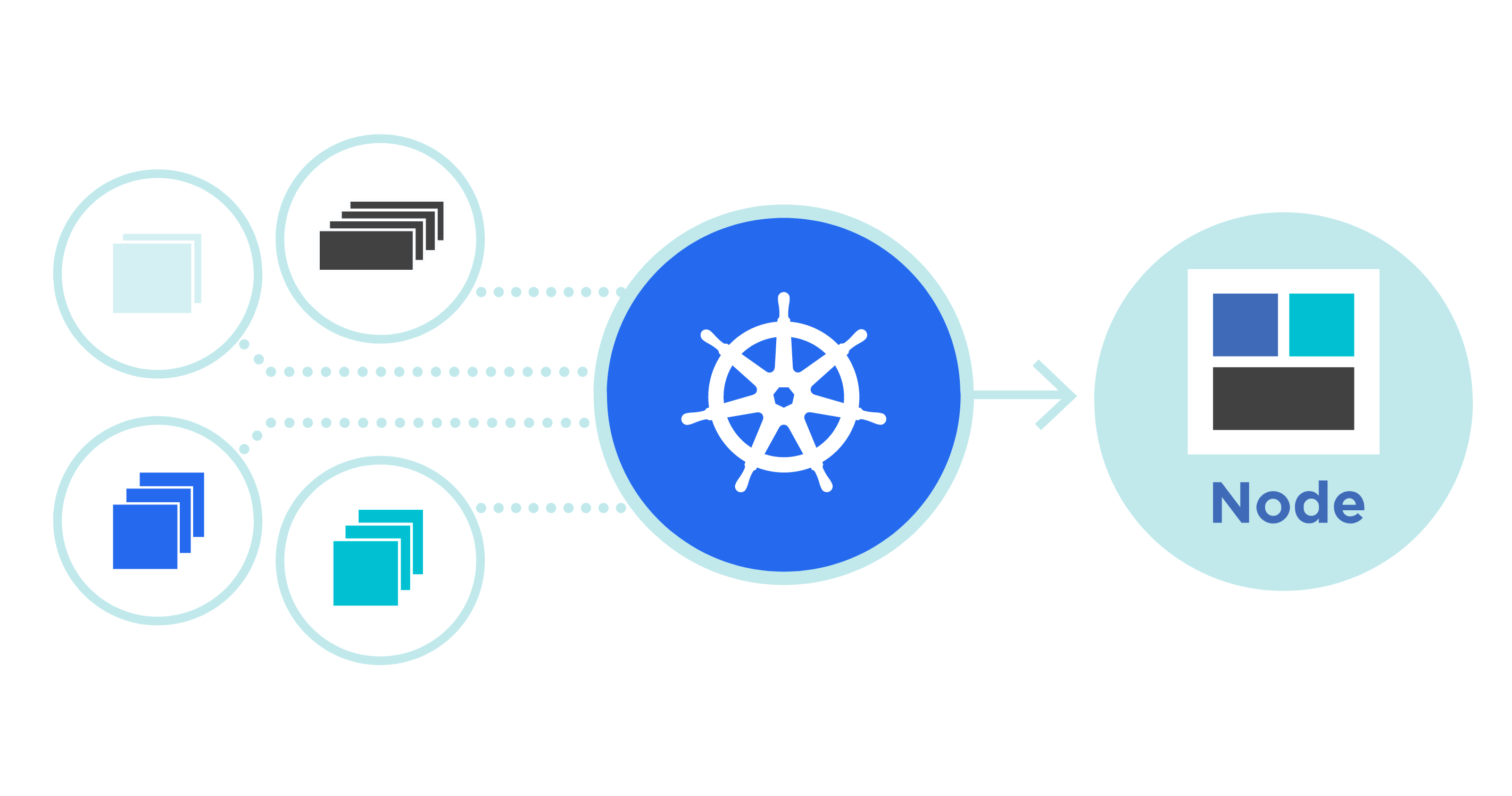
Use topology spread constraints for inference availability, understand minDomains and GPU capacity, and preserve placement intent in Polyaxon.
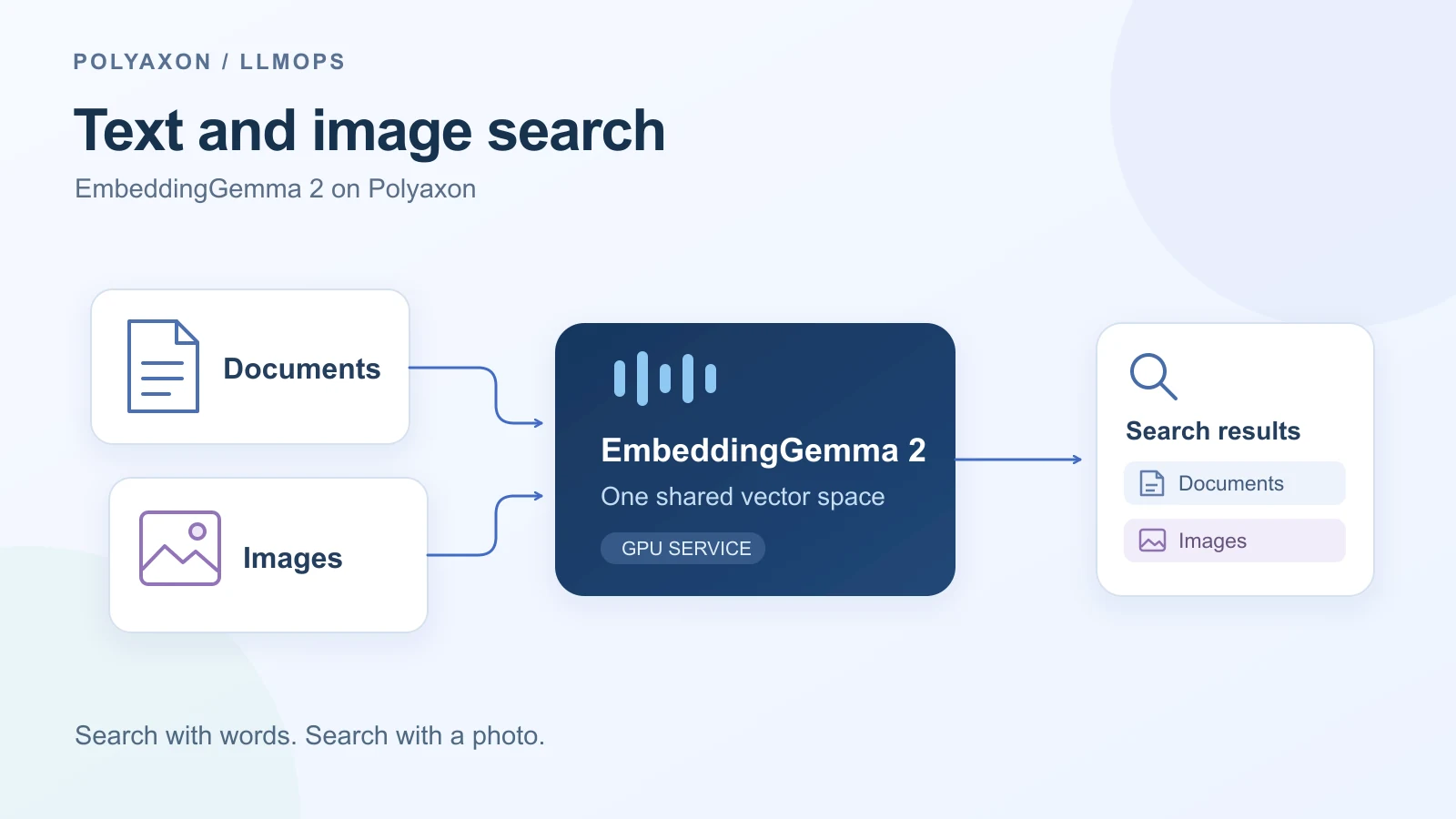
Deploy EmbeddingGemma 2 as a Polyaxon GPU service, then use text or an image to search a mixed collection of documents and photos.
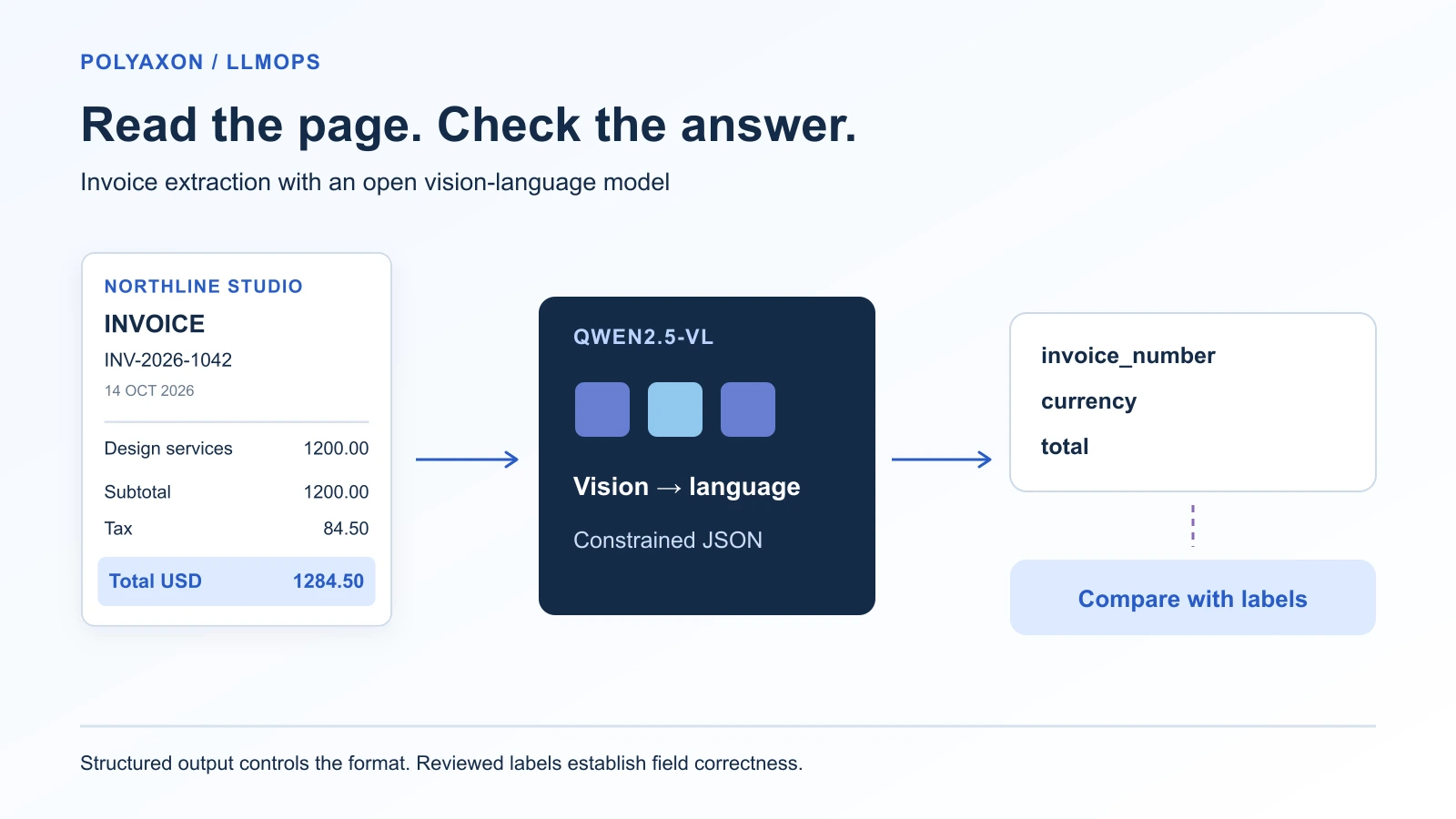
Serve an open vision-language model on your GPU cluster, extract typed invoice fields, and evaluate whether the values actually match the document.
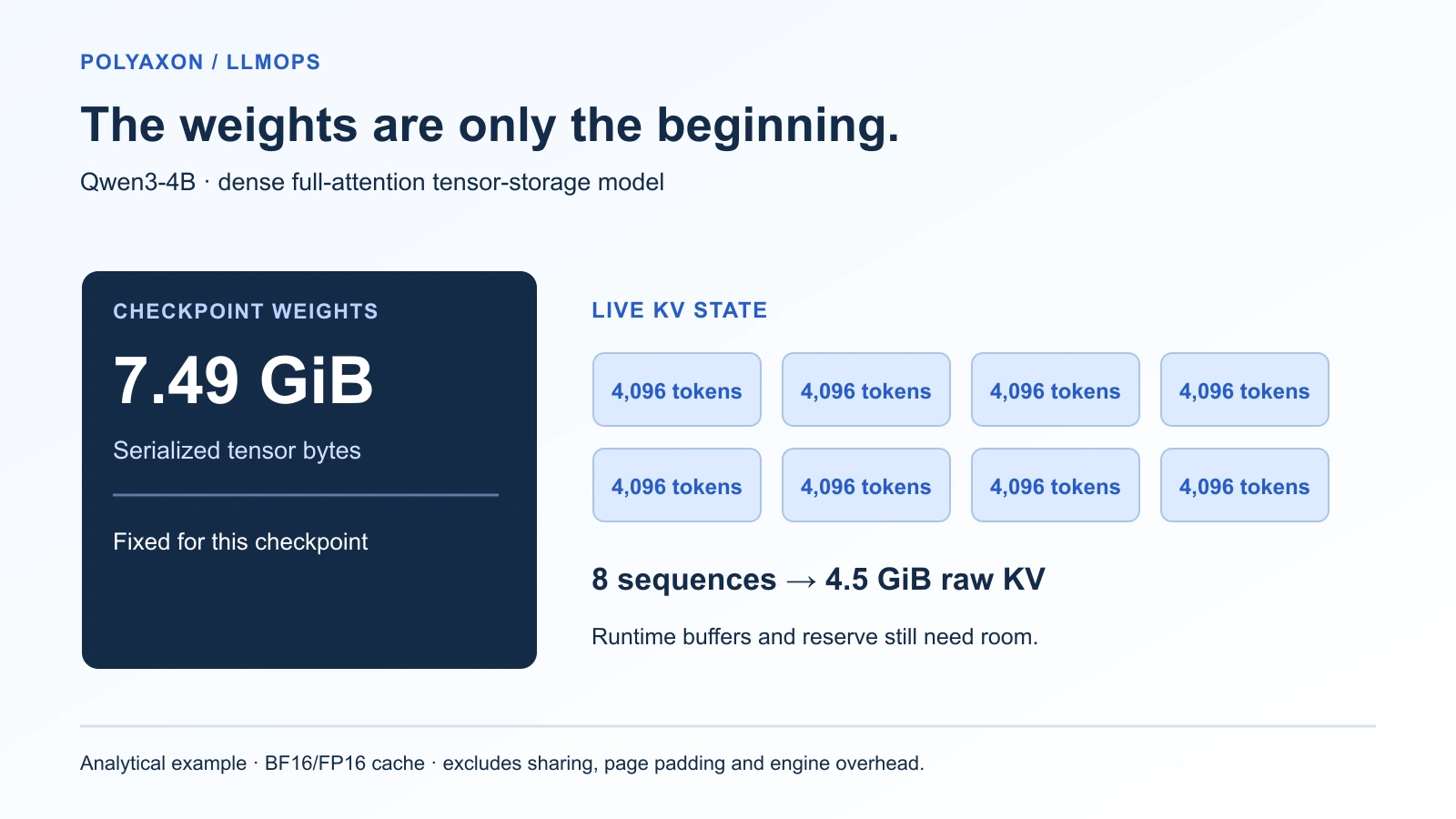
Calculate Qwen3-4B weight and KV-cache storage, understand what the estimate excludes, and use a Polyaxon service to check the actual capacity.
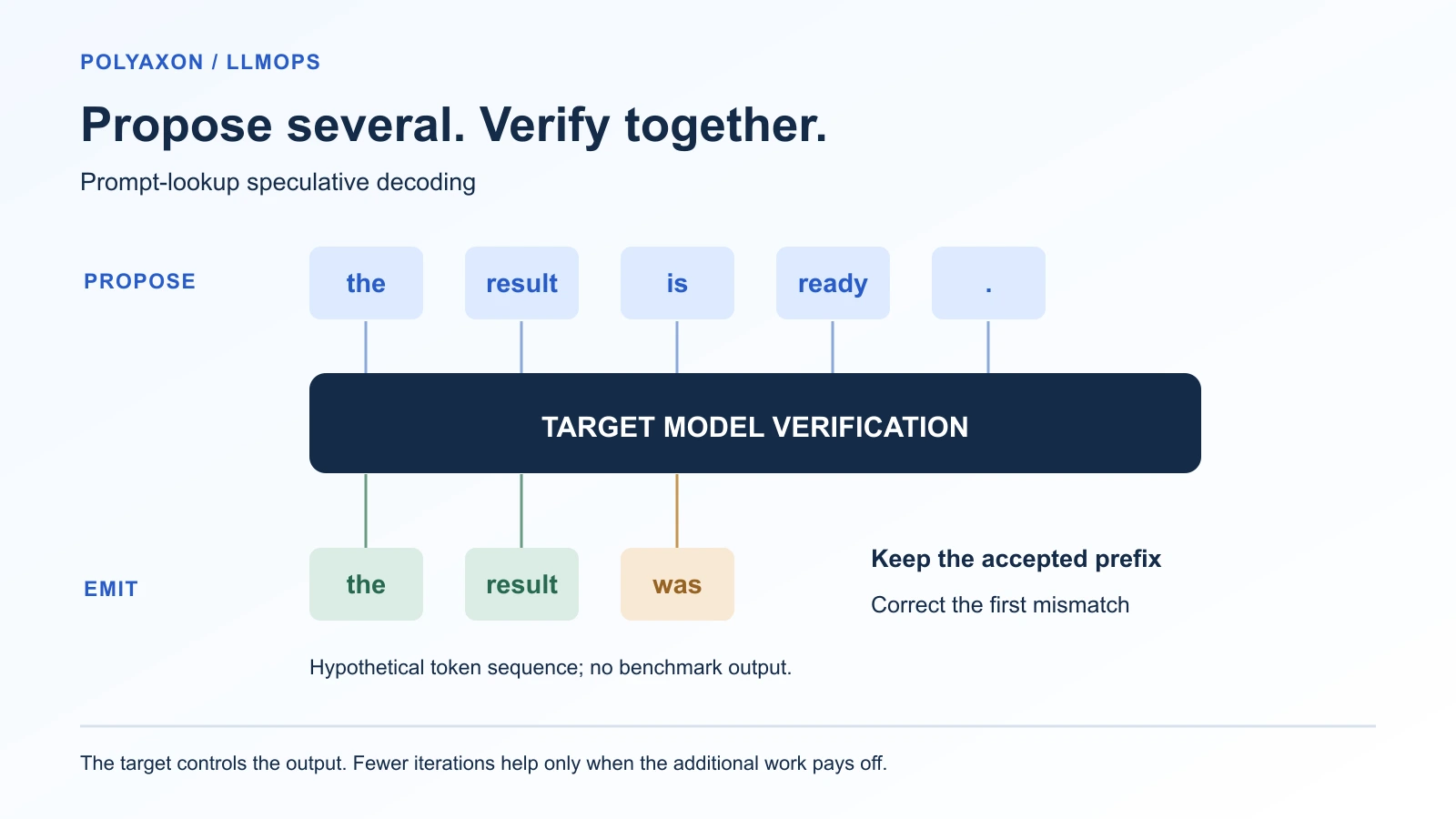
Compare ordinary decoding with prompt-lookup proposals under the same model, workload, and GPU allocation, including latency, failures, and output checks.
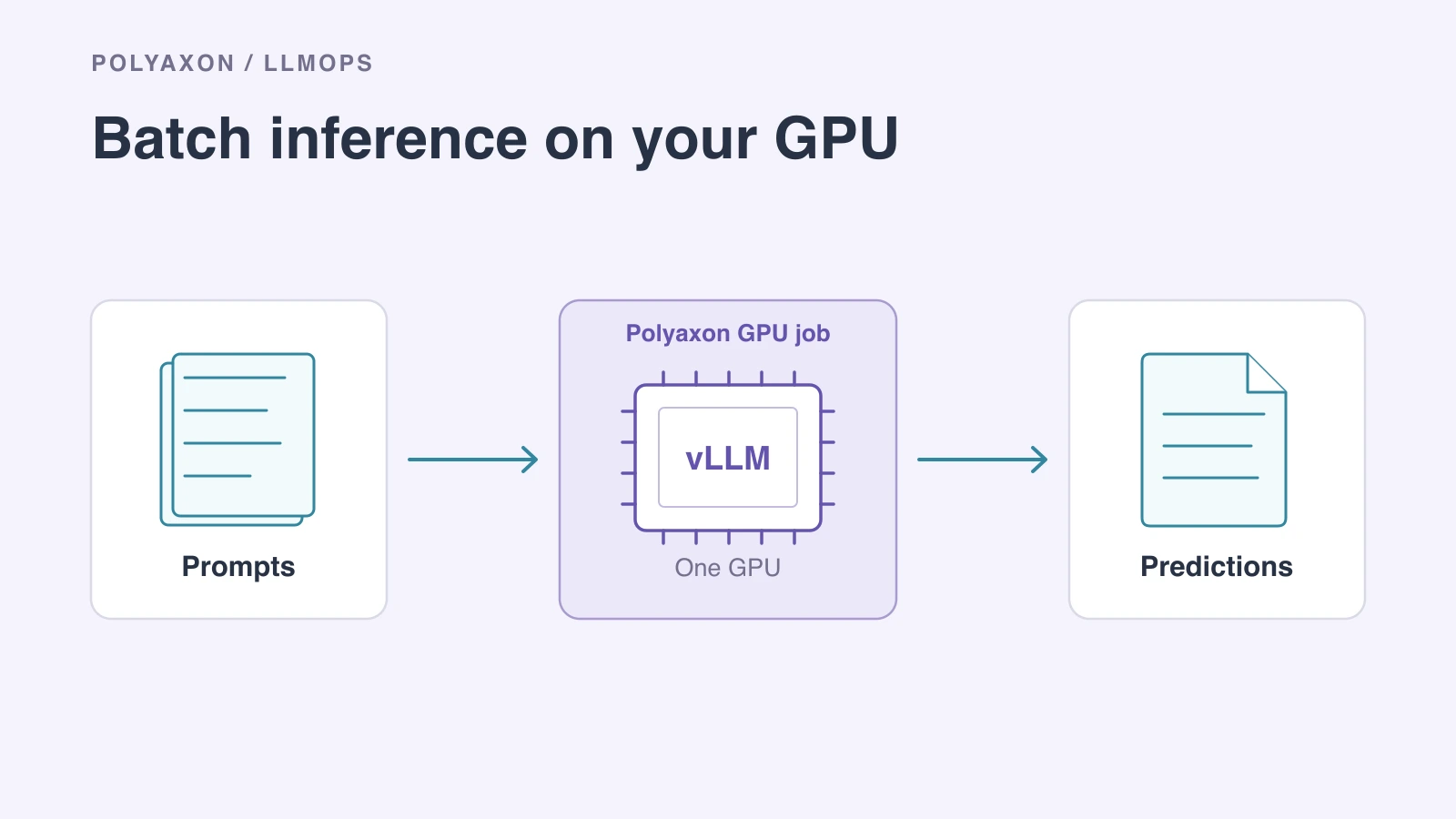
Generate predictions from a JSONL prompt file with vLLM, schedule the work on a Polyaxon GPU agent, and save the results as run artifacts.
Set a PodDisruptionBudget around usable inference capacity, inspect blocked evictions, and account for replacement GPUs and model warmup.
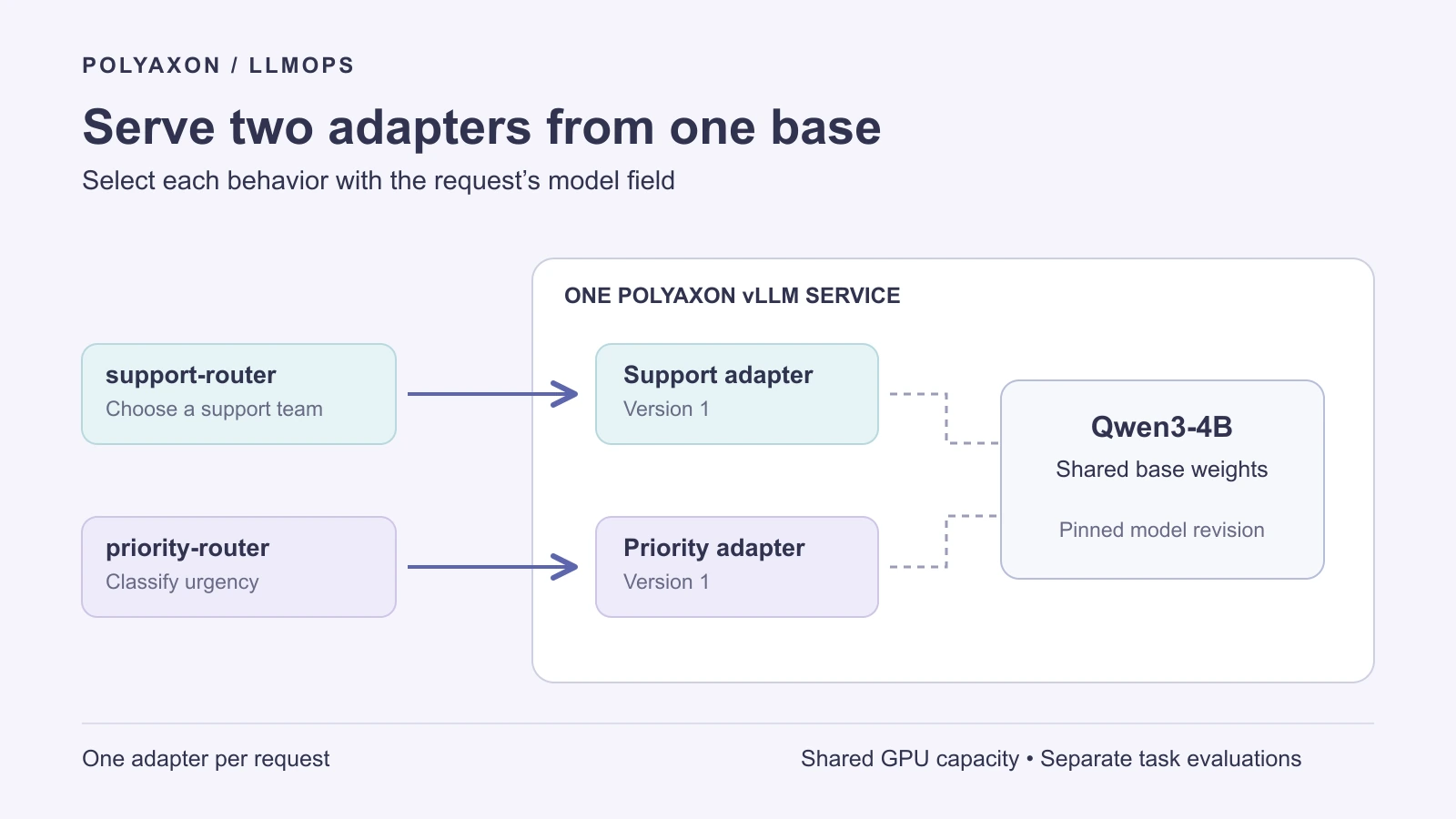
Deploy two task-specific LoRA adapters over one Qwen base model, select them by name, and measure quality and shared GPU capacity with Polyaxon.
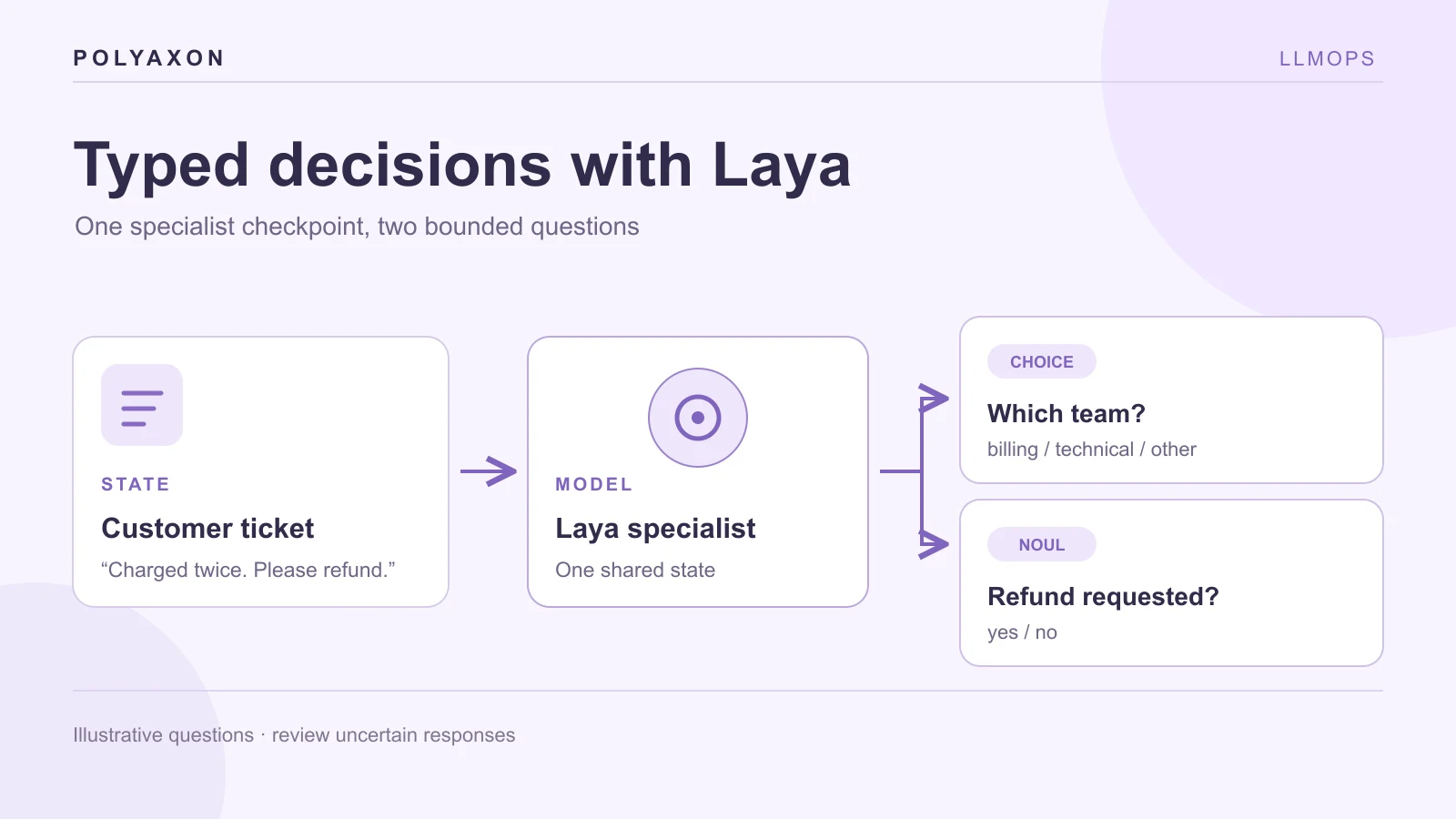
Serve the open Laya typed-decisions checkpoint through Polyaxon, with a CPU classifier endpoint, explicit model scope, and a review path for uncertain classifications.
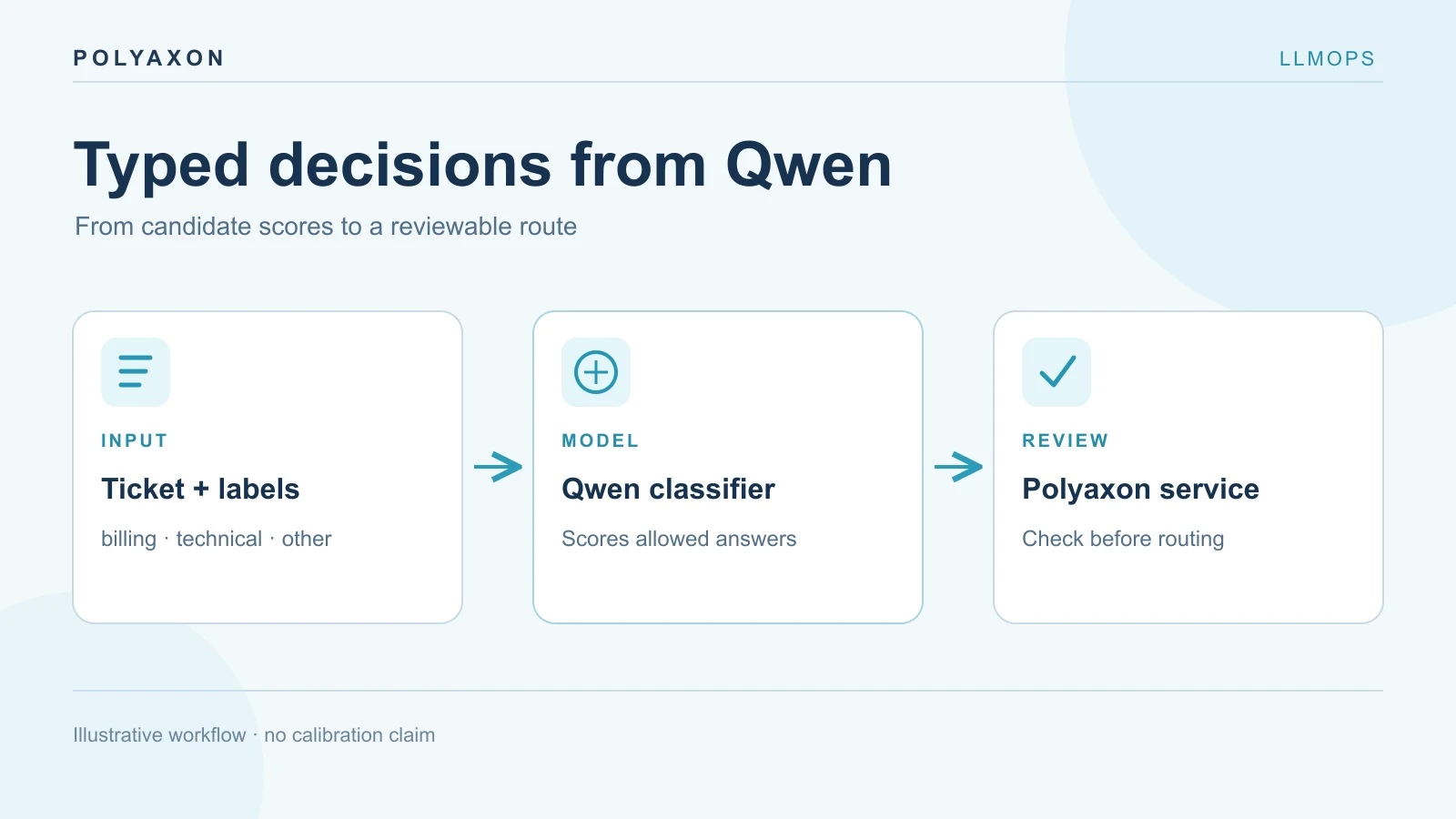
Deploy an open Qwen model behind a typed classification API on Polyaxon, then check the decision schema and calibration before routing real work.
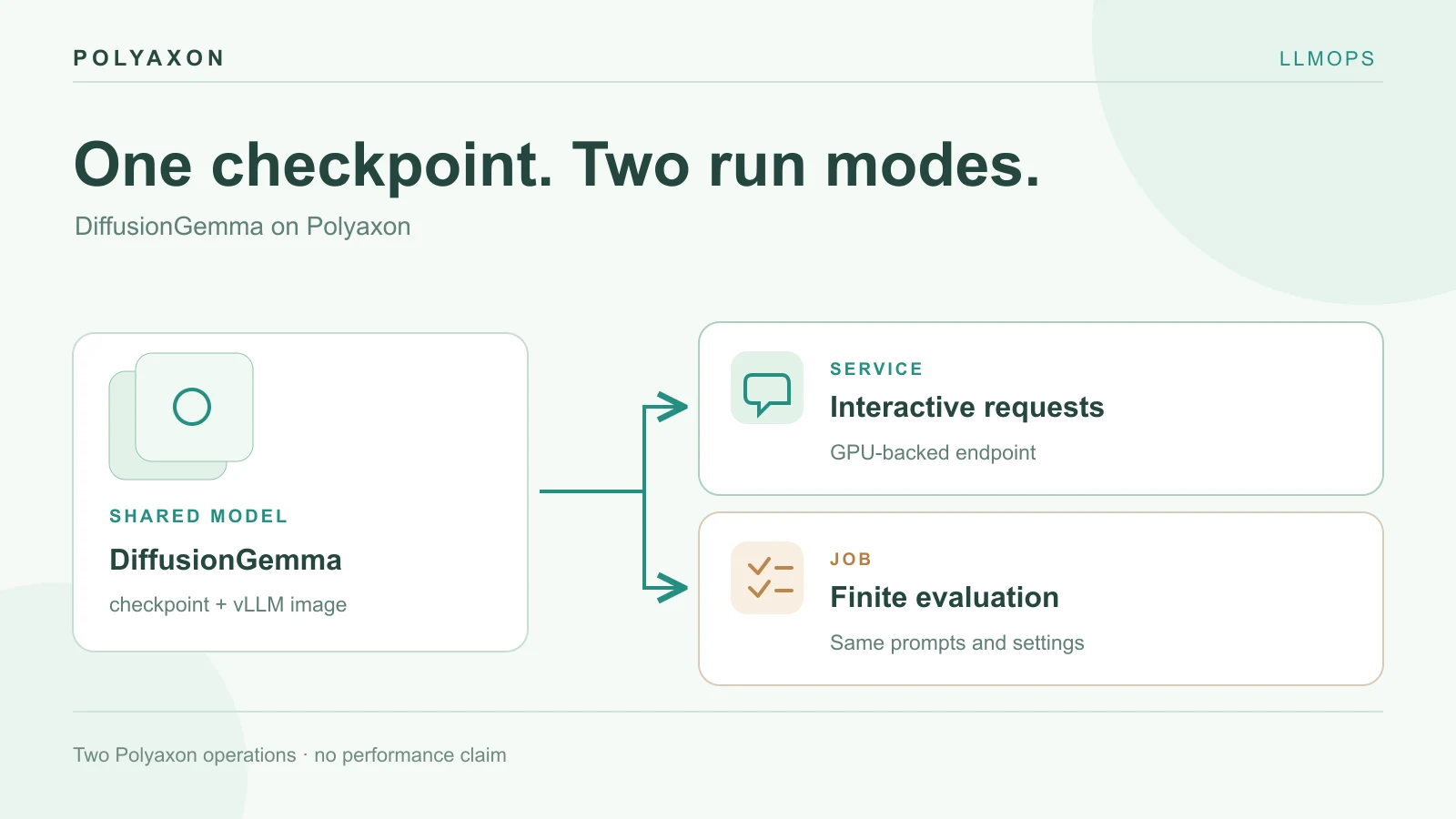
Adapt Google's Gemma-on-Kubernetes deployment choices to Polyaxon with a DiffusionGemma vLLM service, a batch evaluation job, and an explicit compatibility checklist.
Understand exact prefix reuse in vLLM, structure repeated context, account for replica routing, and compare cold and warm workloads with Polyaxon.
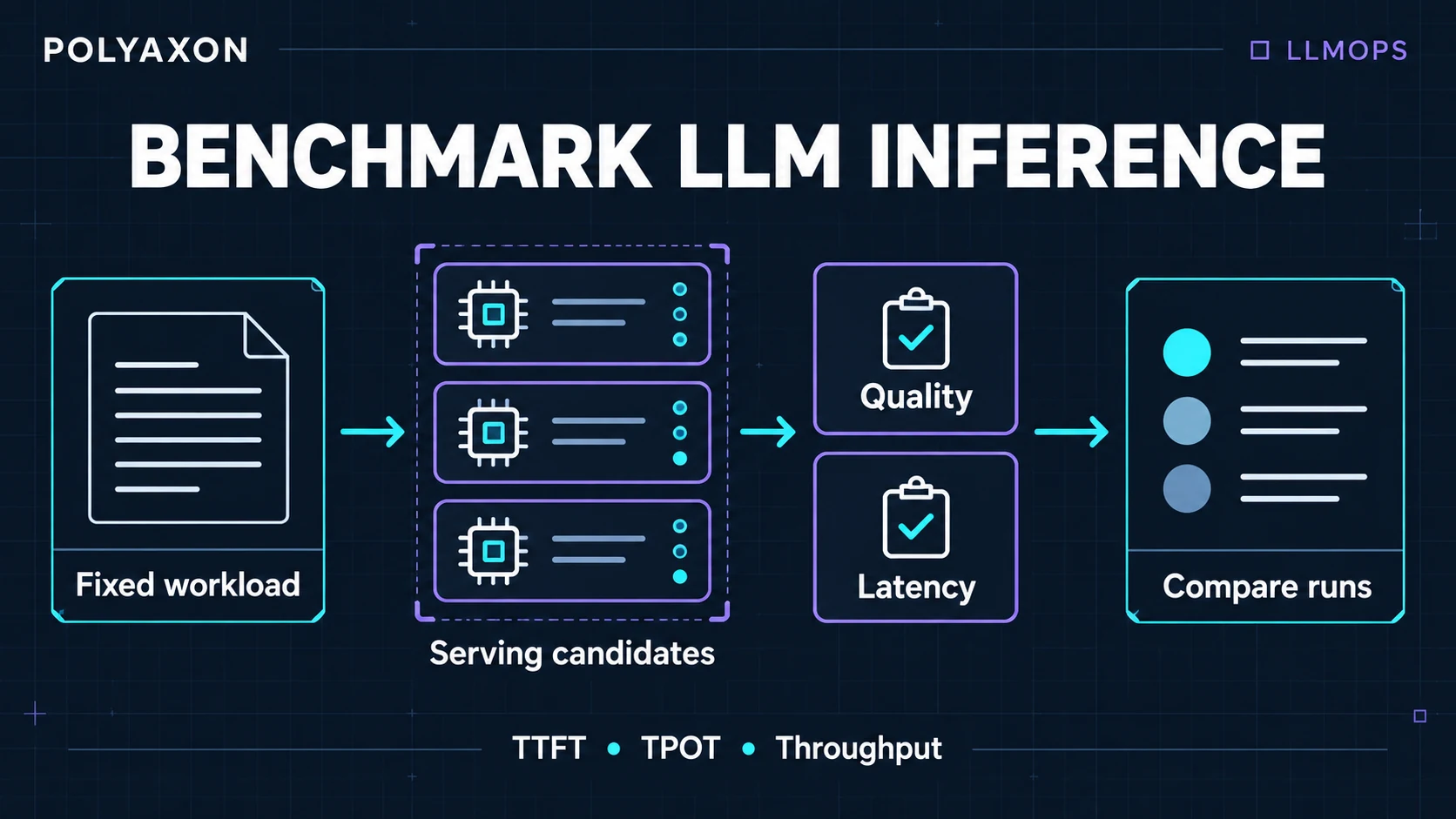
Compare inference optimizations against a fixed workload, latency limits, and quality checks, with benchmark configurations and results tracked in Polyaxon.
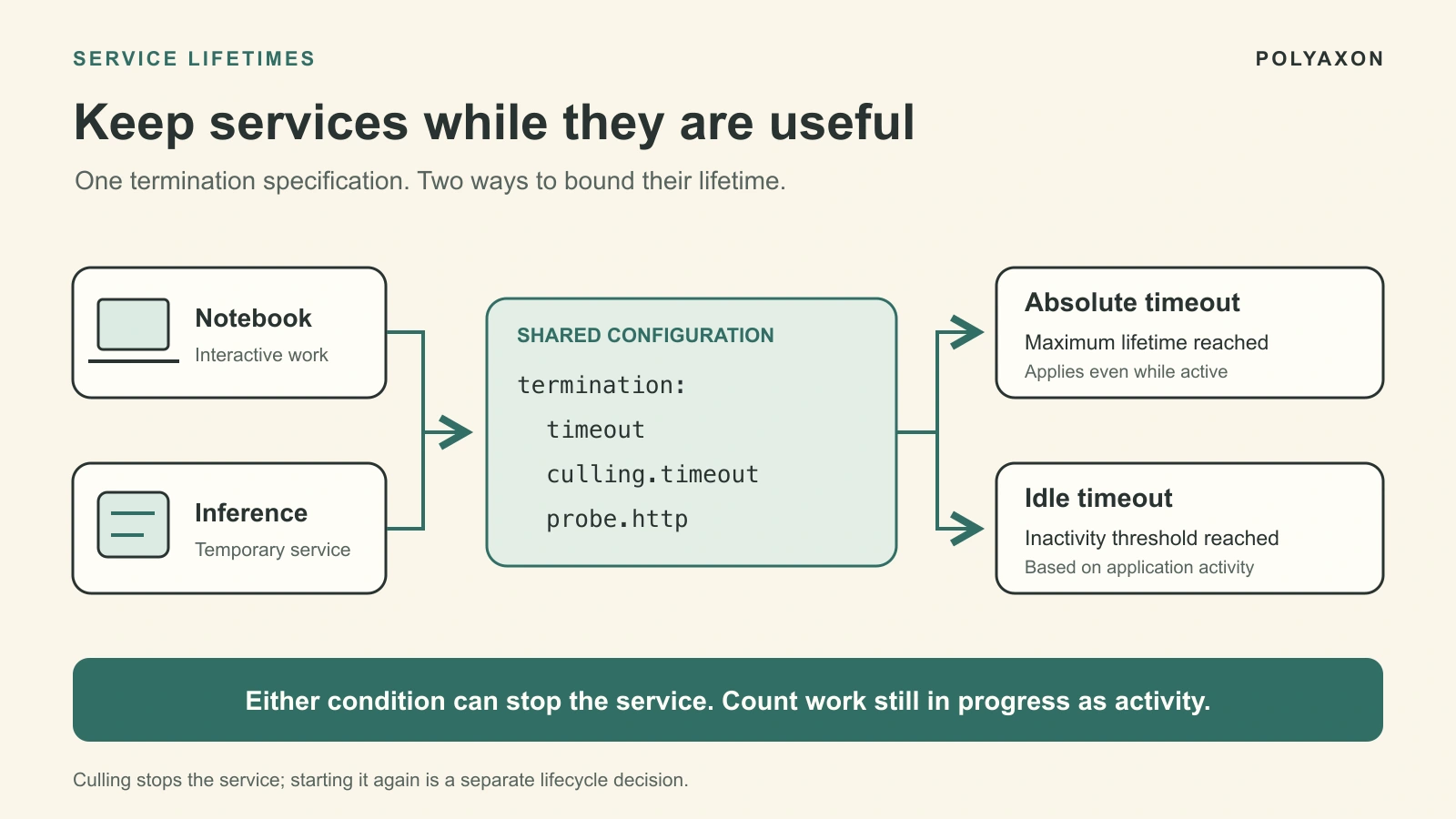
Reuse Polyaxon's termination specification to bound notebook and inference service lifetimes, stop idle services, and distinguish inactivity from ongoing work.
Separate immutable model files from the serving image with Kubernetes image volumes, and choose when an OCI artifact fits better than a download or PVC.
Use custom metrics with Kubernetes HPA for independent inference replicas, account for model startup, and distinguish desired replicas from usable capacity.
Plan GPU inference rollouts around surge capacity, temporary reduced availability, model warmup, and request draining with a worked Deployment scenario.
Use Pod-level resource budgets for cooperating containers, understand the remaining isolation boundaries, and evaluate the fit for ML services.
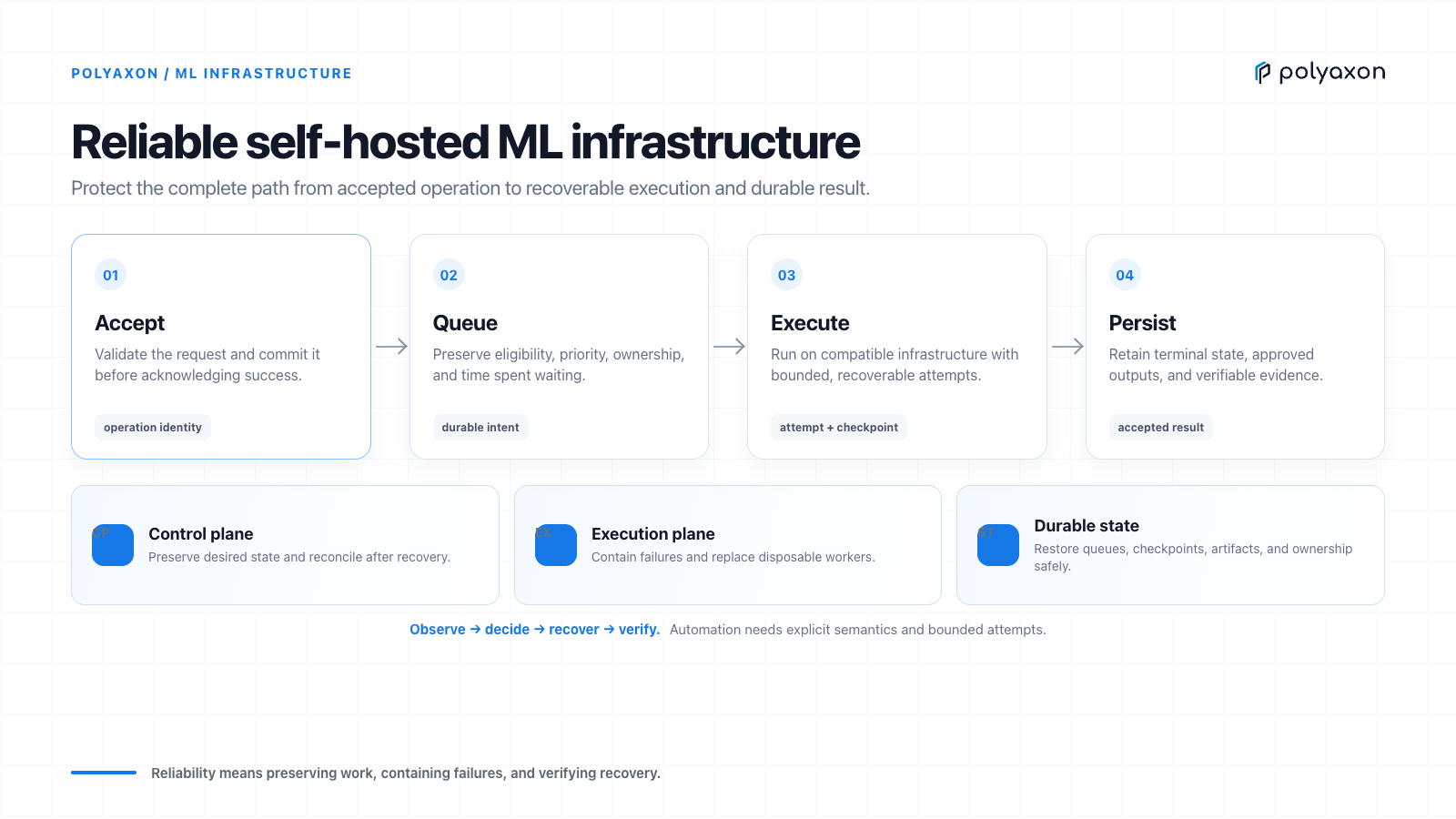
Choose between self-hosted and managed AI inference using data policy, model access, latency, utilization, reliability, staffing, and cost per accepted outcome.
Configure a DeepSeek V4 Pro service on B200 GPUs and check model loading, reasoning output, tool calls, and resource use.
Use Polyaxon components, matrices, tracking, and run comparisons to evaluate serverless model APIs against dedicated inference services on quality, latency, and cost.
Deploy Qwen3.6-27B with SGLang, then check the model's API behavior, memory use, and response quality before sending it production traffic.