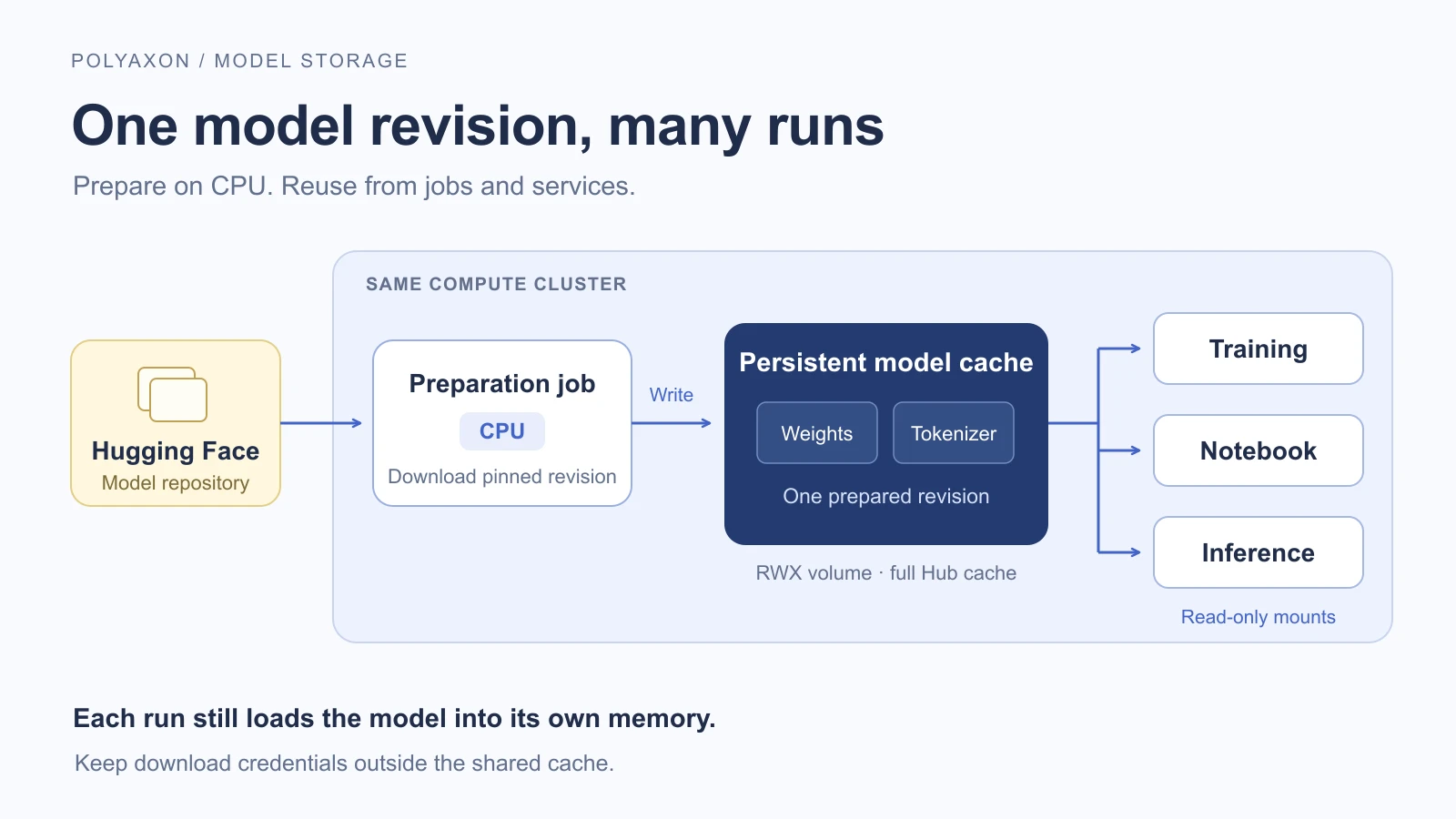
Reuse Hugging Face weights across Polyaxon runs
Prepare a pinned model revision in a CPU job, then reuse its files from read-only storage in Polyaxon training, notebook and inference workloads.
LLMOpsHugging FaceStorage
The latest guides, tutorials, and product updates.
Prepare a pinned model revision in a CPU job, then reuse its files from read-only storage in Polyaxon training, notebook and inference workloads.
Set PyTorch CPU threads, DataLoader workers, and native-library thread counts together within a Kubernetes container's CPU budget.
Inspect /dev/shm, size DataLoader prefetching, and configure shared memory for PyTorch jobs on Kubernetes and Polyaxon.
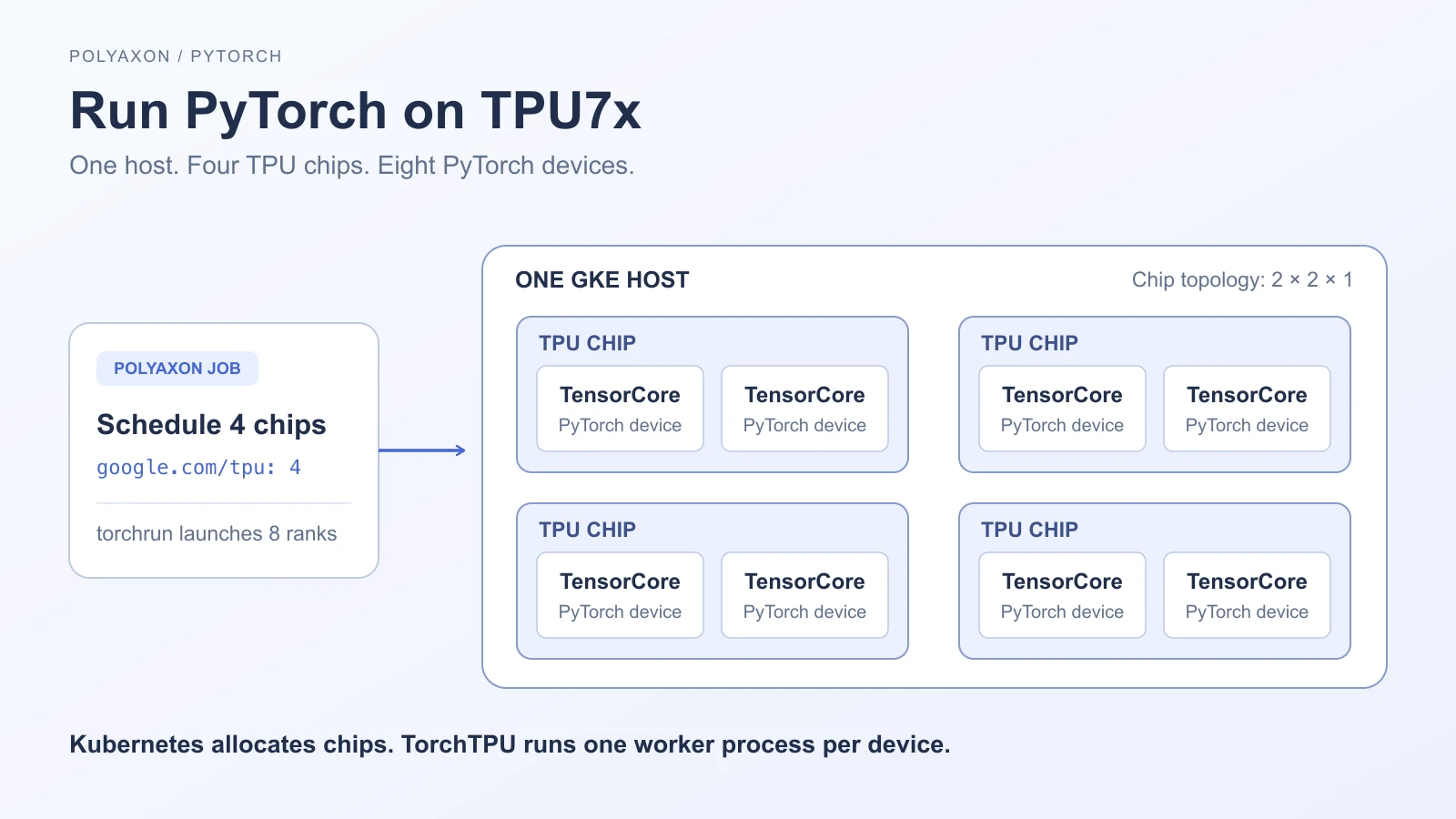
Deploy TorchTPU through a simplified Polyaxonfile, train with eight PyTorch workers on four TPU7x chips, and track metrics and model weights.
Use Kubernetes Job TTLs to bound finished workload retention, preserve logs and artifacts separately, and configure the same policy through Polyaxon.
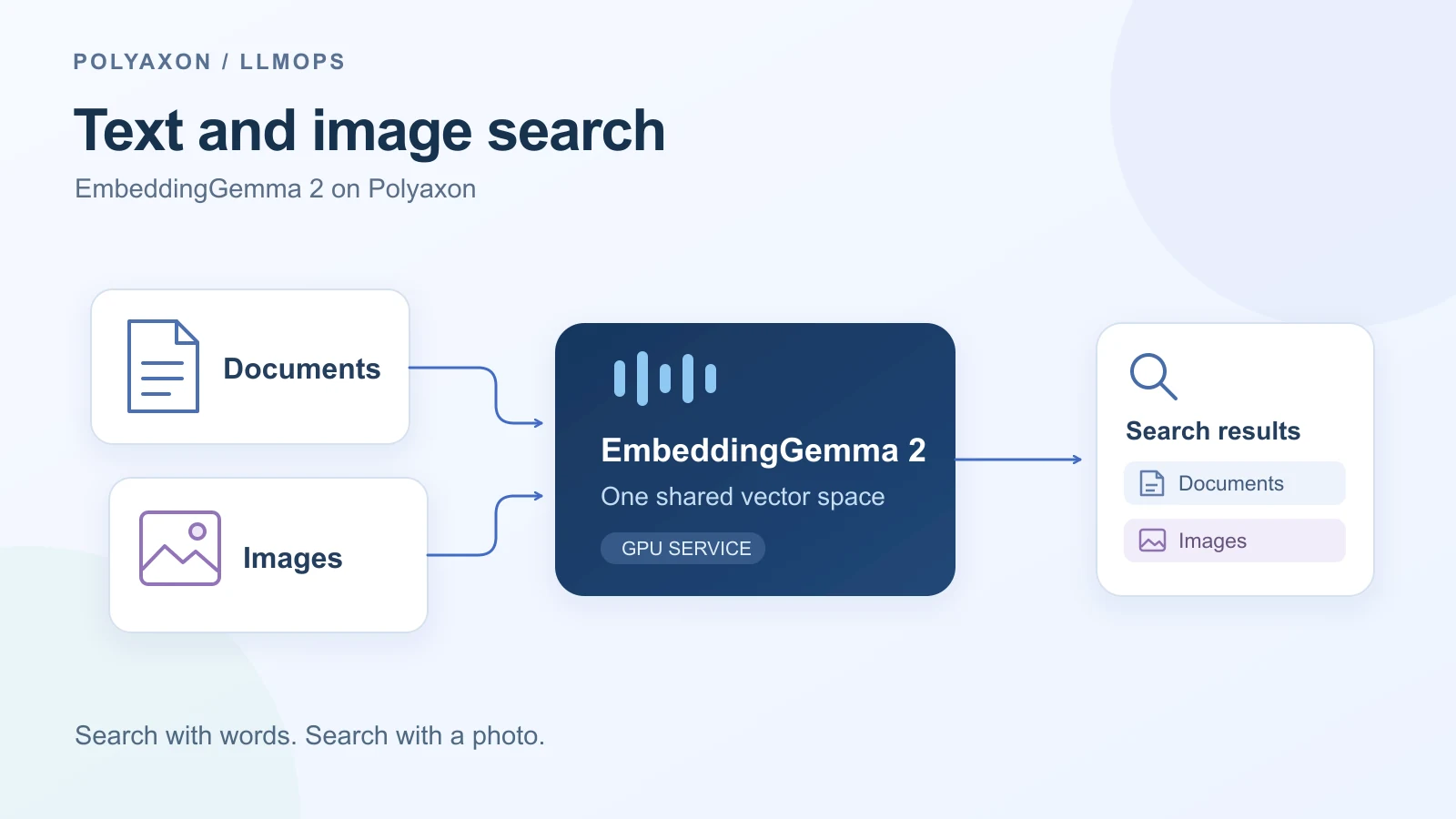
Deploy EmbeddingGemma 2 as a Polyaxon GPU service, then use text or an image to search a mixed collection of documents and photos.

Use eStargz and containerd for lazy image pulls, then measure a Polyaxon GPU job through its first completed CUDA operation.
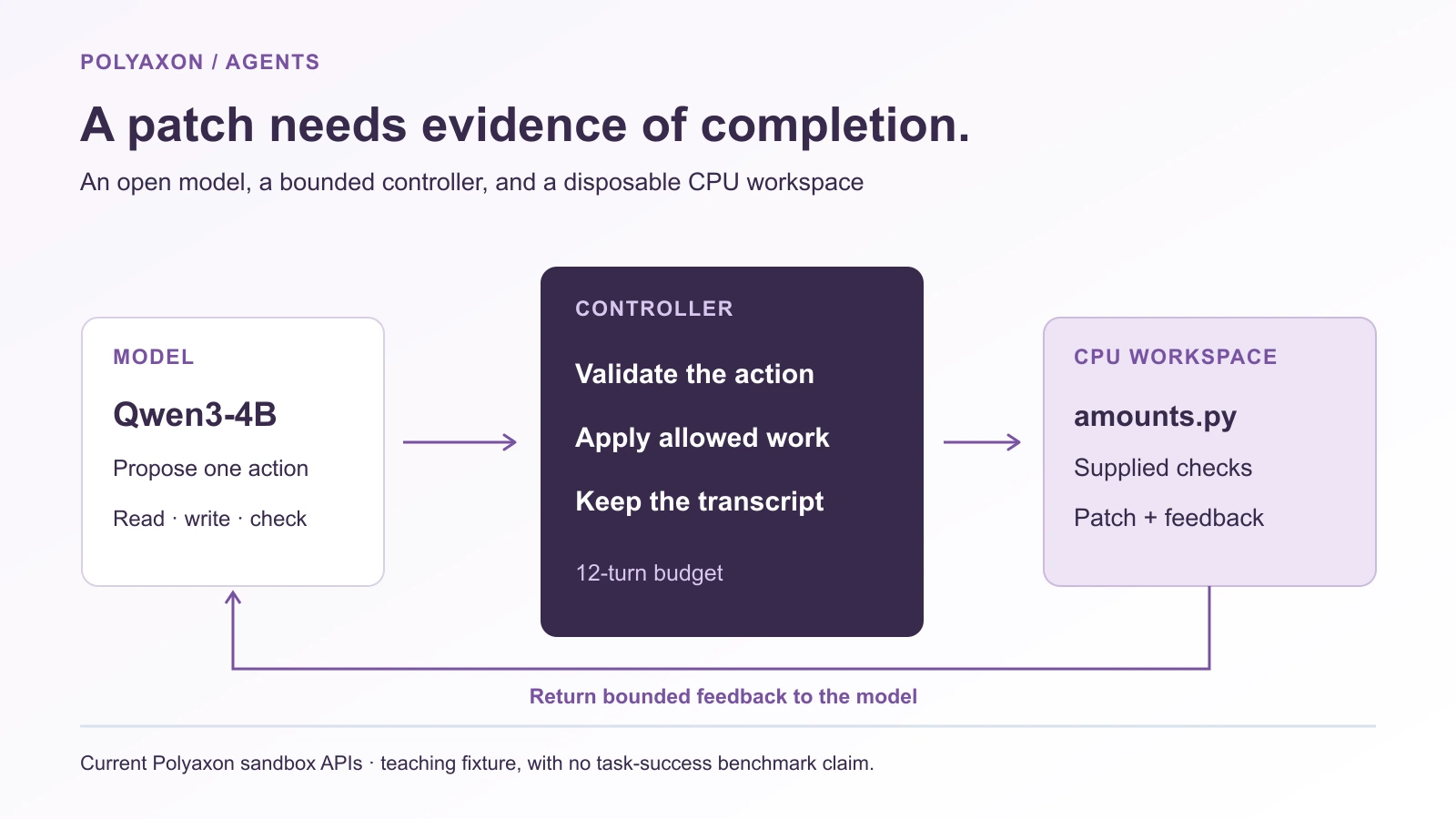
Give an open model a bounded read, edit, and check loop in a Polyaxon workspace, then retain the patch and evidence behind its completion claim.
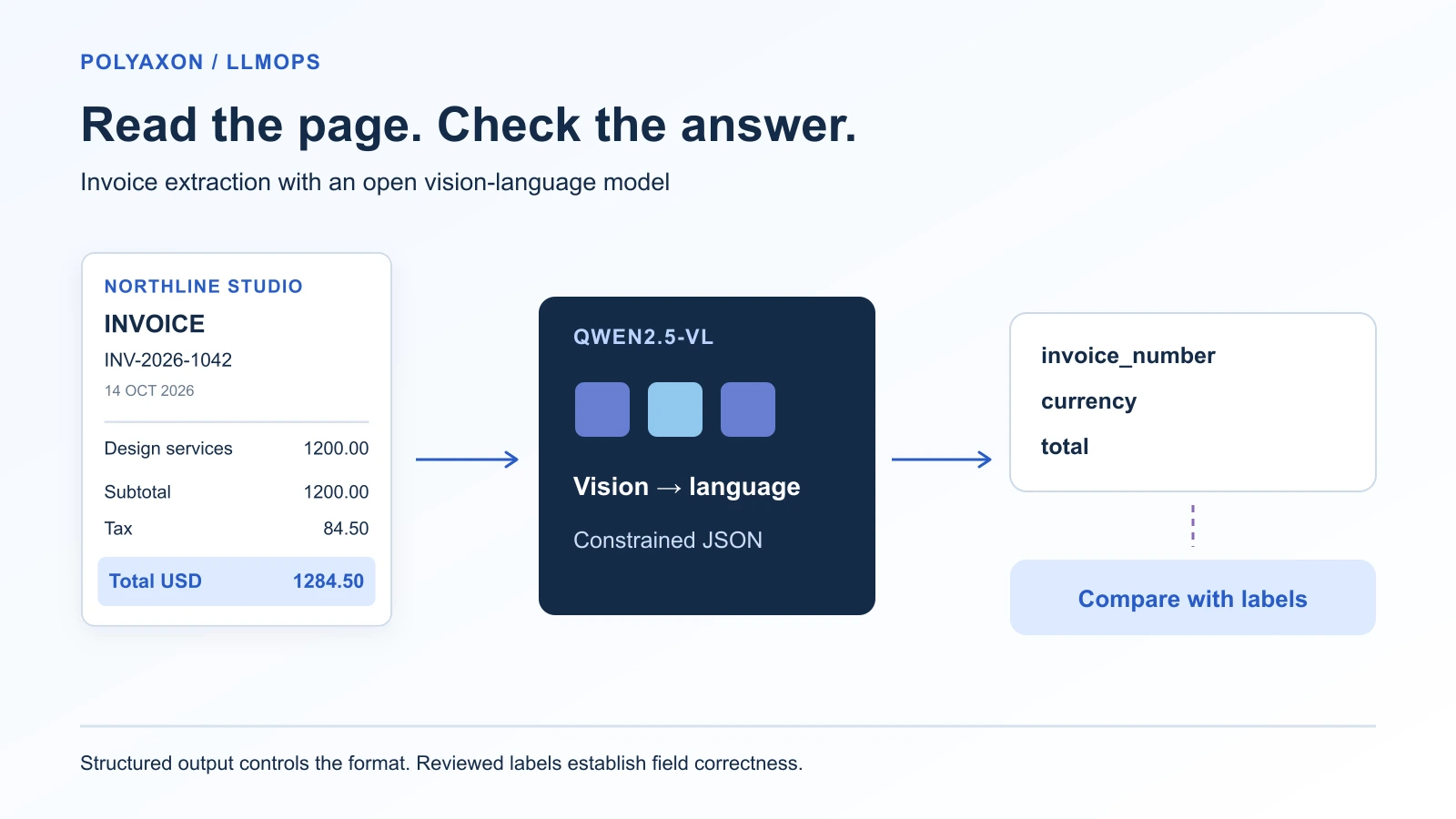
Serve an open vision-language model on your GPU cluster, extract typed invoice fields, and evaluate whether the values actually match the document.
Run synchronized training and inference workers on Polyaxon, compare MIG with time-slicing, and measure the shared interval rather than misleading solo utilization.
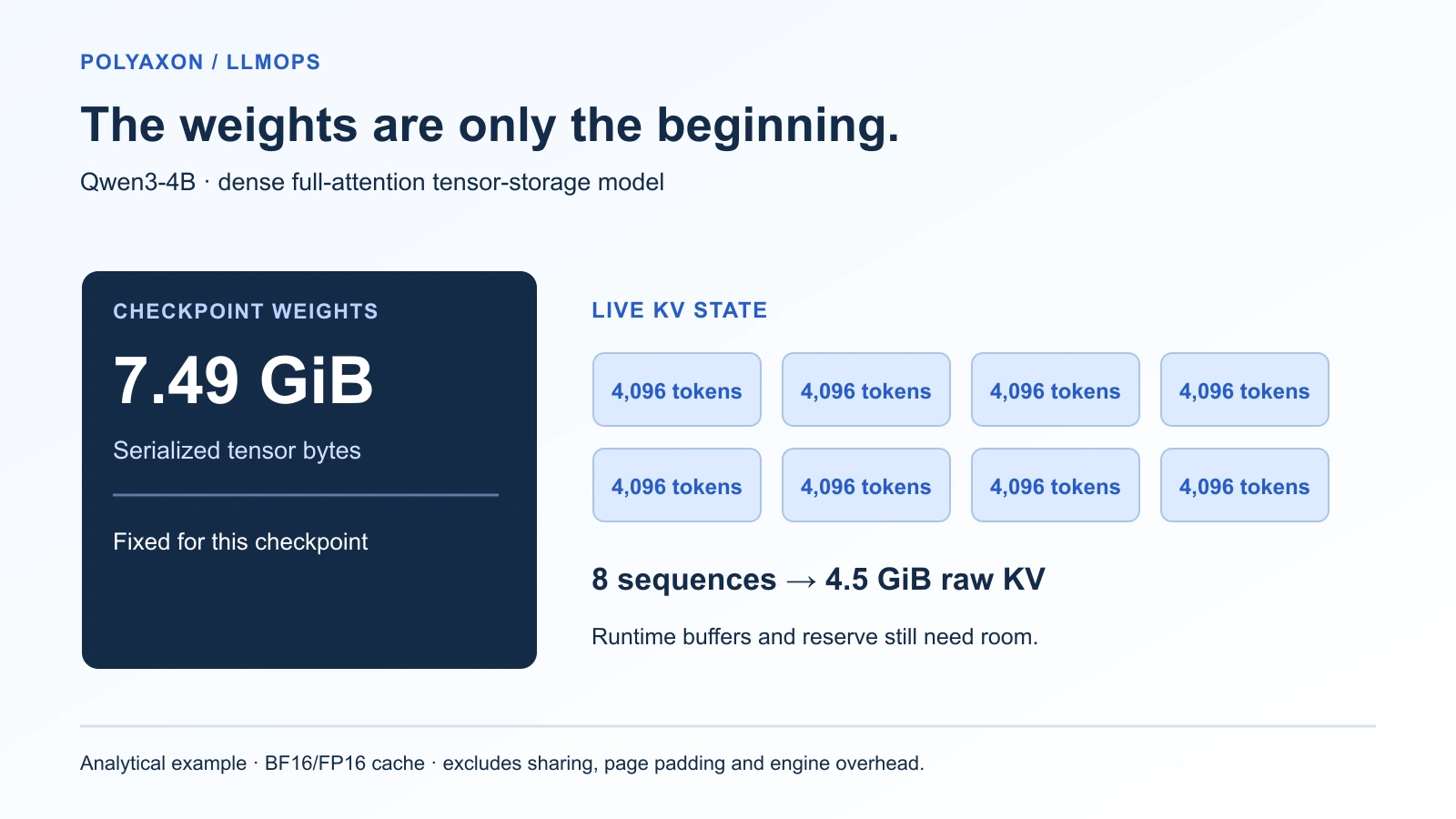
Calculate Qwen3-4B weight and KV-cache storage, understand what the estimate excludes, and use a Polyaxon service to check the actual capacity.
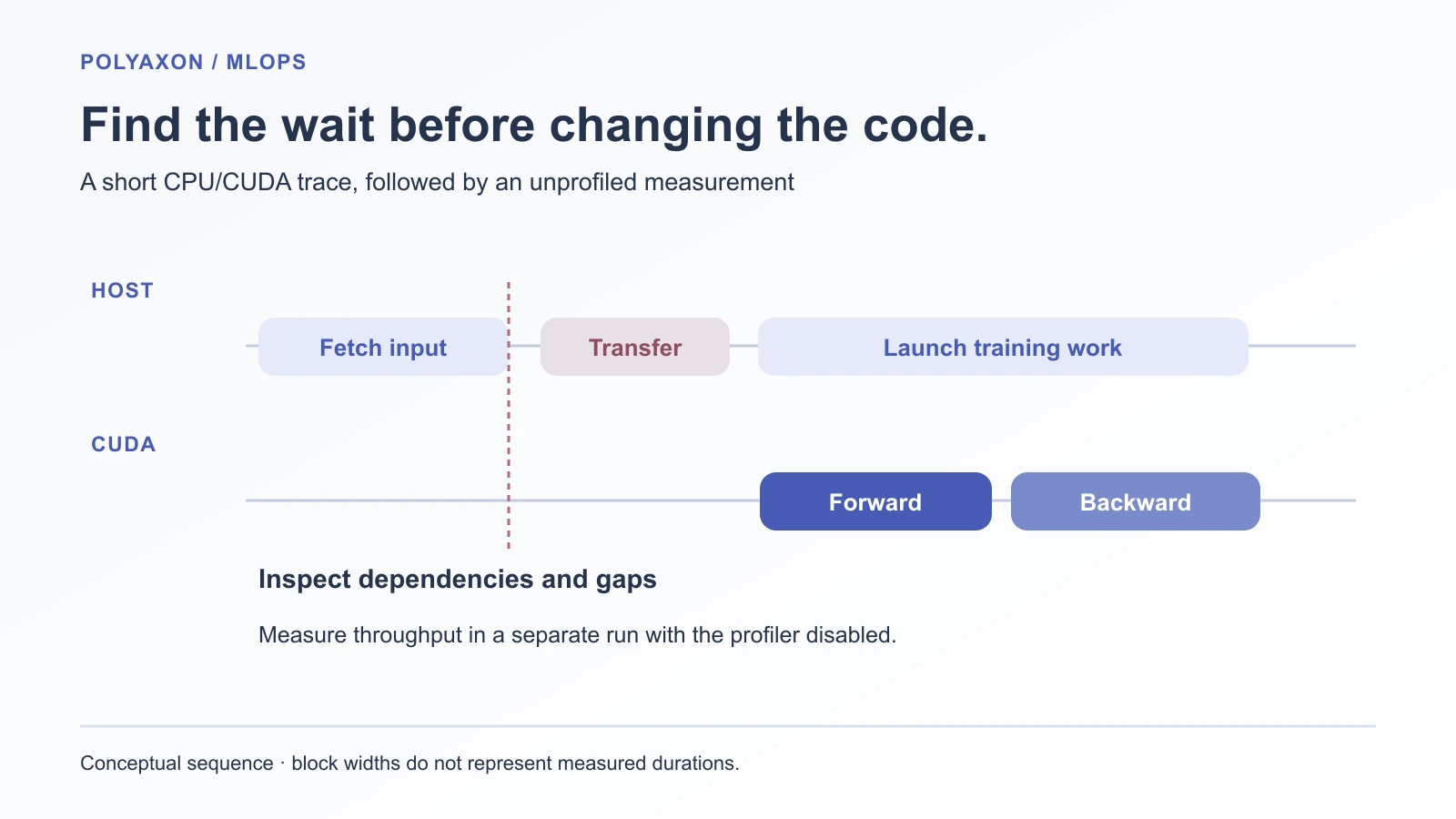
Capture a short CPU/CUDA trace, identify whether input loading or GPU work is delaying training, and measure a targeted change without profiler overhead.
Give urgent GPU evaluations or notebooks higher Kubernetes scheduling priority without evicting running training Pods, and select the policy in Polyaxon.
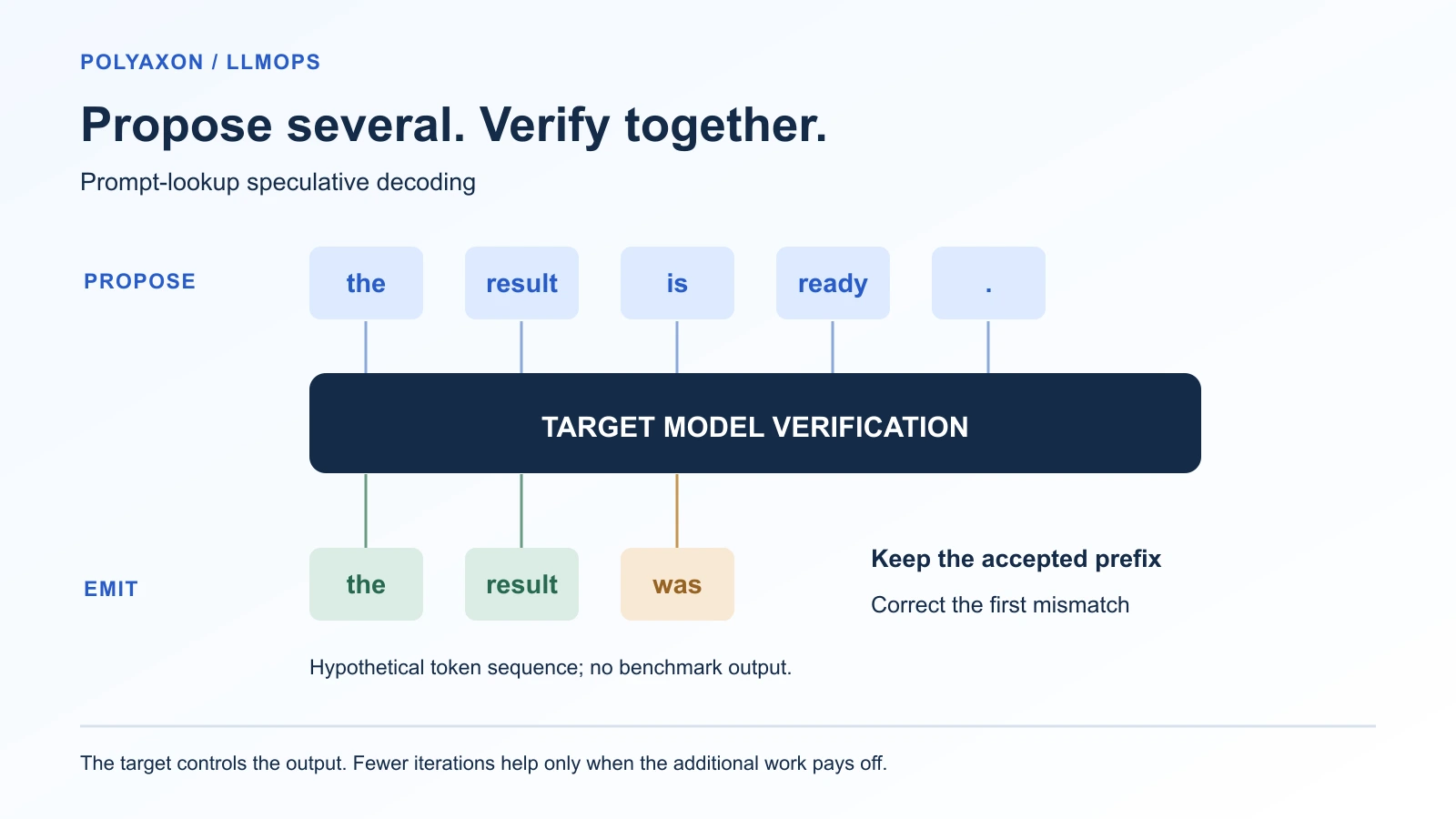
Compare ordinary decoding with prompt-lookup proposals under the same model, workload, and GPU allocation, including latency, failures, and output checks.
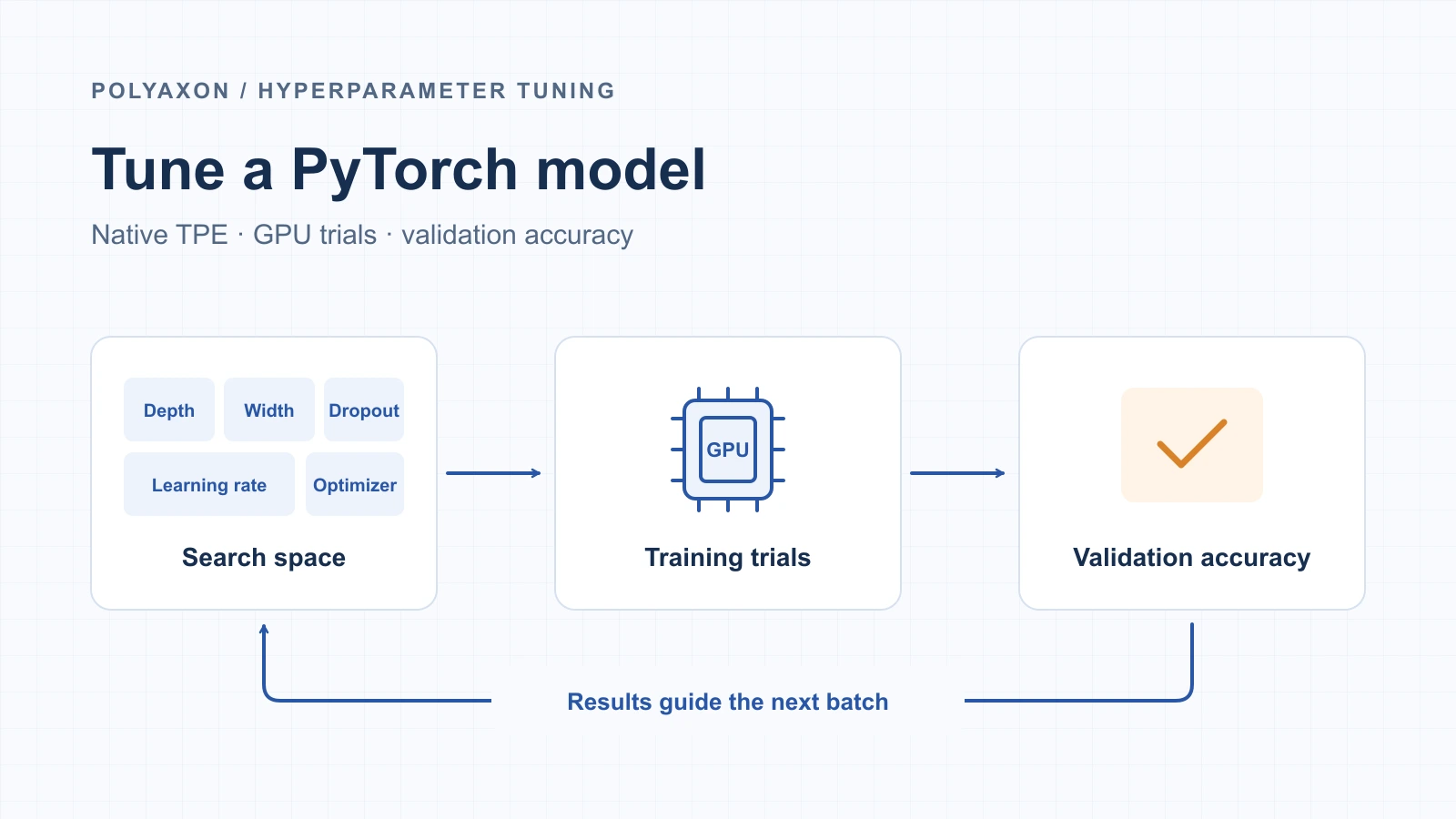
Tune a PyTorch model's depth, width, dropout, optimizer, and learning rate with native TPE, GPU trials, and validation accuracy in Polyaxon.
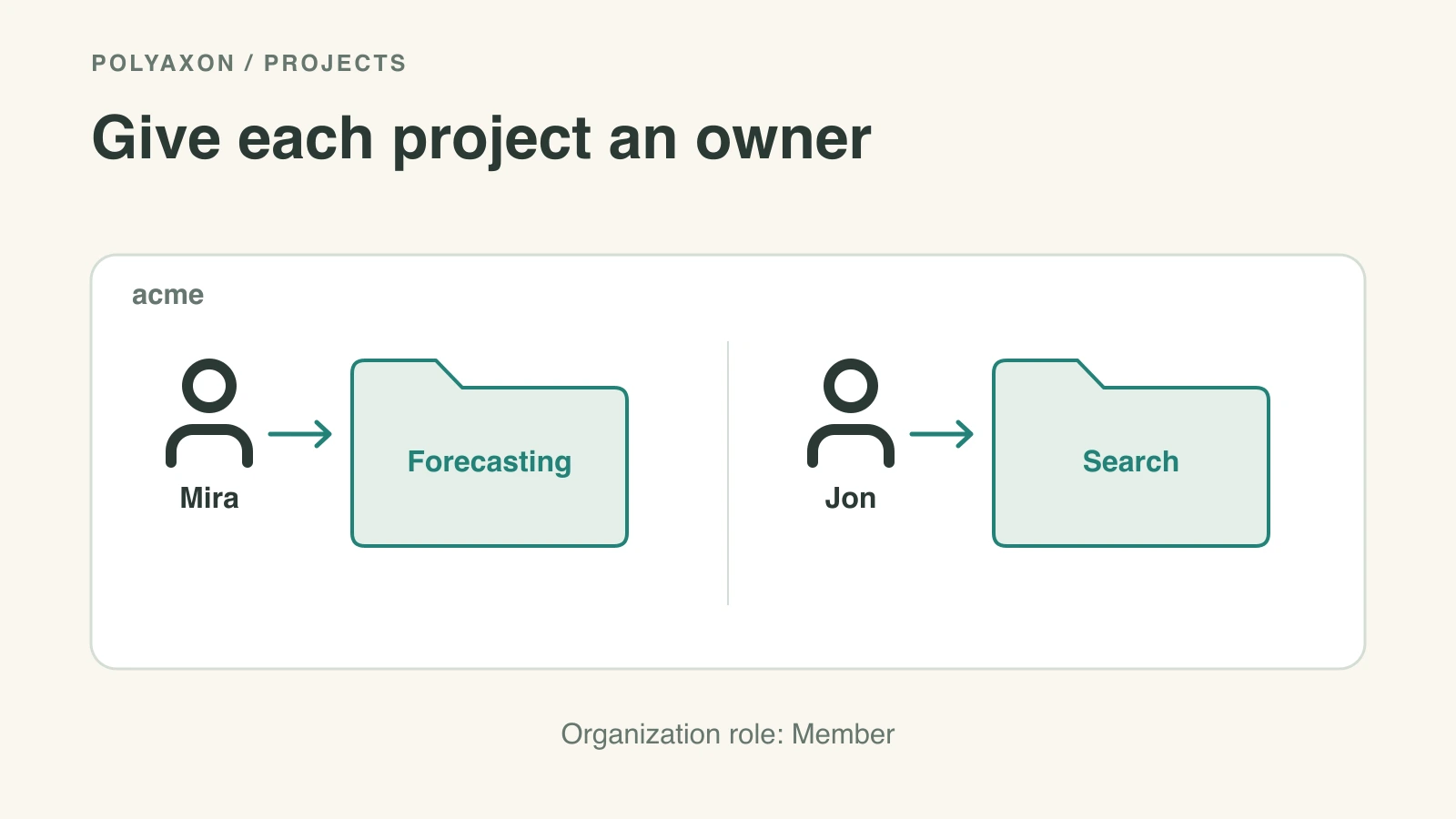
Give a teammate responsibility for a Polyaxon project while keeping their organization role and your team's access restrictions in place.

Restrict a Kubernetes notebook workspace PVC to one Pod, mount it in a Polyaxon service, and hand access to a replacement notebook.
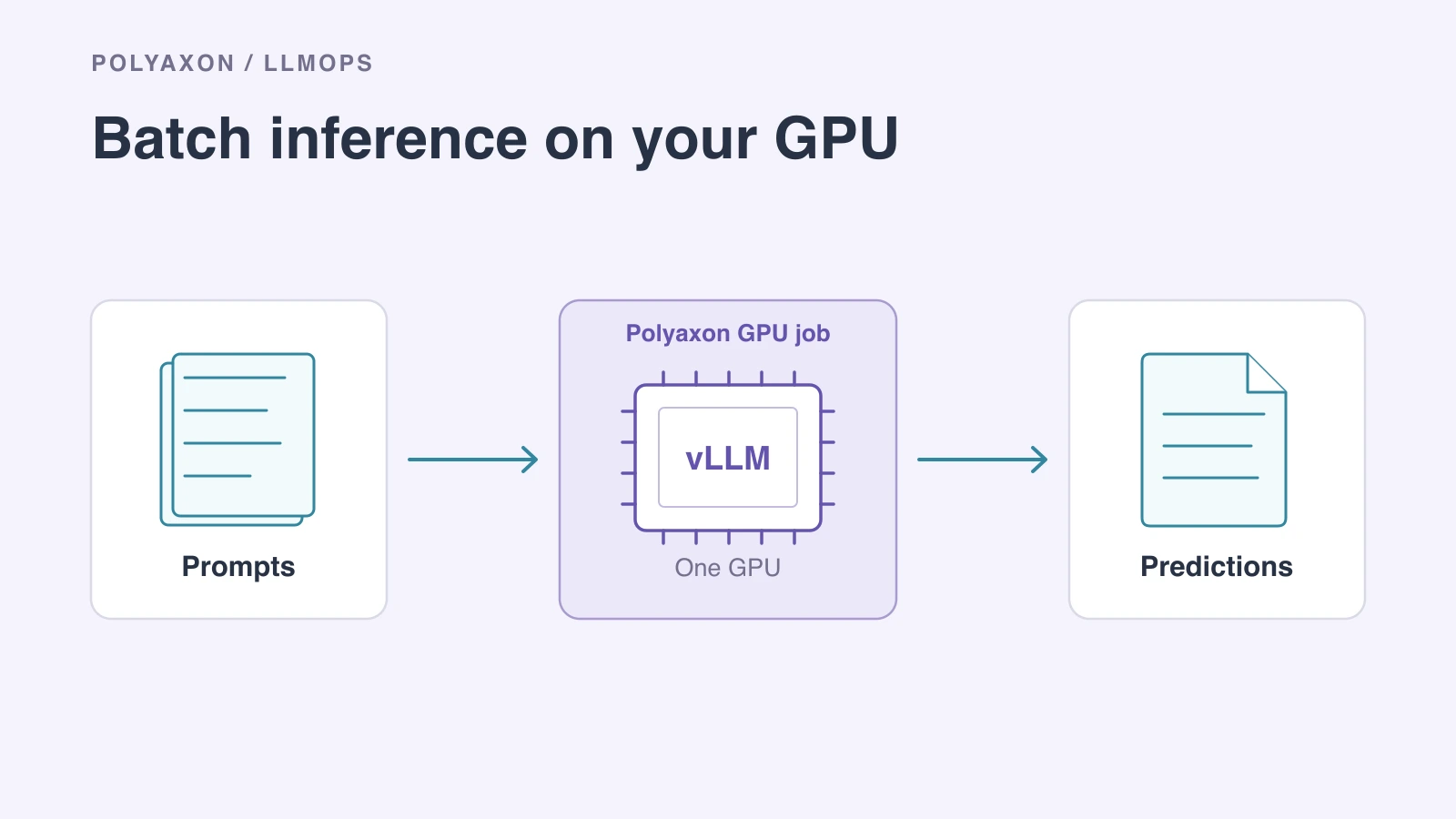
Generate predictions from a JSONL prompt file with vLLM, schedule the work on a Polyaxon GPU agent, and save the results as run artifacts.
Limit aggregate GPU requests with ResourceQuota, supply CPU and memory defaults, and align Polyaxon resource profiles and queues with namespace budgets.
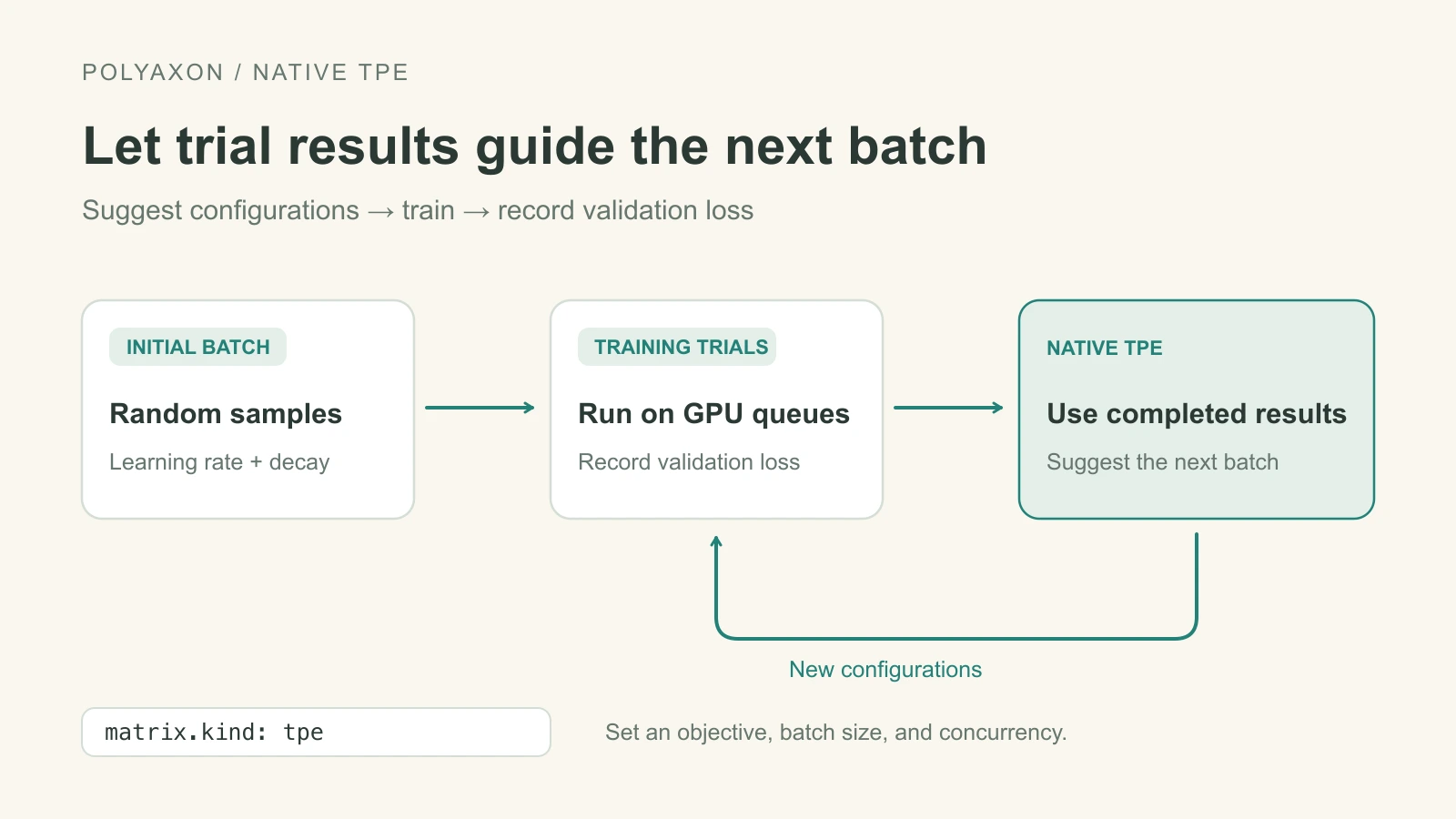
Use completed trial results to guide hyperparameter choices with native TPE, run GPU training trials, and compare validation loss in Polyaxon.
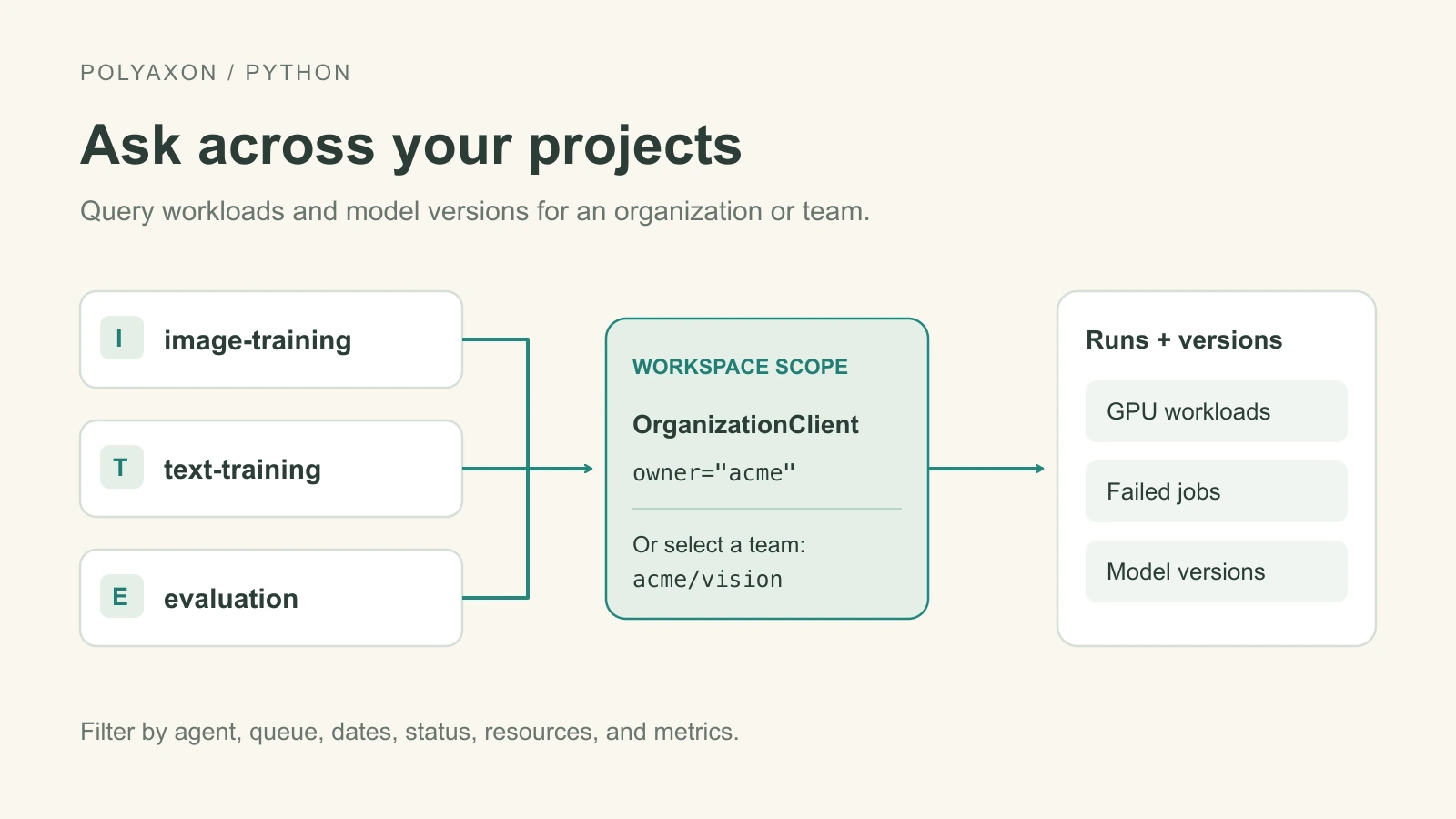
Use Polyaxon's organization and team APIs to inspect GPU workloads by agent, count model versions, and calculate job failure rates across projects.
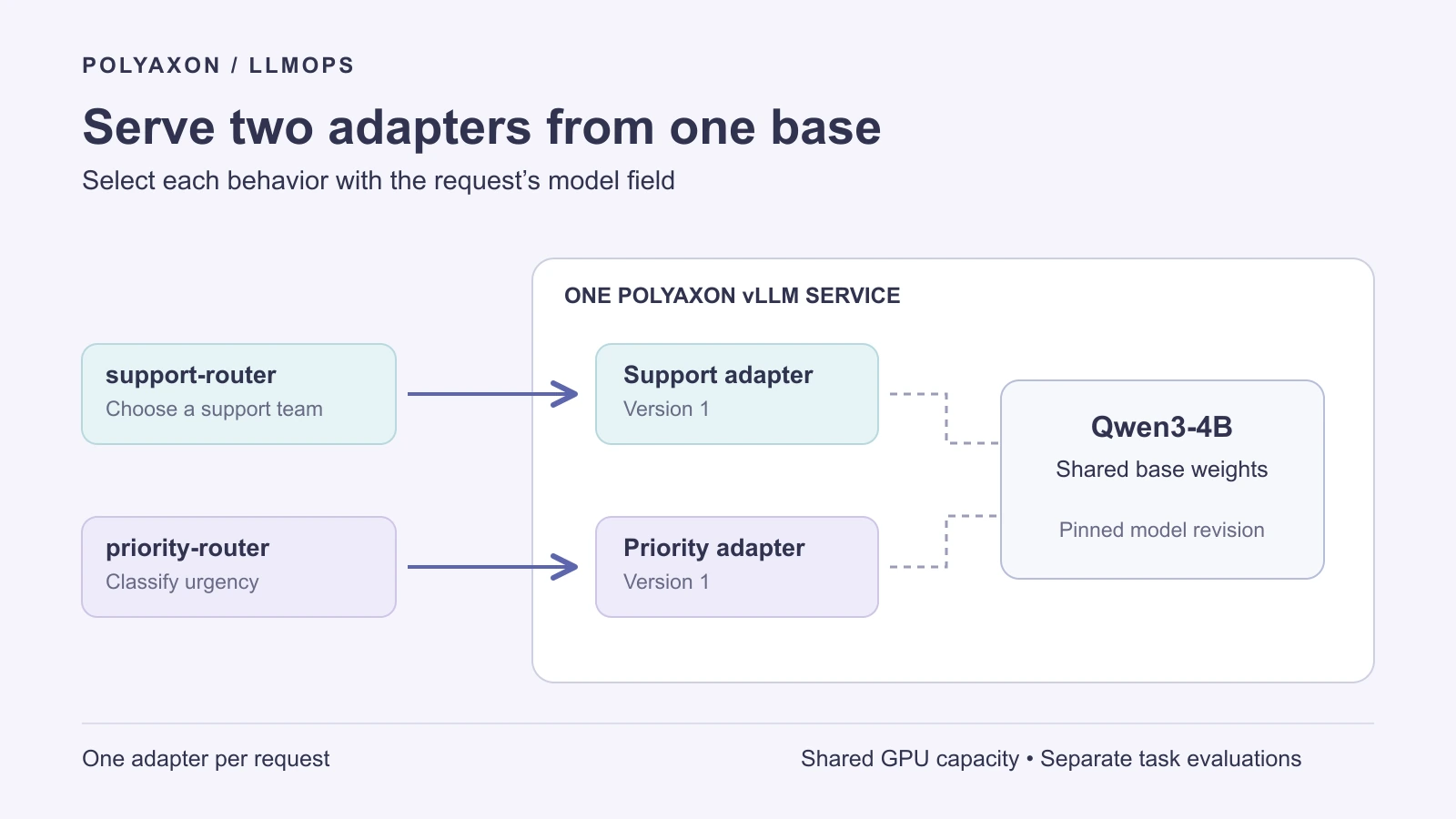
Deploy two task-specific LoRA adapters over one Qwen base model, select them by name, and measure quality and shared GPU capacity with Polyaxon.
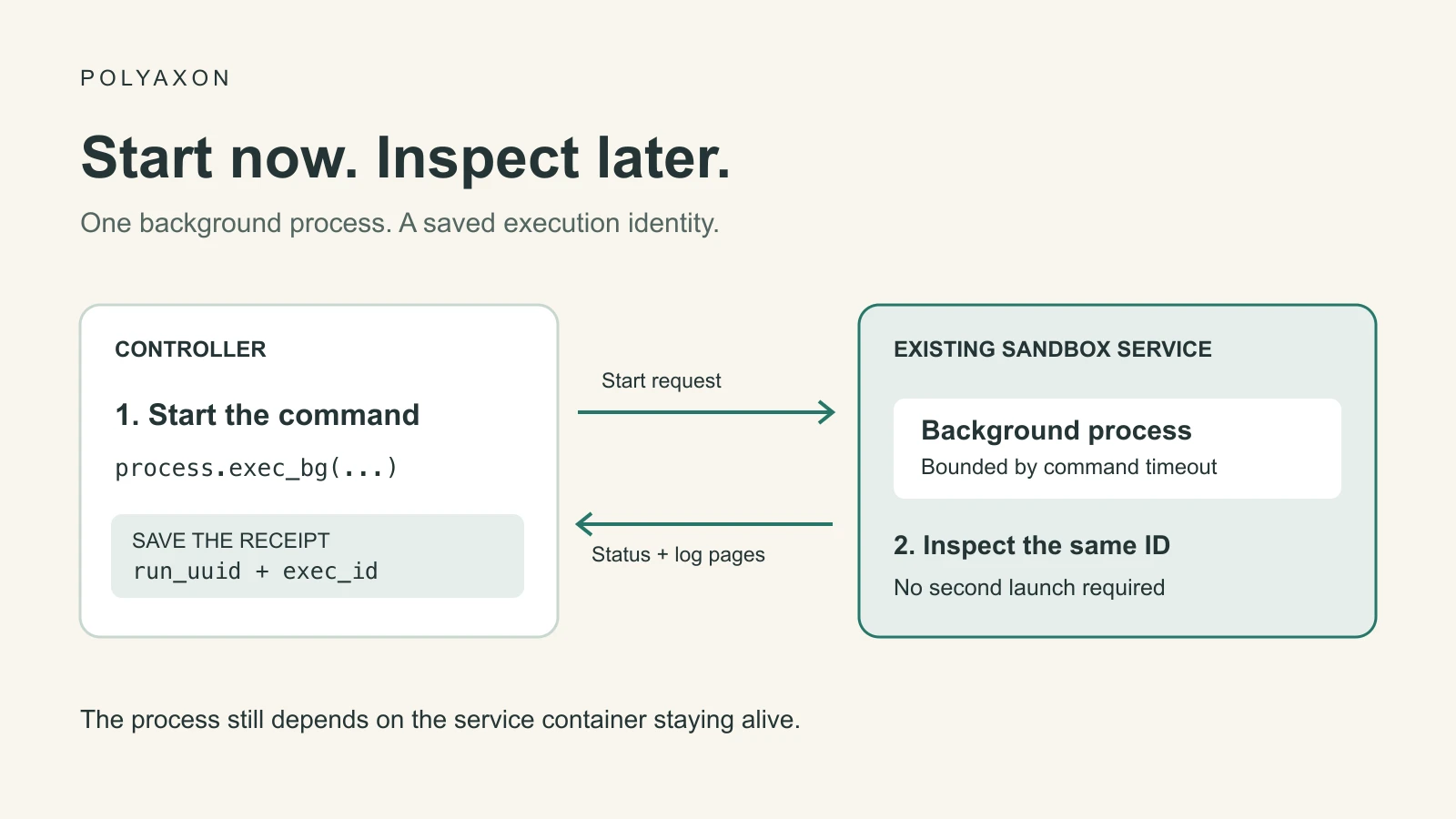
Start a background process, save its execution ID, reconnect to status and logs, and distinguish command limits from the lifetime of a Polyaxon sandbox.
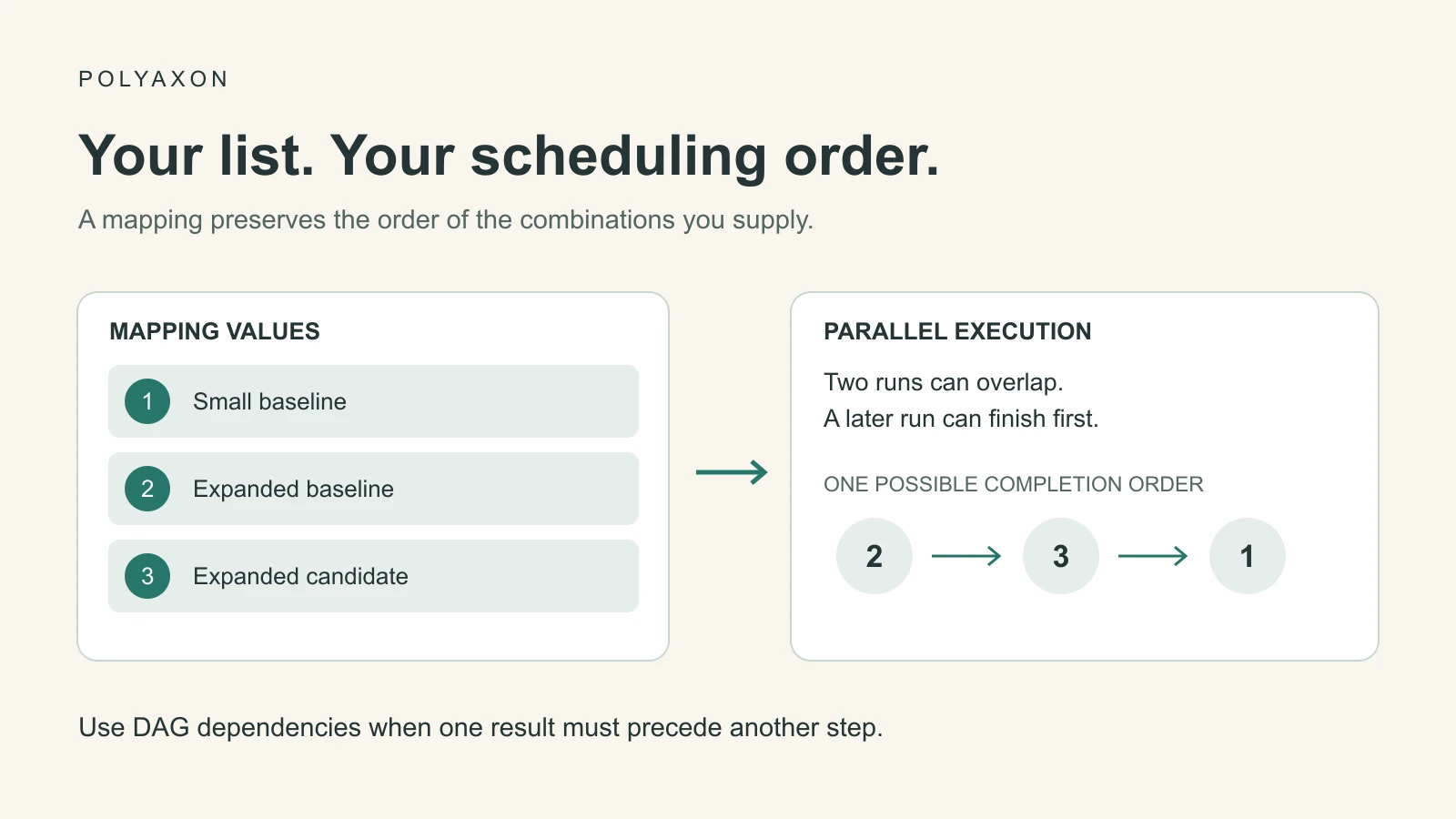
Use an ordered Polyaxon mapping for a curated list of experiments, control concurrency, and distinguish scheduling order from dependencies and completion order.