Set GPU quotas for shared Kubernetes namespaces
Limit aggregate GPU requests with ResourceQuota, supply CPU and memory defaults, and align Polyaxon resource profiles and queues with namespace budgets.
KubernetesGPUScheduling
The latest guides, tutorials, and product updates.
Limit aggregate GPU requests with ResourceQuota, supply CPU and memory defaults, and align Polyaxon resource profiles and queues with namespace budgets.
Use Kubernetes Job success policies for chosen indexes or success counts, preserve durable results, and distinguish them from Polyaxon metric early stopping.
Use topology spread constraints for inference availability, understand minDomains and GPU capacity, and preserve placement intent in Polyaxon.
Use Kubernetes in-place resource resizing for running workloads, inspect whether changes took effect, and understand the limits for Polyaxon services.
Explore native gang scheduling in Kubernetes 1.37, its potential for Polyaxon training and sandboxes, and how it compares with KAI, Kueue, and Volcano.
Understand native topology-aware workload scheduling, combine rack locality with gang placement, and assess the tradeoff between waiting and communication.
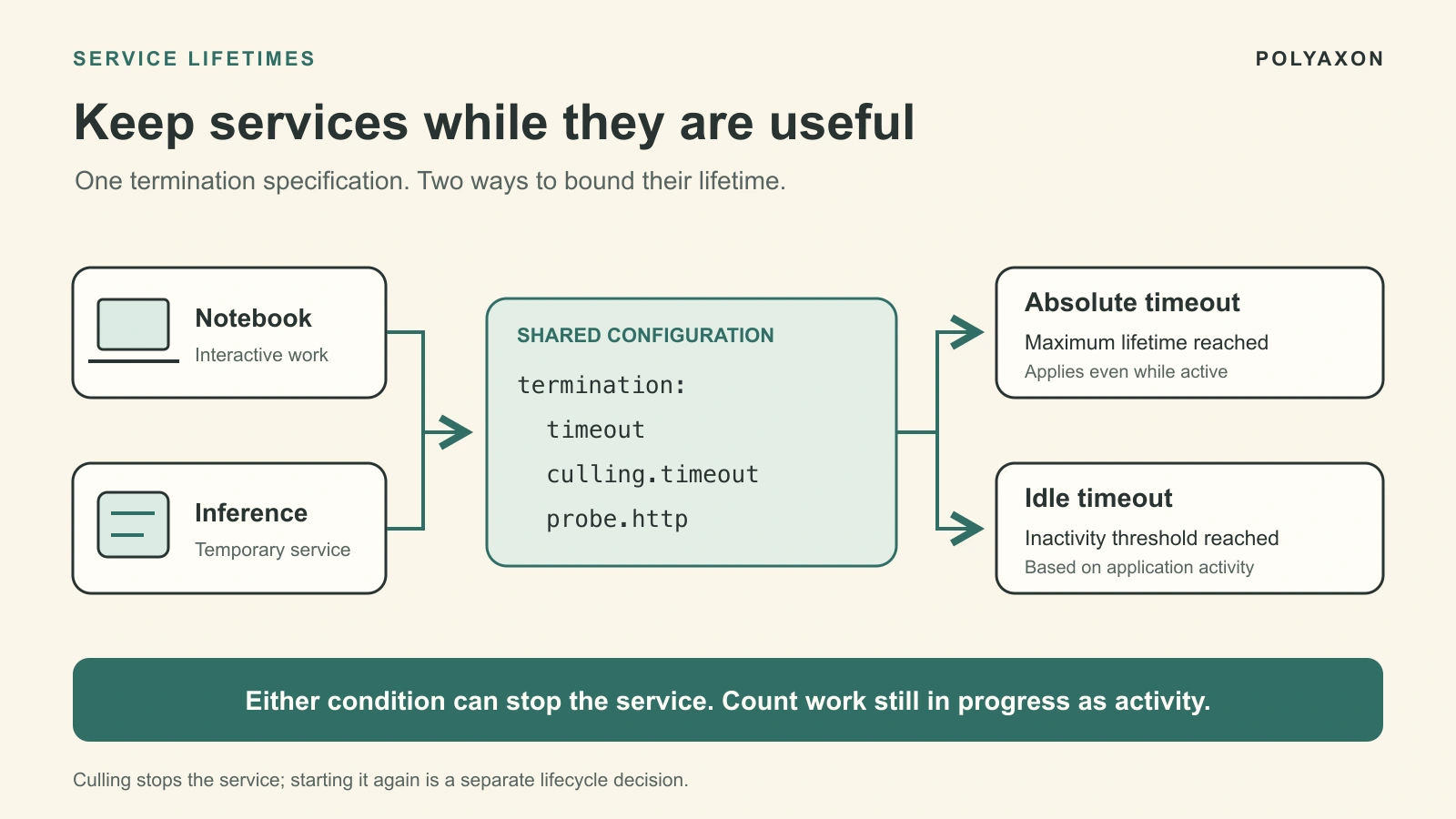
Reuse Polyaxon's termination specification to bound notebook and inference service lifetimes, stop idle services, and distinguish inactivity from ongoing work.
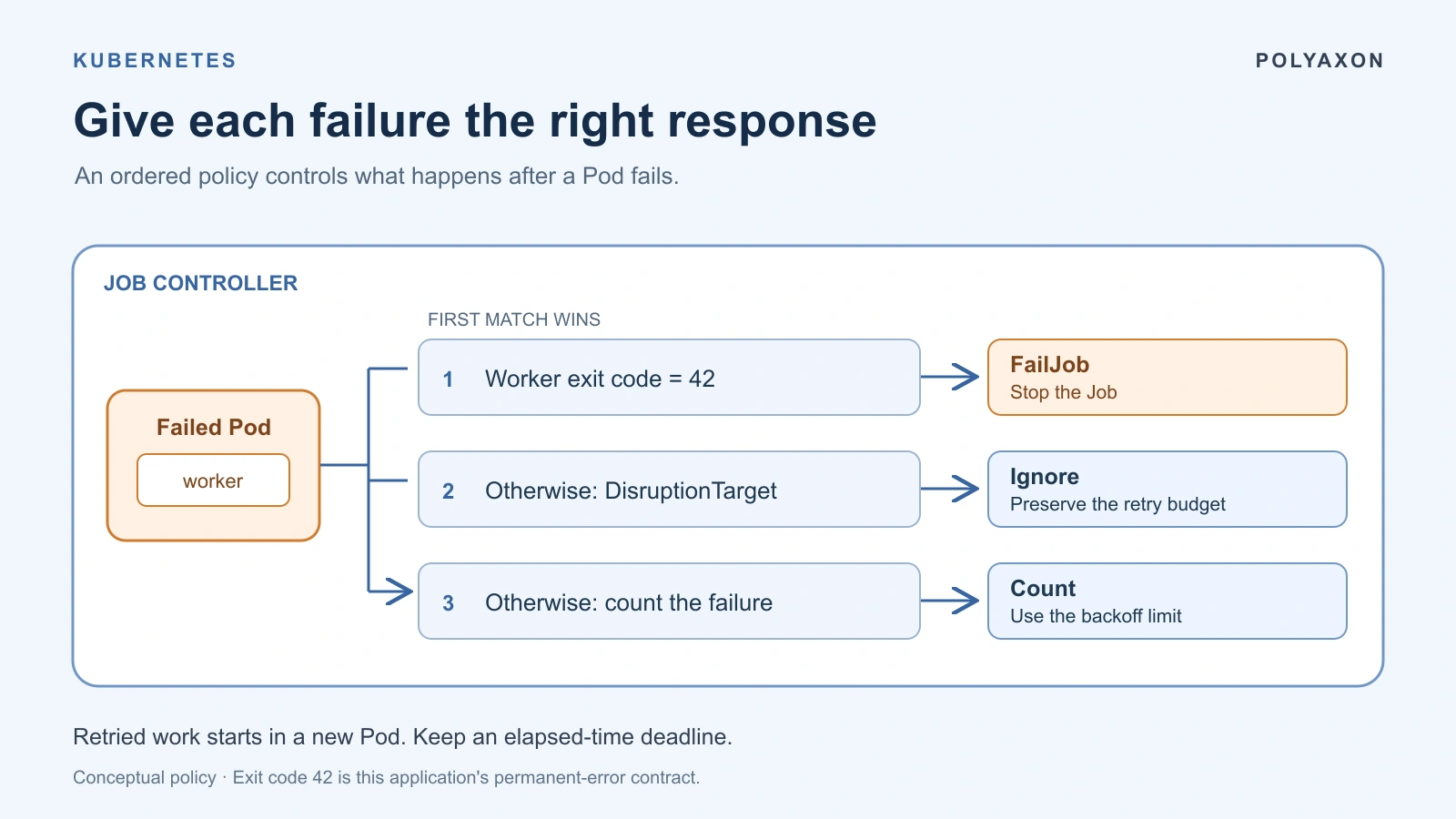
Stop retrying permanent errors, preserve the retry budget for marked disruptions, and inspect Kubernetes Job failure decisions with a concrete example.
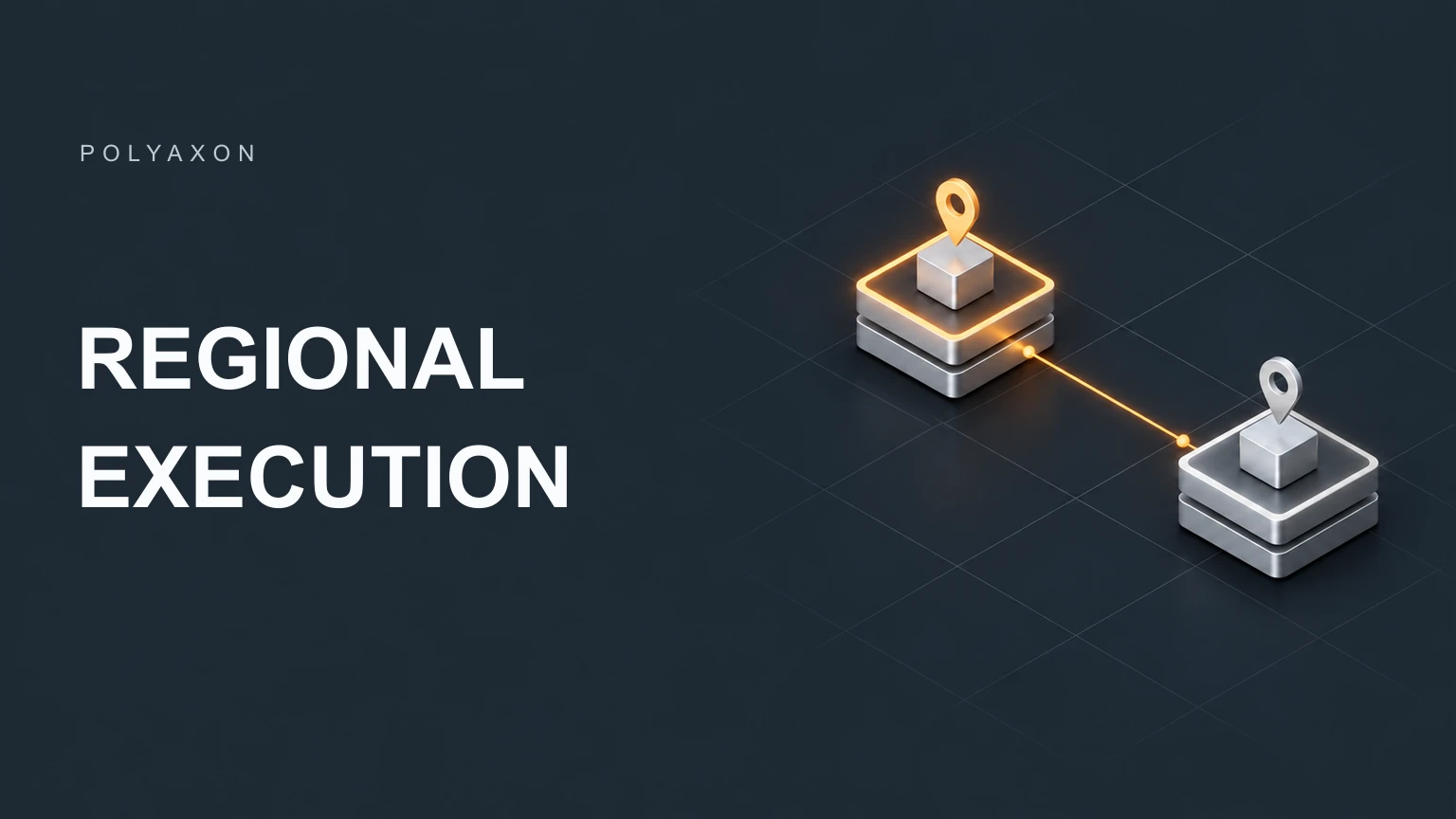
Configure regional execution with Polyaxon agents, queues, and storage connections, then measure data-transfer costs without assuming same-region traffic is free.
Use Dynamic Resource Allocation to describe the accelerator a workload needs, understand device claims, and plan the integration with Polyaxon.
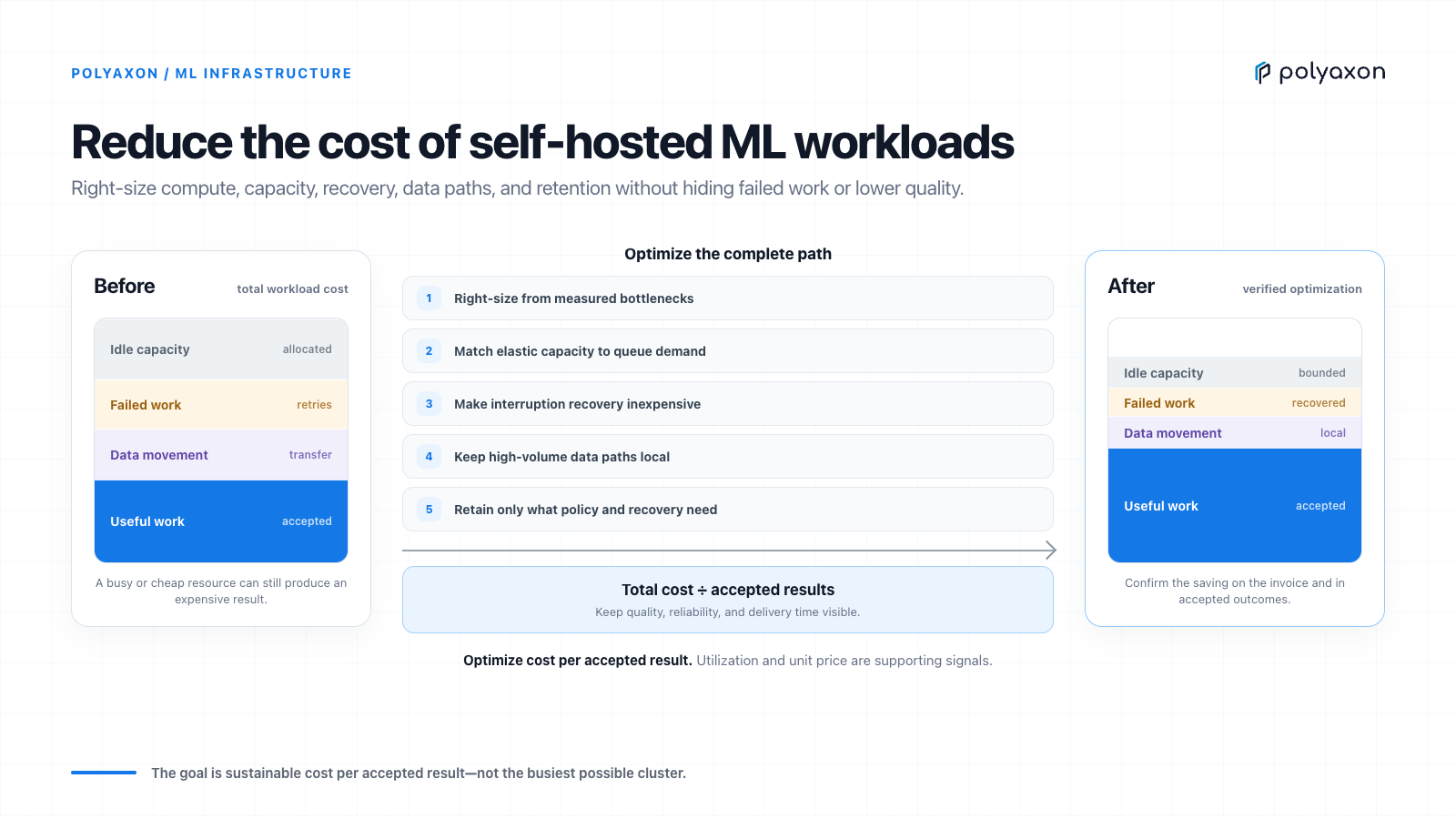
Reduce self-hosted ML costs with outcome-based accounting, right-sized resources, elastic capacity, interruption-ready workloads, local data paths, and deliberate retention.
Use Kubernetes scheduling gates to wait for external prerequisites before placement, with a controlled example and clear ownership of gate removal.
Understand how Kubernetes preempts capacity for PodGroups, choose disruption behavior for training and evaluation, and keep recovery separate from priority.
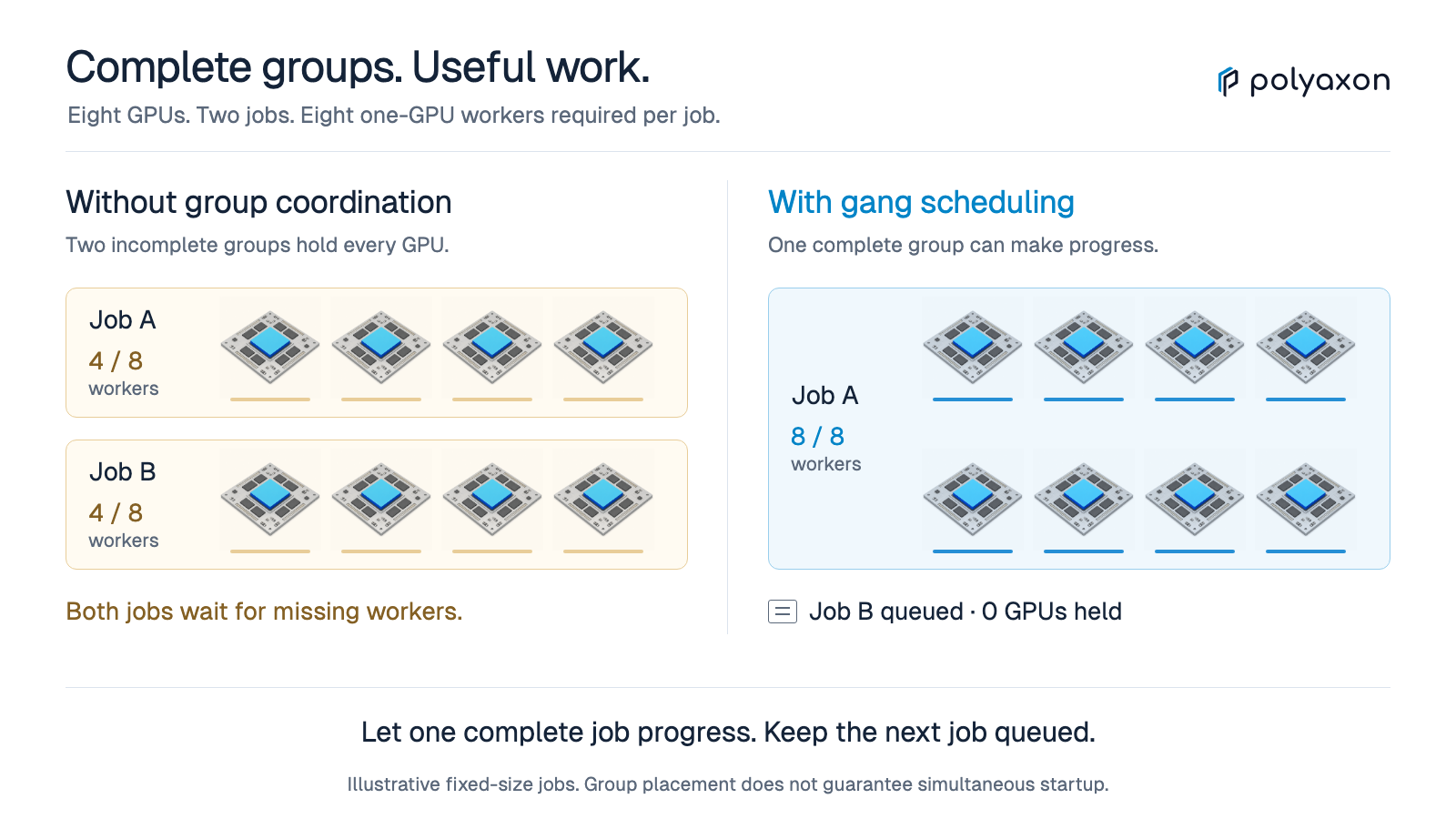
Understand how gang scheduling prevents partial distributed jobs from holding GPUs, how minimum membership works, and what Polyaxon supports.
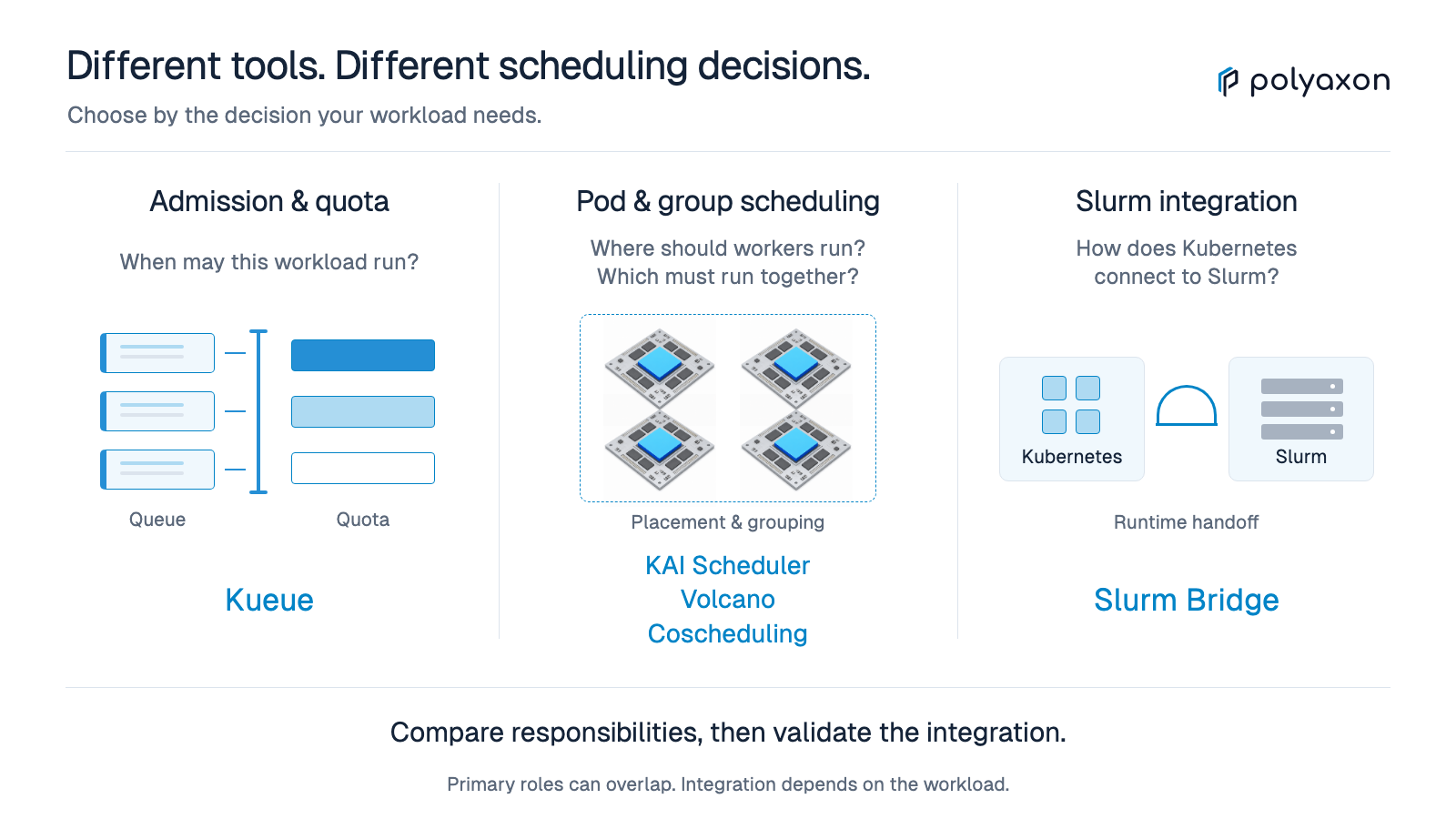
Compare Kueue, KAI Scheduler, Volcano, Coscheduling, and Slurm Bridge by responsibility, workload fit, and Polyaxon integration path.
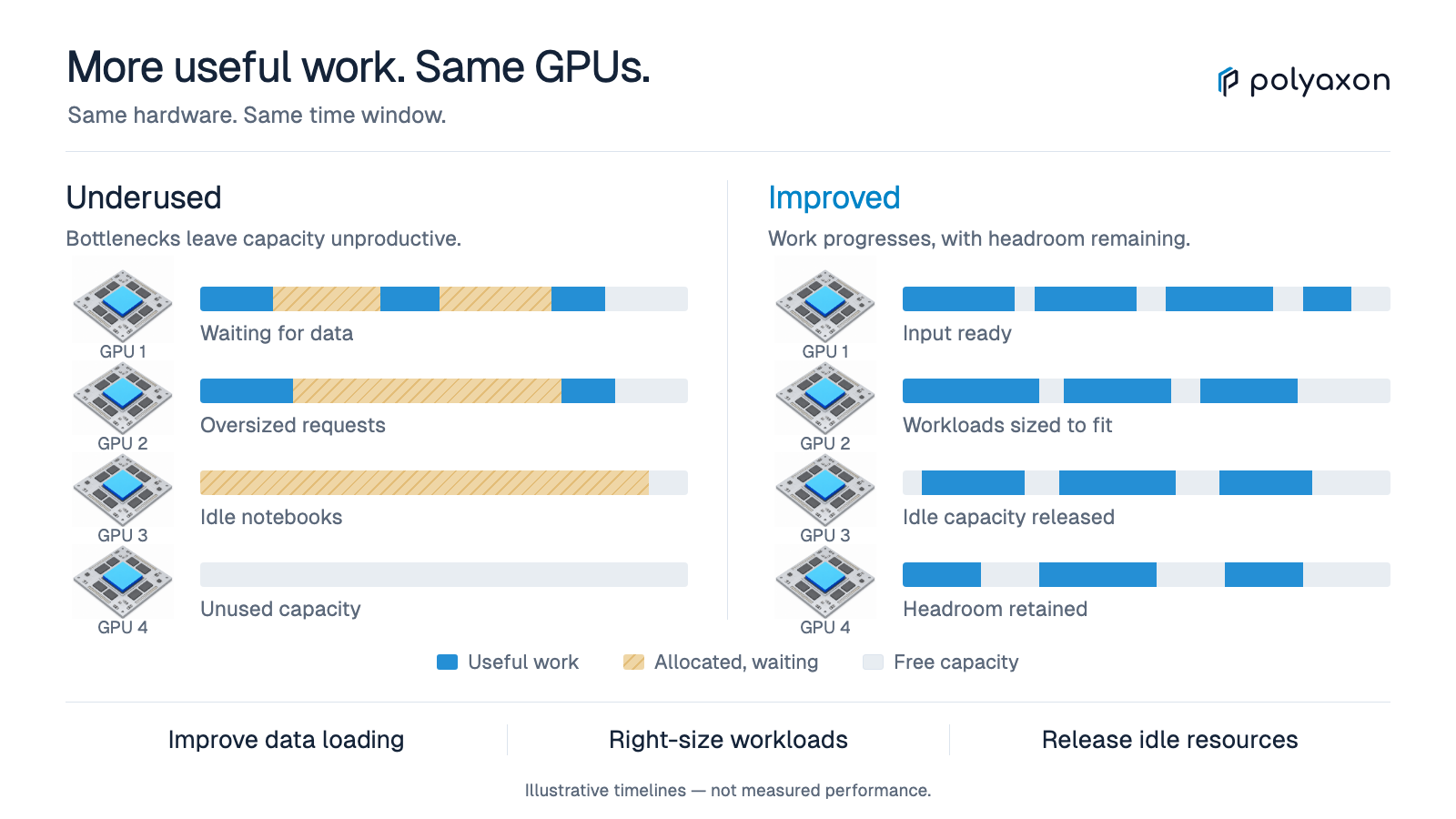
A practical guide to improving GPU utilization by diagnosing queue delays, input bottlenecks, resource fragmentation, sharing, and recovery overhead.
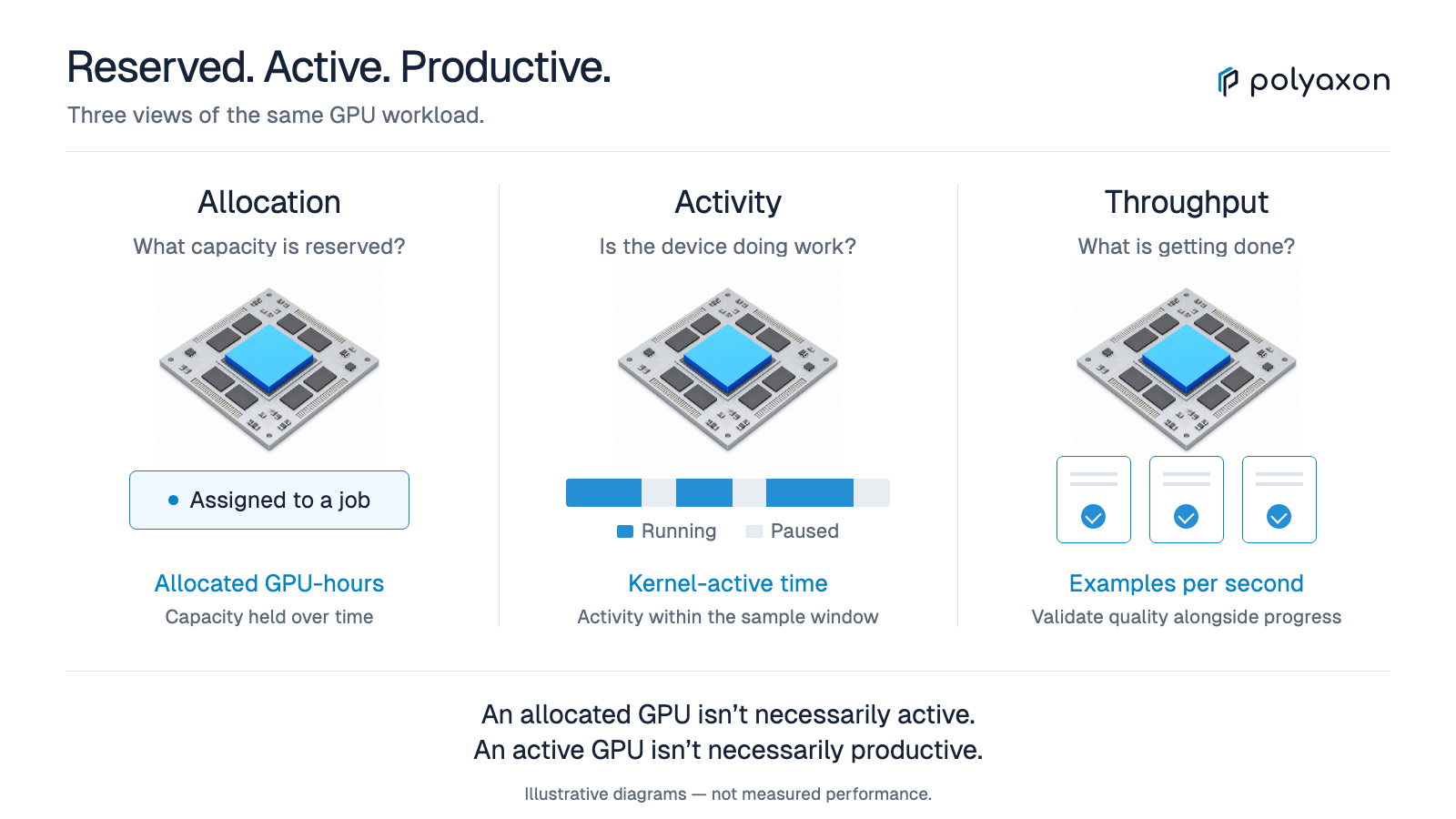
Learn which GPU utilization metrics explain capacity, device activity, memory pressure, and useful ML throughput—and how to avoid misleading averages.
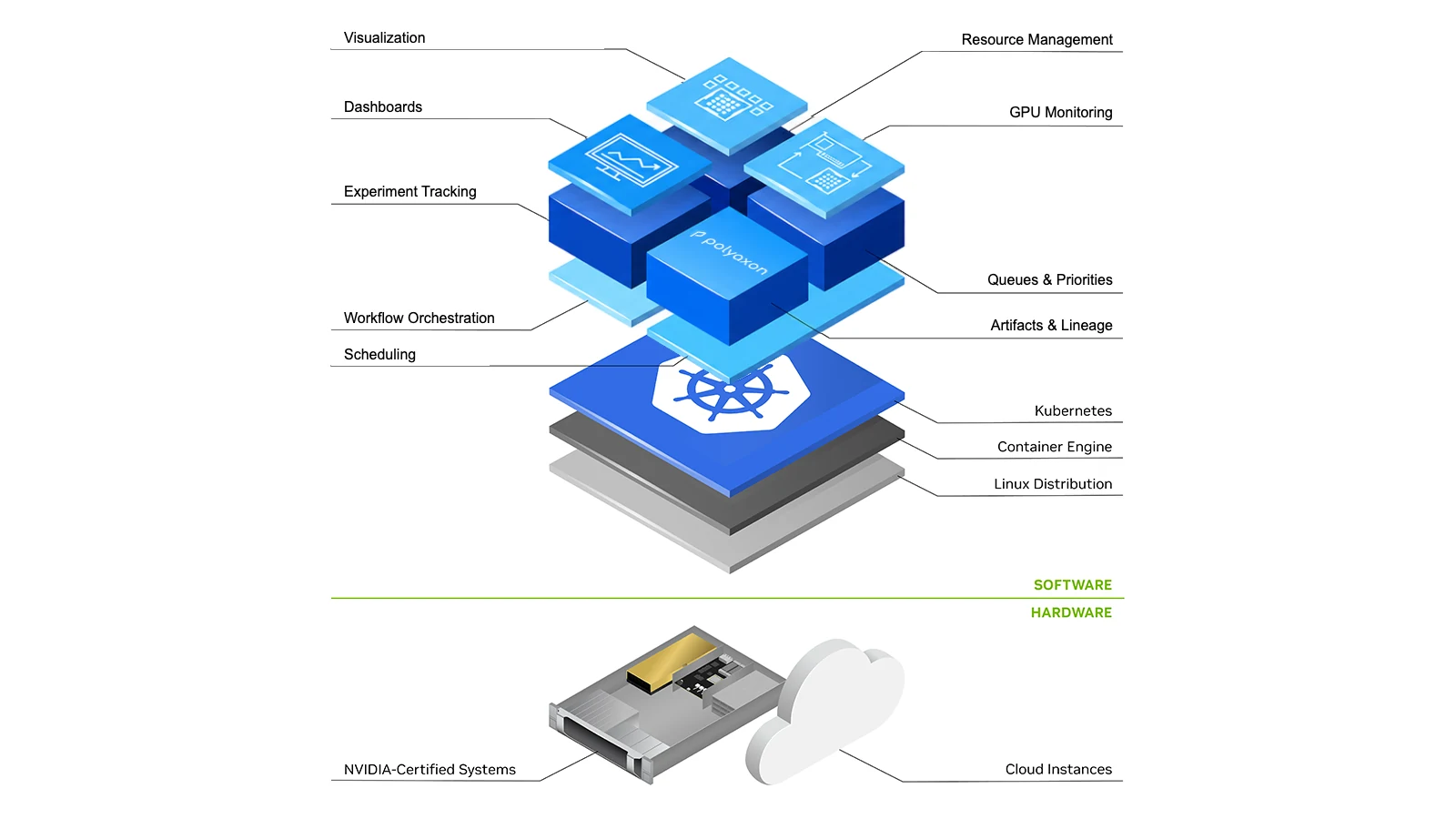
Understand how GPU orchestration connects workflows, queues, resource placement, and recovery across shared ML infrastructure.
Why queue management matters for shared ML infrastructure and how Polyaxon handles priorities, concurrency, and workload scheduling.
Reduce Polyaxon agent startup latency by measuring queueing, image preparation, initialization, and readiness before tuning capacity or workspace reuse.
Keep ordinary Pods away from specialized nodes and combine tolerations with positive placement rules for GPU and interruptible ML capacity.
Design identity, isolation, quotas, queues, networking, storage, and observability for multiple ML teams sharing Kubernetes infrastructure.
Schedule repeatable Kubernetes jobs with explicit time zones, concurrency, deadlines, history limits, idempotency, and observable outcomes.
Understand node components, conditions, capacity, labels, taints, failure behavior, and lifecycle management for Kubernetes ML clusters.