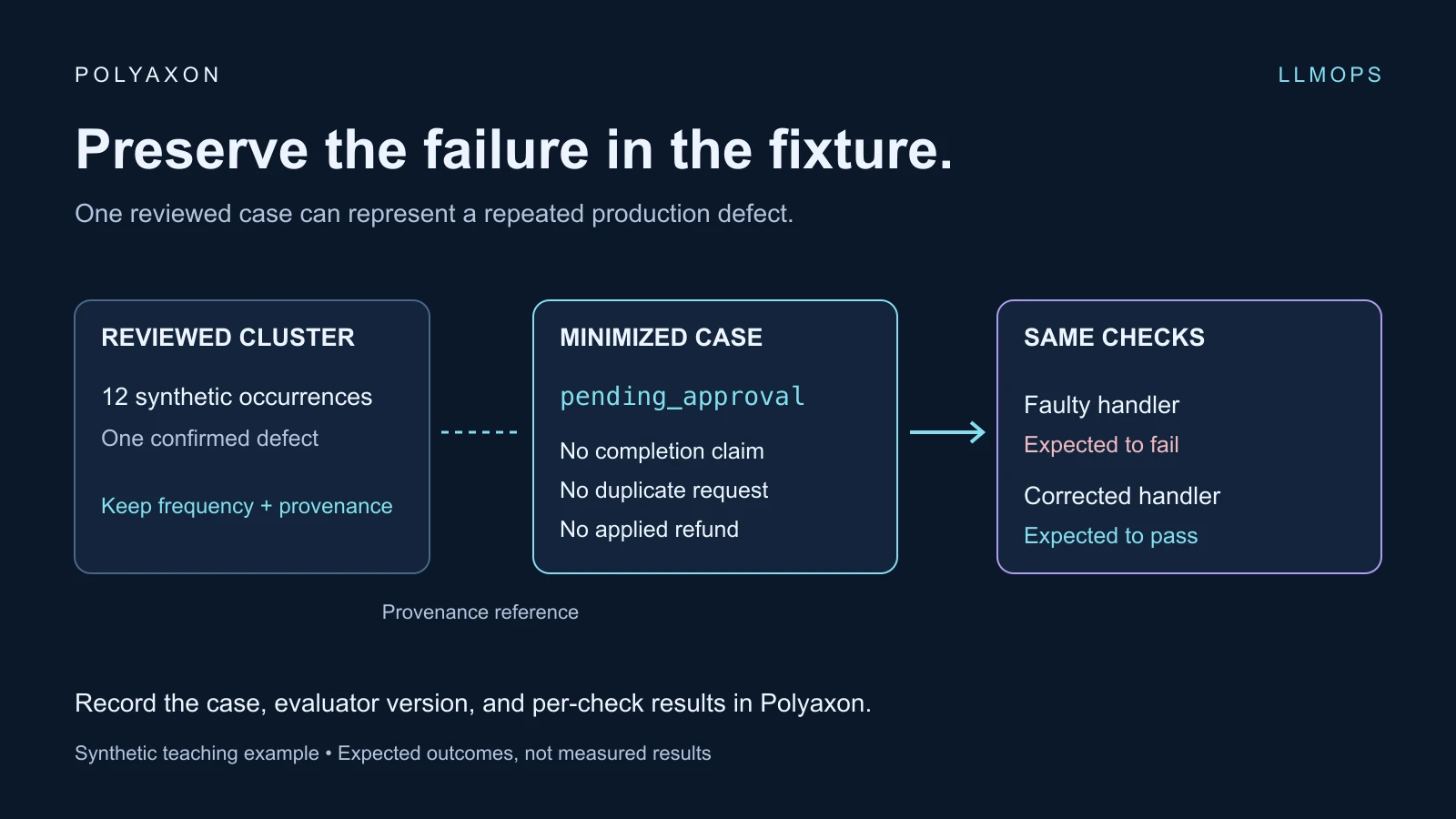
Turn production traces into regression tests
Turn a failure cluster into a reviewed regression case, preserve the causal tool response, and record baseline and candidate checks with Polyaxon.
LLMOpsObservabilityEvaluation
Learn how to evaluate, deploy, observe, and control the cost of LLM applications, from initial experiments to production feedback.
Essential guides, selected for this topic.
Turn a failure cluster into a reviewed regression case, preserve the causal tool response, and record baseline and candidate checks with Polyaxon.
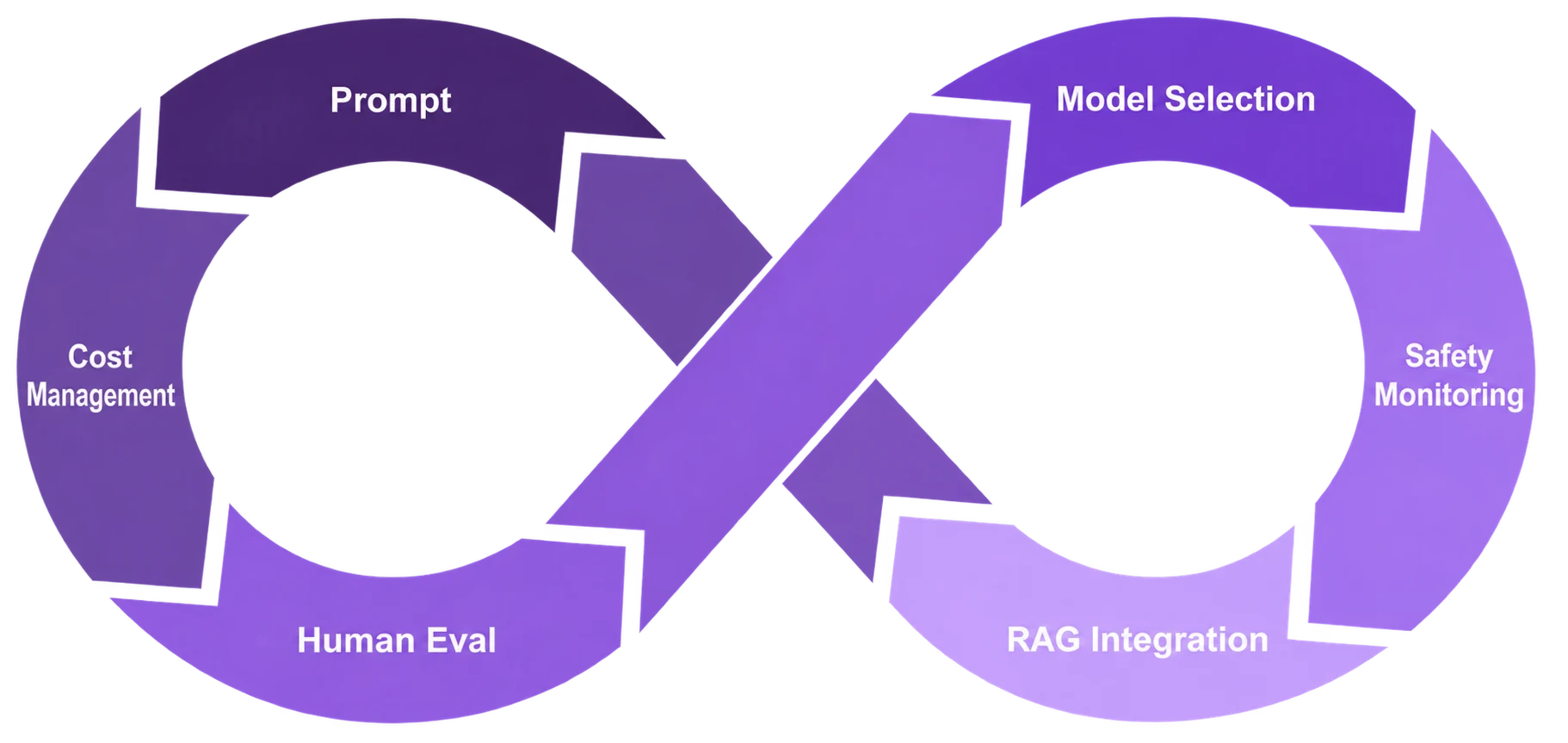
LLMOps applies repeatable development, evaluation, deployment, and observability practices to production LLM applications and AI agents.
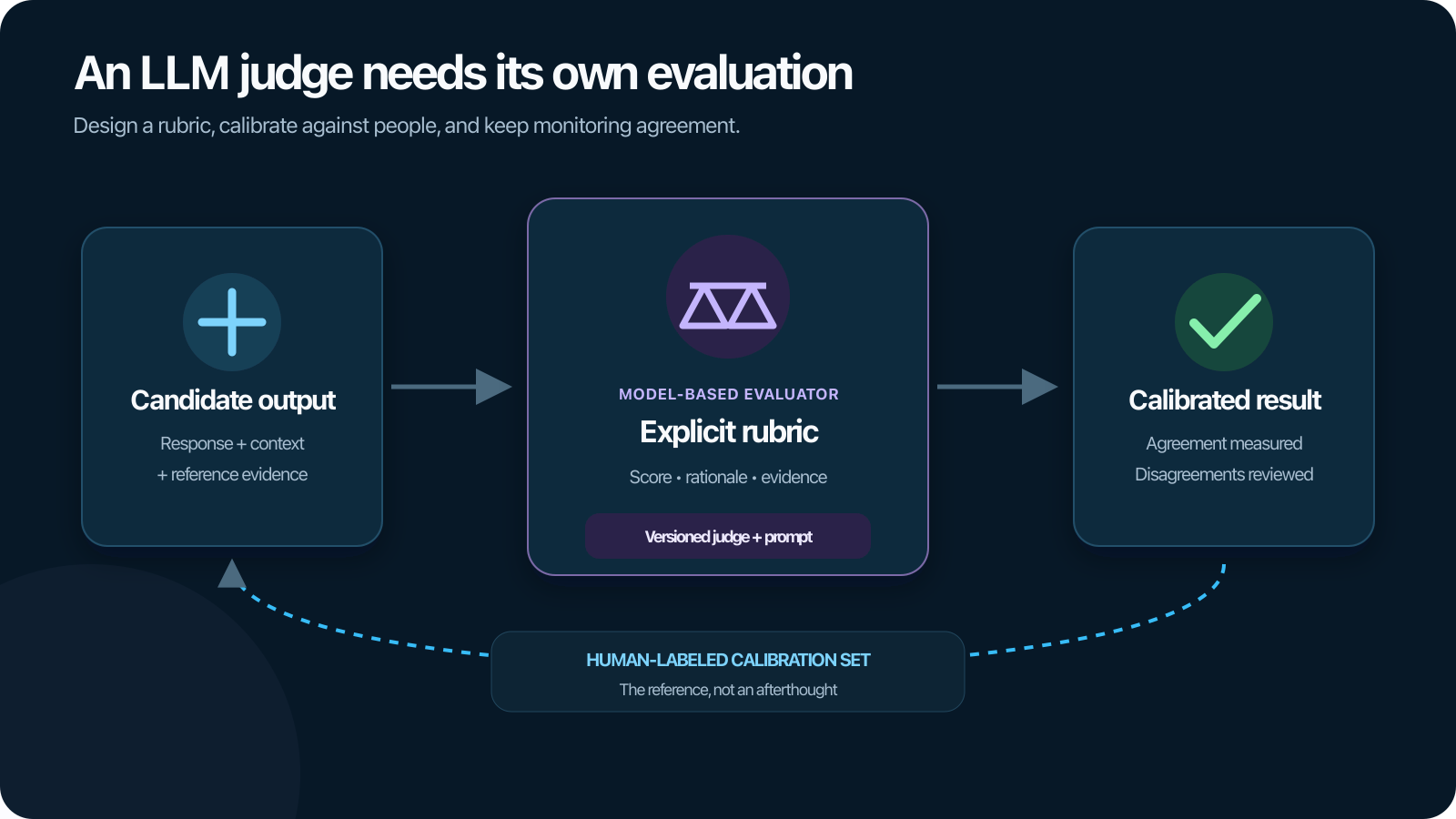
Use LLMs as scalable evaluators without treating them as ground truth: design clear rubrics, calibrate against humans, and monitor bias and drift.
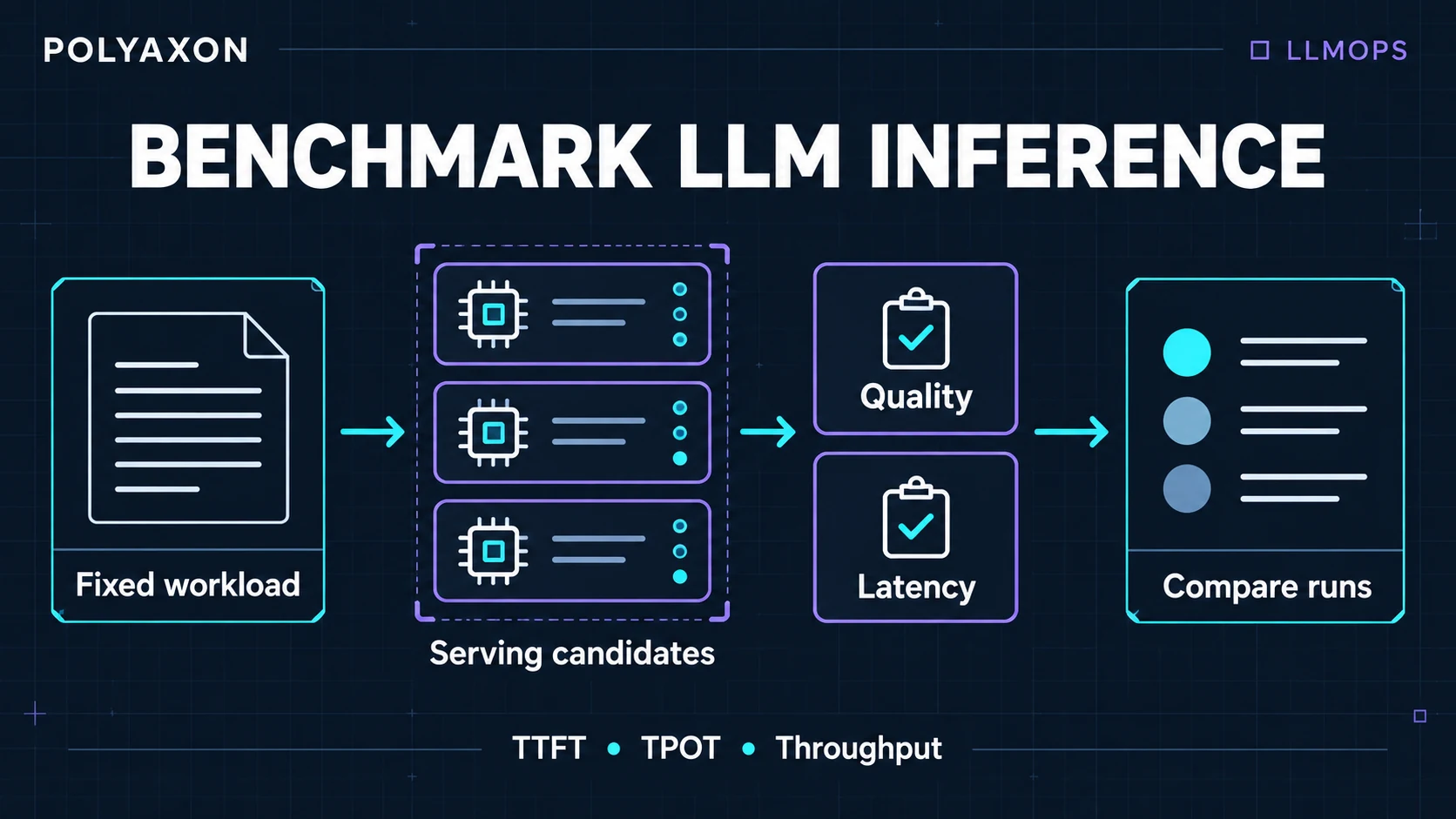
Compare inference optimizations against a fixed workload, latency limits, and quality checks, with benchmark configurations and results tracked in Polyaxon.
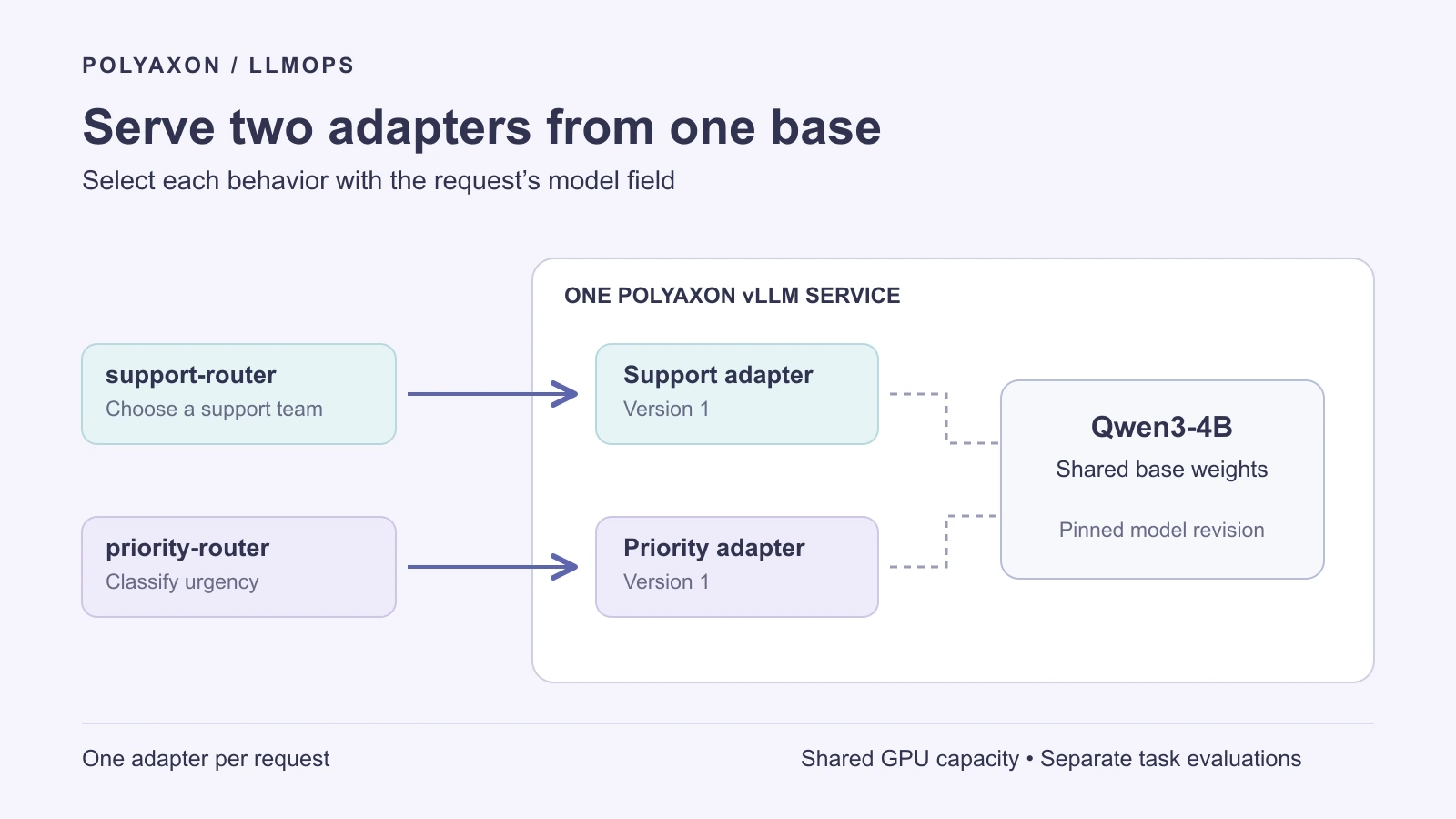
Deploy two task-specific LoRA adapters over one Qwen base model, select them by name, and measure quality and shared GPU capacity with Polyaxon.
The latest guides, tutorials, and product updates.
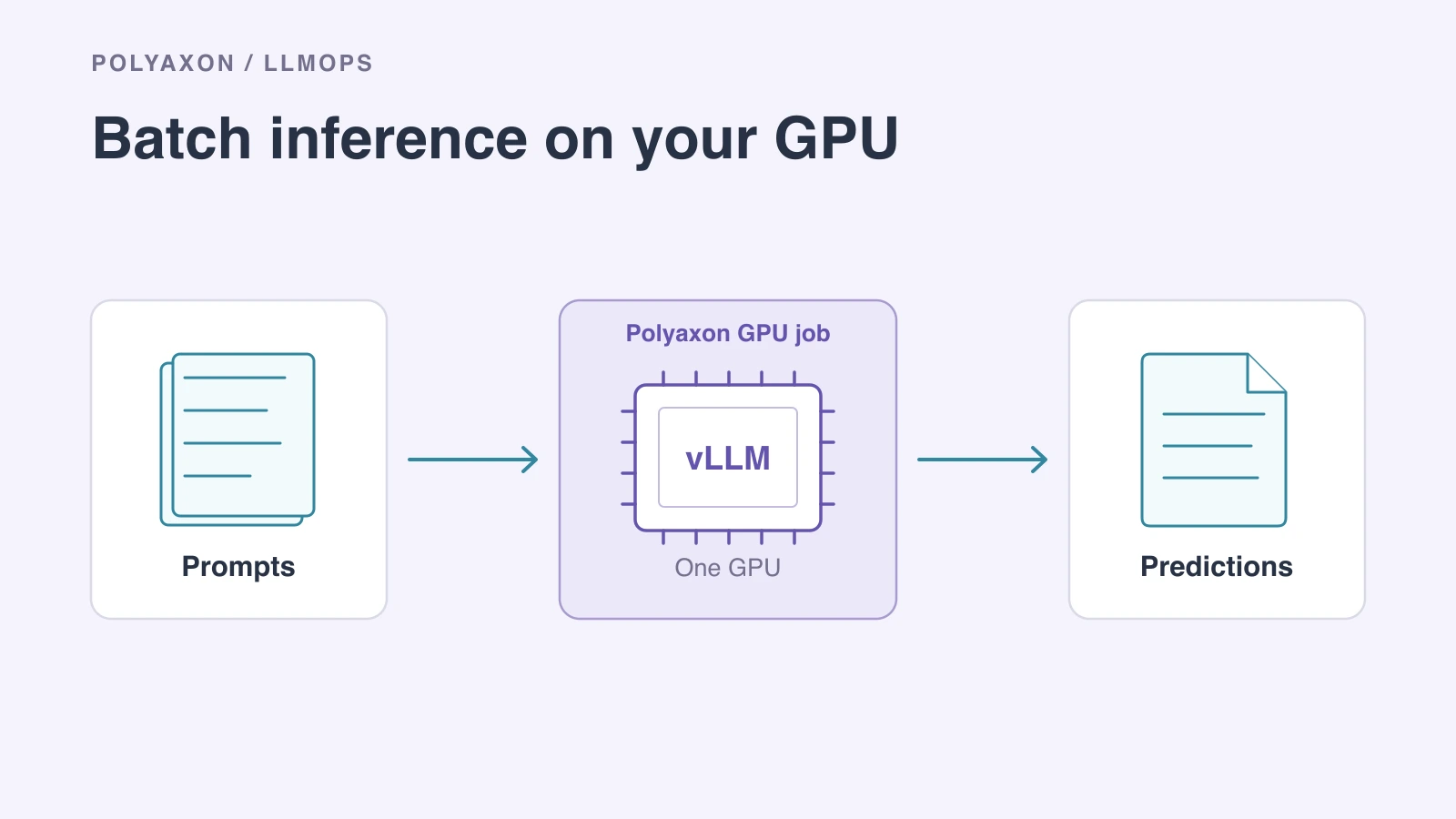
Generate predictions from a JSONL prompt file with vLLM, schedule the work on a Polyaxon GPU agent, and save the results as run artifacts.
Deploy two task-specific LoRA adapters over one Qwen base model, select them by name, and measure quality and shared GPU capacity with Polyaxon.
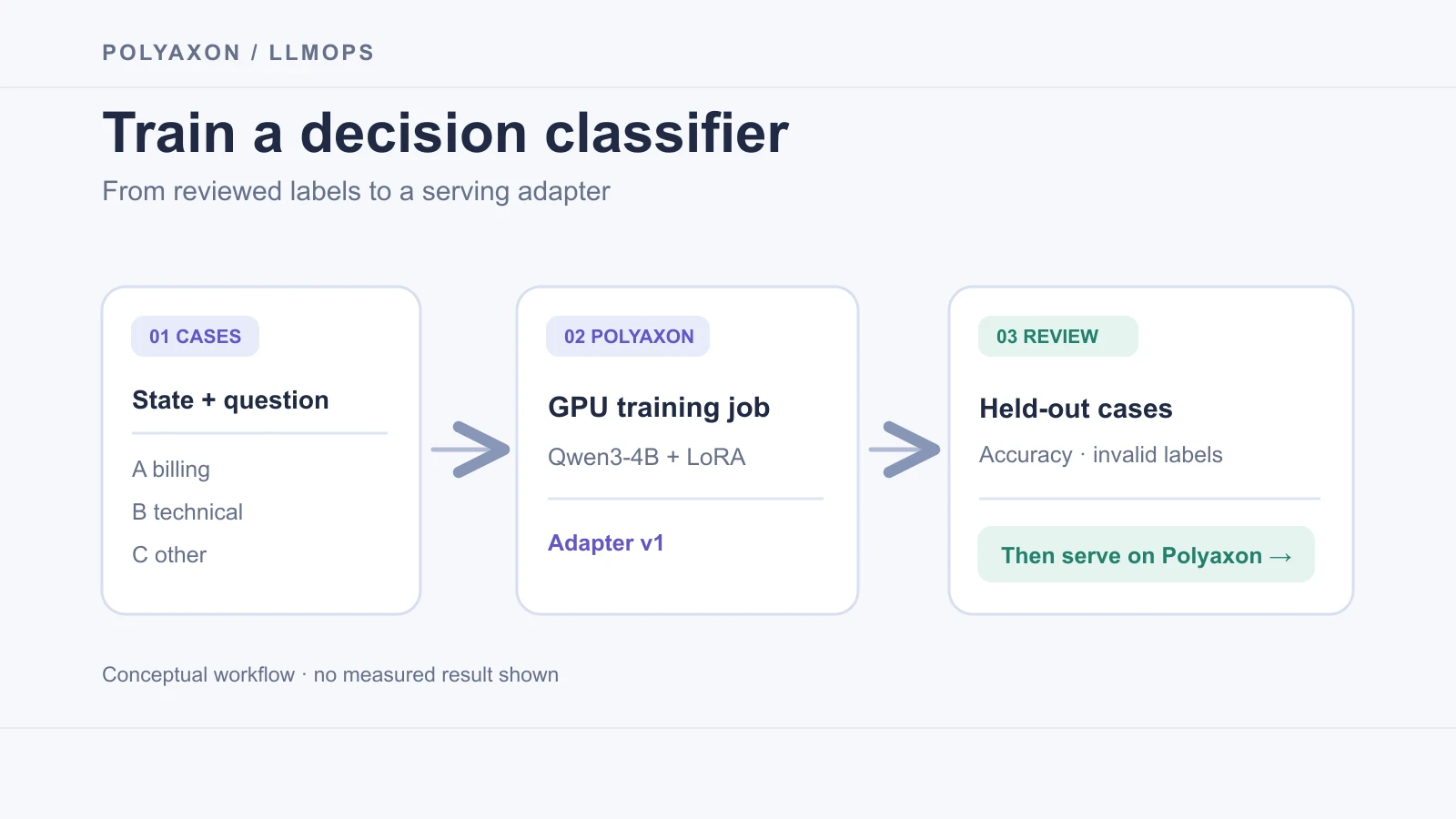
Fine-tune an open Qwen model for bounded support-routing decisions with Polyaxon jobs, track the adapter, and serve the reviewed version through vLLM.
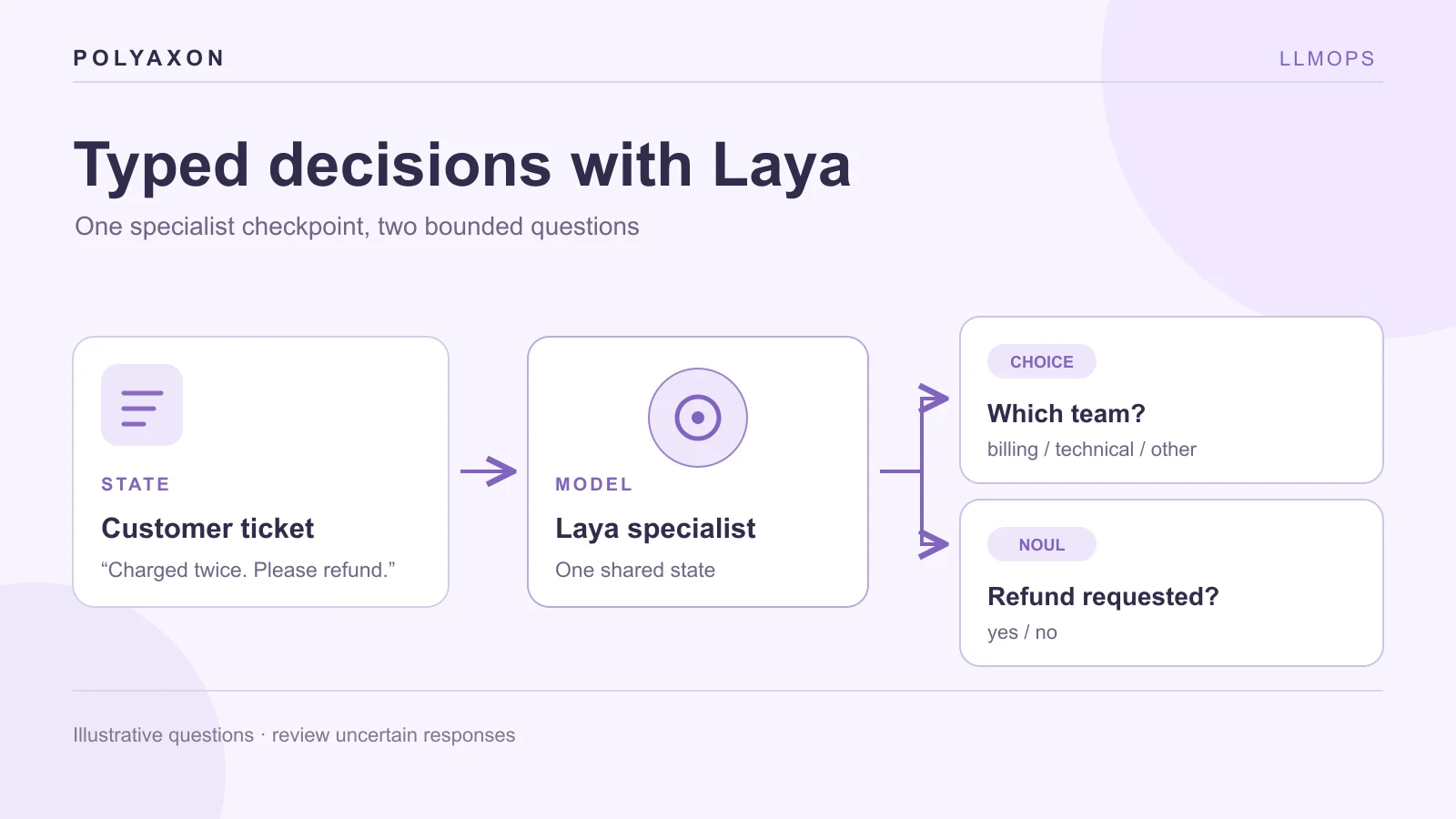
Serve the open Laya typed-decisions checkpoint through Polyaxon, with a CPU classifier endpoint, explicit model scope, and a review path for uncertain classifications.
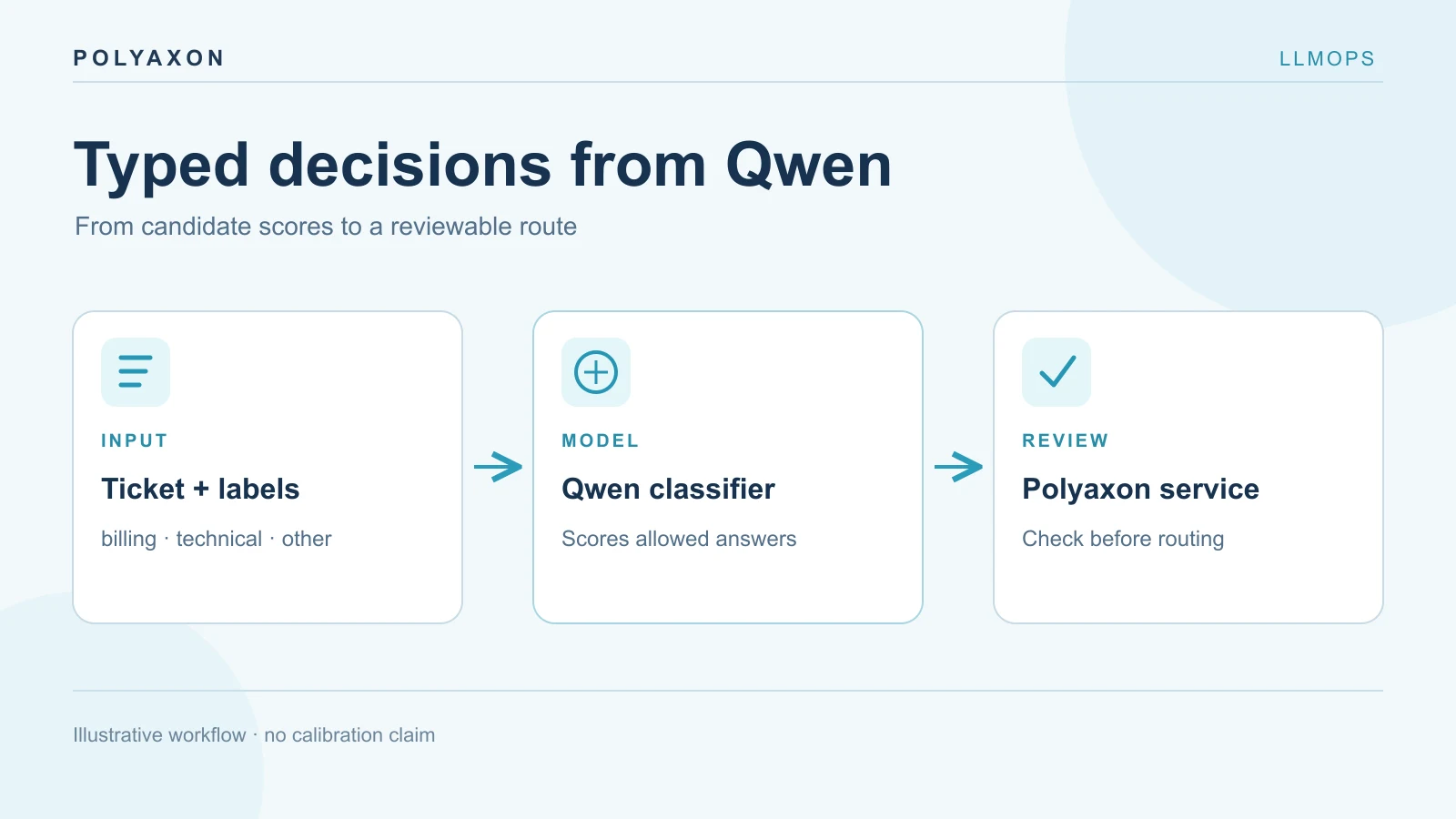
Deploy an open Qwen model behind a typed classification API on Polyaxon, then check the decision schema and calibration before routing real work.
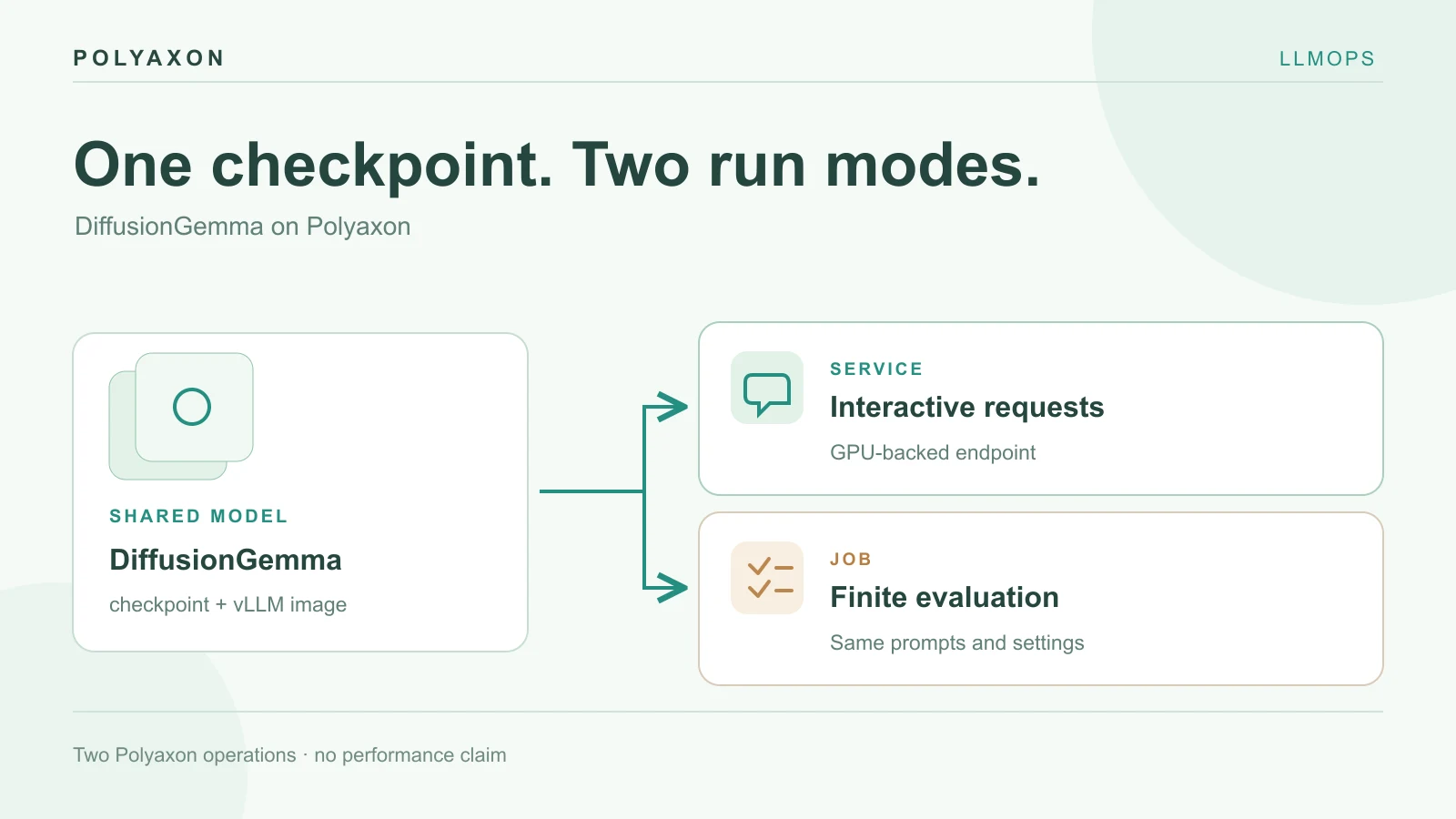
Adapt Google's Gemma-on-Kubernetes deployment choices to Polyaxon with a DiffusionGemma vLLM service, a batch evaluation job, and an explicit compatibility checklist.
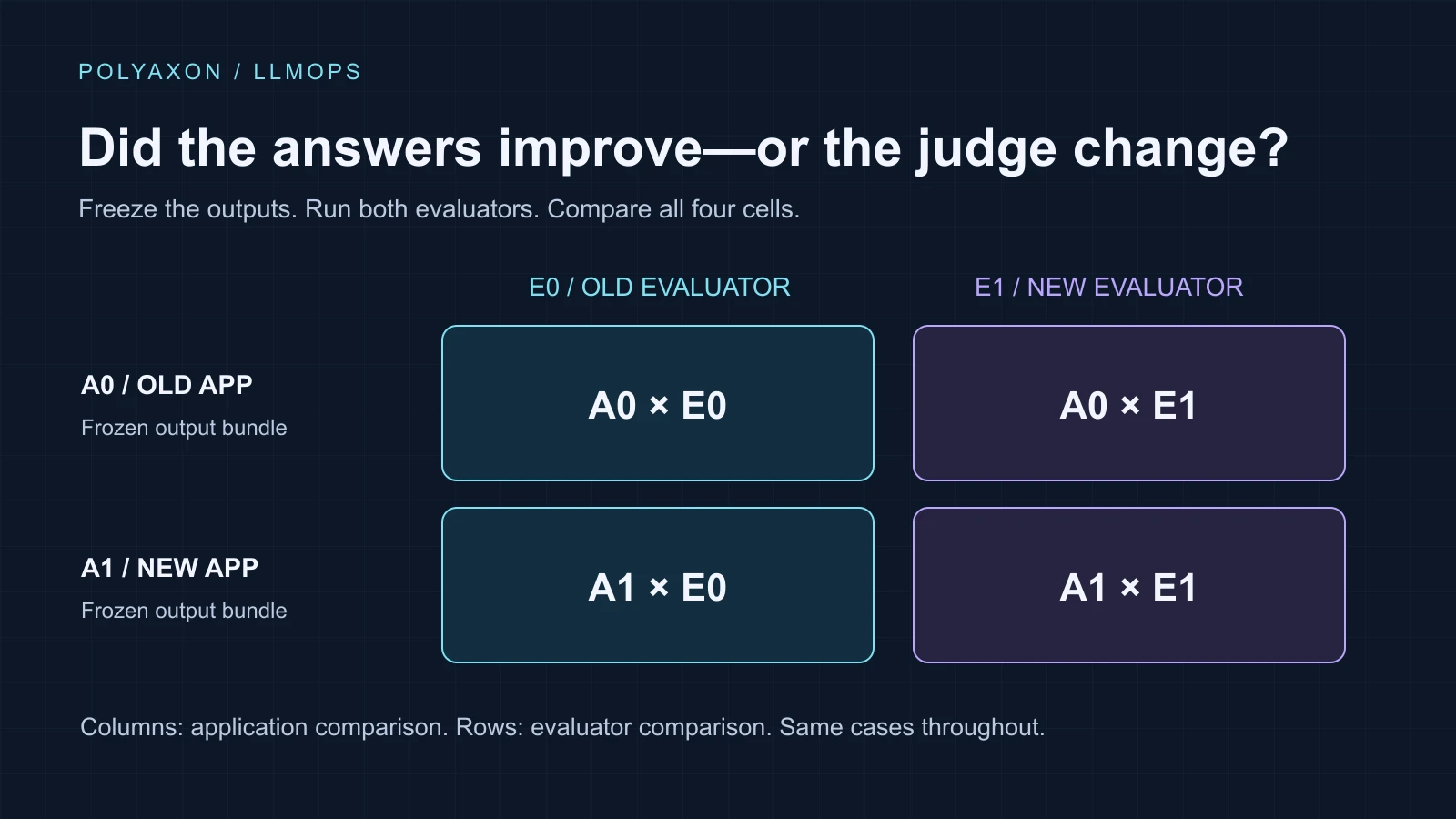
Compare old and new application outputs under both evaluator versions, inspect changed decisions, and retain the four comparisons in Polyaxon.
Understand exact prefix reuse in vLLM, structure repeated context, account for replica routing, and compare cold and warm workloads with Polyaxon.
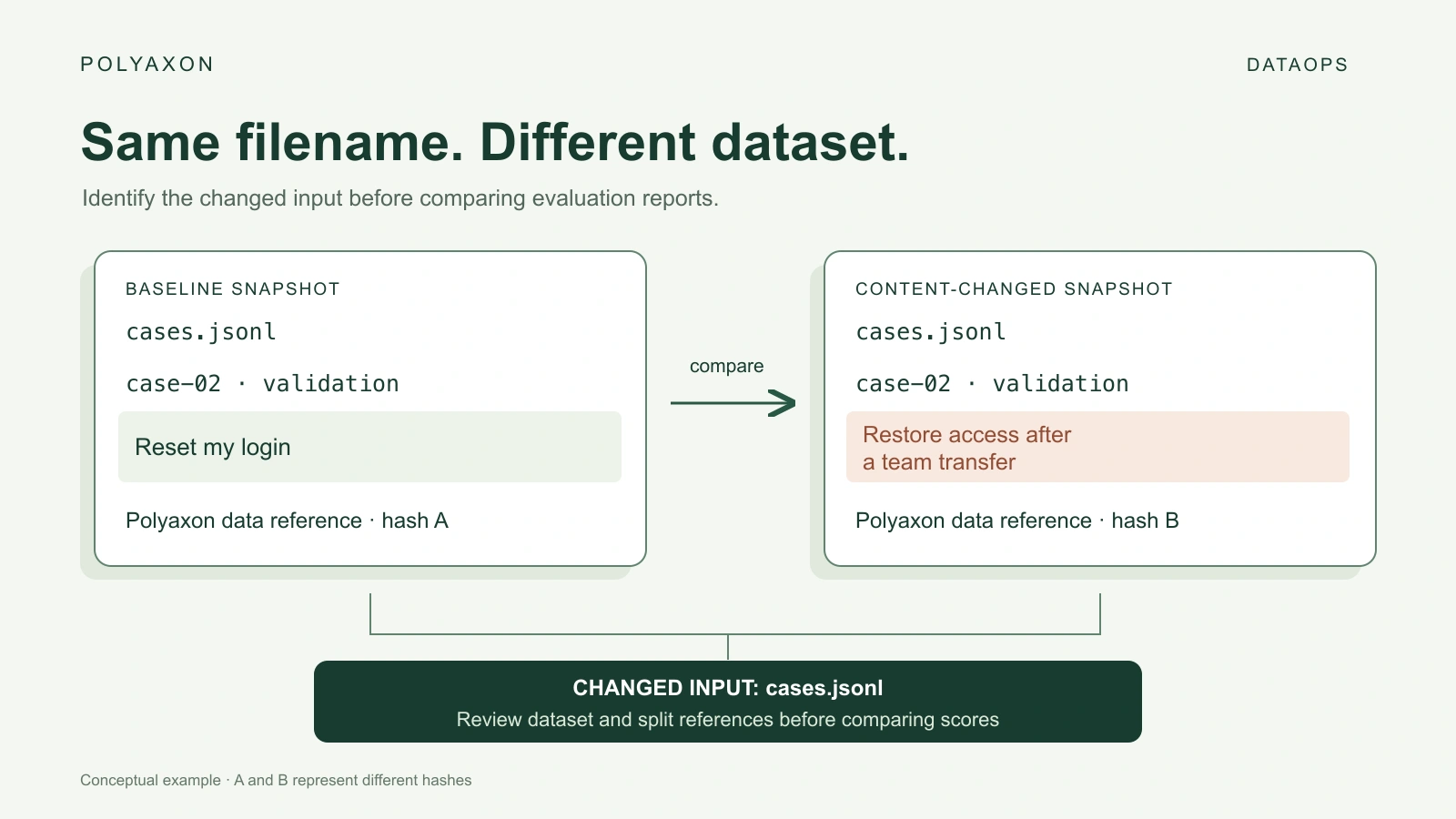
Use Polyaxon data references, artifact logging, and registered versions to retain the dataset and split behind each evaluation.
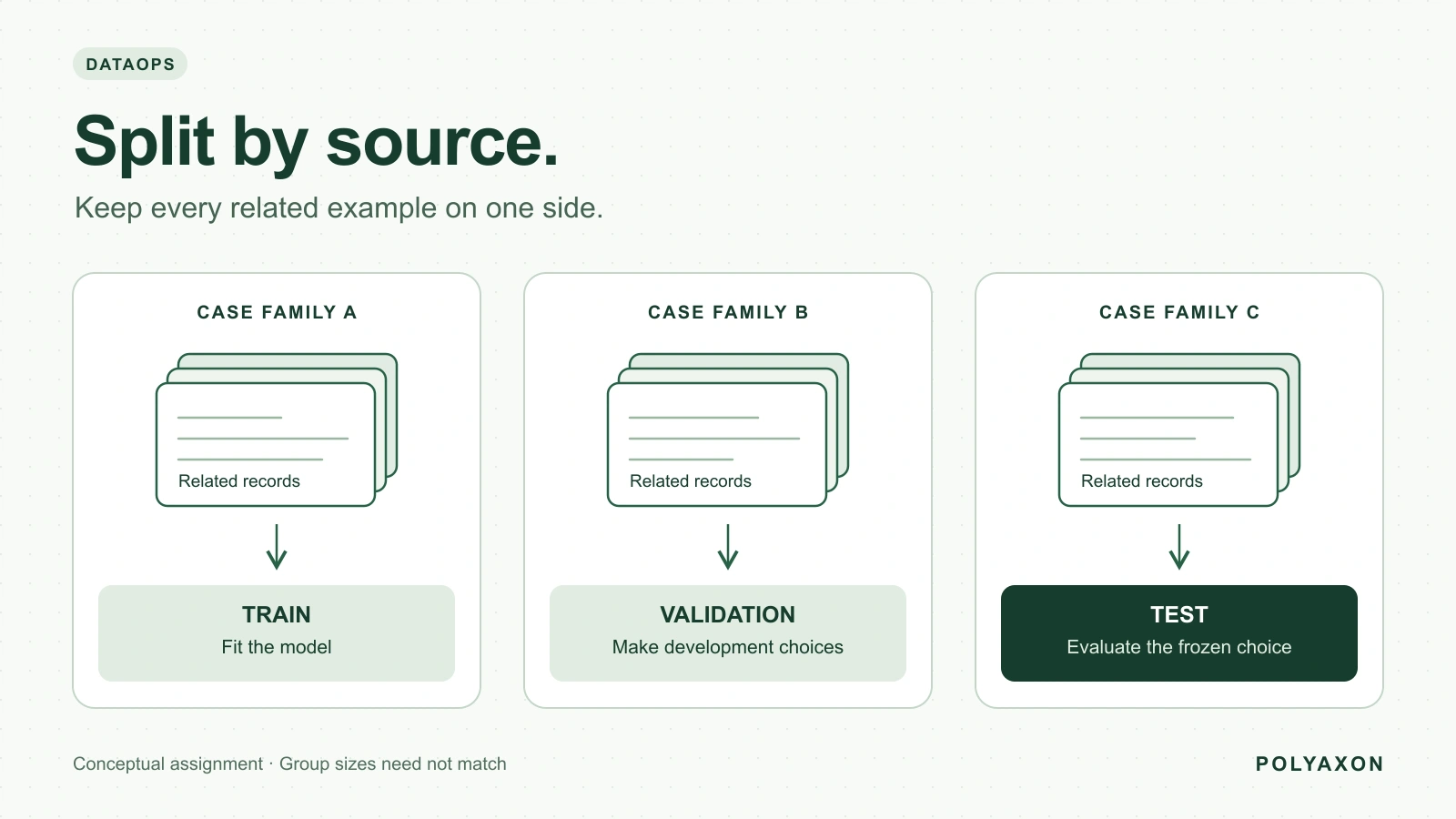
Choose evaluation boundaries, keep related examples together, audit duplicate overlap, and retain reproducible split manifests for ML and LLM experiments.
Compare inference optimizations against a fixed workload, latency limits, and quality checks, with benchmark configurations and results tracked in Polyaxon.
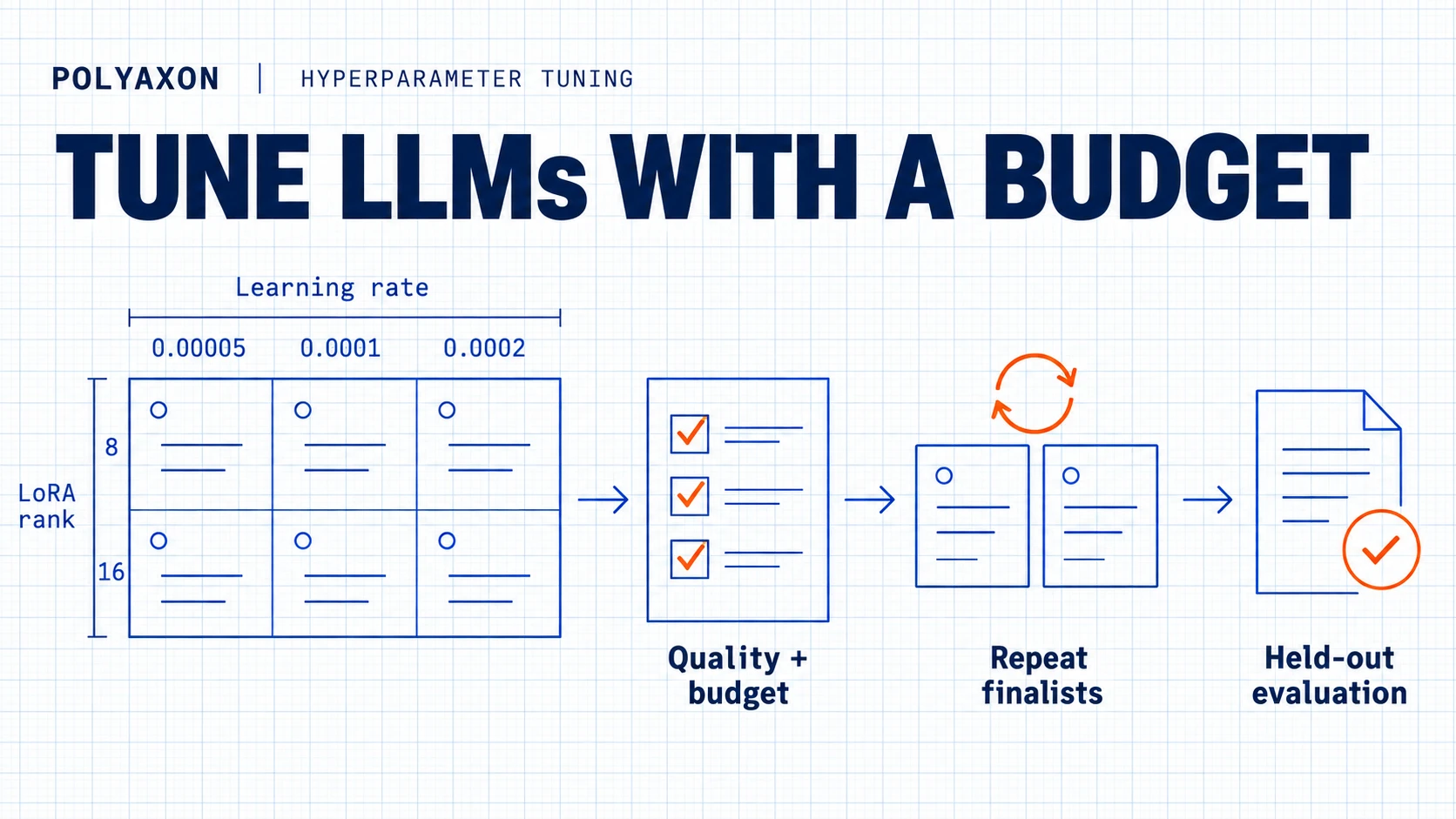
Design a small LoRA fine-tuning sweep, control its execution in Polyaxon, and compare validation quality, resource use, and repeatability.
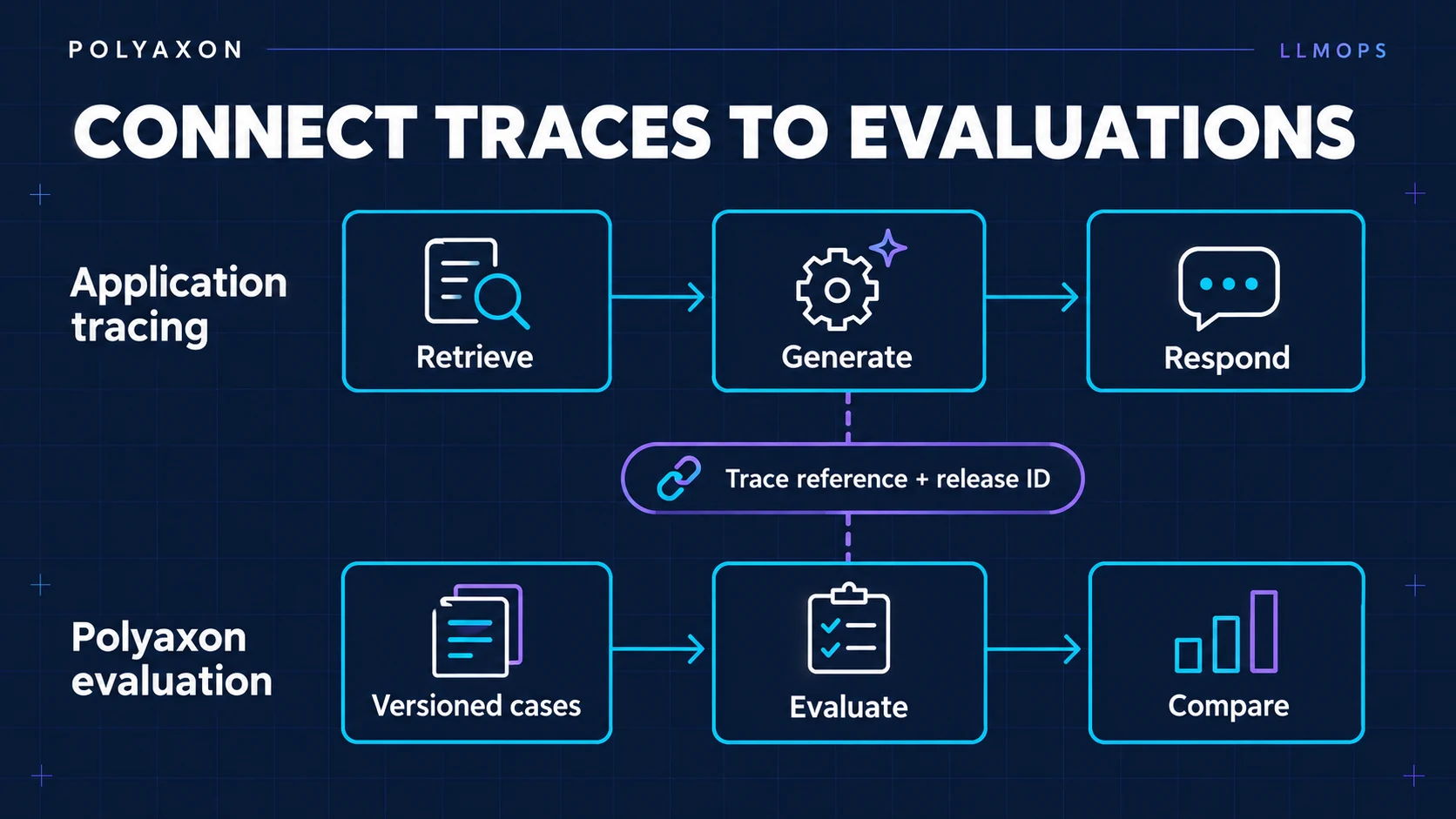
Keep release, dataset, evaluator, and sampling context connected as you investigate LLM failures and compare fixes with Polyaxon.
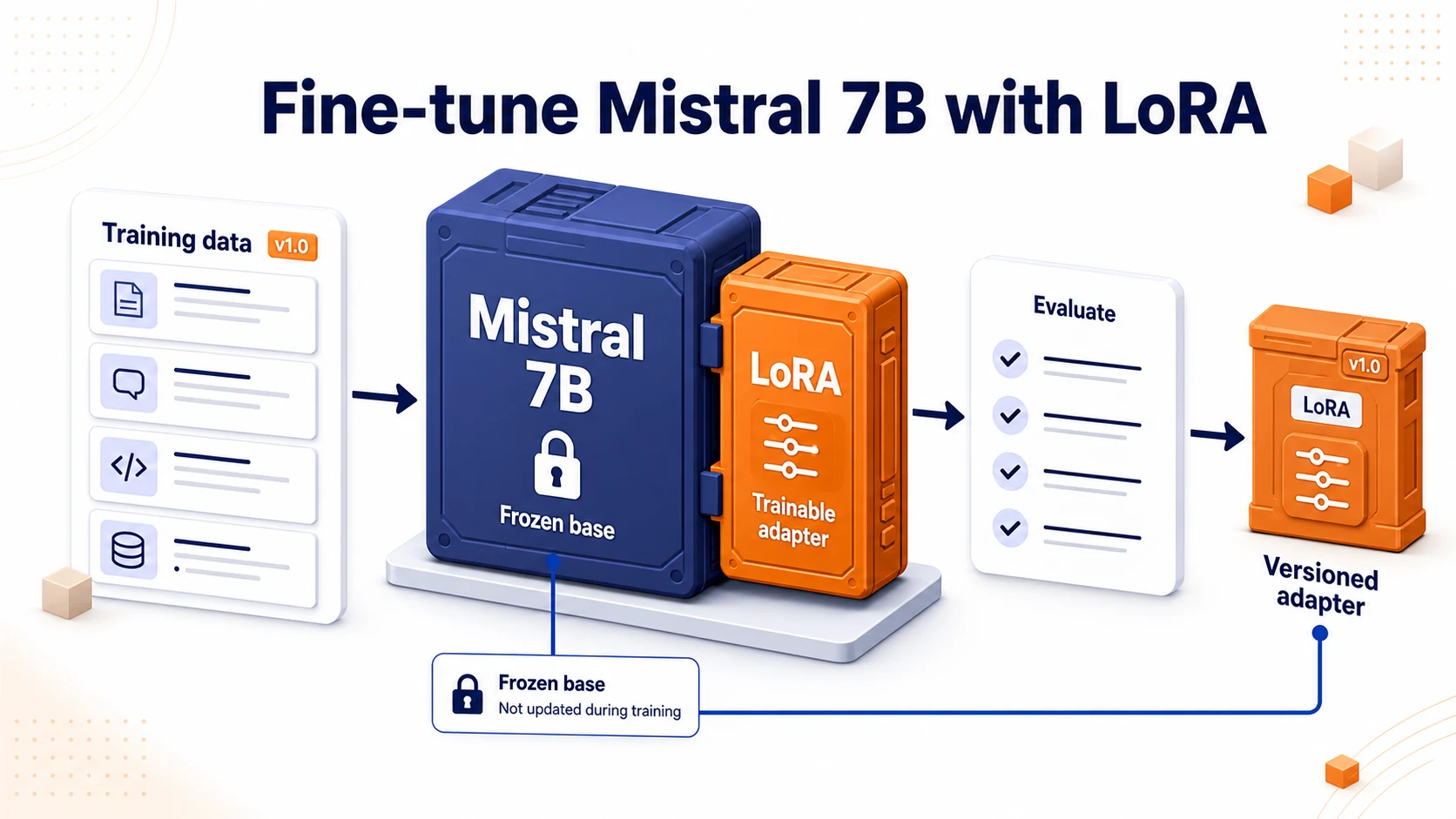
Plan a Mistral 7B LoRA fine-tuning workflow on Kubernetes with versioned data, GPU scheduling, Polyaxon tracking, evaluation, and adapter packaging.
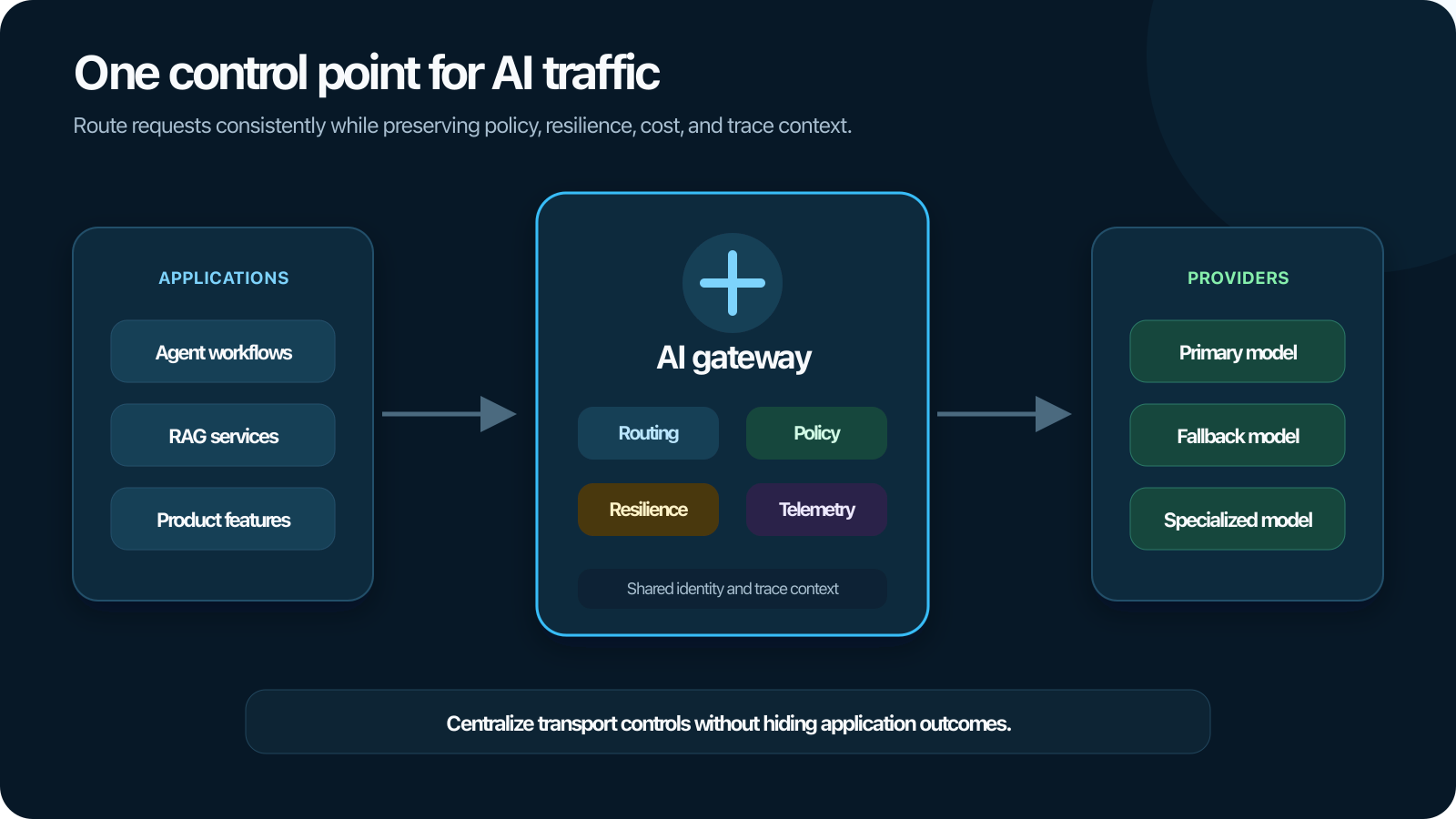
Operate an AI gateway as a policy boundary for workload identity, eligible models, routing, budgets, privacy, evidence, and controlled configuration changes.
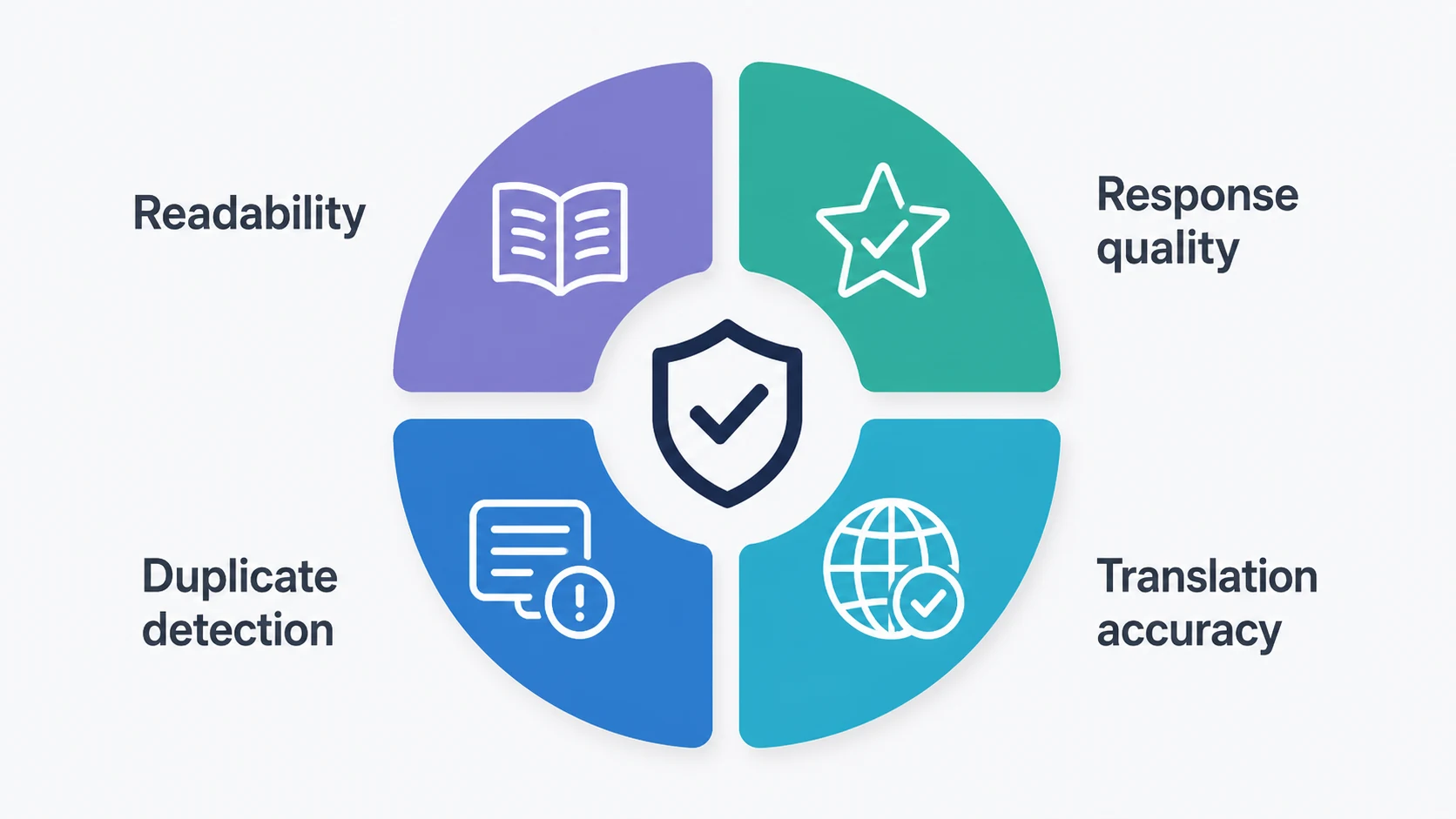
Design reliable batch LLM evaluations with stable shards, bounded concurrency, GPU-aware placement, resumable results, and complete aggregation.
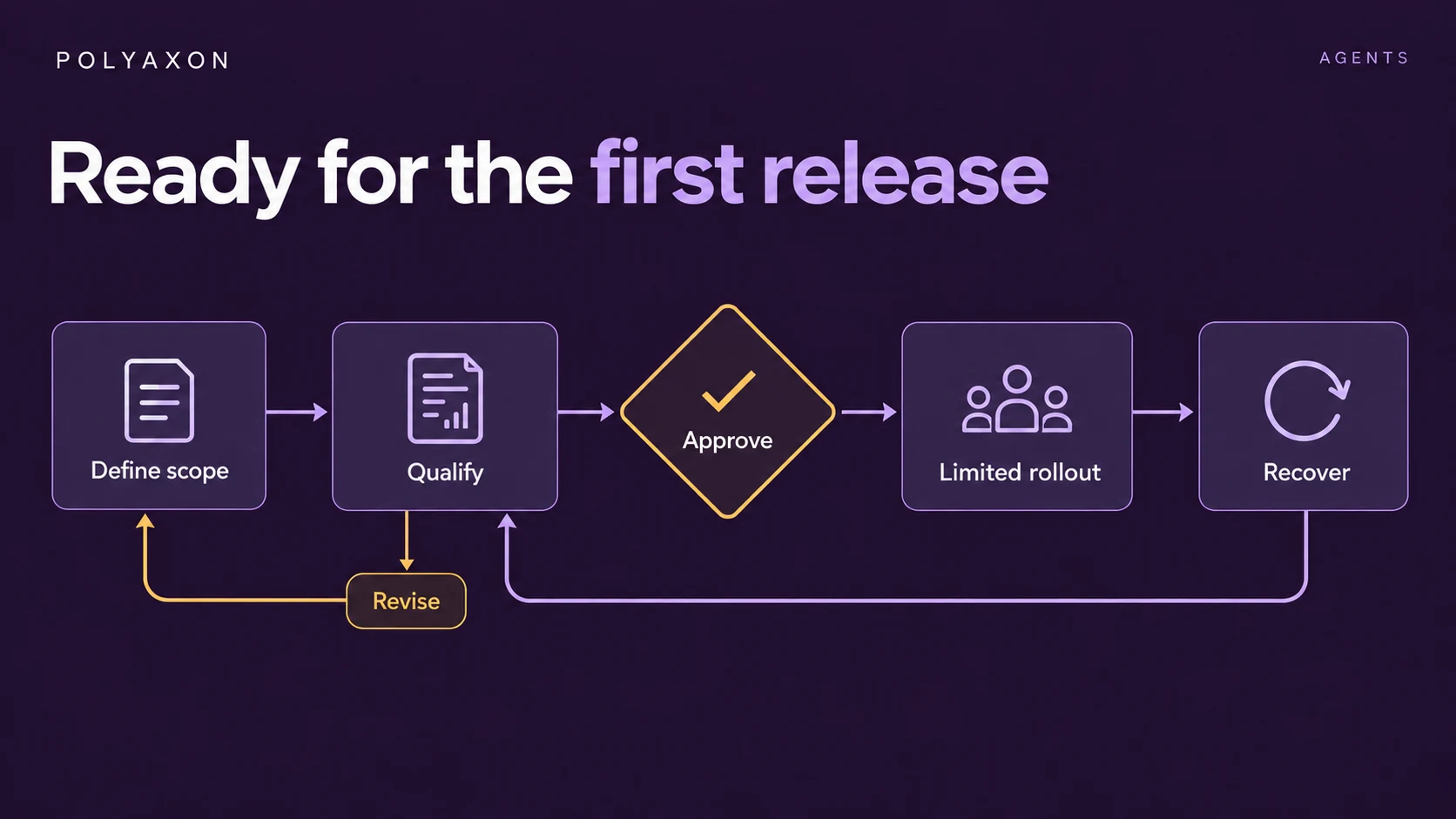
Build an agent release checklist around Polyaxon qualification jobs, versioned components, artifact reports, termination settings, and manual approval.
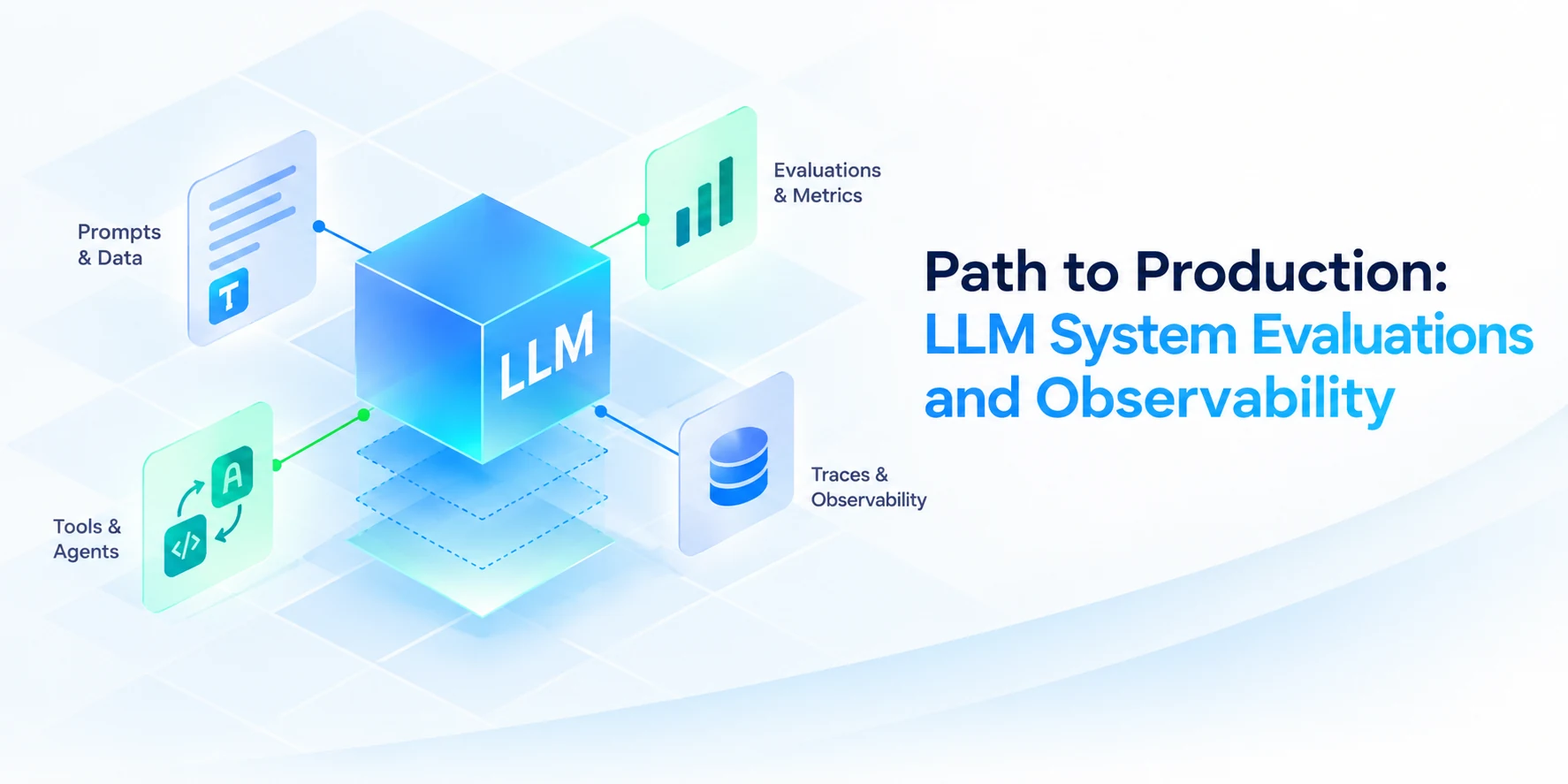
Use Polyaxon run tracking, comparison dashboards, resource monitoring, and repeatable evaluation to decide what to improve after an LLM prototype.
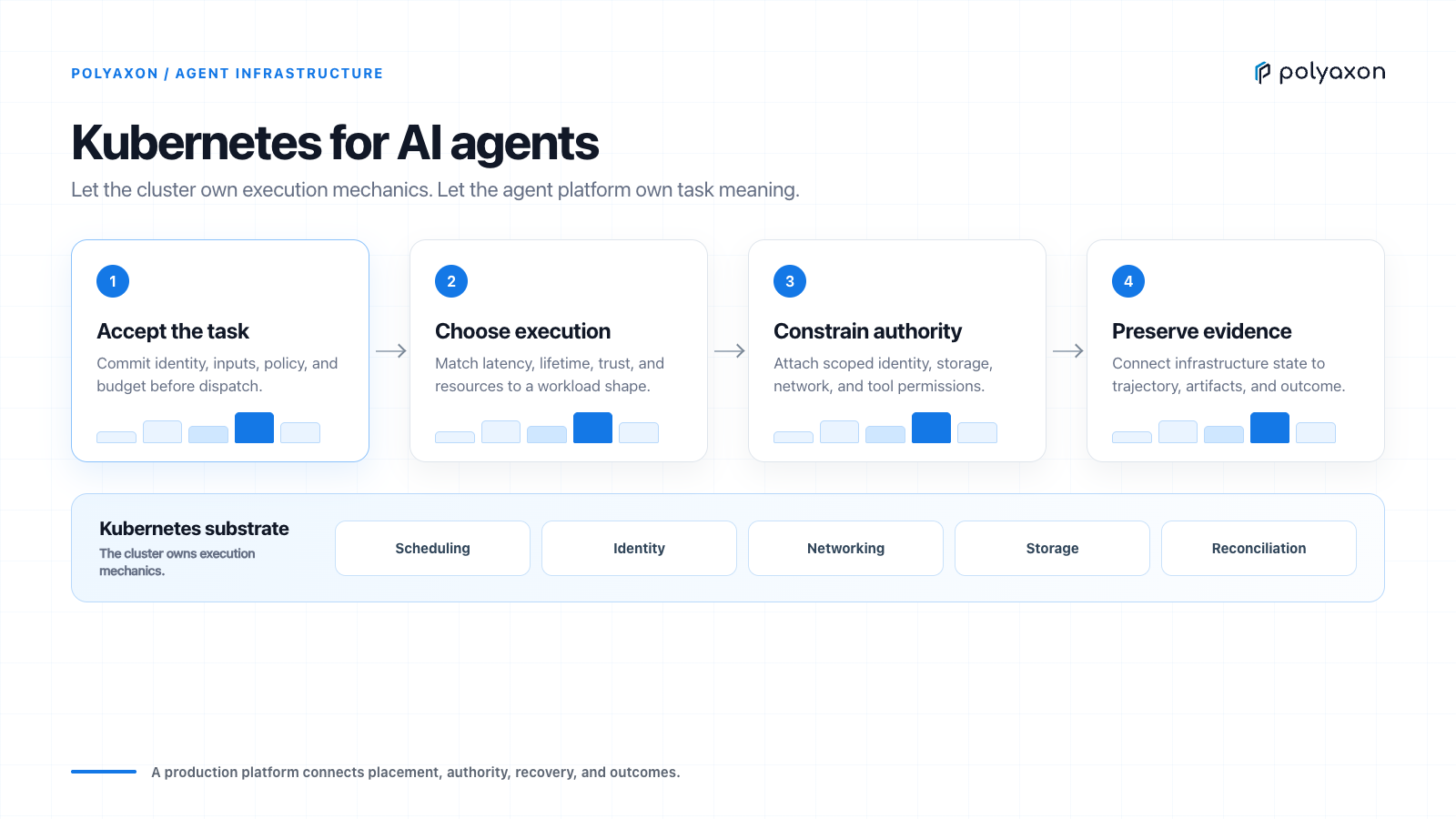
Design a production conversational assistant with grounded retrieval, controlled model access, durable conversation state, evaluation, security, and Kubernetes operations.
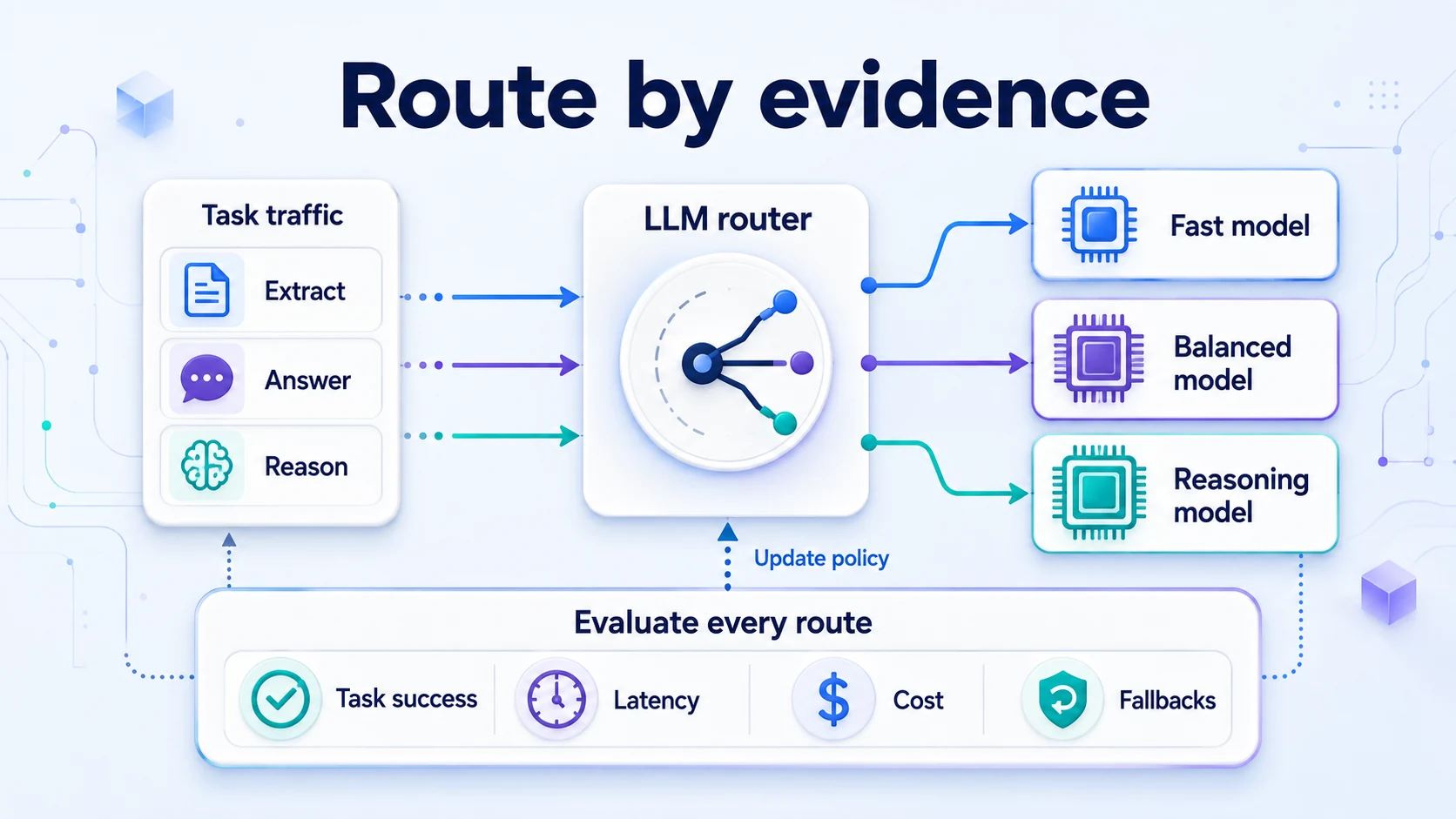
Test LLM routing policies with task-level quality, cost, latency, fallbacks, route stability, and model-aware production evidence.
An AI gateway centralizes model access, routing, resilience, policy, cost controls, and telemetry across production LLM applications and agents.
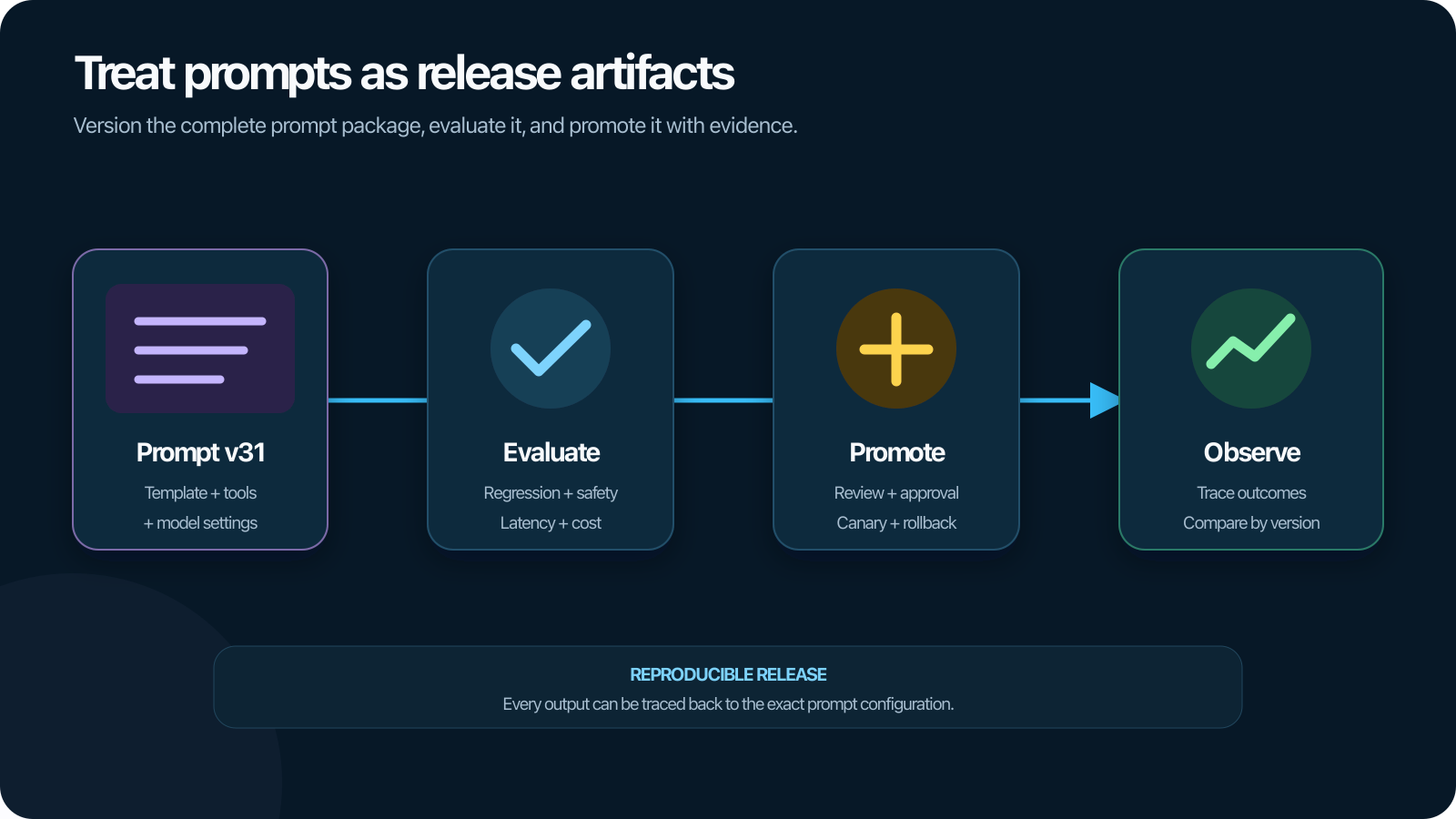
Treat prompts as versioned production artifacts with lineage, evaluations, promotion workflows, rollback, ownership, and runtime observability.
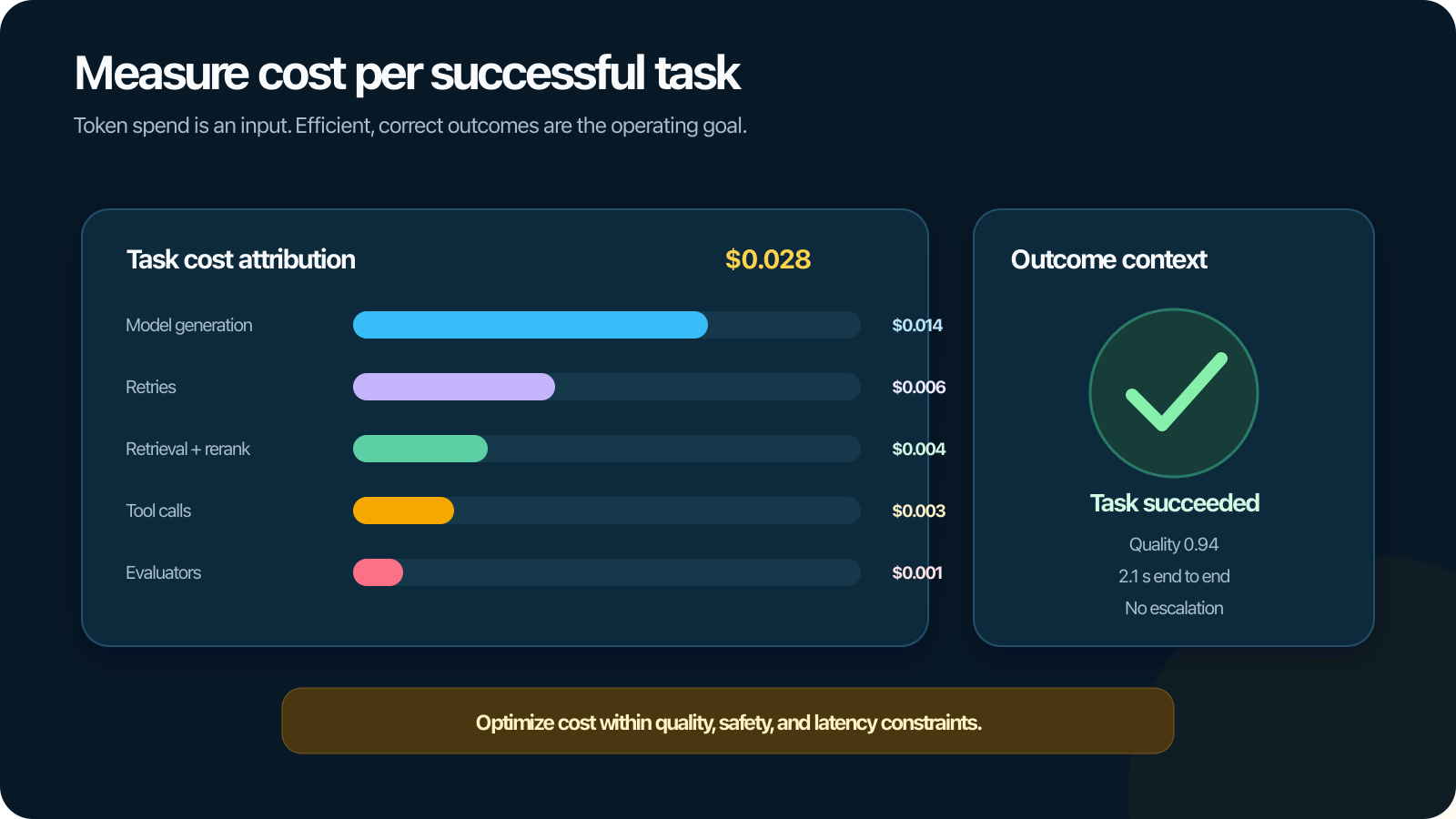
Connect tokens, model calls, retrieval, tools, retries, and infrastructure with quality and task outcomes to control production LLM costs.
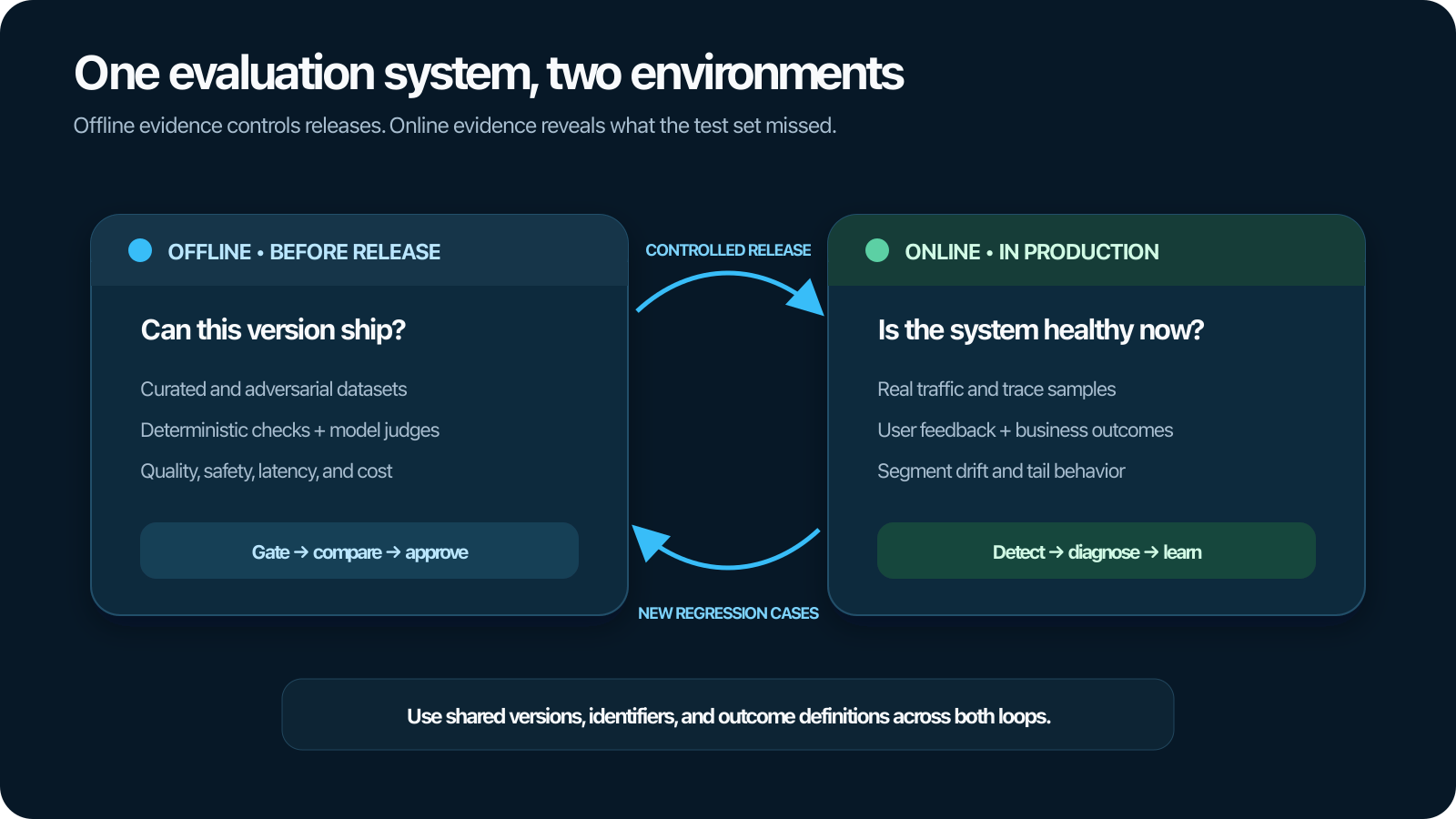
Use offline evaluation for reproducible release decisions and online evaluation for real production behavior, then connect both in one feedback loop.