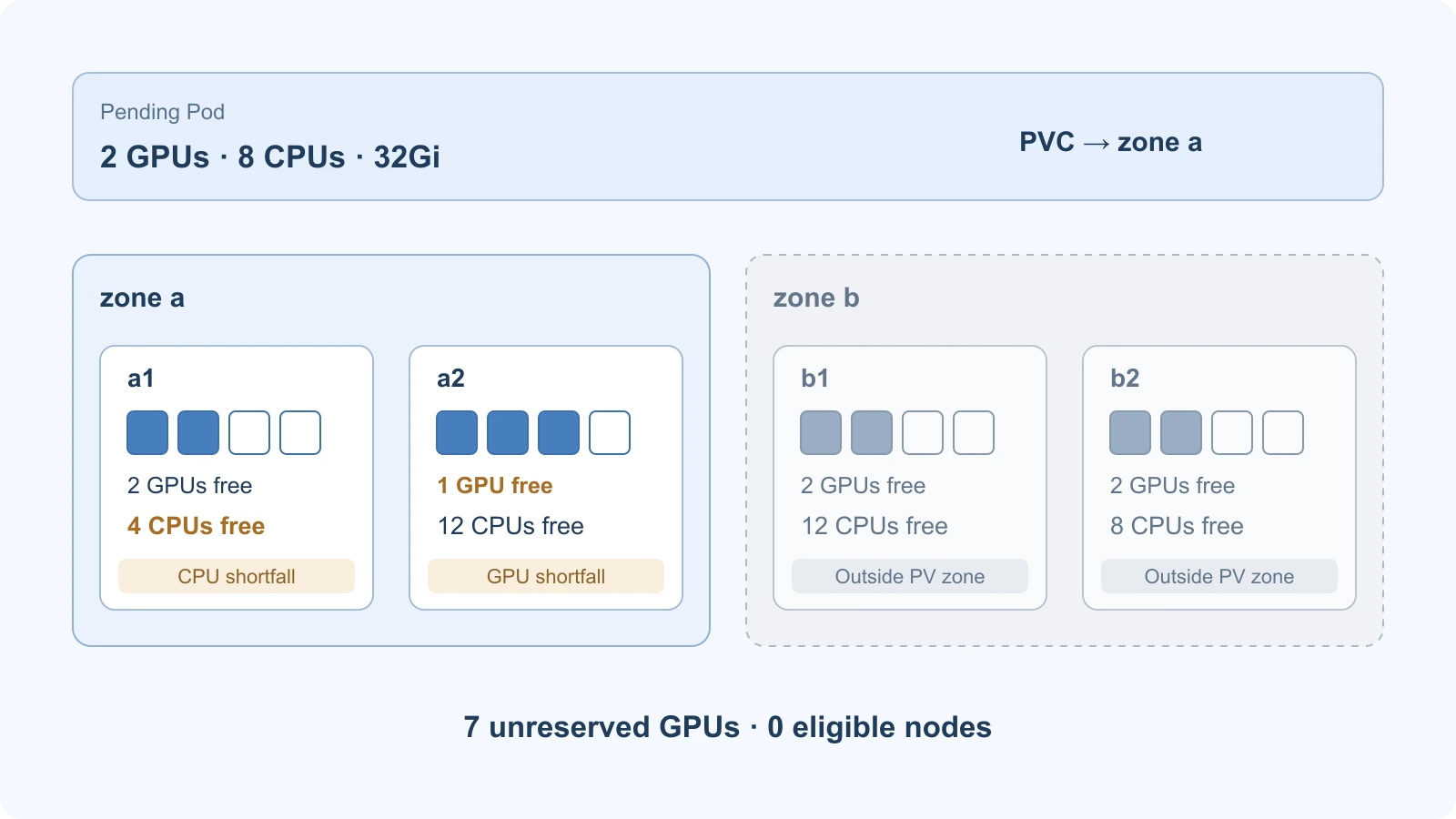
Diagnose a Pending GPU Pod across compute and storage
Work through a GPU placement case where available devices, CPU reservations, and volume topology leave no eligible node.
KubernetesGPUScheduling
The latest guides, tutorials, and product updates.
Work through a GPU placement case where available devices, CPU reservations, and volume topology leave no eligible node.
Run synchronized training and inference workers on Polyaxon, compare MIG with time-slicing, and measure the shared interval rather than misleading solo utilization.
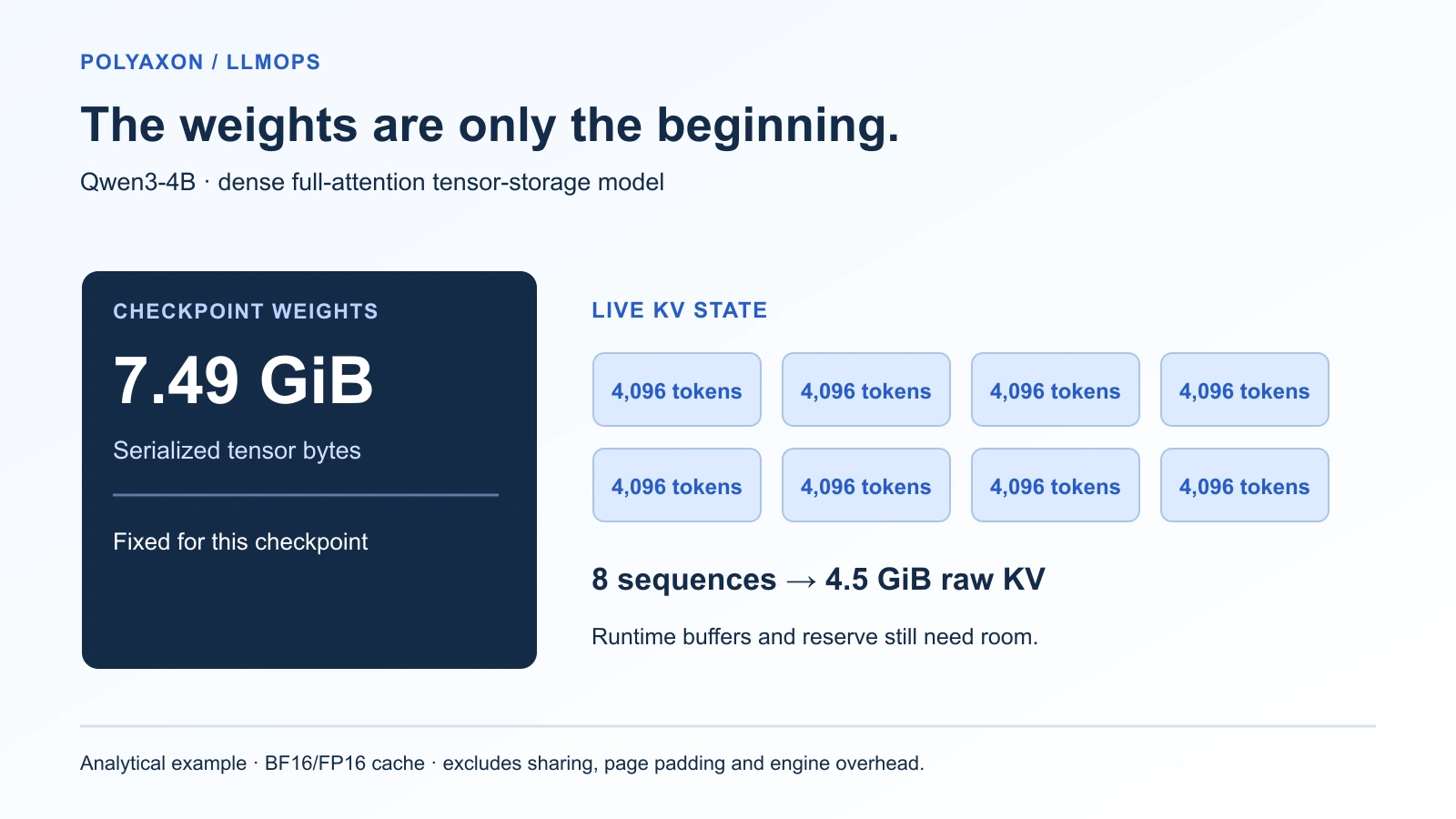
Calculate Qwen3-4B weight and KV-cache storage, understand what the estimate excludes, and use a Polyaxon service to check the actual capacity.
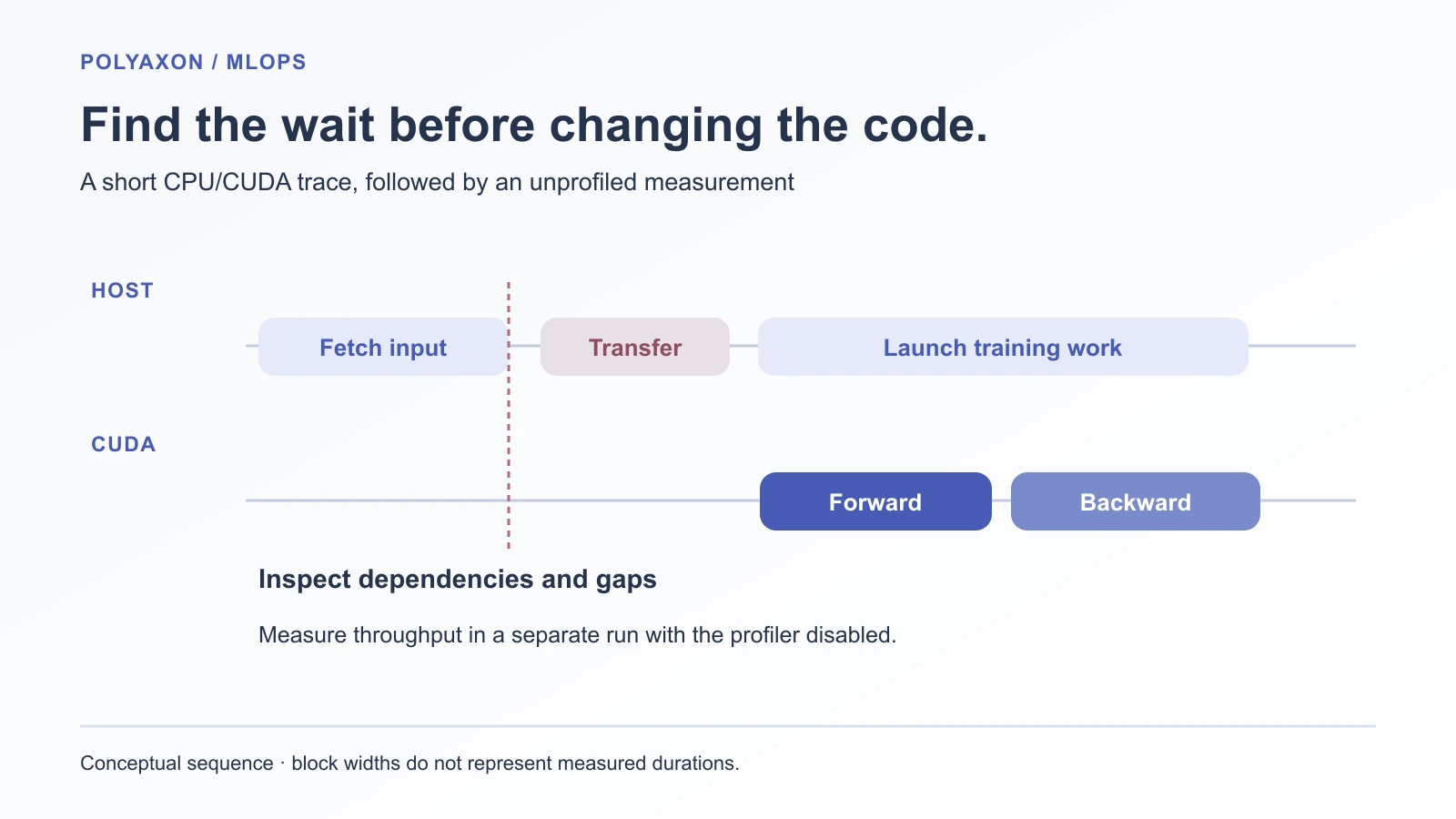
Capture a short CPU/CUDA trace, identify whether input loading or GPU work is delaying training, and measure a targeted change without profiler overhead.
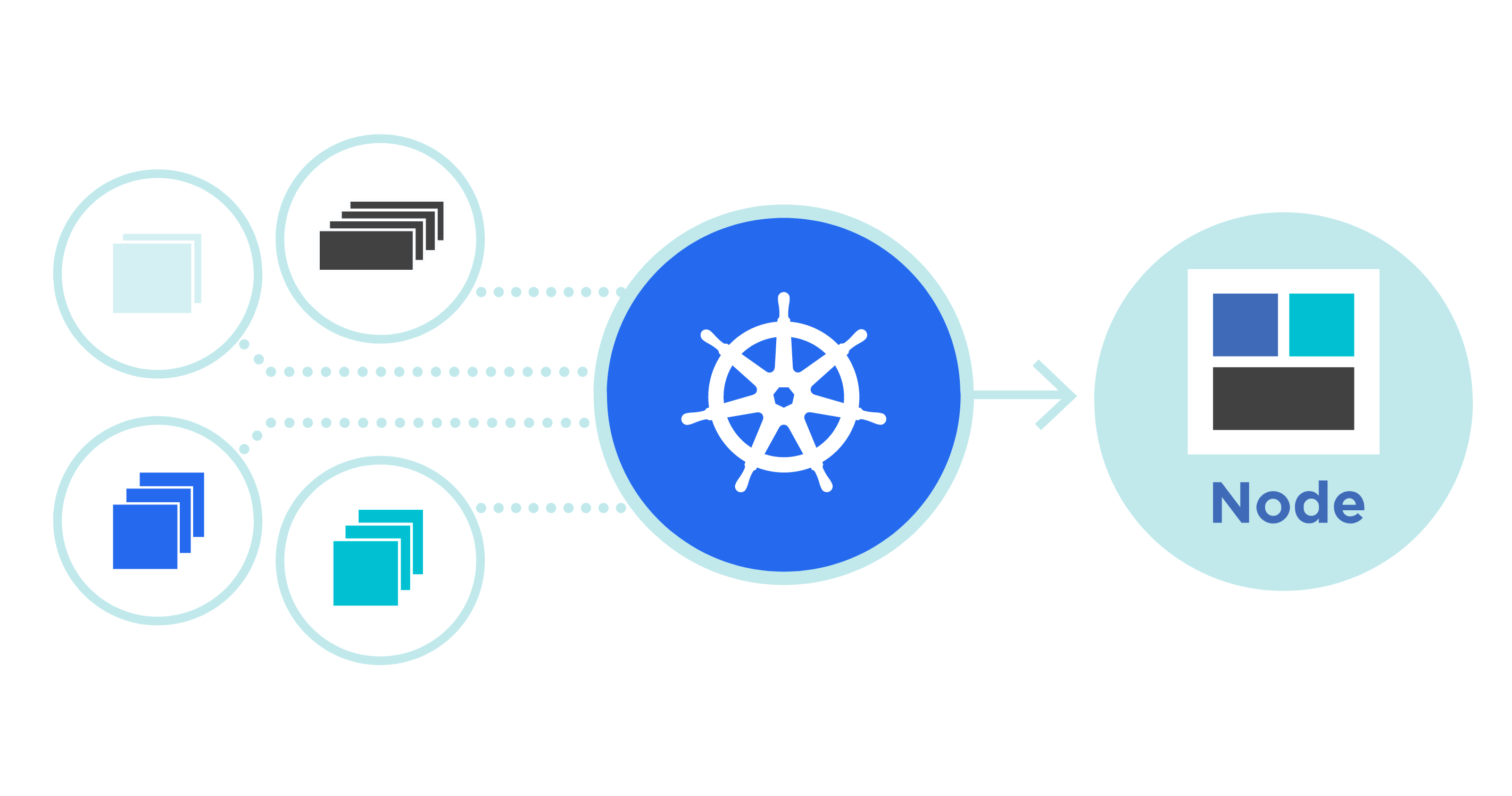
Give urgent GPU evaluations or notebooks higher Kubernetes scheduling priority without evicting running training Pods, and select the policy in Polyaxon.
Limit aggregate GPU requests with ResourceQuota, supply CPU and memory defaults, and align Polyaxon resource profiles and queues with namespace budgets.
Combine CPU Manager eligibility, full-core allocation, and Topology Manager policy, then compare CPU/GPU workloads with Polyaxon.
Use Dynamic Resource Allocation to describe the accelerator a workload needs, understand device claims, and plan the integration with Polyaxon.
Connect Kubernetes DRA allocations, device health, and application failures without confusing missing telemetry with healthy hardware.
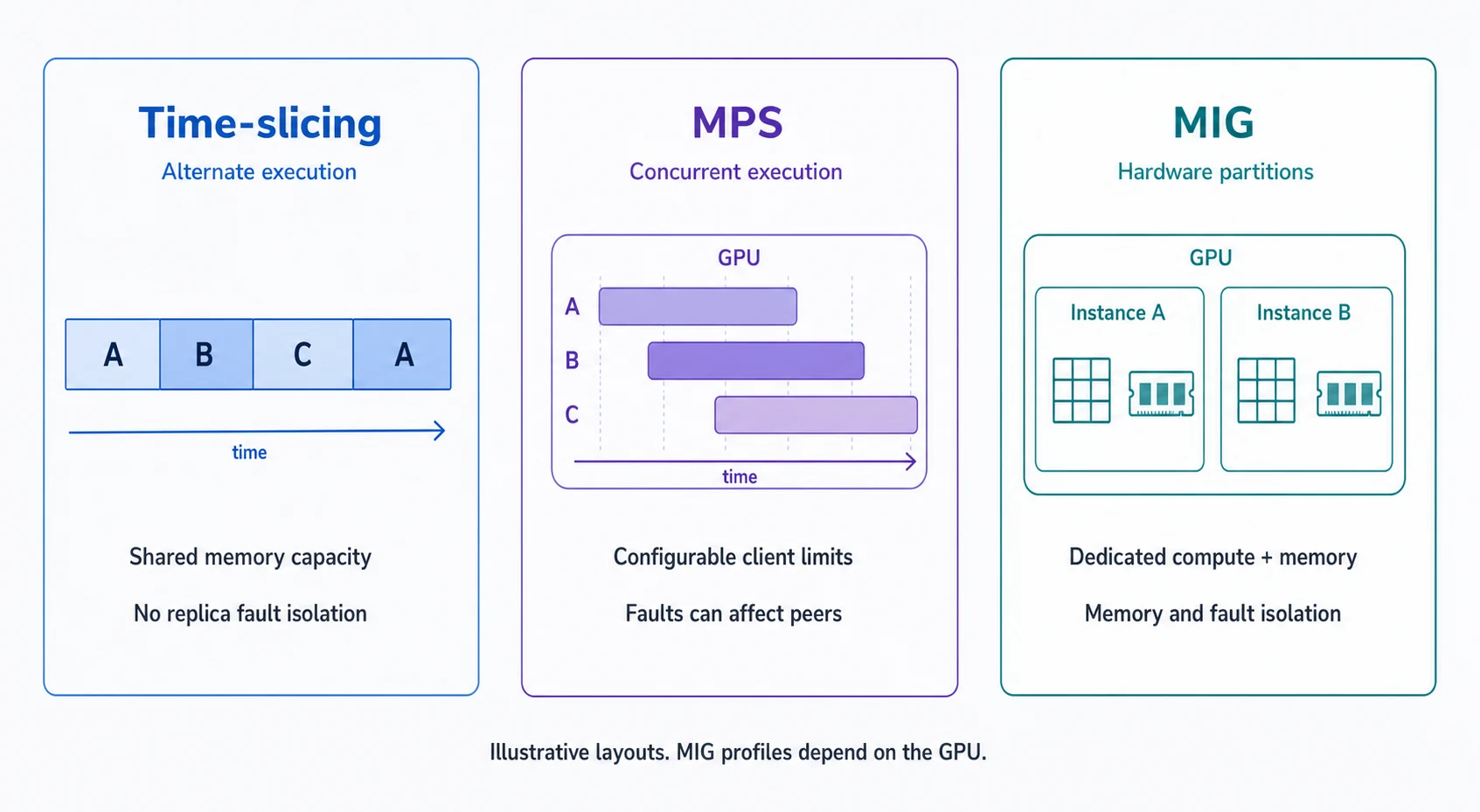
Compare NVIDIA MIG and GPU time-slicing on Kubernetes, including memory isolation, resource names, scheduling behavior, and workload fit.
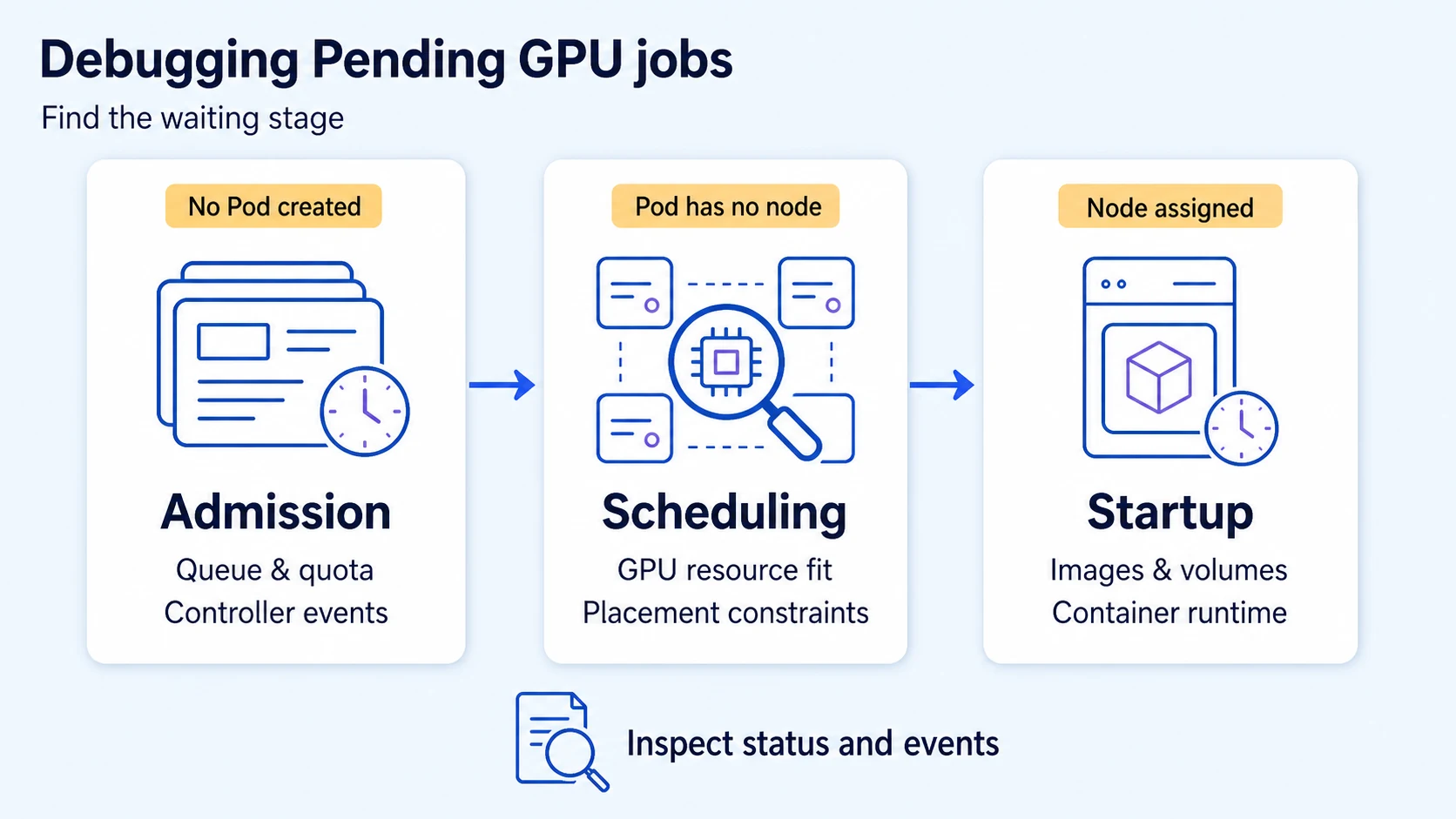
Diagnose Pending GPU jobs by checking queue admission, scheduler events, advertised GPU resources, placement constraints, storage, and node capacity.
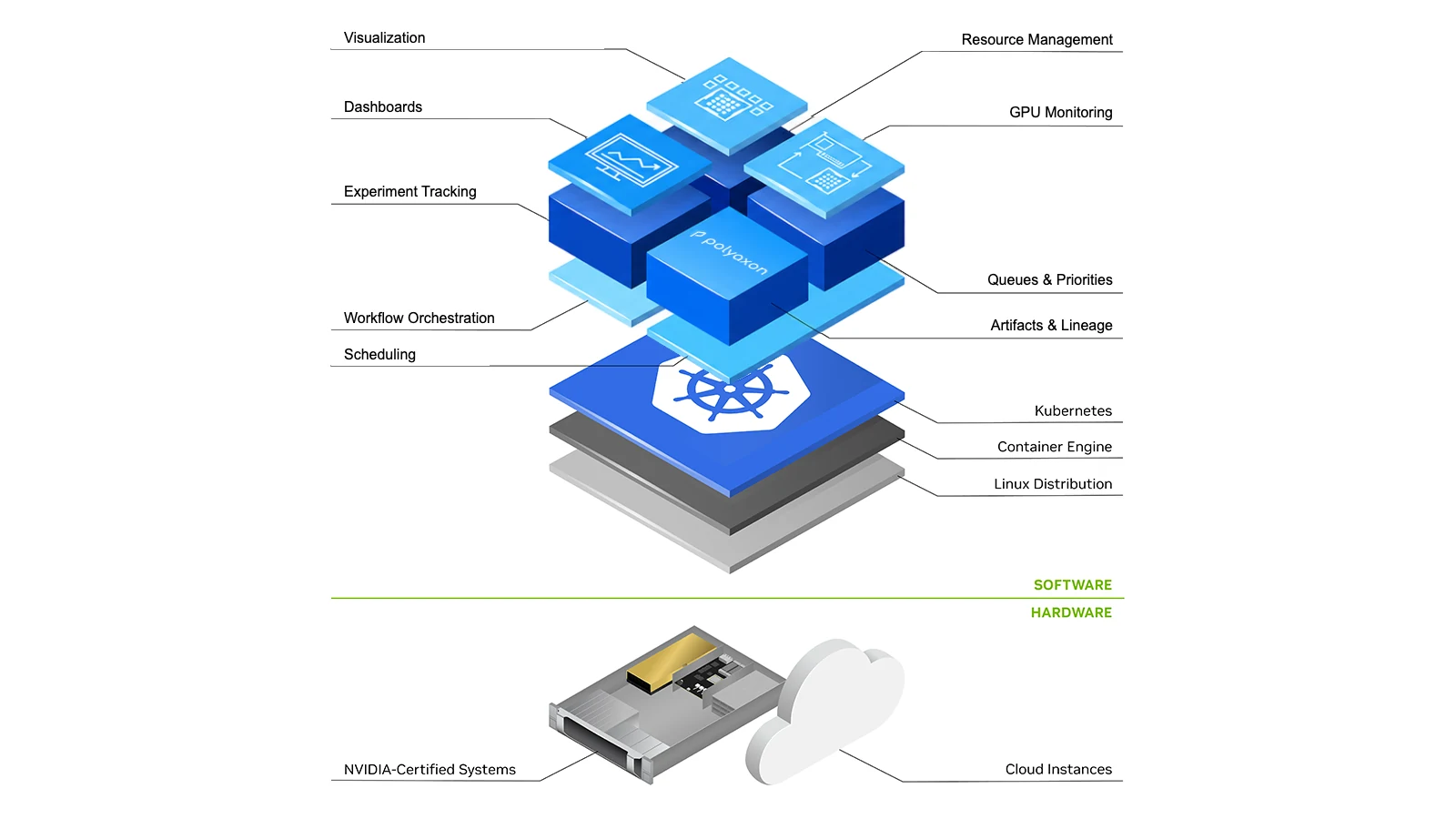
Make AI platforms ready for new accelerator generations through portable workload contracts, device-aware scheduling, topology, storage, compatibility, and migration evidence.
Run collective communication checks as tracked MPI jobs before using a multi-node GPU pool for training.