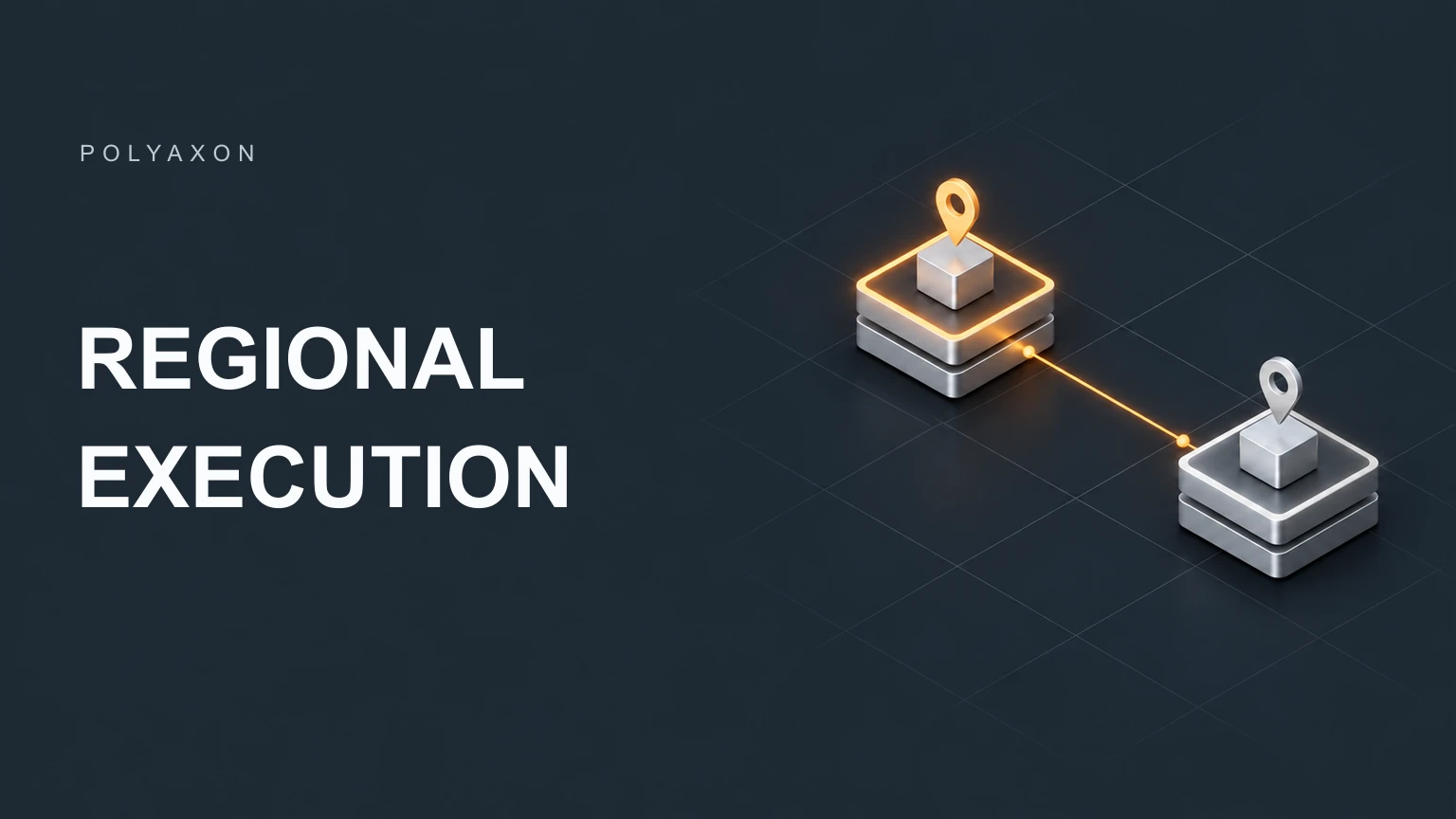
Route ML jobs to regional infrastructure with Polyaxon
Configure regional execution with Polyaxon agents, queues, and storage connections, then measure data-transfer costs without assuming same-region traffic is free.
InfrastructureSchedulingGuides
The latest guides, tutorials, and product updates.
Configure regional execution with Polyaxon agents, queues, and storage connections, then measure data-transfer costs without assuming same-region traffic is free.
Operate AI workloads across clusters and clouds with central intent, local execution, placement policy, consistent identity, connected evidence, and failure-aware control.
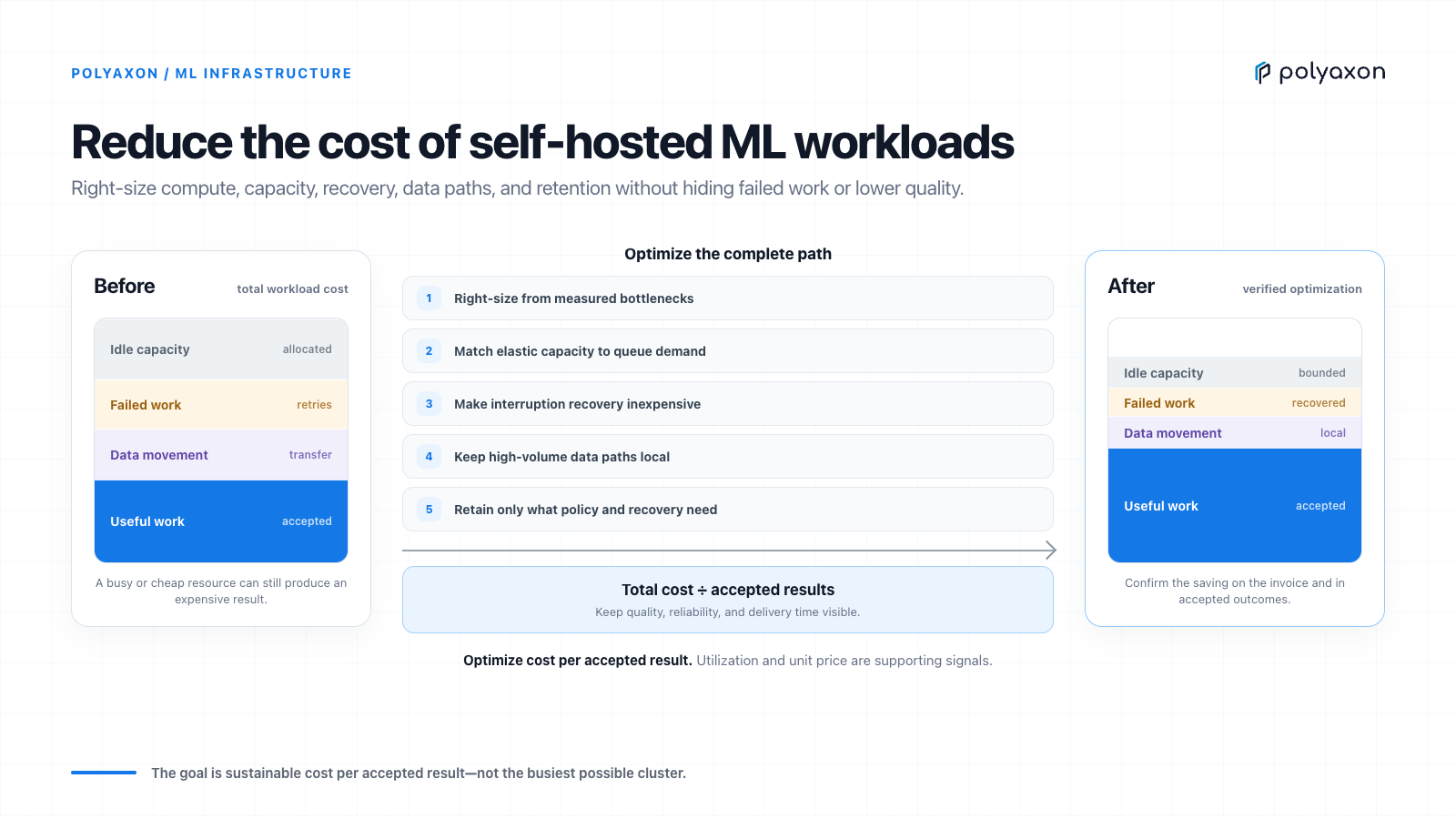
Reduce self-hosted ML costs with outcome-based accounting, right-sized resources, elastic capacity, interruption-ready workloads, local data paths, and deliberate retention.
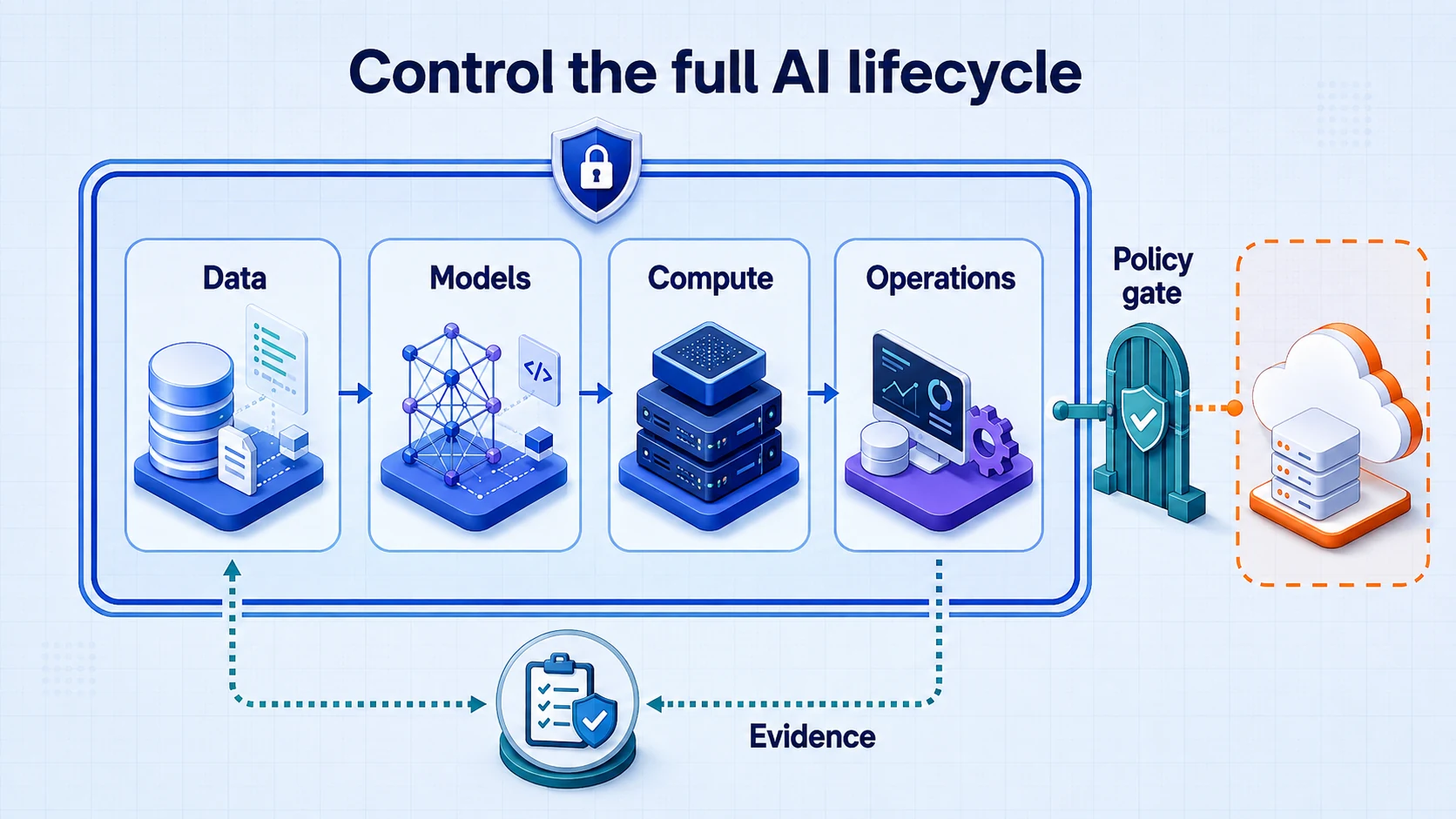
Define sovereign AI as control over data, models, compute, operations, providers, and evidence, then implement it with Kubernetes.
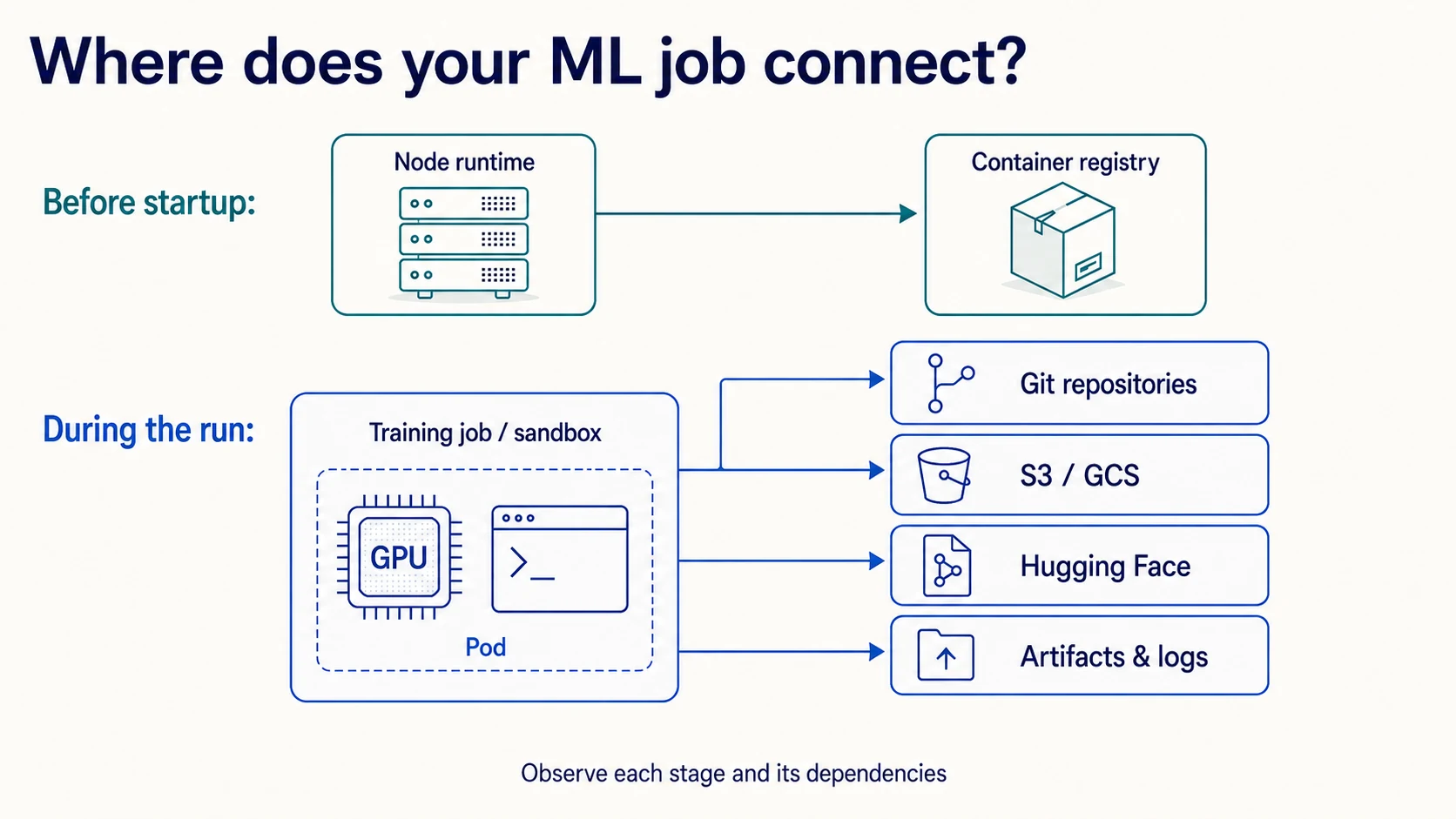
Trace image pulls, Git clones, S3 and GCS access, Hugging Face downloads, and artifact uploads across the lifecycle of Kubernetes jobs and sandboxes.
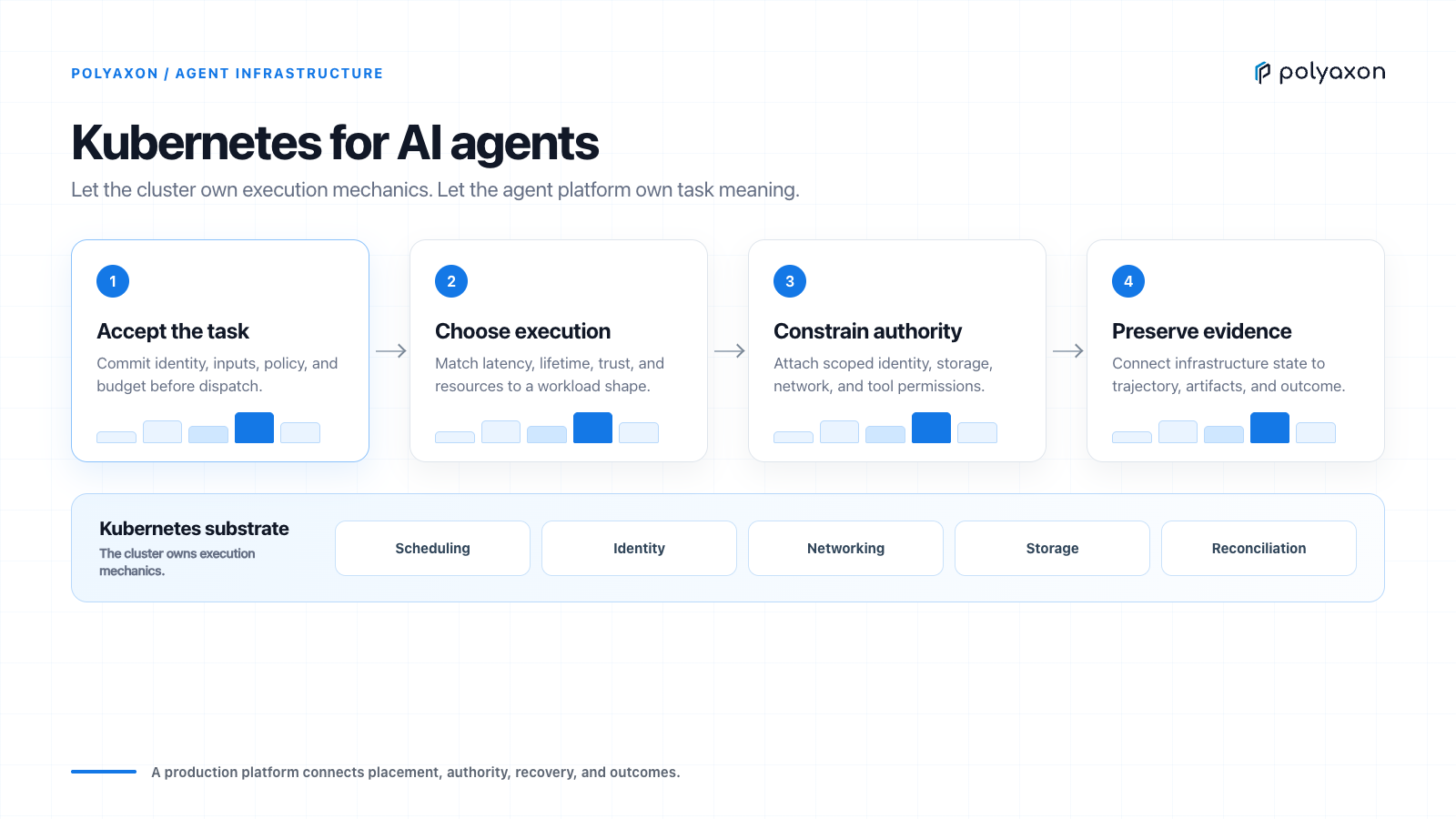
Design a Kubernetes platform for AI agents with clear workload boundaries, durable state, scoped access, resource controls, and end-to-end evidence.
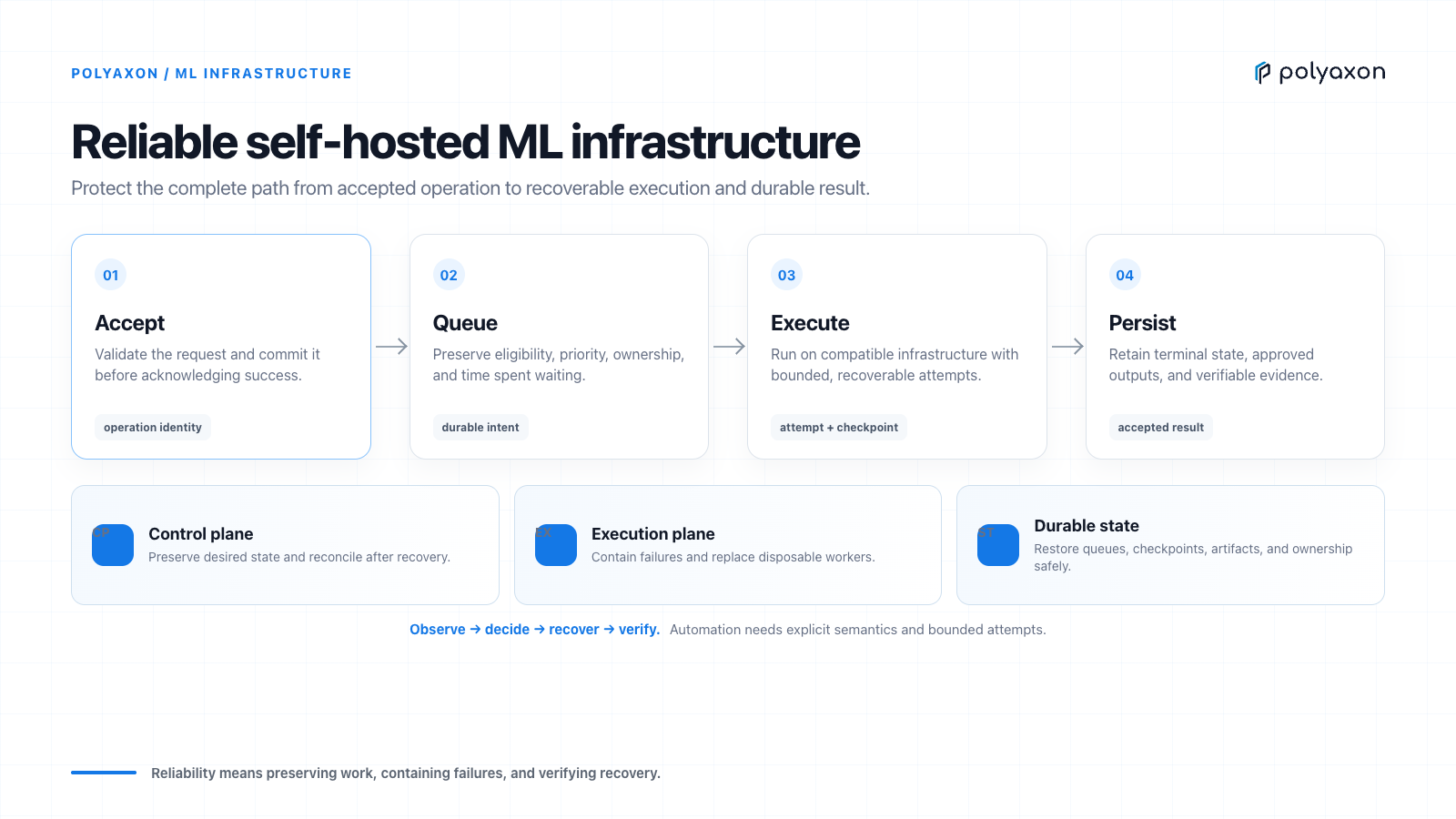
Build self-hosted ML infrastructure around explicit failure domains, durable queues and artifacts, eligible failover, actionable telemetry, and tested recovery.
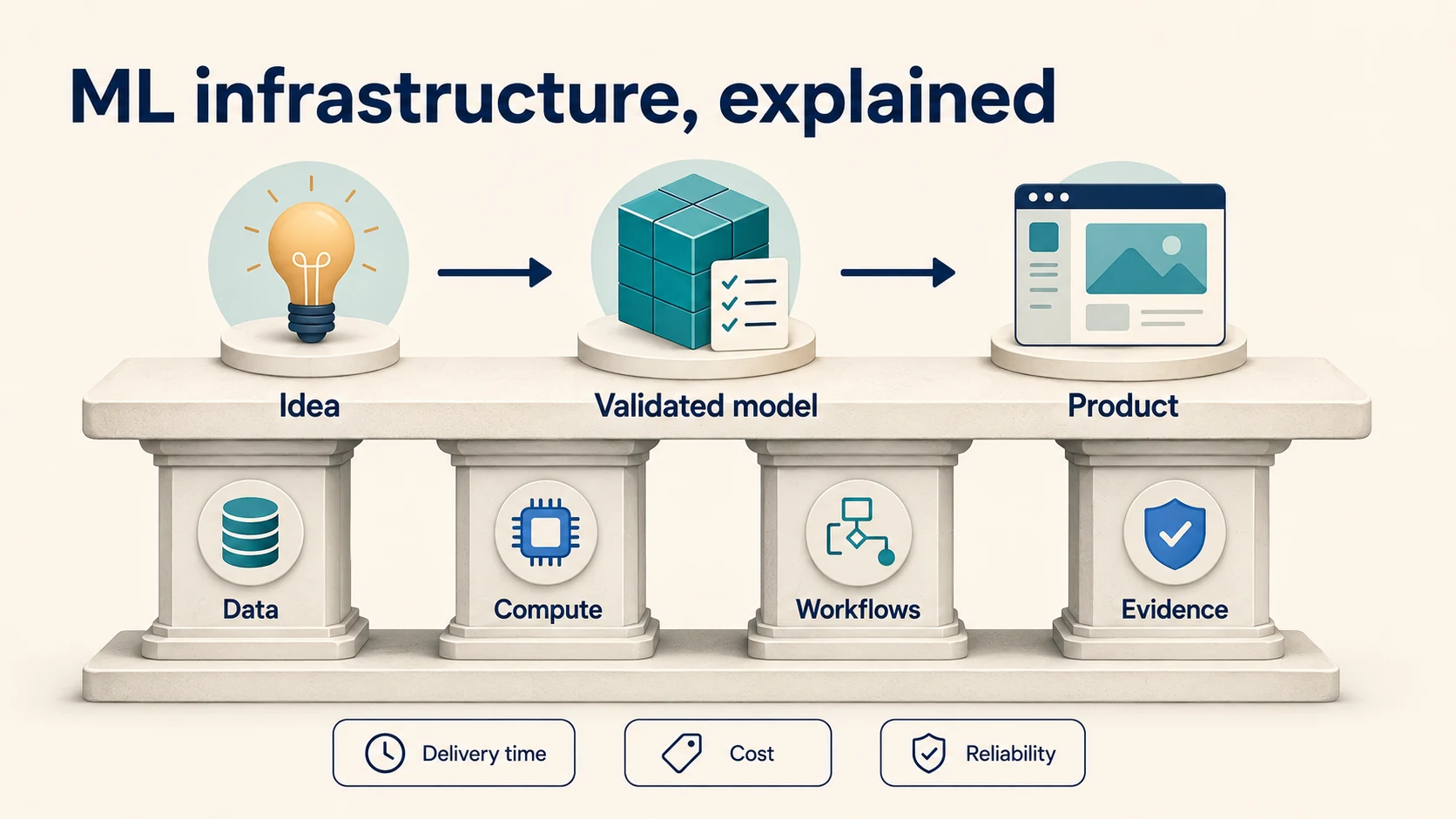
Understand what ML infrastructure pays for, how it affects delivery and reliability, and how to evaluate an investment using measurable workflow outcomes.
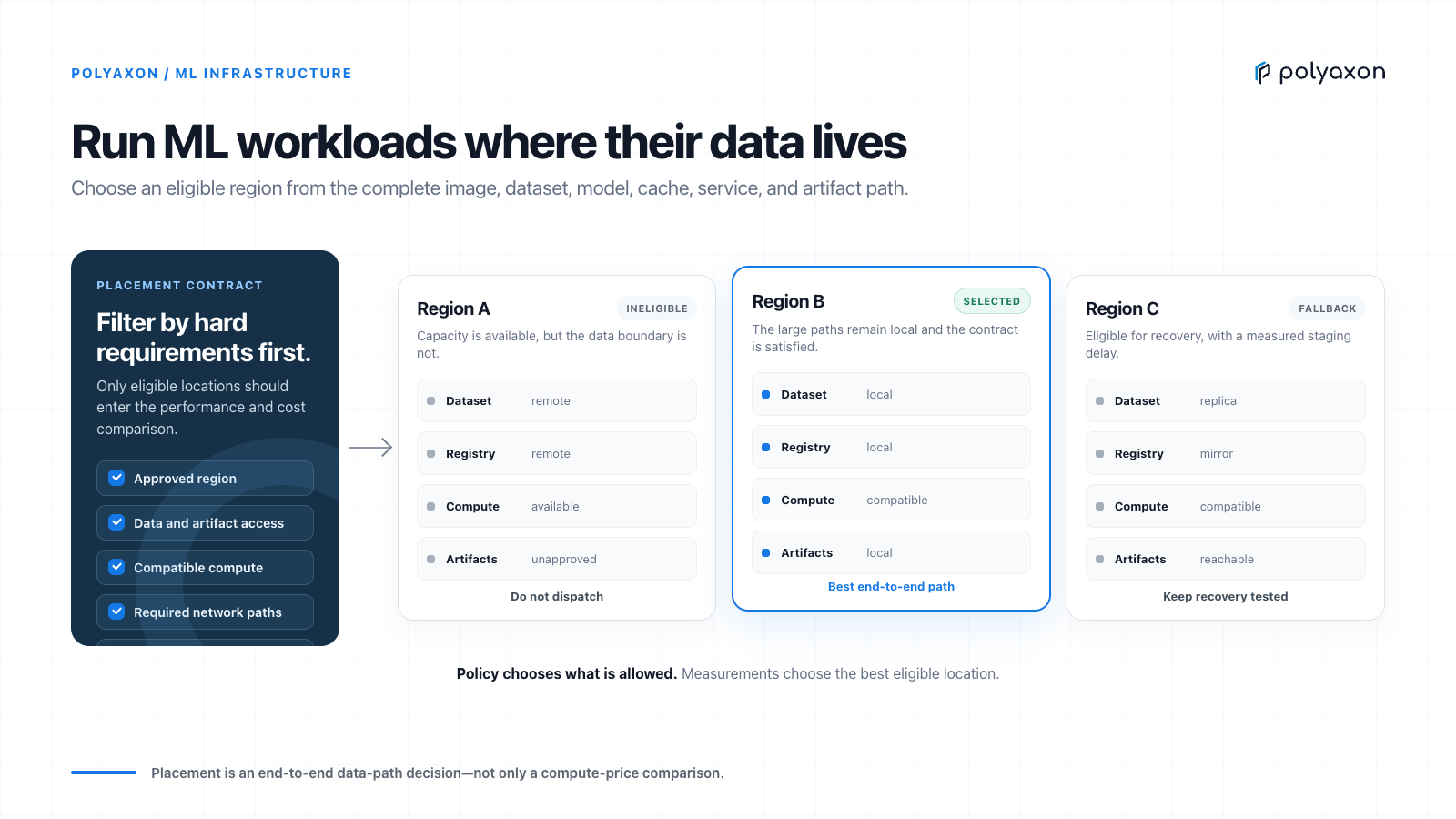
Design region-aware ML execution around dataset, registry, model, cache, artifact, and service locality without confusing proximity with data residency.
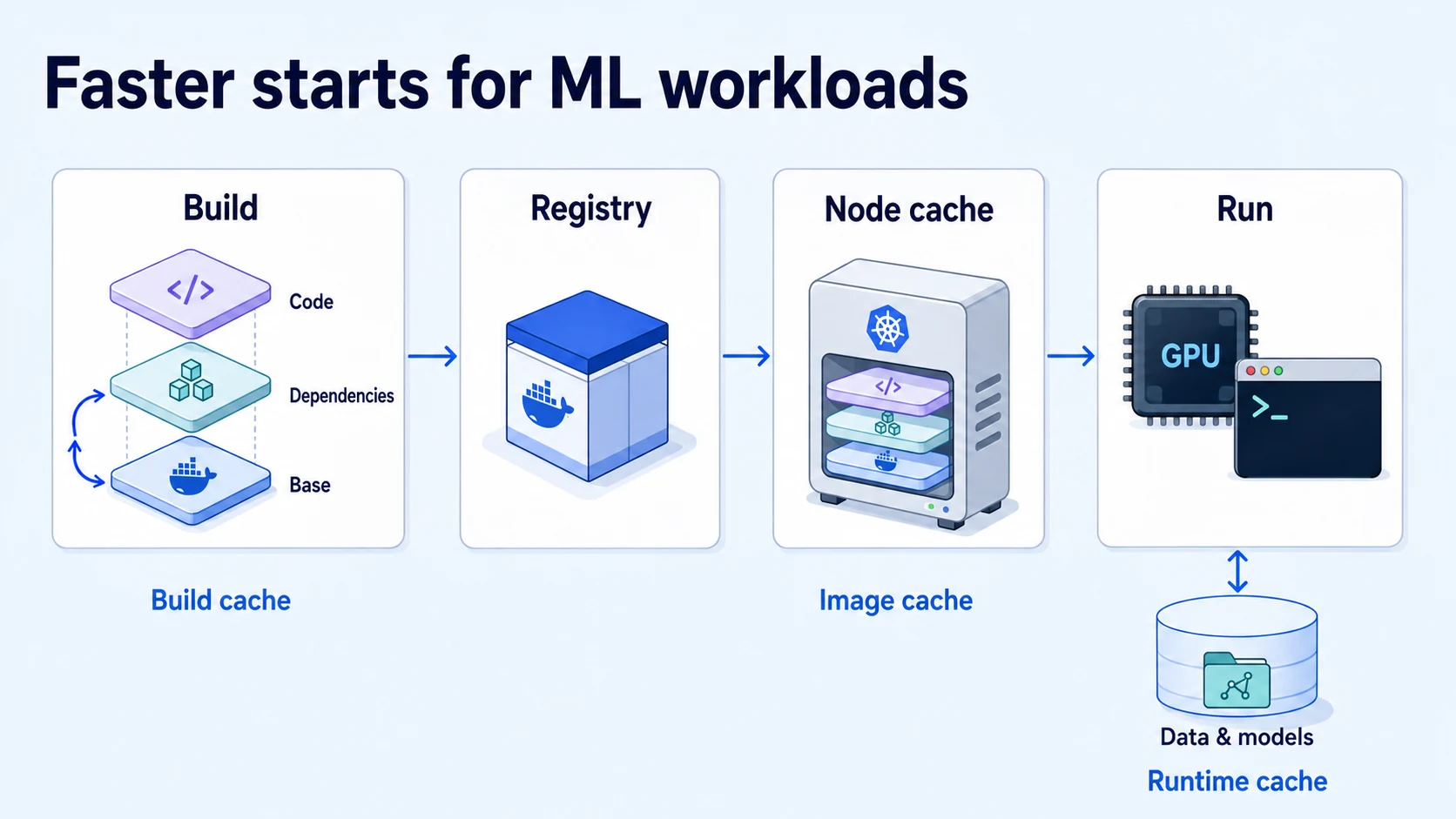
Reduce container build and startup time for ML jobs with reusable dependency layers, persistent build caches, and deliberate image and model caching.
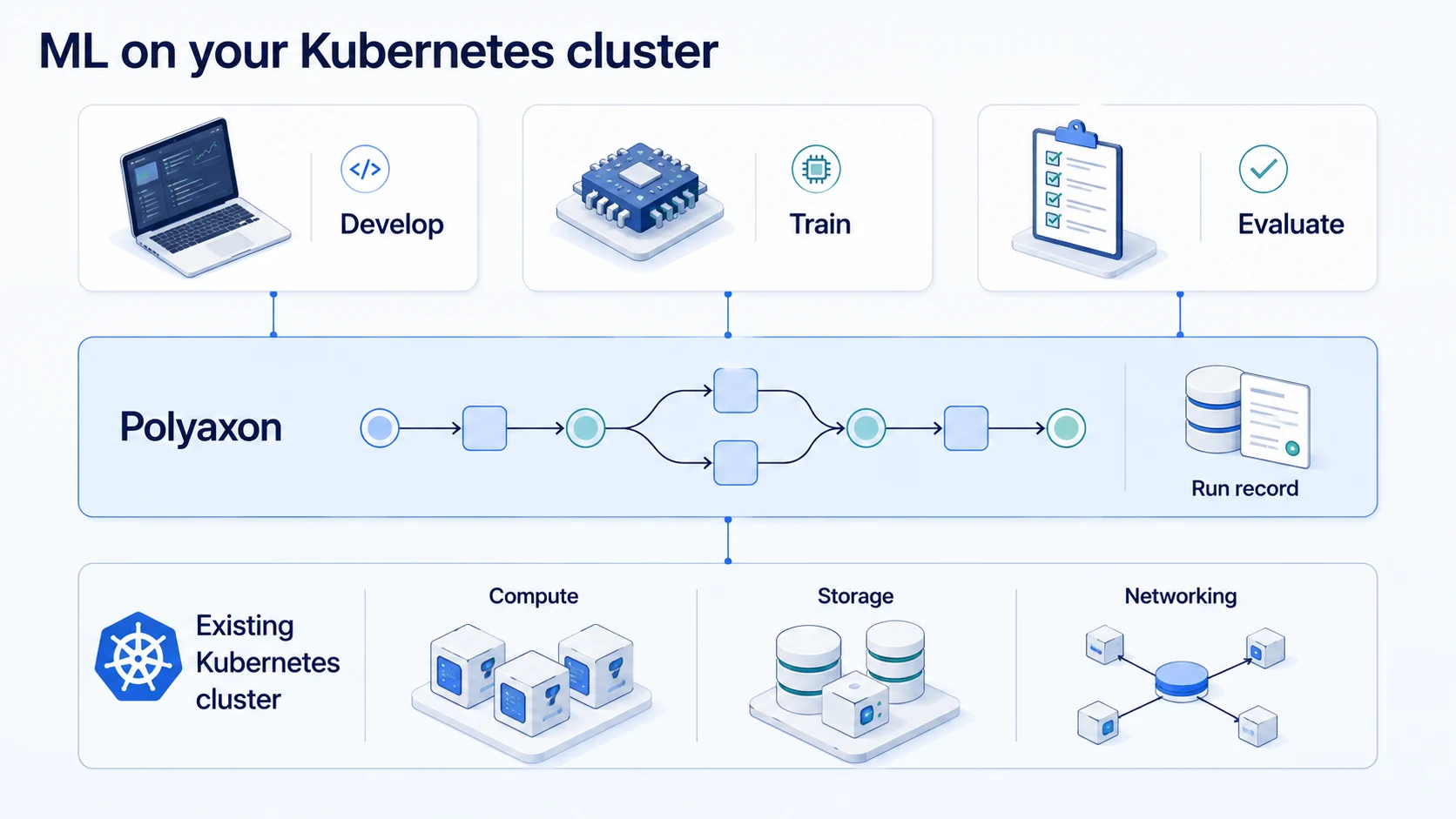
Keep AI workloads portable with explicit execution contracts, open packaging and telemetry, hardware abstraction, data boundaries, and tested migration paths.
Plan a Polyaxon deployment on an existing Kubernetes cluster, covering GPUs, storage, identity, networking, workload ownership, and recovery.
Choose between self-hosted and managed AI inference using data policy, model access, latency, utilization, reliability, staffing, and cost per accepted outcome.
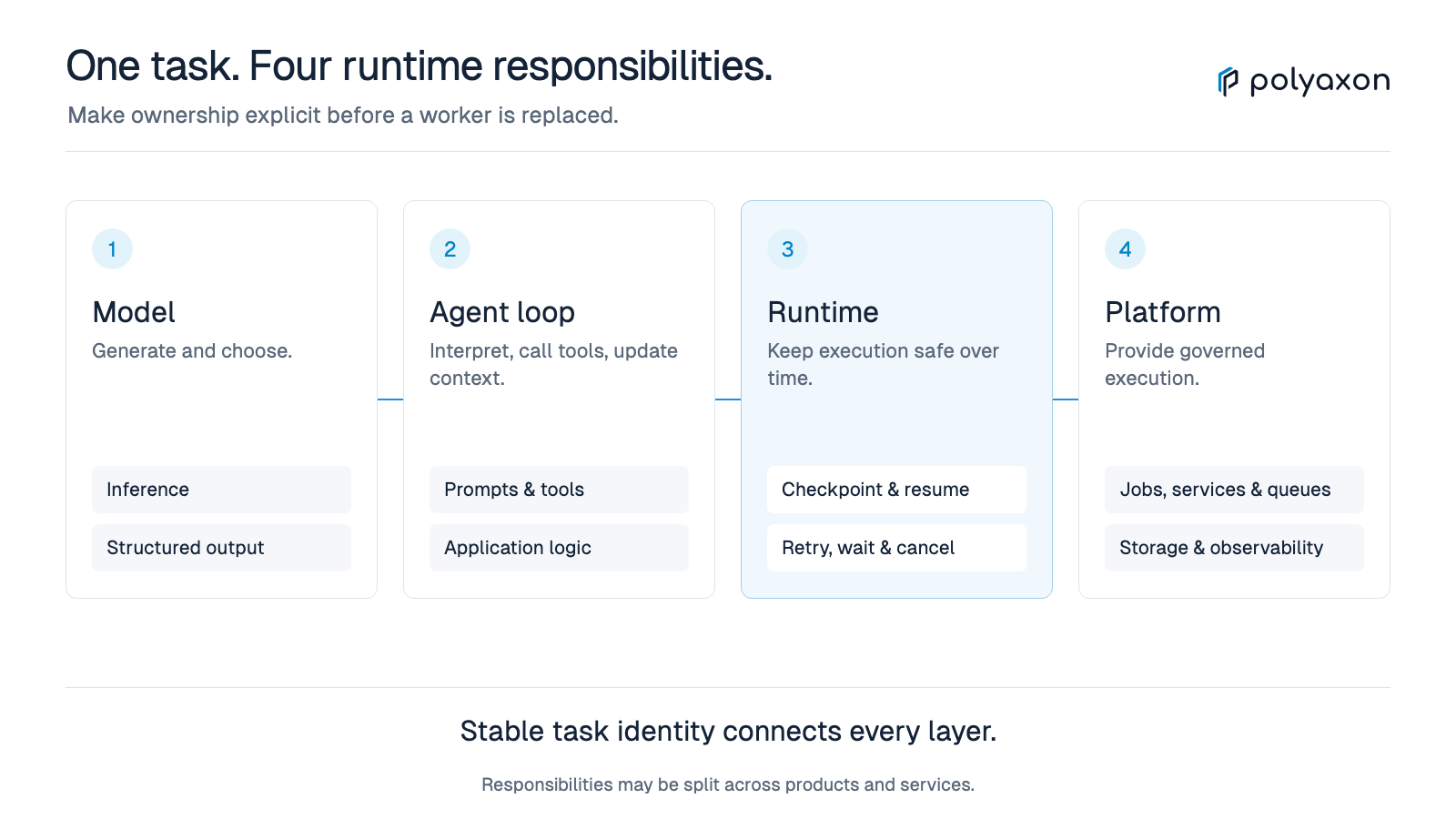
Scale AI agents with admission control, dependency-aware concurrency, durable state, bounded authority, backpressure, and outcome-based capacity planning.
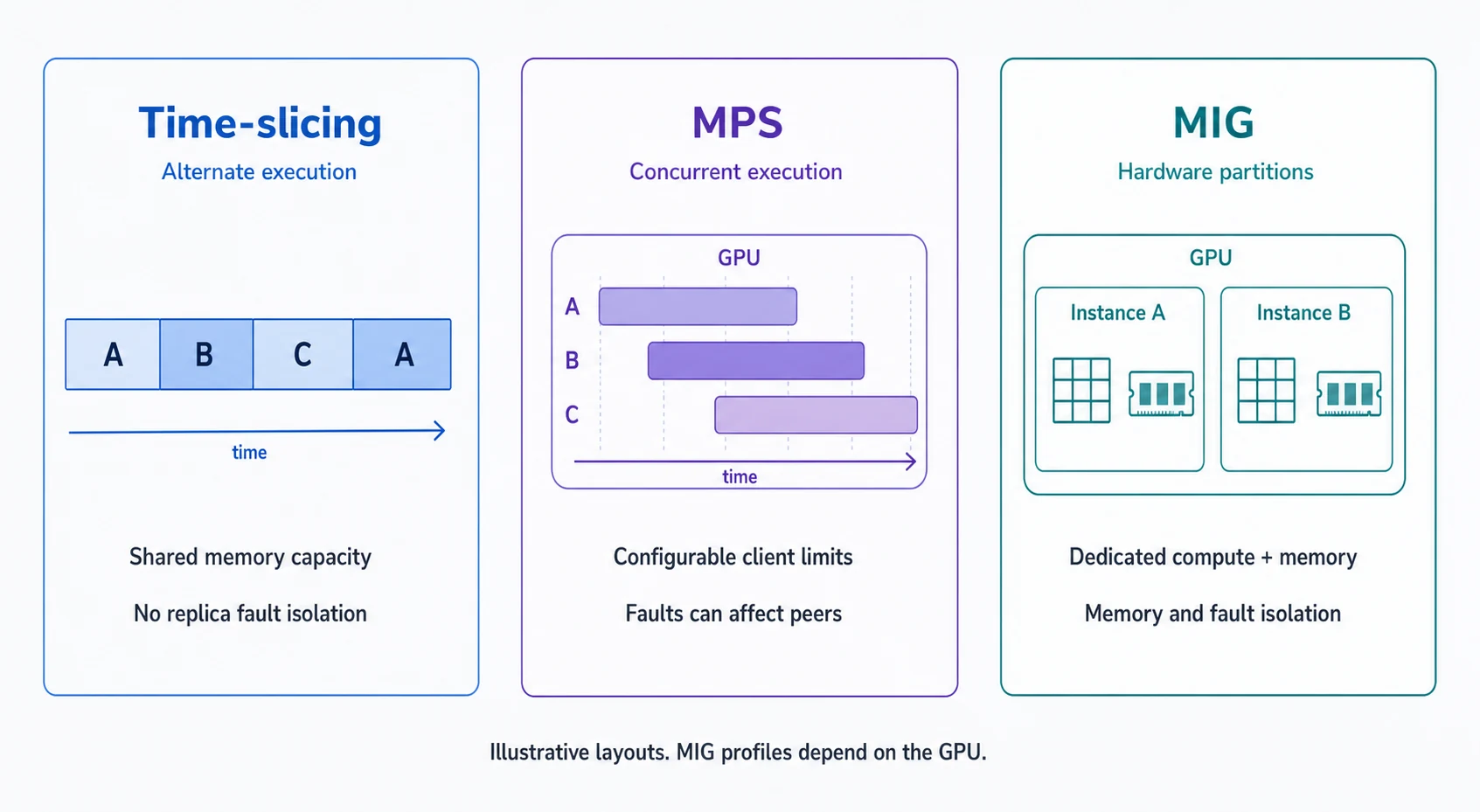
Compare NVIDIA MIG and GPU time-slicing on Kubernetes, including memory isolation, resource names, scheduling behavior, and workload fit.
Estimate AI sandbox operating costs from measured active and idle resources, retries, storage, and engineering ownership using Polyaxon workload evidence.
Evaluate AI agent infrastructure reliability through task-level outcomes, recovery behavior, Polyaxon execution evidence, and explicit operational ownership.

Map AI execution data paths to Polyaxon compute placement, connections, artifacts, external providers, and documented residency controls.
Use Polyaxon components, matrices, tracking, and run comparisons to evaluate serverless model APIs against dedicated inference services on quality, latency, and cost.
Use Polyaxon jobs, sandbox-enabled services, schedules, and tracking to match agent tasks to their execution, persistence, and capacity requirements.

Choose compute platforms for AI agent jobs by execution shape, state, resource needs, and operational responsibility, using Polyaxon as the workload context.
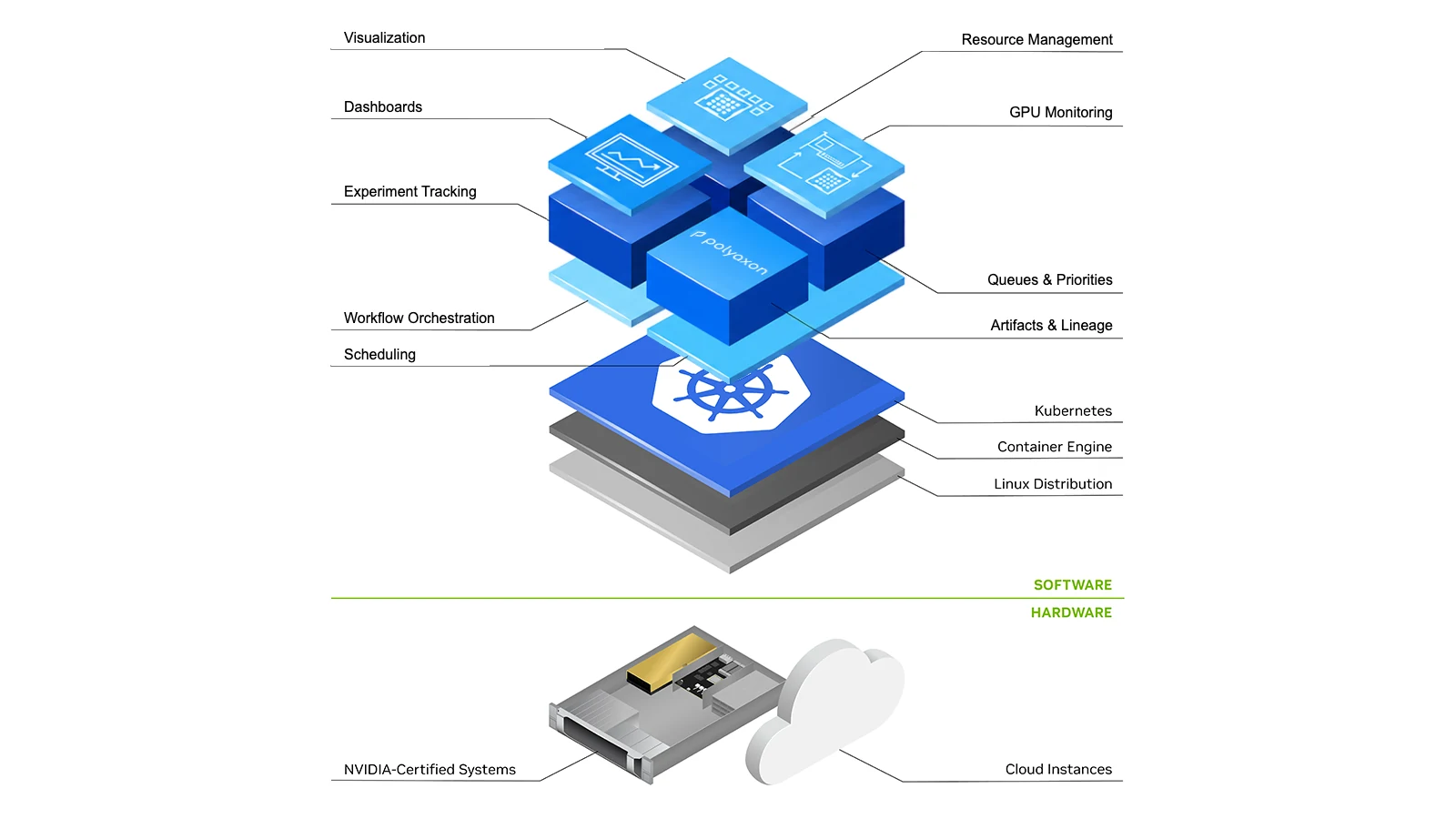
Make AI platforms ready for new accelerator generations through portable workload contracts, device-aware scheduling, topology, storage, compatibility, and migration evidence.
Distinguish confidential computing from workload isolation, and define how Polyaxon scheduling and evidence fit a trusted execution design.
Plan enterprise AI platforms around measurable outcomes, heterogeneous compute, durable agents, cost per successful task, and continuous governance.