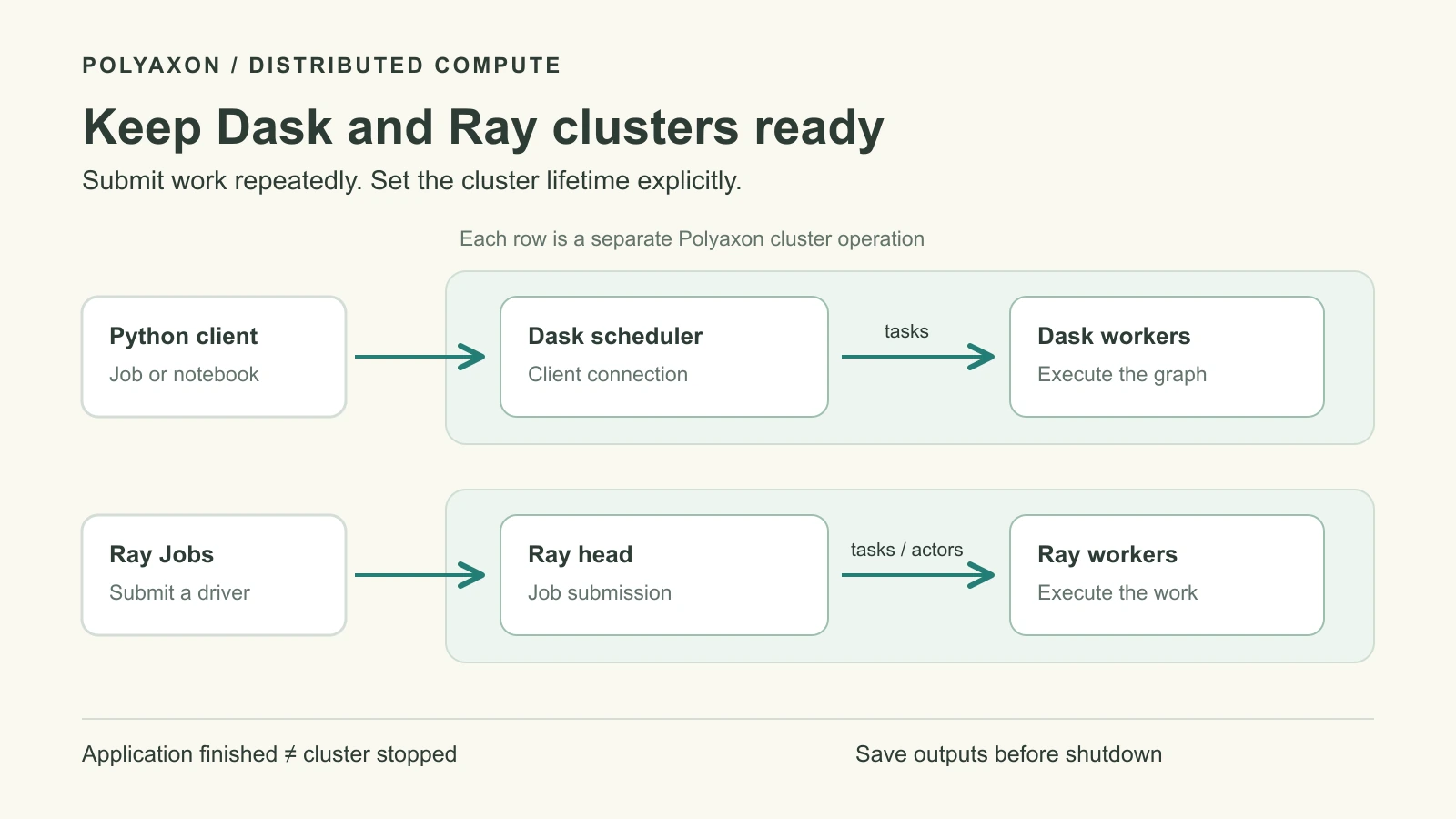
Run persistent Dask and Ray clusters on Polyaxon
Launch Dask or Ray clusters with Polyaxonfiles, submit repeated work, and control worker capacity, durable outputs, and cluster lifetimes.
ProductDaskRay
The latest guides, tutorials, and product updates.
Launch Dask or Ray clusters with Polyaxonfiles, submit repeated work, and control worker capacity, durable outputs, and cluster lifetimes.
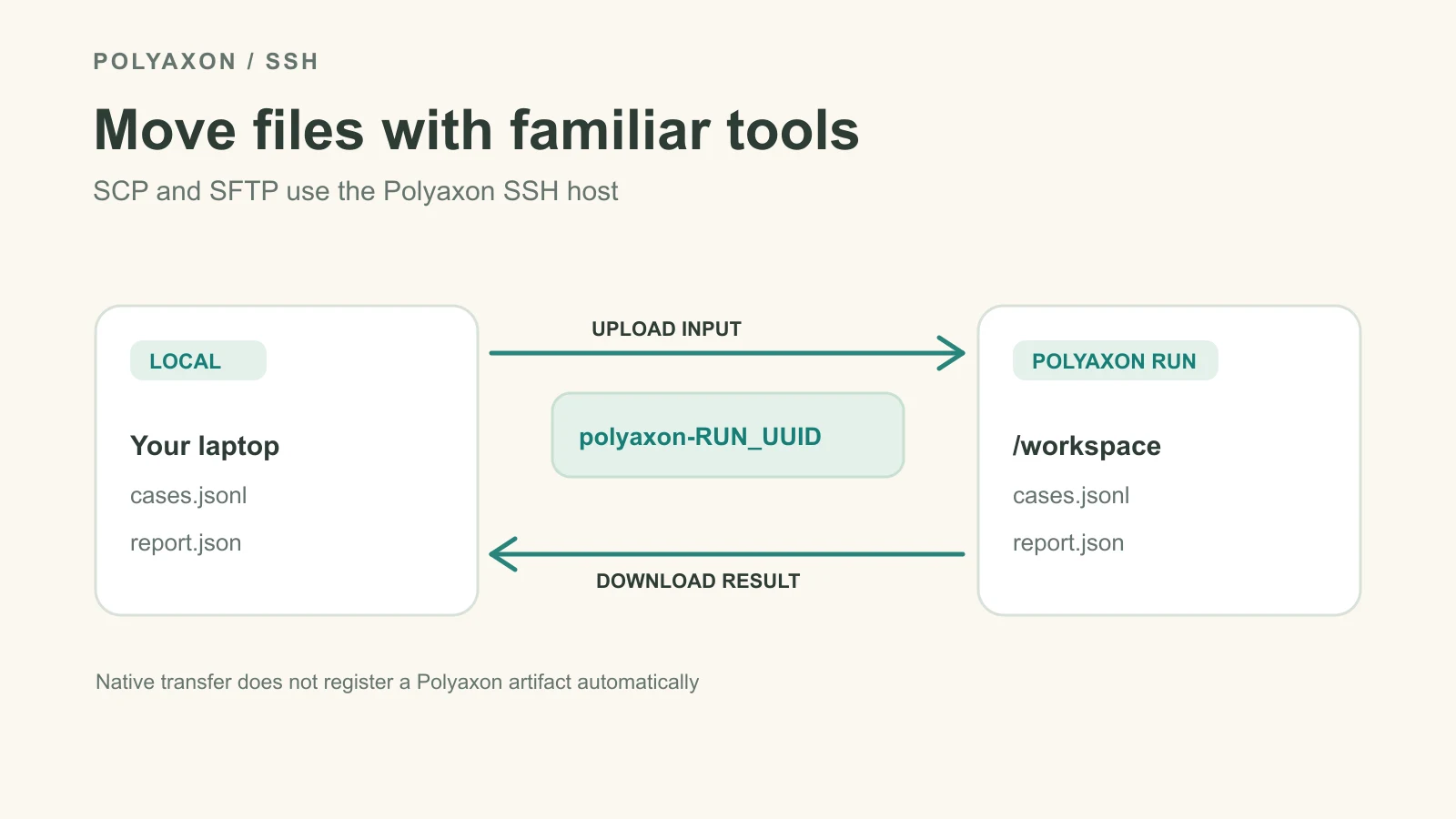
Use Polyaxon's generated SSH host with native SCP and SFTP to move files into and out of a running service workspace.
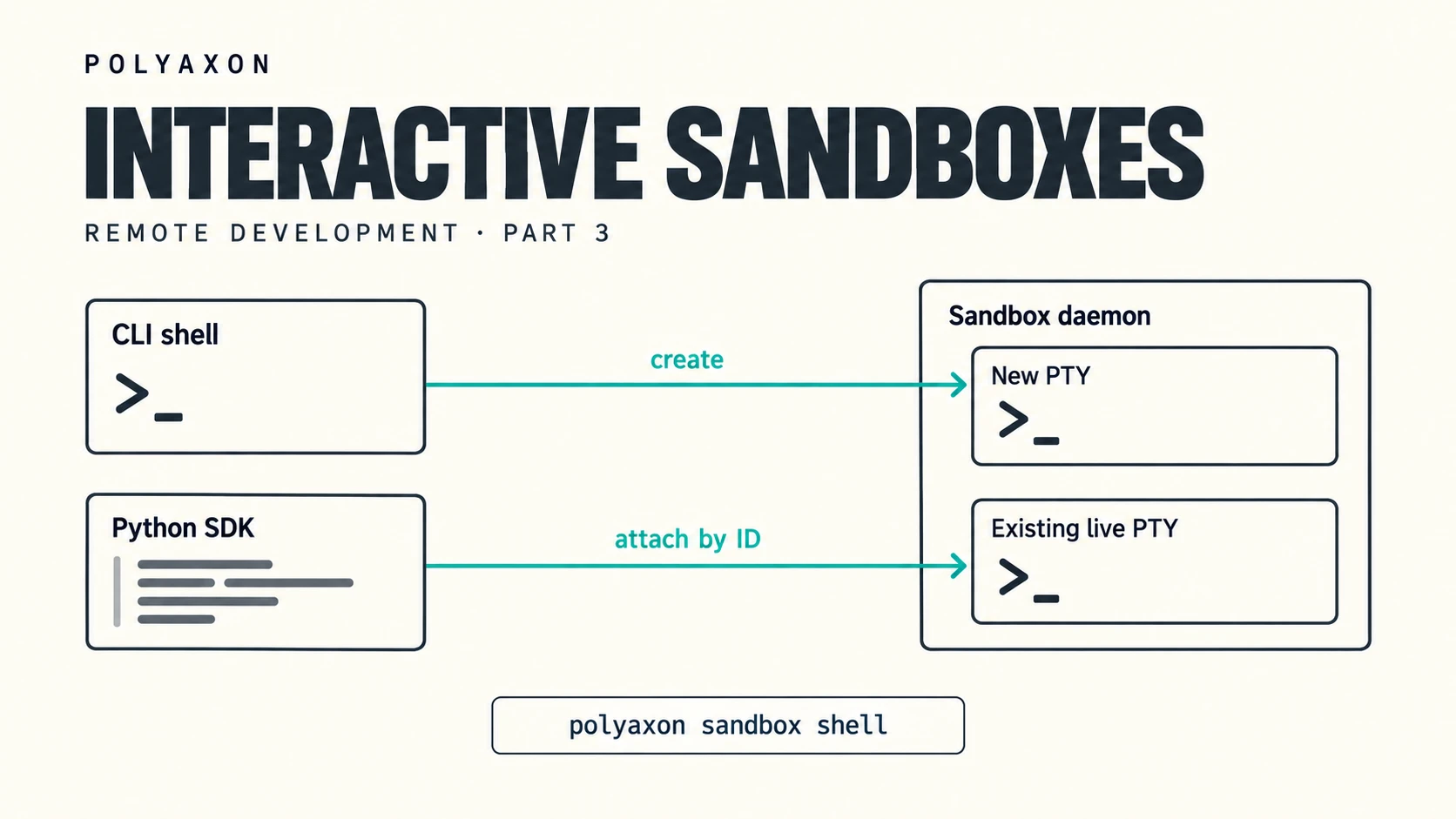
Choose between sandbox shells and exec, understand PTY lifetime and output replay, and manage terminal attachment explicitly through the Python SDK.
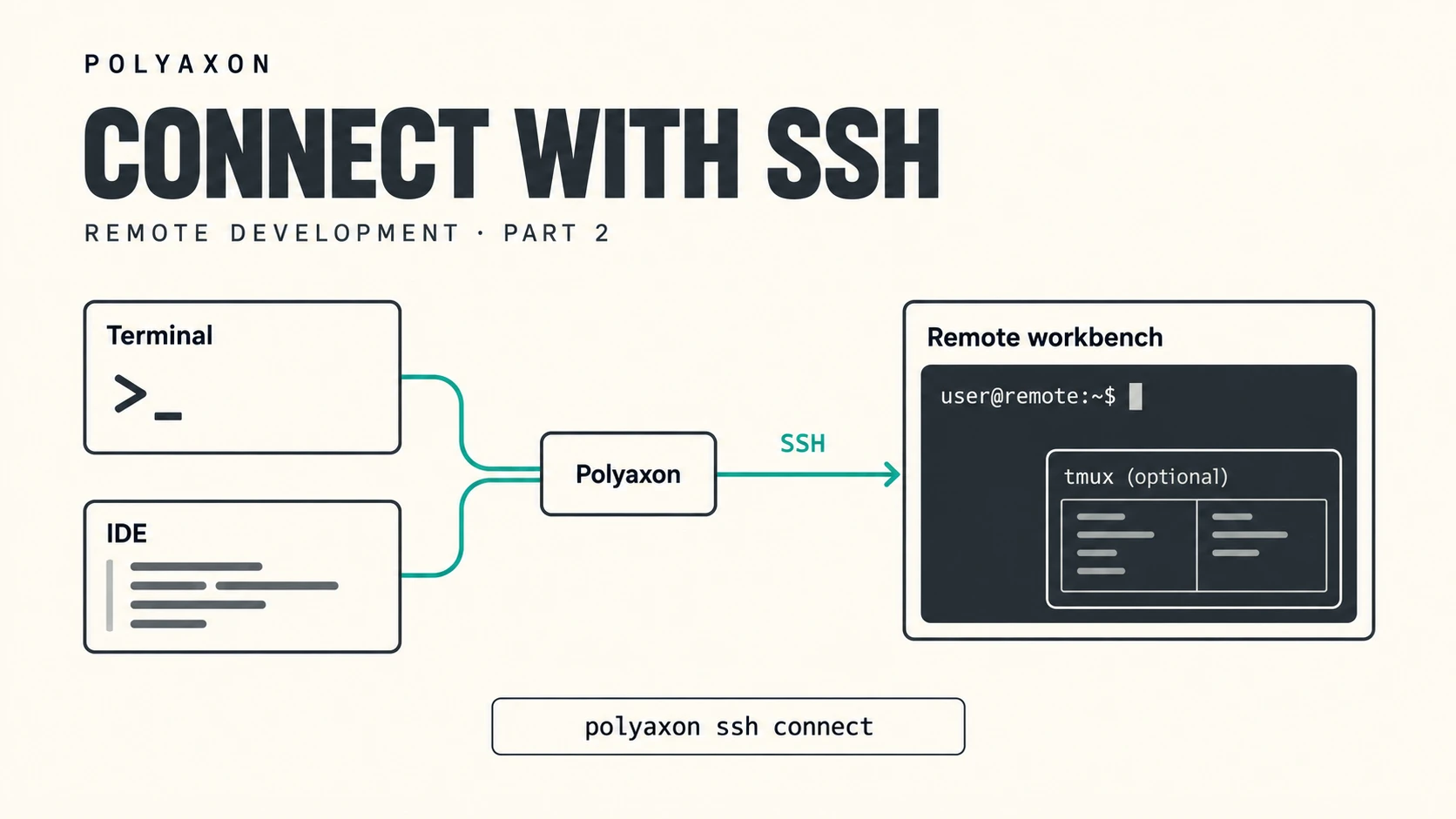
Connect native terminals and IDEs to a Polyaxon service, forward application ports, and use tmux explicitly when you want to resume a shell.
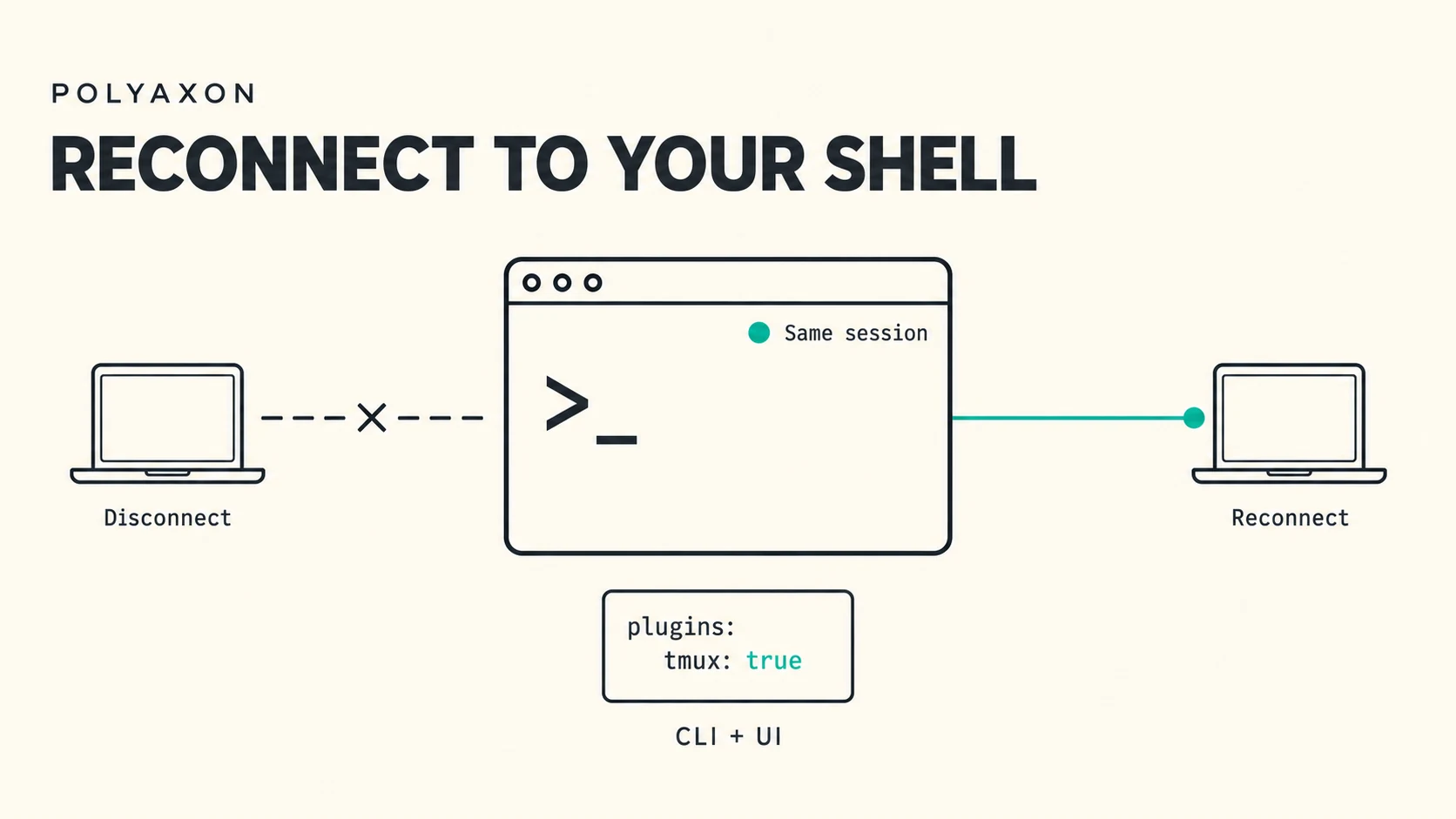
Learn how ordinary ops shells differ from tmux sessions, then detach and reconnect to the same Polyaxon shell from the CLI or UI.
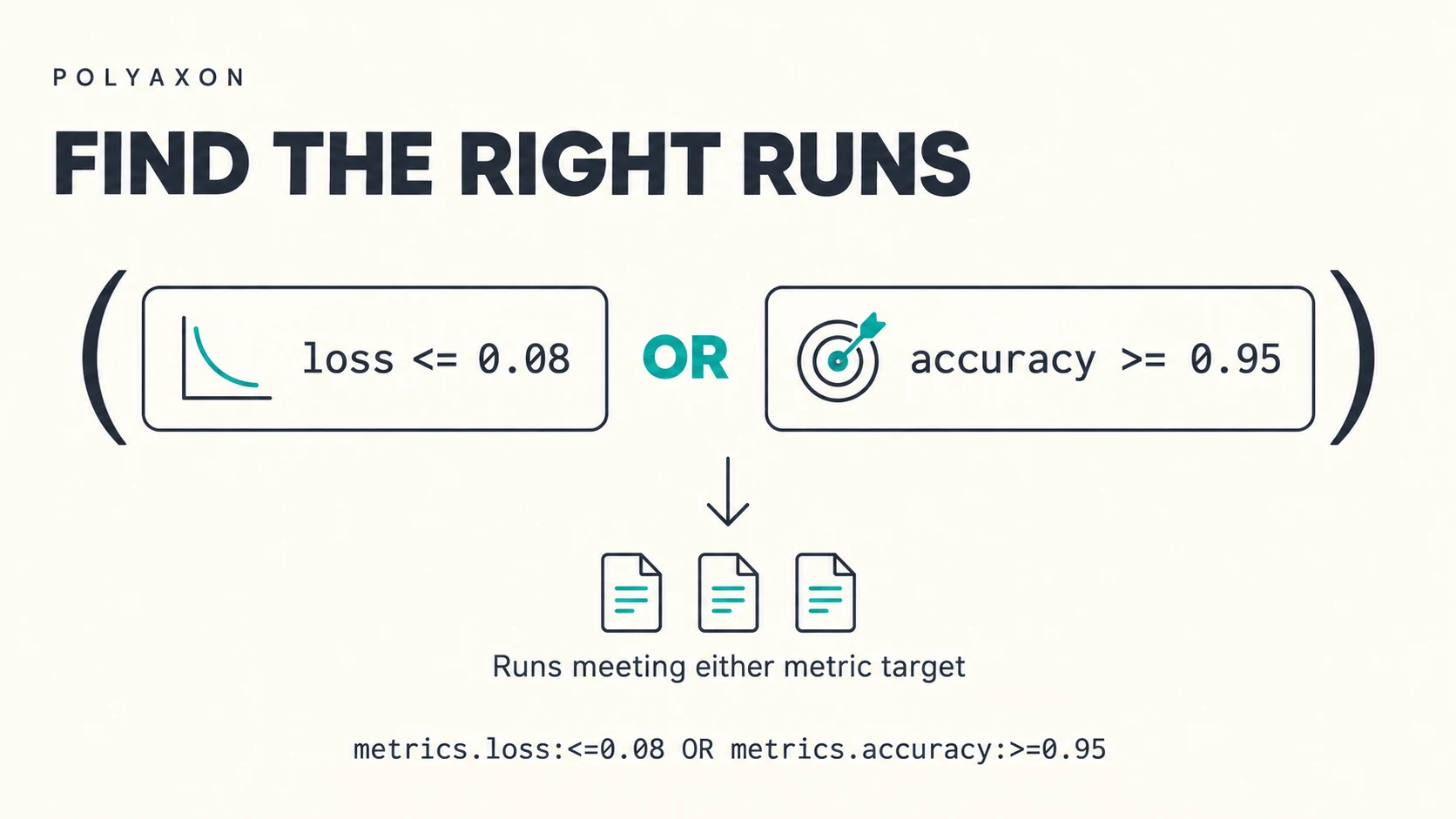
Use OR to combine metric thresholds, negated conditions, and independent groups of filters in Polyaxon queries.
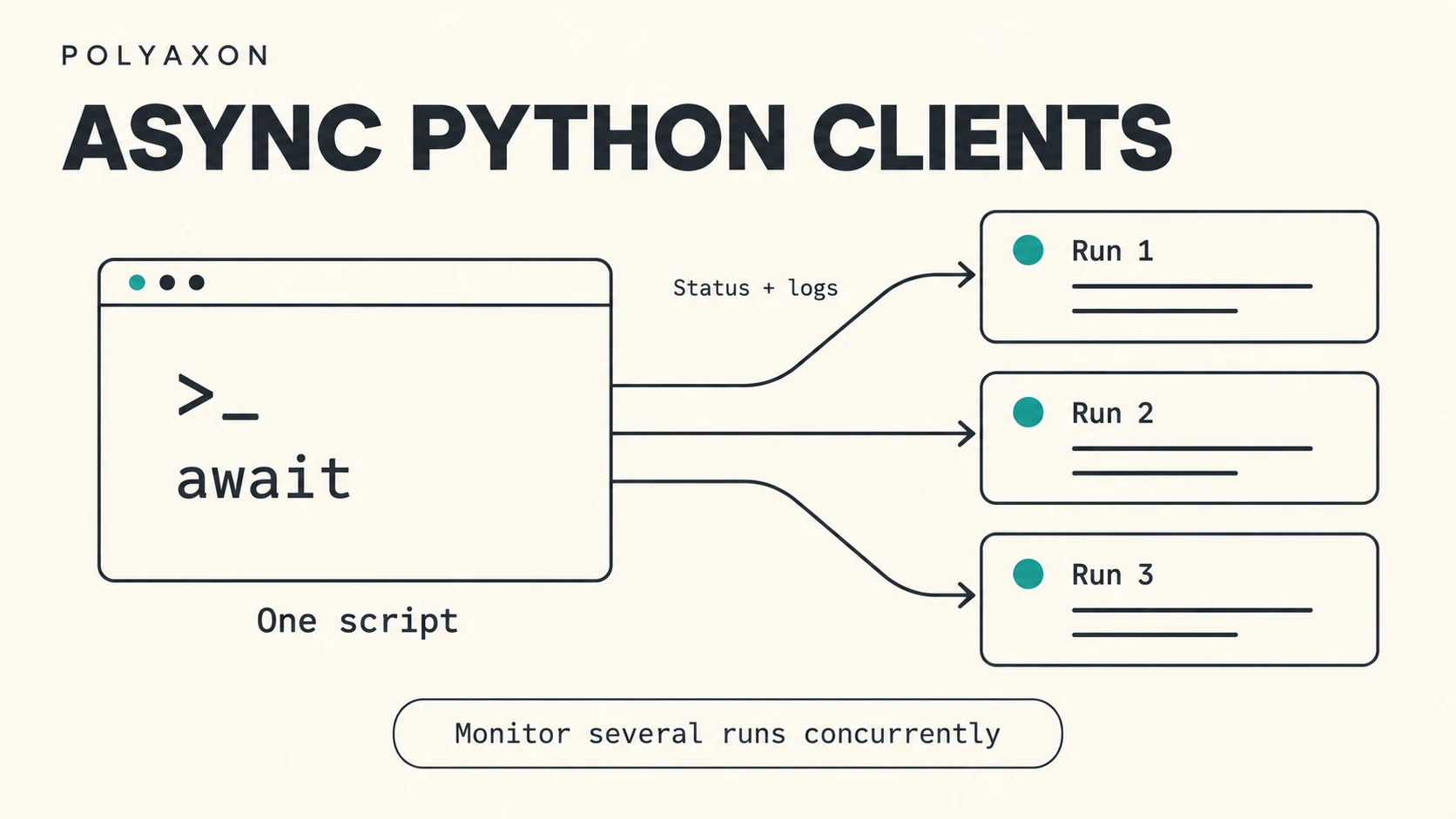
Monitor several Polyaxon runs concurrently with async Python clients, retrieve recent logs, and manage concurrency, timeouts, and client cleanup.
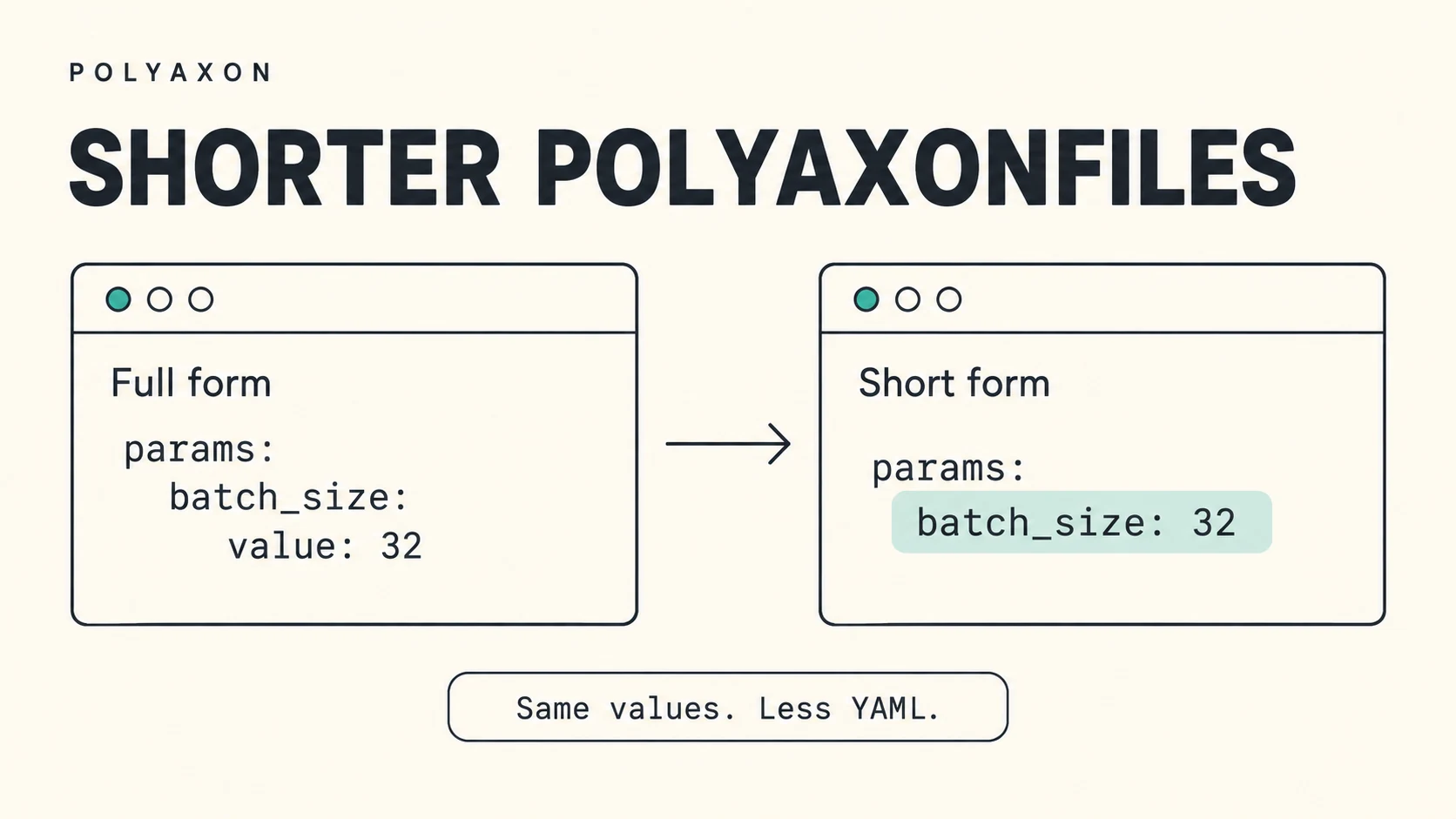
Use direct parameter values and let input and output defaults imply optionality, with a look ahead at simpler workload definitions planned for Polyaxon 2.18.
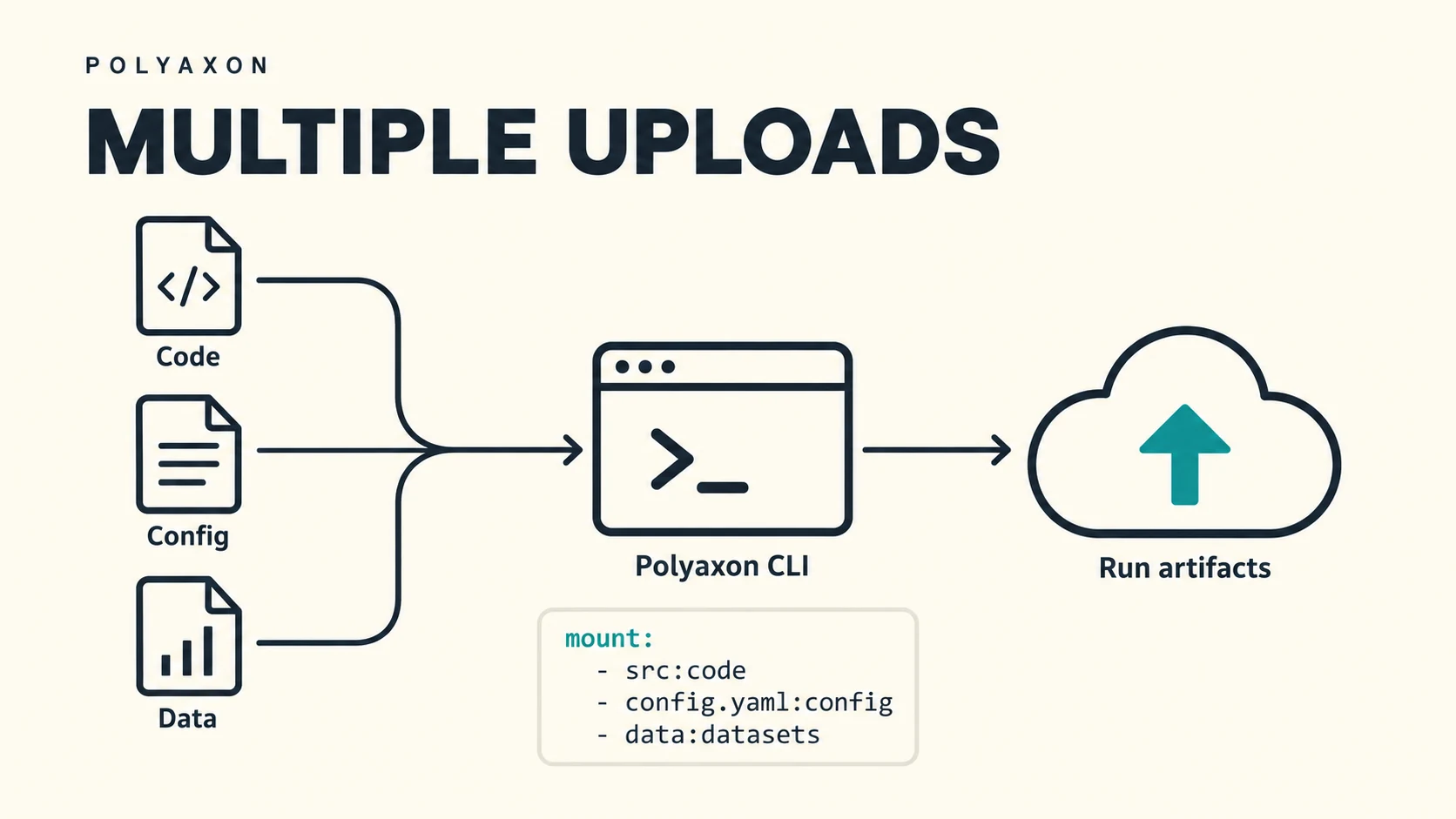
Upload code, configuration, and small datasets in one Polyaxon CLI command, then save the same path mappings in a declarative mount section.
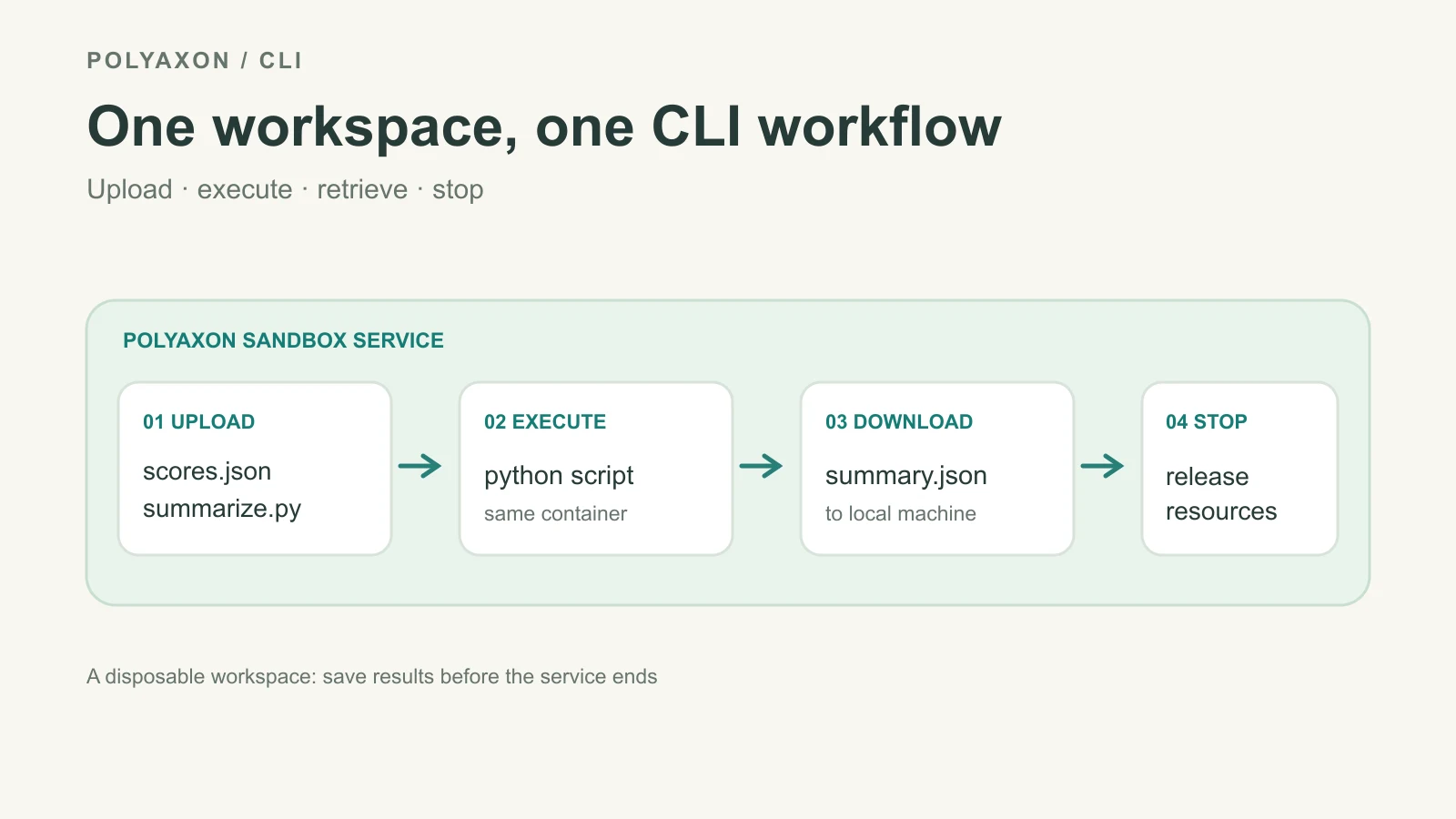
Start a sandbox-enabled Polyaxon service, upload two files, run a command, download its result, and release the workspace from the CLI.
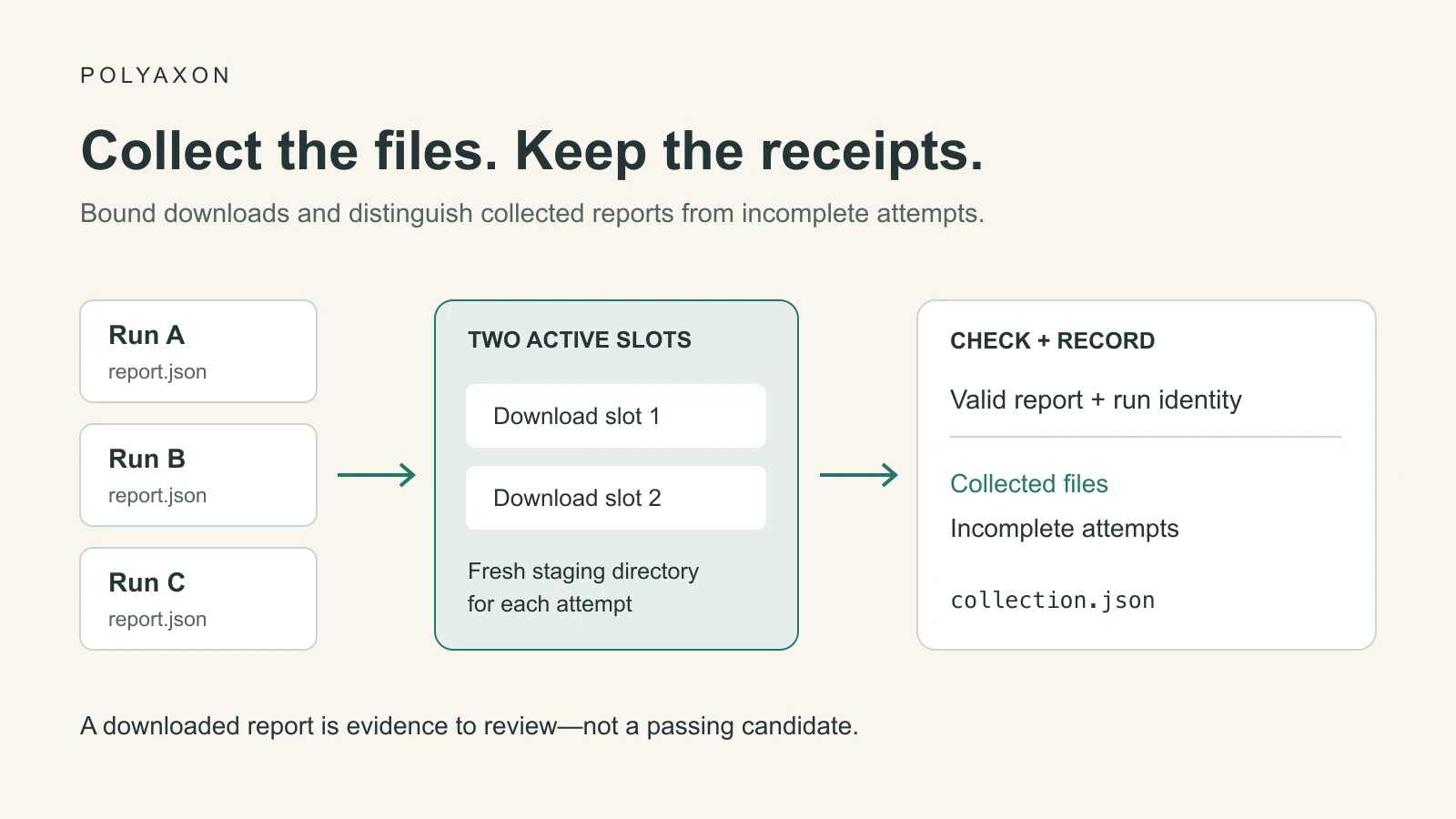
Collect reports from several Polyaxon runs with bounded async downloads, fresh staging directories, content checks, and a receipt for every transfer.
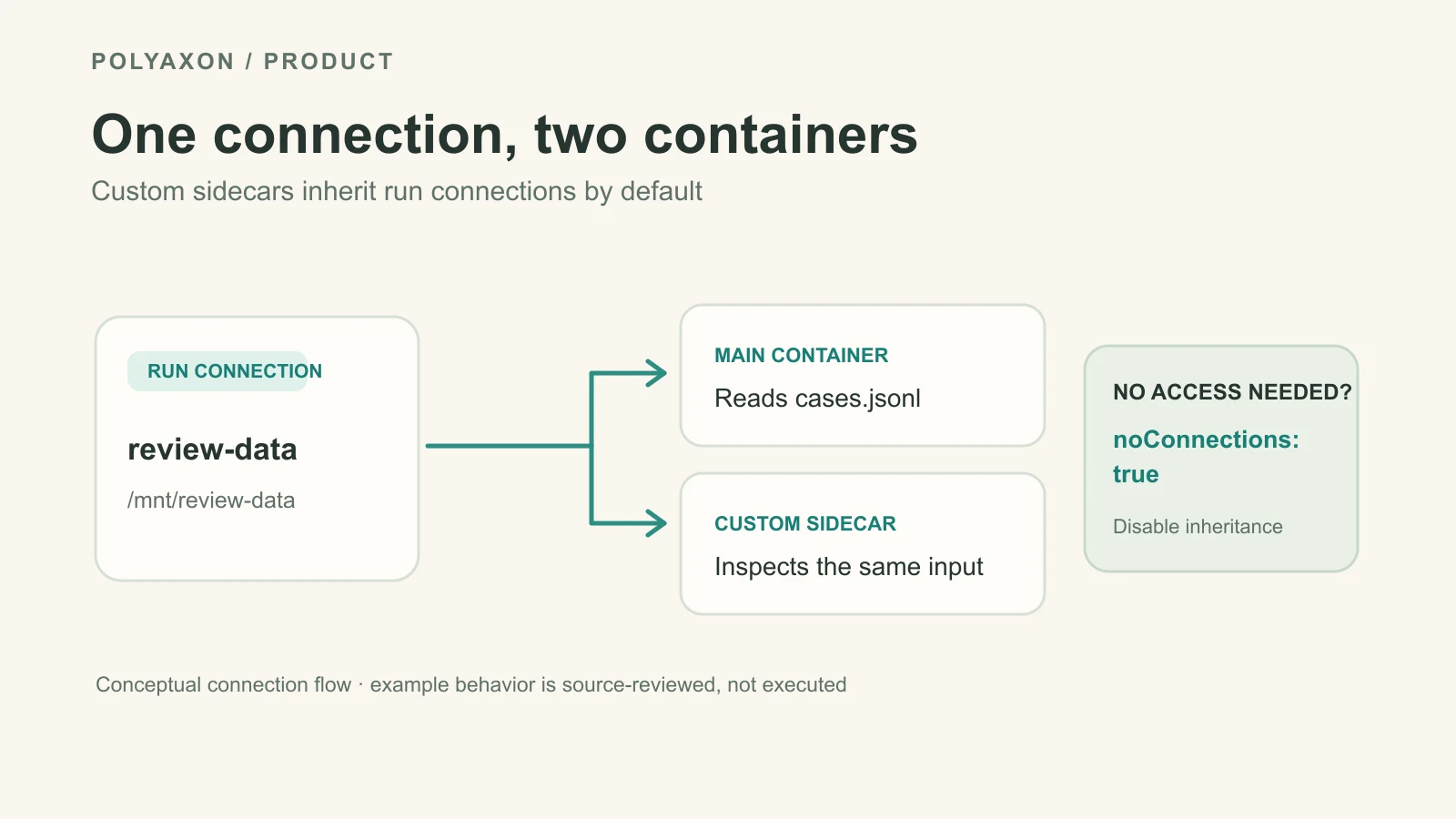
Use one Polyaxon connection in a job and its custom sidecar, then decide when a sidecar should not inherit the run's mounts and credentials.
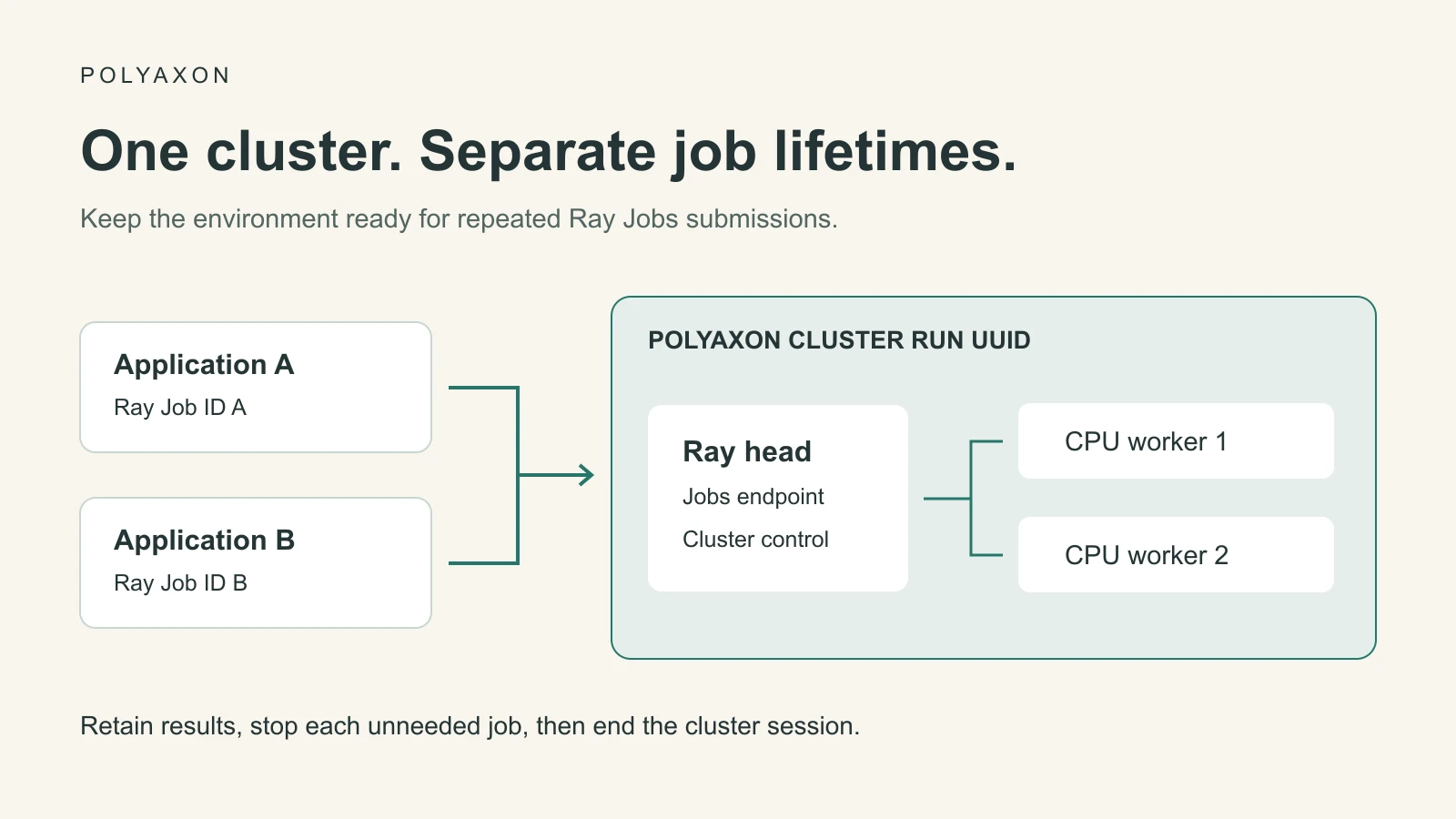
Keep a Polyaxon-managed Ray cluster available for repeated job submissions, with explicit resource settings, job identities, storage, and shutdown ownership.
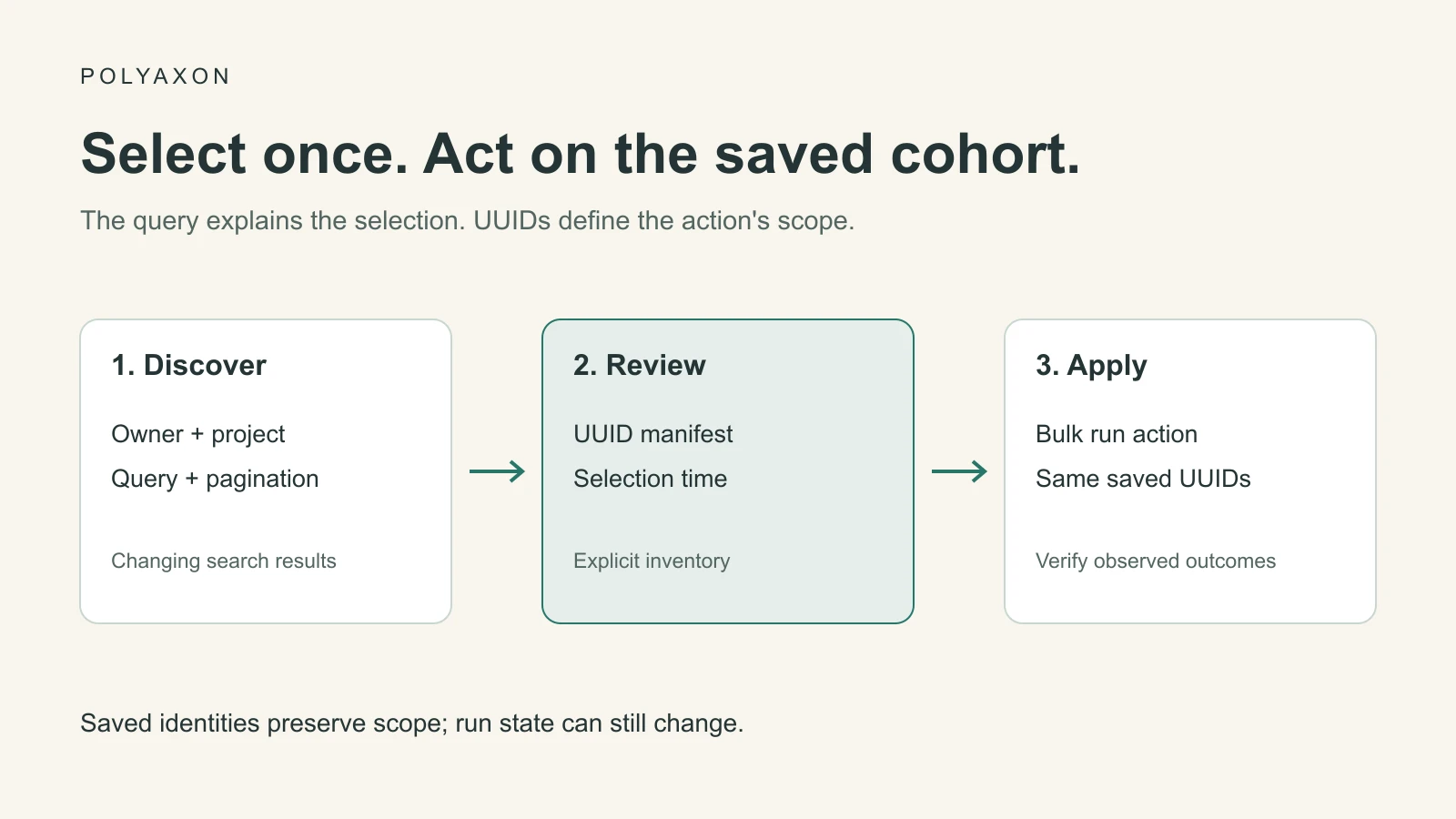
Select a run cohort, save its UUIDs for review, and apply a ProjectClient bulk action to that explicit inventory without rerunning a changing query.
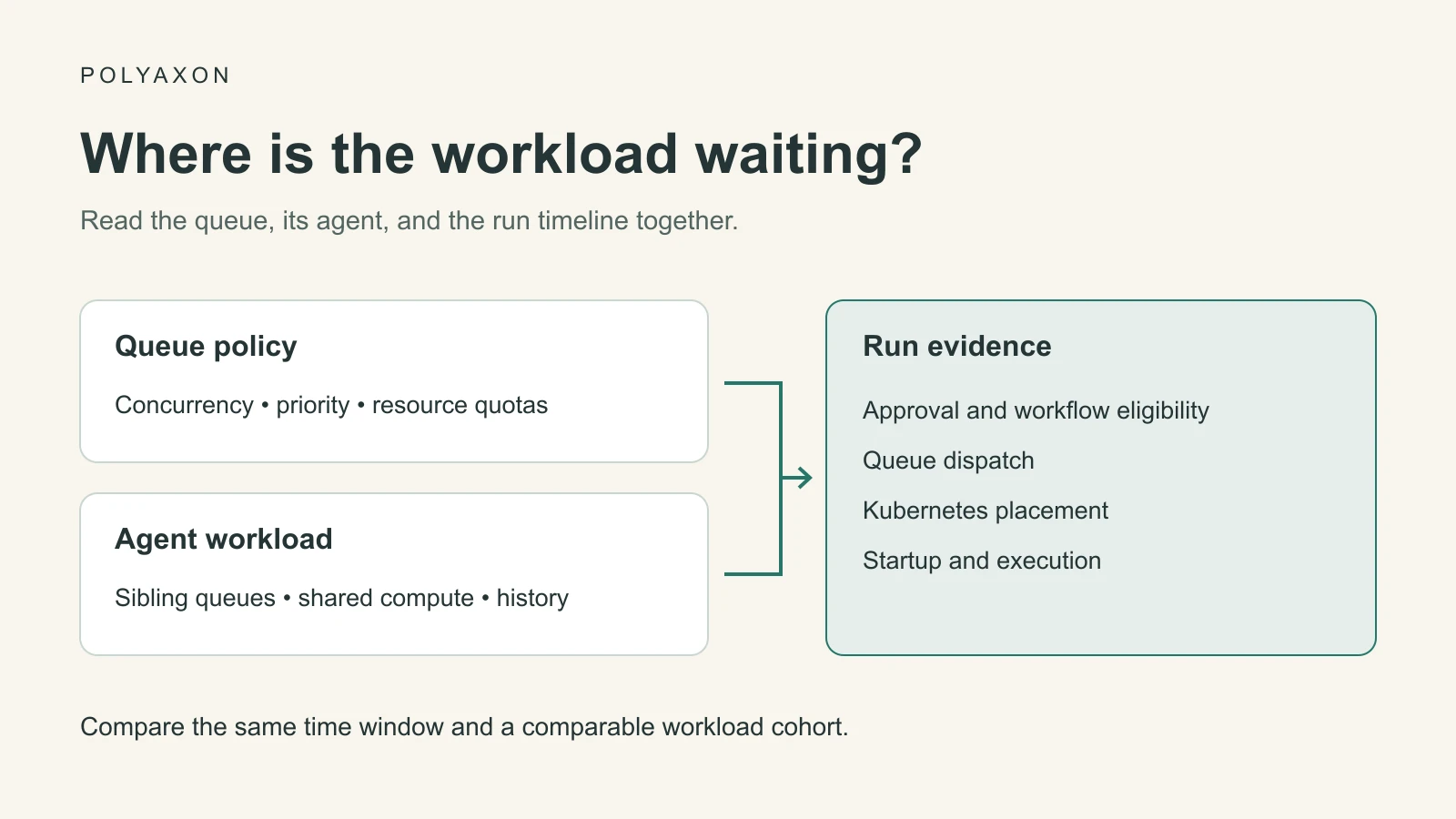
Use Polyaxon queue and agent statistics with run timelines to distinguish policy limits, workload changes, and Kubernetes placement problems before adding capacity.
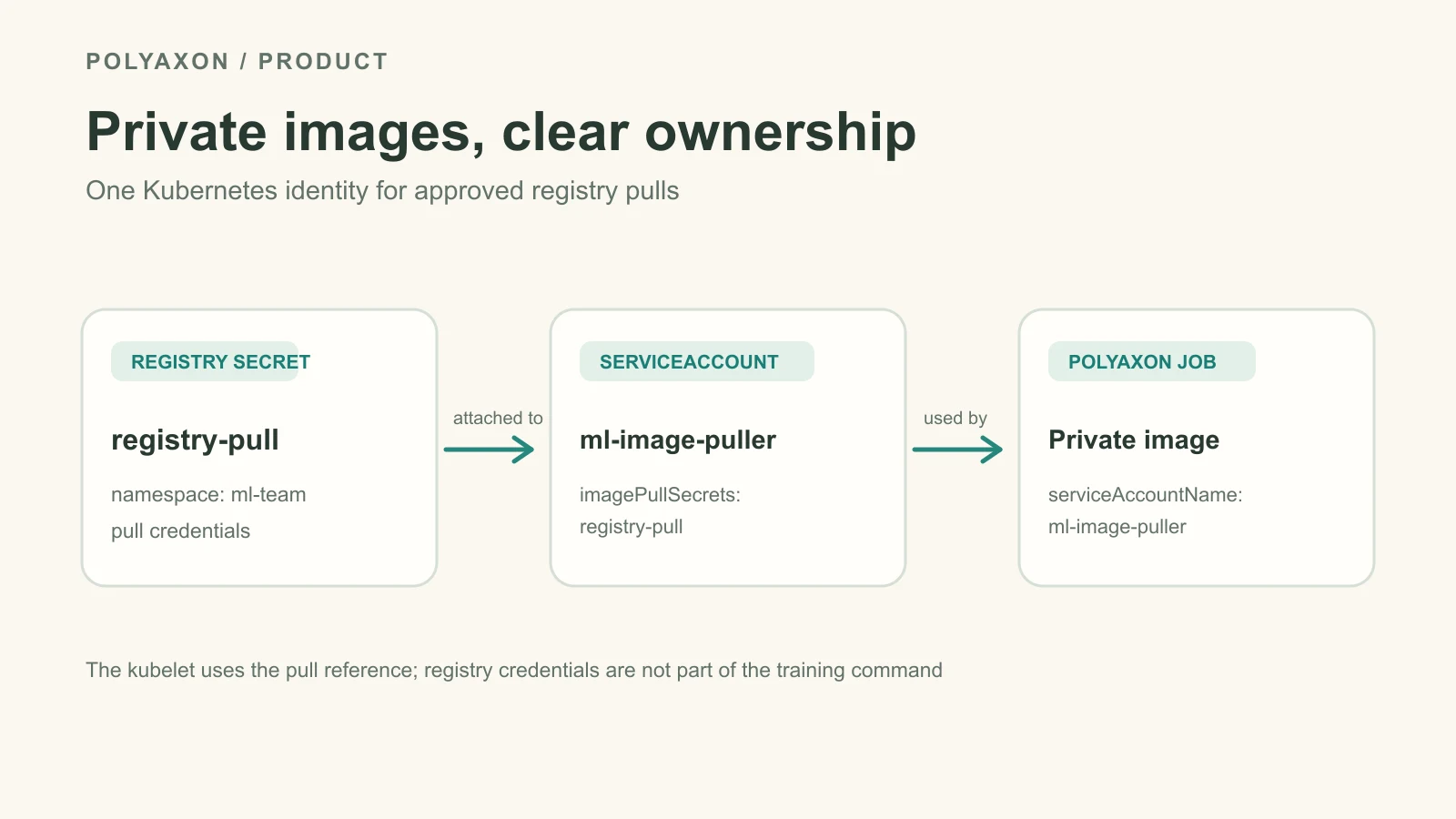
Attach a private-registry pull secret to a Kubernetes ServiceAccount, select it for a Polyaxon operation, and verify the new Pod can use the intended image.
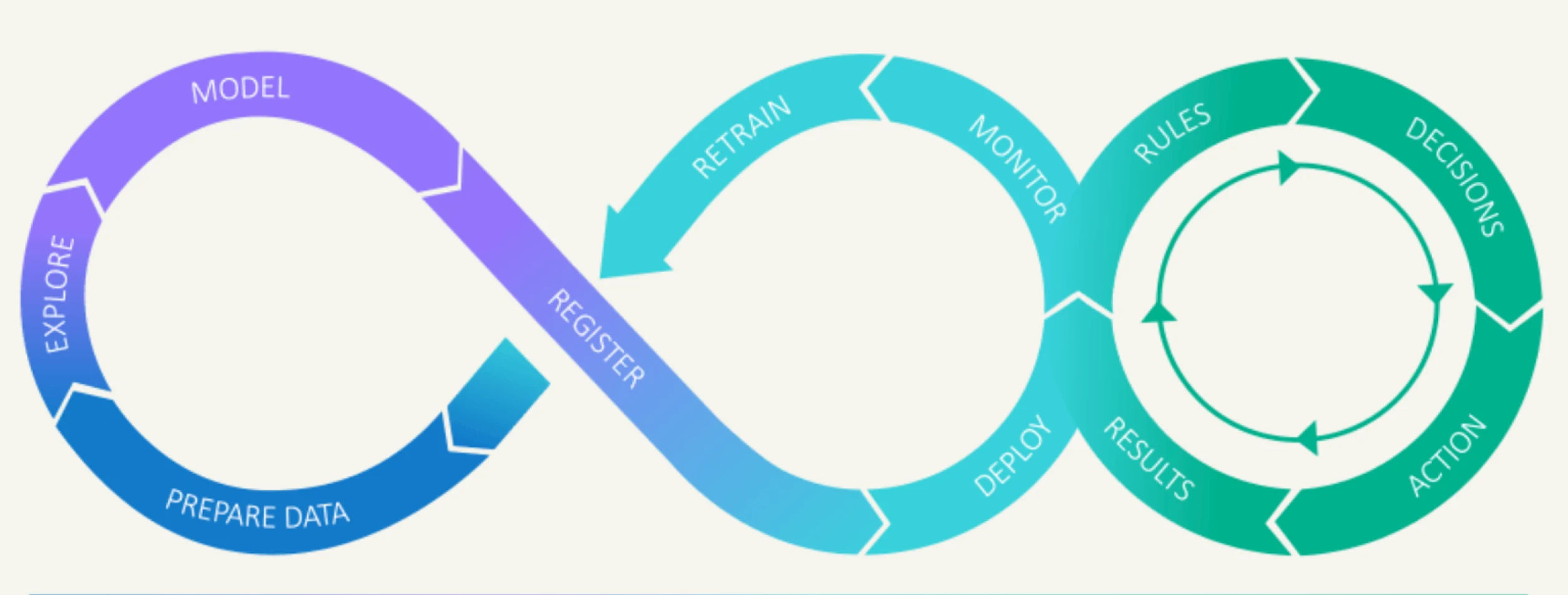
At Polyaxon, we're always looking for ways to push the boundaries of what's possible with machine learning infrastructure, this is why we are excited about the upcoming sandbox deployment capabilities.
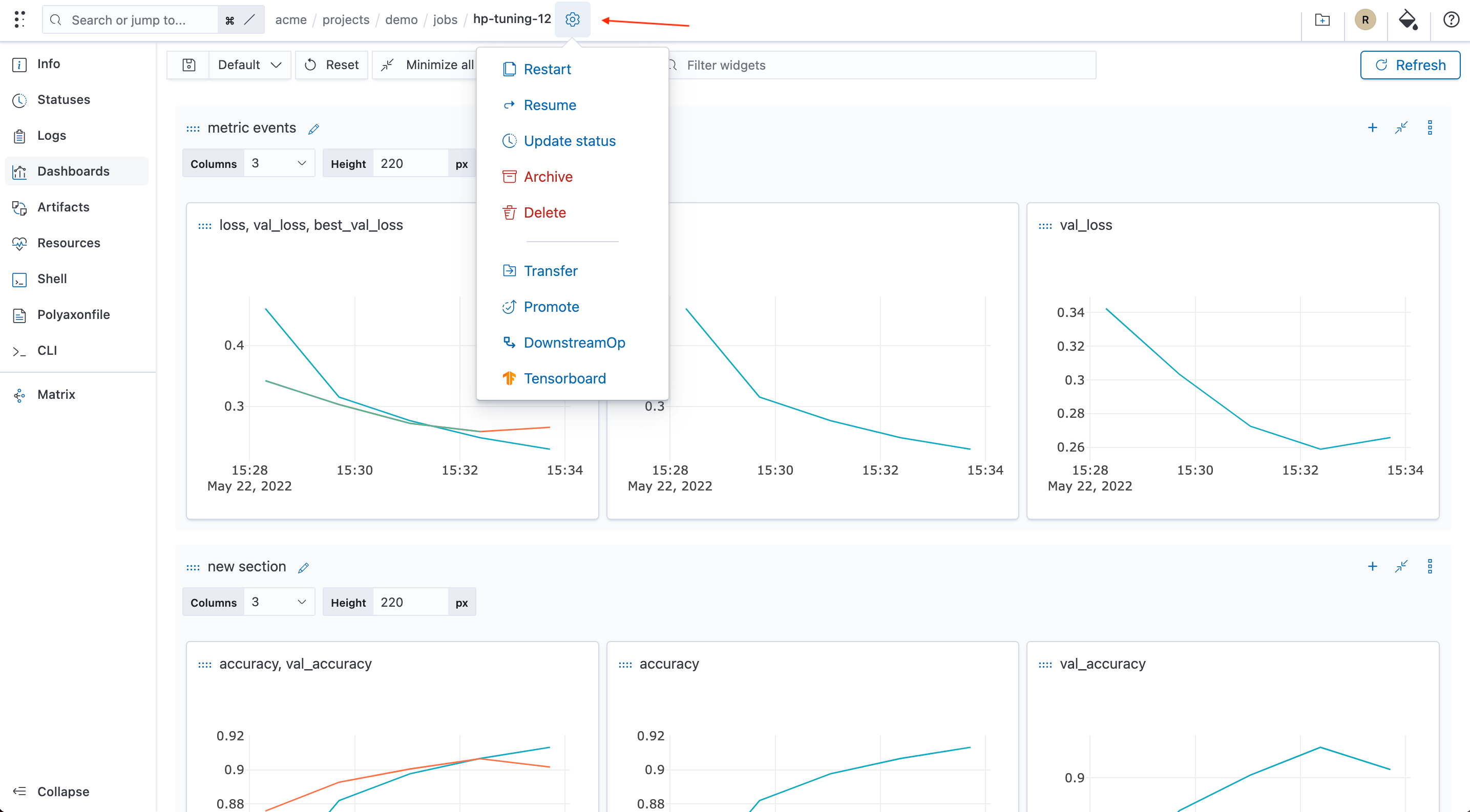
The run control, i.e. cog icon, is now visible on all tabs to allow users to easily perform actions on a run
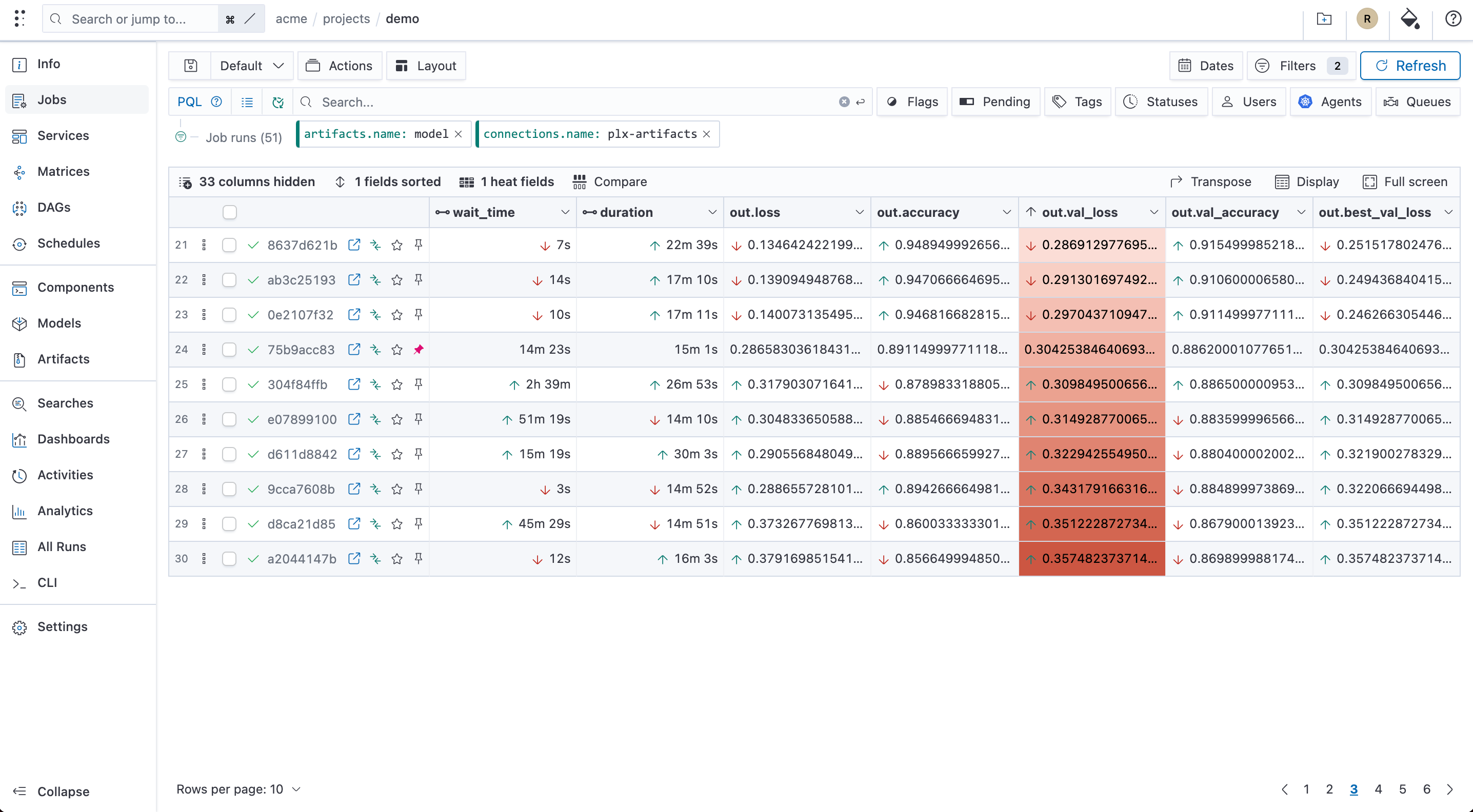
Polyaxon UI has new features that allows users to quickly compare and filter their runs
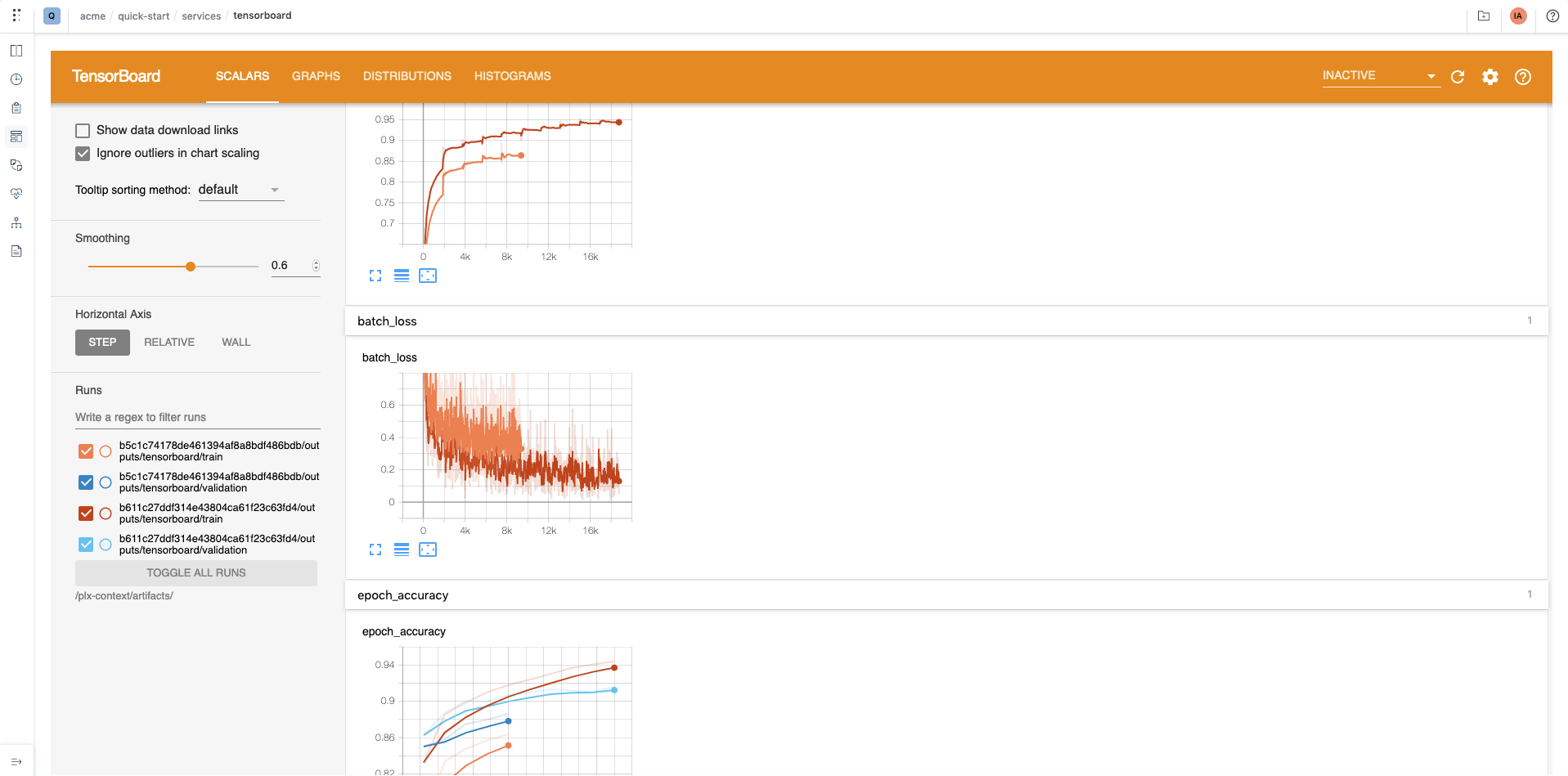
You can now start Tensorboard using the experiment names instead of the experiment uuids
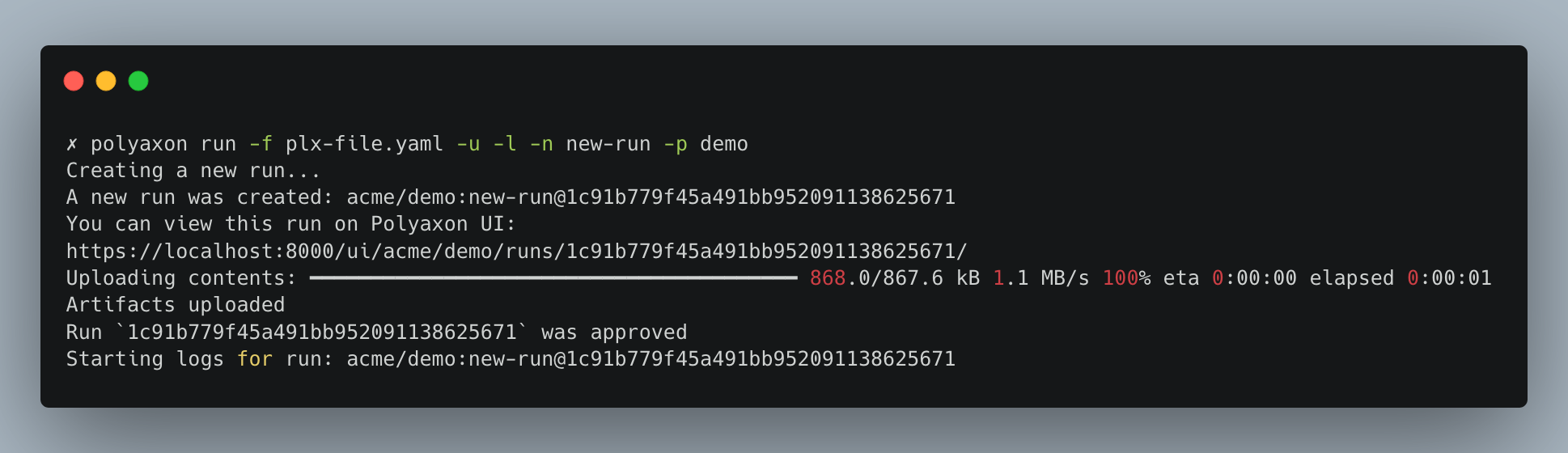
We recently worked on an effort to improve the visual experience our CLI
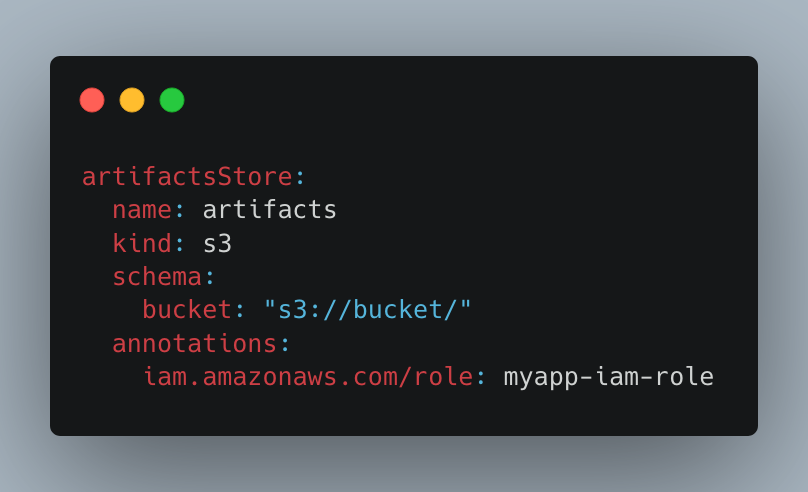
You can now define annotations and environment variables in your connections' schema
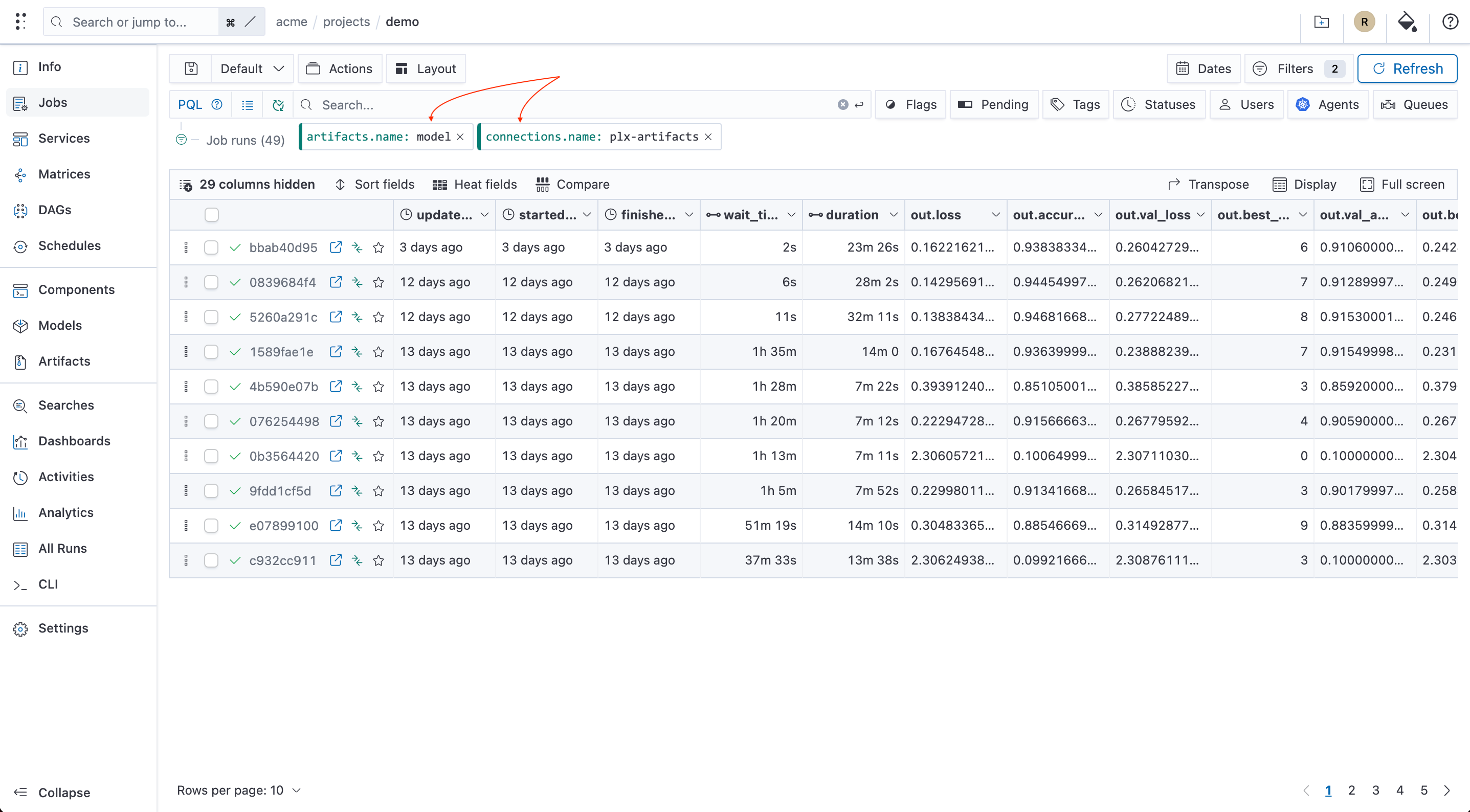
Users can now filter by connections and artifacts
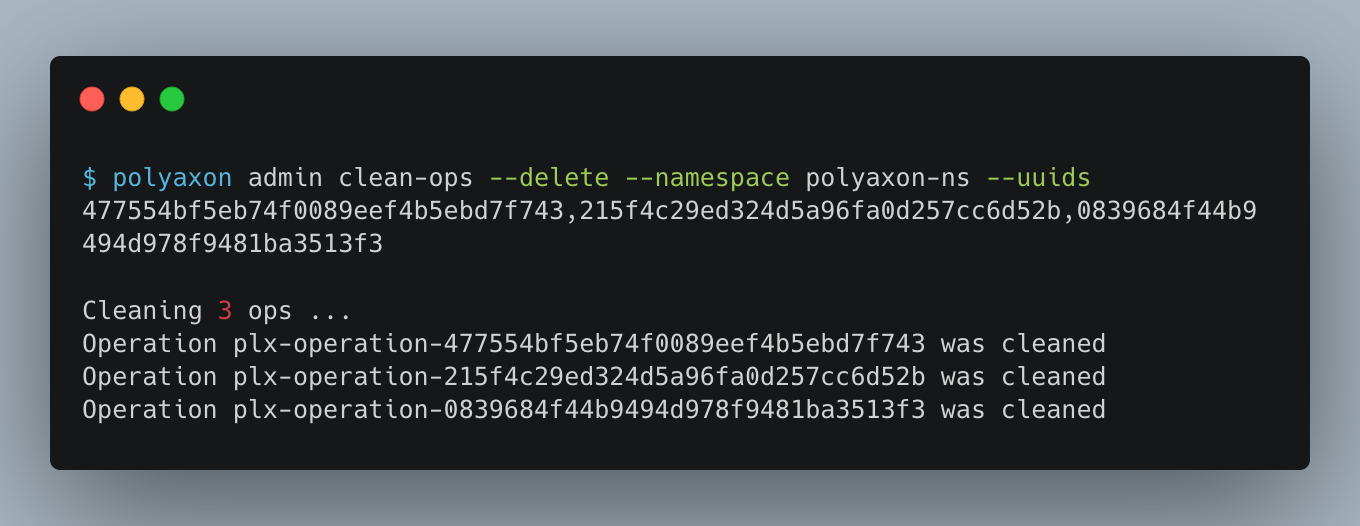
Admin users with access to kubectl can now force kill operations in a namespace