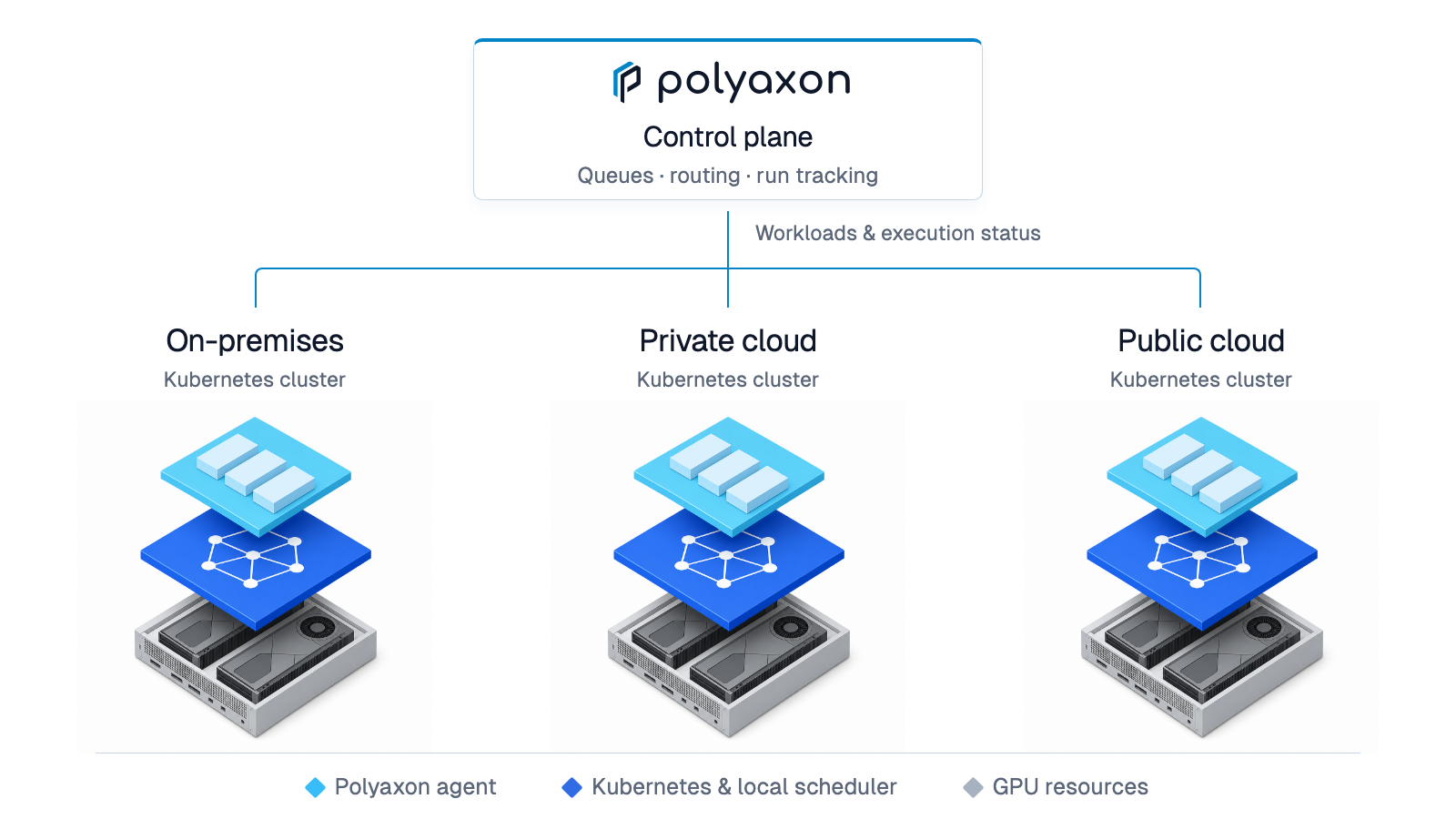
Multi-cluster GPU orchestration
Design multi-cluster GPU orchestration around workload eligibility, data locality, queue routing, recovery, and clear dispatch ownership.
OrchestrationKubernetes
Learn Kubernetes fundamentals, troubleshoot GPU workloads, and monitor ML infrastructure with practical guides for data scientists and platform engineers.
Essential guides, selected for this topic.
Design multi-cluster GPU orchestration around workload eligibility, data locality, queue routing, recovery, and clear dispatch ownership.
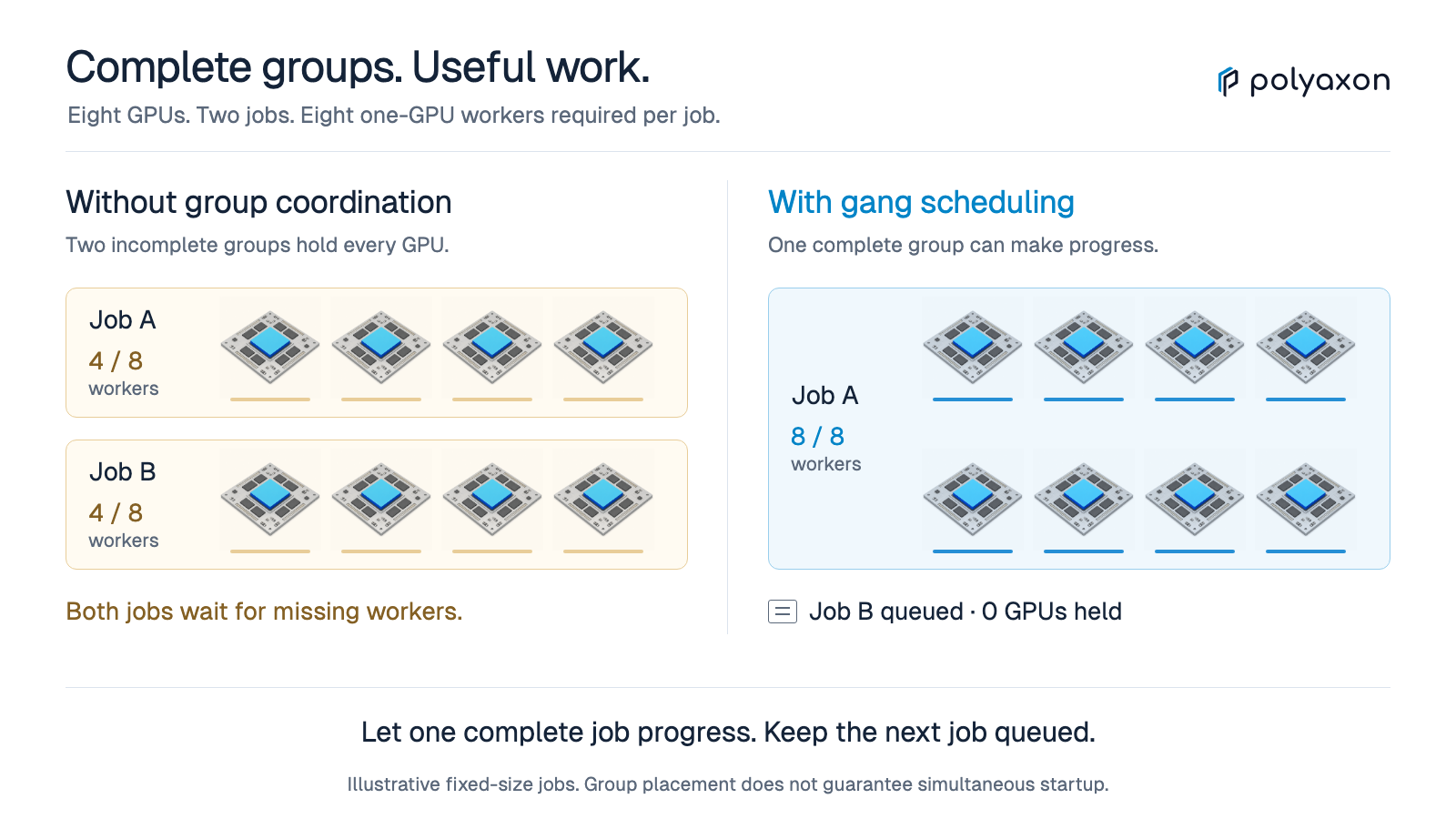
Understand how gang scheduling prevents partial distributed jobs from holding GPUs, how minimum membership works, and what Polyaxon supports.
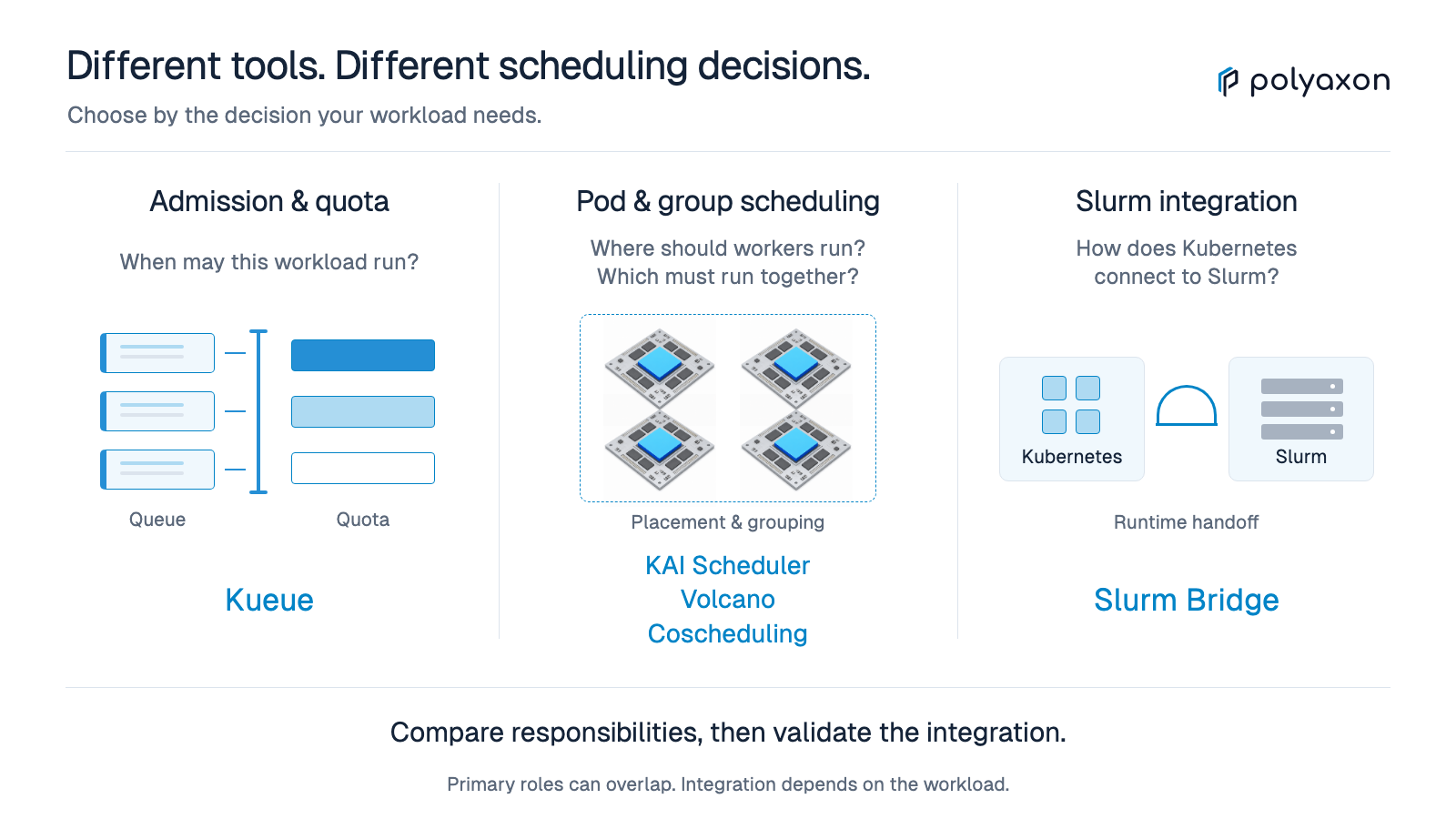
Compare Kueue, KAI Scheduler, Volcano, Coscheduling, and Slurm Bridge by responsibility, workload fit, and Polyaxon integration path.
Understand native topology-aware workload scheduling, combine rack locality with gang placement, and assess the tradeoff between waiting and communication.
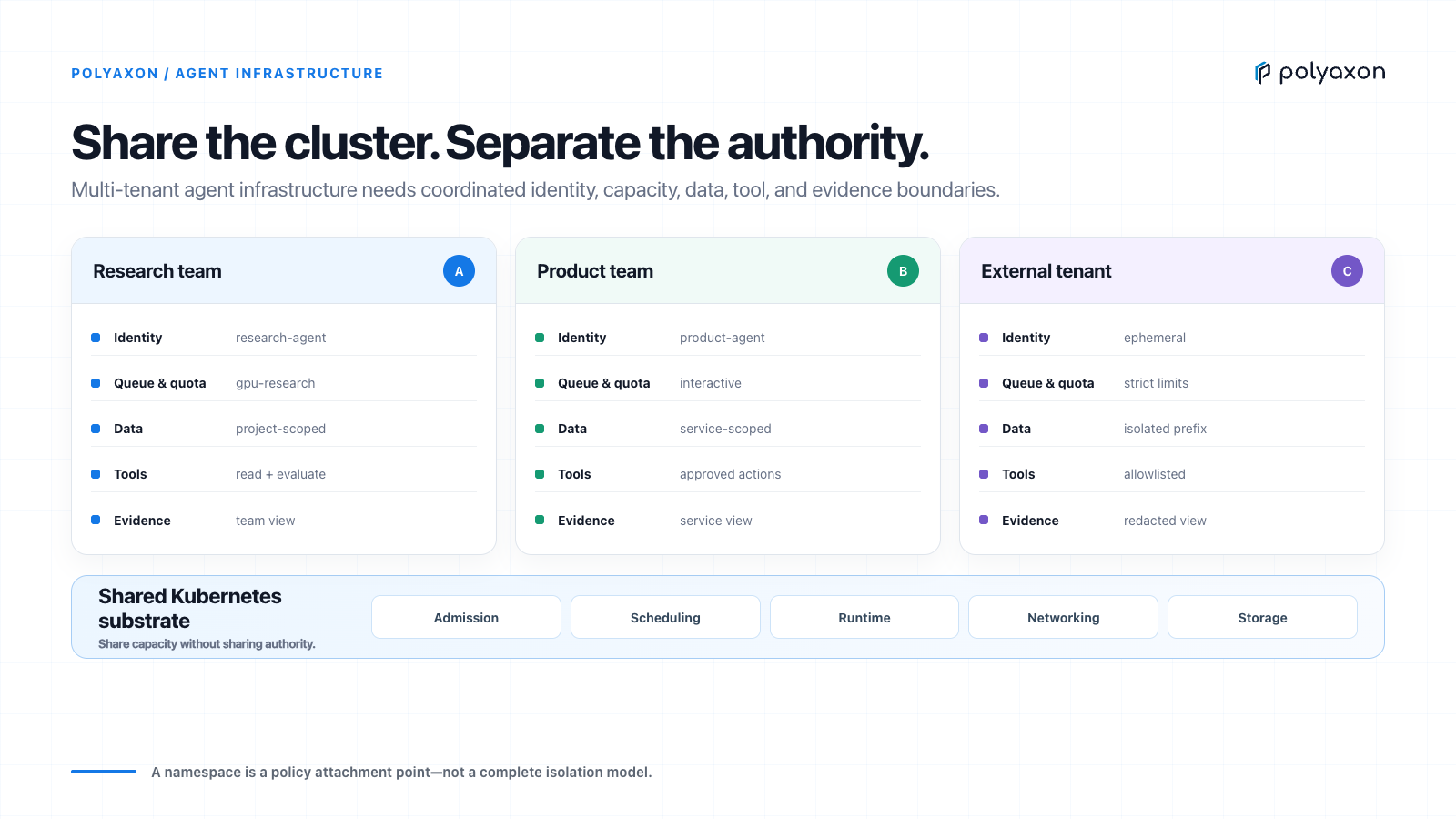
Separate identity, network access, data, queues, budgets, and evidence when multiple teams or customers run AI agents on shared Kubernetes infrastructure.
The latest guides, tutorials, and product updates.
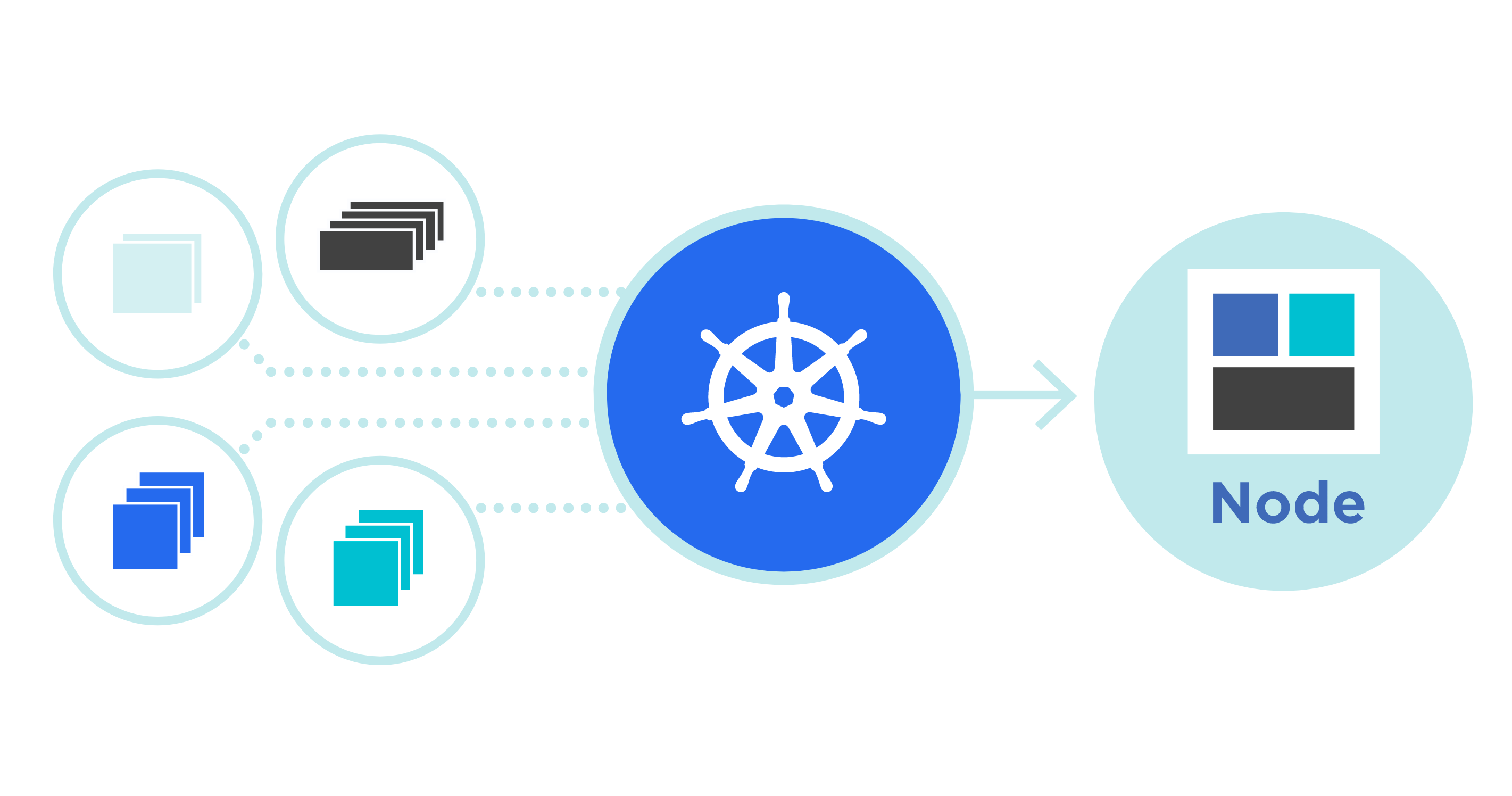
Give urgent GPU evaluations or notebooks higher Kubernetes scheduling priority without evicting running training Pods, and select the policy in Polyaxon.
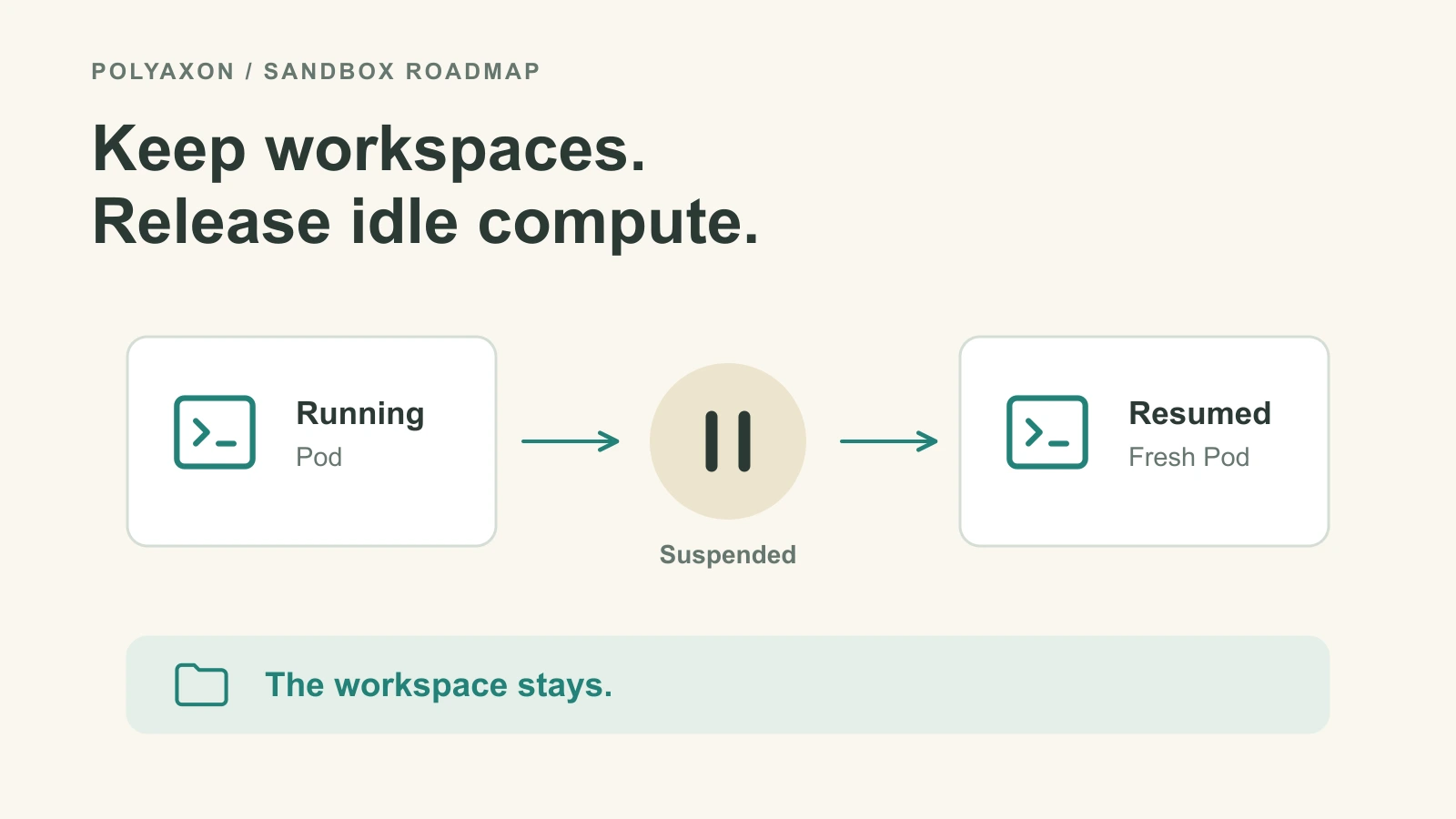
Our plans for persistent sandbox workspaces, suspend/resume, activity-aware idle suspension, and ready pools on Kubernetes—and where AX and Substrate differ.
Restrict a Kubernetes notebook workspace PVC to one Pod, mount it in a Polyaxon service, and hand access to a replacement notebook.
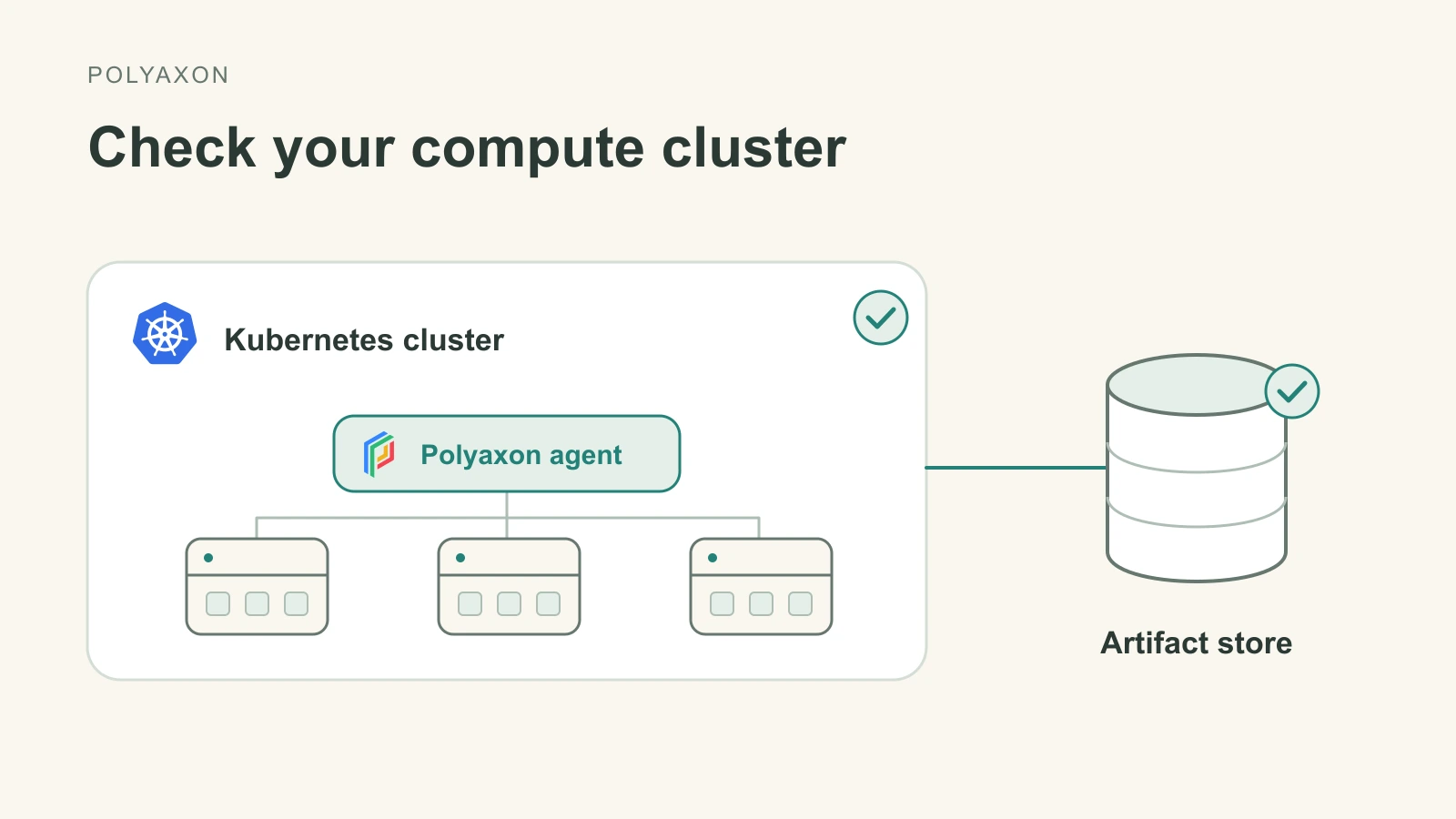
Polyaxon checks Kubernetes access and the default artifact store before managed agents begin syncing. Find failed checks and correct credentials, permissions, or mounts.
Limit aggregate GPU requests with ResourceQuota, supply CPU and memory defaults, and align Polyaxon resource profiles and queues with namespace budgets.
Set a PodDisruptionBudget around usable inference capacity, inspect blocked evictions, and account for replacement GPUs and model warmup.
Use Kubernetes Job success policies for chosen indexes or success counts, preserve durable results, and distinguish them from Polyaxon metric early stopping.
Use topology spread constraints for inference availability, understand minDomains and GPU capacity, and preserve placement intent in Polyaxon.
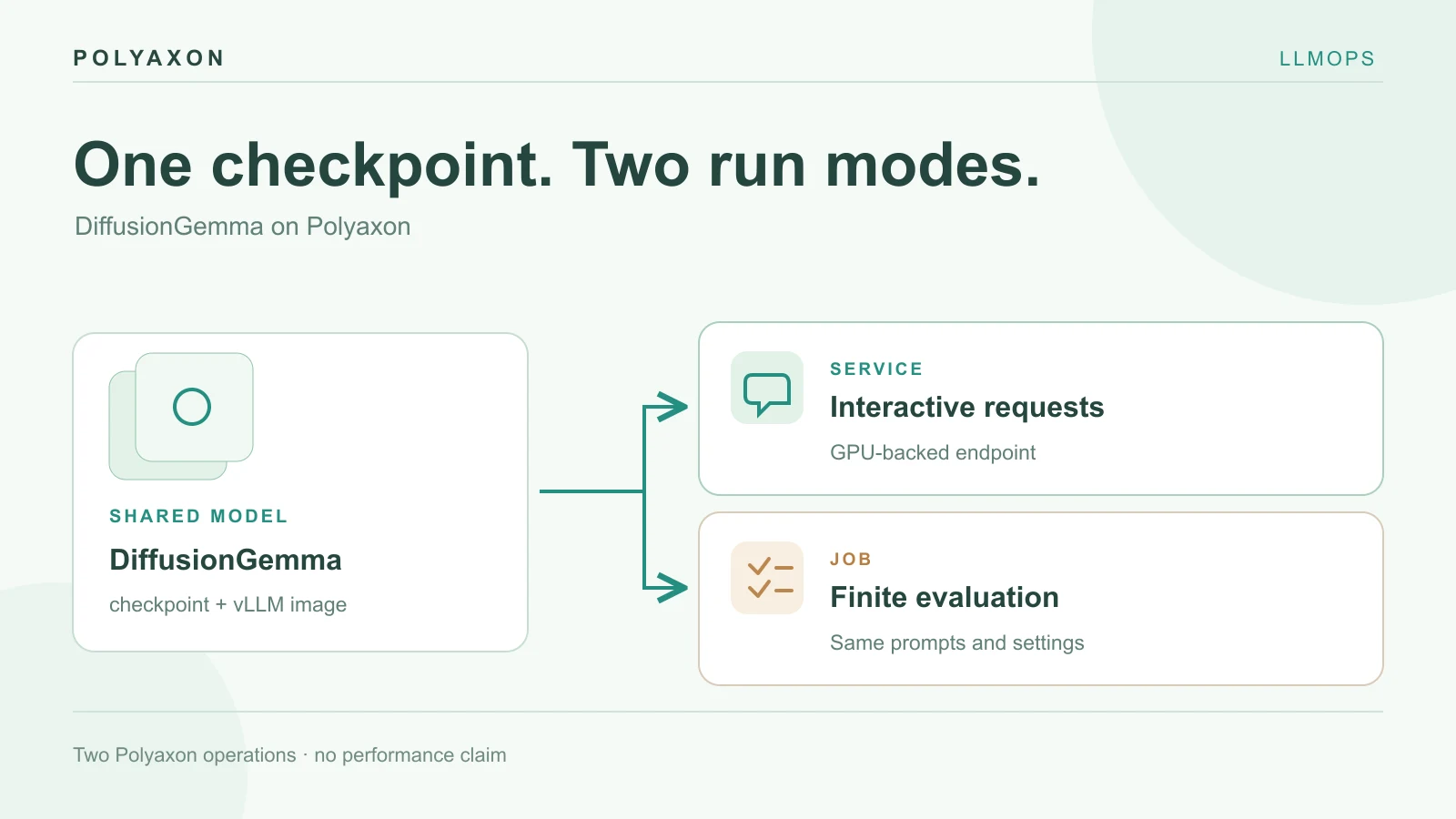
Adapt Google's Gemma-on-Kubernetes deployment choices to Polyaxon with a DiffusionGemma vLLM service, a batch evaluation job, and an explicit compatibility checklist.
Combine CPU Manager eligibility, full-core allocation, and Topology Manager policy, then compare CPU/GPU workloads with Polyaxon.
Use Kubernetes in-place resource resizing for running workloads, inspect whether changes took effect, and understand the limits for Polyaxon services.
Explore native gang scheduling in Kubernetes 1.37, its potential for Polyaxon training and sandboxes, and how it compares with KAI, Kueue, and Volcano.
Understand native topology-aware workload scheduling, combine rack locality with gang placement, and assess the tradeoff between waiting and communication.
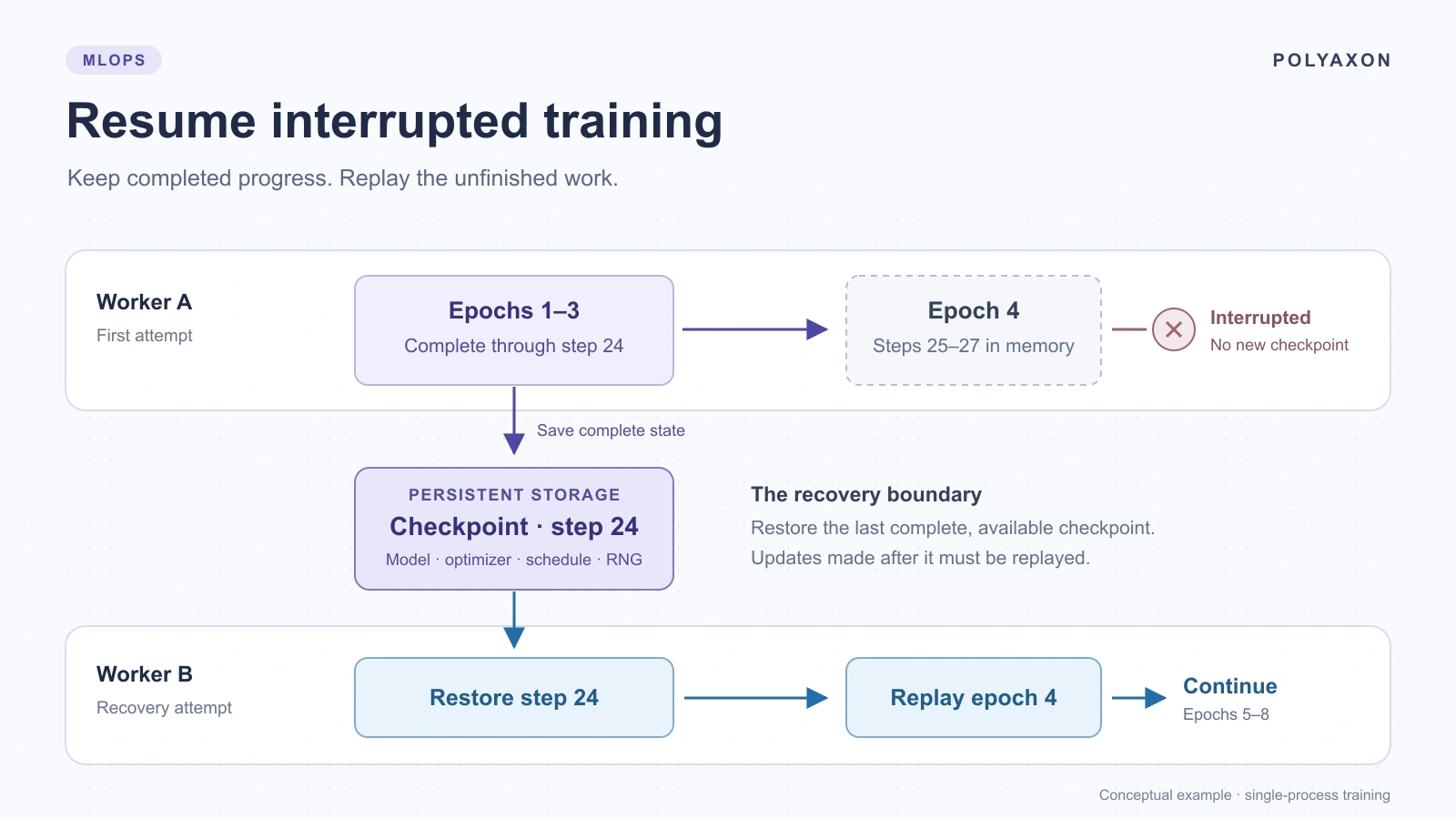
Build recoverable PyTorch training jobs with complete checkpoints, durable storage, and explicit restoration. Practice recovery locally and with Polyaxon.
Use projected ServiceAccount tokens and refresh-aware clients so long-running training, notebooks, and services can keep authenticating without static credentials.
Use Kubernetes ValidatingAdmissionPolicy to check workload ownership and image references, with scoped warning and enforcement stages for ML namespaces.
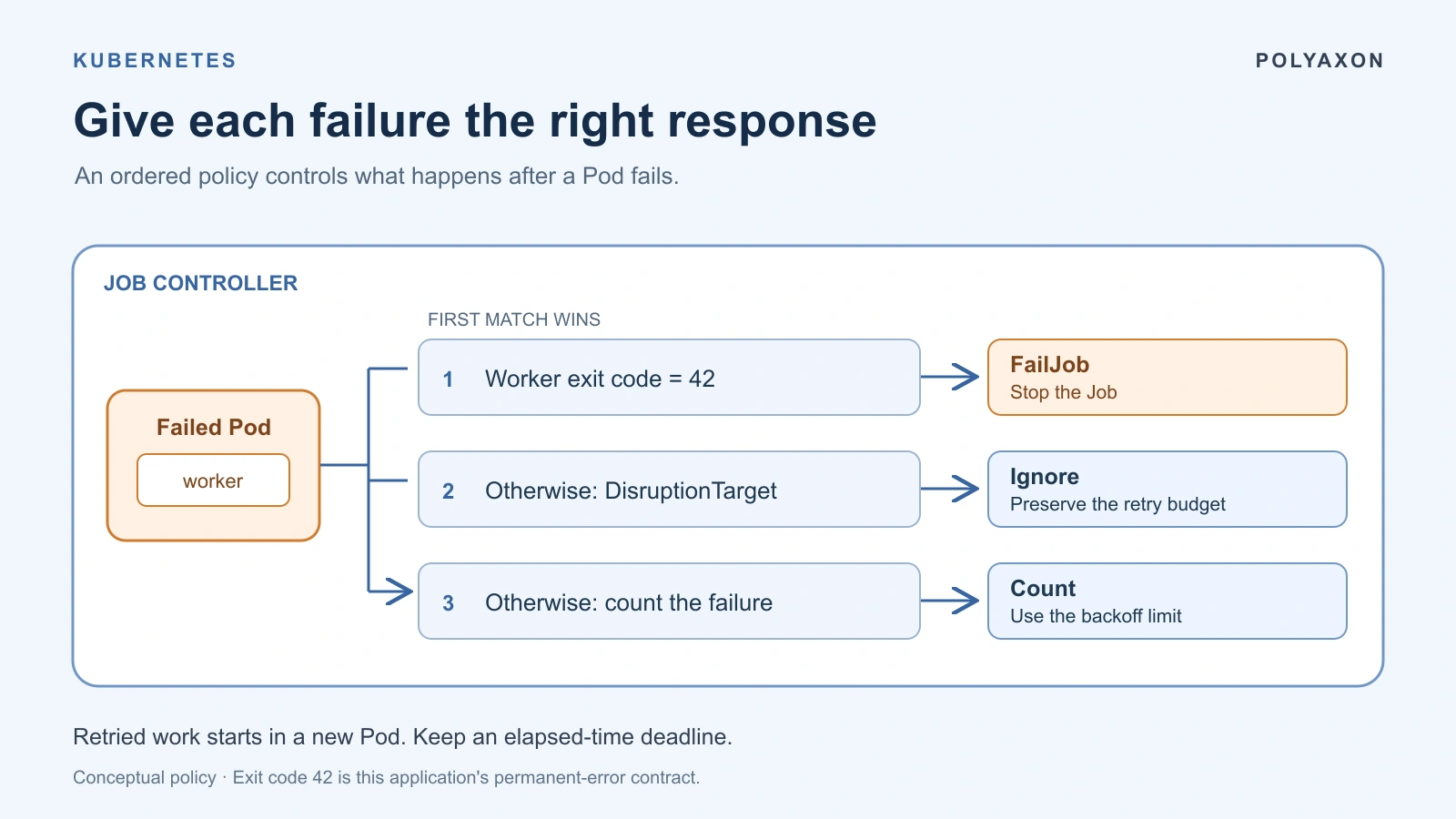
Stop retrying permanent errors, preserve the retry budget for marked disruptions, and inspect Kubernetes Job failure decisions with a concrete example.
Separate immutable model files from the serving image with Kubernetes image volumes, and choose when an OCI artifact fits better than a download or PVC.
Use Dynamic Resource Allocation to describe the accelerator a workload needs, understand device claims, and plan the integration with Polyaxon.
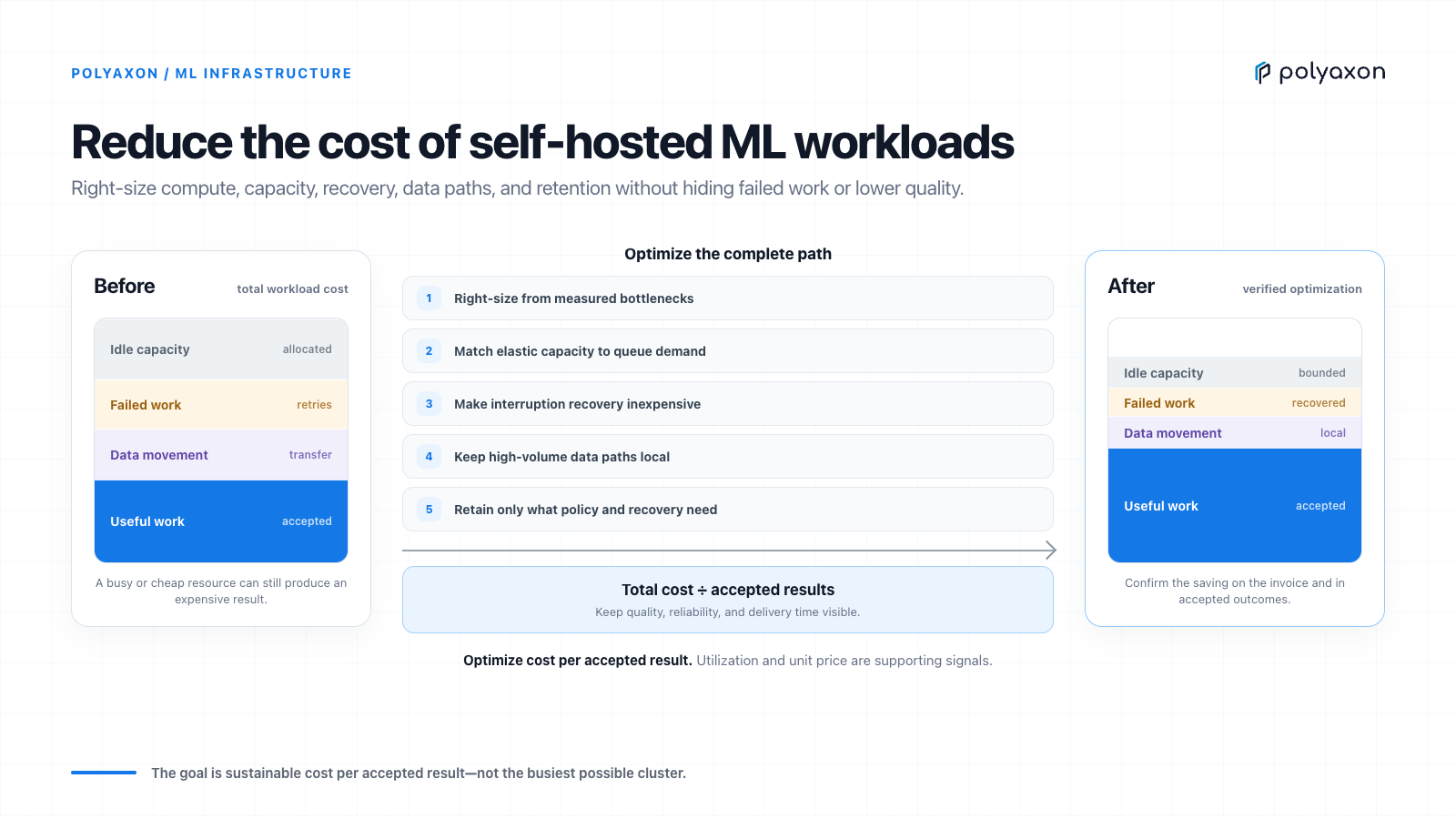
Reduce self-hosted ML costs with outcome-based accounting, right-sized resources, elastic capacity, interruption-ready workloads, local data paths, and deliberate retention.
Separate identity, network access, data, queues, budgets, and evidence when multiple teams or customers run AI agents on shared Kubernetes infrastructure.
Use exit-code-based container restart rules, observe what stays within the Pod, and distinguish local recovery from retrying a complete ML operation.
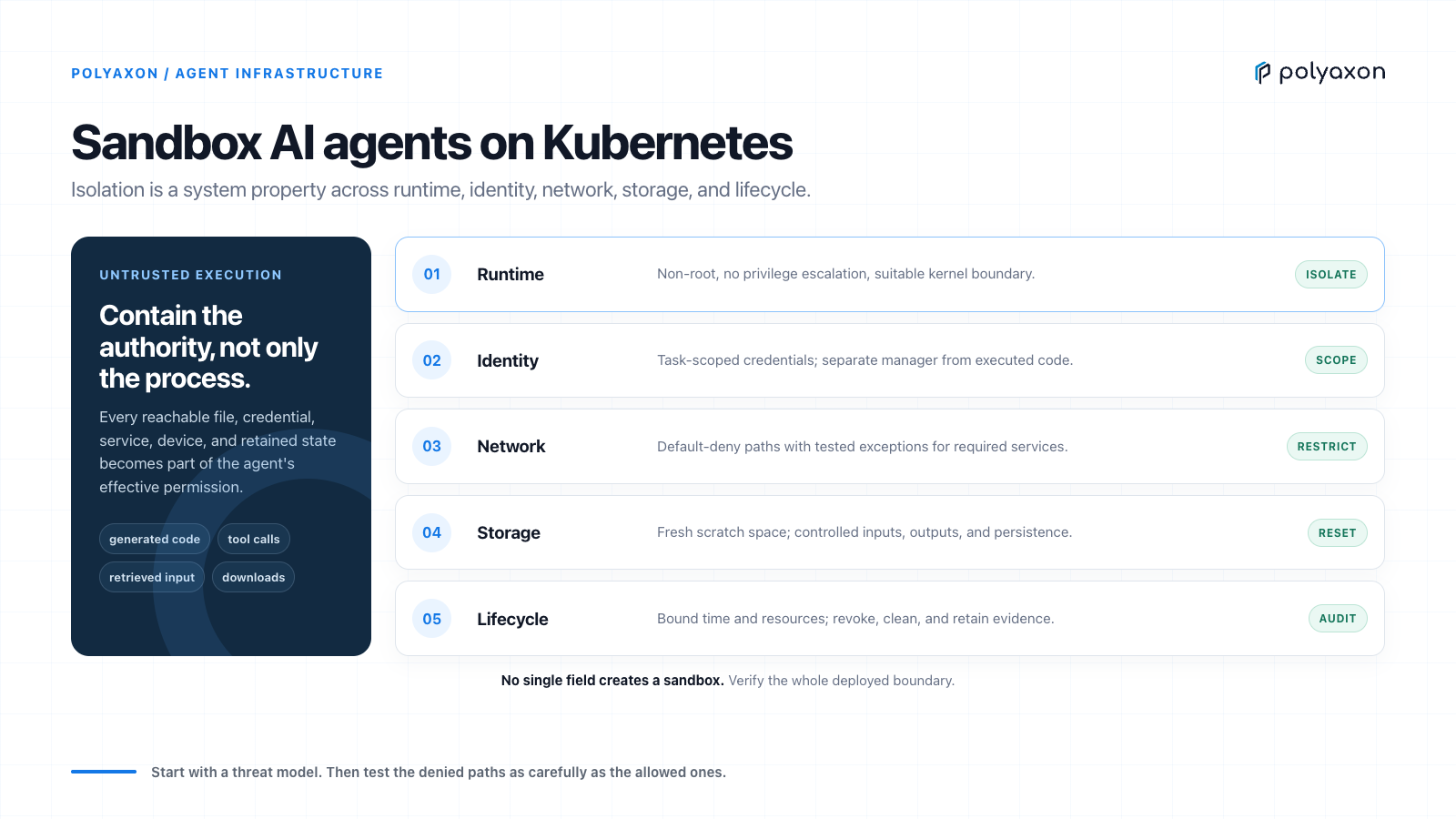
Design isolated Kubernetes execution for AI agents with a threat model, stronger runtimes, scoped identity, controlled egress, bounded storage, and auditable cleanup.
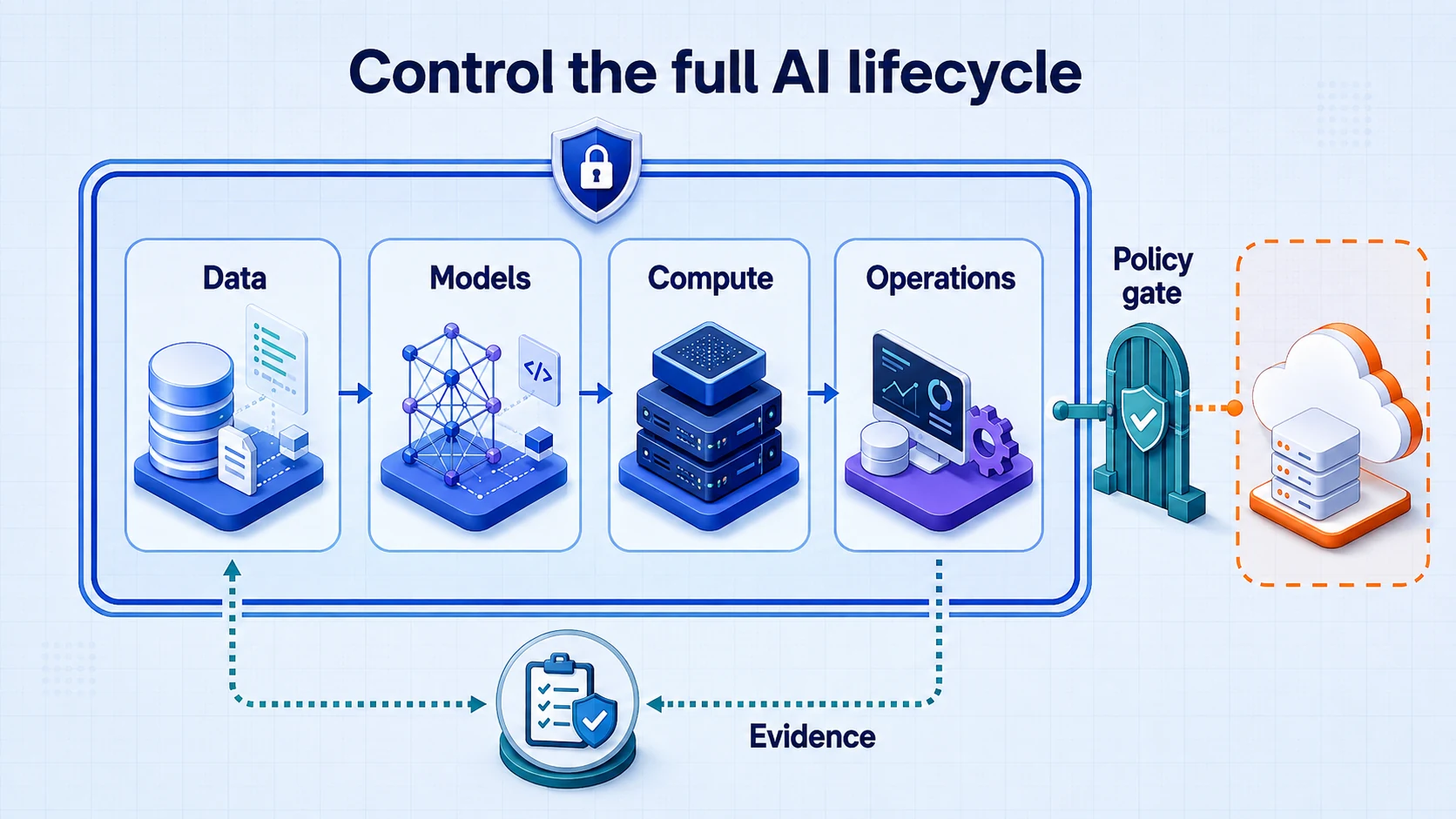
Define sovereign AI as control over data, models, compute, operations, providers, and evidence, then implement it with Kubernetes.