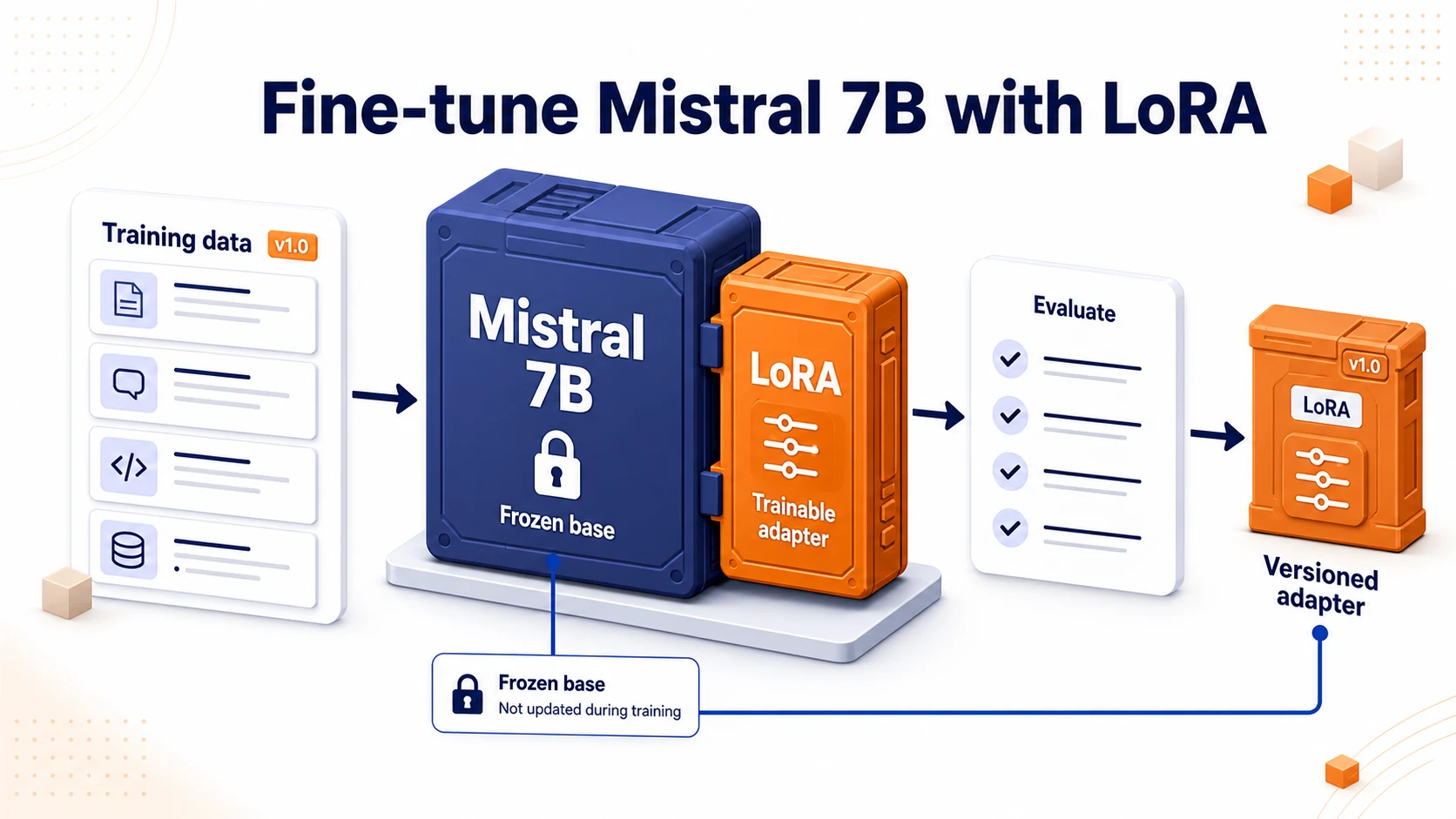
Fine-tune Mistral 7B with LoRA on Kubernetes
Plan a Mistral 7B LoRA fine-tuning workflow on Kubernetes with versioned data, GPU scheduling, Polyaxon tracking, evaluation, and adapter packaging.
LLMOpsKubernetesGuides
Learn Kubernetes fundamentals, troubleshoot GPU workloads, and monitor ML infrastructure with practical guides for data scientists and platform engineers.
Page 2 of 8
Plan a Mistral 7B LoRA fine-tuning workflow on Kubernetes with versioned data, GPU scheduling, Polyaxon tracking, evaluation, and adapter packaging.
Give evaluation shards stable indexes and independent retry budgets with Kubernetes Indexed Jobs, while keeping incomplete results visible.
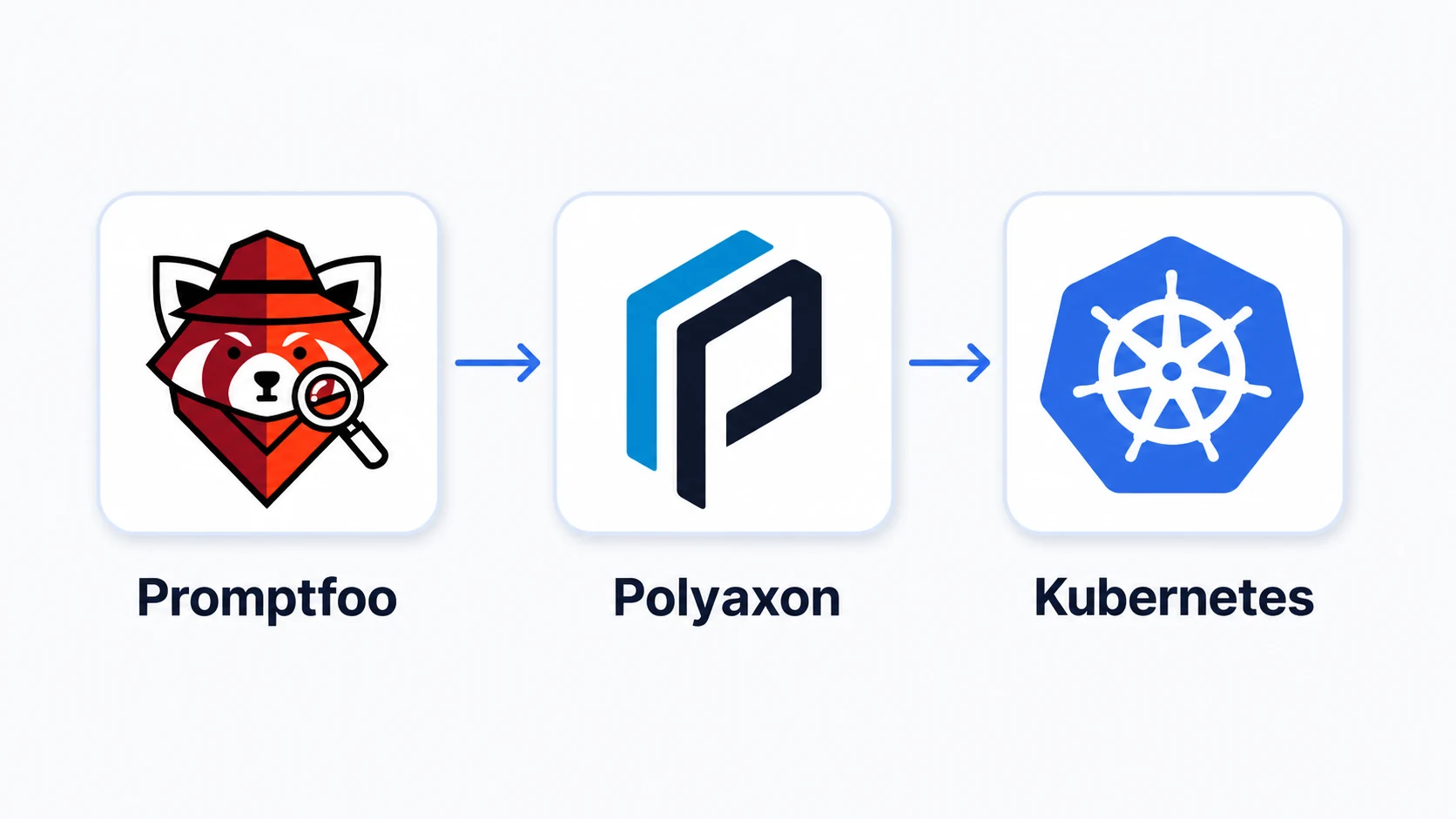
Package a Promptfoo suite as a Polyaxon job, export evaluation reports, track artifacts, and verify that failed checks fail the workload.
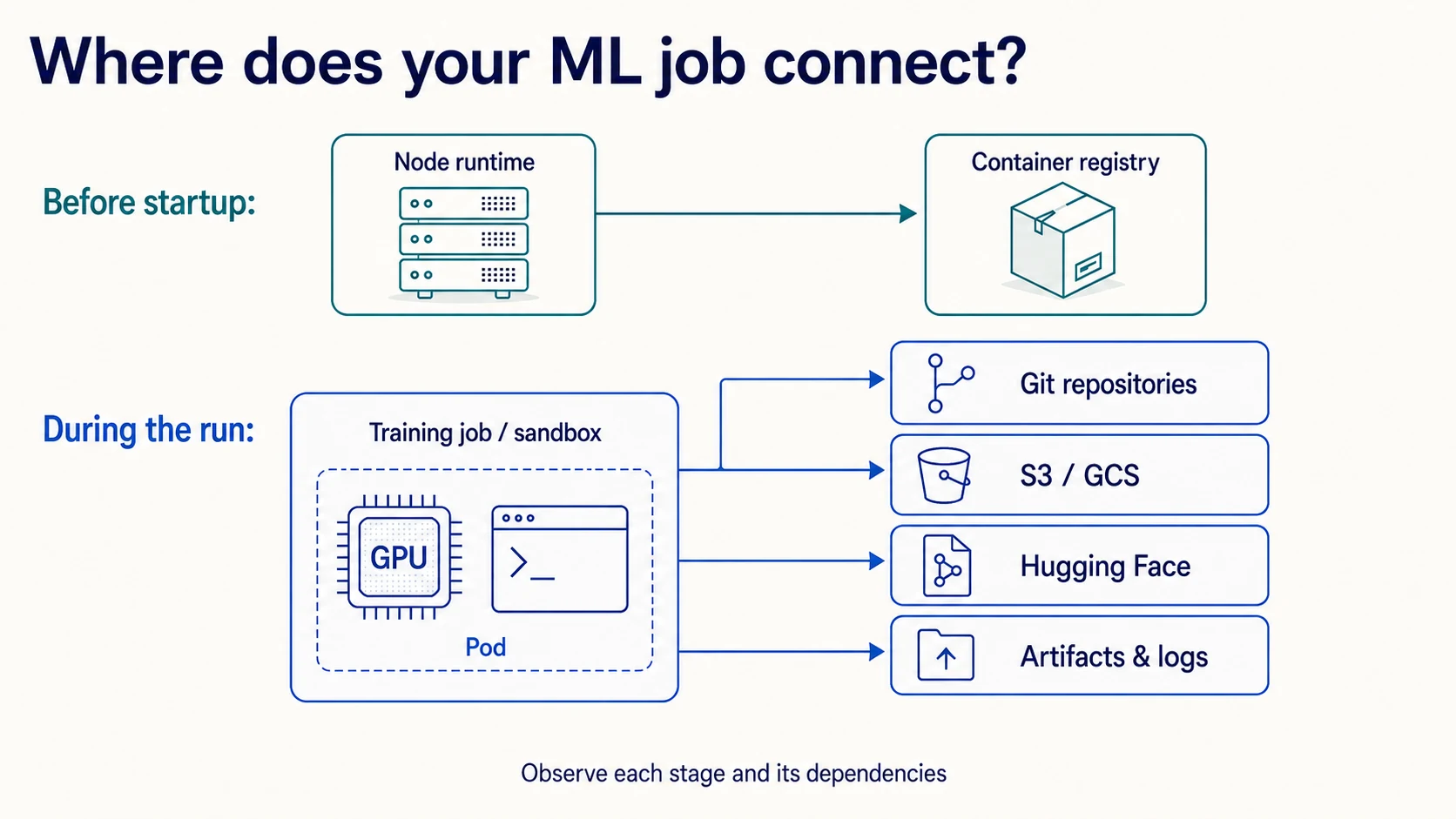
Trace image pulls, Git clones, S3 and GCS access, Hugging Face downloads, and artifact uploads across the lifecycle of Kubernetes jobs and sandboxes.
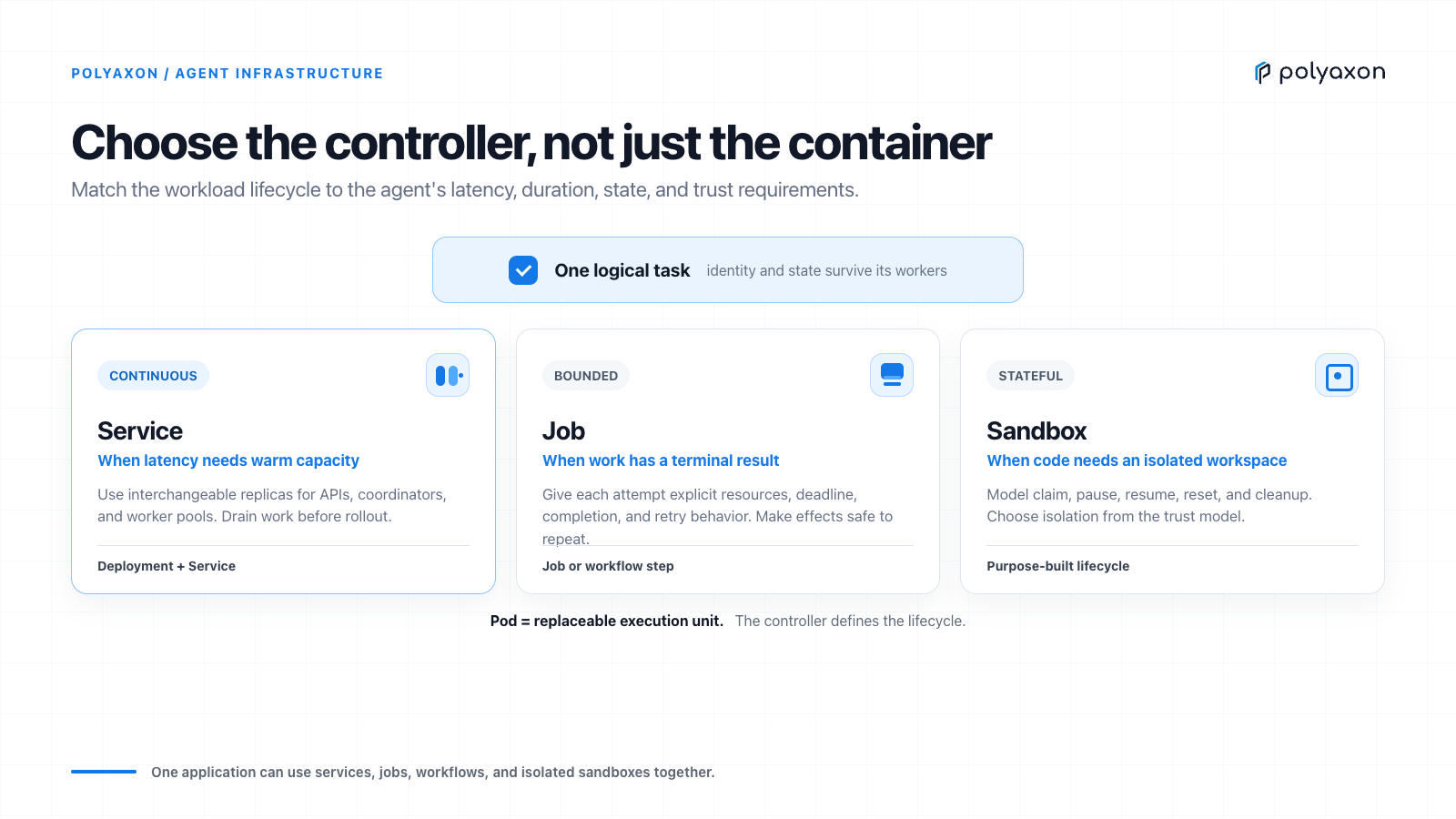
Choose the Kubernetes execution shape for an AI agent by separating logical task identity from Pods, Jobs, Services, workflows, and sandbox lifecycles.
Create a CSI snapshot of a notebook workspace, restore it into a separate PVC, and verify files and application state before switching workspaces.
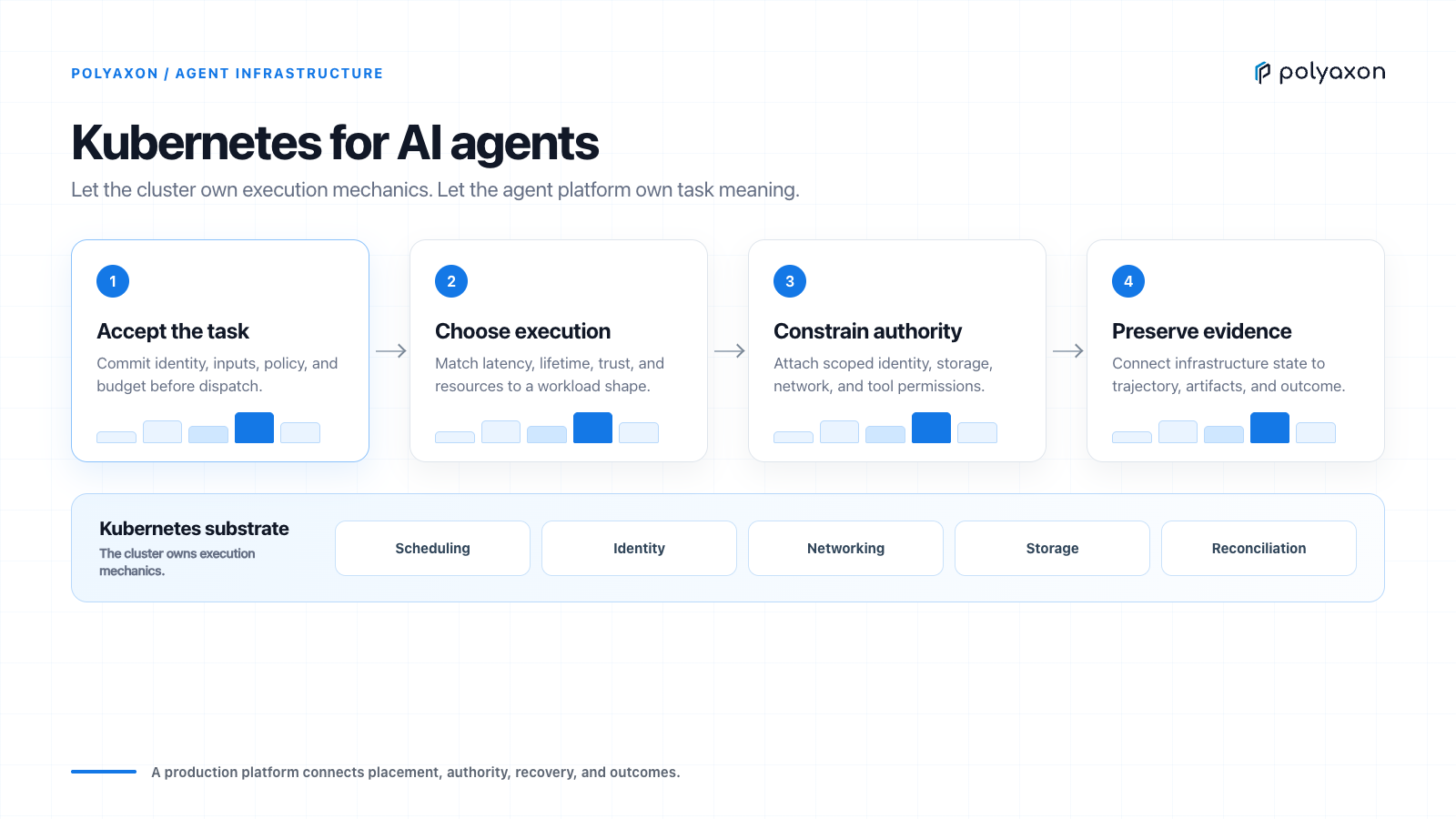
Design a Kubernetes platform for AI agents with clear workload boundaries, durable state, scoped access, resource controls, and end-to-end evidence.
Use Kubernetes scheduling gates to wait for external prerequisites before placement, with a controlled example and clear ownership of gate removal.
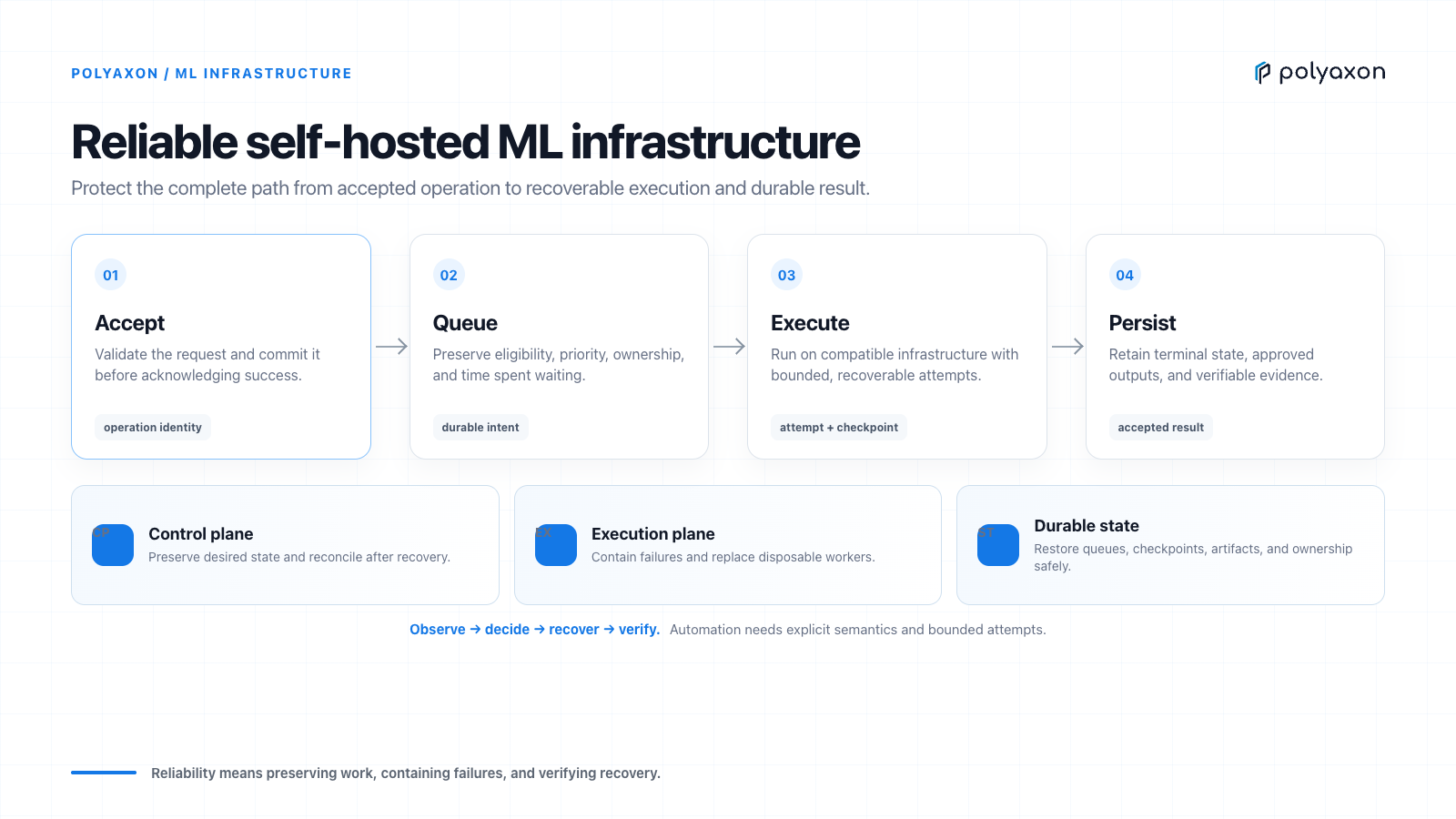
Build self-hosted ML infrastructure around explicit failure domains, durable queues and artifacts, eligible failover, actionable telemetry, and tested recovery.
Use custom metrics with Kubernetes HPA for independent inference replicas, account for model startup, and distinguish desired replicas from usable capacity.
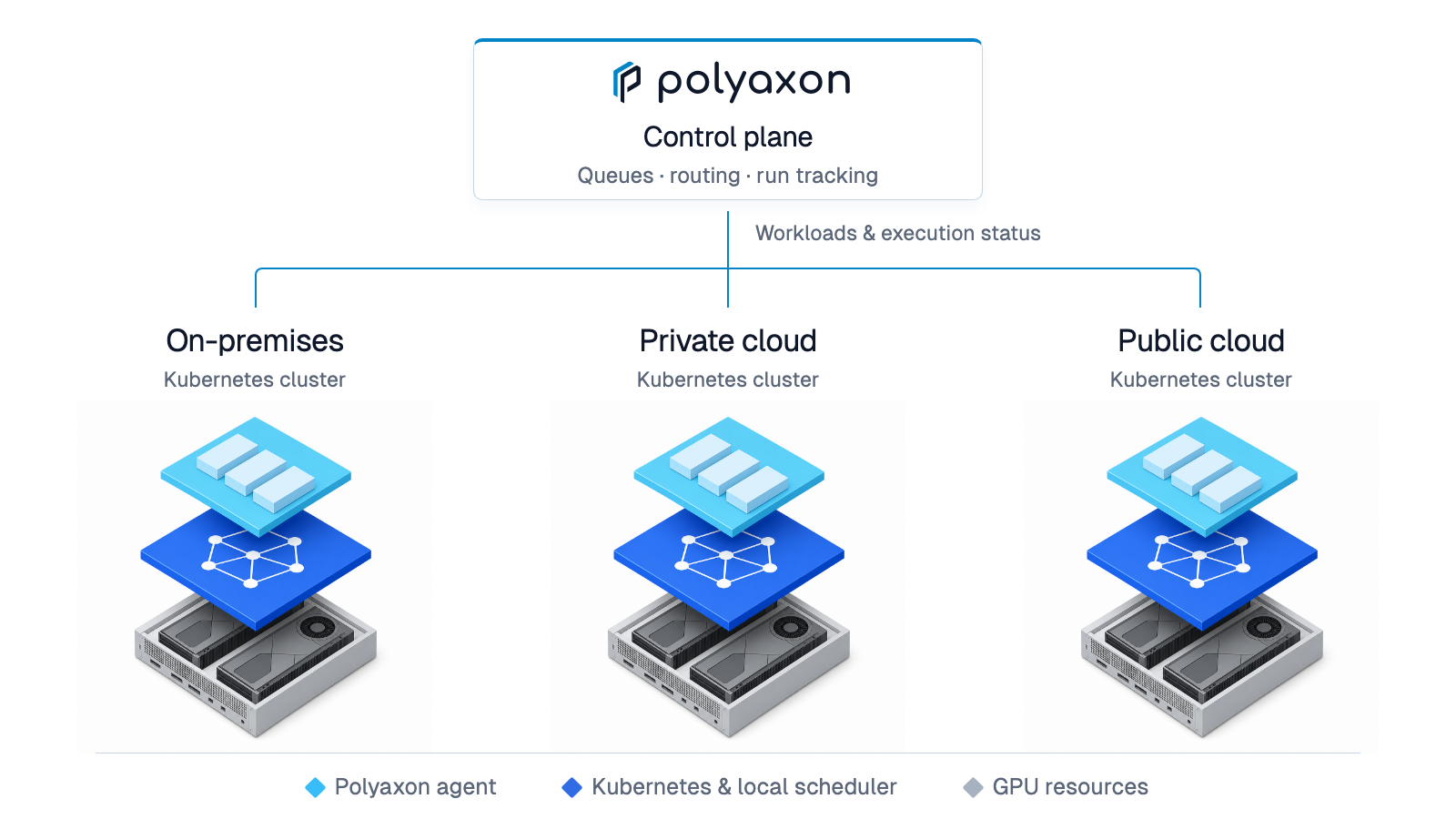
Design multi-cluster GPU orchestration around workload eligibility, data locality, queue routing, recovery, and clear dispatch ownership.
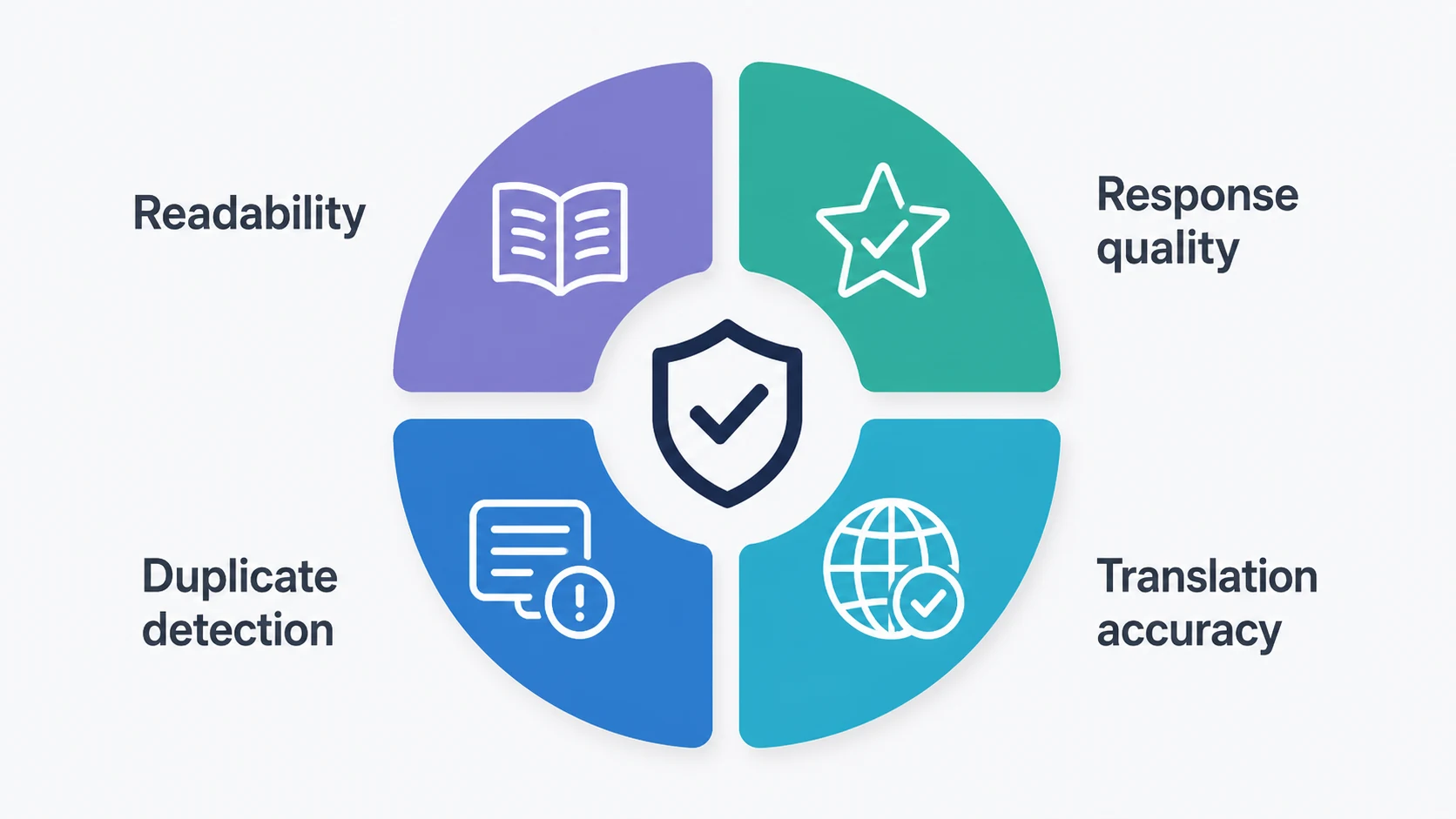
Design reliable batch LLM evaluations with stable shards, bounded concurrency, GPU-aware placement, resumable results, and complete aggregation.
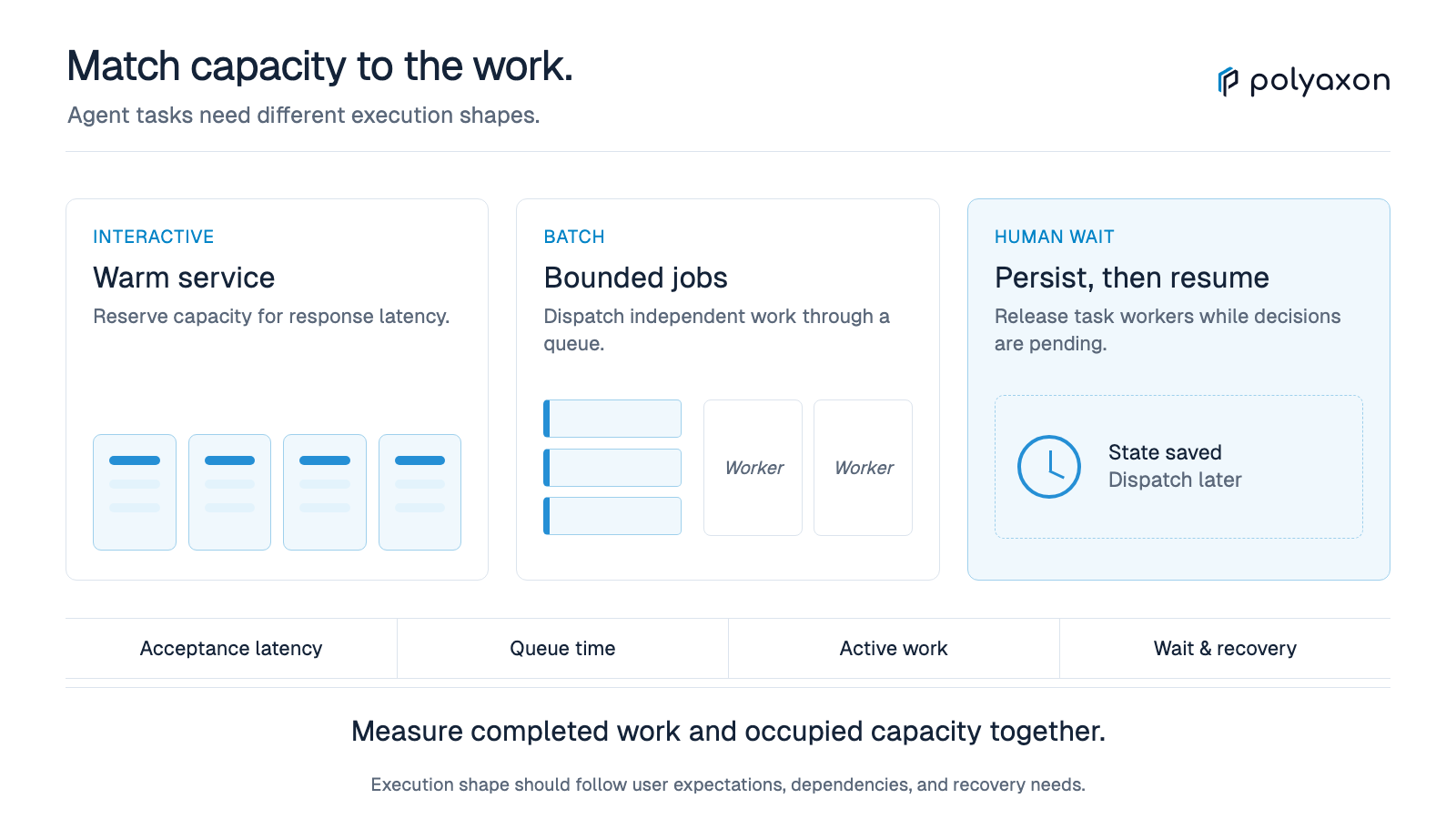
Choose jobs, services, queues, and capacity controls for agent workloads using task duration, dependency limits, resume latency, and execution cost.
Plan GPU inference rollouts around surge capacity, temporary reduced availability, model warmup, and request draining with a worked Deployment scenario.
Use Pod-level resource budgets for cooperating containers, understand the remaining isolation boundaries, and evaluate the fit for ML services.
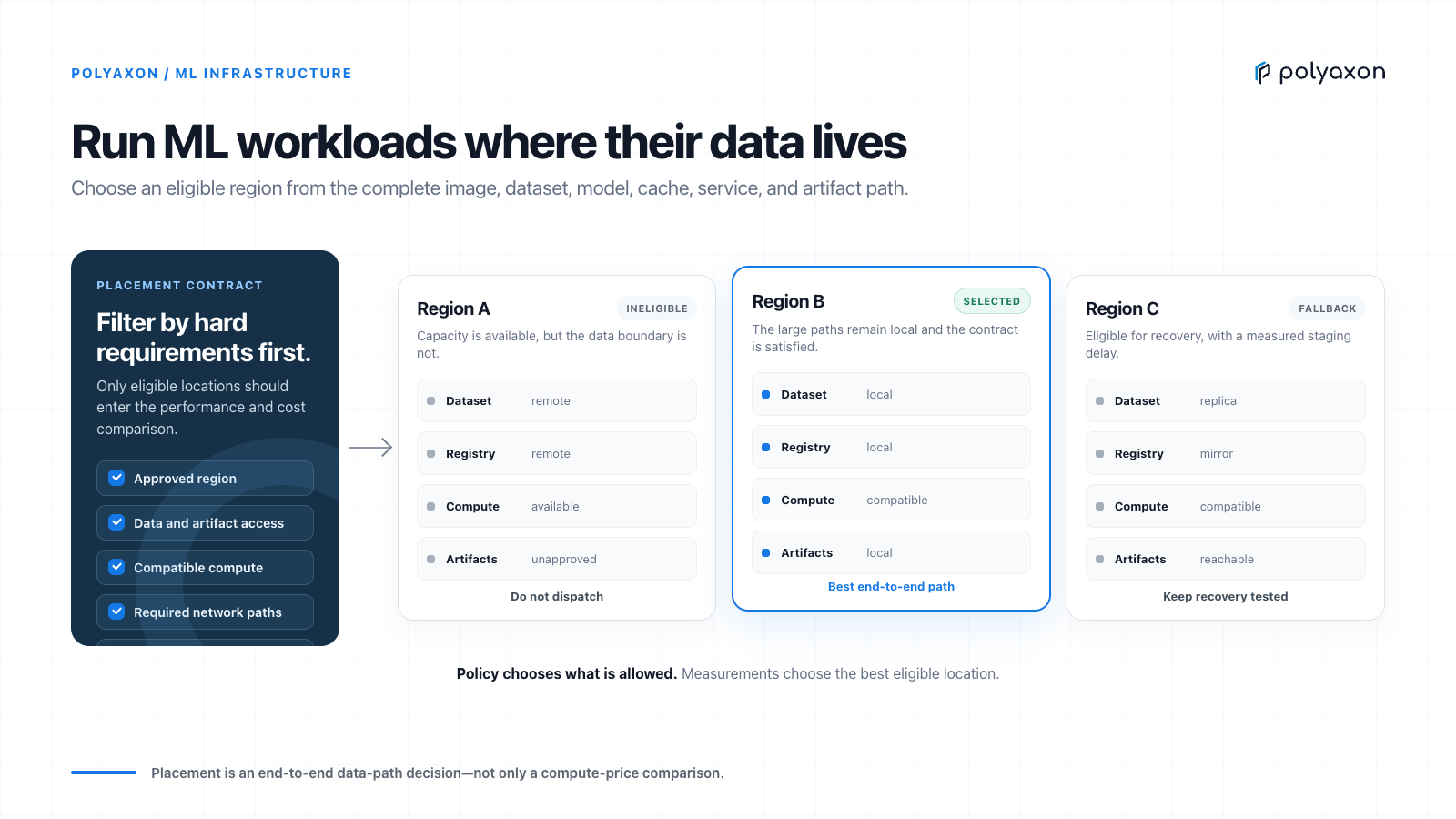
Design region-aware ML execution around dataset, registry, model, cache, artifact, and service locality without confusing proximity with data residency.
Connect Kubernetes DRA allocations, device health, and application failures without confusing missing telemetry with healthy hardware.
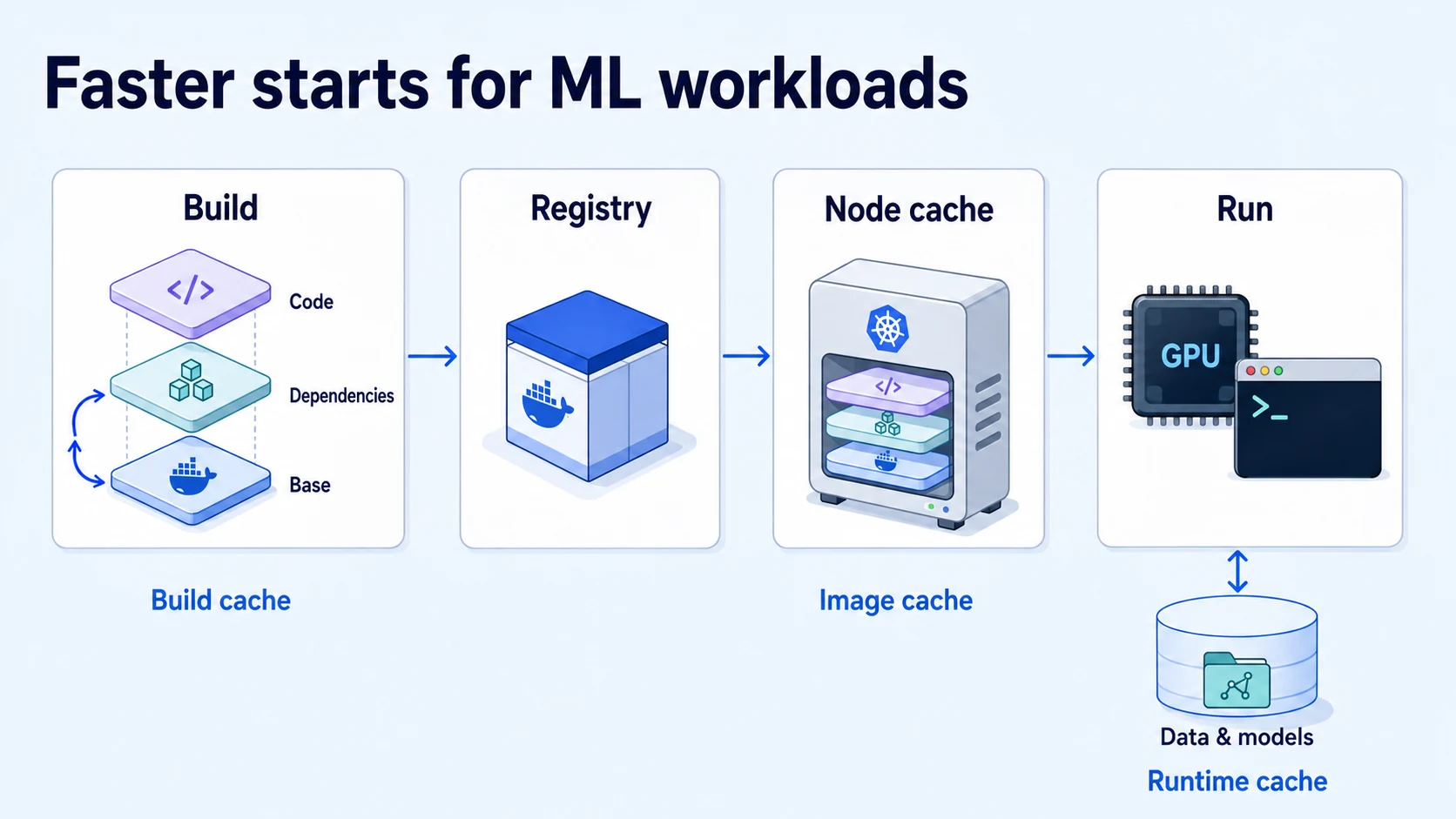
Reduce container build and startup time for ML jobs with reusable dependency layers, persistent build caches, and deliberate image and model caching.
Understand how Kubernetes preempts capacity for PodGroups, choose disruption behavior for training and evaluation, and keep recovery separate from priority.
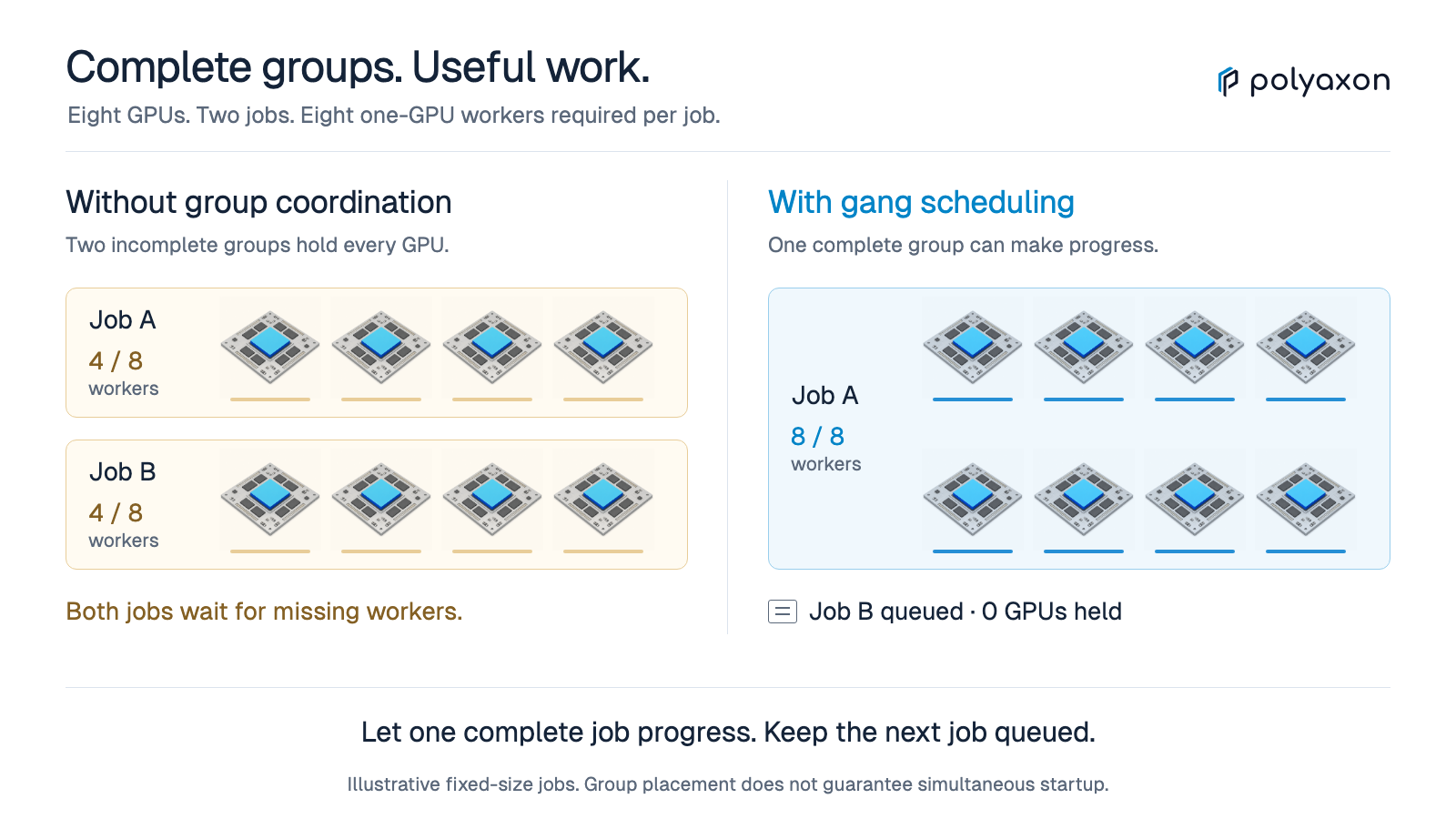
Understand how gang scheduling prevents partial distributed jobs from holding GPUs, how minimum membership works, and what Polyaxon supports.
Keep AI workloads portable with explicit execution contracts, open packaging and telemetry, hardware abstraction, data boundaries, and tested migration paths.
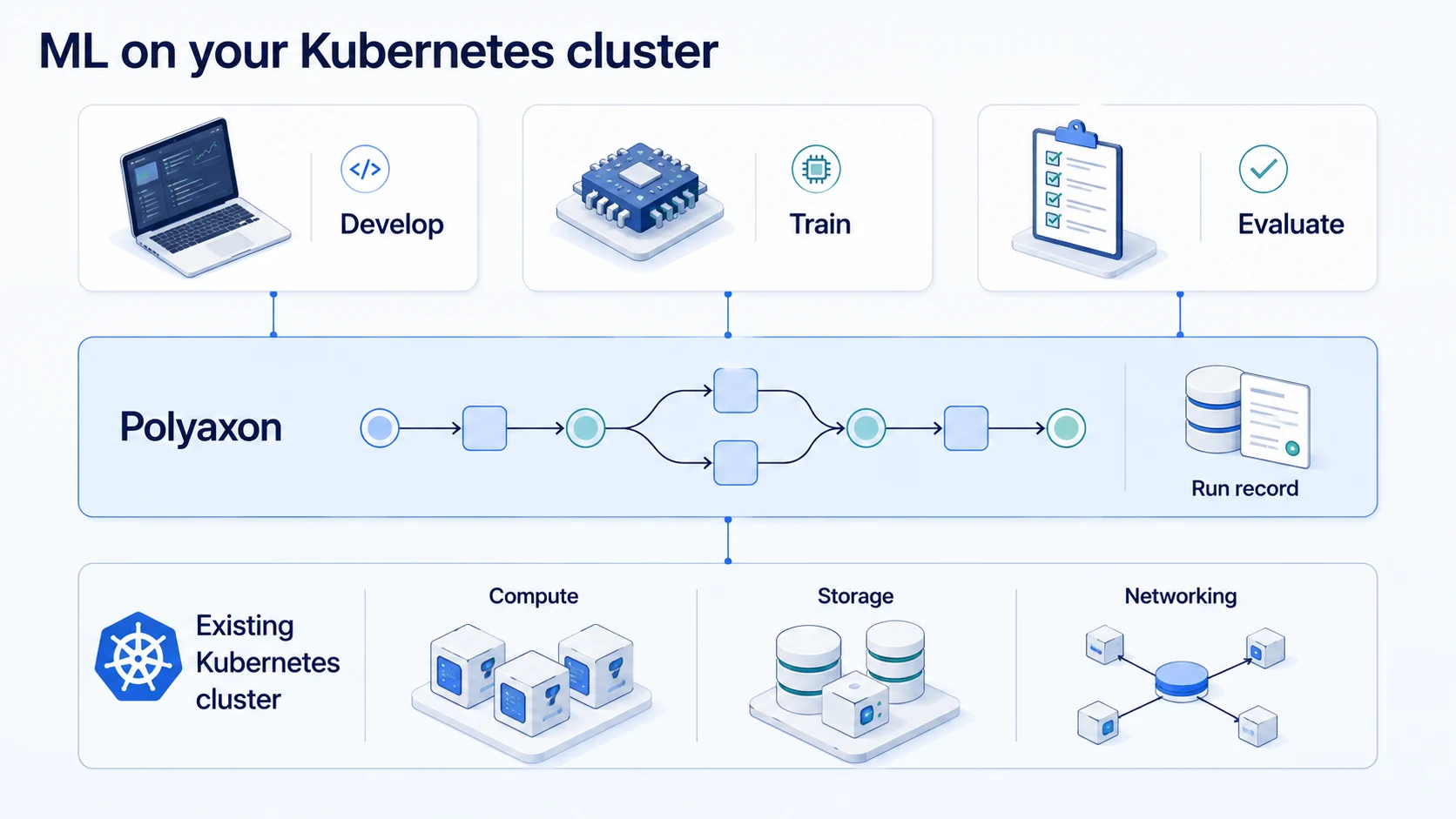
Plan a Polyaxon deployment on an existing Kubernetes cluster, covering GPUs, storage, identity, networking, workload ownership, and recovery.
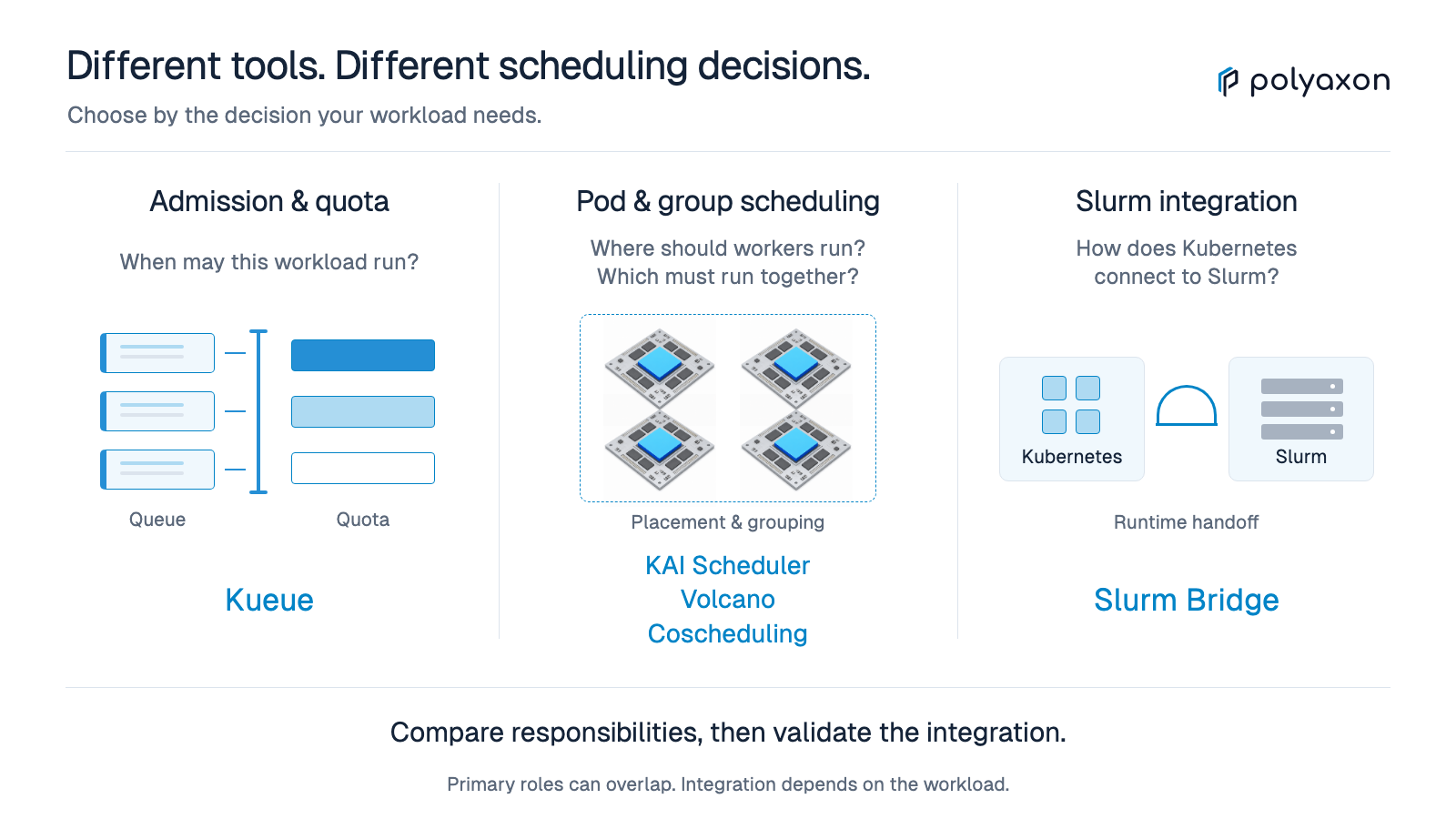
Compare Kueue, KAI Scheduler, Volcano, Coscheduling, and Slurm Bridge by responsibility, workload fit, and Polyaxon integration path.
Design a production conversational assistant with grounded retrieval, controlled model access, durable conversation state, evaluation, security, and Kubernetes operations.