Contain generated code with Kubernetes runtime controls
Reduce the impact of generated-code failures with Polyaxon workload configuration, Kubernetes admission and network controls, minimal credentials, and incident evidence.
Learn Kubernetes fundamentals, troubleshoot GPU workloads, and monitor ML infrastructure with practical guides for data scientists and platform engineers.
Page 3 of 8

Reduce the impact of generated-code failures with Polyaxon workload configuration, Kubernetes admission and network controls, minimal credentials, and incident evidence.

Use kubectl edit for deliberate live Kubernetes changes while avoiding controller conflicts, configuration drift, wrong-cluster edits, and unrecoverable fixes.

Understand Kubernetes CPU requests, limits, throttling, and the failure modes caused by weak resource configuration.

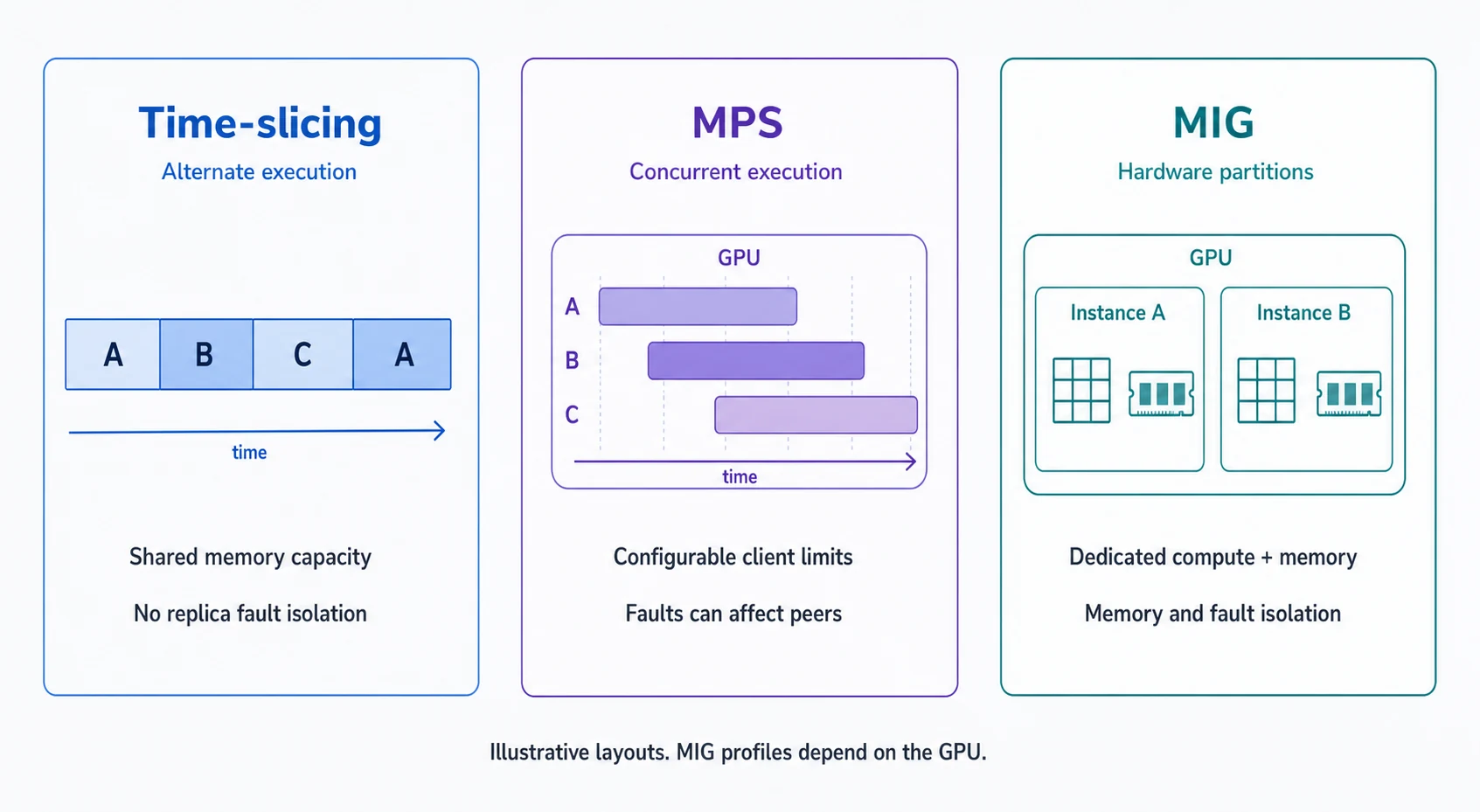
Compare NVIDIA MIG and GPU time-slicing on Kubernetes, including memory isolation, resource names, scheduling behavior, and workload fit.

Use explicit kubeconfig contexts, namespaces, identities, and verification checks to reduce wrong-cluster changes across development, staging, and production.

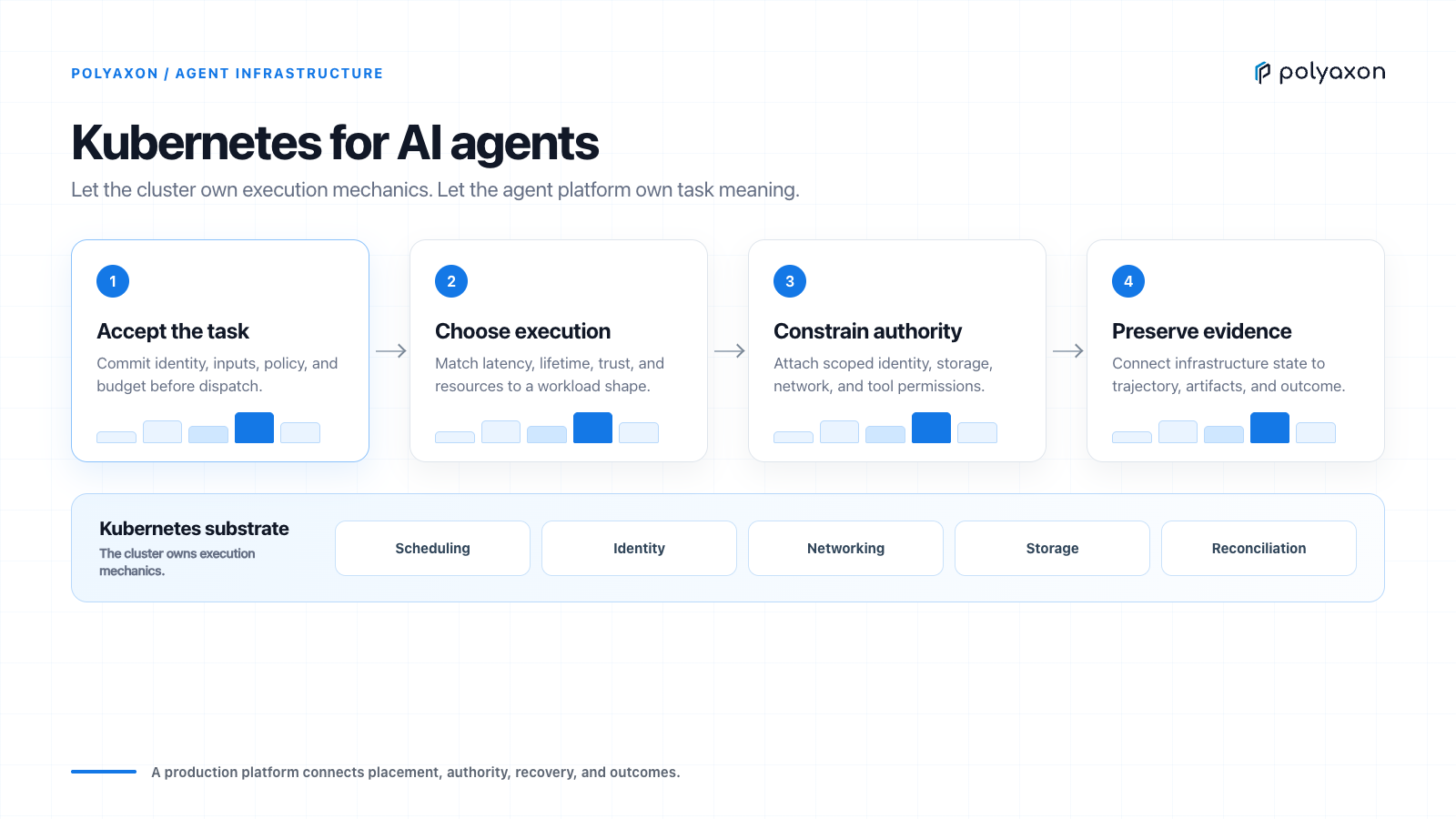
Understand AI sandboxes for development and agent execution, including runtime isolation, credentials, storage, network access, GPUs, and lifecycle.

Configure startup, readiness, and liveness probes for model servers and interactive ML services without causing restart loops or hiding dependency failures.

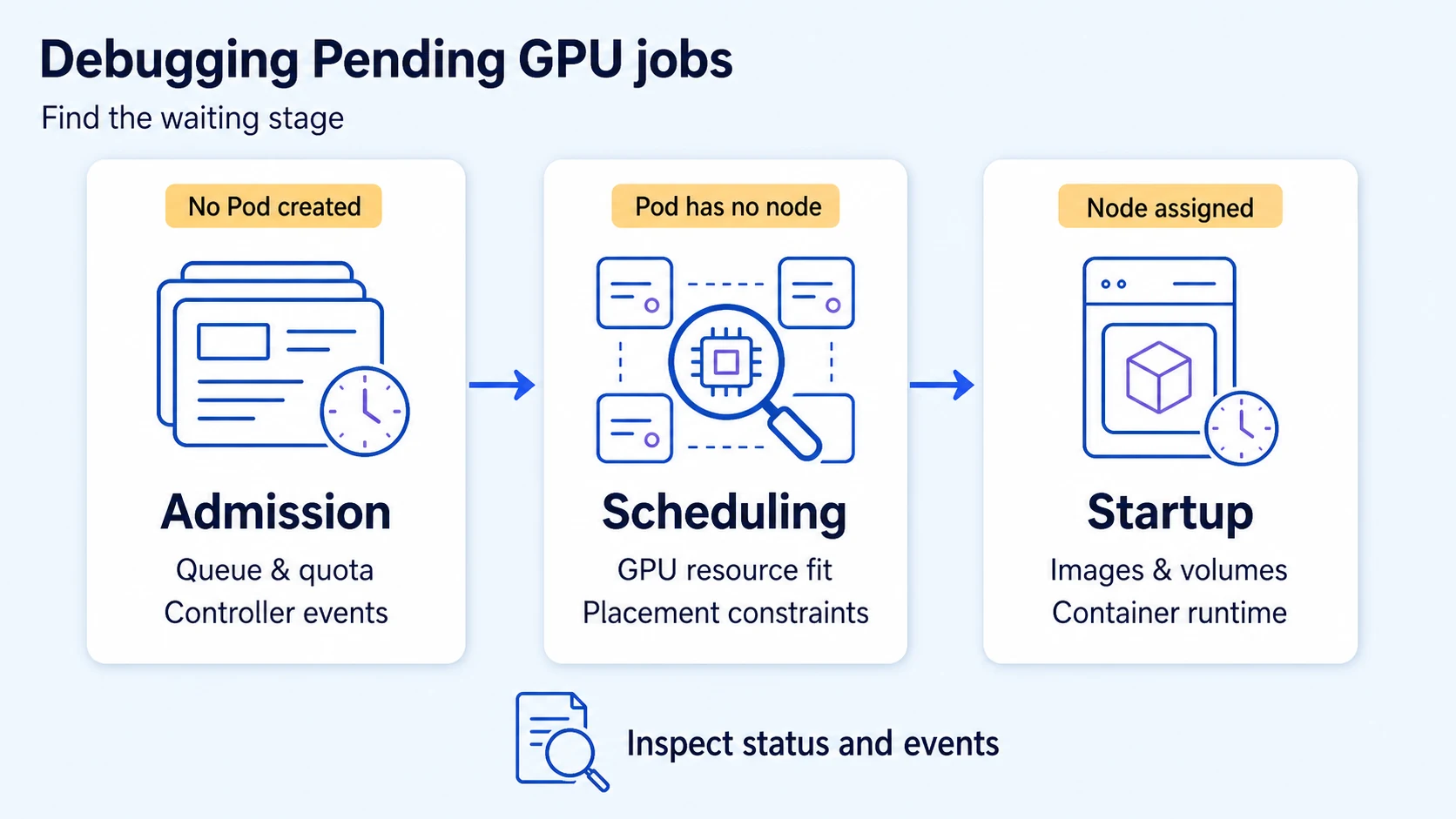
Diagnose Pending GPU jobs by checking queue admission, scheduler events, advertised GPU resources, placement constraints, storage, and node capacity.

Design least-privilege Kubernetes access for ML workloads with clear subjects, namespaced roles, dedicated service accounts, permission checks, and reviewable policy.

Design repeatable Kubernetes load tests for model services using realistic arrivals, tail latency, queueing, accelerator metrics, and recovery criteria.

Give model servers enough time to load weights and warm runtimes without weakening liveness detection for the rest of their lifecycle.

Design Kubernetes and ML platform workflows that remain usable with keyboards, assistive technology, low-vision settings, and different ways of working.

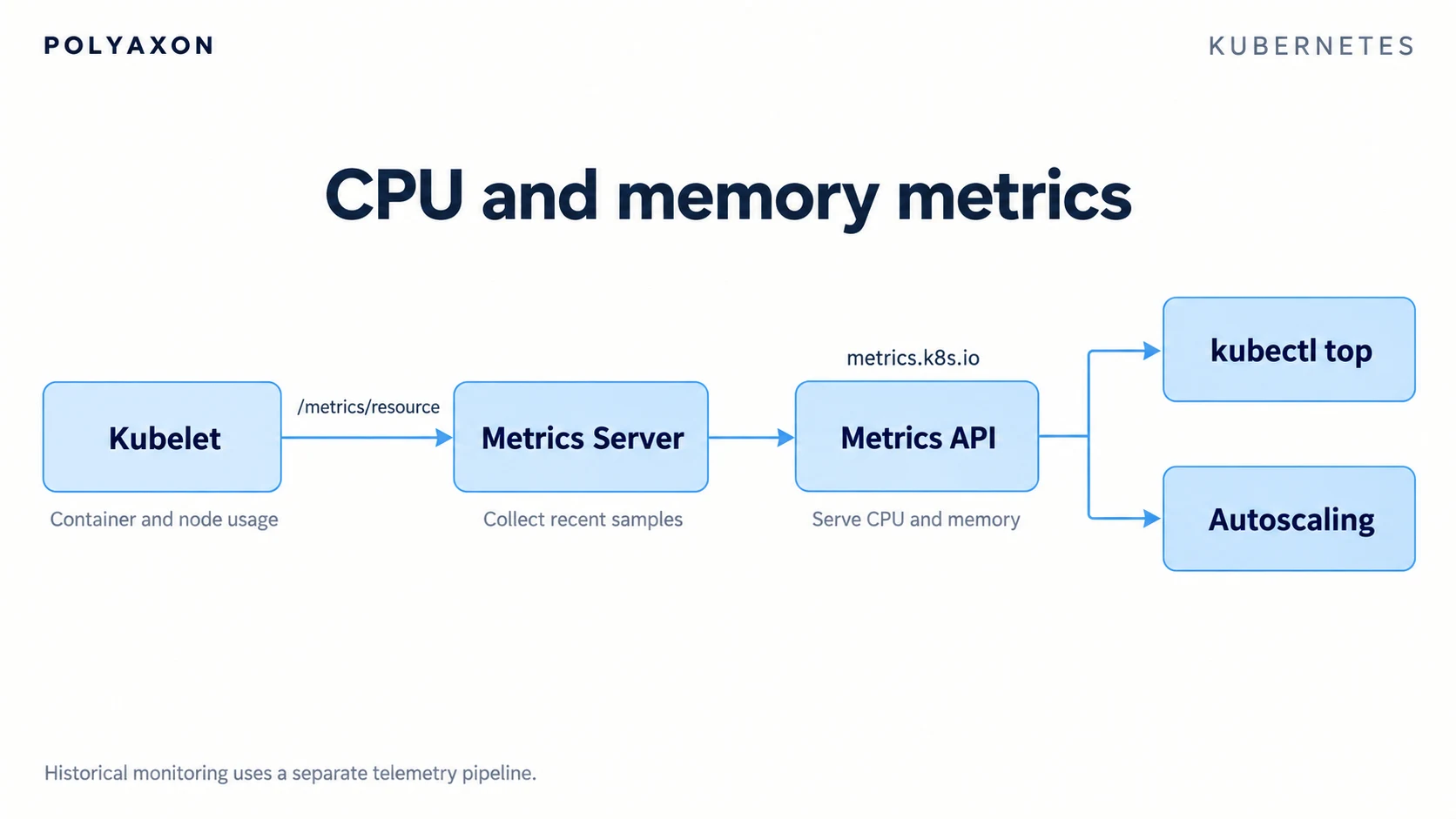
Use Kubernetes resource, object-state, and control plane metrics to diagnose scheduling delays, size workloads, and design actionable alerts.

Choose service boundaries for Kubernetes-based ML platforms without turning every component, model, or workflow step into a separate microservice.

Assess and close the gaps in accelerator access, batch scheduling, inference, data, identity, observability, cost, and ownership before AI workloads scale on Kubernetes.

Create and verify Kubernetes Services with kubectl expose while keeping selectors, ports, exposure scope, and production configuration explicit.

Diagnose Kubernetes DiskPressure, understand eviction signals, and prevent images, logs, and local ML data from exhausting node storage.

Evaluate whether Kubernetes provides enough scheduling, isolation, portability, and operational leverage to justify its complexity for ML workloads.

Check kubectl, control-plane, node, and API compatibility before upgrades or while diagnosing inconsistent Kubernetes behavior.

Understand how Pods, Services, DNS, ingress, egress, and network policy shape the data paths used by training jobs and model services.

Configure Django logs for container collection, useful request context, exception diagnosis, privacy, and correlation with Kubernetes workload state.

Monitor Node.js services with request outcomes, event-loop delay, memory, dependencies, Kubernetes state, and low-cardinality telemetry.

Choose strategic merge, JSON merge, or JSON Patch deliberately, preview changes, and reconcile emergency Kubernetes patches with declarative configuration.

Keep ordinary Pods away from specialized nodes and combine tolerations with positive placement rules for GPU and interruptible ML capacity.