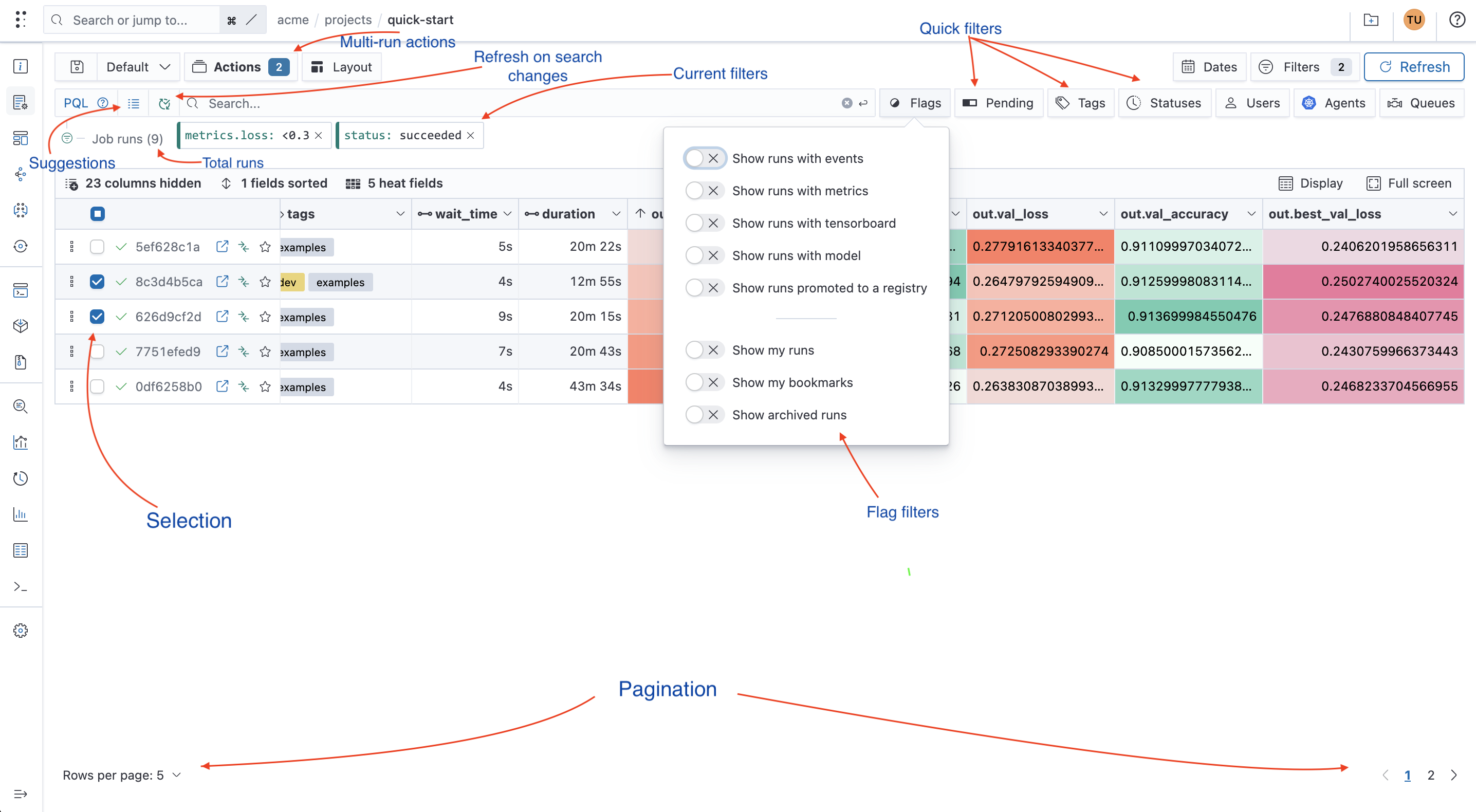
ML Metadata Store: Examples, Artifacts, and Lineage
Understand ML metadata with examples of runs, datasets, and model artifacts. Learn how a metadata store connects them and how to query them in Polyaxon.
MLOps
Explore MLOps principles, experiment tracking, metadata, and reproducible machine learning workflows with practical Polyaxon guides.
Essential guides, selected for this topic.
Understand ML metadata with examples of runs, datasets, and model artifacts. Learn how a metadata store connects them and how to query them in Polyaxon.
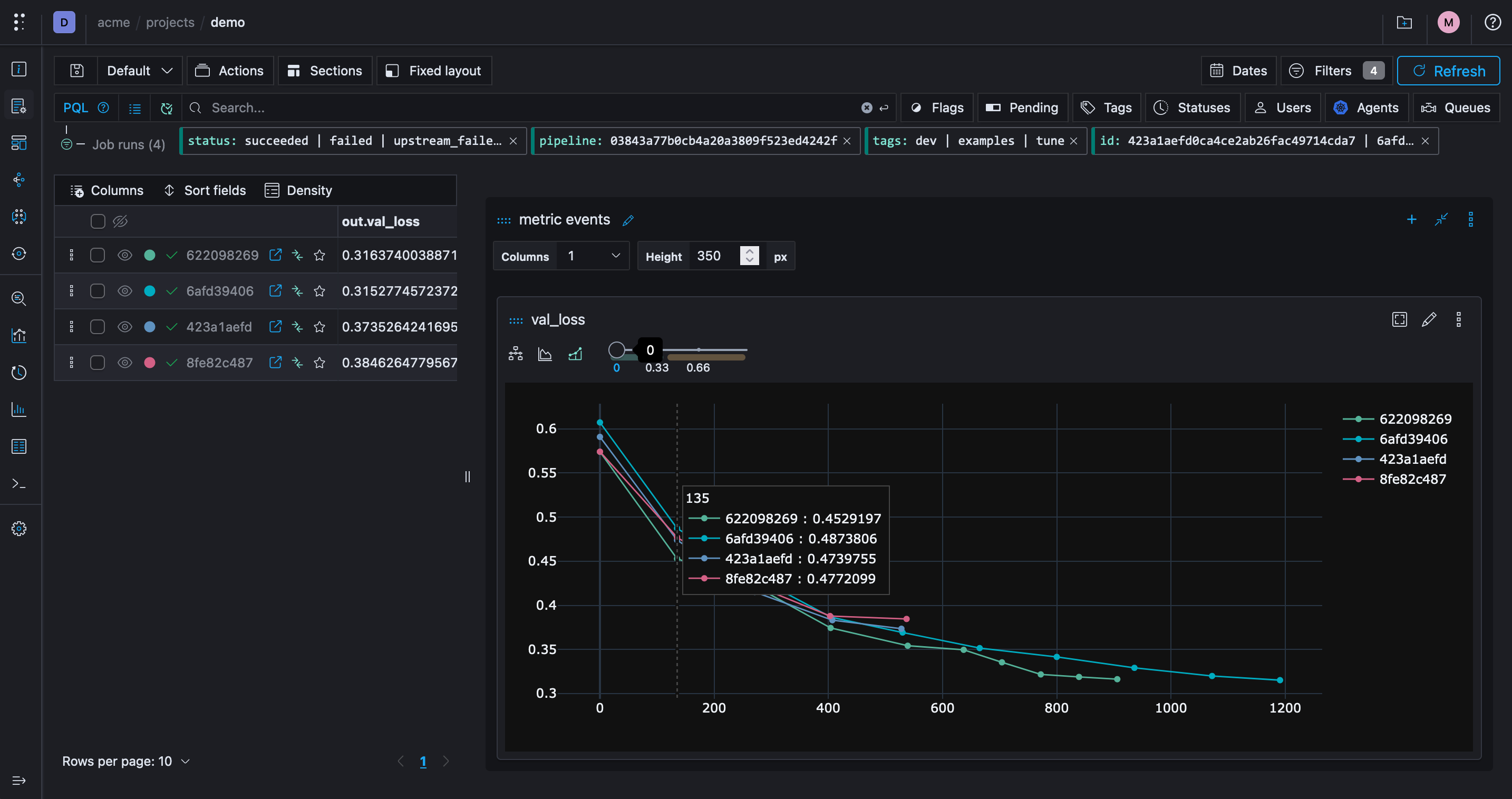
Learn what to record for each ML experiment, how to compare runs fairly, and how to log parameters, metrics, datasets, and model artifacts with Polyaxon.
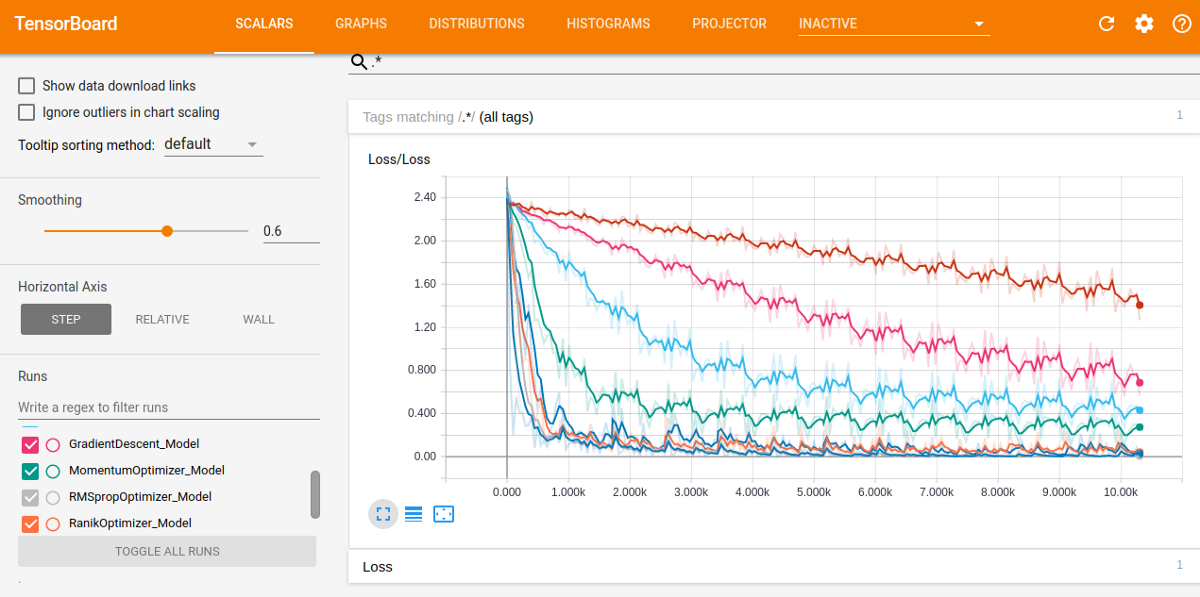
hyperparameters tuning is very important concept in order to choose the optimal hyperparameters for a given algorithm!
Control multi-cloud ML spending with normalized allocation, workload unit economics, placement policies, elastic capacity, and reproducible efficiency measurements.
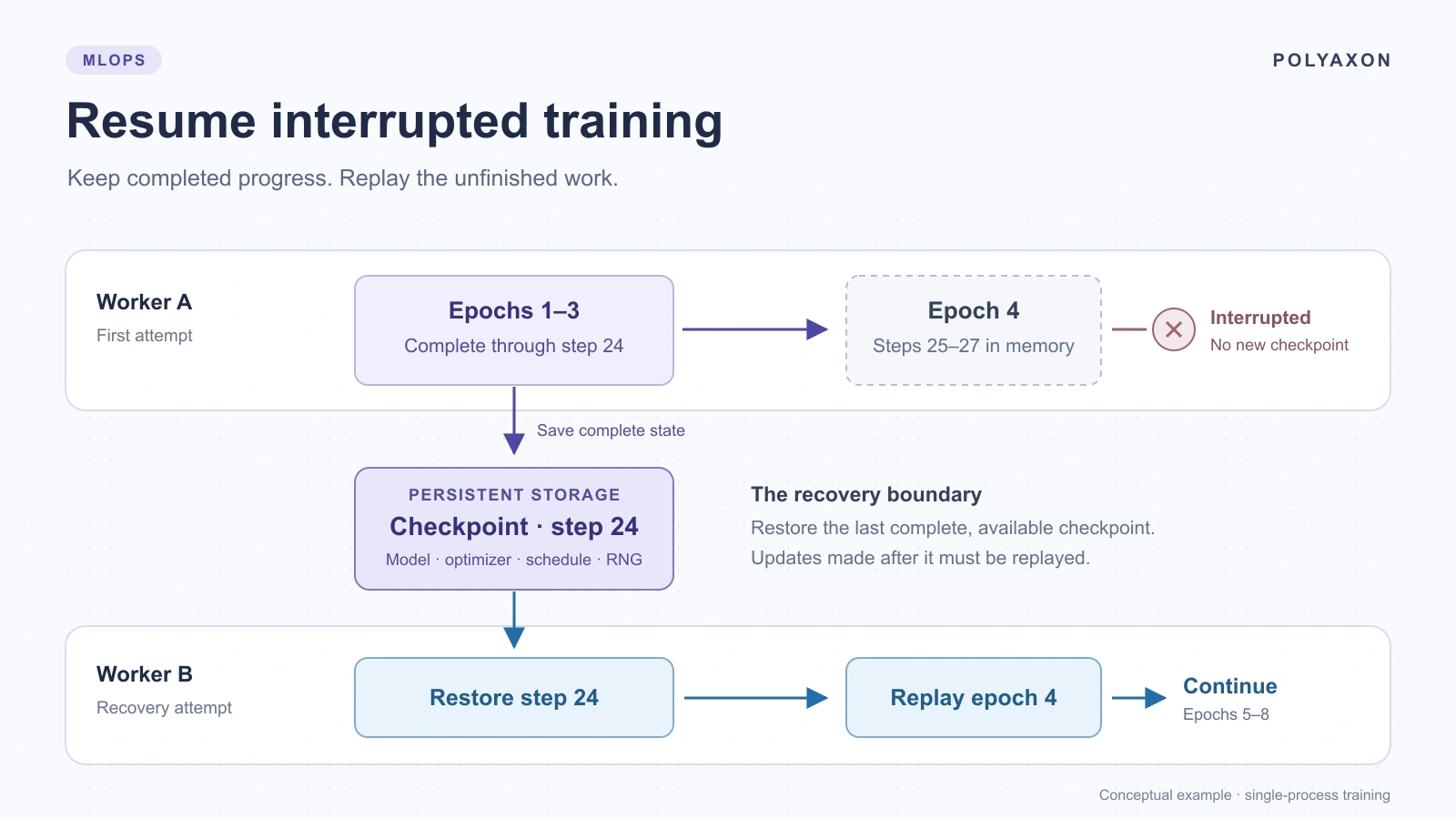
Build recoverable PyTorch training jobs with complete checkpoints, durable storage, and explicit restoration. Practice recovery locally and with Polyaxon.
The latest guides, tutorials, and product updates.
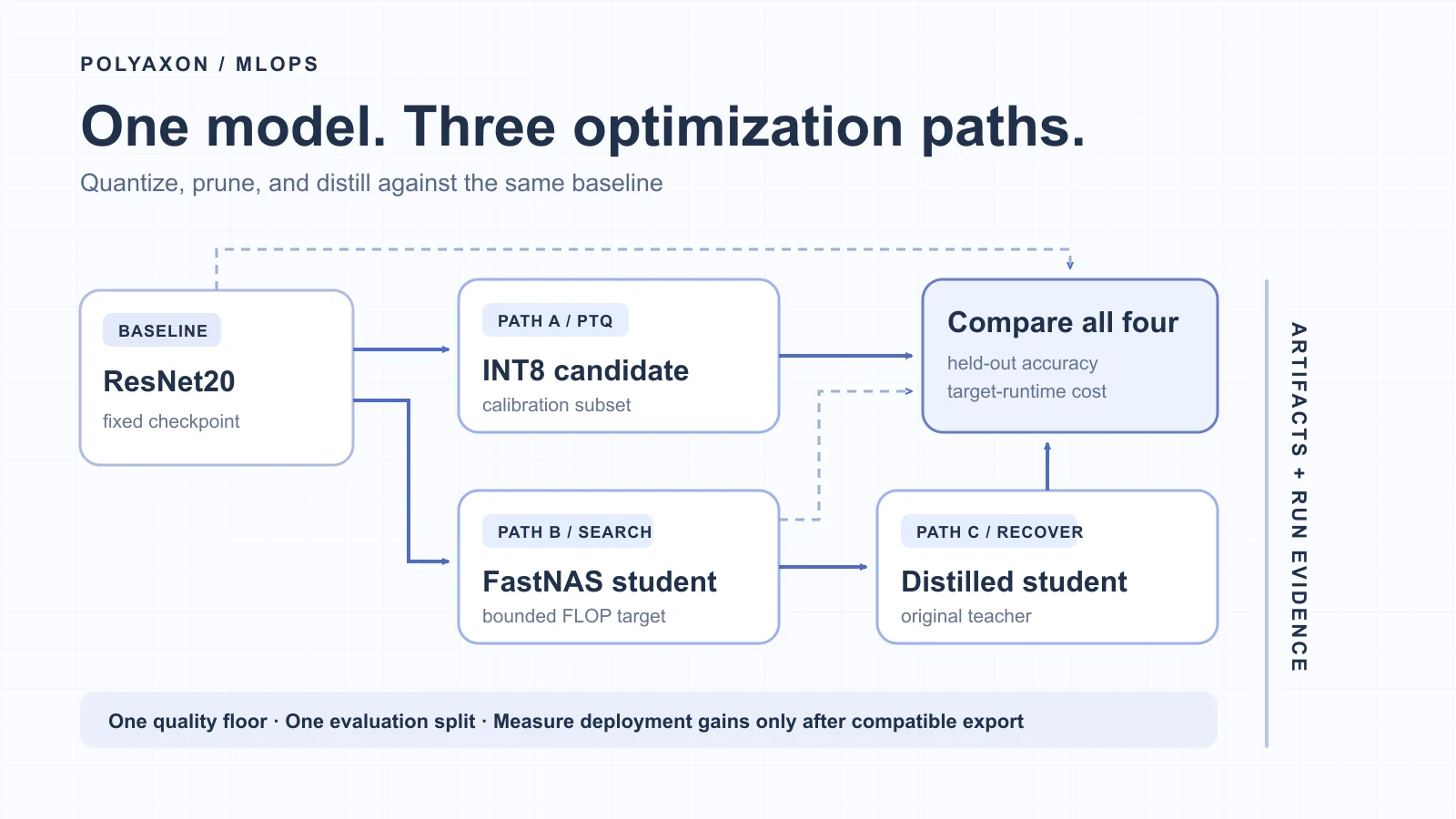
Compare INT8 quantization, FastNAS pruning, and distillation against one tracked baseline, then measure the candidate that meets your accuracy floor.
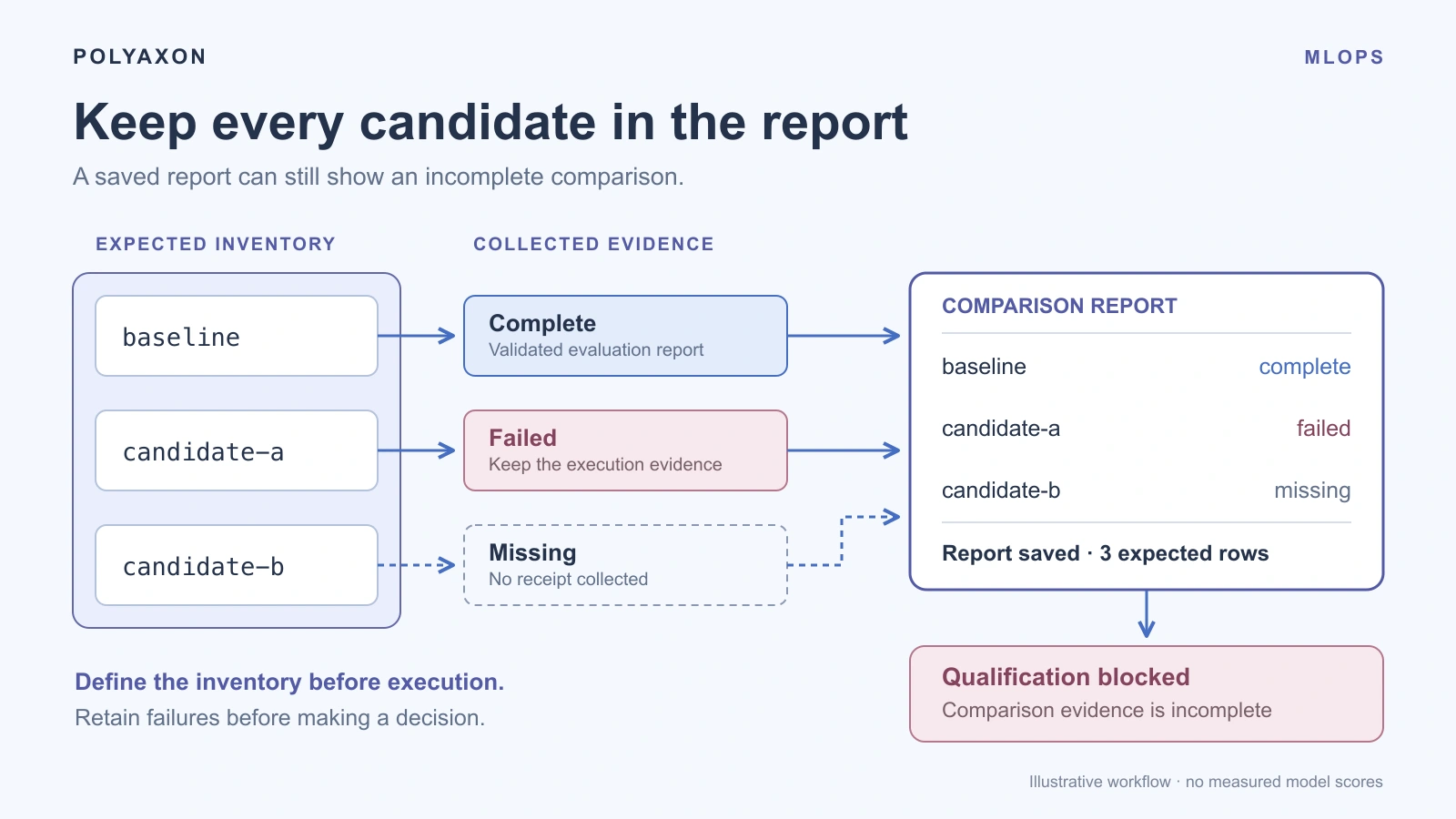
Reconcile evaluation results against an expected candidate manifest, preserve failed and missing outcomes, and separate pipeline reporting from release approval.
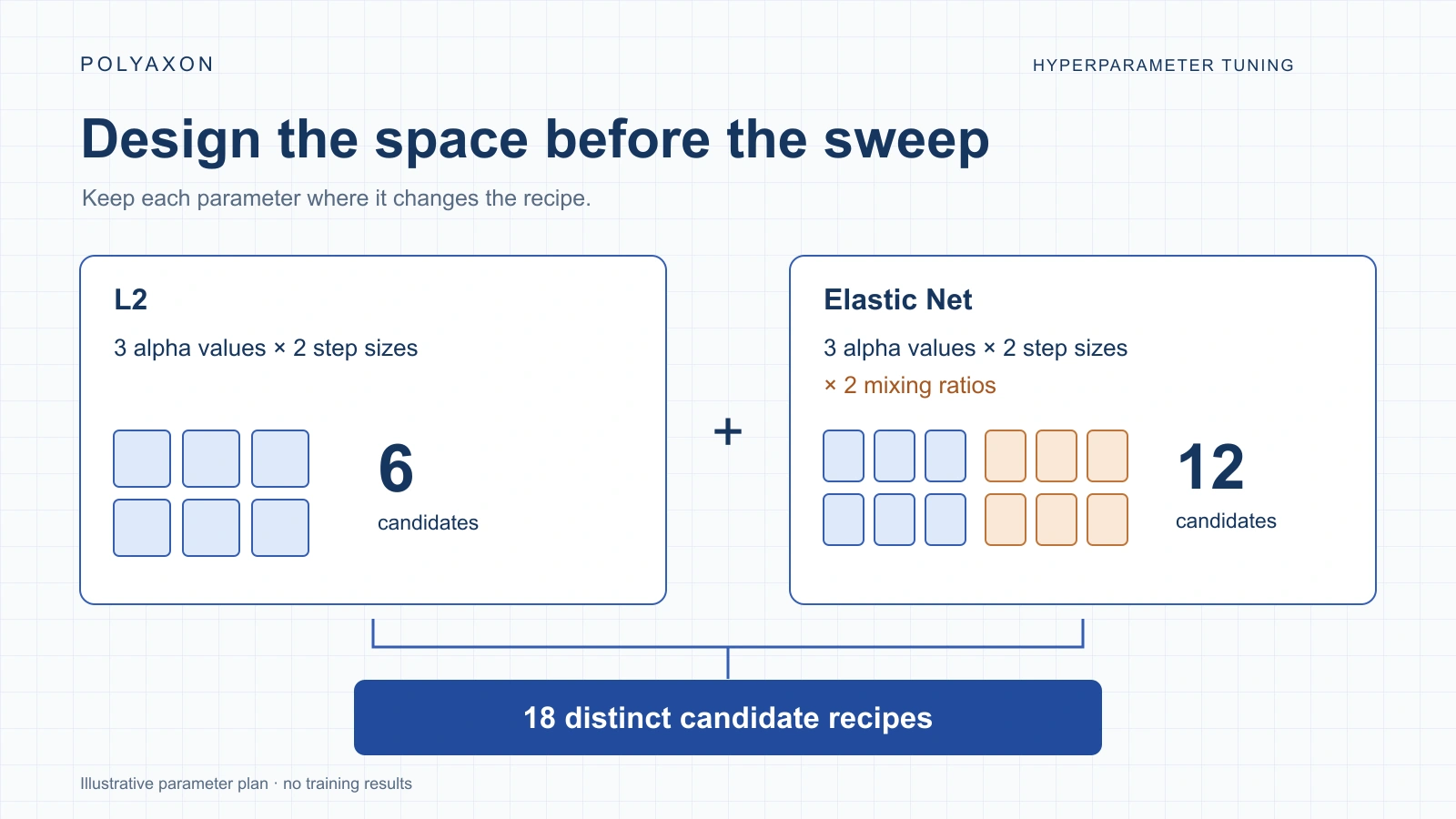
Use Polyaxon matrices to choose parameter scales, separate meaningful combinations, and control the size of a hyperparameter sweep.
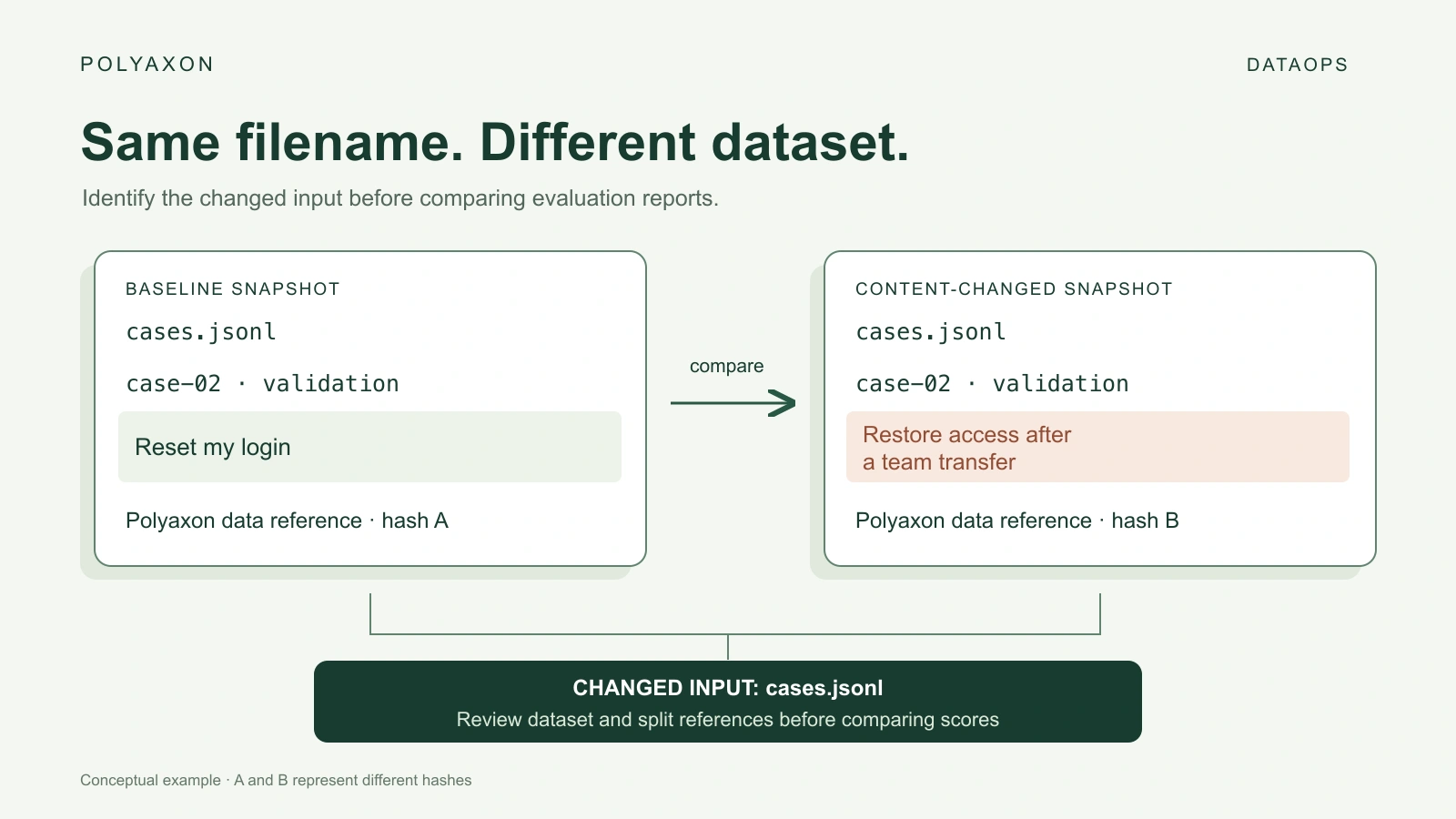
Use Polyaxon data references, artifact logging, and registered versions to retain the dataset and split behind each evaluation.
Build recoverable PyTorch training jobs with complete checkpoints, durable storage, and explicit restoration. Practice recovery locally and with Polyaxon.
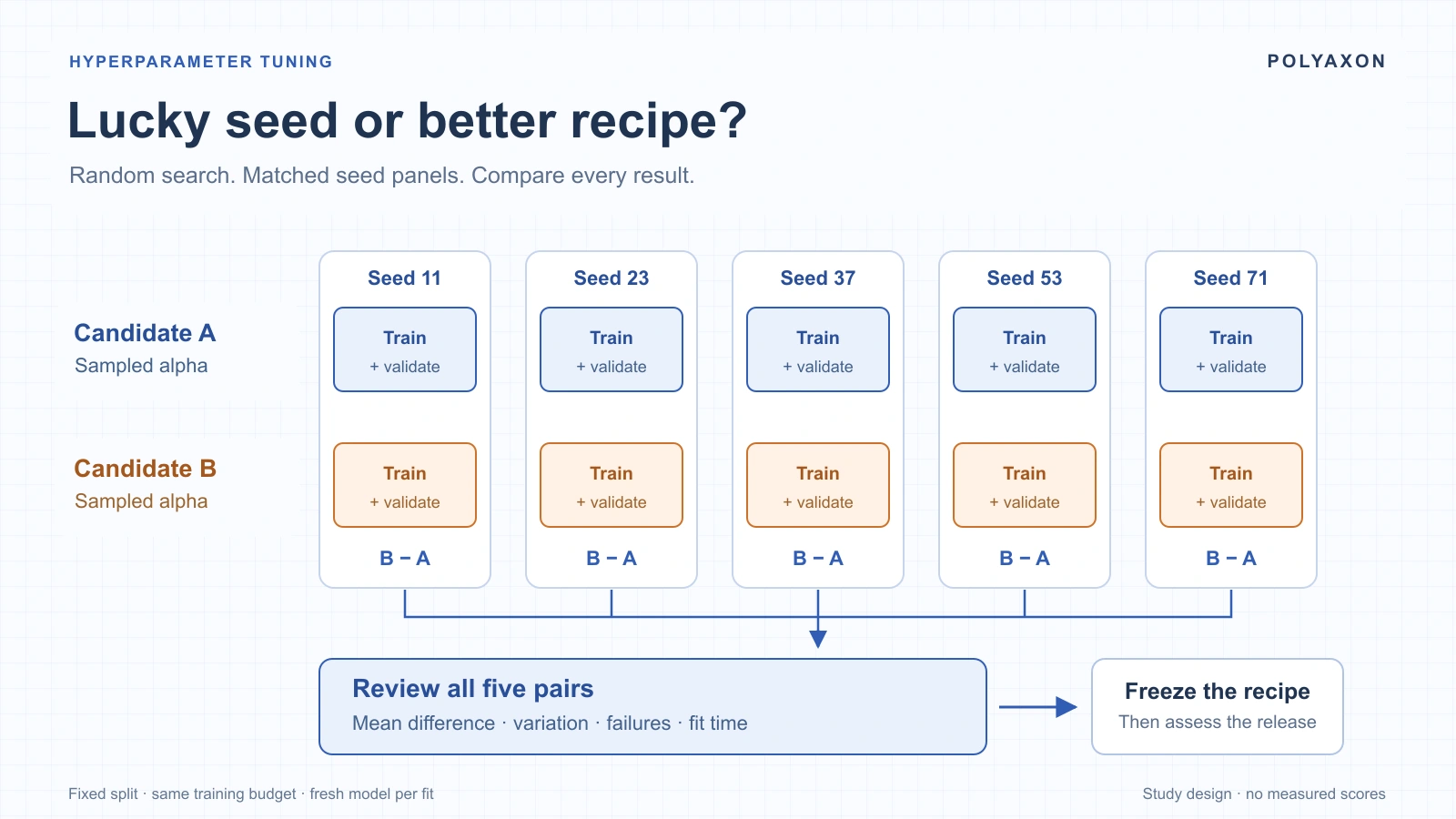
Confirm hyperparameter finalists across matched training seeds, compare variation and paired differences, and reserve compute for a defensible final choice.
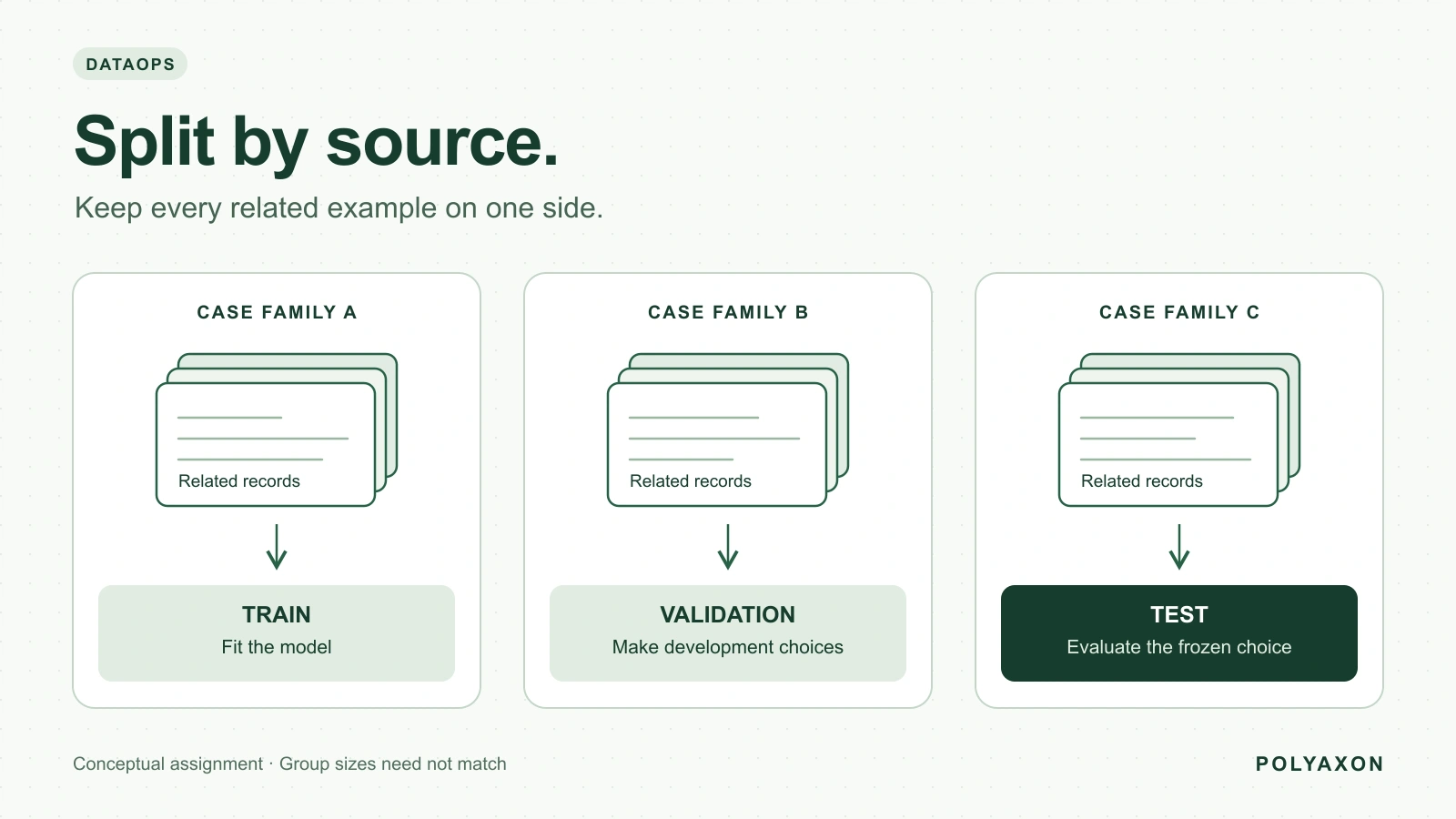
Choose evaluation boundaries, keep related examples together, audit duplicate overlap, and retain reproducible split manifests for ML and LLM experiments.
Operate AI workloads across clusters and clouds with central intent, local execution, placement policy, consistent identity, connected evidence, and failure-aware control.
Define ownership, risk tiers, platform boundaries, exceptions, and evidence so enterprise AI security operates continuously instead of as a launch checklist.
Add static model artifact scanning before registry promotion, preserve scan evidence, check coverage, and bind approval to immutable artifact digests.

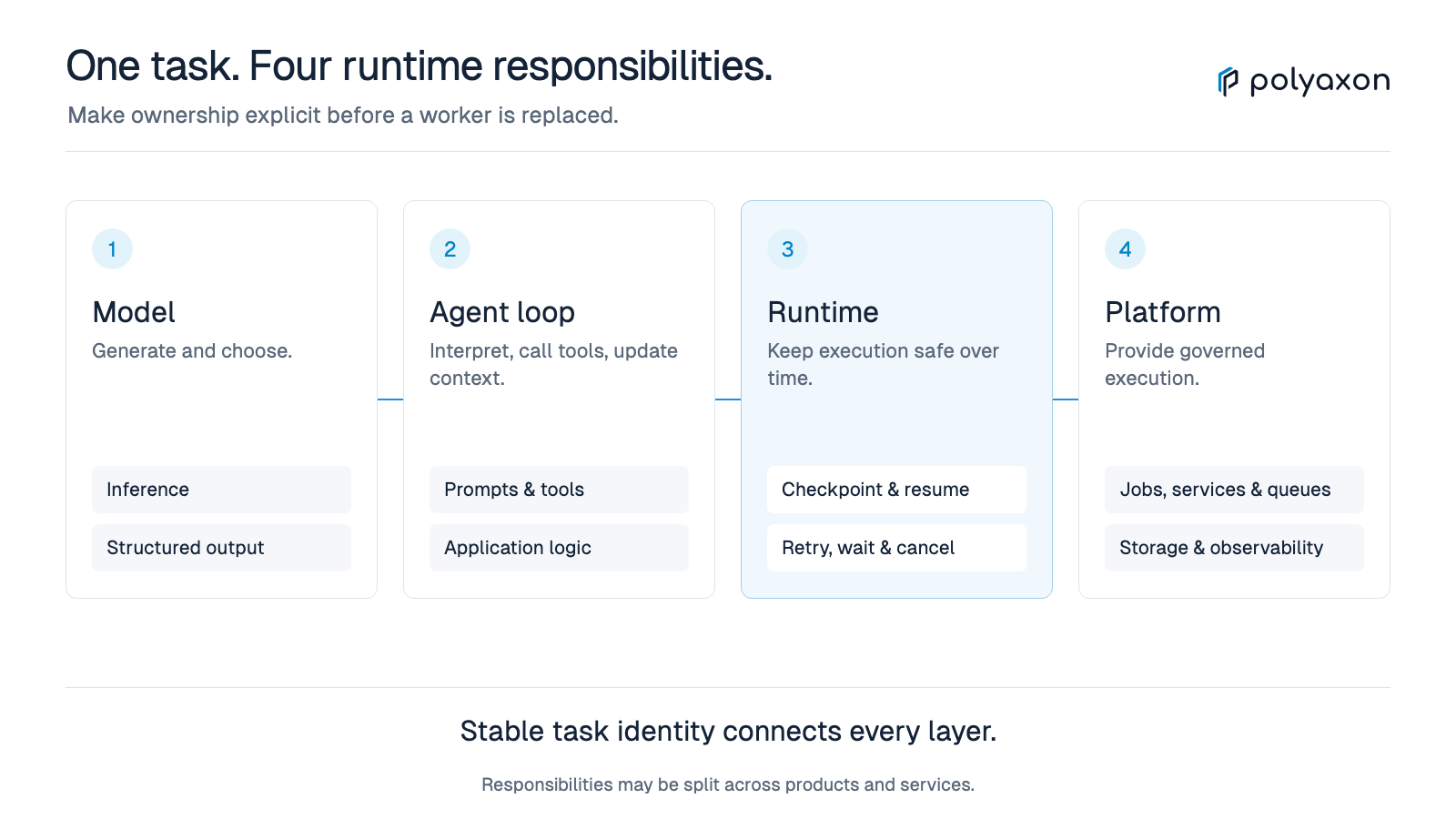
Connect AI agent execution to Polyaxon projects, components, scheduling, tracking, and artifacts through a stable application-owned execution contract.
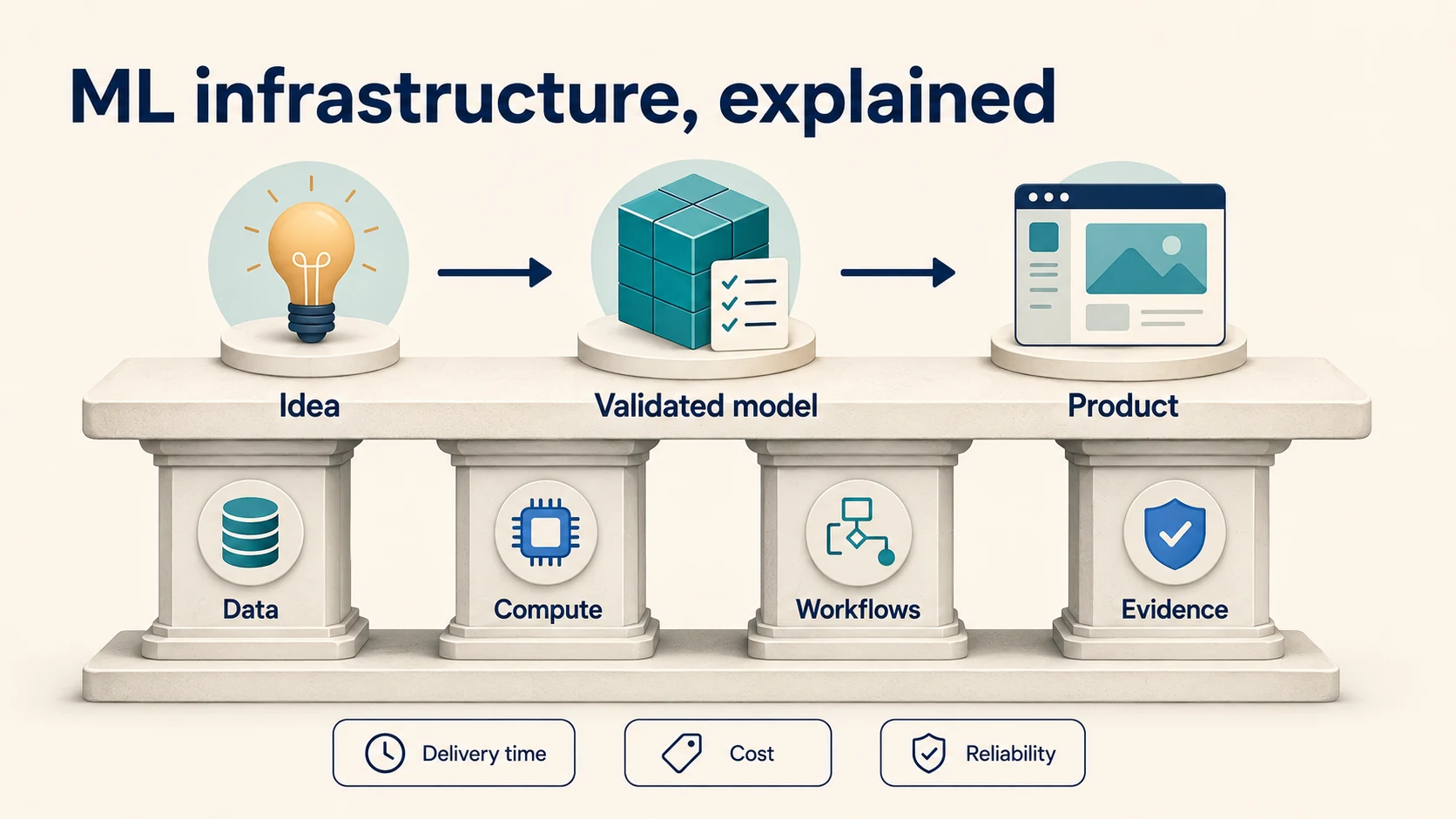
Understand what ML infrastructure pays for, how it affects delivery and reliability, and how to evaluate an investment using measurable workflow outcomes.
Apply security controls across data, training, evaluation, artifacts, deployment, and operation without slowing every AI workload equally.
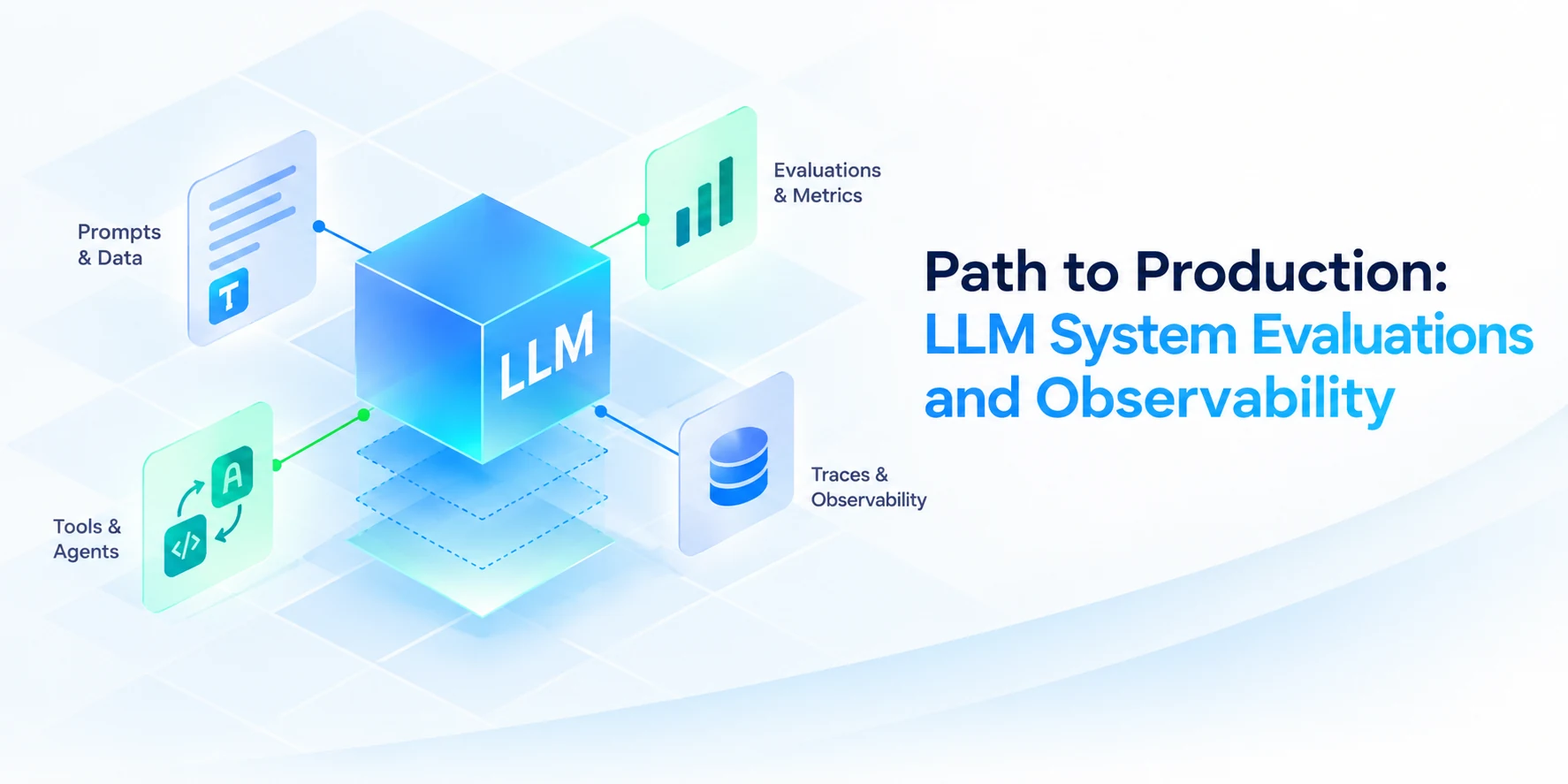
Use Polyaxon run tracking, comparison dashboards, resource monitoring, and repeatable evaluation to decide what to improve after an LLM prototype.
Use consequence-based AI risk tiers to apply proportionate data, evaluation, security, approval, deployment, monitoring, and incident controls.
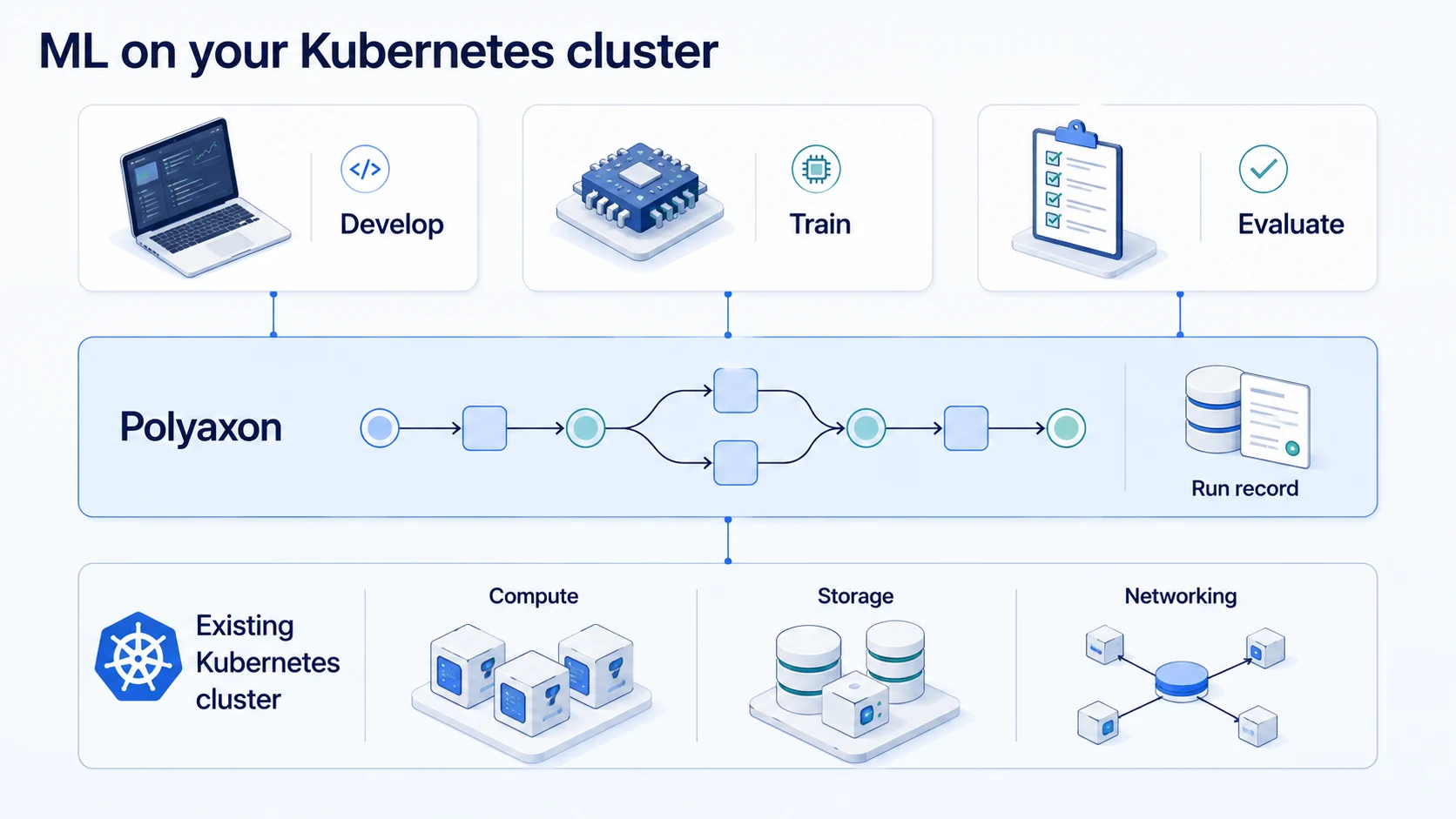
Keep AI workloads portable with explicit execution contracts, open packaging and telemetry, hardware abstraction, data boundaries, and tested migration paths.
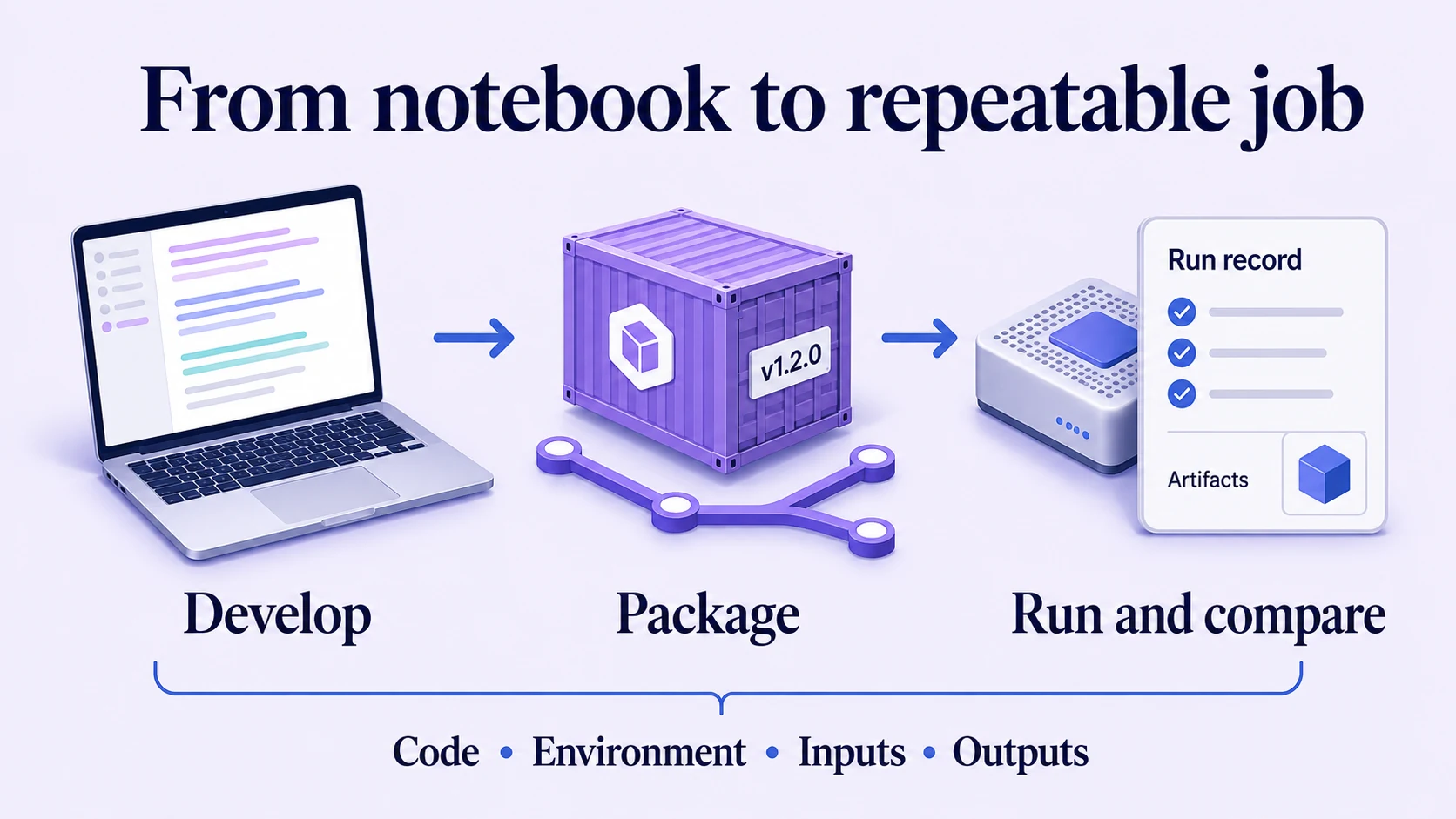
Move notebook experiments into repeatable ML jobs with explicit inputs, versioned code, reproducible containers, and Polyaxon tracking.

Package an agent evaluator as a Polyaxon component, track candidate revisions and task metrics, and compare changes using existing MLOps workflows.
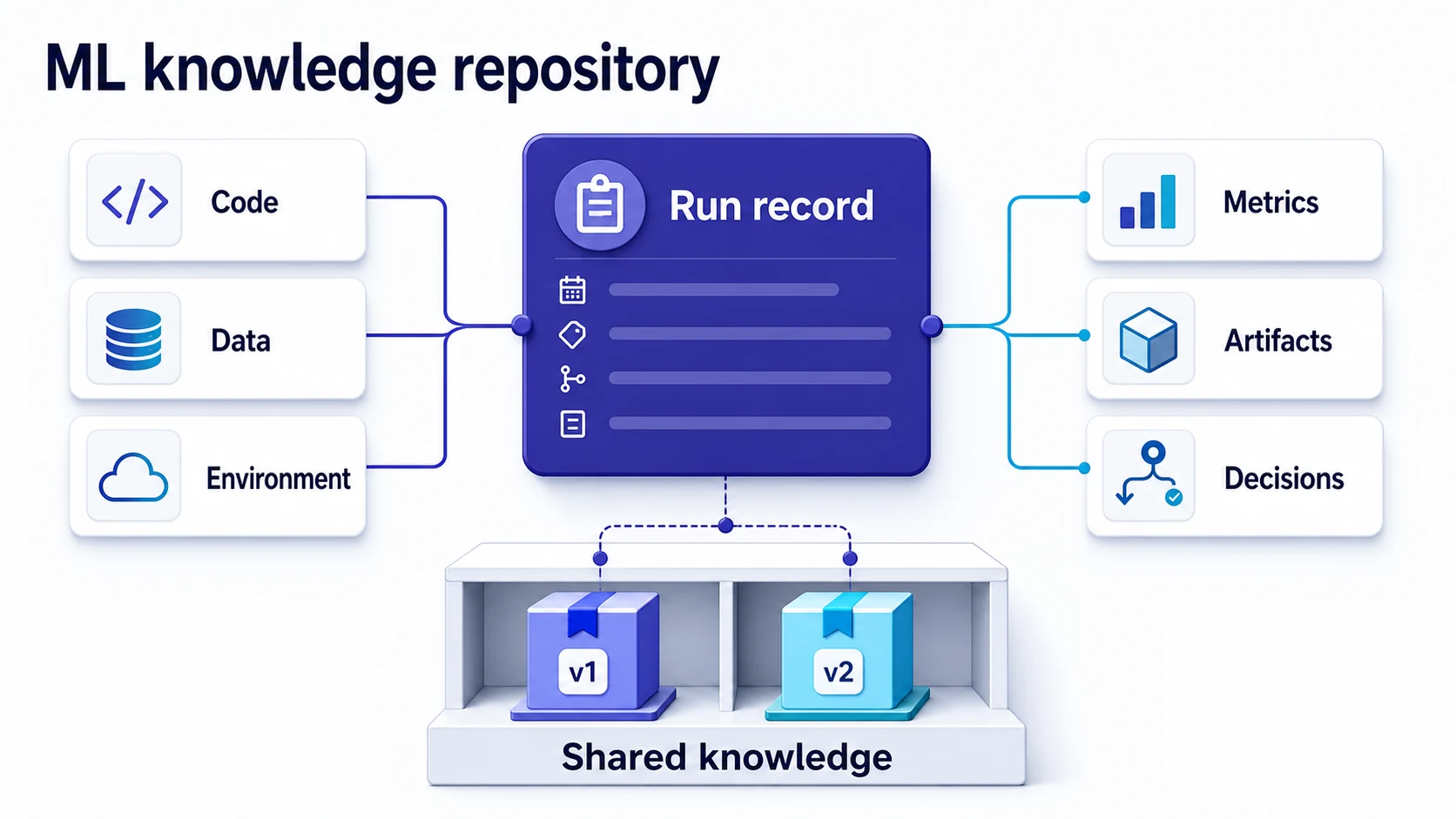
Connect experiment records, dataset versions, model artifacts, and review decisions into a reusable ML knowledge repository with Polyaxon.
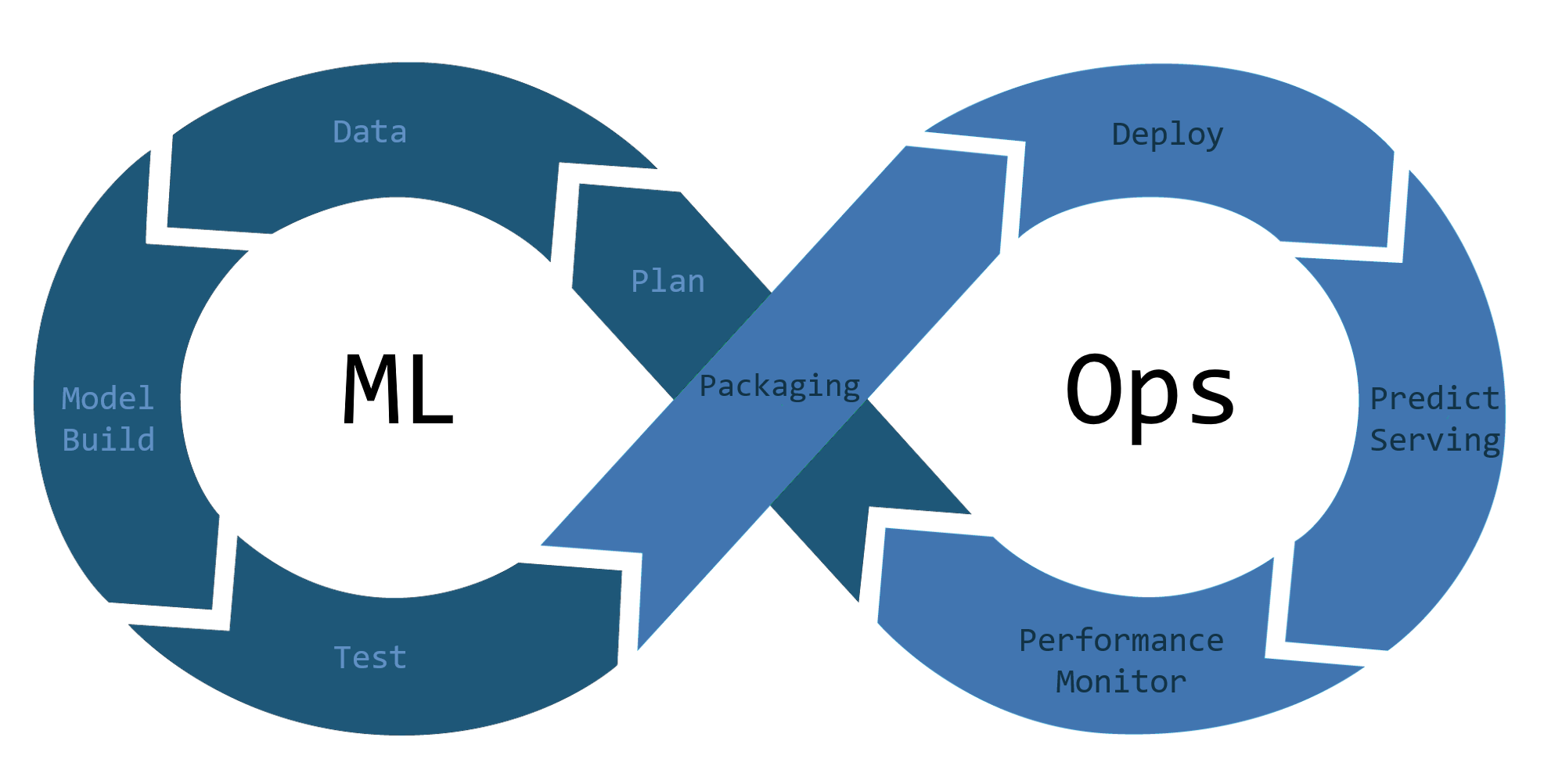
Create self-service AI delivery paths with explicit workload contracts, reusable components, governed connections, evaluation gates, evidence, and safe exceptions.
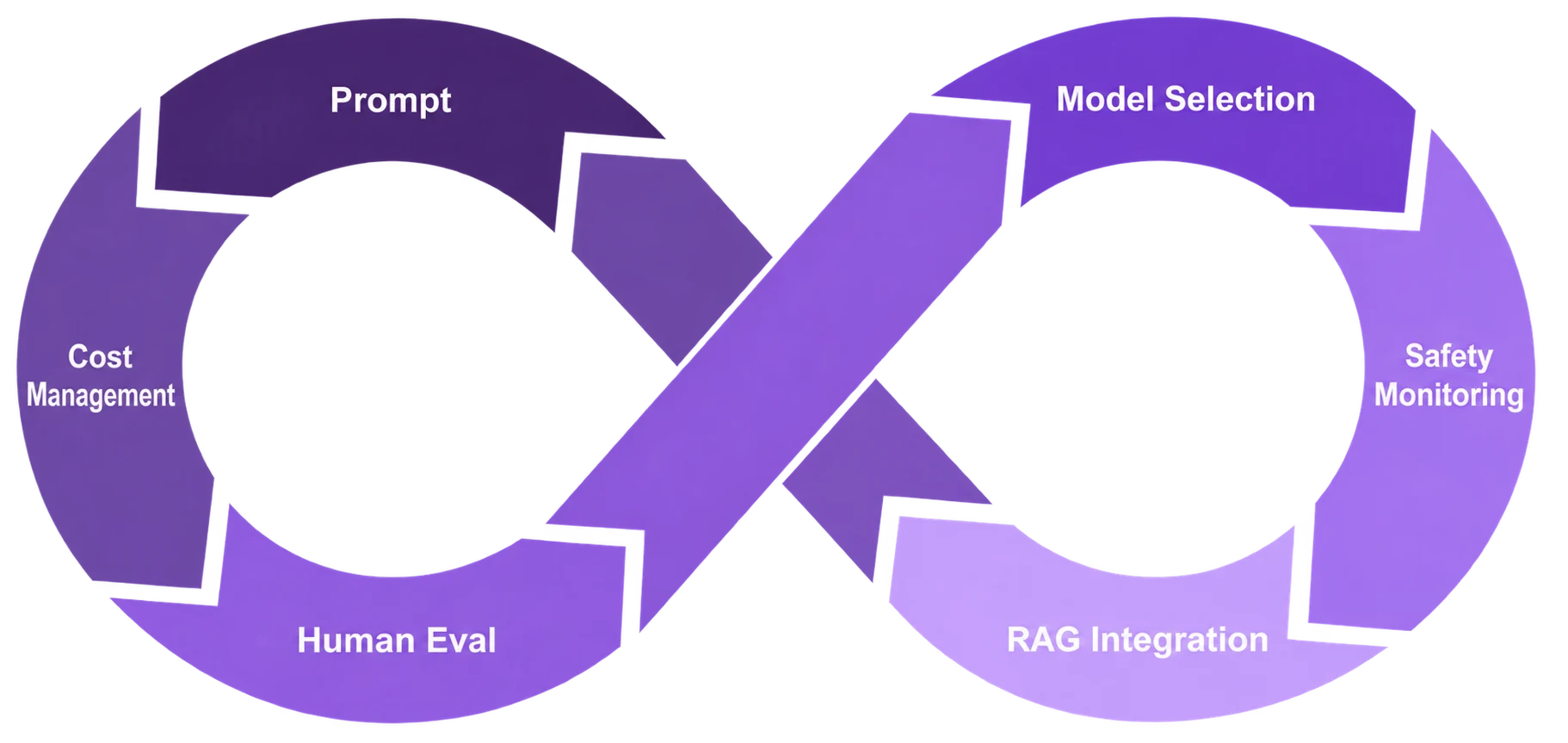
LLMOps applies repeatable development, evaluation, deployment, and observability practices to production LLM applications and AI agents.
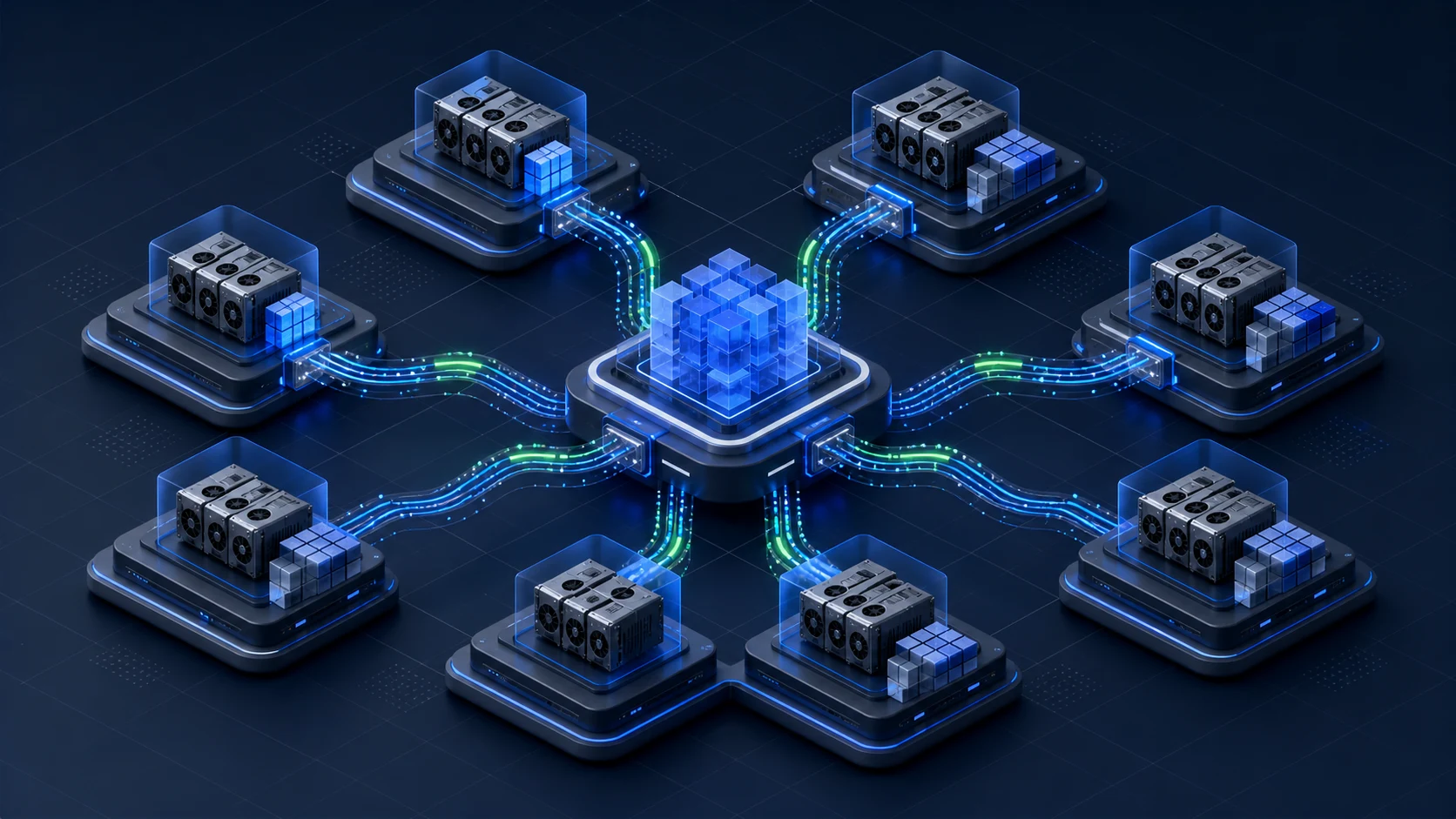
Distributed learning splits model training across processors or machines. Learn the main strategies, tradeoffs, and how to run it on Kubernetes.
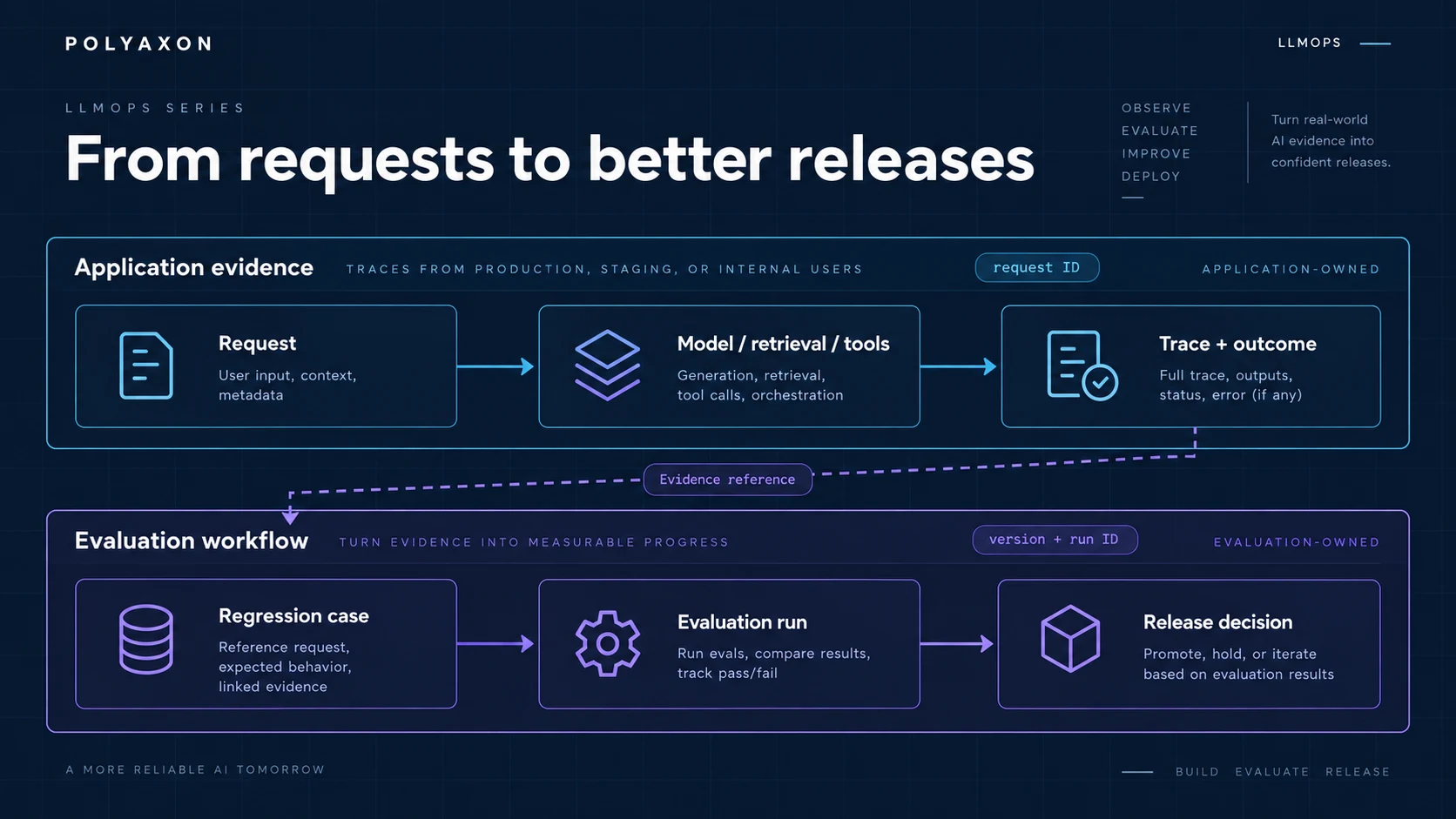
AI observability connects traces, metrics, evaluations, feedback, and runtime context so teams can understand and improve models, applications, and agents.
Choose service boundaries for Kubernetes-based ML platforms without turning every component, model, or workflow step into a separate microservice.