Secure enterprise AI from data to deployment
Apply security controls across data, training, evaluation, artifacts, deployment, and operation without slowing every AI workload equally.
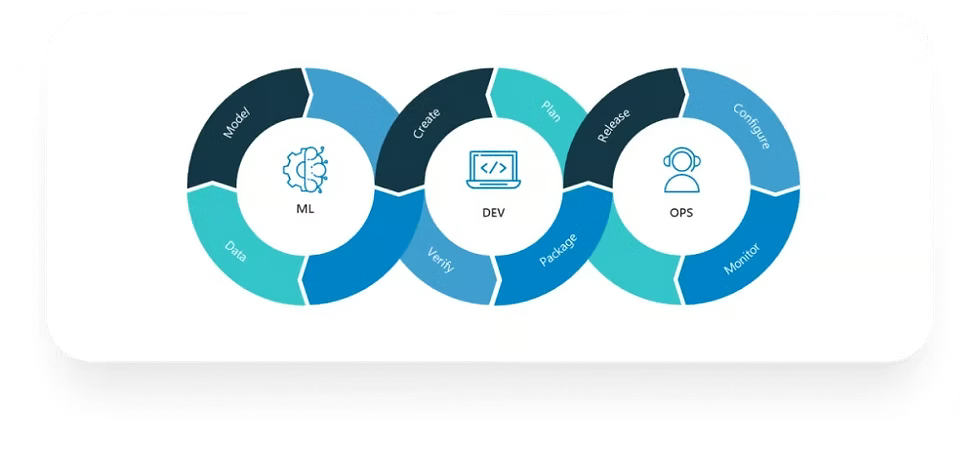
Enterprise AI security is a lifecycle problem. Protecting the model endpoint is necessary, but it does not cover the dataset copied into a notebook, the dependency installed during training, the artifact promoted without an evaluation, or the agent tool that can change production data.
A workable program attaches controls to transitions in the delivery path. Teams can then see which evidence is required before data is used, code runs, an artifact is promoted, or a deployment receives additional authority.
Inventory systems and classify consequences
Start with a registry of AI use cases rather than a list of model providers. For each application, record its owner, intended users, data classes, model and dependency sources, deployment environment, external actions, and rollback path.
Assign a risk tier based on consequences. A document summarizer using public material does not need the same controls as a system that reads customer records or changes infrastructure. The tier should determine review, isolation, evaluation, approval, and retention requirements. Do not let teams self-label an application as low risk while omitting the tools or downstream data it can reach.
NIST's Generative AI Profile extends the AI Risk Management Framework with risks and actions across the AI lifecycle. Use it as a catalog for tailoring controls, not as a claim that one checklist makes a system secure.
Put controls at lifecycle transitions
Map the delivery path and define the evidence required at each boundary:
| Transition | Required evidence | Example decision |
|---|---|---|
| Data to training | Source, license, classification, validation results | Is this dataset permitted for this use? |
| Code to execution | Revision, dependency lock, identity, resource policy | Can this workload run in this environment? |
| Run to artifact | Inputs, parameters, metrics, checksums | Is the result reproducible and attributable? |
| Artifact to registry | Evaluation report, approver, lineage | Is this candidate eligible for promotion? |
| Registry to deployment | Signed artifact, runtime policy, rollback | Can this version serve this traffic? |
| Deployment to action | User identity, tool scope, approval | May this system change external state? |
Make policies machine-readable where possible. A pipeline can verify that an evaluation artifact exists and meets a declared threshold. It cannot decide whether an undeclared use of personal data is acceptable, so keep accountable human owners for policy and exceptions.
Protect data before it reaches the model
Use access controls at the source rather than relying on prompts to hide restricted records. Separate projects and environments by sensitivity, issue short-lived credentials to workloads, and mount only the secrets a step requires. Redact or tokenize sensitive fields before they enter training or retrieval when the use case allows it.
Keep validation outputs with the dataset revision: schema, quality checks, duplicate detection, label provenance, and policy decisions. When a dataset changes, rerun the controls that depend on it. A model approved against one snapshot should not silently inherit approval for a different population.
Kubernetes notes that Secret values are base64 encoded rather than encrypted by that encoding alone and recommends encryption at rest and least-privilege access in its Secrets good practices. Avoid exposing credentials through notebooks, environment dumps, or captured logs after the workload reads them.
Verify code, dependencies, and artifacts
Pin dependencies, scan code and container images, restrict untrusted package installation, and run builds with isolated identities. Record the source revision and builder that produced each artifact. The SLSA specification describes provenance and verification practices for improving software supply-chain integrity; the same evidence helps distinguish a reviewed model package from an unexplained file.
Artifact integrity is not model quality. Verify checksums and provenance, then evaluate the model or agent for the use case it will serve. Preserve dataset, evaluator, prompt, model, guardrail, and environment versions so a passing report can be reproduced.
Enforce runtime boundaries
Run workloads with non-root containers, limited capabilities, appropriate resource bounds, and isolated service accounts. Restrict ingress and egress to required services. Kubernetes NetworkPolicies can control pod traffic when the selected network implementation enforces them; creating a policy object without an enforcing implementation has no effect.
For agents, put tool authorization outside the model. Check the current user, tenant, action, target, and approval at the tool boundary. Limit steps, time, tokens, and concurrent actions. Require review for irreversible changes and preserve idempotency keys for retries.
Promote evidence, not confidence
Define release gates per risk tier: security scans, evaluation thresholds, reviewed failure cases, change approvals, canary behavior, and a tested rollback. Reject missing or stale evidence explicitly instead of treating it as a zero-risk result.
After deployment, monitor input drift, task outcomes, permission denials, guardrail errors, anomalous tool use, cost, and latency. Route new failures back into a versioned evaluation set. Security is maintained by this feedback loop, not by the approval meeting that happened before launch.
Implement the controls with Polyaxon
Use Polyaxon pipelines to make validation, training, scanning, evaluation, and promotion separate steps with explicit dependencies. Record inputs, parameters, metrics, and lineage through tracking, and store evaluation reports and attestations as artifacts.
Use project and platform permissions to separate teams and environments, then keep cloud, cluster, data-store, and agent-tool authorization enforced by those systems. The result is a delivery path where every promoted asset has an owner, provenance, measured behavior, and a defined runtime boundary.