
Use eBPF to improve Kubernetes monitoring
Understand where eBPF adds kernel-level visibility in Kubernetes, which questions it can answer, and how to operate it safely for ML workloads.
KubernetesMonitoringObservability
Practical guides to building, running, and improving ML and AI in production.
Page 15 of 21
Understand where eBPF adds kernel-level visibility in Kubernetes, which questions it can answer, and how to operate it safely for ML workloads.
How multi-architecture Docker images help ML teams run the same workload across developer laptops, CI, and mixed cloud compute.
Production Kubernetes needs monitoring, RBAC, resource controls, versioned manifests, and operational discipline. This guide covers the checks that matter.
Learn how Kubernetes operators extend the API to manage application lifecycle, stateful systems, upgrades, backups, and automation.
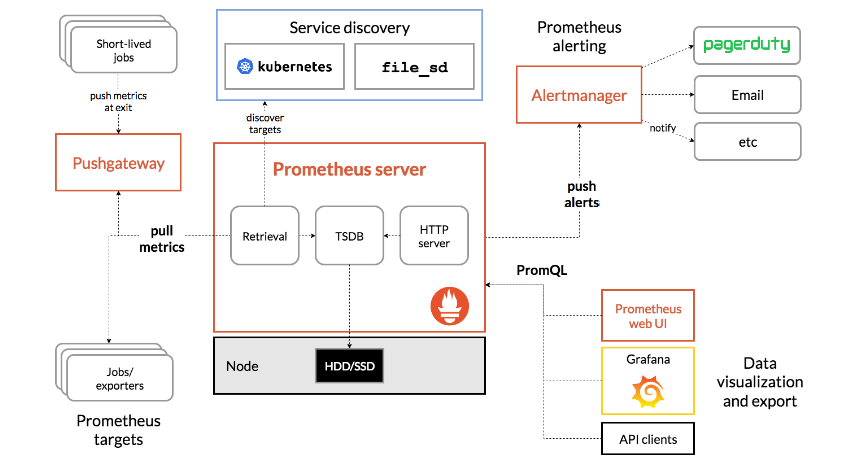
A practical guide to Kubernetes monitoring layers, useful metrics, workload visibility, and the limits of raw cluster telemetry.
Connect NGINX metrics to Prometheus with the NGINX Prometheus exporter and configure scraping for basic service monitoring.

Use kubectl delete safely for Kubernetes resources, files, labels, namespaces, force deletion, and cleanup workflows.
Learn how Prometheus exporters expose third-party metrics, how to build a simple exporter, and what practices keep metrics useful.
Understand Prometheus metric types, collection architecture, storage behavior, custom metrics, and Kubernetes monitoring use cases.
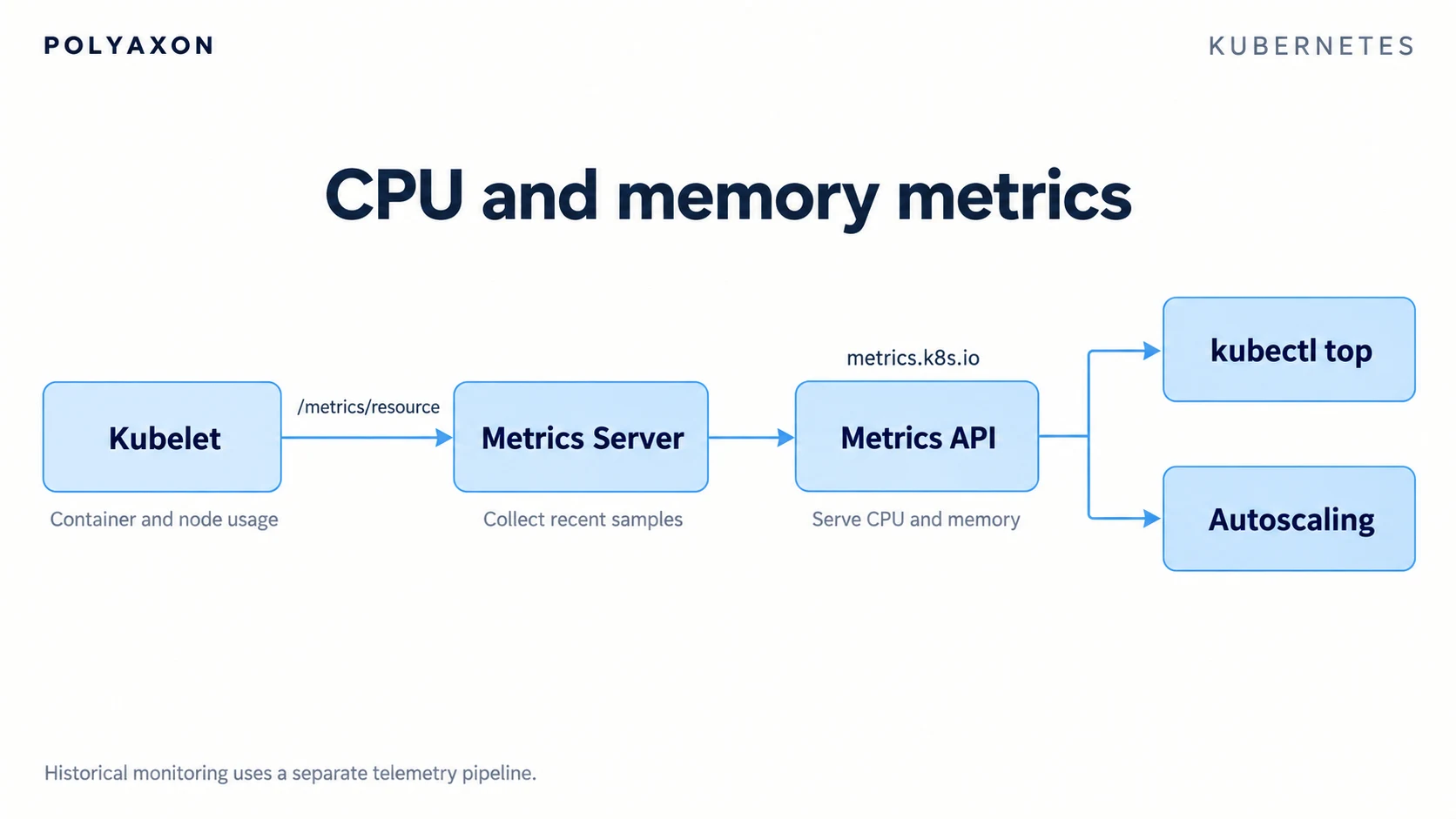
Find Kubernetes CPU, memory, object-state, and control plane metrics, and read them correctly with kubectl and your monitoring tools.
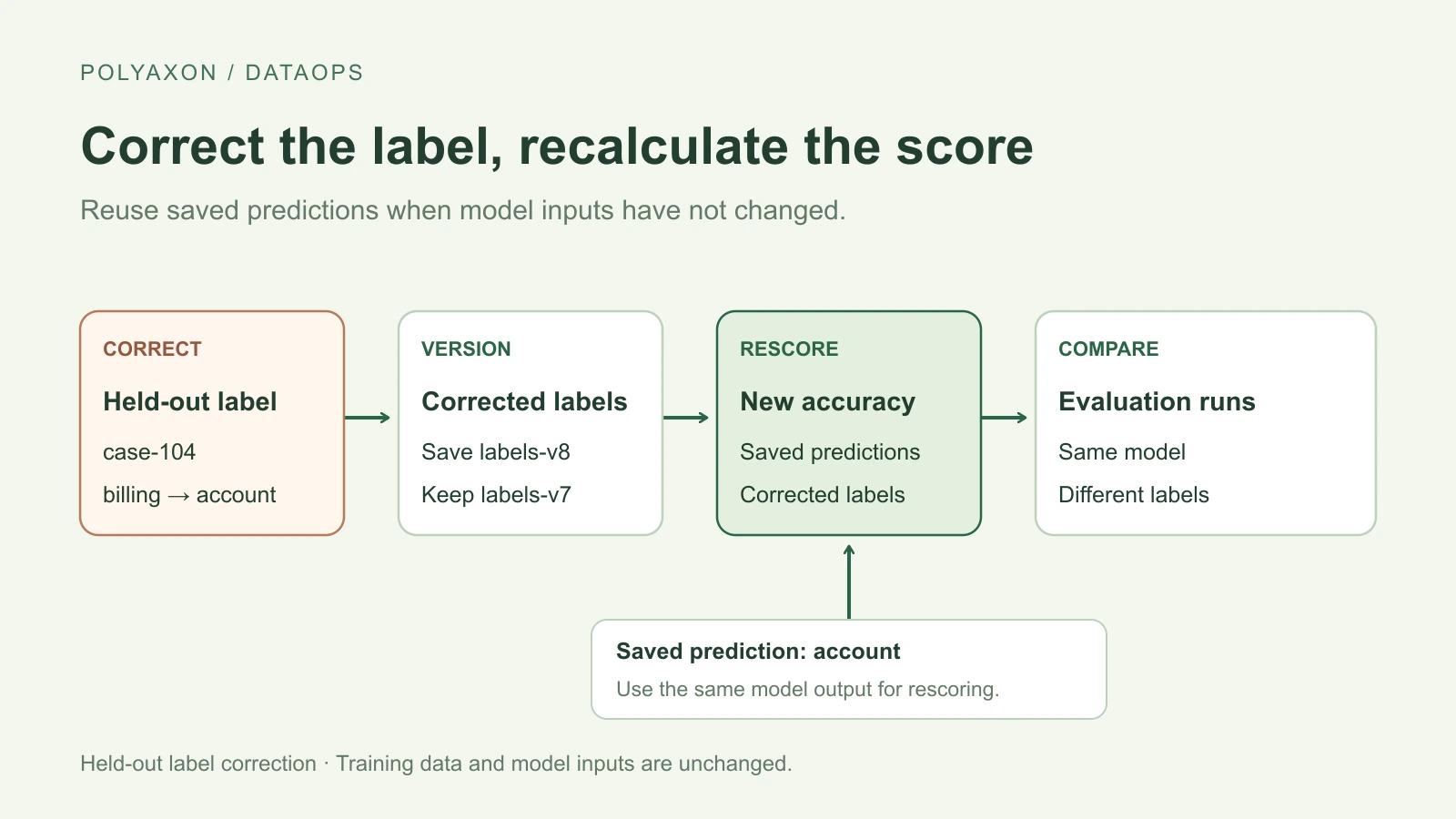
Keep corrected labels as a new dataset version, reuse predictions when model inputs are unchanged, and compare evaluation runs in Polyaxon.
Use Pod certificate projections and trust bundles for workload TLS, with signer prerequisites and rotation handling for long-running ML services.
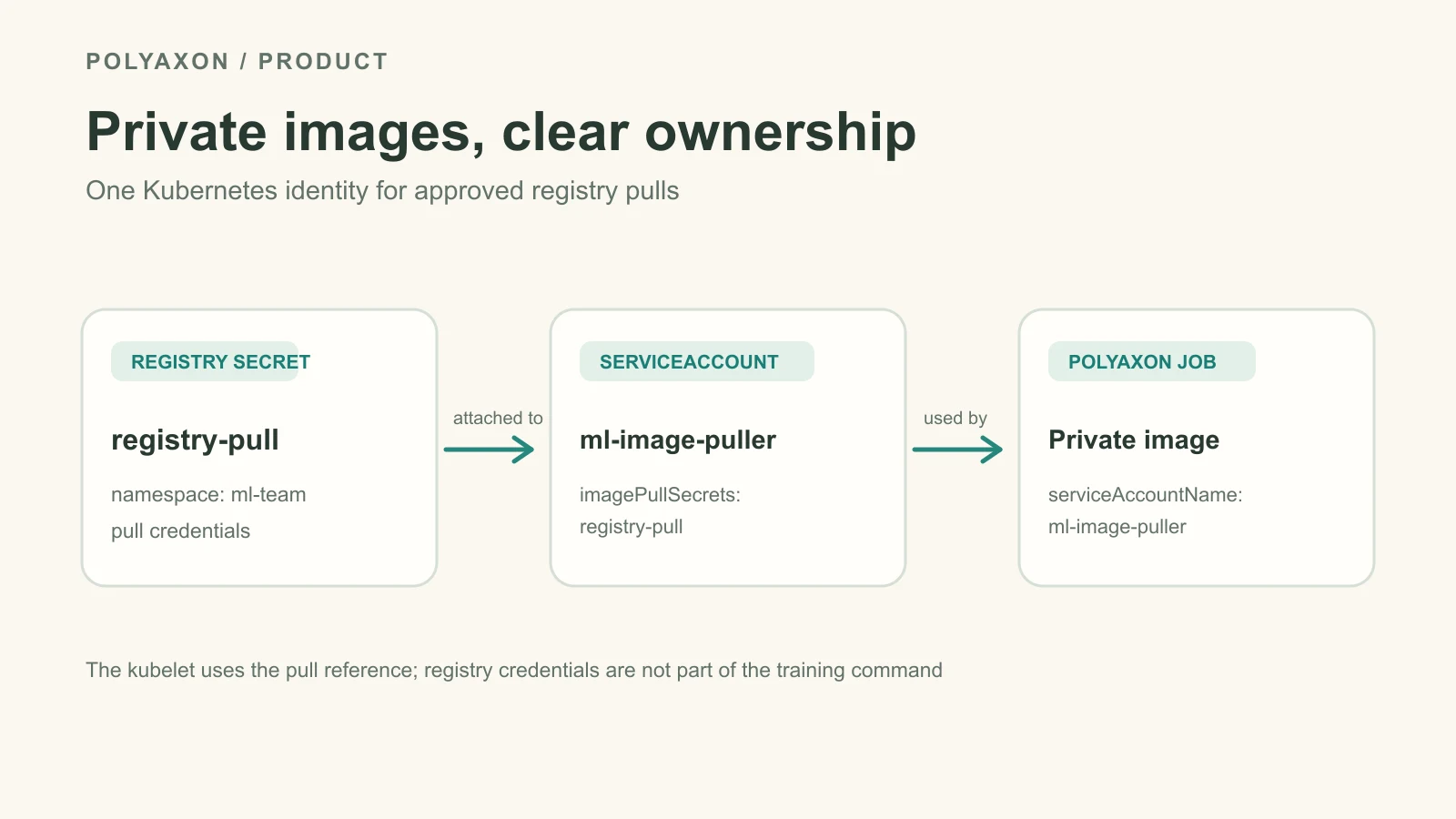
Attach a private-registry pull secret to a Kubernetes ServiceAccount, select it for a Polyaxon operation, and verify the new Pod can use the intended image.
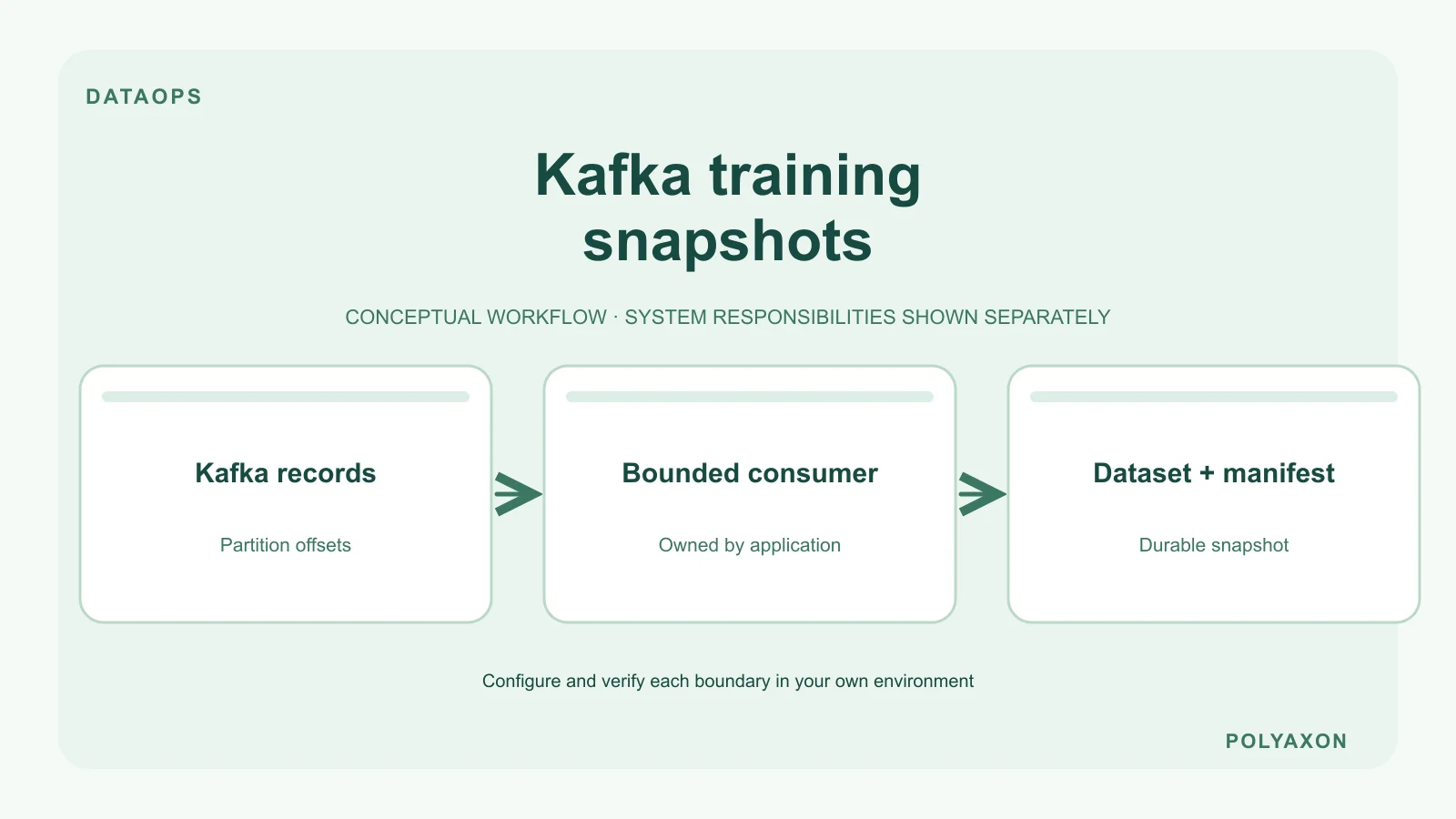
Define a bounded Kafka record window, preserve its output and offset manifest, and run the snapshot job on Polyaxon.
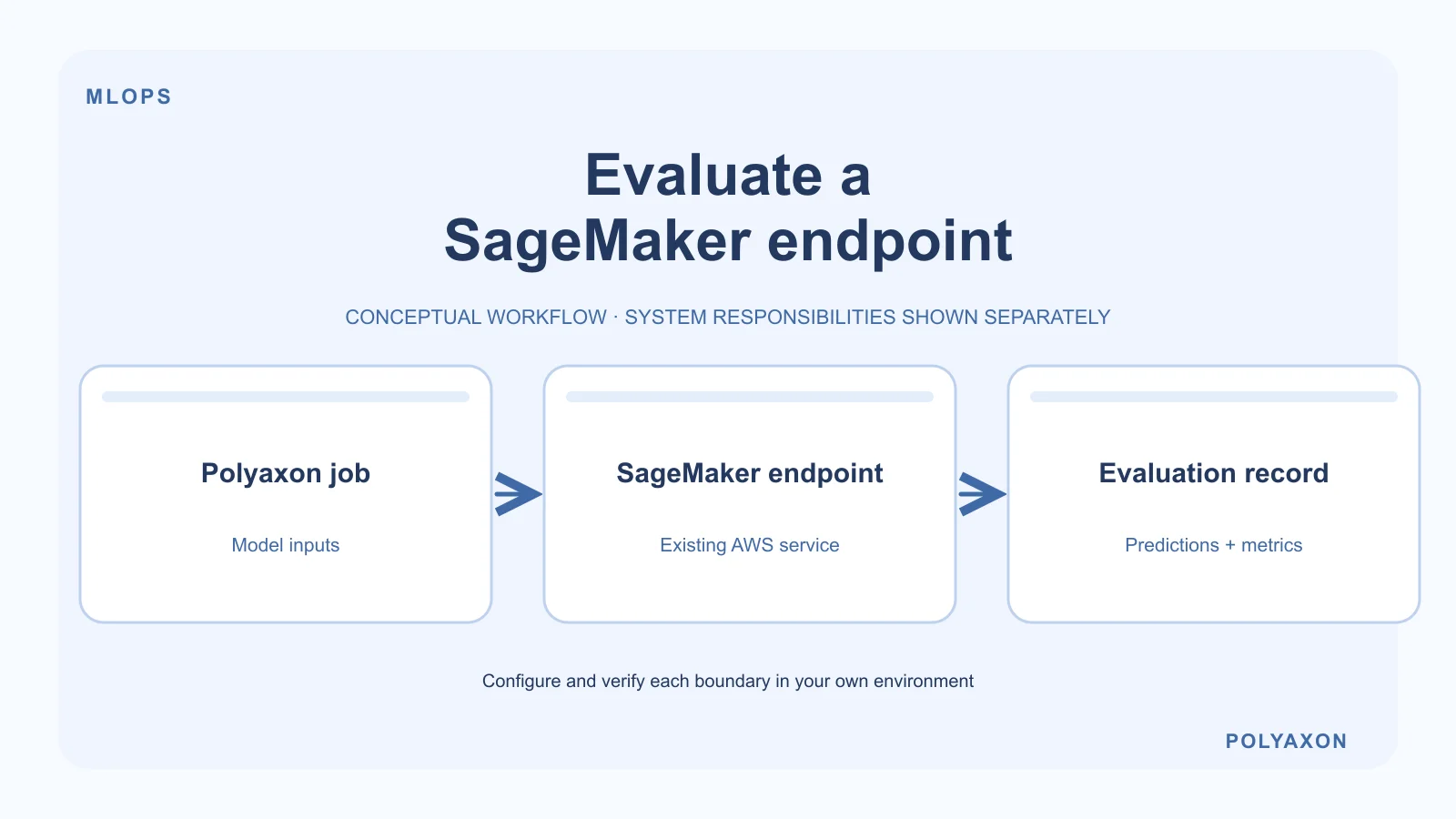
Call an existing SageMaker endpoint from a Polyaxon job and retain model-specific predictions and evaluation results.
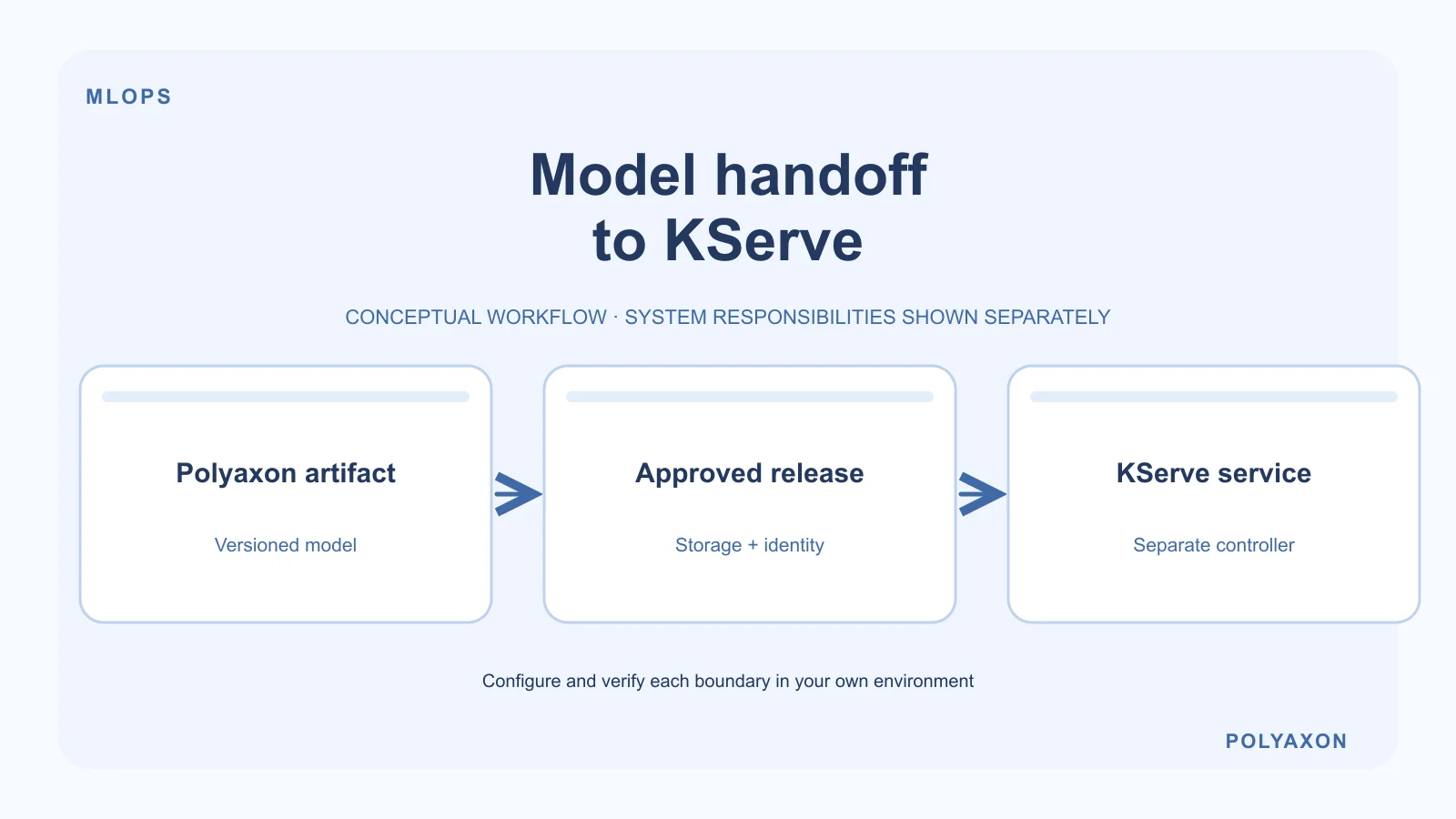
Move an approved model artifact from a Polyaxon run to a separately managed KServe InferenceService.
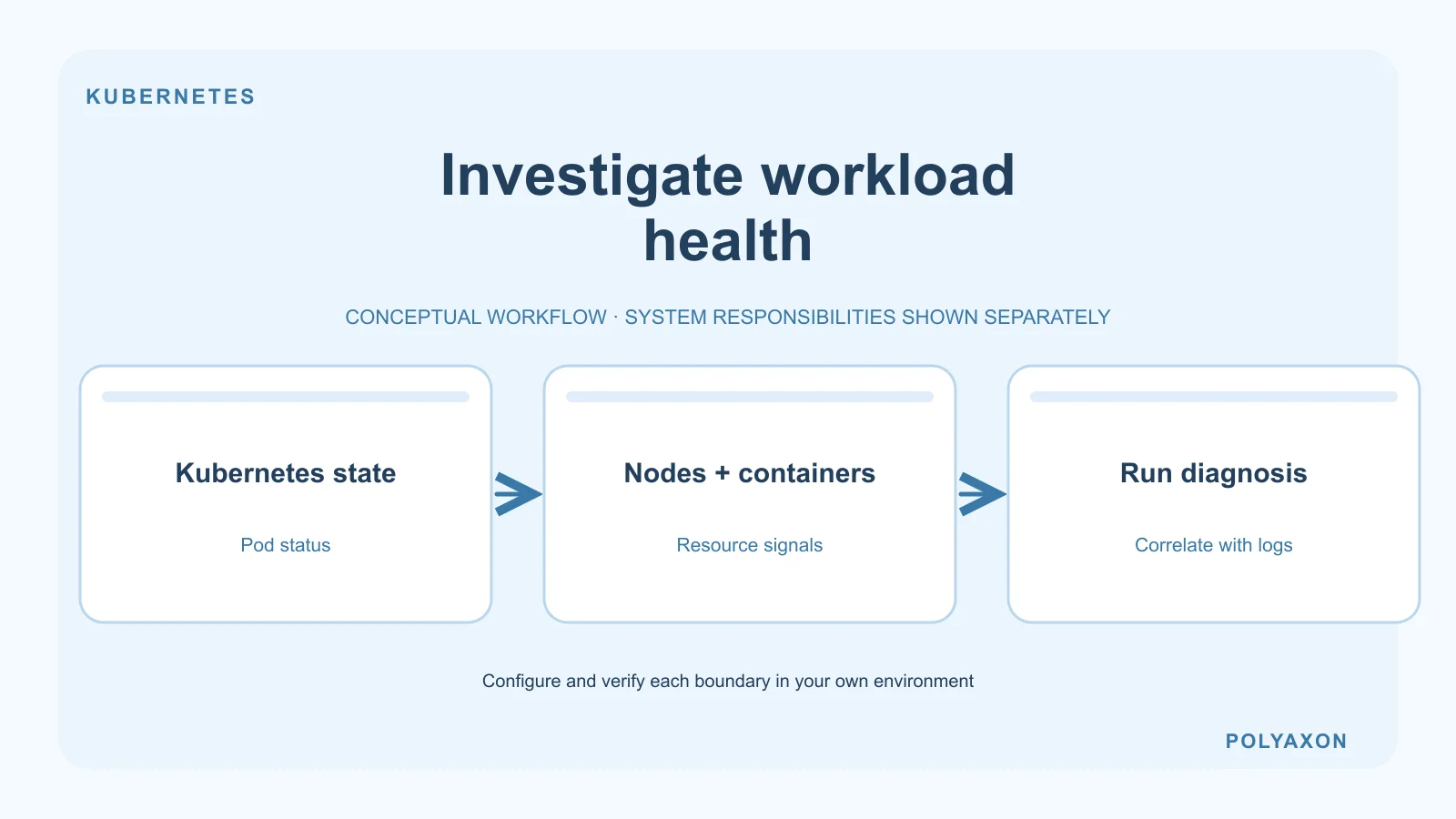
Correlate Kubernetes object state, container usage, and node health when investigating a Polyaxon workload.
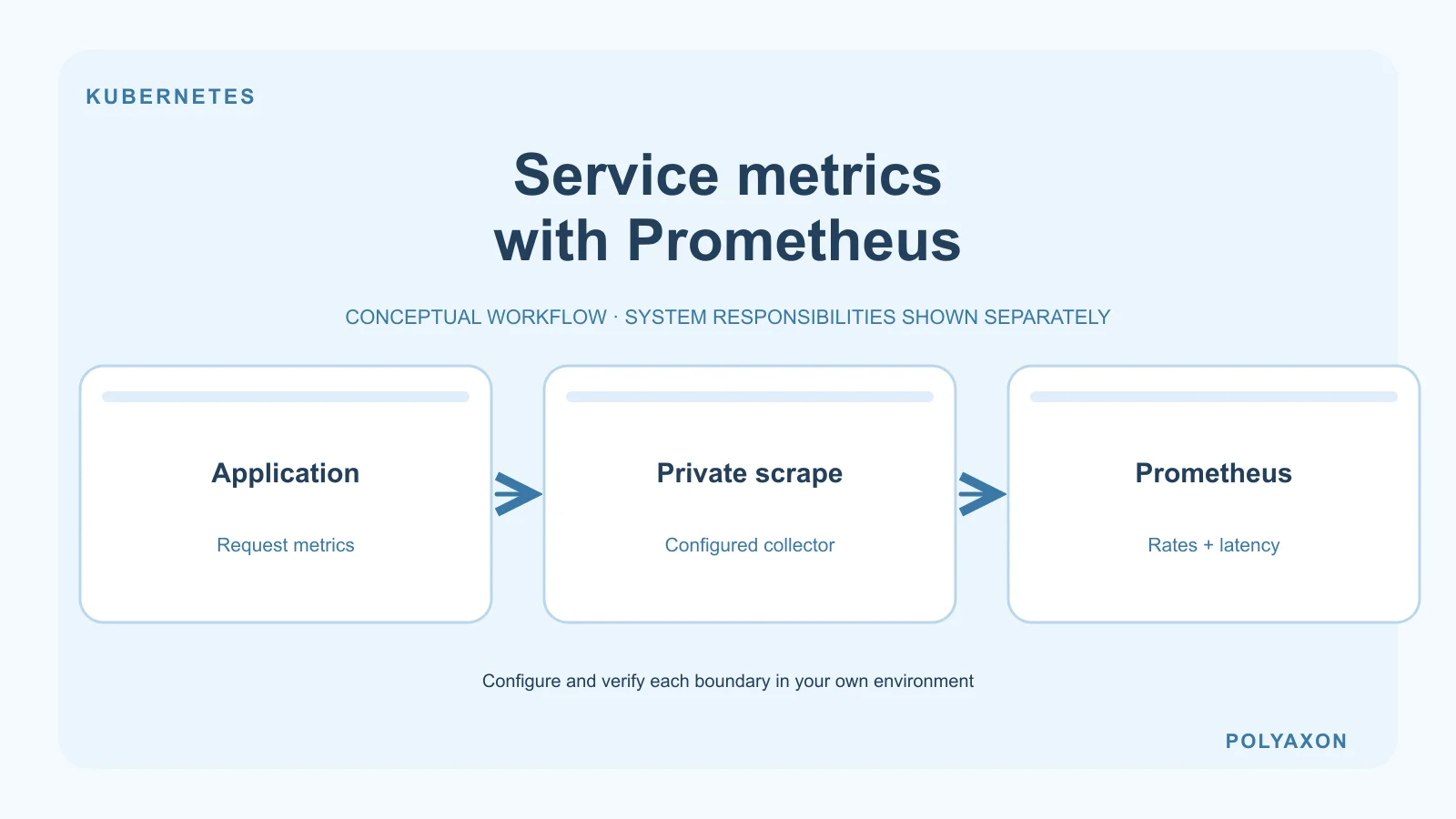
Instrument application request metrics in a Polyaxon service and configure a separate Prometheus collector to scrape them.
Control multi-cloud ML spending with normalized allocation, workload unit economics, placement policies, elastic capacity, and reproducible efficiency measurements.
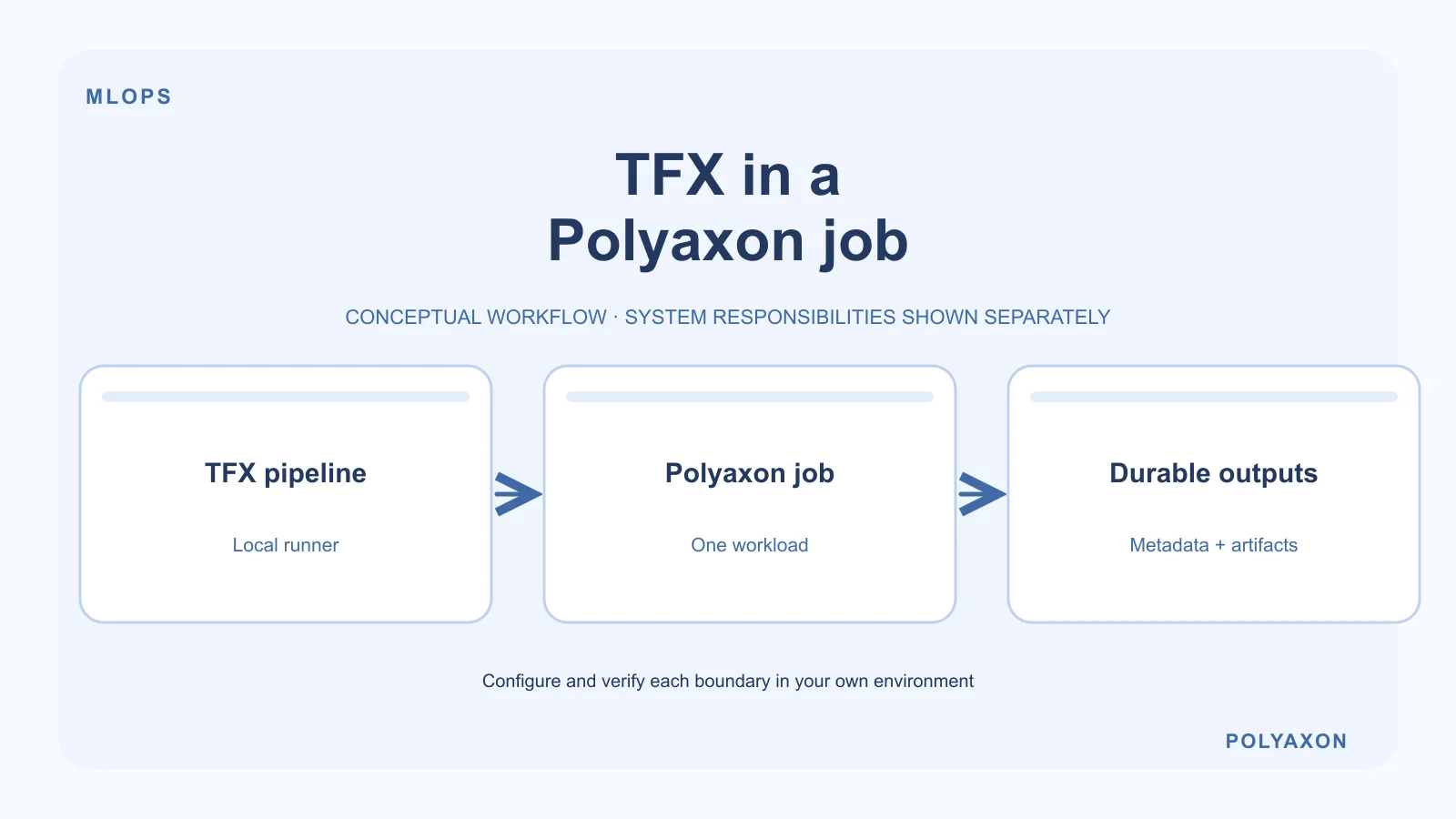
Wrap a local TensorFlow Extended pipeline in one Polyaxon job while preserving its own metadata and artifacts.
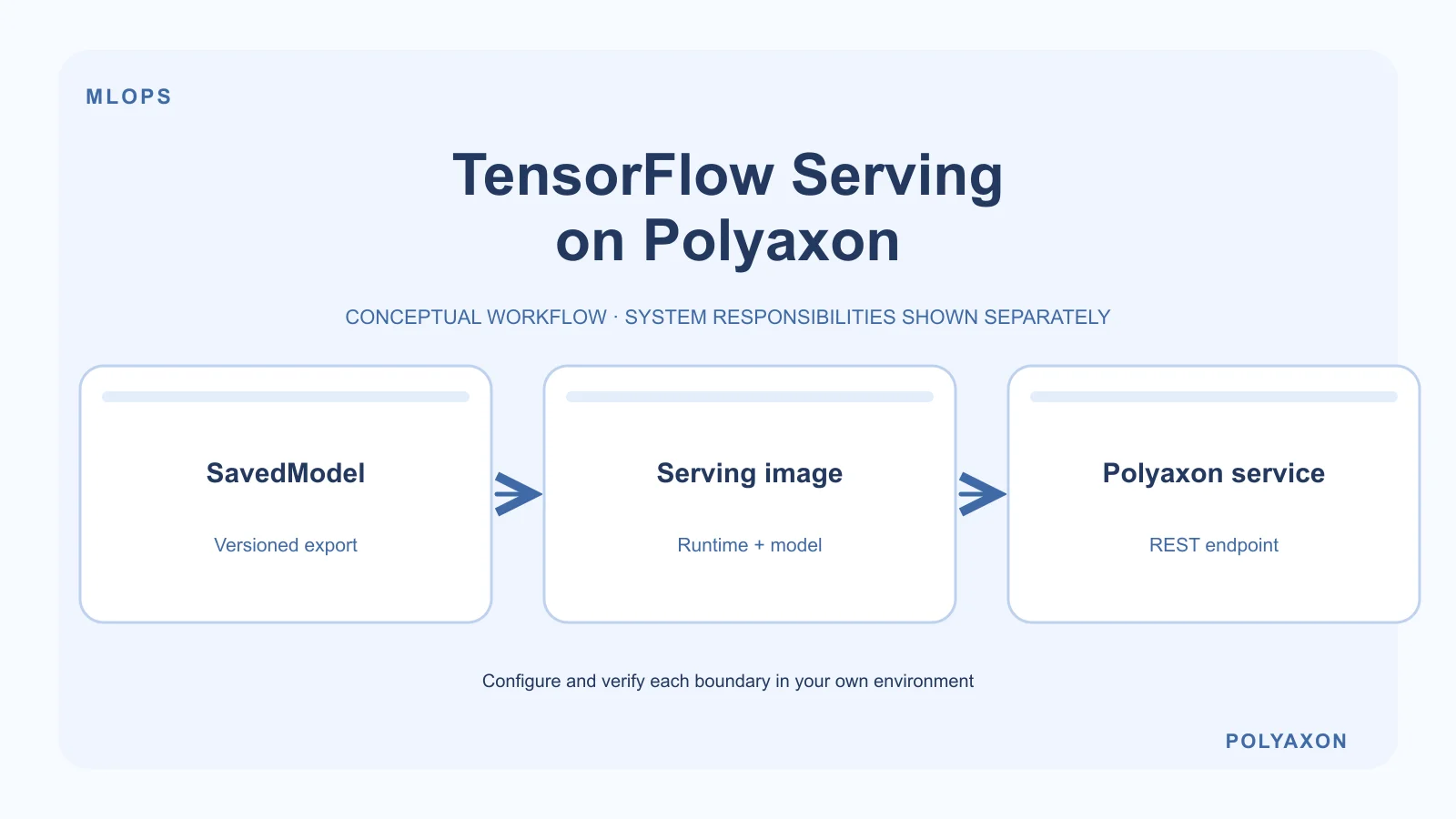
Package a versioned SavedModel with TensorFlow Serving and run its REST endpoint as a Polyaxon service.
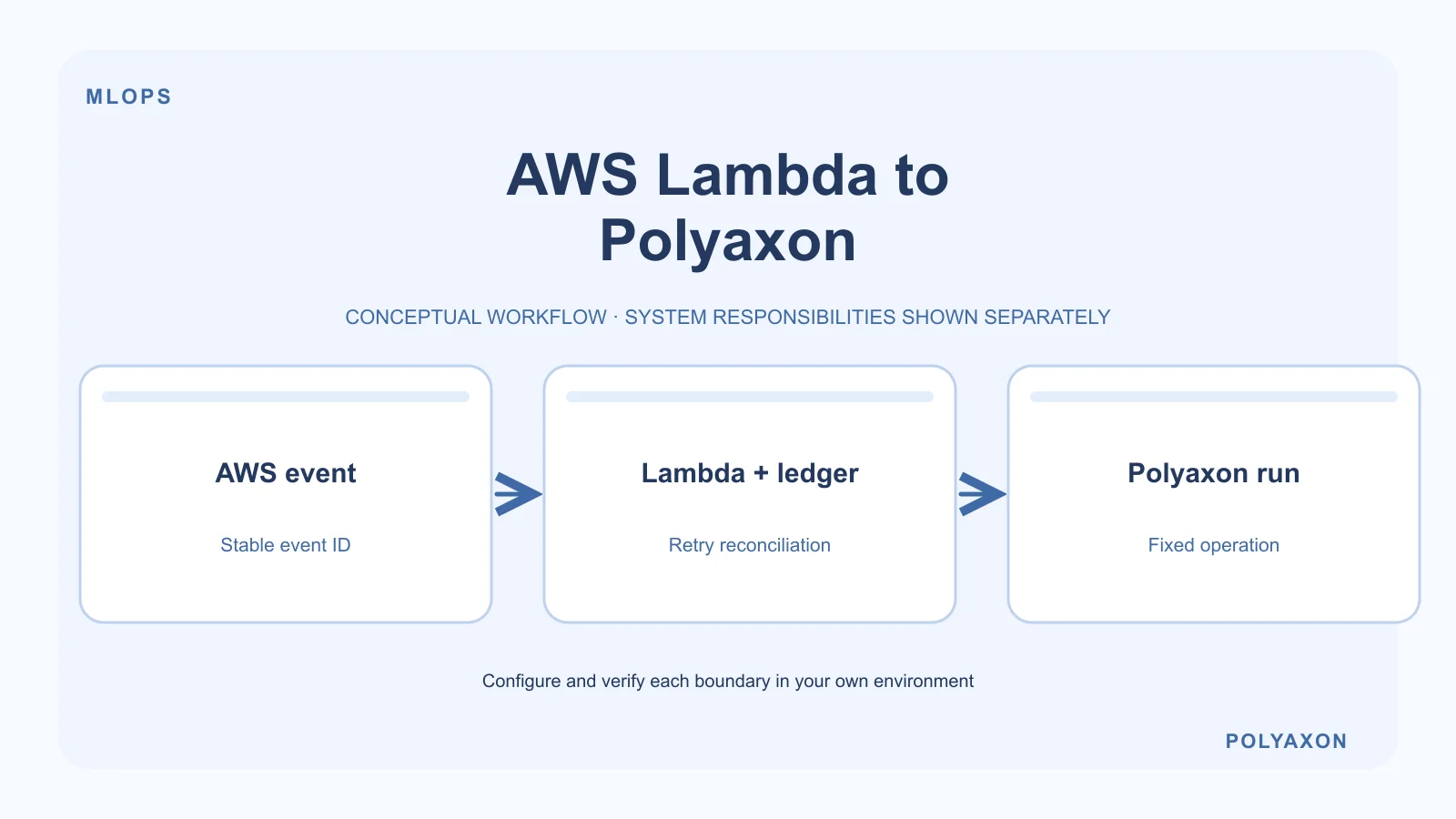
Hand a trusted operation from a short AWS Lambda invocation to Polyaxon while accounting for retries and uncertain responses.
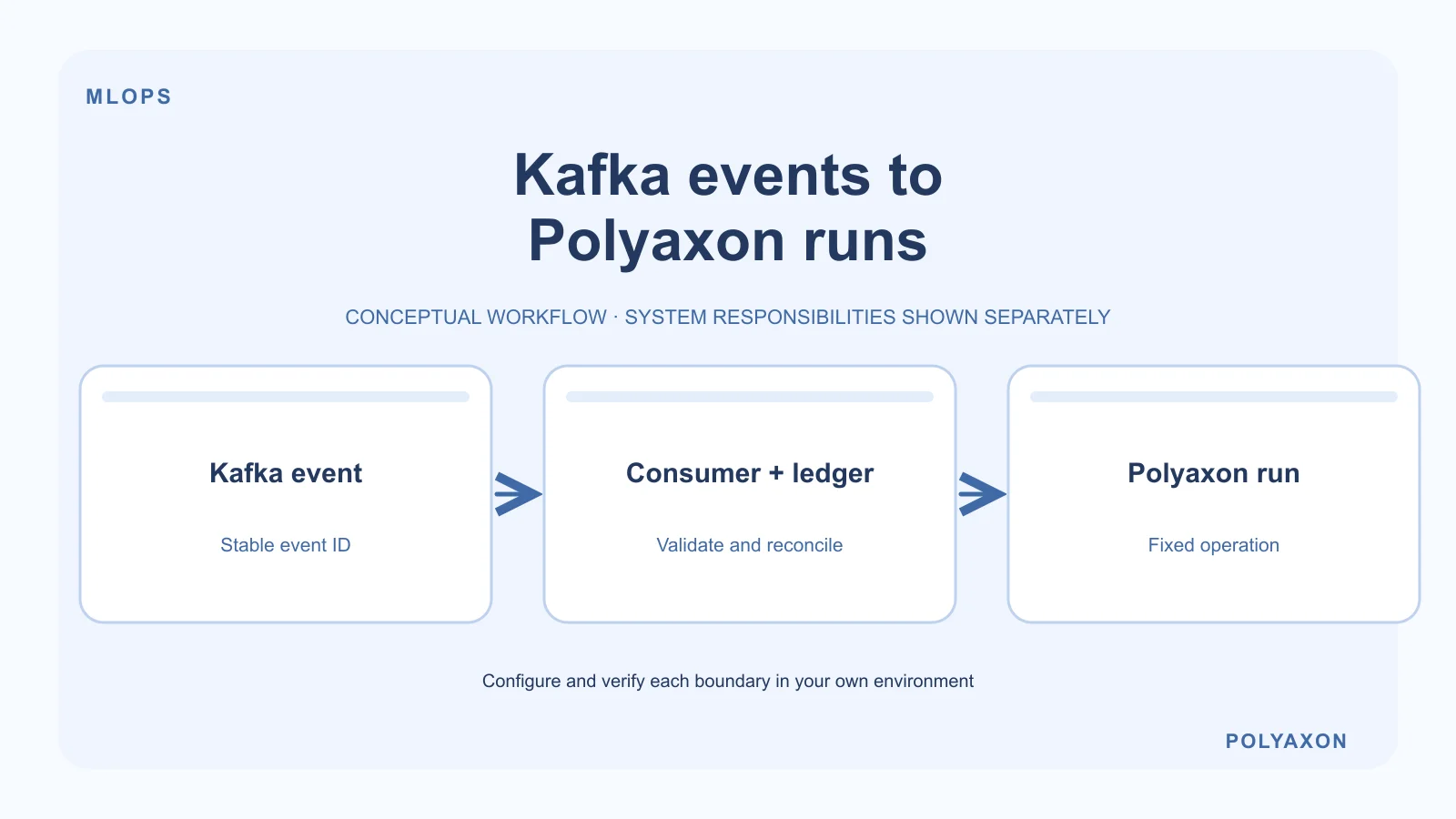
Connect validated Kafka events to fixed Polyaxon operations with a durable submission ledger and replay handling.
Monitor Kubernetes control planes, nodes, containers, schedulers, applications, and ML outcomes with useful correlations and controlled cardinality.