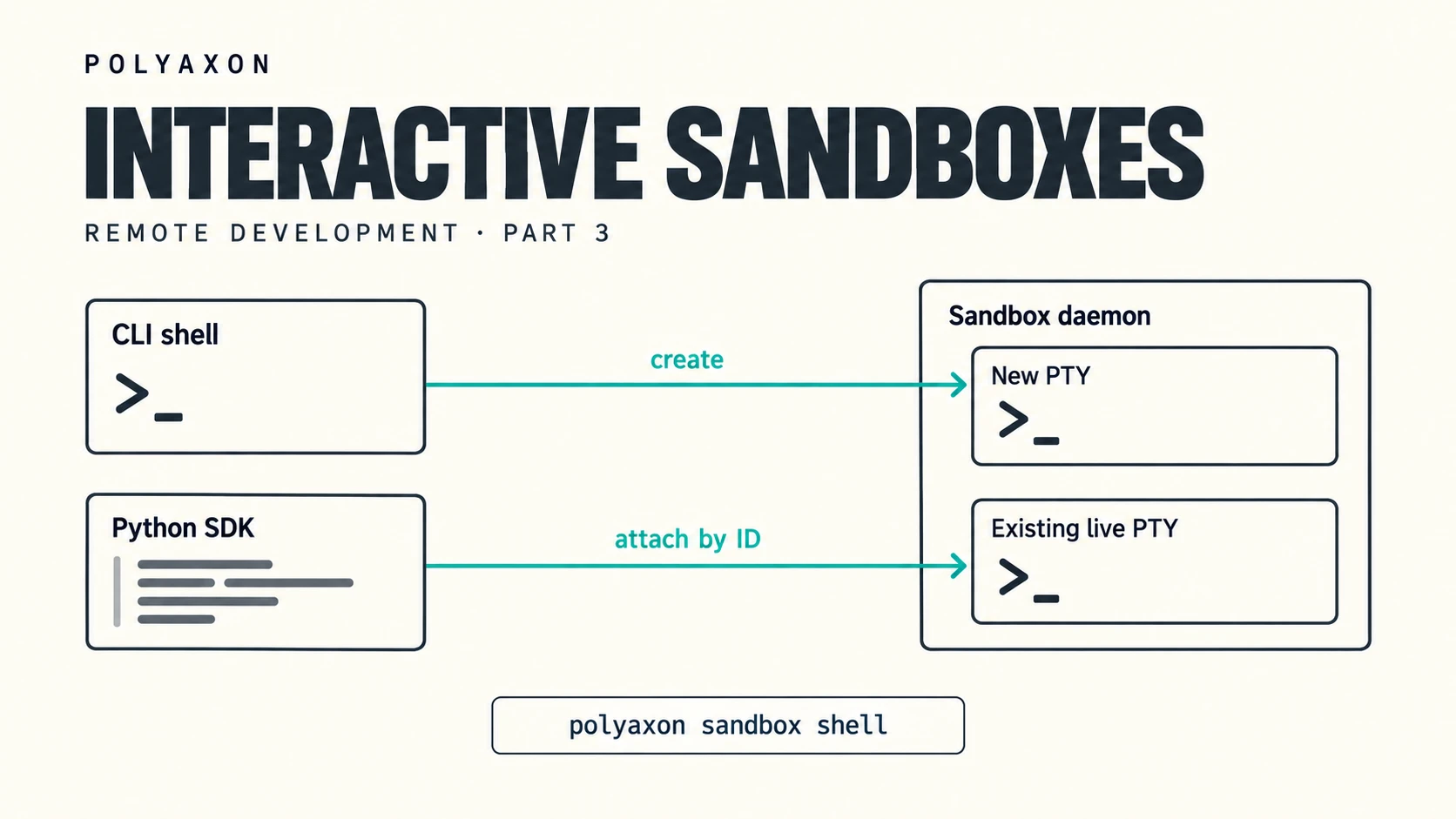
Work interactively with Polyaxon sandboxes
Choose between sandbox shells and exec, understand PTY lifetime and output replay, and manage terminal attachment explicitly through the Python SDK.
ProductCliGuides
Practical guides to building, running, and improving ML and AI in production.
Page 3 of 21
Choose between sandbox shells and exec, understand PTY lifetime and output replay, and manage terminal attachment explicitly through the Python SDK.
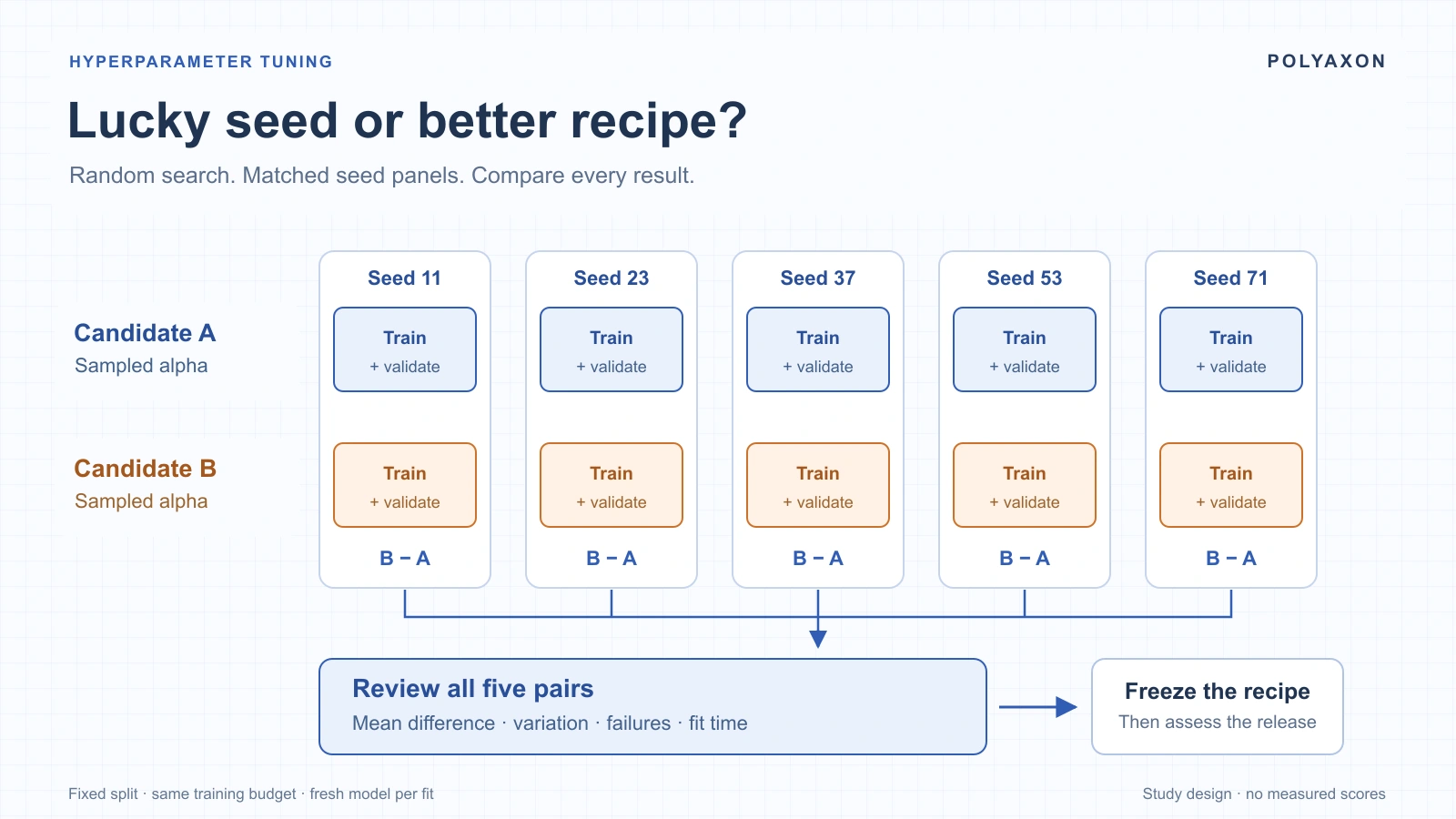
Confirm hyperparameter finalists across matched training seeds, compare variation and paired differences, and reserve compute for a defensible final choice.
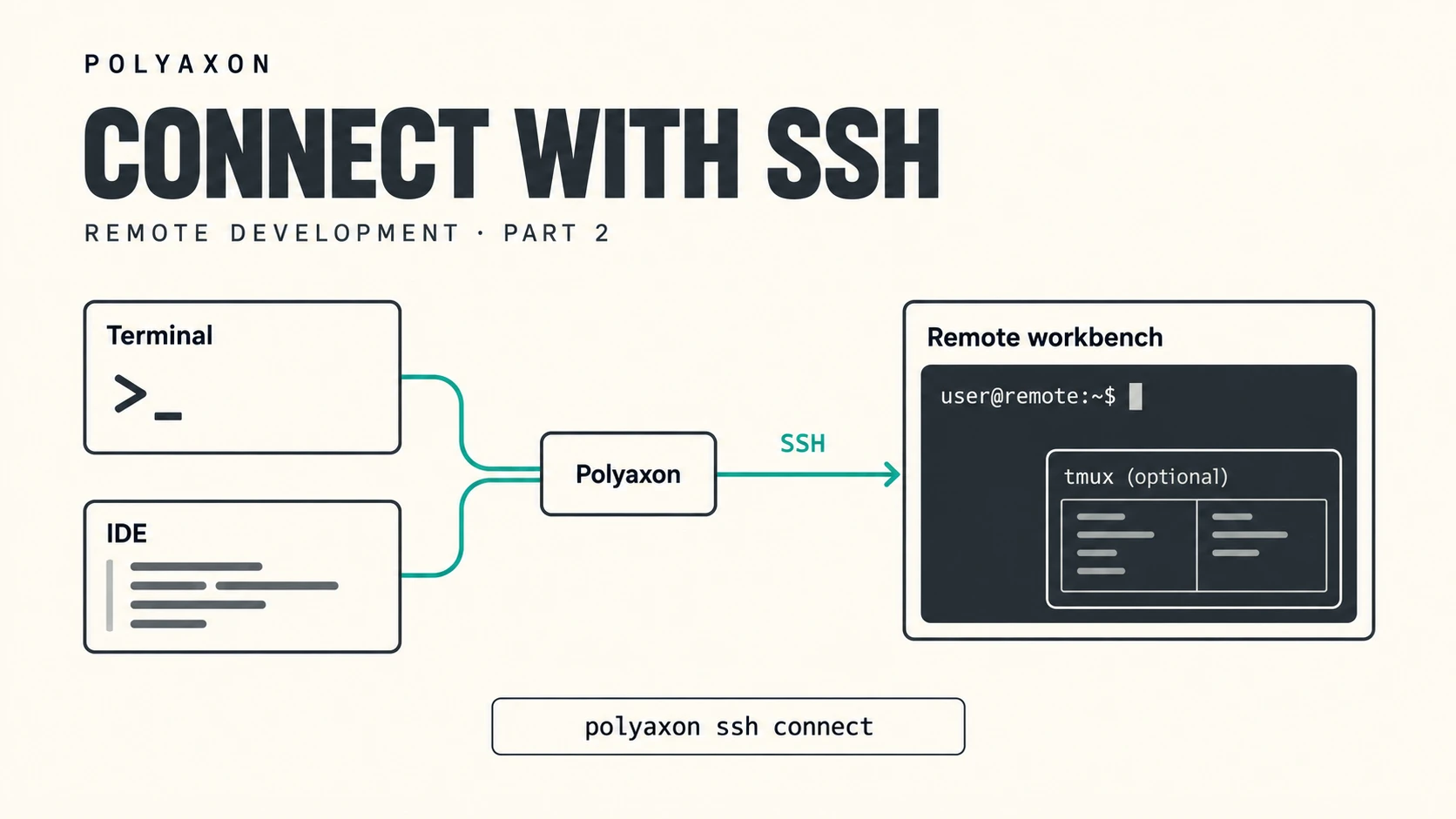
Connect native terminals and IDEs to a Polyaxon service, forward application ports, and use tmux explicitly when you want to resume a shell.
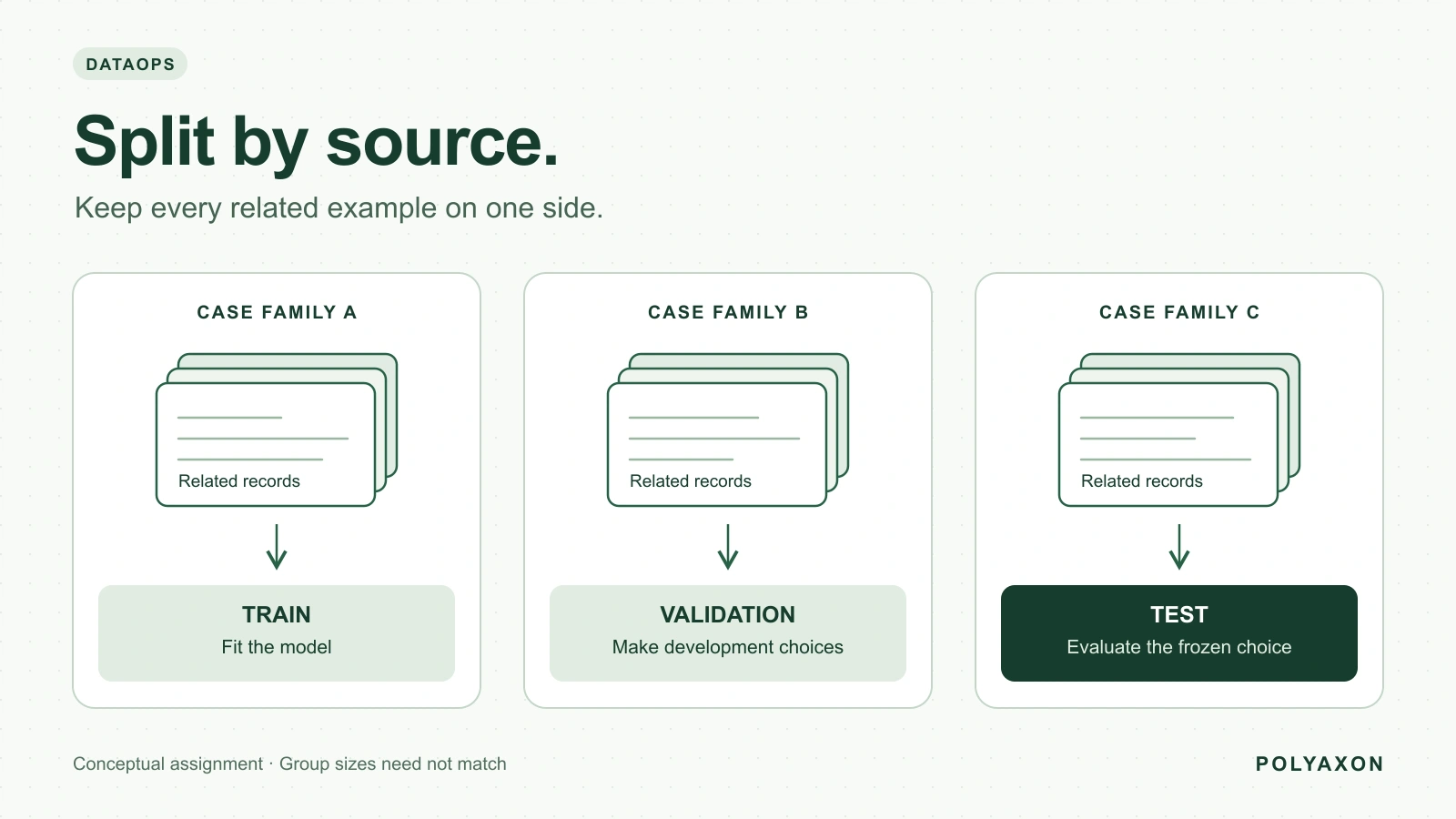
Choose evaluation boundaries, keep related examples together, audit duplicate overlap, and retain reproducible split manifests for ML and LLM experiments.

Use projected ServiceAccount tokens and refresh-aware clients so long-running training, notebooks, and services can keep authenticating without static credentials.
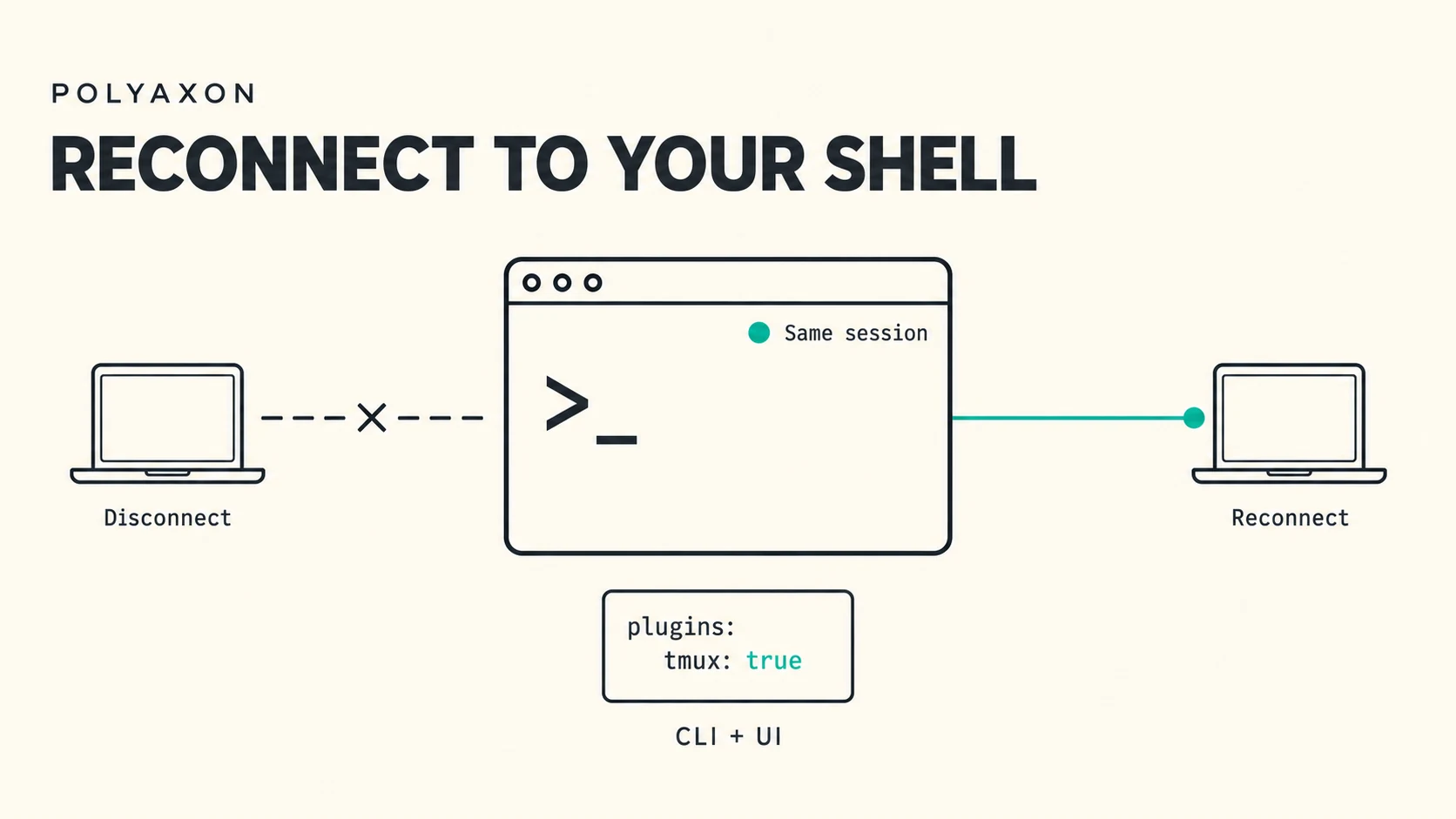
Learn how ordinary ops shells differ from tmux sessions, then detach and reconnect to the same Polyaxon shell from the CLI or UI.
Use Kubernetes ValidatingAdmissionPolicy to check workload ownership and image references, with scoped warning and enforcement stages for ML namespaces.
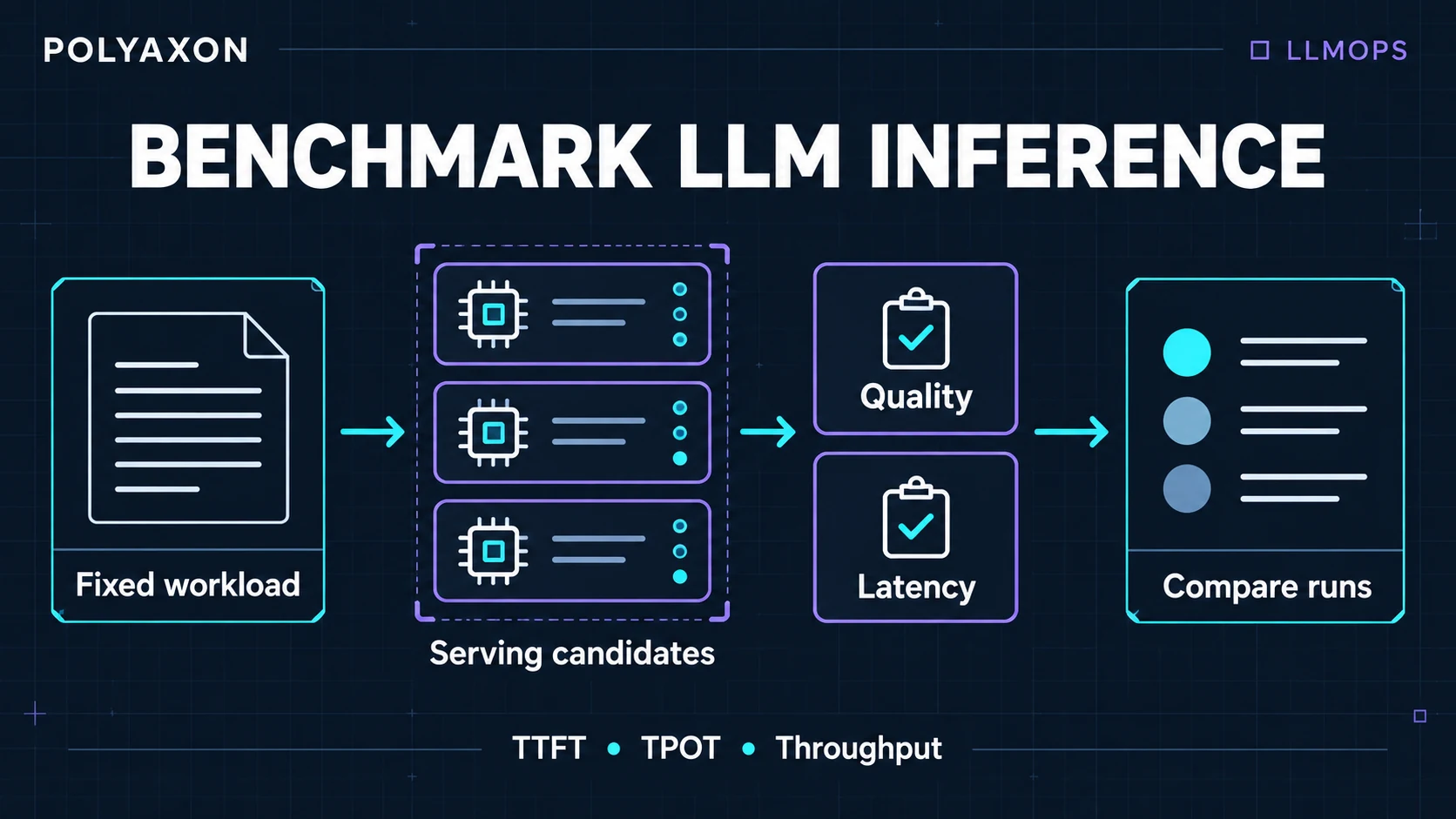
Compare inference optimizations against a fixed workload, latency limits, and quality checks, with benchmark configurations and results tracked in Polyaxon.
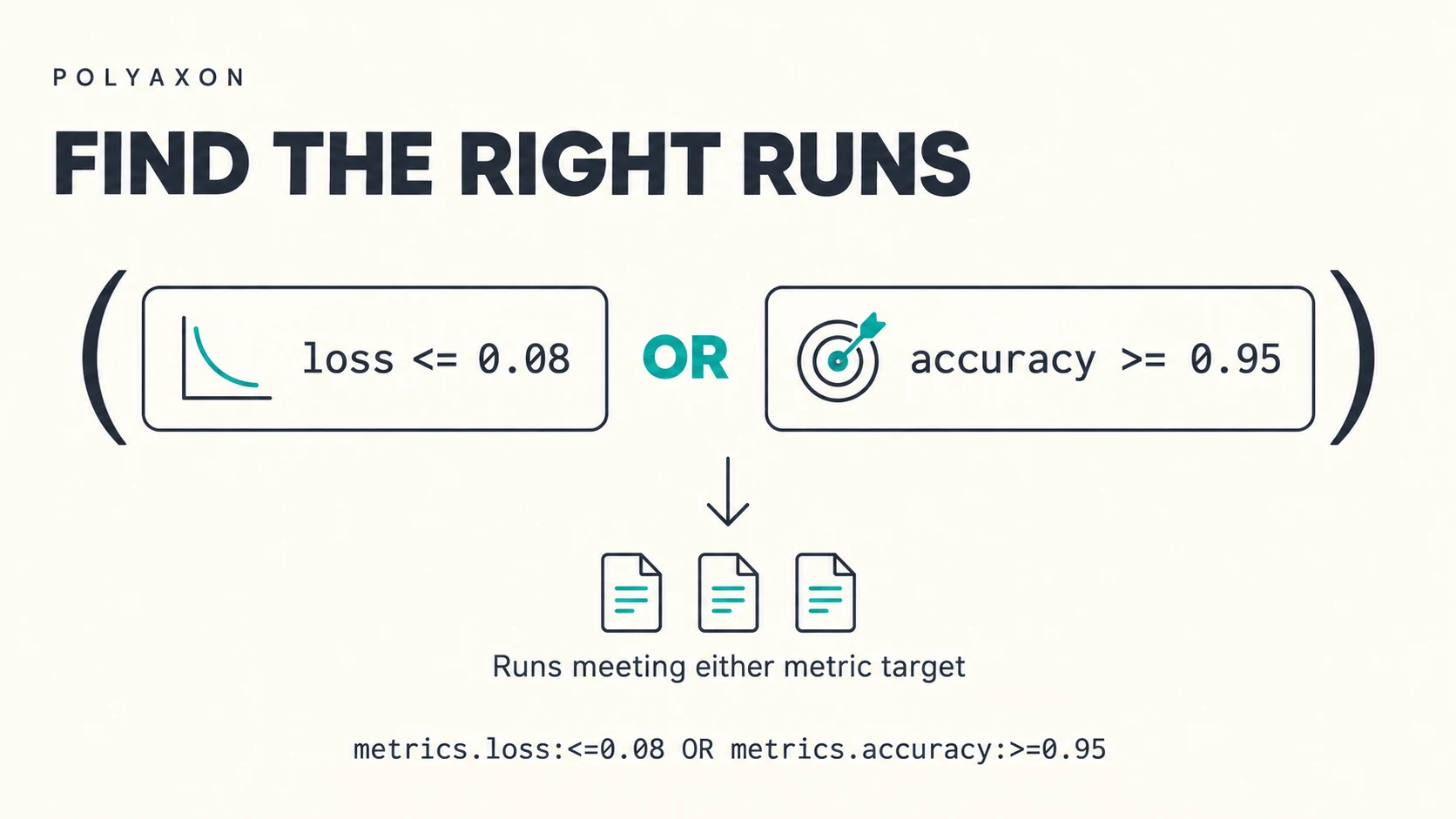
Use OR to combine metric thresholds, negated conditions, and independent groups of filters in Polyaxon queries.
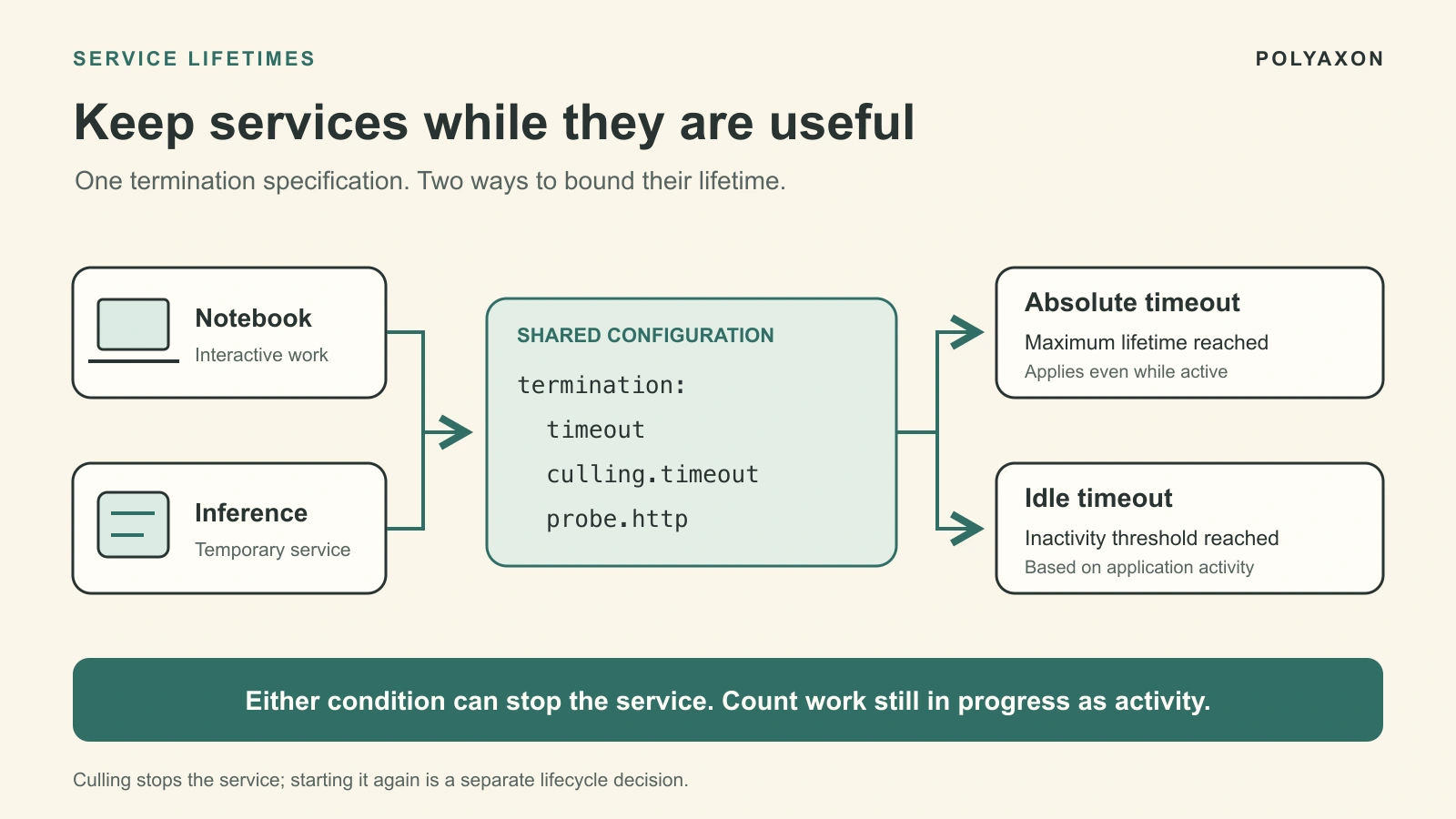
Reuse Polyaxon's termination specification to bound notebook and inference service lifetimes, stop idle services, and distinguish inactivity from ongoing work.
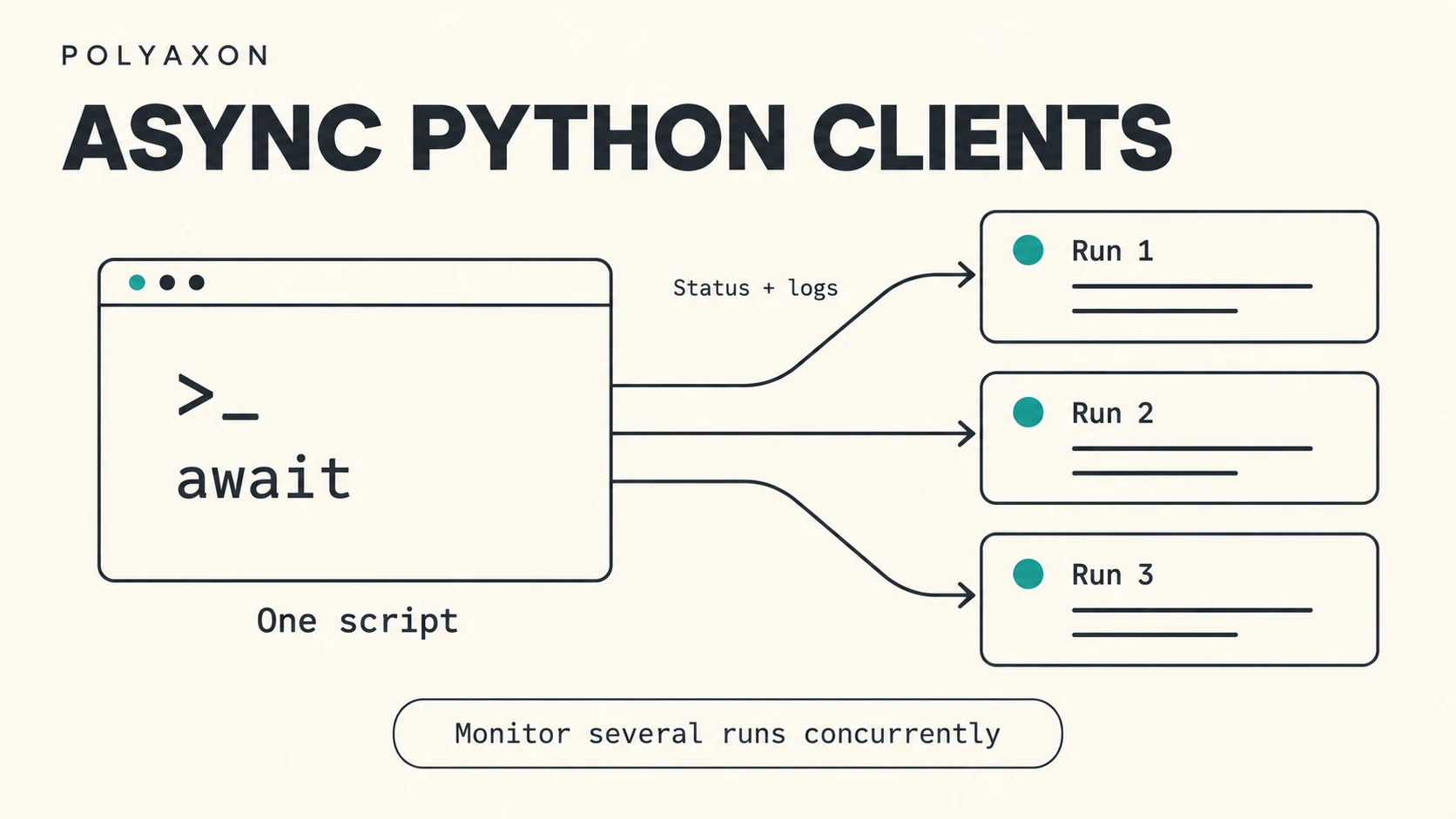
Monitor several Polyaxon runs concurrently with async Python clients, retrieve recent logs, and manage concurrency, timeouts, and client cleanup.
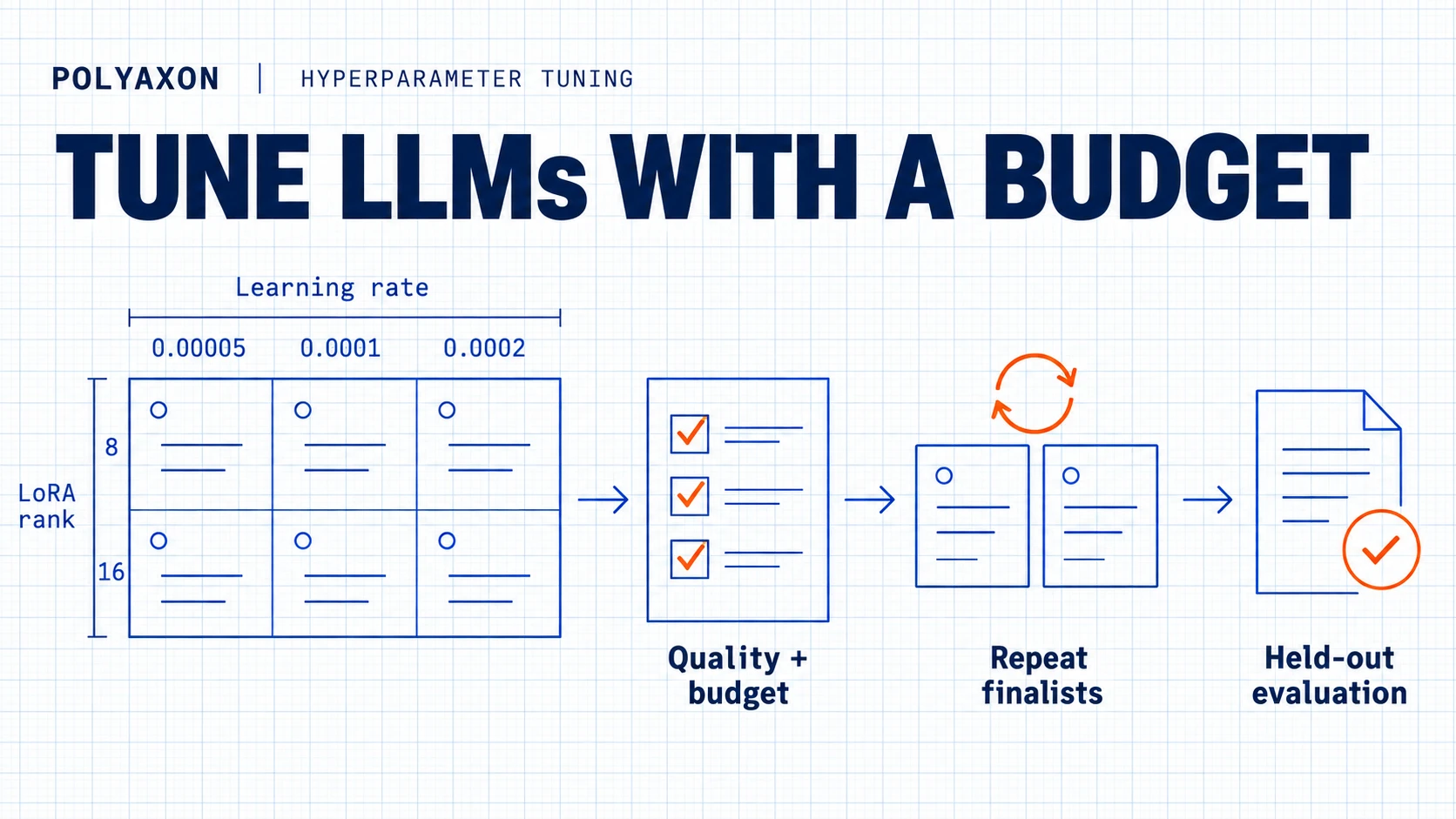
Design a small LoRA fine-tuning sweep, control its execution in Polyaxon, and compare validation quality, resource use, and repeatability.
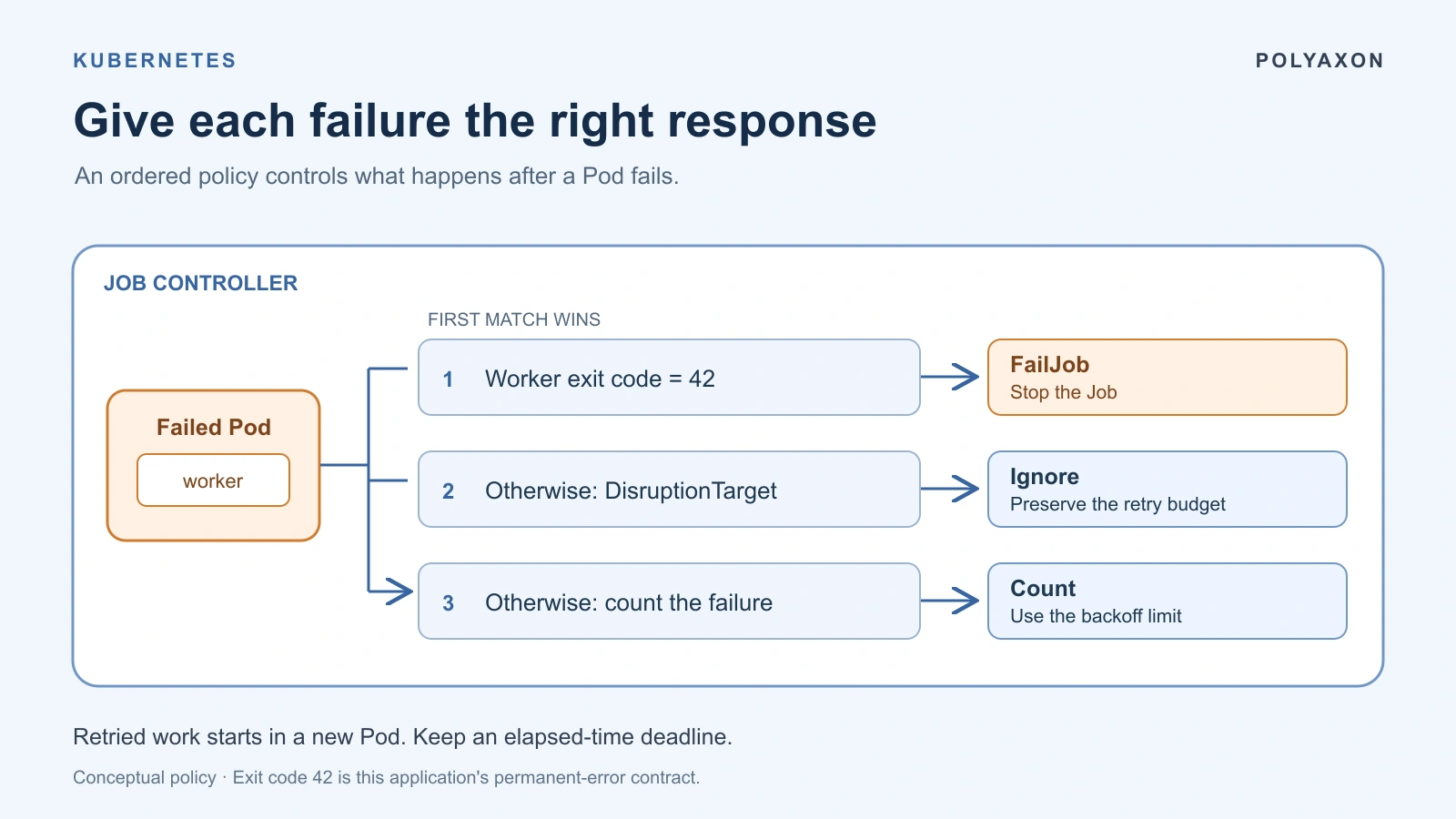
Stop retrying permanent errors, preserve the retry budget for marked disruptions, and inspect Kubernetes Job failure decisions with a concrete example.
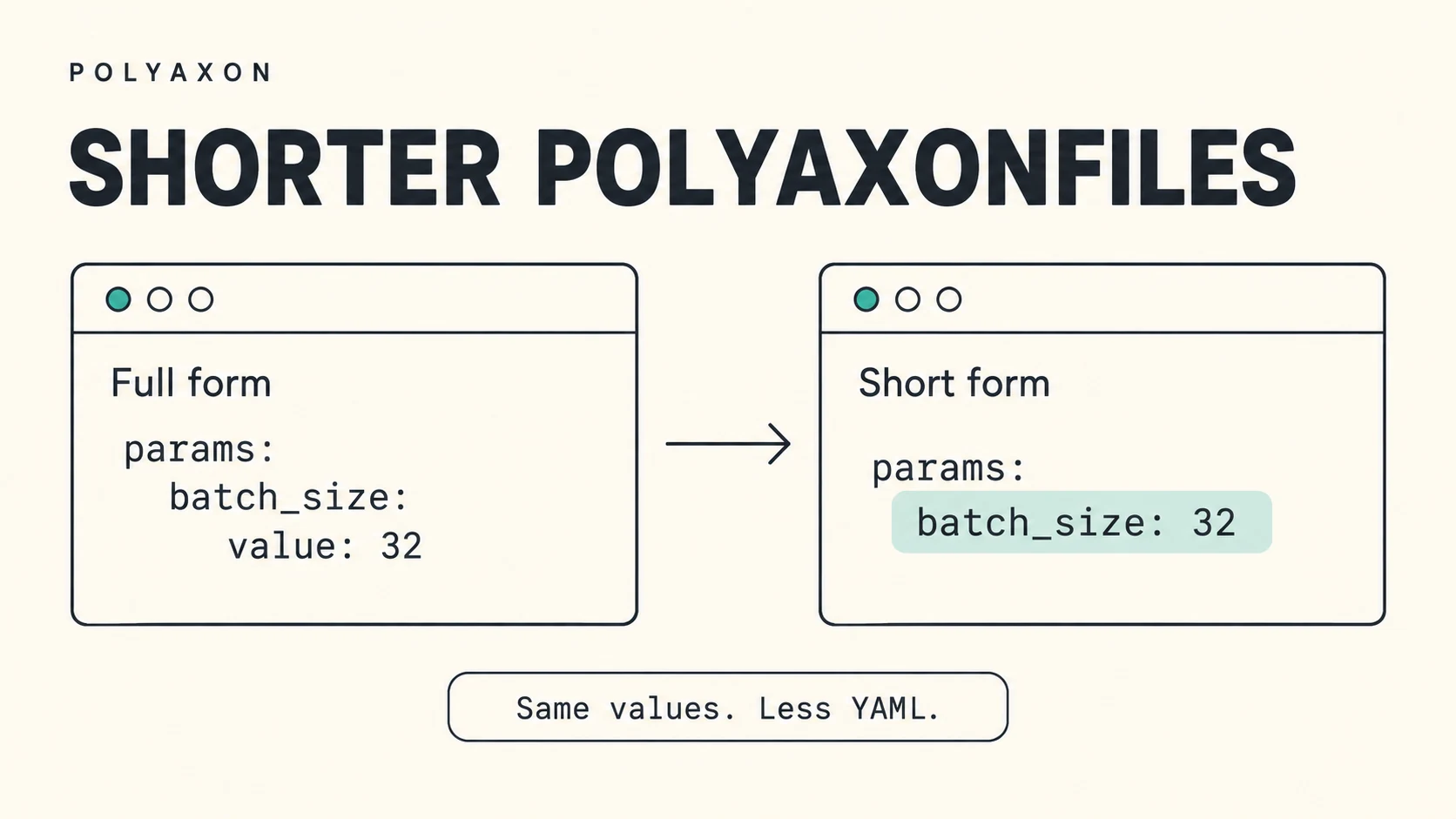
Use direct parameter values, let input and output defaults imply optionality, and simplify workload definitions with Polyaxon 2.18.
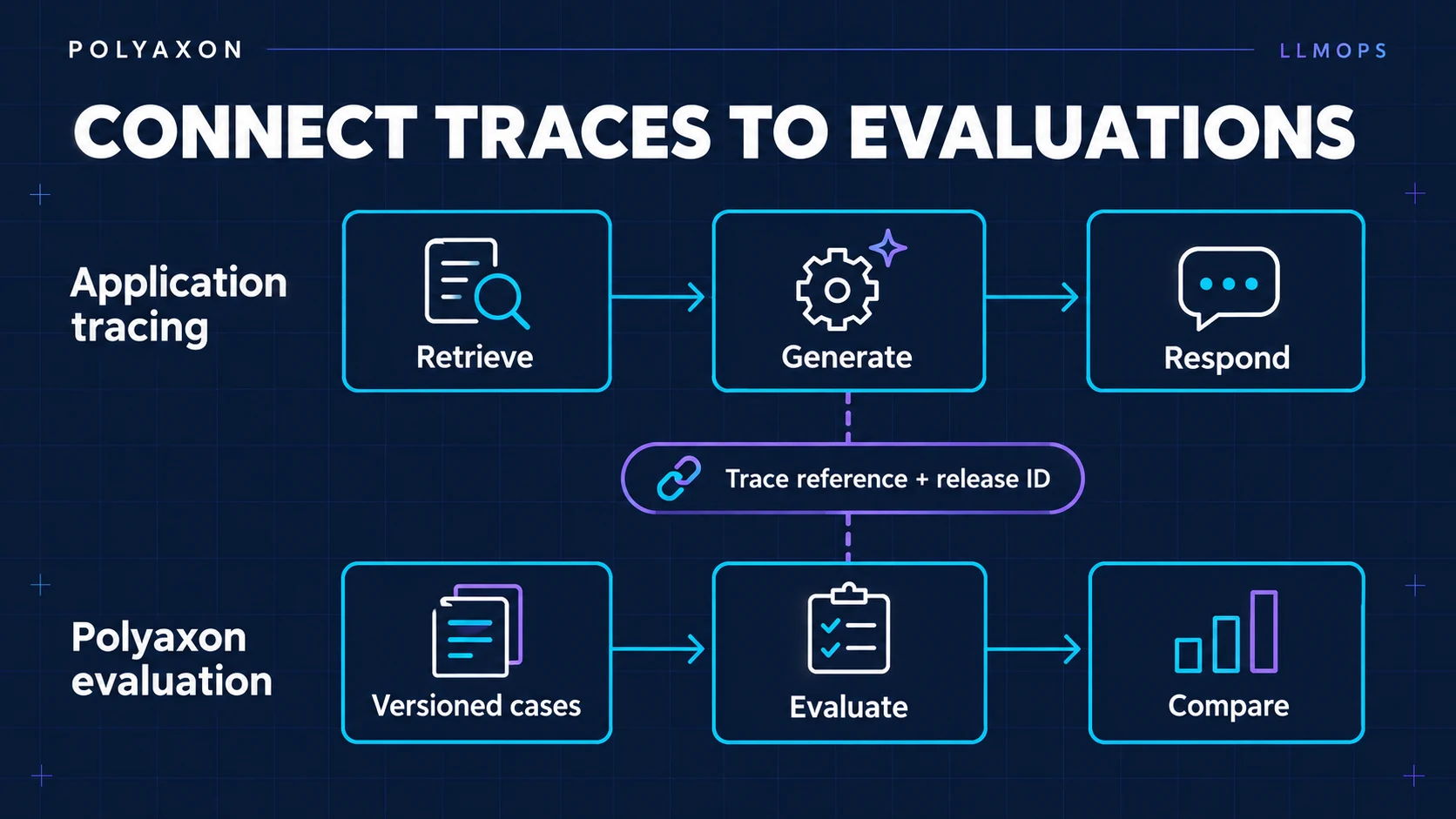
Keep release, dataset, evaluator, and sampling context connected as you investigate LLM failures and compare fixes with Polyaxon.
Separate immutable model files from the serving image with Kubernetes image volumes, and choose when an OCI artifact fits better than a download or PVC.
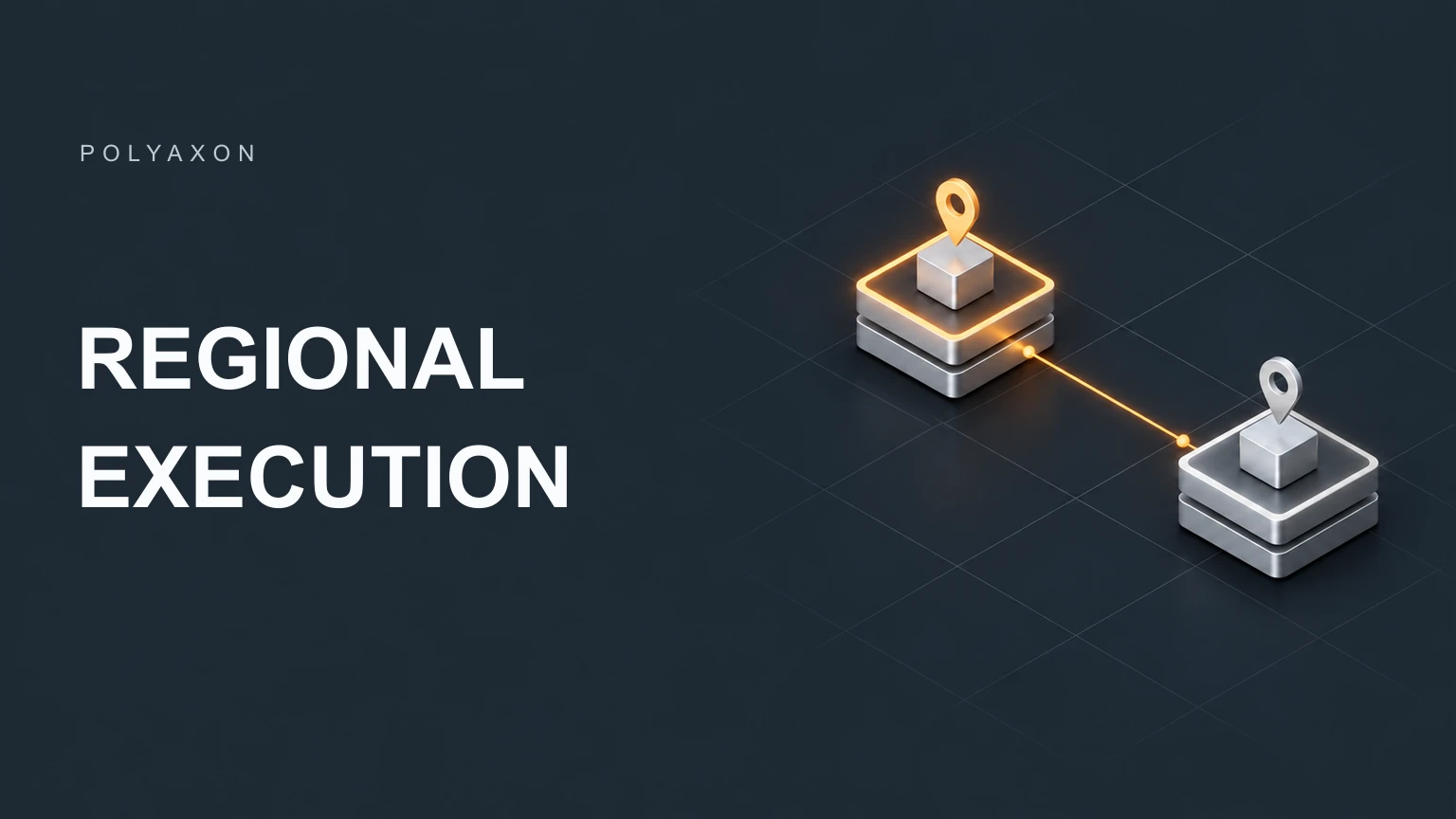
Configure regional execution with Polyaxon agents, queues, and storage connections, then measure data-transfer costs without assuming same-region traffic is free.
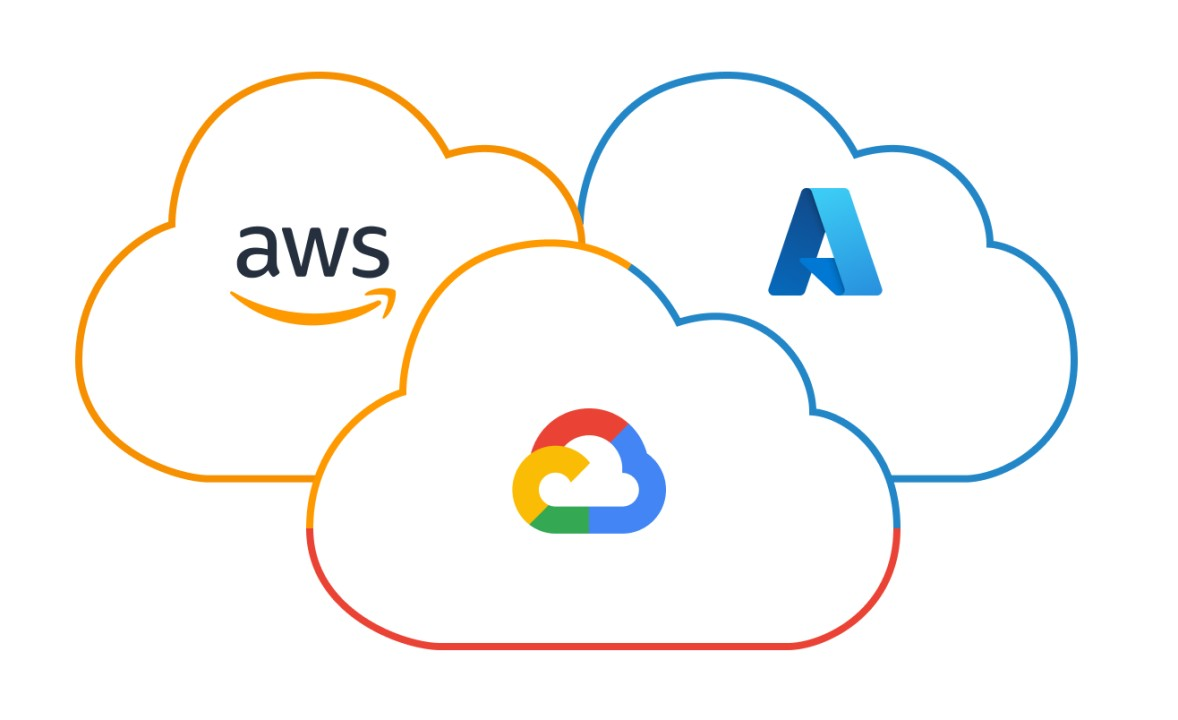
Operate AI workloads across clusters and clouds with central intent, local execution, placement policy, consistent identity, connected evidence, and failure-aware control.
Use Dynamic Resource Allocation to describe the accelerator a workload needs, understand device claims, and plan the integration with Polyaxon.
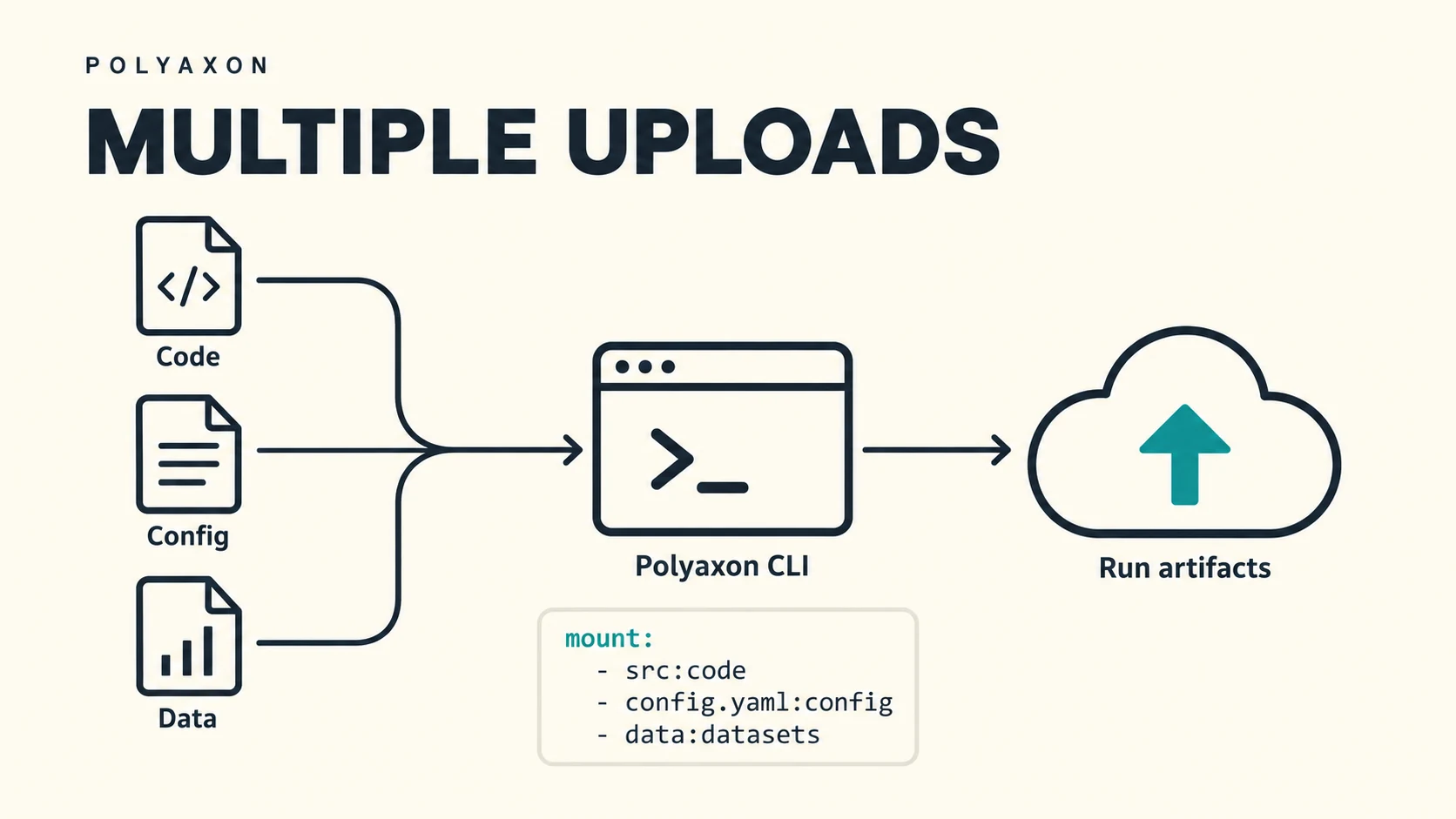
Upload code, configuration, and small datasets in one Polyaxon CLI command, then save the same path mappings in a declarative mount section.
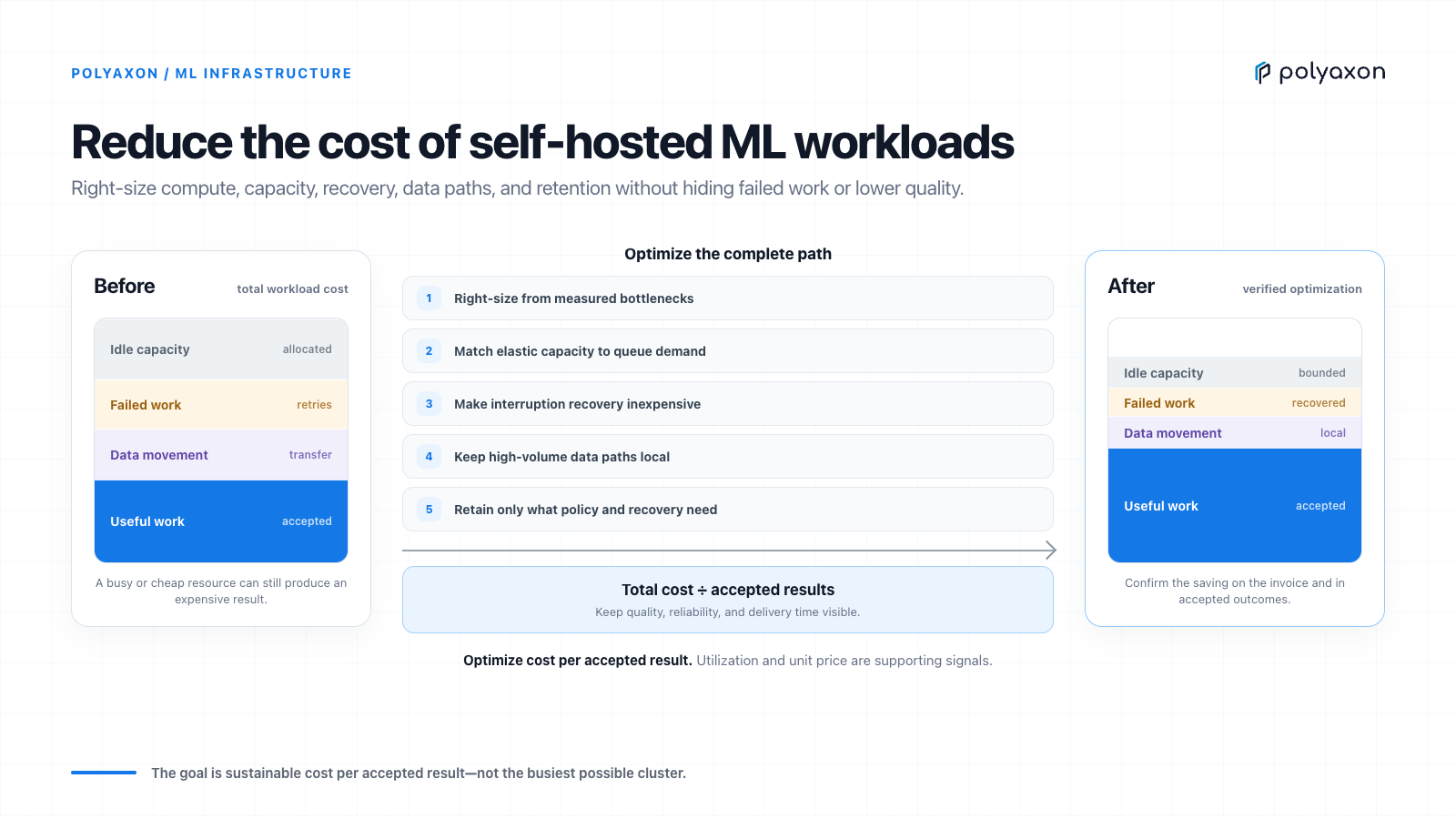
Reduce self-hosted ML costs with outcome-based accounting, right-sized resources, elastic capacity, interruption-ready workloads, local data paths, and deliberate retention.
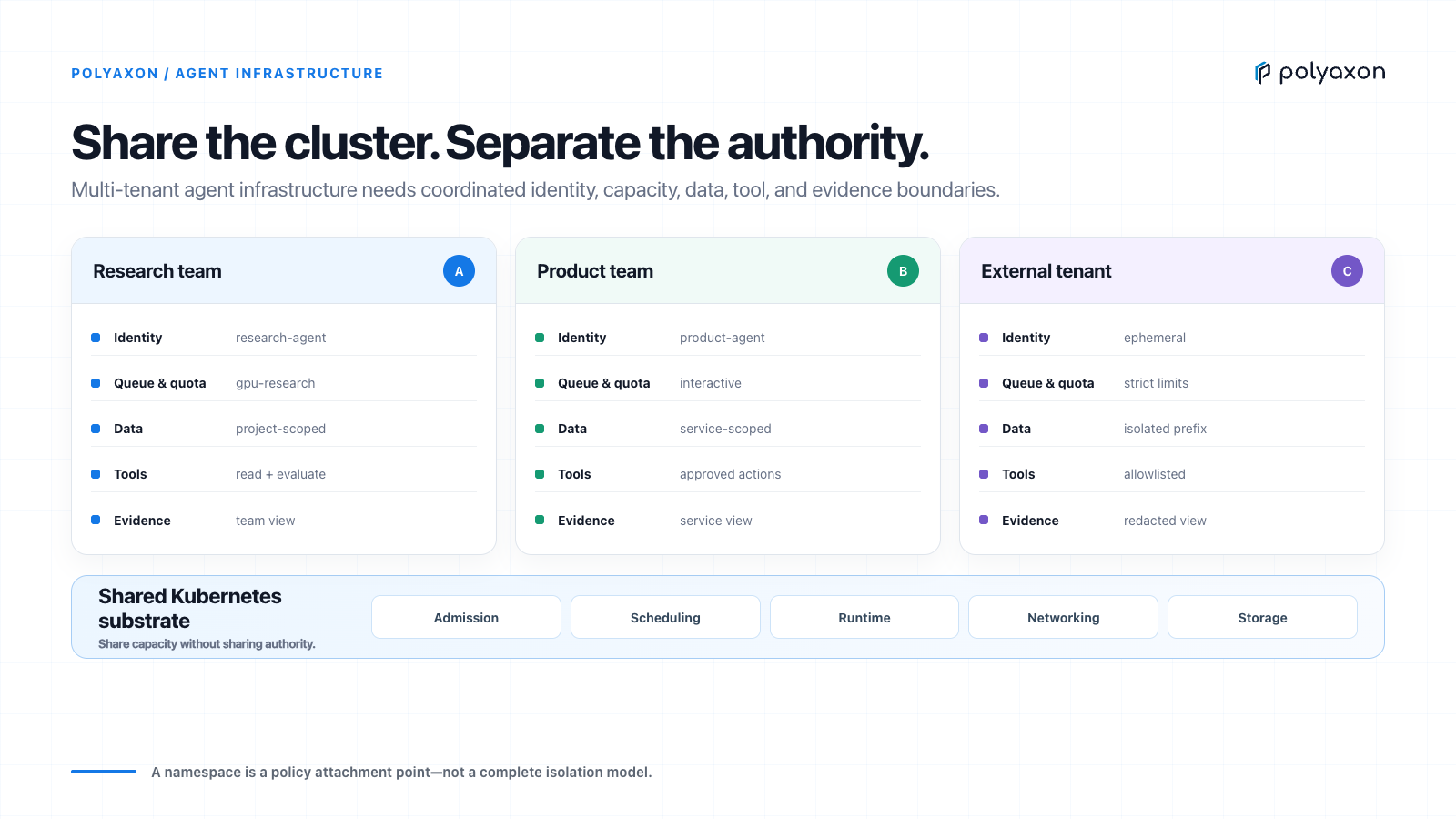
Separate identity, network access, data, queues, budgets, and evidence when multiple teams or customers run AI agents on shared Kubernetes infrastructure.
Use exit-code-based container restart rules, observe what stays within the Pod, and distinguish local recovery from retrying a complete ML operation.
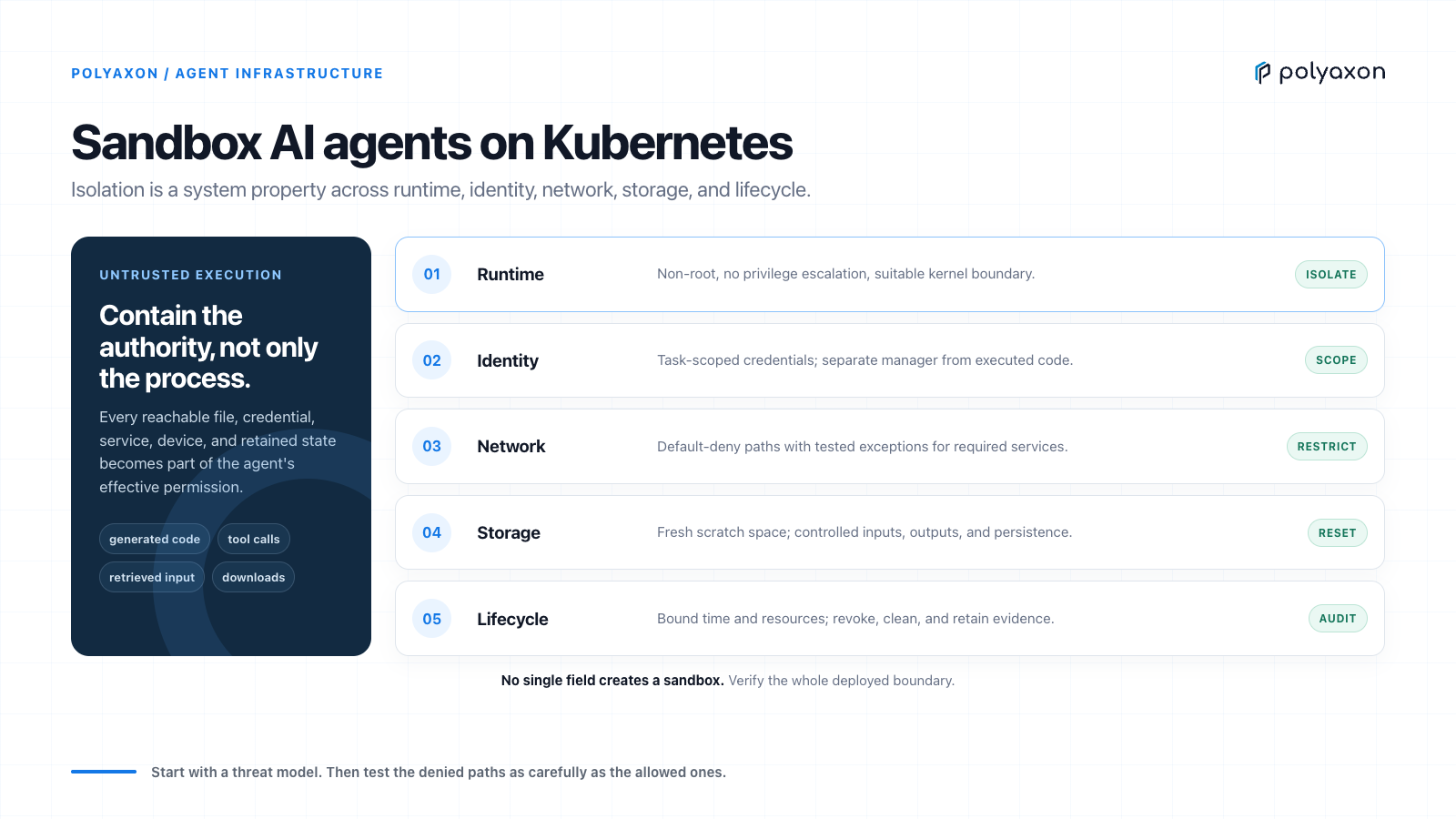
Design isolated Kubernetes execution for AI agents with a threat model, stronger runtimes, scoped identity, controlled egress, bounded storage, and auditable cleanup.