Keep inference available during Kubernetes node drains
Set a PodDisruptionBudget around usable inference capacity, inspect blocked evictions, and account for replacement GPUs and model warmup.
KubernetesInferenceReliability
Practical guides to building, running, and improving ML and AI in production.
Page 2 of 21
Set a PodDisruptionBudget around usable inference capacity, inspect blocked evictions, and account for replacement GPUs and model warmup.
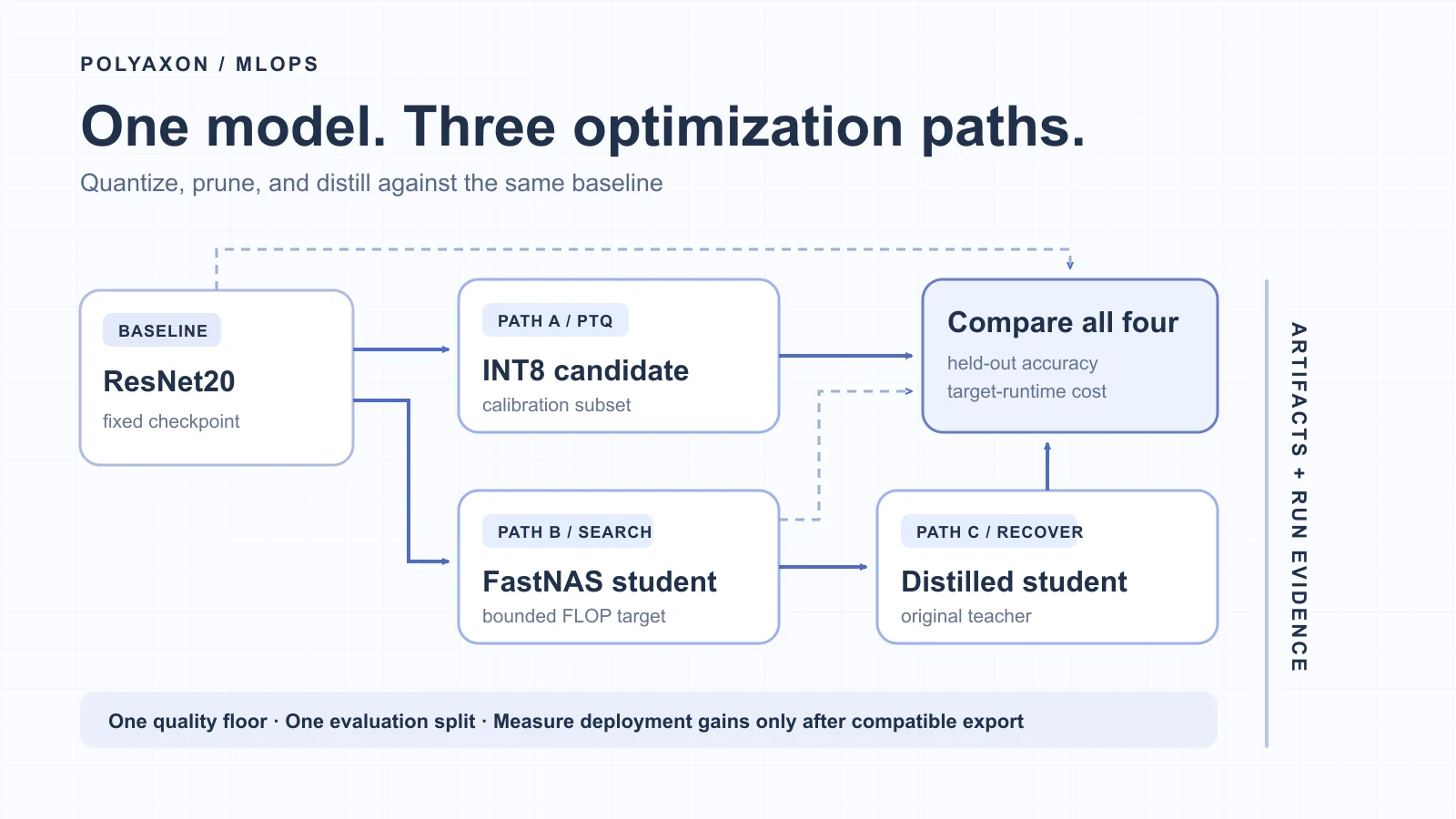
Compare INT8 quantization, FastNAS pruning, and distillation against one tracked baseline, then measure the candidate that meets your accuracy floor.
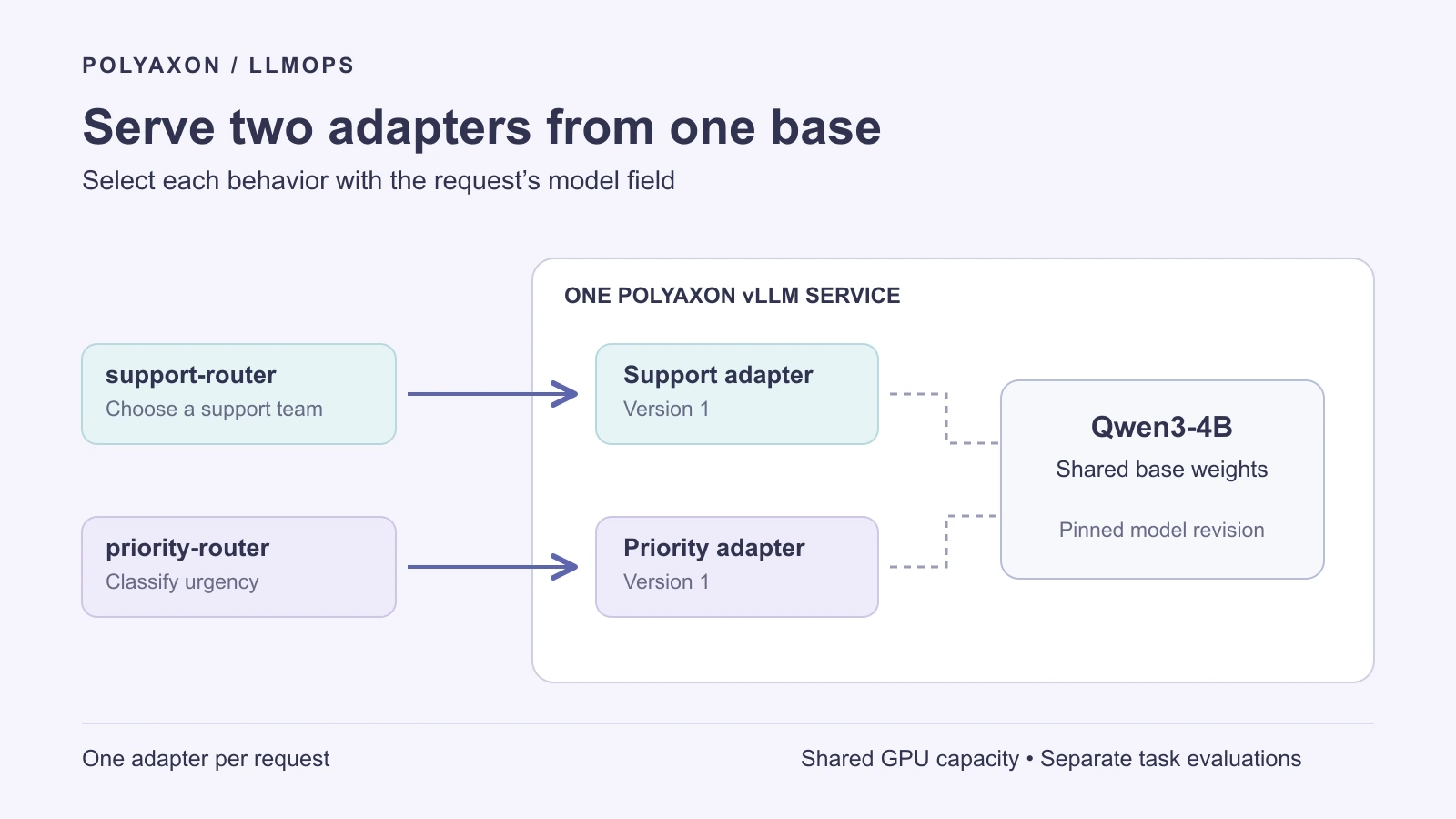
Deploy two task-specific LoRA adapters over one Qwen base model, select them by name, and measure quality and shared GPU capacity with Polyaxon.
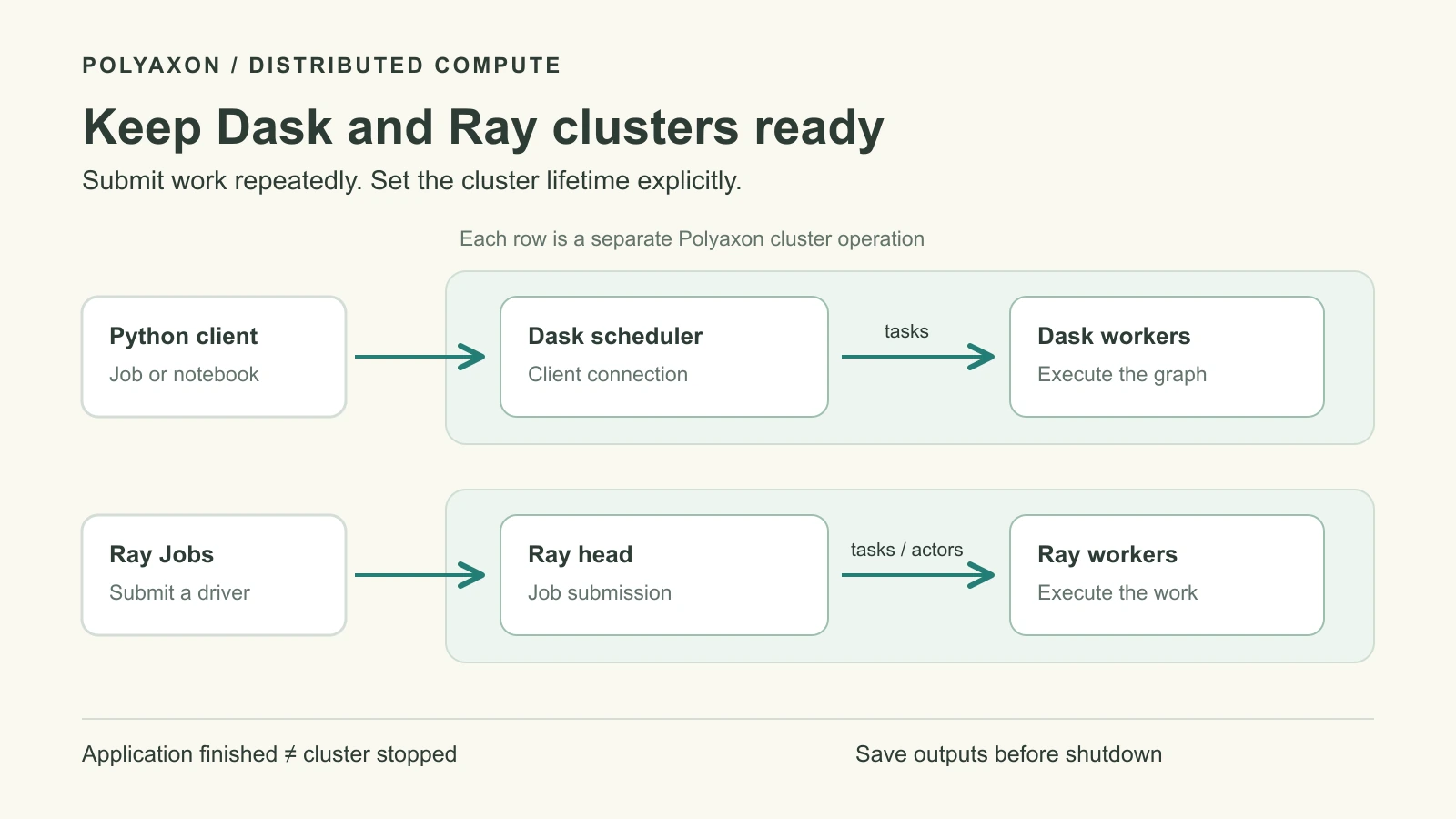
Launch Dask or Ray clusters with Polyaxonfiles, submit repeated work, and control worker capacity, durable outputs, and cluster lifetimes.
Use Kubernetes Job success policies for chosen indexes or success counts, preserve durable results, and distinguish them from Polyaxon metric early stopping.
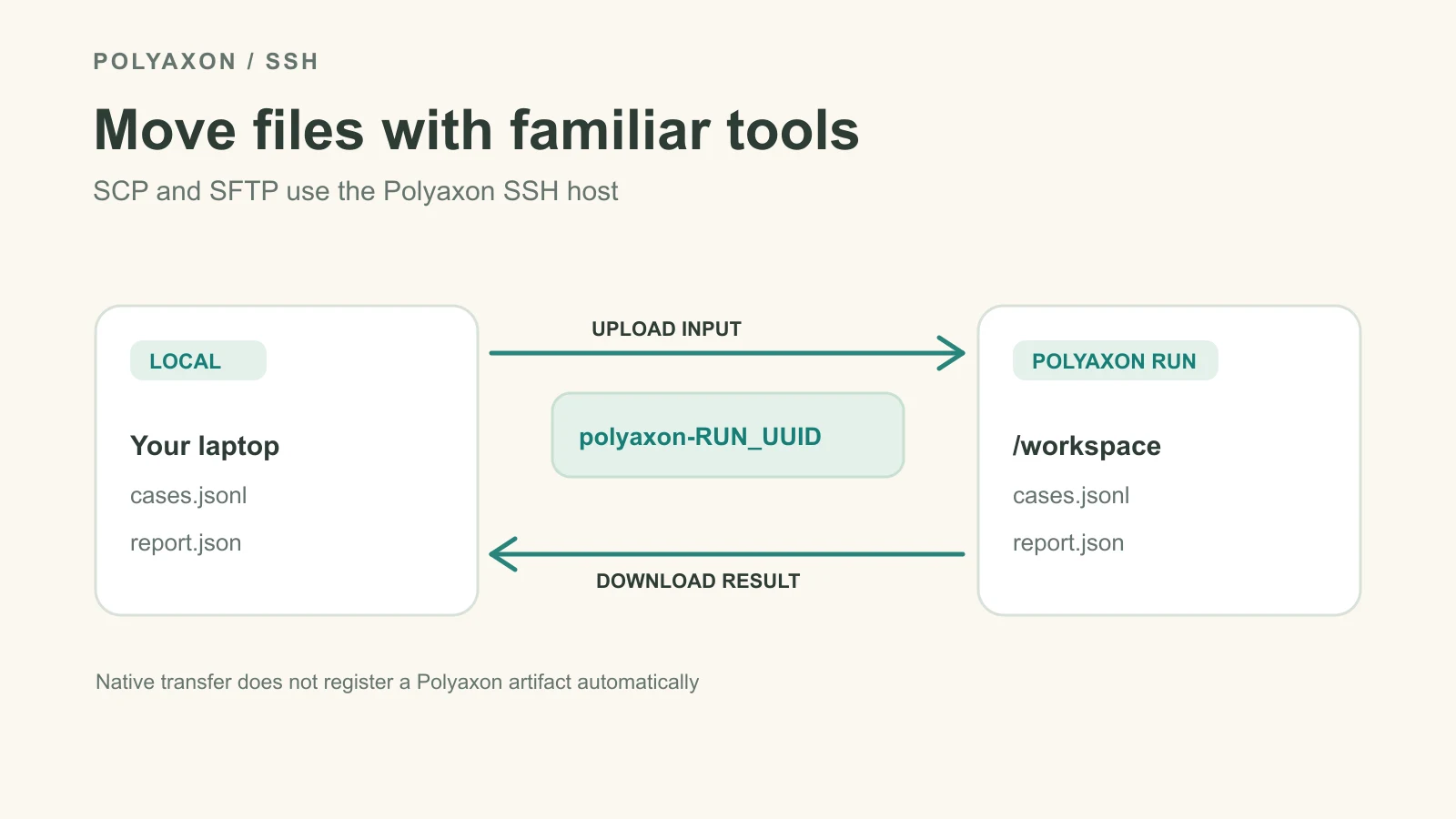
Use Polyaxon's generated SSH host with native SCP and SFTP to move files into and out of a running service workspace.
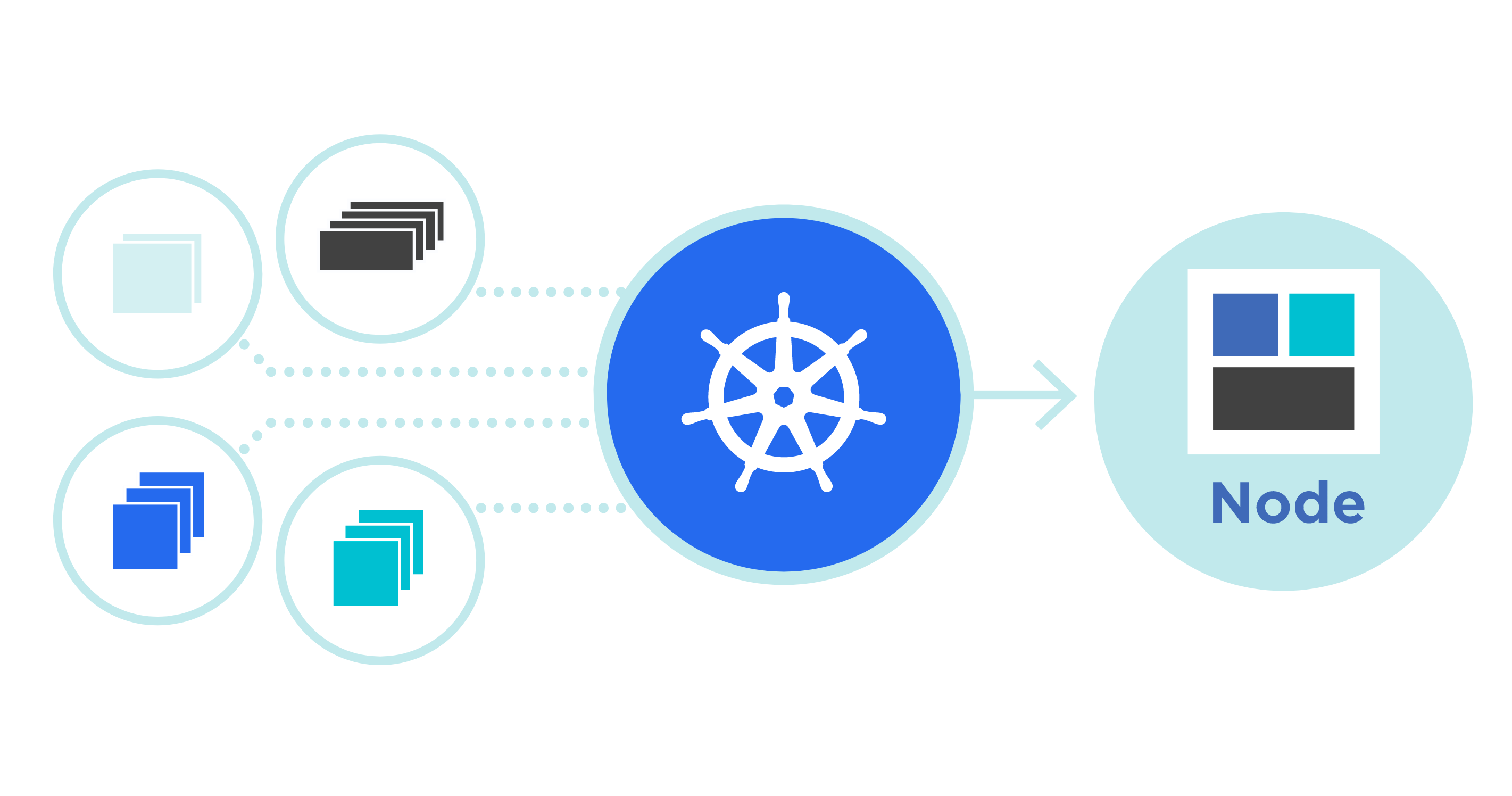
Use topology spread constraints for inference availability, understand minDomains and GPU capacity, and preserve placement intent in Polyaxon.
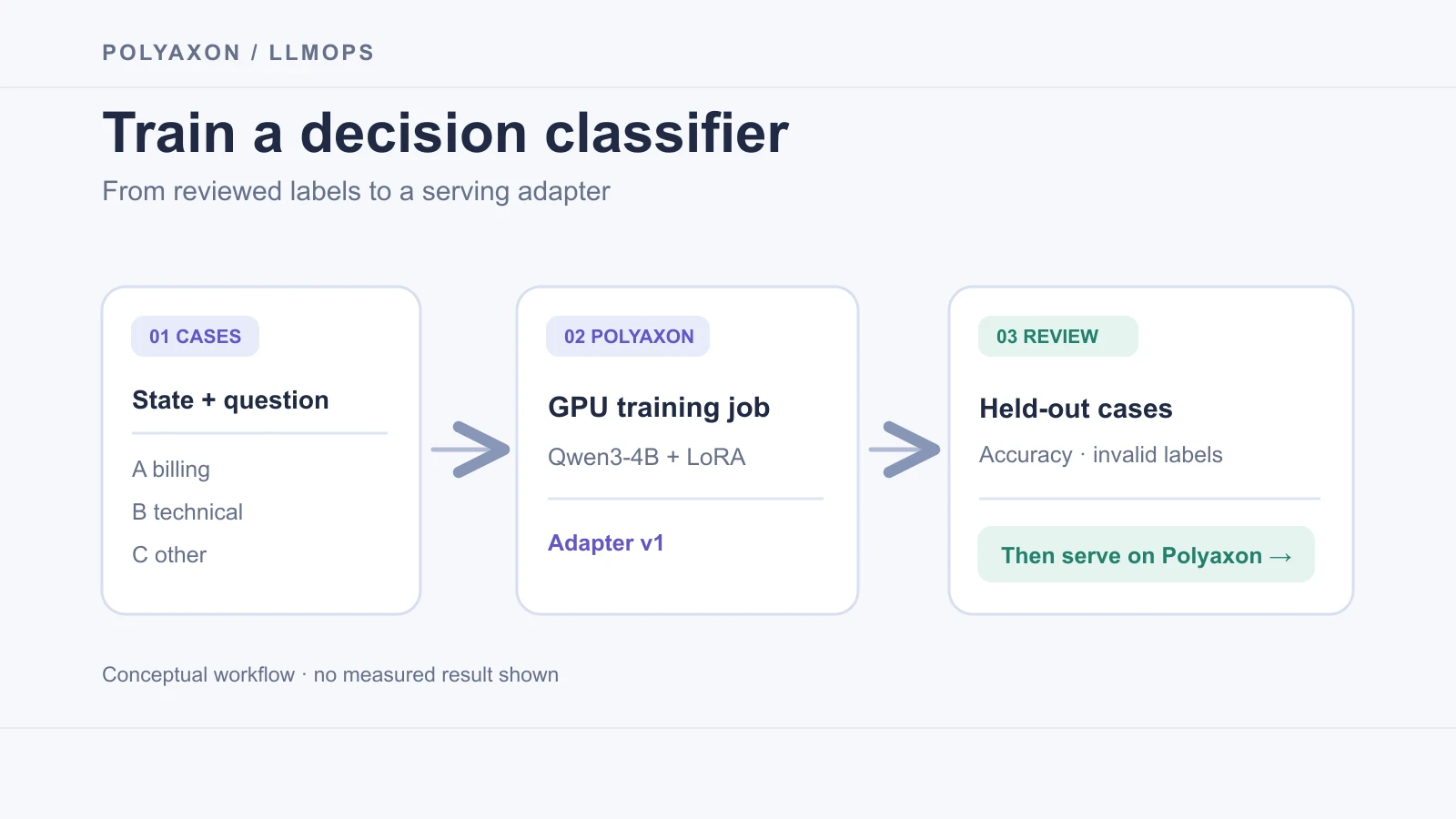
Fine-tune an open Qwen model for bounded support-routing decisions with Polyaxon jobs, track the adapter, and serve the reviewed version through vLLM.
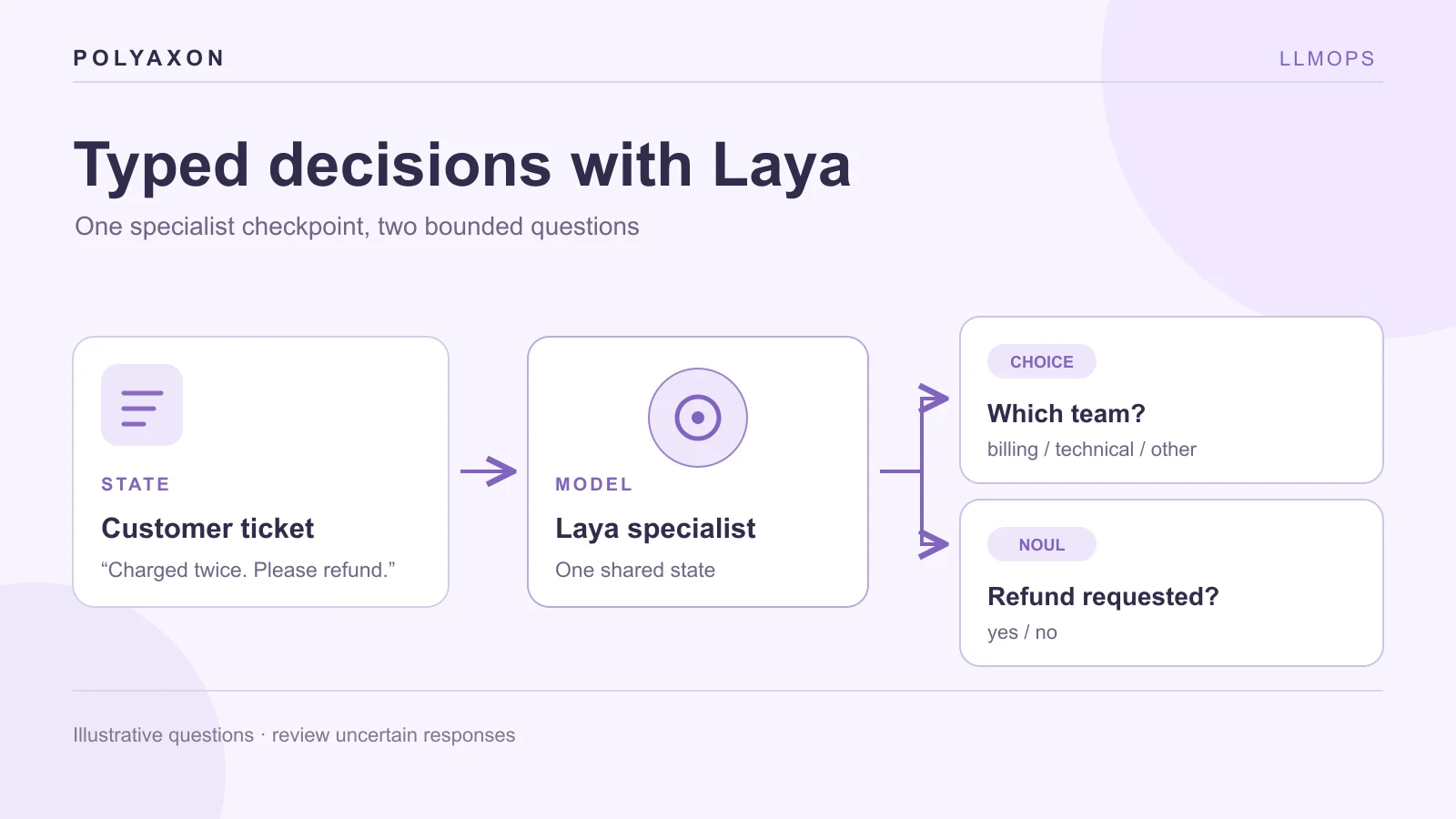
Serve the open Laya typed-decisions checkpoint through Polyaxon, with a CPU classifier endpoint, explicit model scope, and a review path for uncertain classifications.
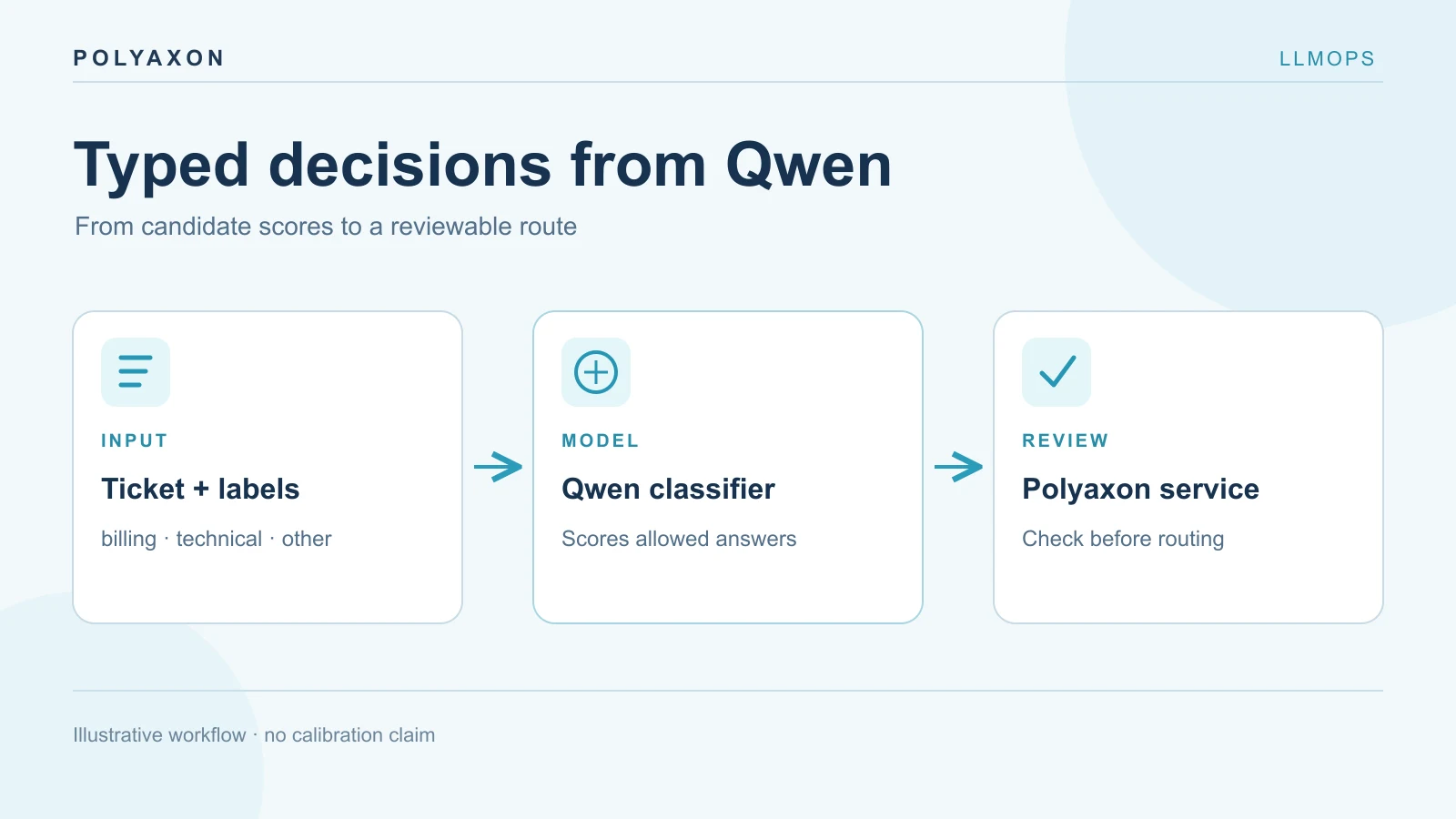
Deploy an open Qwen model behind a typed classification API on Polyaxon, then check the decision schema and calibration before routing real work.
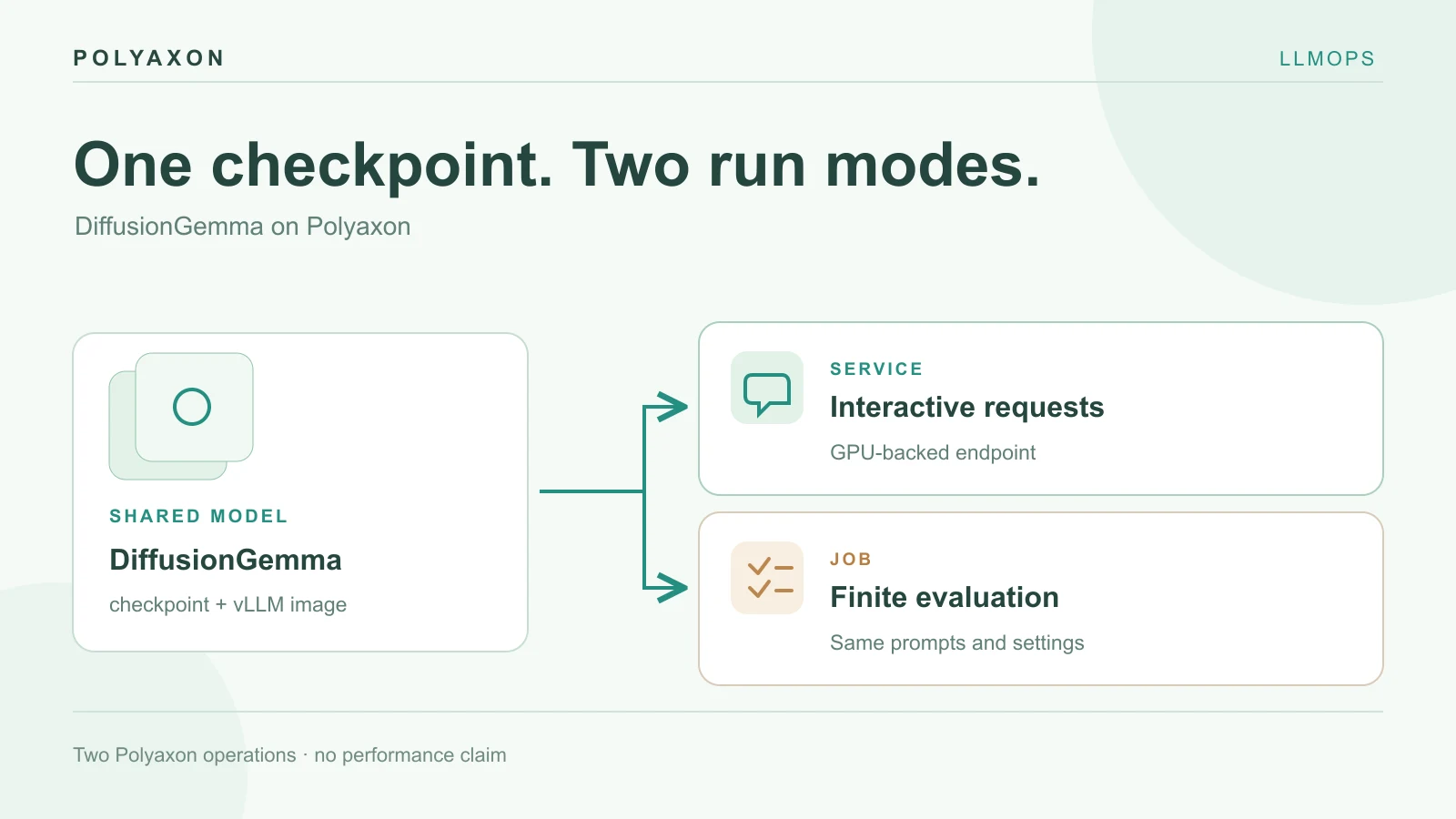
Adapt Google's Gemma-on-Kubernetes deployment choices to Polyaxon with a DiffusionGemma vLLM service, a batch evaluation job, and an explicit compatibility checklist.
Combine CPU Manager eligibility, full-core allocation, and Topology Manager policy, then compare CPU/GPU workloads with Polyaxon.
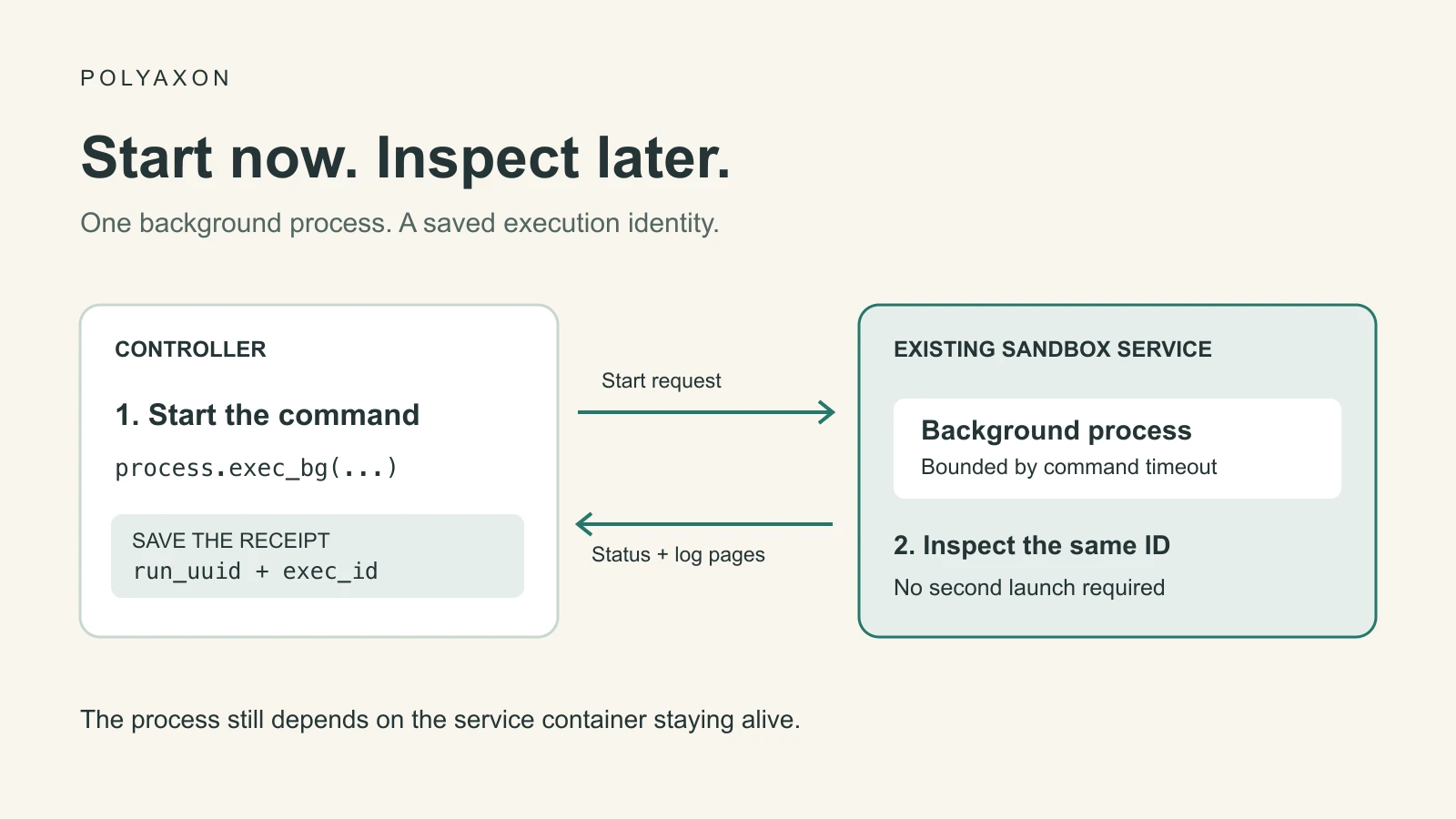
Start a background process, save its execution ID, reconnect to status and logs, and distinguish command limits from the lifetime of a Polyaxon sandbox.
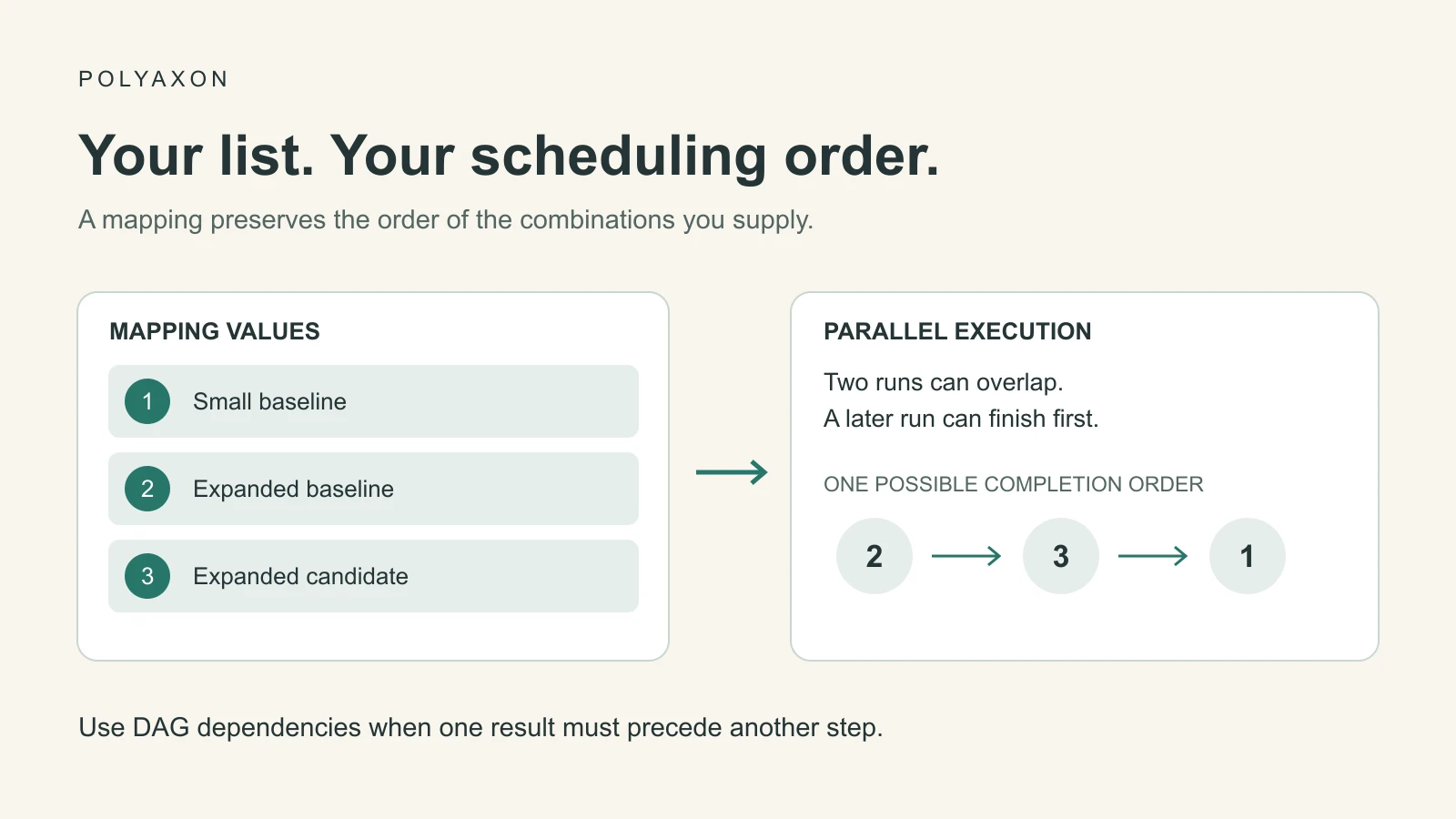
Use an ordered Polyaxon mapping for a curated list of experiments, control concurrency, and distinguish scheduling order from dependencies and completion order.
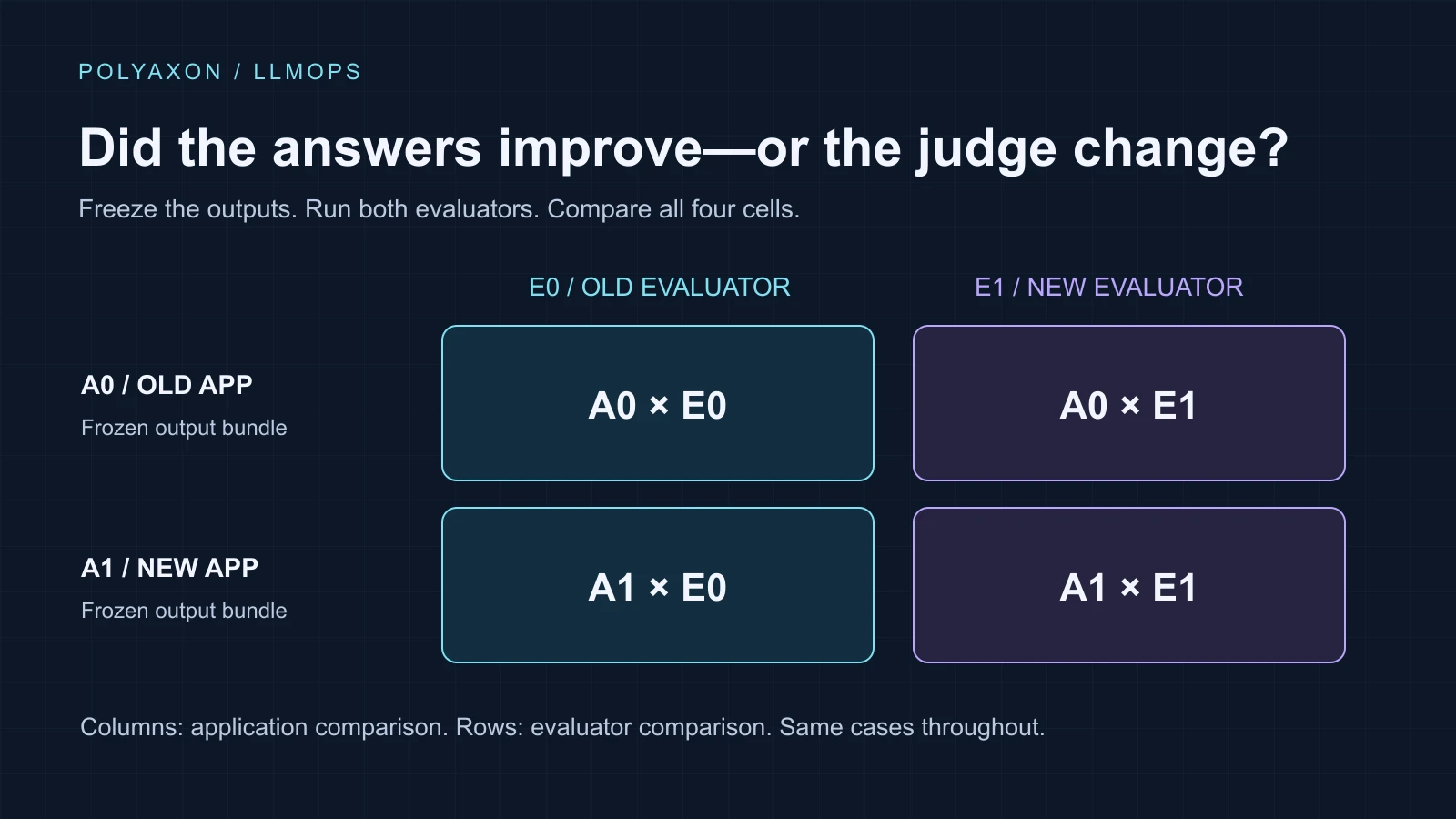
Compare old and new application outputs under both evaluator versions, inspect changed decisions, and retain the four comparisons in Polyaxon.
Understand exact prefix reuse in vLLM, structure repeated context, account for replica routing, and compare cold and warm workloads with Polyaxon.
Use Kubernetes in-place resource resizing for running workloads, inspect whether changes took effect, and understand the limits for Polyaxon services.
Explore native gang scheduling in Kubernetes 1.37, its potential for Polyaxon training and sandboxes, and how it compares with KAI, Kueue, and Volcano.
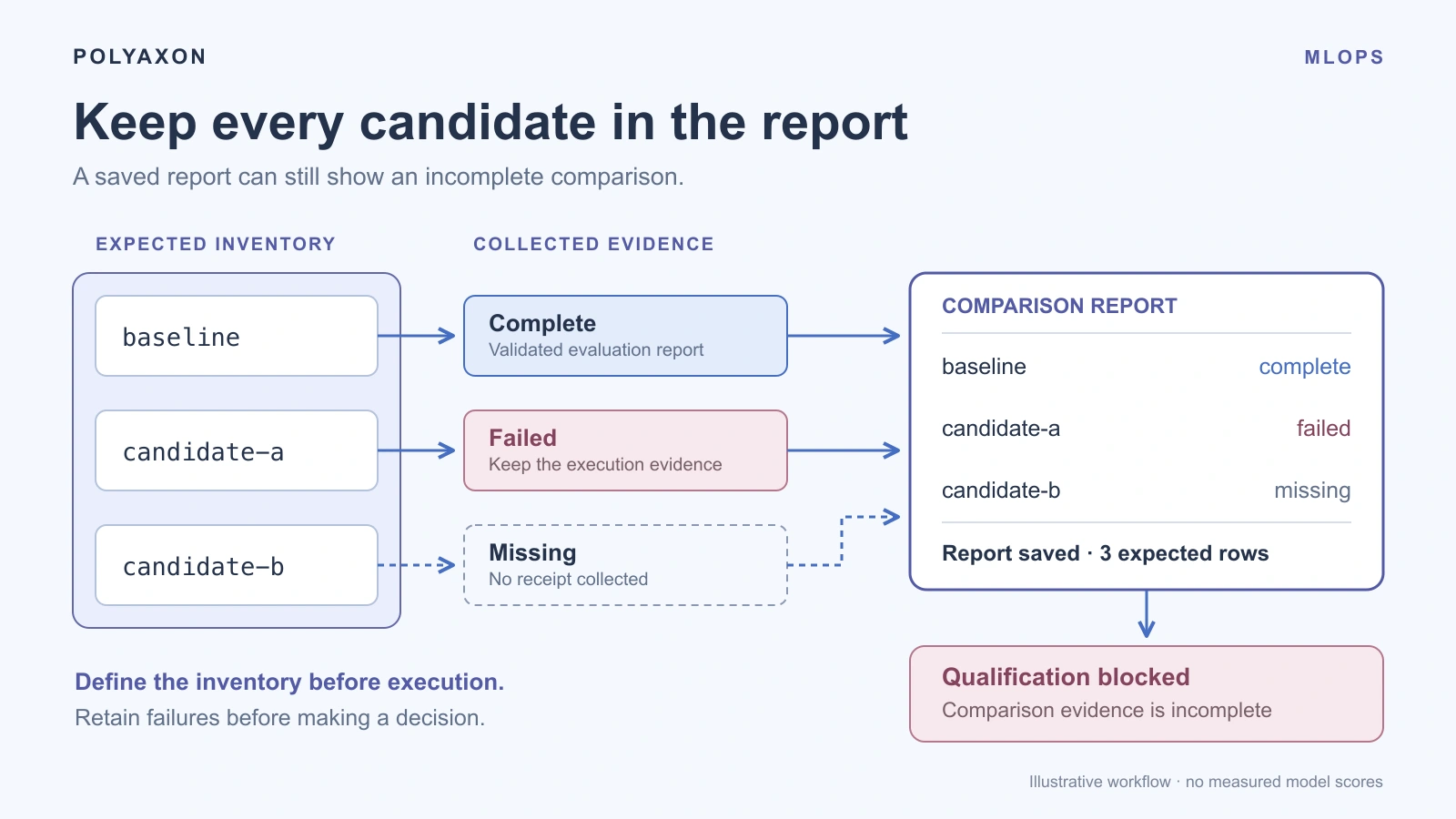
Reconcile evaluation results against an expected candidate manifest, preserve failed and missing outcomes, and separate pipeline reporting from release approval.
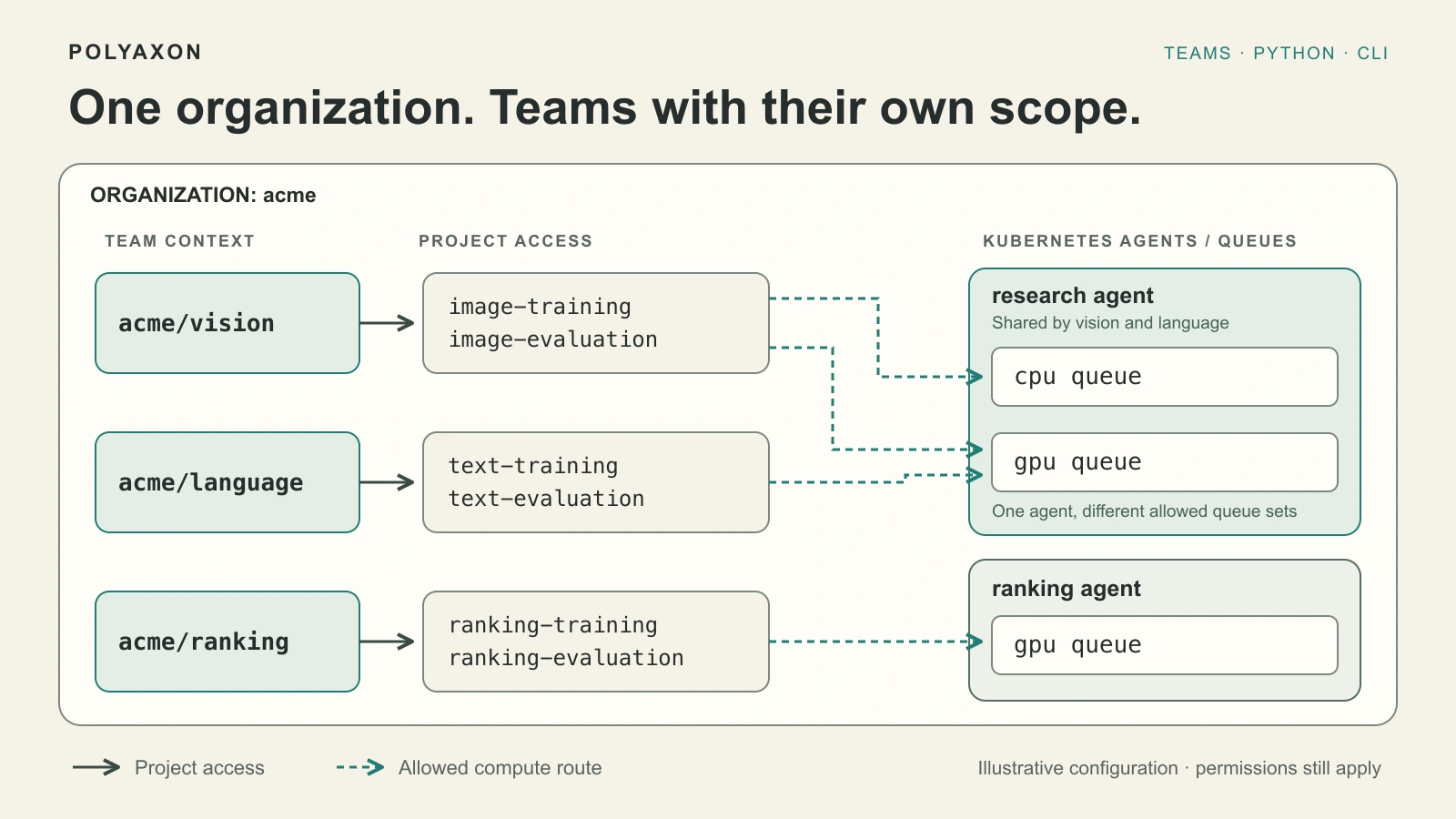
Scope Polyaxon Python clients and CLI commands to a team, review runs across its projects, and keep explicit project targets and saved defaults clear.
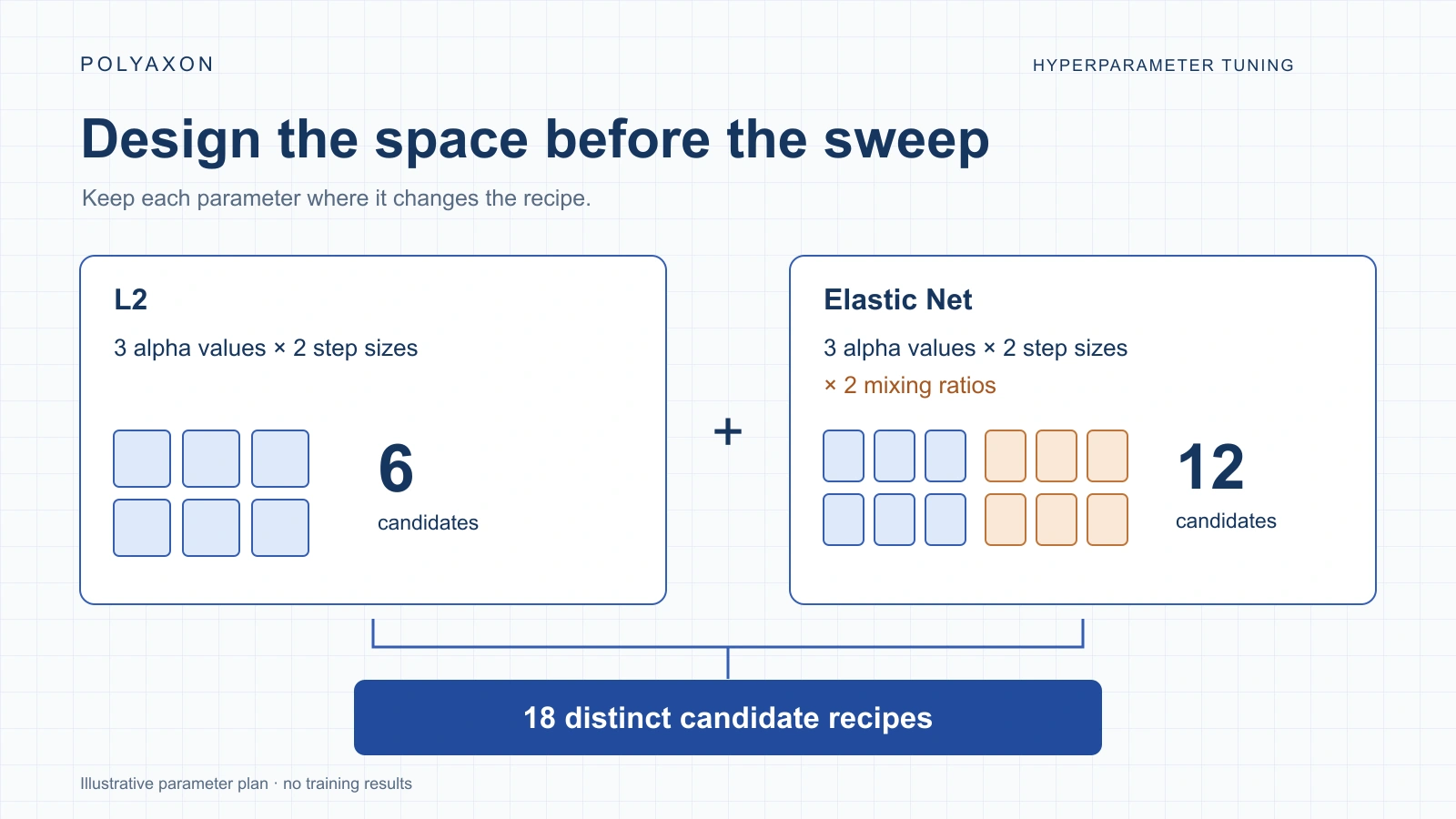
Use Polyaxon matrices to choose parameter scales, separate meaningful combinations, and control the size of a hyperparameter sweep.
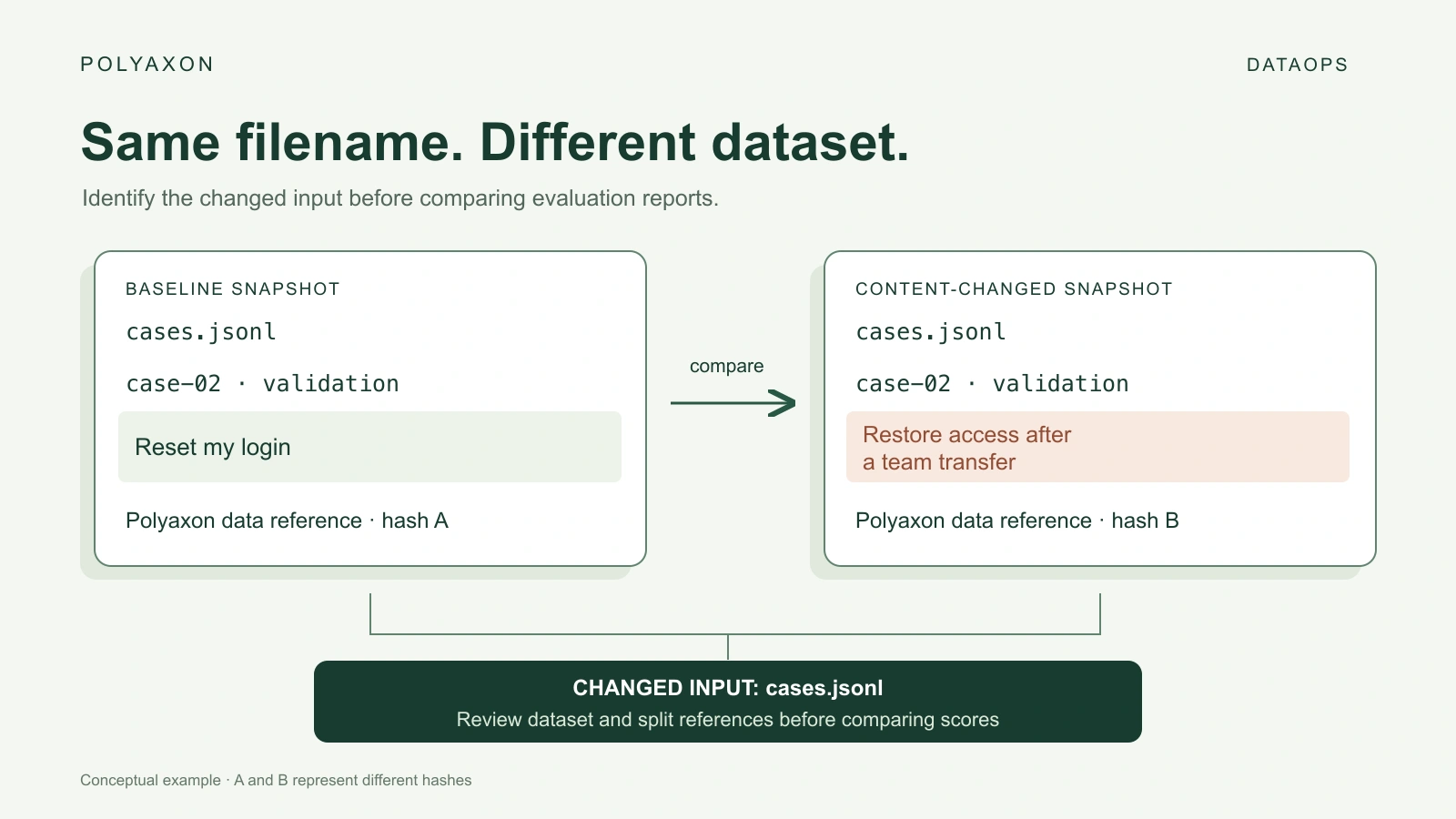
Use Polyaxon data references, artifact logging, and registered versions to retain the dataset and split behind each evaluation.
Understand native topology-aware workload scheduling, combine rack locality with gang placement, and assess the tradeoff between waiting and communication.
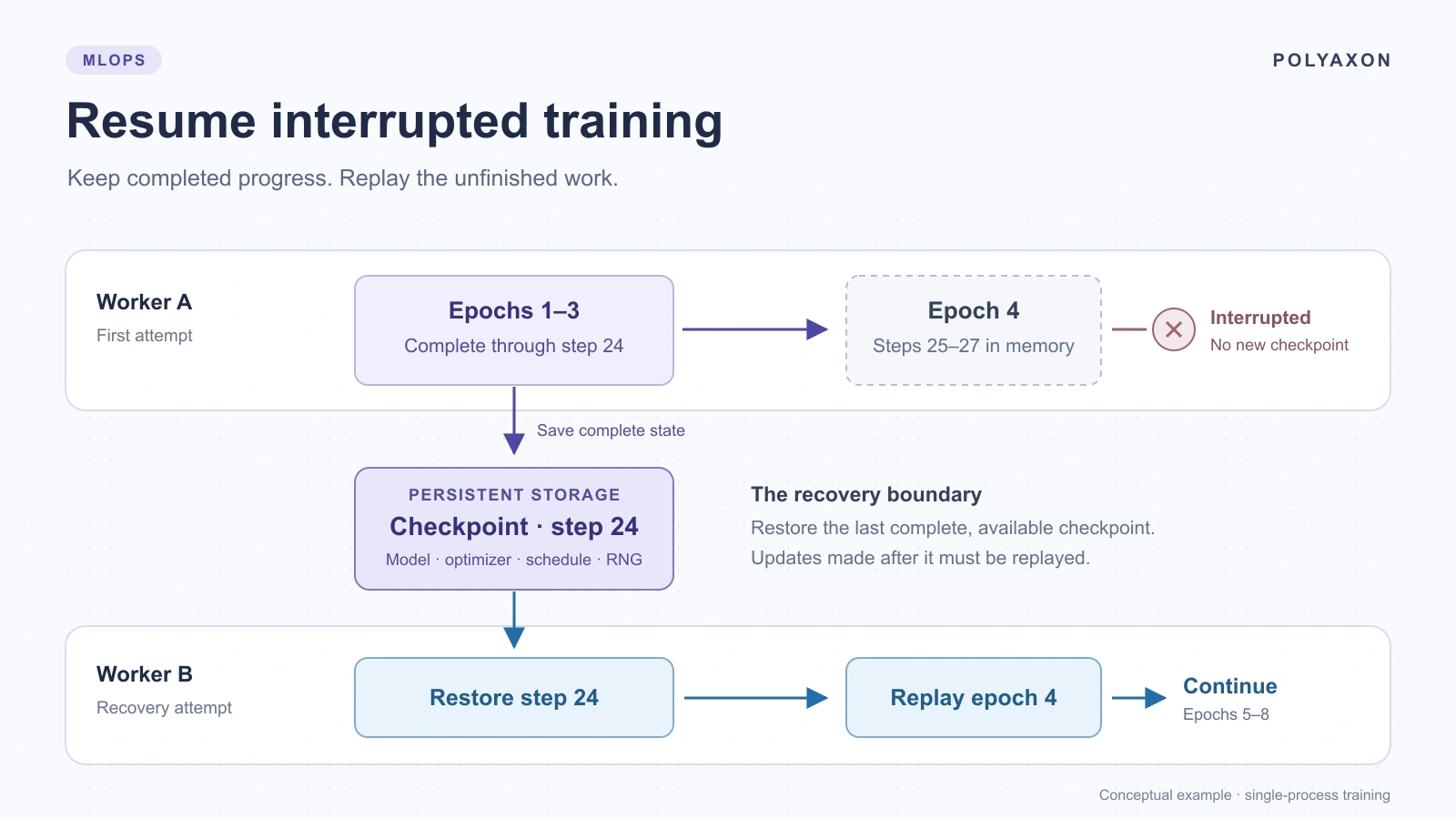
Build recoverable PyTorch training jobs with complete checkpoints, durable storage, and explicit restoration. Practice recovery locally and with Polyaxon.