
Load-test ML services on Kubernetes
Design repeatable Kubernetes load tests for model services using realistic arrivals, tail latency, queueing, accelerator metrics, and recovery criteria.
KubernetesMonitoringGuides
Practical guides to building, running, and improving ML and AI in production.
Page 8 of 21
Design repeatable Kubernetes load tests for model services using realistic arrivals, tail latency, queueing, accelerator metrics, and recovery criteria.
Evaluate sandbox selection as a Polyaxon platform decision covering execution contracts, identity, scheduling, state, evidence, and operational ownership.
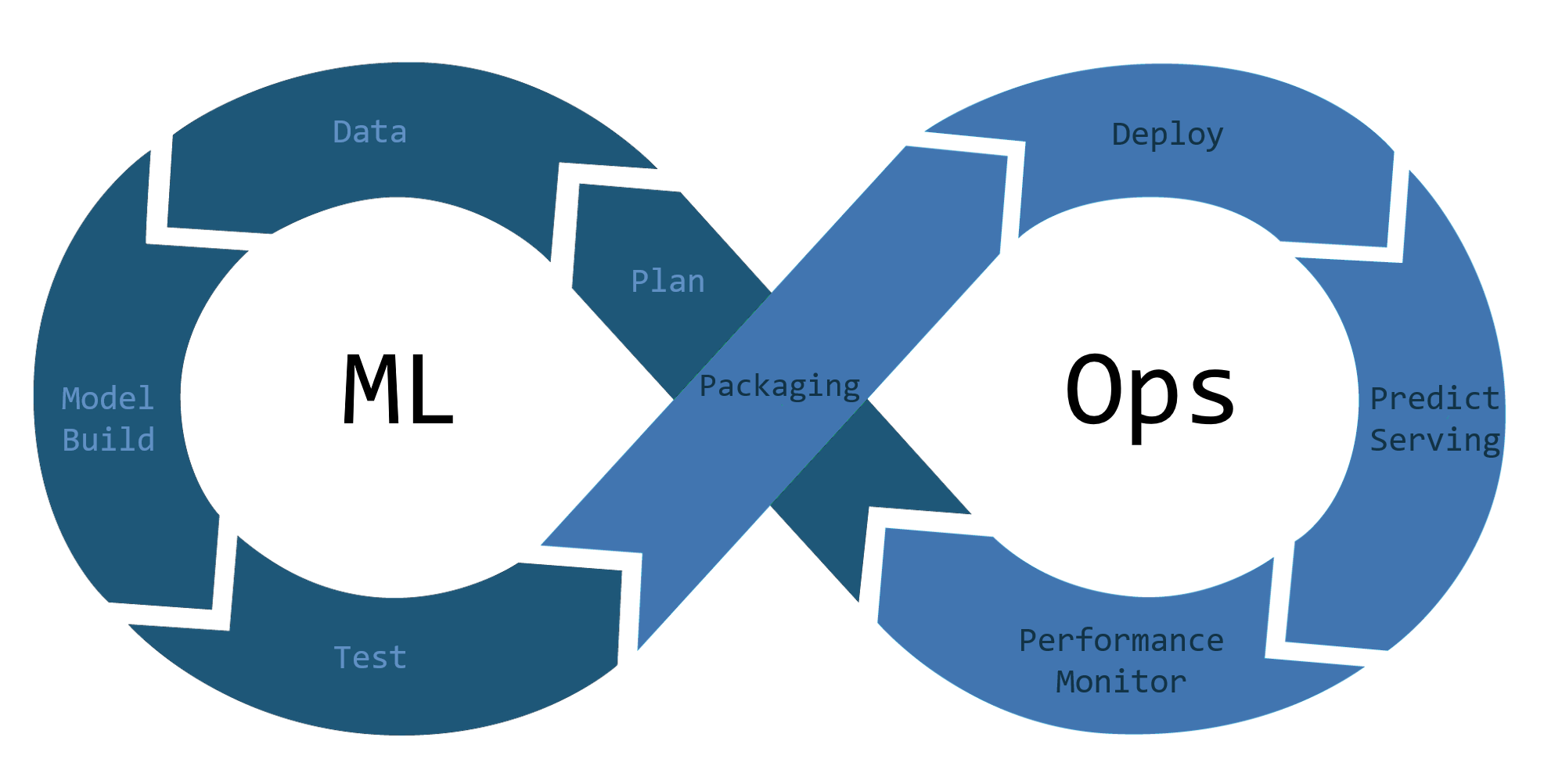
Create self-service AI delivery paths with explicit workload contracts, reusable components, governed connections, evaluation gates, evidence, and safe exceptions.
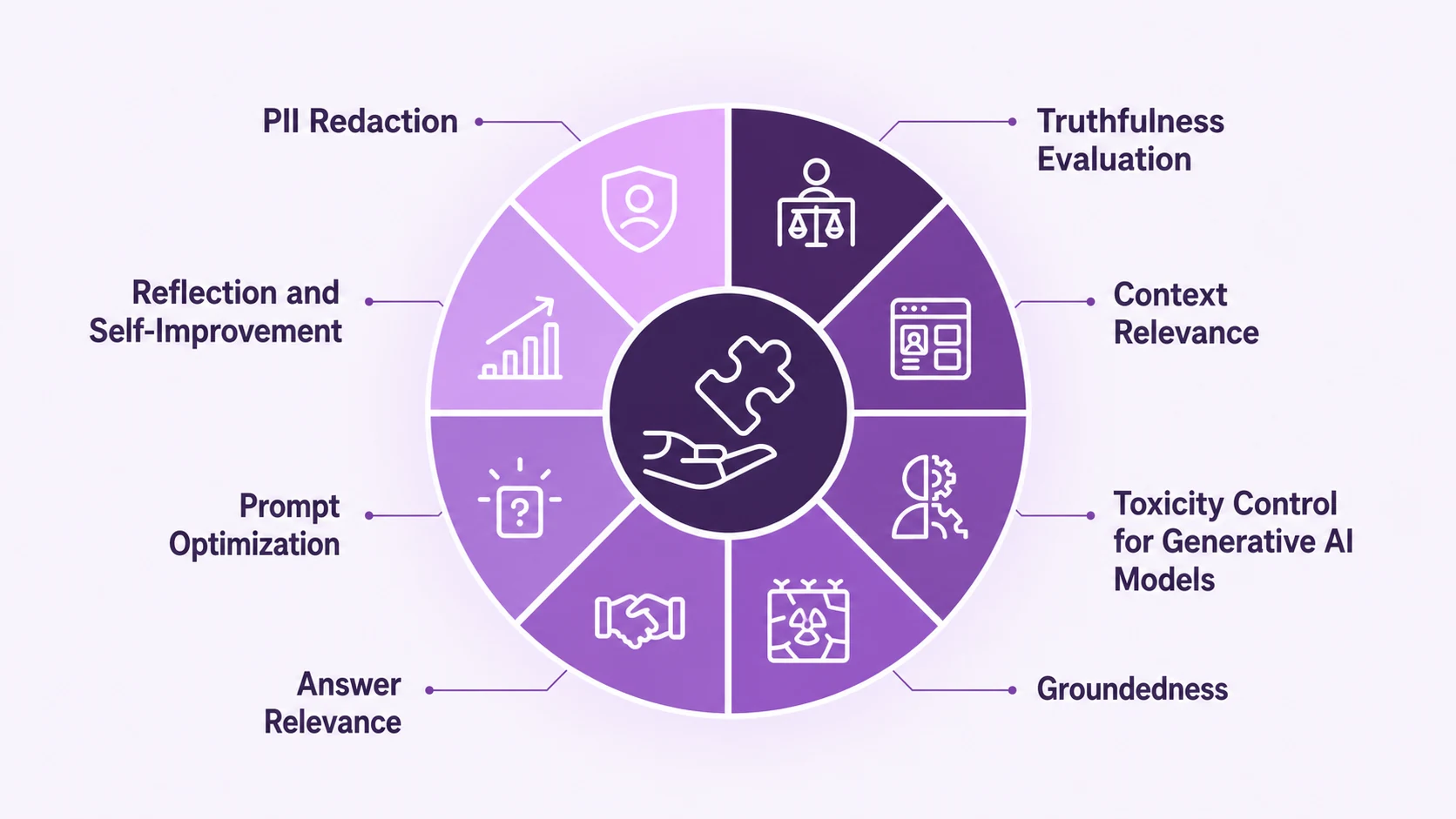
A practical framework for evaluating AI agent outcomes, trajectories, tool use, safety, latency, and cost before and after release.
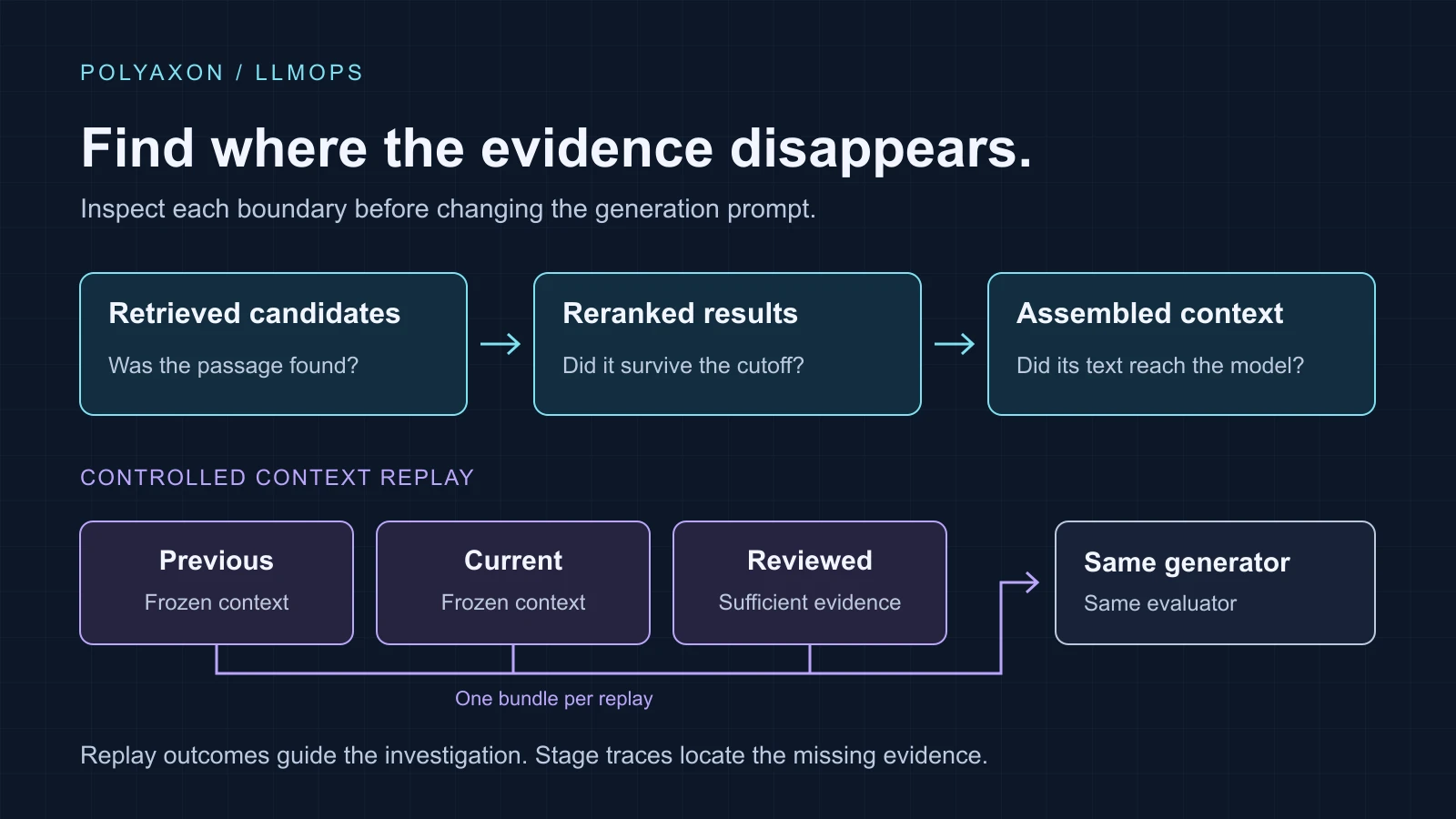
Trace missing evidence through retrieval, reranking, and context assembly, then replay frozen context in Polyaxon to locate a RAG regression.
Give model servers enough time to load weights and warm runtimes without weakening liveness detection for the rest of their lifecycle.
Configure Polyaxon Python sandbox services with minimal privileges, controlled writable paths, bounded resources, and separate handling of untrusted LLM code.
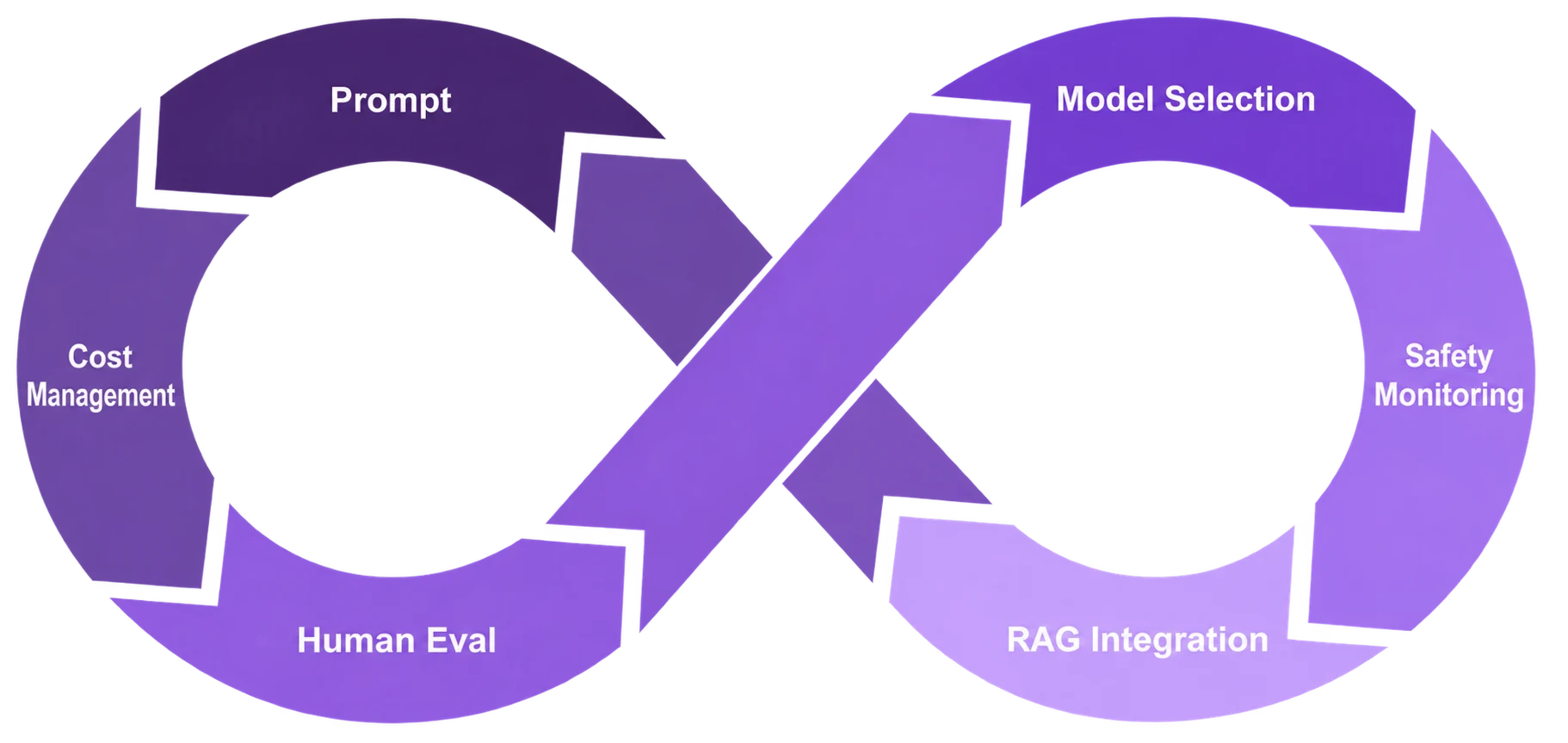
LLMOps applies repeatable development, evaluation, deployment, and observability practices to production LLM applications and AI agents.
Design Kubernetes and ML platform workflows that remain usable with keyboards, assistive technology, low-vision settings, and different ways of working.
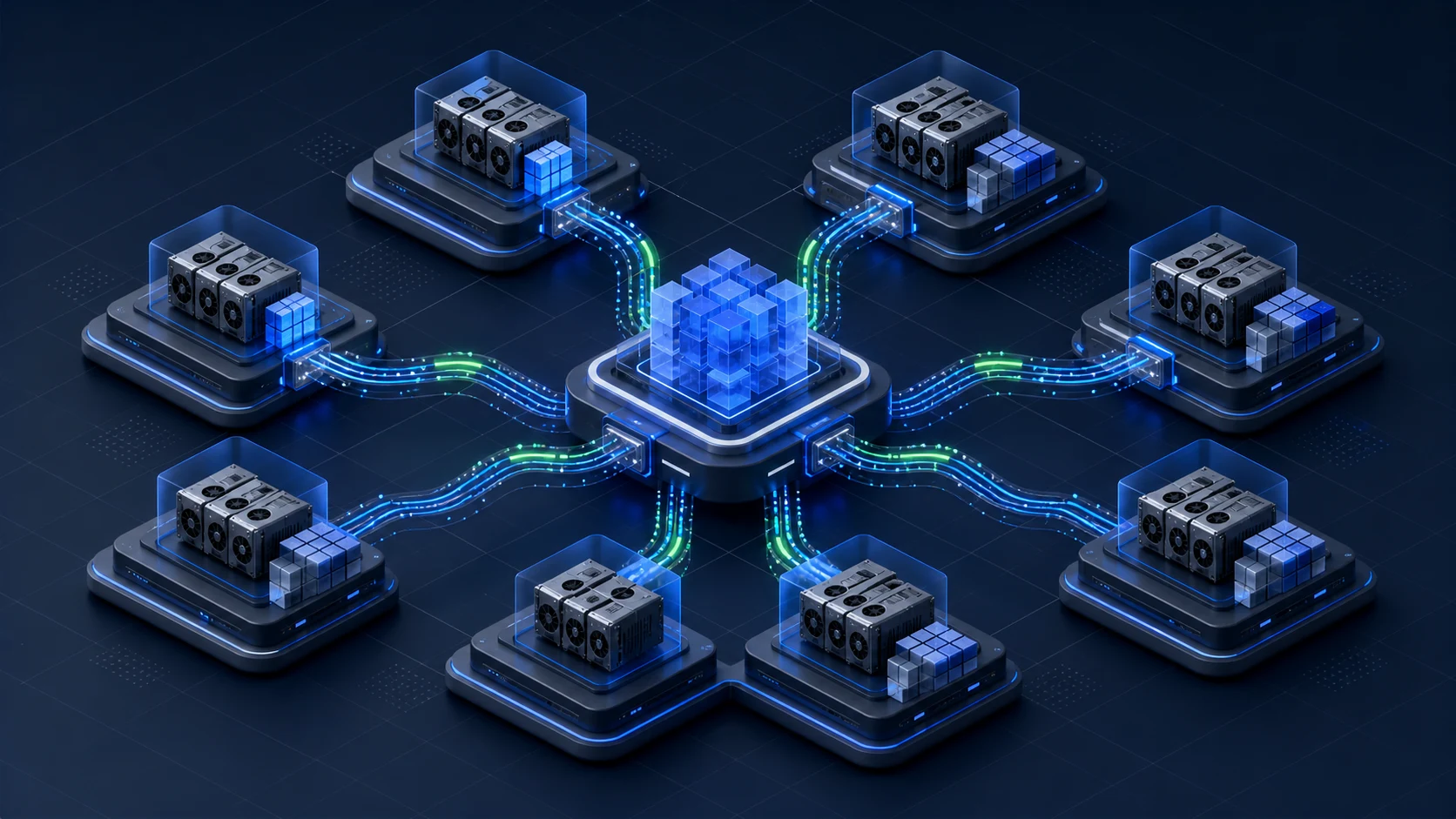
Distributed learning splits model training across processors or machines. Learn the main strategies, tradeoffs, and how to run it on Kubernetes.
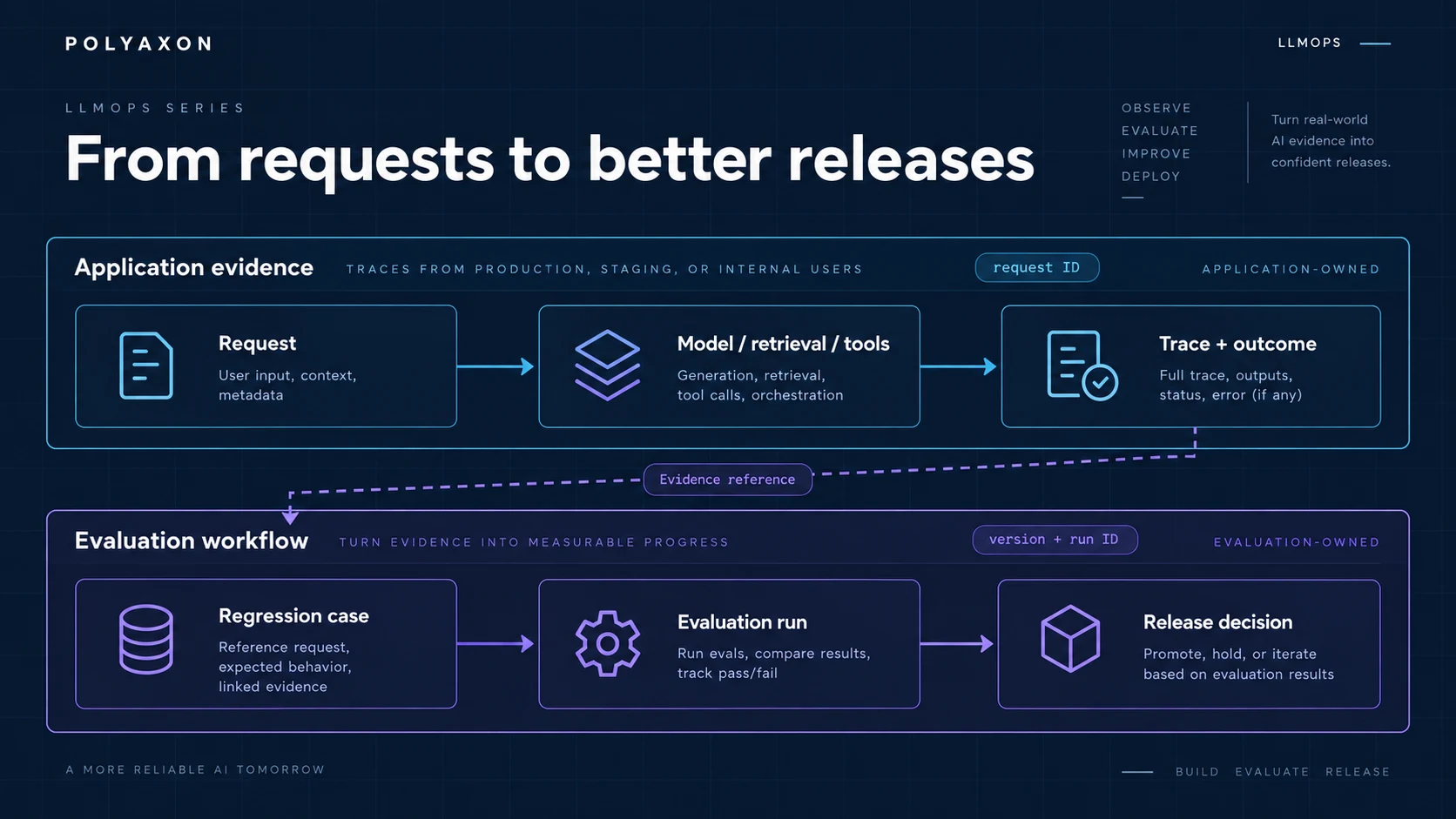
AI observability connects traces, metrics, evaluations, feedback, and runtime context so teams can understand and improve models, applications, and agents.

Distinguish the security boundary, process runtime, and interpreter session when designing Polyaxon code execution for AI agents.
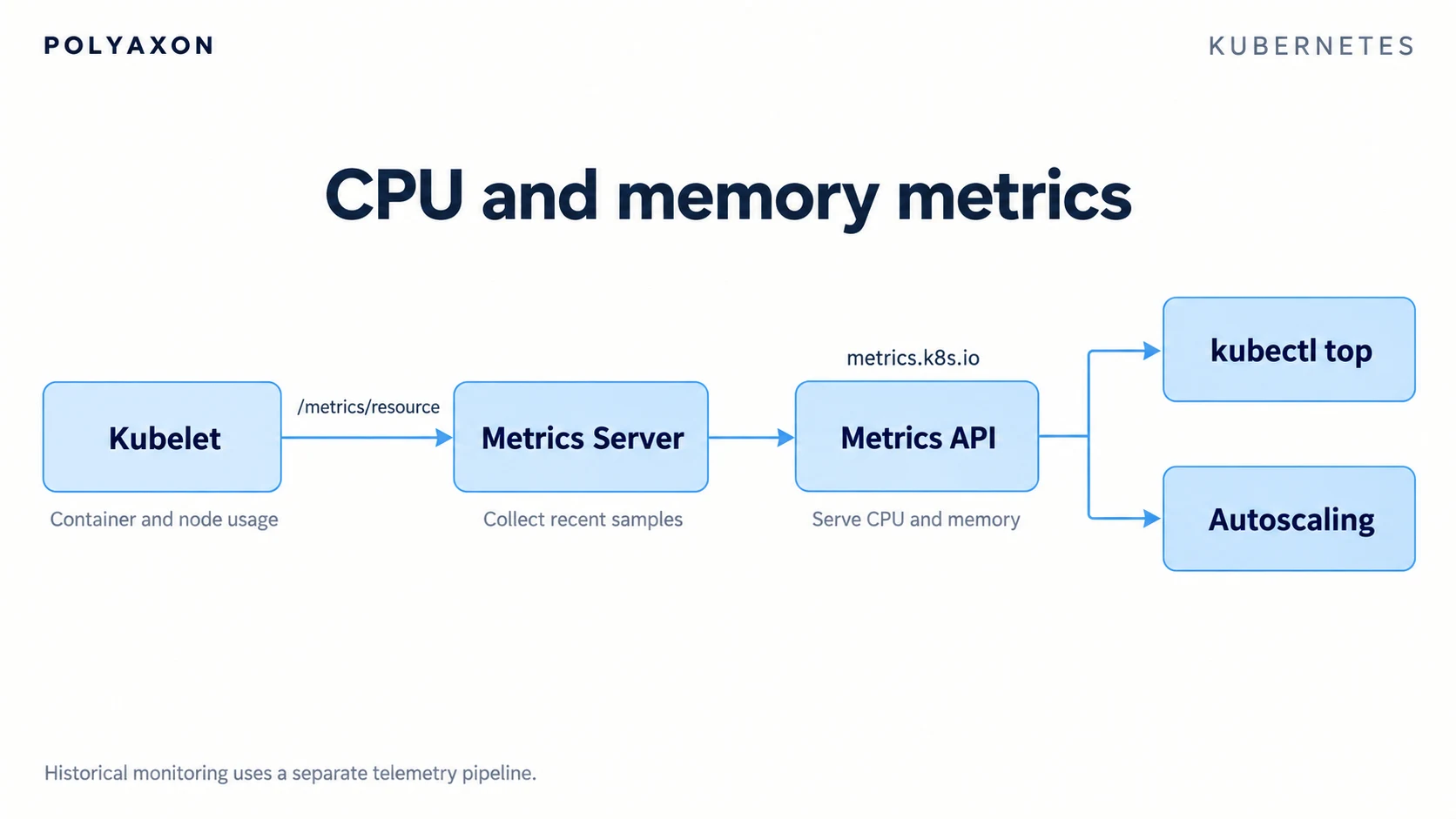
Use Kubernetes resource, object-state, and control plane metrics to diagnose scheduling delays, size workloads, and design actionable alerts.
Configure a DeepSeek V4 Pro service on B200 GPUs and check model loading, reasoning output, tool calls, and resource use.
Choose service boundaries for Kubernetes-based ML platforms without turning every component, model, or workflow step into a separate microservice.
Use Polyaxon tracking, sandbox execution receipts, artifacts, and run comparison to investigate coding-agent failures and qualify changes.
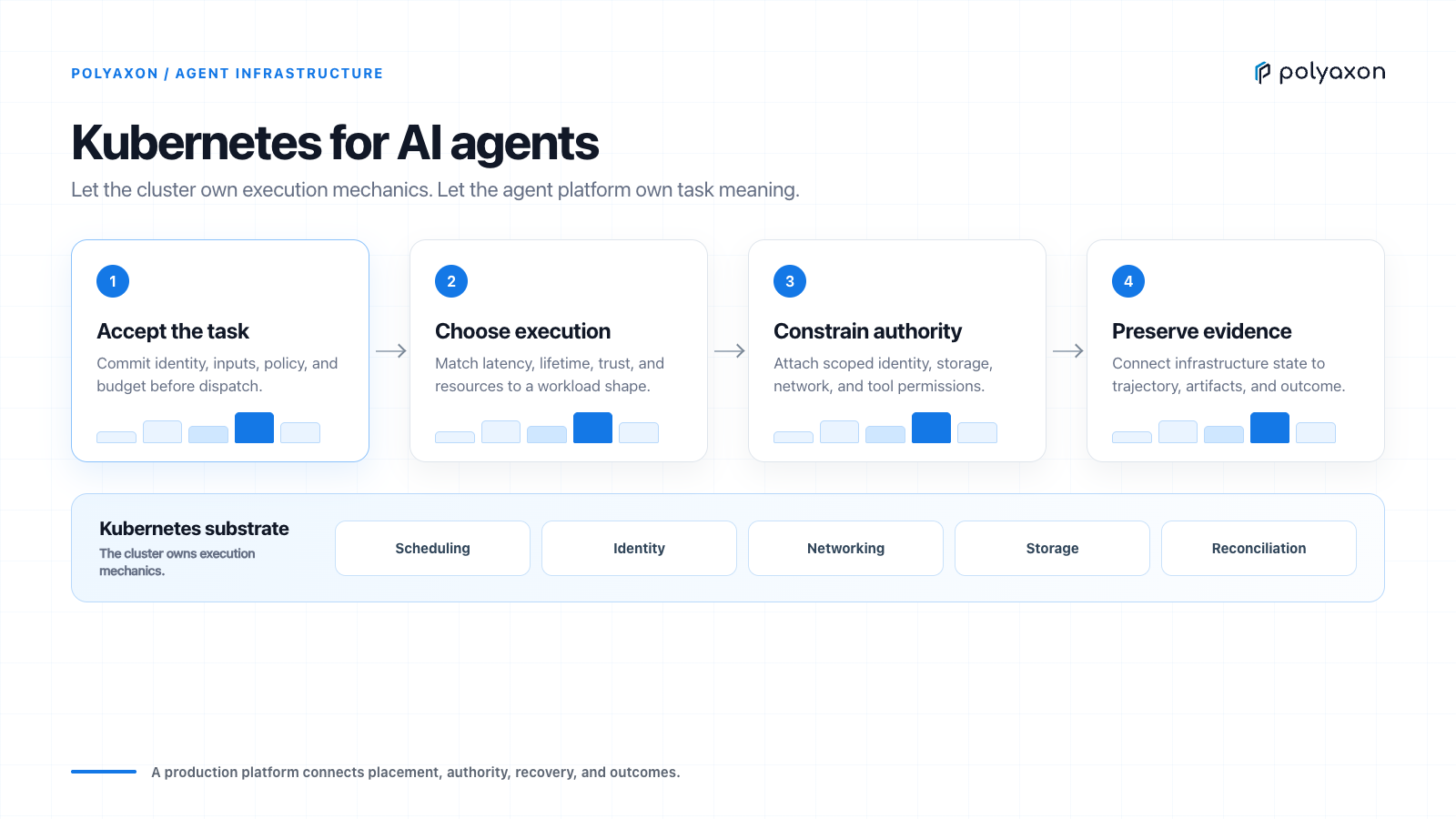
Assess and close the gaps in accelerator access, batch scheduling, inference, data, identity, observability, cost, and ownership before AI workloads scale on Kubernetes.

Persist agent memory outside Polyaxon sandbox lifetimes using application stores, scoped connections, versioned snapshots, and reproducible evaluation.
Create and verify Kubernetes Services with kubectl expose while keeping selectors, ports, exposure scope, and production configuration explicit.
Qualify AI-generated code with Polyaxon sandbox controls, tracked execution receipts, reusable evaluation jobs, artifacts, and explicit promotion boundaries.
Diagnose Kubernetes DiskPressure, understand eviction signals, and prevent images, logs, and local ML data from exhausting node storage.
Use Polyaxon component versions, evaluation runs, pipeline dependencies, manual approval, and scoped execution to make agent releases reviewable.
Manage long-lived Polyaxon agent workspaces with explicit ownership, reproducible environments, checkpoints, bounded lifetimes, and safe replacement.
Run recurring agent evaluations and controlled historical backfills with Polyaxon schedules, date-range matrices, explicit window identity, and fresh results.