SRE vs. DevOps for ML platforms
Clarify how DevOps and site reliability engineering complement each other through delivery, service objectives, error budgets, automation, and ML operations.
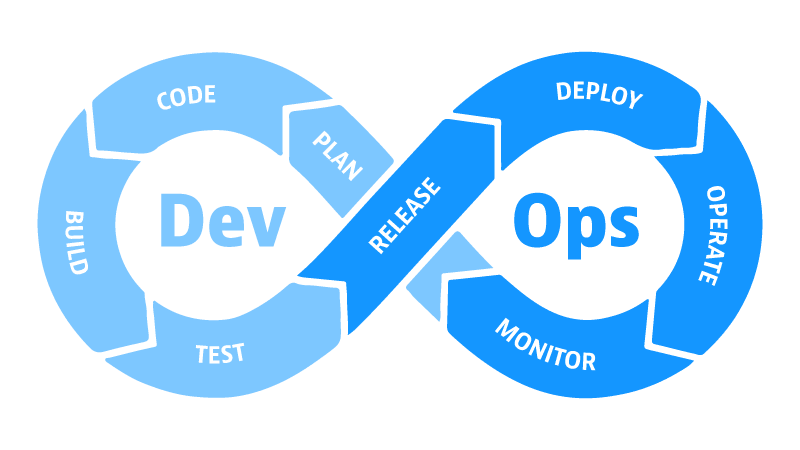
DevOps and site reliability engineering are overlapping practices, not two mutually exclusive job descriptions. DevOps emphasizes collaboration and automation across software delivery and operations. SRE applies software-engineering methods to reliability and uses explicit objectives to balance change with operational risk.
An ML platform needs both perspectives: a repeatable path for delivering changes and a measurable definition of whether teams can run and serve useful workloads reliably.
Treat DevOps as an operating model
DevOps reduces the distance between people who build software and people who operate it. Common practices include version control, automated delivery, infrastructure as code, small changes, fast feedback, shared ownership, and production learning.
It is broader than a CI/CD toolchain or a role named “DevOps engineer.” A team can automate deployments while retaining slow handoffs, unclear ownership, and unsafe changes. The outcome is a delivery system in which code, infrastructure, policy, and operational evidence move together.
For ML systems, the delivery unit may include code, container images, datasets, models, prompts, evaluation criteria, and deployment configuration. Reproducibility must cover more than an application binary.
Use SRE to make reliability concrete
Google's SRE introduction describes applying software engineering to operations and treating reliability as a feature with explicit tradeoffs.
Core practices include:
- service-level indicators that measure user-visible behavior;
- service-level objectives that define an acceptable target;
- error budgets that quantify tolerated unreliability;
- automation that replaces repetitive operational work;
- capacity planning, incident response, and post-incident learning;
- limits on toil so engineers can improve the system.
SRE does not mean maximizing uptime at any cost. The objective should match user needs, and the error budget helps teams decide when change velocity or reliability work deserves priority.
Define ML service objectives carefully
An API objective alone is not enough for an ML platform. Teams may need objectives for:
- successful operation submission;
- queue wait for priority workload classes;
- run completion and infrastructure-caused failure rate;
- notebook or workspace availability;
- artifact and metadata durability;
- model-serving availability and latency;
- evaluation, safety, or quality guardrails;
- recovery time after node, cluster, or provider failure.
Separate platform failure from user-code failure. A syntax error in a training script should not consume the same reliability budget as a scheduler outage, although both should remain visible.
Do not turn every metric into an SLO. Choose a small number that represent outcomes users depend on, then use detailed observability to explain them.
Balance delivery speed and reliability
DevOps creates the mechanism for frequent, controlled change. SRE supplies risk signals and policies for deciding when that change is safe.
A practical loop is:
- define the service objective and error budget;
- deliver a small, observable change;
- canary it against representative workloads;
- measure user outcomes and operational cost;
- continue, pause, or roll back according to policy;
- turn incident findings into automation or design changes.
This avoids a permanent conflict between a delivery team rewarded for release frequency and an operations team rewarded for preventing all change.
Automate toil, not judgment
Toil is repetitive, manual, automatable work that grows with service demand and provides little enduring value. Examples include hand-routing every run, repeatedly repairing the same label, or manually collecting standard incident evidence.
Automate validated responses: environment checks, safe retries, queue routing, certificate rotation, standard diagnostics, and cleanup. Keep human review for ambiguous risk, security exceptions, model acceptance, or actions with a large blast radius.
Measure whether automation reduces recurrence and response time. Automation that retries a permanently invalid workload can increase cost and hide the actual problem.
Align team boundaries with services
Publish owners for the platform API, scheduler, clusters, storage, observability, model serving, and shared integrations. Ownership should include code, on-call response, objectives, runbooks, and lifecycle.
Avoid creating an SRE team that receives every production problem without authority to improve the source systems. Product and platform teams remain responsible for operability; SRE practices help them make reliability measurable and sustainable.
Security, data, and ML specialists also participate. A reliable service that serves an unsafe or invalid model is not a successful ML system.
Apply the practices through Polyaxon
Polyaxon provides repeatable operations, versioned execution configuration, queues, tracking, logs, metrics, lineage, and artifacts. Scheduling presets reduce one-off configuration, and platform observability supports operational objectives for the services managing workloads.
Use DevOps practices to deliver platform and workload changes consistently. Use SRE practices to define the reliability users need, measure it, and decide how much risk the system can safely absorb. Together, they create an ML platform that can change quickly without making production a guessing exercise.